A is for Action: Chop Wood, Carry Water
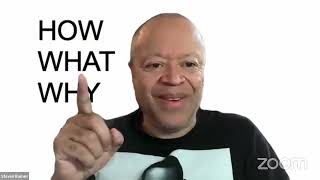
Steven Barnes explains mastery as relentless daily action, not enlightenment. He breaks it down: define what you want and why, then build the how into small daily tasks. Breathing, exercise, writing, parenting—the formula works everywhere.
Chapters
Well, greetings. Let's see, I have to kill the sound here once again. Just figuring out how to do this right. This is Steve Barnes. Welcoming to you to Morning Mastery. Thought that it would be useful to give an overview here of where I am at the moment. Last night, I pushed the button, sending the first draft of the Star wars novel to my editor. There is still work to be done, and I'm going to jump into it as soon as I get off the call today. But as today is a is for action, I wanted to talk about action a little bit and taking action and taking consistent action, because that's one of the distinguishing things about masters in any craft. They're always learning, they're always doing, and they're always teaching. At least the masters that I admire, there are some who, of course, are off in the mountains. But I think that it is reasonable within the context of what we're doing here, which is to try to set you up to be the absolute best you can be. It might be useful also to define what mastery is. And the greatest masters that I've had a chance to talk to and study, sit down with, and really discuss this question do have that sense of always learning, always doing, always teaching. But the more specific definition is that mastery is a vector, not a position. It's a process. And it's a matter of having all the basics of your craft at the level of unconscious competence so that you can create spontaneously under pressure. To the degree that you do that, you are on the path of mastery as much as anybody else is on the path. Even though some of them will be horizons distant from you, you'll notice that masters don't care about that as much as they care about what are you doing, you know, are you training? Are you writing, you know, whatever. Are you taking care of your kids? Are you there? Are you in the mix? And that's the road of trials, and we never get through it. You know, I saw a thing yesterday, somebody suggesting that the concept of chop would carry water is in opposition to the concept of joy. No, chop would carry water. You know, it comes from the expression of before enlightenment, chop would carry water. After enlightenment, chop would carry water. It's just what we do. It's just that before you wake up, you might resent the fact that you have to do right every day, work out every day, watch your diet every day, interact with your family or friends. You know, when you feel like you'd rather be doing something else, and there's a wish that we could push a button and do something and that thing will be done. Why do I have to keep watching my diet? Well, the fact is that when people lose weight, they often stop watching their diet and they gain the weight back and then they blame their bodies. And I see this all the time. It's impossible to lose weight, or it's impossible to save money, or relationships are impossible or whatever. And all you have to do is take a look at their daily practices and you can tell which direction they're heading in. Are they getting better or are they falling apart? And the truth is that really, you're always doing one or the other. You're either getting better or falling apart from that perspective. So there's a book. John Steinbeck. John Steinbeck, the novelist, Grapes of Wrath and so forth, wrote a book called Once There Was a War. It was his war correspondence, musings on and reportage on World War II. And there's an interesting scene in that book that I've never forgotten. He's on a troop transport ship, and the men are eating. They're going to lunch or dinner. And there is a certain weariness on the face of the cook in the. In the mess hall. And what Steinbeck said was that it's like that. That feeling that came over him, quote, unquote, when he realized there was no way to feed a man once and for all. That there are things we do every day. And that's the A in action. You know, the A in magic is action to define your goal, to commit to improving 1% per week, to find the people who have accomplished your goal, starting with your resources. You know, some people will always say, well, this person who achieved it is lucky. This person achieved it had privilege. And there, of course, luck and privilege are advantages. And we always try to pass those things on to our children. But people who insist that anybody who's doing better than them was just lucky, they're just dealing with ego problems. If you looked at their schedule, they know that they were not really doing it as much as they could have. They were not getting their egos out of the way as much as they could have. None of us are ever operating at the level of perfection in terms of what it is we're trying to do. But when you blame the world for what's going on in your life, make sure that you've got the magic formula lined up. If you've got the magic formula, line up, you've got a map or model of people who've accomplished it, starting from where you started. If you're taking daily action. If you are maintaining positive emotions, if you have a clear intention of what it is you're trying to do, that is measurable and smart goals. And if you have confidence that you can and should do this thing, in other words, it aligns with your identity so that you can really see yourself doing it. And you believe that the daily efforts towards doing it will, will bring you joy. Because nobody can promise that you're going to get to the end goal. All you can do is optimize your chances. That's all you can really do. There are things you can do to pretty much guarantee you won't get there, but there isn't anything you can do to guarantee you'll get there with most complex life situations. Love my morning tea. So if you notice, as soon as you start saying the gap between where you are and where you want to be, break it down into bite sized chunks. When you break down those chunks enough that you can see how one of those chunks can be accomplished this week, you got it. And if you can break it down, if you can break it down into what you need to do today, then it's just. Chop would carry water. This is just, this is what I have to do today. And it'll fits into my weekly plan, my monthly plan, my yearly plan, my life plan. When you take a few minutes to look at it that way, everything becomes a lot easier. And you can surrender to the process of doing the work, the push ups or the yoga or the drive back and forth to work. You're not resenting it. Pain, that thing that pain is sometimes non negotiable in life. But suffering is optional. The work that you have to do to write a book or raise a kid, or raise a dog or a cat, or stay in shape, shape is non negotiable. You have to do the, you have to do work. But how you feel about what you did is very negotiable. What you feel about your obligations to do these things, very negotiable. So up on the board here is what, why, how. That's the order you look at it. Even though it's, it's written down, how, what, what, why. And that's very deliberate. In the process of thinking about what you have to do today, think about your long term goal. Your longest term goal is always to move away from pain toward pleasure. Don't let anybody kid you. No matter who you are. Everything you're doing is connected to the urge to move away from pain toward pleasure. All living things do that. But the question of how you do that and why you do that and how your values and so forth connect to it. That's more individual and cultural and so forth. But your what is always to be happy, to be joyful. And the Dalai Lama would say that the ultimate meaning of life is to be joyful and of service. But that's a higher level. Make sure you've got the most basic animal level. First, move away from pain towards pleasure. So you look at the things that will move the needle in your life and there should be one that's physical, physical body, one that's emotional, your relationships, your relationship with yourself especially, but relationship with your significant other or your kids or whatever, but certainly a relationship with yourself, that's got to be good. And then you have your, your head, your, your, your career, your. You know, I'd say that if intelligence is problem solving, the most important problem to solve is how to move away from pain toward pleasure. And one of the things that really takes an awful lot of our lives is hunting and gathering, is actually staying alive, is eating. And in the adult world, that means money. And a lot of people have a bad attitude towards that. What's really sad is people talk about money doesn't matter, money doesn't matter. And then they complaining about not having money. So you know, they're not telling themselves the truth. They're lying to themselves or they're lying to you. For all practical purposes, the context of this conversation is everybody wants to be wants health, love and abundance. Okay? If you don't, if you feel like that is wrong, then this message is not for you. It's very, very simple. Adrian sky says hello. Hi there. Chop wood and carry water for me is on point Mobar. It says I listen and must rest in bed, legs elevated and breathe. Otherwise my feet will well and I'll be in pain. Absolutely. So you're moving away from pain. But what I sense about you, Mo, is that you are programmed to move away from pain. And so you will do, you do those things. But if you don't, then transfer that to the desire to the feeling that you deserve to be joyful. You'll get stuck in that loop. And people who've been caught in oppressive situations, abuse situations, born in poverty, things like that, they're often programmed just to get out of pain and not for joy, which would be happiness. Long term, generative, healthy, builds upon itself. The brain as a problem solving machine will look for answers to anything that you pose to it. So be sure that you're asking it the right question. Very important. So starting with breathing every hour, 60 seconds. And that is a lot harder than you think. And if you had that goal, then not only are you interrupting the negative progression of stress, but you're also creating a clear place where you can think a little bit more clearly. You're out of emergency situation, Your reptile hindbrain isn't, you know, just really beating on you and you can start seeing the options that are there to create long term positive results. So your what, what? There it is. Your what is always to be happy, move away from pain towards happiness. Your brain is going to be thinking, how can I do that? Now you want that in three different arenas. But asking yourself, you know, once you have the what that you want. So let's say for me today it's do another hundred pages of editing, light editing and input on the Star wars novel. That's my what, the why. I have what I have whys on the level of body, emotions and mind. You know, body, you know, it's, well, you know, this is what I do for a living. This is how I sustain my family. You know, I'm a professional novelist and television writer. The heart of it is this is fun and I'm having a good time. The little kid inside me is really having a good time writing Star wars. And I empathize with the fans and the, the editors and so forth who trust me to do this. So there is that sense of connection to my own heart and connection to the hearts of others. The mental part of it is career, of course, this is a career movement. Do I have a publishing company? No, I publish my own stuff. But being a publisher, I have Dark Dream Productions, does our courses and I have a couple PDF books. The one on ethical seduction for incels@www.incelcure.com is something that I published. But I'm not trying to be a publisher per se. I'm a writer. And in some cases I feel like doing an end run around publishers. But in general, my belief is that you need, unless you have the skills of a professional editor and a professional marketer, you want to turn that over to somebody else and give them a cut. You want to focus on the question of what doing the best writing you can do. So the what today is to get this polish done. The why is that it impacts me on level of body, emotions and mind. So now that it's impacting me on all three of those levels, it's very easy for me to motivate myself. I don't have to beat myself up. I can get myself out of bed. Oh, I have to write today. Or even better, because one of the things that is very useful to say is, how can I accomplish X and have fun in the process? Remember, working backwards from the idea that joy is the universal goal, how can I have fun doing this? So it's not that I have to do this today, it's that I get to do this today. Got it? Okay. Now, once you have the what and the why, now you can ask yourself the how. How are you going to do it? Well, I know how to do it. You know, I get up, I do a brain dump of everything I have to do that day. I organize it into chunks, I take a look at what I can do to prioritize those chunks with things that's most important for me to do. And I find the single thing that's the most important thing that will move my life forward in my body, which is today it's doing Turkish getups, followed by flow fit, followed by some body action system and followed by stretch and then doing the Five Tibetans and the ripstick just during the day, during breaks. So that's body stuff, heart stuff. I need to meet with Jason today and I need to pick Tananarif up from the airport today. I needed to meditate, get in touch with my heart today. And actually, at some point I'm going to need to chill, I'm going to need to have a whole day off. I didn't really have the kind of Christmas vacation that I would rather have had because I was on deadline. So at some point I'm going to have to take some time off, but I'm aiming at going to the Philippines. You know, there's still questions about it. There are things that I have to take care of. So let me get the business out of the way and then I will see what's next. If I get to go, fantastic. I'm ready to go physically. I'm ready to go mentally and emotionally. But there's some, like, there's some things that I have to work out, the how, then I understand it. I've written 30 something books. I know how to write, I know how to do this. I know the process that gets me there. That process is just chop wood, carry water. I just get up every day. I do certain things. I read or I absorb story. I let it cook inside my head. I get that unconscious competence thing. You know, the editor is the conscious mind, the creator is the unconscious mind. So I've got that stuff lined up. I know what I know why, I know how this is, as far as I can see, when I've worked with clients, the essence of executive function, it is exactly. The most important thing that my son Jason needs to learn is how to know exactly what he needs to do in a day in order to get his long term goals, why he wants to do it. See, that's the thing that's often missing is that people with ADHD and things like that, they can focus on the things they want to focus on. They just don't focus on the things you want them to focus on. So you have to show them why what you want them to do also benefits them if they don't understand that. And it can't just be punishment, because if it's punishment, then they'll do the minimum amount to stop hurting and then they'll go right back to what they were doing. You have to find a way to hook it into what they want and they have to believe they can and should do it. So they have to believe in it and then they have to see how to do it. This is what I have to get synchronized or deep into his mind over and over again in every single arena until it starts becoming part of his automatic behavior patterns. That's right. They have to believe it can work for them. That's right, Ross, because that's part of magic formula. That's the C in the magic formula is the confidence. Not only that the world will reward them for it, but it is their nature, it is their character. They can do this. And what that usually means is helping them see ways in which they've already done it. The more different ways you can show somebody that they've already done the thing, they already know the thing. Knowledge is always connected to something you already know. You take things and connect it to what you already know, what you've already done. And as soon as you do that, we start being able to believe that we can do this, that we should do this, that this could work for us. I guess that's the most important thing that I wanted to say today. I've got to get up. I'm already up. I've got to get this work done. I got to organize my head. I have to just do this work. Then I'll have to meet with, with have to work out. Probably around noon, I'll get some work done. I'll work at it about noon, then I'll get back to work. I'll meet with Jason and about 7 o' clock tonight I'll take off to pick Donna Reeve up from the airport, and we'll come home, and then we'll finally have a war council on how we're going to accomplish all the different things that we're trying to do. Being able to have these. The footings of the bridge over the gorge. Oh, my God. Yeah. You know, sometimes you have to follow the words of people who had no bridge who went down into the gorge, you know, rappelling down and climbing up the other side. And then they left the rope behind, and then the engineers built a bridge. Sometimes you have to be the one to go down into the gorge. And if you do that, it's easier to not resent the fact that you had to do that. If you realize that you had many bridges, that those bridges were built at great cost by others, in that sense, it's just your turn to build a bridge. The thing that we have to offer the world that's most important is our honest assessment of how we walk our path. Then people can look at our results, make a decision for themselves whether or not they think that they like those results. Look and see what your resources were, determine whether or not your recipe for getting those results would work for them. And now they've got a map. So we all follow maps and we all build them for others. And that's the thing that we. I think we need to focus on that you don't have to pretend to be something that you're not. You just need to share your sincere and genuine journey. That's certainly all I'm doing, and I hope that it'll be of use to you. If you'd like to know more about how this all connects to writing, then I would strongly suggest that you come to the first screenwriting workshop that we're doing this year. It'll be on February 17th. You can find out at about@screenwriting webinar.com screenwriting webinar.com Take care. I need to get to work.







