Afrofuturism, August 26, 2017
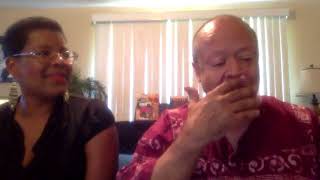
Authors Steven Barnes and Tananarive Due define Afrofuturism as genre-bending art centered on the African diaspora, from Octavia Butler to Jordan Peele's Get Out. They discuss why this storytelling matters now and offer online courses and resources at afrofuturismwebinar.com.
Chapters
Program for dreamers. And so a lot of people are feeling despair. And that's part of what we want to address while we talk to you today.
Absolutely. Hi there. Steve Barnes here. We're here with Life Writing Live and Afrofuturism.
You see our cat in the background?
See our cat back there?
Ginger is there.
Hi there.
So in any case, I think I might have said this. I am an author, and I am a screenwriter. I have taught afrofuturism at UCLA for several quarters. This fall, for the first time, I'm teaching a black horror course I'm very excited about, which also incorporates, by my definition, some of the elements of Afrofuturism. Tell them a little bit about yourself, honey.
Yeah. My name is Stephen Burns. I think I already said that. And I'm a novelist and television writer and teacher and done a lot of different things in there. And I think that the thing that I'm most interested in, the reason why I'm most excited about this is that we've been searching for ways to reach you guys. We've been searching for ways to reach out to you and touch you and to be able to build a community with you. Just last week, early this week, I had this idea.
Well, you know something?
Facebook is. I wake up in the morning and I think, who can I touch on Facebook? Who can I help on Facebook? So I thought, well, why not just do it on Facebook instead of using a separate piece of webinar software, why not just do this and see how it goes? And so I'm so delighted. I can see. So if you like the app, if you like the idea of us reaching out to you right here on Facebook, give us some hearts. Give us some lights. Come on. Likes. Like it. Like it. Come on. Let's see that. Come on. Oh, you don't like me. Oh, there we go.
Yes.
I see a heart. I see another heart. Oh, this is great. I love it.
So welcome, everybody. We really want to tell you a little bit about. Look at all those hearts.
They love us.
Afrofuturism. You know, you can take a second to type in chat while you're here, because I'd love to know, you know, why some of you were drawn to this. I'm guessing you're fans of Octavia Butler's work.
Look at those hearts. This is just so great. I love it.
Or you want to know more about her or sci fi and fantasy and horror. I include writers. Maybe you are yourself a writer or a teacher, a scholar. Or maybe you're just fired. About the upcoming black Panther film and just looking at that trailer endlessly over and over again. And those videos with all the Easter eggs in the trailer over and over again. Maybe I'm just speaking about myself.
No, I don't think so. I really don't.
Maybe that's really helping you right now get through some difficult times.
One of the things that we want you to do is if you like this, share it by sharing with your friends and sharing with people. That's how you know if you're digging this. Because what we want to do is we would like to do this as a weekly thing, answering questions that you have, addressing your concerns. What. Let us know what you want us to talk about. We've published millions of words of fiction work in Hollywood. Tanari was from a line of civil rights warriors.
Hopefully my dad, John Dew, freedom lawyer, is watching from Florida right now.
Wouldn't that just be great?
I think he is.
It really is. And we're going to build this. If you love this as much as we do, we're going to build this. If you let us know how to help you, we're going to help you every week with just kind of just surviving this environment.
Yeah, really.
As well as learning how to actually affect it. We believe that art can make a difference. Just like. Absolutely. Yeah. So I've got. Let's see, who have I got here? There's Diane. He said, hi, Diane. And K series Wright and Trudy and other people. Frederick Coulter, just, you know, hi, guys. Just, you know, so glad to see you. They're four basic things that we're going to accomplish today. And one of them is we're going to define clearly what Afrofuturism is. And we're going to talk about the definition of it. Yes, that's one. That's right. The second one is, who is it for? And the third thing is, why do we need it now? Why is it important? And the third thing is how to create it and support it. So those are the four things. And we're going to be doing that over the next hour. And we want you to stay till the end. If you stay to the end, you're going to find out how you can get a free copy of any of our books that are available on Amazon at retail. Anything. You're going to find out how you can do that.
Can you imagine a world in which all Americans had empowering myths that link them not just to their ancestors, but to a positive, joyous future? All Americans, we can't. We can't imagine that. And we hope that by the end of this webinar, you'll be able to imagine that, too.
It's more than just imagining it. I'm an old guy.
He is pretty old.
It's like, really, I used to ride a dinosaur to school, and a dinosaur is now in my gas tank. Poor little dino. Anyway, I've seen so much change over the course of my life. So much positive change. I mean, this country really has shifted. And if you're younger or if you don't understand history, it can look like nothing has changed it. And you can feel despair. It's like, oh, my God, we're just falling apart. No, we're not. This is the natural flux and flow of a society that is trying to adapt to the 21st century.
Well, honey, why don't you talk about back in the day? What was it like for you back in the dinosaur times?
Back in the dinosaur times? Well, you know, I could talk about what got me. You know, what. What my journey was.
Sure.
You know, because when I was a little kid, I would watch television and I used to be able to go. I could go for an entire year and never see anybody who looked like me on television.
I mean, it's possible to imagine now.
With the possible exception of Rochester on the Jack Benny Show. And God bless Jack Benny. He really did take good care of Rochester.
No offense, but wasn't that radio? Was that tv?
No, no, it was radio first and then television. But other than that, especially if you're talking about drama, you know, just nothing. I mean, just. Just you. I could literally go week after week, month after month, with no images at all. By the time that I was old enough to start going into movies, you know, on my own especially, I started noticing that there were no images of people who look like me in those movies. And then once they started in there, they died with monotonous regularity. Just. And we'll go into that sacrificial Negro. Yeah, absolutely. That sacrificial Negro thing. I mean, the first one I noticed that I was watching a movie called Damnation Alley. And Jan Michael Vincent and George Peppard and Paul Winfield were in an atomic Winnebago crossing a nuclear wasteland. And they get to, I think, the ruins of Las Vegas. Out of the ruins of Las Vegas comes the last woman in the world. And she's white. Now, I was seeing this with a friend of mine, a Hispanic guy, white Hispanic guy named Dan Pinal. And I turned to my friend, I said, they're gonna kill Paul Winfield. And Dan said, why? And I said, they're not gonna pretend that he's not interested in this woman and they're not gonna let him compete for her. The only thing they've got left to do is kill him. And Dan said, you are so cynical. And about three minutes later, Paul Winfield gets eaten by giant cockroaches. That was the first time I noticed. You know, this is whack. This is awful. I mean, if all of you. If you guys had a moment in which you looked into media and realized there was something wrong here, you know, give me, give me, give me, give me some love. It's like, vote for it. Was there a point at which you realized that the world was wrong and was doing you wrong and that there was something missing? Because if you notice that, we've got the answer for you. So let us know. I'm seeing hearts.
I like to say that Afrofuturism really is for all of us who were underrepresented in the original Star wars film. You know, we did have one strong woman in Princess Leia, but pretty much nobody else, you know, so there were no Latinos and no blacks and not a lot of women and no Asians. And so, yes, it was this sort of. I loved it. And I went with my dad. And dad, you probably remember this. It was a great experience to see all the special effects. I didn't even notice, honestly, that there weren't any black characters. That's how sad it was. We were just conditioned that way that we accepted that we had to live through characters who didn't look like us.
Yeah. You know, Poppy Guru says, poor Paul Winfield. I'm sorry. Damnation Alley wasn't the end of it. He also died in Terminator. He also died in Serpent, the Rainbow. He also died in Wrath of Khan. And usually he died protecting white people. So it's about as bad as you can possibly imagine.
And all horror fans, no matter what your background, you recognize those. Those tropes that have become familiar and cliched. But despite that, now, my mom, my late mother, Patricia Stevens Duke, loved horror. I have a love for horror directly because of her. I used to sit with her and watch those old black and white horror films. The Fly, the Original Fly, even before Jeff Goldblums, the Fly, the Mole People, the Mummy, you know, Dracula, the Wolfman, all that. And I used to think that mom just loved horror because it was kind of like a roller coaster ride. It's like, whee. You can be scared in a safe way. But as I've gotten older and as I've lived a bit more and you start to carry sort of more of the toil on your back as you, as you live a bit more. I've come to understand that that escapism for my mother, I think was even more important than just wee on a roller coaster. It really was that she could disappear in those films and sometimes you could vanquish evil in those films. And if you didn't vanquish evil, at least you understood the evil. Whereas, you know, people are like, why do people hate us? You know, that kind of question is very hard to understand. But in horror you can contain the story. And I do include horror as fantasy in our definition of Afrofuturism or Afro speculation or whatever.
I look at it as filling in the gap in the mythology that was ripped away from the children of the African diaspora. And the question of why that's important is one of the things that we're going to be going into. Let's talk a little bit about current events just to make sure that we cover.
Oh, you were off. We did that a little bit. We talked about all the stuff that's going on in the news. There was a great love march in San Francisco today. I love images of people marching. My parents marched, they took us on marches when we were kids. I marched. I have marched.
So Lisa and Rita, Rebecca, I love you too.
Of creating change. And it's actually that's kind of a good palate cleanser after the day of despair yesterday where so many people are coming out saying this is just flying in the face of justice to pardon this horrible sheriff Arpaio who created so many human rights offenses and so many prisoners died under his care. And the court said you're guilty and the so called president says no, you're not and you'll go free. It's really disheartening and it's not a really good precursor for events to come.
No, it's not. But once again, if you look at the long view of things, I'll tell you the honest truth. Whether you loved him or hated him, I don't think you can argue with the statement that Donald Trump is the anti Obama, that basically what people wanted to do was to hit the reset button and get somebody in the White House who was the opposite of Obama. And I think they did it.
Yeah.
So, you know, I see that I could feel that so often that people, you know, you're unhappy. The times that I've been unhappiest in my life was when I, I thought life was going to turn out Some particular way I had some vision of what life was going to be. It doesn't matter. When I was like a little kid. And you know, they break us into writing group, into reading groups in first grade. And I think I'm going to be with my friends. We're all smart, we're all nice. And they ripped me away from that and put me in the slow reading group because of the color of my skin.
Right.
You know, that, that it's like, wait, wait, what's going on here?
What about me?
What about me?
Individuality.
It destroyed a part of me. And that fear, I think, is what a lot of people in this country, when you see anger, you know, just think about the last time you were really angry about something and ask yourself, weren't you really scared? Wasn't the anger really about something that you were scared about? You were scared about something for yourself or someone else. If you can project that, if you can think about that and connect with what we're seeing happening in America right now. You see, there's a tremendous amount of fear. And one of the reasons why I think storytelling is so beautiful is that, you know, Tananarive talks about how her mom would watch horror movies to help her deal with things. My mom, we watched horror movies, but we were. She went through long periods of time where we didn't know whether or not we were gonna have enough money, you know, to pay bills and buy food and so forth. So I would wake up in the middle of the night and I would hear her screaming in her nightmares, being chased by the Frankenstein monster or the wolfman. It was the personification of the small fears that she felt. And I huddled in my bed listening to my mother, who was a single mother, raising us, dealing with her fears. And it's one of the things, I'm sure, that made me want to write stories where people dealt with fear but came out the other side of it. So I began to write and I began to write and to include myself in the images to write stories which people who looked like me could be heroes could overcome. Because I was just this little four eyed, pot bellied, nerdy kid who got beat up by every bully at the school, including the girls. And I just dreamed of one day being able to be proud. And when I started writing, it often felt like I was by myself. I mean, for a long time, for 20 years, I was the only black male science fiction writer working in the field. Chip Delaney had left the field.
And I really hesitated.
Oh, no, no, no, go ahead.
I hesitated to Even embrace my mother's love of horror in fiction. Because I had this idea that I would not be respected if I wrote horror, you know, and that's a whole different conversation. But when I finally did have the courage to write my first novel, it literally changed my life. My first novel, the between, was published in 1995. And then, lo and behold, shall I.
Yes, absolutely.
In 1997, I was invited to Clark Atlanta University. Oh, he wants to share it. Clark Atlanta University, where I met. And I'll make it closer here too, so you can see if I can shift it right. There's one for one of you and then for the rest of you. And then in the middle, so on the far right you have Samuel R. Delaney. Next to him in a Space Jam sweatshirt, Stephen Barnes. Jewel Gomez, whose gilded stories were just republished, was there. I'm next to Jewel Gomez. Next to me, the late, great Octavia E. Butler. And then the filmmaker on the far left. I'm still hoping one of you will help us.
Yes, hopefully. Does somebody know who this guy is?
Does anyone know who this gentleman is? In any case, I saw someone on your list. Cliff Winning, said that he was one of Octavia's students at Clarion.
Oh, that must have been a wonderful experience.
So talk about life changing. But what happened was to be in the company of all those writers. We didn't use the term Afrofuturism. Some of us may have known it. I didn't even probably know the term Afrofuturism in 1997, but there we were. And I was blessed enough to begin publishing at a time when this movement was actually coalescing. So it's Afrofuturism. What do I mean by that? It's the literature, movies, art, including in music, that is genre bending, historically grounded and future facing, featuring the children of the African diaspora. It's movies like Jordan Peele's get out, which helped inspire the horror course that I'll be doing at ucla. Musical artists, of course. Beyonce, Lemonade, that Grammy performance, Pure Afrofuturism. George Clinton, Janelle Monae, Sun Ra, and of course authors like Hugo winners Nnedi, Okorafor, nk, Jemisin and Octavia Butler. And what's so great, really, this was pretty much not everybody, but pretty much everybody you can name back in, back.
In 1997, people I didn't even know. I didn't know anything about Jill Gomez. I had never heard of this incredible young lady named Tananarive. Dr. Yeah, but let me tell you something, sweetheart. I hope I wasn't condescending When I first met you, I was trying to be polite. When we first had. When we first had breakfast together, my impression, my knowledge is that in a community that small, people will lift up and celebrate anybody, because it's like, is there anybody here? So you didn't have to be of quality. You could have just been nice. Okay? And so I was polite to you. But when we went to that first book signing and you showed me a copy of one of your books and I had a chance to read in the between, and what I realized was that at creating a realistic world and realistic characters, even though I had been working in the field for 20 years, you were already better than me creating our world as a knowable place. And I realized right there at that instant, you were extraordinary. And my thought was to protect you, you know, was to be a big brother. It wasn't until later, and we talk.
About that another time, we started sparking off of each other and falling for each other and doing our little mating dance while Octavia was sort of watching and chuckling and maybe Chip Delay.
Yes, Octavia and Chip were watching and chuckling about it.
But. So, yeah, Steve and I were married a year and a half later. And that's just sort of one example of the way my life changed as a result of becoming a part of an Afrofuturism community.
To put it bluntly, a day and a half after meeting each other, we were sitting in the airport in Atlanta holding hands, our heads together, talking about how we could build an empire. Empire. Empire.
We literally used the word empire. I'm not even kidding.
So you're part of our empire. You're part of. We're building an army of people to change the world. We need artists and fans of artists. And I believe that just a few thousand artists and dedicated fans can literally shift our culture right now. This is what this is about. And if you like this, if you love this, if you share this with people, we're going to do this every week. We're going to talk about the things that are your interests. We see the future so clearly. What we have for you is a new opportunity. We're looking at Afrofuturism as a way of literally communicating what has never been spoken before. And one of the opening salvos in Afrofuturism was W.E.B.
Du Bois, 1920. He published a short story called the Comet. Most people know Du Bois, and he did pronounce it Du Bois. They know him as a social activist and writer and co founder of the NAACP Anti Lynching Crusader. But Actually, in stories like the Comet, and the Comet wasn't his only science fiction work, he was able to take those social issues that he wrote about and postulate, well, what would happen if a comet wiped out what seemed to be all life in New York City. And the only survivors were a black man and a white woman. And that was the big taboo. And interestingly enough, Jordan Peele is going back to that and get out. So it's sort of full circle.
Well, not only that, but there was a movie, the World, the Flesh and the Devil with Harry Belafonte and Inger Stevens. Oh, I remember that.
Yeah.
Not too much carded with decline setting in you that dealt with the exact same thing was probably an adaptation of that story.
Interesting. So you see, Du Bois, great thinker and scholar, saw the power of Afrofuturism. He didn't call it that, but that's what he was creating to show American readers how absurd it is that we see skin color before we see each other's humanity, and what might it take to level that playing field. And as soon as the crisis was over, of course, spoiler. The social roles revert back. But for that brief, shining moment, that brief, shining moment, we were just. They were just a man and a woman trying to survive. And it was all humanity and race was vanishing. And that's just one example of the power of Africa.
And there are so many. And I think that what's critical to understand is that Afrofuturism isn't just for black people. Movies about women are not just for women. They're also for the men who love them. You know, stories about things happening in Japan or. Or Mexico or anyplace else. If they touch that universal humanity, they're for all of us. We're all in this together. The lie is that we're separate. The truth is that we're all the same. And that if we can share each other's humanity. If you are an artist and you have it in your heart to share that feeling. It's like I, when I was a little kid, looked out at the world, and I thought, if I could just let people know who I am, if I could just put my stories out there, surely people will see it. They'll know that I'm not scared, and they'll know that I am. God, it's sad having grown up without my dad. I remember on one of the few occasions when my mom would date, she brought a guy over to the house, and they're sitting on the couch, and I couldn't have been more than about seven years old. And I was curled up on the love seat behind the couch. And all I wanted was for him to reach back, touch my hair, just reach back and acknowledge that I was there. And I remember thinking to myself, am I such an ugly thing, a hideous thing, that nobody wants to be my daddy?
And culturally, you extrapolate that out. That is how black people, people of color, yes, people in underrepresented groups, the LGBT community, we all feel unloved, unseen.
And everybody, everybody goes through that. If you. If you still have the illusion that every part of yourself is embraced and loved, disabuse yourself of that illusion. We have. We're all other in some ways, even if some of us can pretend to be part of some homogeneous tribe. But you're going to be too young, too old, too fat, too thin, too poor, too rich, too sick, too this, too black, too gay, too this, too that. And you're going to find that there is some part of yourself that is being cut off in your desperate attempt to be loved and accepted. And so Afrofuturism, although this is touching a particular thread of this, the theme is, what do we need to do to see each other's humanity as a totality? What do we need to do to move beyond this? So whether you want to create Afrofuturistic material, whether you want to support it, or whether you have a different cause, something that you care about, we're here for you. And although we're going to be specific to this particular thing, we're really talking about how do we create a future that works for everybody?
I had a great experience with the power of Afrofuturism. Just a few weeks ago, I was in Little Rock, Arkansas, where I had the honor of meeting civil rights activist Elizabeth Eckford. I will also share on Steve's page. Elizabeth Eckford. She was one of the Little Rock Nine who helped desegregate Little Rock Central High School in 1957. And it was what was really amazing about this. And this was, yeah, this was a great event by the Deltas in Little Rock. And her tribute was right before my talk. So we were sharing an event together, which was a great honor for me.
You bet.
And the name of my talk was basically Afrofuturism Dreaming Our Future. Who better to lead? And it was so powerful to sit next to this woman who, as a young person was so brave to endure all this scorn and fear of her life. She really got choked up watching the video before her presentation that she could do that because she envisioned a future. That was different. And so I have to be able.
To see yourself on the other side of the pain. If you don't despair. Depression is fear with no one to fight and nowhere to run.
So whether it's Octavia Butler's dystopian warnings in books like Parable of the Sower or Parable of the Talent, she even as a lot of, you know, if you're Octavia Butler fans, she foresaw the political slogan make America great again because she paid attention. She paid attention to trends, she paid attention to the news or whether it's Nichelle Nichols. That's a difference I had growing up with Star Trek. I could actually just turn on my TV and see Nichelle Nichols sitting there on the bridge as the communications officer, capable, competent, or whether it's the long unsung women behind hidden figures or the Afro fantasy of the epic Black Panther, Afrofuturism helps us imagine inclusivity in the future. And inclusivity, once normed, can be applied across underrepresented groups. Afrofuturism broadens our vision of our world, both past and present, and helps give form and power to social critiques, leadership models. We need that that can be applied in real life. It's both a powerful tool and a powerful weapon.
So that's what Afrofuturism is, and that's who it's for. But that's sort of the general part of it. But as we kept writing and as you, we got married, you lived up in Washington with me for a while, and we came back down to Los Angeles and both of us started teaching in this area. And you actually started teaching formal classes at ucla? I had taught at UCLA before, and I've taught via the Internet and other things as well. And teaching is always a matter of trying to transfer a knowledge base. I looked out at my students and I thought, what do I need to do to help these people? And I remember one day I'm in a class at UCLA and I'm teaching a writer's toolbox. You know, in other words, flow state management and how to generate ideas and how to stay on track. And the concept of the machine where you write at least one sentence per day and stuff like this. And one of the guys in the class said, Mr. Barnes, you've given us all this wonderful stuff, but I don't think I could use it. I said, why not? He said, well, my wife doesn't really understand my wanting to be a writer, and my kids don't support it, and I'm so busy at My job. There's this expression that from time to time, life gives you a cubic inch of opportunity, and it flows past, and if you either grab it or it's gone forever. I got one of my cubic inches at that moment, and I said to him, if you were a character in a story you were writing, and at the end of that story, that character got everything they wanted, what would you have the character do next? And you could see the smoke coming out of his ears as he kind of in his. The gears in his head kind of. And he started coming up with all of his own answers. You know, I could. I could exchange some jobs with my wife. I could. I could get my kids psyched about how great it would be to have their dad as a writer. I could take my lunch to work. And I suddenly realized, oh, my God, if you just visualize your life as a story that you're writing, the tools that you would use to solve problems in your story, you're starting to use to solve the problems in your life. So I started as I taught science fiction, and I taught these different elements of things. It was like, well, how do you create Afrofuturism? That's the question. Well, how do you create science fiction? And how do you create science fiction? That's a question of how you create writing, and that's a question of what kind of human being are you going to be? So my pedagogy is you connect the work to the inner world of the writer. You make the writer a better, healthier person who then becomes capable of doing honest, powerful work. What's yours, sweetie?
Well, I'm just thinking about Octavia Butler, because we went to that great exhibition at the Huntington that just closed, I believe, where we could see her creating herself as that artist. She went from that writer who couldn't see herself reflected in any of the literature or films that she saw, and she wrote herself in.
Basically, yeah, they would put green people on the covers of her books, but they wouldn't put black people on the covers of her books. The same thing that happened to me.
Street Lethal.
Remember that? This guy's supposed to look like a Zulu, you know? Yeah. Anyway, go ahead.
So, in any case, yeah, she. She's just that person who comes to mind when you talk about the writer sort of creating herself, because that's basically what she did. She looked at who she wanted to be, what she wanted to accomplish, and. And she created herself. And. And I think, you know, you tell a story about your friend Darnell that I think would speak to probably how she felt about it.
Well, look, the truth is that once I saw Hand Me Back the Street Lethal cover again. Once. Once I saw that people were not. Were not willing to put black people on the covers of my books. But they would. They put. There it is. Remember, this guy is supposed to look like a Zulu. Okay, Aubrey Knight.
I'll show you too my people. I mean, his skin is a little darkish.
And the thing that was so sick was that no one at the publishing company would take responsibility for having done it. I mean, my poor editor, this lovely lady named Beth Meacham, who I really can't wait to work with again. She was so mortified when she told me about that. But the publisher, the head editor said, well, it was the art department. The art department said, oh, it's the marketing department. The marketing department said, well, it's the truck drivers who put the books on the stands. That if they think it's Shaft in space, they won't promote. They won't put the books on the stands. So I suddenly realized I'm dealing with an entire that does not want to know who I am. And art is about self expression. It's about coming out from who you are as a being. And if you feel that the world does not really want to know who you are, you can't express yourself. You can't do your best work. You can't do your best art. If any of you have ever tried to express yourself or been afraid to express yourself, give me some lights on your. Raise your hand if you've ever had the sense that the world did not want to know who you were. And so on some level, you just said, to hell with it. Why should I try? Why should I give the best? Just let. Let me know if I'm not. If I'm not the only one experienced this.
What you want to create. Creating, that could be anything. Or create.
That's right.
Almost behind a mask.
So I. I created behind the mask. I created behind the mask. And I did this for years. And I hid behind Larry Nevin. That's just the honest truth. I felt like I would not be able to make a living in the science fiction field unless I hid who it was that I was. And I was more interested in raising my family and paying my bills. But the little boy inside me who looked out at the world and said, where am I? What about my heart? Doesn't anybody love me? Was dying inside. I remember I was visiting with a dear friend of mine, Darnell Gadberry, now a computer engineer. And I expressed this to him, and I told him, I'm. I'm afraid to really come out and say who it is that I am in my work, but I'm afraid that if I don't, I'm betraying myself. I'm being a whore. I'm being a coward, and I don't know what to do. And he said, one of the best things anybody has ever said to me, he said, steve, eventually, someone is going to have to start writing stories that include us in the future. If not you, who? If not now, when and why would you want to write stories for the pleasure of people you wouldn't want to have in your home?
Yeah. You know, wow. It's. It's.
Yeah, that was. That blew me away.
And although I was not making conscious decisions to hide in my work as a little girl, I started out very young. You know, like a lot of you who may be writers, I was writing about a little black who wanted to get the Book of World Records, and I was writing about a little black girl on the Middle Passage. Lauri Laudy, Make Us Free. That was what it was called. Inspired by Ruth. Inspired by Ruth. That was my version of Ruth. But as I got older, the more I was exposed to the canon in school, middle school, high school, through college, I started writing white characters. I don't talk about this a lot, but before I wrote the between, the major project I was working on before I started the between was basically about two white brothers. And my sort of nod to otherness was that one of the characters was gay, and I was writing sort of a story about two brothers, one gay, trying to bridge the distance in their relationship. Beautiful idea, but why was I writing that story when I was no longer writing black characters? So I had to sort of snap out of it, too. I think it was Gloria Naylor's Mama Day that really felt really accessible to me and made me realize that, hey, I can write about a character who's more like me and be true to my vision and have some metaphysical stuff in there, but it's a journey. It's a journey for everybody. Some of you who are women may relate. You were writing male characters. Hello. I know you were. Raise your hands. A lot of you in the LGBT community are writing straight characters. That's. You know, some of these are marketing decisions, and, you know, that's fine what you want to do, but know why you're doing it, I would say. And in my case, I literally was unwilling to look deeply into who I was and what I wanted to write about.
So ask your question. What if this is the time that our ancestors have been looking towards for thousands of years, hundreds of years, decades, a time when we really can speak our truth? What if this is that moment? And if it is, and you have a truth inside you that needs to be spoken, maybe you need to put it out there. And if not you, who? And if not now, when?
What if Octavia had been afraid of political fallout, which she wanted to write, Parable of the Sower. What a loss that would have been if she had sort of lost hope in the idea that if she wrote the truth, that she saw it, that she could have a response. Because I have to tell you, I don't know how many of you had this experience, but on Election Day in November, I was just filled with despair. And I don't have to explain why, but it was a shock. So there was shock on top of despair. And I still remember the denial when I was at Huffington Post. Refreshing, refreshing, hoping the face would change and the face wouldn't change. And my sister Janita, who works at cnn, finally had to tell me on the phone, there is no path to victory. And I still hear her voice. It's ringing in my ear all these months later. And I think I was like that for a couple days. I won't lie. Bruno Mars new album helped me get through that, too. But more importantly than that, it was remembering the words Octavia wrote in Parable of the Sower. Because, you know, her Earthseed parables, that's a very grim novel. Both of them are very grim novels. It's a very grim world. But she has this religion called Earthseed embedded in there. And those parables, and I'm not kidding, really, remembering the parable helped me get past that moment of shock and despair. All that you touch, you change. All that you change changes you. The only lasting truth is change. And then also God is change and change. Just remembering, yes, we went from Bush to Obama, and now we're going from Obama to Trump, and yet this has changed. This is almost inevitable. It's a pendulum swinging from one side to the other. It actually gave some sort of understanding to me so that I could move. I could move. I could write in my journal. I could write an essay.
Sweetheart, there are facts, but stories are the way we connect those facts with emotion. And the story you tell yourself about the life you've lived or where you are or your path or your future make all the difference. And this is why so many people say, I broke my leg I was sick. I was laid up in bed. And it is known that people who are waiting to find out whether their relatives live or die in hospital emergency rooms, if they're reading nonfiction, they do not do as well as the people who are reading fiction.
Oh, I've never heard that.
Oh, yeah. Oh, yeah. So fiction is important. It's not trivial. It's not just entertainment. It's meat and potatoes.
Well, and yes, absolutely. And I really learned that lesson this past spring. Yes. When I was at.
I love that picture.
At a conference in West Paul beach called Black Women Rise. And it was a fantastic conference. And I got the opportunity to meet Dr. Davis. And that was pretty amazing. She is really, really fierce. Those of you who know her politics and know her opinions and know her history. No, she is really fierce in her beliefs and fierce her history. But she's gentle and full of light and her demeanor. And if you've met her, you know this about her. So I had to just ask her during one of the symposiums, like, how is it that you're able to hold on to that. That light and hope when you of all people see things that the rest of us can't or won't see? And I love what she said in response to that. I wish I could do her voice. I'm. But I can't. But I'm going to try. If I'm optimistic, it's not because I see the world through rose colored glasses. It's that if the work we've done for so many decades and hundreds of years will make the difference in the future, we have to be able to imagine a different future, even though there are no guarantees. But in order to do the work we do, however we do it, whether as artists, as activists, as judges, we have to believe that a different kind of world is possible. That is what she said. So if you're looking at a movie like Black Panther and you're like, why is everybody so excited? It's just fiction. It's just a movie.
Yeah, just a movie.
It's not just a movie.
It's not.
We need more.
Look how many women out there saw Wonder Woman. And with the scene where they did the no Man's Land scene, Remember that scene? I had women telling me that they were sitting watching that scene with tears streaming down their faces, saying, I didn't even know how badly I needed to see that. And for me, that happened when I was watching Will Smith in Independence Day where he flies the alien ship up into orbit and he says, I've waited My whole life for this. And I was sitting there with tears streaming down my face. I just realized, my God, I've waited my whole life to see that too. And what was even more mind blowing was I went to the bathroom after the movie was over and we saw this up in Washington at a theater in a very, very redneck part of the country. And there were a couple of just good old boys sitting, standing at the urinals. They didn't even see me walk in. And they' just standing there after the movie's over. And one of them turns, the other one says, whee. That Will Smith sure was cool. I can't wait to bring my daddy to see this. And I thought, oh my God, that hunger is universal. We want to embrace each other. Talk about the reaction here.
Oh yeah, this is. As you may know, Marvel had Civil War when that came out. That was my introduction, all of our introduction to the character of Black Panther and his all women security force called the Dora Milaje. So there's this one 30 second scene, not even probably, where an actress named Florence Kasumba says, move or you will be moved. You know, you all remember that she said it to Black Widow. We were all like, oh, fight, fight, fight. That would be interesting, that would be interesting.
But anyway, as entertaining as that would.
Be, that was it. Thank you. It was only like a 22nd thing. But a lot of us, especially as black women were like. And I had a co worker tell me she didn't think she could go to work the next day because she was just, her mind was just so spinning from blown. That power, that power that that actress possessed, that culture that was hinted at, we couldn't even see Wakanda, but we could see a hint of what culture was.
If I could sit in Wonder Woman and look at the screen and be thinking, yes. And I could listen to a couple of rednecks standing at the urinal talking about woo wee. That Will Smith sure was cool. I know that black people can understand white people. White people can understand black people. Men can understand women, women can understand men, gay can understand straight. That we can tell stories that bridge this gap. And that's what the forces of darkness, the forces of paleness are afraid of. That we will drop the hate and drop the fear and reach out to each other.
He's using forces of Paleness as a reference to his alternate history novel Lion's Blood, which also switches up some of the language. So instead of saying forces of darkness, they say fortress powers. Rather, did I say fortress in any Case here's Wakanda. This technological future that was hinted at in the trailer that I've probably seen about 30 times. You know, one of the interesting aspects of. I'm sorry, one of the interesting aspects of Black Panther that is so true in all Afrofuturism is that. Or much of Afrofuturism, I should say, is that. Is that we not only have sort of the technological side and the technological advances, but there's this homage to tradition and history which is very apparent in Ryan Coogler's trailer and in the fantastic design for this film.
Yeah. Let me tell you, it's so intense. I showed my. My karate instructor, Steve Muhammad, who I love like a father, was raised in Mississippi by his grandparents who had been slaves.
Yeah, I mean, sit with that for a moment, please, because we really need to understand how close enough this is to touch. He has a friend, a living friend, his karate instructor, who was raised by his grandparents who were born as slaves.
So the past is not some distant thing. It's right here with us. And I had the honor of showing him the Black Panther trailer for the first time. And he looked at that, and he looked at me and he said, they let him do this. That he had heard that there was going to be a Black Panther movie, but he thought it would be Black Panther surrounded by a bunch of white people. And instead of that, it shows a technologically advanced Africa. It shows both tradition and spaceships in the same. In the same frame. You know, those kinds of images. I mean, we want you to create those images. I've done the best I could, and I'm still doing the best I can with my career. But there's a limit to what any one person can do, regardless of their energy and their talent. My wife is fantastically talented writer, and there's a limit to what she can do, but there's no limit to what we can do together. So we're speaking to the next Steve, the next Tanari, the next Octavia, the next Chip Delaney, who's out there, who has the heart to express the unexpressible, to speak the unspeakable. If it's you, my God, I just want to reach my hand out to you and lift you up. Please share your visions with us. Please. We need them desperately. And the thing is that if you're wondering, is it even possible to succeed? Look at Black Panther. Look at Ryan Coogler. What he did was he made a little tiny movie called Fruitvale Station. And that little tiny movie got him doing a bigger movie. Creed, where Sylvester Stallone. He gave him a script to Sylvester Stallone, and Stallone said, this is great. Made that movie, made over $100 million. And because of that, he got to do Black Panther. So there is this ladder. We can show you a ladder going from the smallest piece of the puzzle up to the highest level of success that your heart is capable of handling. There is nothing to stop you except the question, are you willing to tell your truth? Are you willing to share? You know, and the world is so much more open now than it was for Tananarif. It's infinitely more than it was for me. We do. You can stand on our shoulders. Please do. That's why we're here.
We have watched Afrofuturism unfold in real time. You know, and I've often said this year that for every horrible political event or news item I hear on the other side, there's this great announcement. Oh, Ava DuVernay's trailer for a Wrinkle in Time, or. Oh, here's a Black Panther trailer. Or just, you know, super. I mean, black superhero stories. Independent comics on the rise, independent authors on the rise. So much for us to embrace and enjoy. And it has a long lineage, though. And that's what was really interesting for me, teaching my Afrofuturism class. I didn't know about the comet, you know, I learned all of this in the process that W.E.B. du Bois wrote that long history that extended even farther than I thought it did. The musical. Well, all the call and response between different musicians borrowing from each other. So there's a lot to Afrofuturism.
There really is. You know, what it really is, is the question. There is history, and then there is mythology. There are only two things to write art about, to do. There are only two things to know. What is the human experience and what is the world that human beings inhabit? Who am I, and what is the world that I see? If your art speaks honestly of your perspective, you are joining the eternal braid of human communication, and you're. You're helping us toward the future because there is nothing to be feared from the truth. There is nothing. The truth is connection and communication and love. That is the truth. It is lies that separate us and create hate and fear. So I am not afraid of your truth, whatever it is. Please speak it. Speak it. Get your knowledge wherever you can. But if Afrofuturism is what you're looking for, we have got. We have got something that we have spent our entire lives creating in a lot of ways. And what we're doing Is we're trying to create this movement, part of a movement. So I would like to spend.
Is it okay if we share our movement with you? Would you like to hear about. Yeah.
Do we have your permission to spend just a couple minutes talking about this, something we've created to help you have an easier time of it than we have? Had that Octavia had that Chip Delaney had that W.E.B. du Bois had that you can stand on our shoulders and throw and howl at the moon and with your permission, just give us some likes if you want us to, because we're already doing this. We're already in the midst of it. But if you want to join this, if you have the heart, then we can help you.
Yeah, absolutely.
Okay, great. So great. So we're getting hearts and. Oh, people are saying yes. Okay, okay. Okay. So what we've done tonon re. How many times have you taught your Afrofuturism class at ucla?
Probably four or five.
Four or five times. Tell them a little bit about your class.
So actually Afrofuturism is delving into, as I said, the literature, the movies, the art, like artists like Don Jennings, whose work is behind me back there to talk about how it all fits together in this tapestry, which a lot of it is, like I said, with an eye toward the past, but future facing, exploring what blacks look like in the future, in fantasy. And Steve and I, some of you may remember, earlier this spring, taught a 10 week afrofuturism course live, which was a lot like this. We did a lecture and we had homework, though for that, when you didn't have homework here, where basically it was an overview course and you discussed the works of pioneers like Octavia Butler, Samuel R. Delany, films like get out, music by George Clinton and Janelle Monae. So each class was a lecture and.
A discussion and we opened our Rolodex and found the best of the best of all the people who are our friends. I mean, if you ever wanted to sit in a salon and listen to and be lectured to, you can be a fly on the wall as the people are actually the movers and shakers in this field are talking.
Give us our first week was Cheo Hodari Kocher, Luke Cage. Yeah, he came and talked to us.
And we had Reggie Hudlin and we had yes. So every week you're going to have a different lecture by a different giant.
Nalo Hopkinson came. So it's basically most of the class part of the class as lecture and then the end of the class was always our video guest and we did that for 10 weeks.
For 10 weeks. Now there was so much there. Music and art and film and books and just a doorway into an entire world with a fantastic syllabus. And visually we had a wonderful time. And I can tell you, if you took this class at ucla, I mean I think it's better than the one you taught at UCLA because we took that and then we added things to it. And if you talk in class at ucla, you know, would have cost about fourteen hundred dollars, right? Okay, about fourteen hundred dollars. But we didn't stop there. Okay. The next question was what? How do you survive the stress? Because if you can't, if you artists and people with open hearts are getting devastated right now and you cannot create art or have the ability to absorb this entertainment and allow it to transform you if you're tied up with fear. So look, for years I worked at Moonview Clinic out in Santa Monica, very, very high end stress clinic. And I used hypnosis and neuro linguistic programming and pan cultural shamanism and other things that I've learned over the years to work with very, very wealthy people on this. And I've developed a series of techniques for enhancing creativity and dealing with stress and other things like this. And we put together the best of that package. There is the focus and flow for breaking writer's block and coming up in creativity. There's the ancient child technique which is probably the single best thing I've ever done.
It's a meditation.
It's a meditation of visualization for connecting with your creative source, for connecting with the part of you that you would die to protect, to be able to fight for your dreams, to be able to feel totally alive again, to be able to feel love again. Because that is what is ripped away from us by the fear in our culture. We put together this package and God.
Emotional care for social justice warriors.
Yes it is. And I get paid $140 an hour to teach that stuff in that setting. I've gotten paid as much as a thousand dollars an hour for teaching these things in group settings. So I would say that these things, if I were to do these ordinarily it would be at least 250 bucks.
Just for that package.
Just for that package. Just for that emotional care package. Also there's the fear F E A R fountain of energy for active response to turn fear into energy. There's the warrior sleep package. To anybody who's been so stressed out you're having a hard time going to sleep, any insomnia out there who's Having a little hard time shutting down at night and letting yourself get a good night's rest. I know that I was just talking to one of my friends today who's having problems sleeping because of the stuff that's going on in his life. We've got an answer for yes, absolutely. If you don't take care of yourself, you don't get to sleep. You cannot recover. If you can recover, you grow.
You can't change the world if you don't take care of yourself, you cannot.
So we've got that package now that whether you want to call create Afrofuturism or you're a fan of Afrofuturism, those things are going to kick butt and take names.
But there's more than that, even some of you may know. We also did a previous course called Revolutionary Writing, which was designed for writers who specifically wanted to weaponize their art, for lack of a better term, to find ways to incorporate social justice themes in their work in a way that wouldn't overwhelm the story, but would be organic to the story and make us more effective in helping to create that world we want to create.
That's the question of going from the smallest unit. How do I get started? How do I sustain the work? How do I do study? How do I find places to sell it? How do I do all those things? Writing and art for people who want to make a change in the world. That's the Revolutionary Writing class. Once again, if we taught that at UCLA, that would be another $1,400.
I've never taught that, but if we taught it at college, yeah, it would be about $1,300. And it was also very similar to the Afrofuturism course and that there was a lecture component and there was homework and assignments. But then also we had special guests, including for that one, Effie Brown, the producer, Dear White People. And you know her from Project Greenlight, from her showdown with Matt Damon. Daniel Jose Older, who wrote shadowshaper and a bunch of other great books. Nisi Shaw on writing the Other. Because some of you were thinking, I want to be an ally. I'm a writer. I'm not black. How does that work?
We had Zach Stintz, you know, from the X Men, you know, we had one of our guests. We had David Gerald, who created the Trouble Tribbles episode of Star Trek, one of the most famous episodes, speaking about a great novelist and a great friend. We have video conversations with all these people that we're prepared to share with you from our personal archives.
That's a six week course. So the way this works is if you're doing say the 10 week course course, it's like you get one week's material and if you have time to do it, great. If you don't, you do it.
And this is all online. You're getting it through email, you're getting links to the, to the videos and the syllabus. So you get to take it on your schedule, your time, audio and video and PDFs and homework and just, you know, we even have a social media platform, part of Facebook, where you can interact with us. So we're doing everything we can to empty ourselves out in this particular sense.
And then just because we have no sense, we said, well, that's not enough stuff. So the last thing we've thrown in is a 90 minute, just straight lecture webinar we did called the Three Biggest Mistakes New Writers Make. I have done similar lectures at Antioch University of Los Angeles where I'm, where I, where I teach for MFA students. But this is, you know, for you. And it delves into, like I said, the three biggest mistakes new writers make. I'm not going to tell you what.
They are right now, but let me tell you something. We can save you years of time. Years of time that being able to model people who are willing to share with you, you can shave years, decades of struggle trying to figure out what is the path to get there. How do I get there? How do I operate most efficiently? Between the two of us, we've done 40 novels, more than 40 novels. Television. We know people who've done so much more than that. We've listened to them and they've shared with us, and we just want to be able to share it with you. If we took all this stuff together at the retail price of it, I think it's fairly reasonable that the total value would be about $3,000. A couple of university classes and all the lectures and the counseling and stuff like this. But don't worry, we're not going to. We cannot charge $3,000 because in all honesty, we don't have the overhead. We don't have the overhead that a college has. So we can do much better than that. But let me ask you a question, Let me ask you this question, honestly. If you're an artist who wants to create, if you want to understand how to support artists who are interested in changing the world, and you could do something that would, that would shave years off your, off your life, years of time off of your efforts or help you make a difference in the world, wouldn't it be worth $3,000? We're not going to charge you that at all. But I mean, just the honest truth, wouldn't it be worth that to be able to create the world that you want for your children and the life that you want for yourself? I know that I would have given much more than that.
I wish something like that had existed when I was in kids.
And it just didn't. It just didn't. Right. But what we are doing here and it has everything, has a 30 day, 100% money back guarantee. So you're risking nothing, literally nothing. But what we're doing here is it's not going to be $3,000. It's only $300.
$300 for the Afrofuturism 10 week course.
The revolutionary writing six week course, the three greatest mistakes new writers make, and.
All of the self care package, which frankly, all of us need. I know I have trouble sleeping. Warrior sleep helps me. Ancient Child is my favorite visualization when I meditate every morning for $300. And it's. I'll type the website here. It's available if my computer will cooperate@www.afrofuturismwebinar.com. www.afrofuturismWebinar. I'm typing.com is where you can sign up to start receiving those materials. And again, I know it sounds like a lot because it is. It's a lot. Which is a good thing though.
But it's one week at a time. Just, you know, you just take it. You can just skim across the surface and listen to it or you can dive deep, do the homework.
You know, I would really advise that when we're talking about a movie, watch it or before we discuss a short story, read it. But you really don't have to. Some people just like listening to the lectures, listening to the guests. Do it in your own way. We're not grading your papers, but you can, you can join this course and be a part of this conversation, offer that price and we've made it as affordable as we possibly can. And hopefully that's something that you would be interested.
If you have any questions about it, just, you know, let us know. That's why we're here.
Felicia Hogg is saying my books have been life changing. Thank you so much for saying that, Felicia. That really helps me because sometimes I get caught up in teaching and I don't write the way I should. And when I hear words like that, it inspires me to get my butt back in my novel. That I'm working on.
There you go.
And actually, we should talk a little bit about what we're doing right while we're waiting for questions. If you have a question, please type it. But I am actually working on a novel. It's a historical. It's a ghost story set in Florida in 1950. I just sold a short story adaptation from the novel to a major literary magazine I am super excited about. And that was a real boost. That's something I always encourage students to do, write short stories. There's so many reasons to do it. I can't go into them now.
Look, I will give them the machine. I'll give them one of the most important things. One, write at least one sentence every day. Two, write a story, one to four stories per month. Finish those stories and submit them. Don't rewrite except to editorial request. Read 10 times as much as you write and Repeat this process 100 times. Not a single person, not a single person who I've coached through this process has made it past number 25 before they started selling. Not one. And you will not be the first to break my strip. To break my record. If you will help, if you will let us help you, we can get you published. We can get you into the game. How far your heart and your talent can take you, I don't know. But we can give you everything, the core of everything we learned over our entire lives, one week at a time. You'll be sitting with us talking to our friends, one week at a time. And once again, it's only 300 bucks. Afrofuturismwebinar.com I'm going to talk about what I've been doing. Oh, yeah, I'm finishing up. I've got 120,000 words into a novel that I'm doing with Larry Niven and Jerry Pornell. After that, I'm making a decision about whether or not I want to write a time travel novel or novel dealing with the future in Africa as multinational corporations are diving for the resources. I don't know which of these I want to do. Both of them sound like fun. But before I do that, I'm going to be doing a collection of short stories with Charles Johnson, National Book Award winner, Charles Johnson, National Book Award genius grant winner, Charles Johnson, buddy of mine and writer of the Middle Passage. It's going to be eight stories that represent Buddhism's Eightfold path. It's going to be a hoot. It's going to be a lot, a lot of fun. I just love writing short stories because they Allow you to work on your craft. Novels are where you get paid. Short stories are where you learn your craft. So I want to purify my voice a little bit. I've been doing more short stories over the last couple years, and I've really enjoyed the experience.
I love the experience. So. And now some of you may be sitting there thinking, oh, I'm not a writer, but I love reading and I love art. Well, then, absolutely. The Afro features and packages for you, too. Or you might want to gift it. Although I suggest you do it first and then gift it.
Yeah, if you do it first and pass the material on to somebody else you from passing, we can't stop you. It's not very businesslike to say that, but the truth is that we really want you to succeed.
We're sharing it with you.
We're sharing with you as much as we can. And in the future weeks, every week, we're going to be talking about the course. Yes. But the first thing we want to do is talk about your lives, talk about your careers, talk about what's happening in the world. So you will send us questions, and we will be addressing this stuff every week. You know, we've got. There are three things that we are concerned with. We're concerned about our love for each other and our family and our community. We're concerned with our careers. We're concerned with our physical health and our physical vibrancy, because artists need to take care of themselves physically because the stress is massive. So, you know, this is. There are times I remember seeing a movie called all all that Jazz and watching, you know, watching Roy Scheider basically, you know, playing this guy who's addicted to sex, drugs, and musical theater. And he destroys his life because he's trying so hard to become superb, become excellent, to become perfect. And he destroys his entire life. And I realized that I could do that, that it's critical for artists to know how to take care of themselves. You know, that I've been. I'm in my seventh decade now, and I have to feel like my best work is ahead of me and I have to take care of myself. So we will deal with that, and we will deal with love and relationships and life and all the things that are the core material that go into writing. This is what we're up to, and this is what, you know, with your support, this is the journey that we're on.
So check out www.afrofuturismwebinar.com. that name of the course is actually Dreams to Banish Nightmares and I know a lot of us are having nightmares that we could really use some dreams. And mostly, we'd really like to thank you all for joining us. There are a lot of other places you could be on a Saturday night. Thank you for choosing to share it with us. I think our first simulcast went pretty well.
I think it went pretty well. If you liked what you saw here today and you want us to do this again, you're prepared to join us again next week. Give us some love. Let's see some parts, let's say. Oh, good. Okay. Great.
Great.
I'm seeing that. If you like this, if you love us as much as we love you, if you can feel that we're doing everything that we can to connect with you and to be as blunt as we possibly can, there are people out there who've known us for years, and you know, this is just the way we are. You can ask anybody on my page. You can PM anybody. Is Steve really like that? Is Tananarive really like that? And they'll tell us that what we want to do is to be a place that. That you can get honesty about what this journey is. And we will never, ever do less than that.
And remember what Octavia said. The only lasting truth is change. So if you're feeling despair about today, there is always tomorrow. And that is a part of the allure of Afrofuturism. Everybody, thank you for joining us. We've had a great crowd, great participation. Hi, dad.
Yeah, her dad says I was raised colored. After Angela Davis, I became black. Her dad is a trip. We've actually got some video on him that we're going to share with you as soon as we figure out the technology. Listen, folks, take care. Get on with your lives. Www.afrofuturismwebinar.com. steven Tononarive.
Have a good night.







