Afrofuturism LIVE! 9-23-17
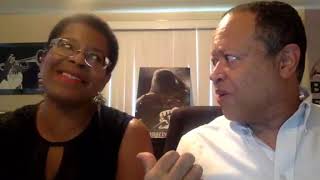
Steven Barnes and Tananarive Due discuss Afrofuturism and Due's novel My Soul to Keep, exploring how speculative Black art drives cultural change. They cover the book's origins and failed screen adaptations, then announce a new Afrofuturism course with self-care and writing modules.
Questions this video answers
September 23, 2017.
1997.
www.afrofuturismwebinar.com.
$297 (one-time) with an installment option mentioned.
First 10 people who sign up (offer described during the livestream).
Chapters
Yeah, mine's on.
Oh, I didn't know you were on live.
So we are still.
Hello, everybody.
Yes, as often happens, you know, we're working with the new technology so that we can do more graphic things for you. So we're gonna take down the. Take down my camp. My. My microphone, rather my speaker, so we don't get that feedback.
Does anyone see video? Is what I'm asking. Does anyone see video?
No. We have got people over here.
You can do video.
So see. Oh, T's live video is in. She's having problems with her live video. She's having technical issues. So, Michael, if you're watching this, would you please share this over to Tananarive's page so we can do this? As you can see, we are just.
You know, yay, everybody. Thank you for coming. I don't know what is happening with my Facebook page, but I'm going to try one more time while I continue to introduce this with Steve. Welcome, welcome, welcome, everybody. I know people on my page will want to see it.
Yes, absolutely.
So that's why I keep trying share.
It over to Tananari's page. And, you know, we will. We will make this. We'll make this thing happen. So welcome to Afrofuturism live today. This is the 23rd of September. Yes, the.
Hi, everybody. Thank you for coming.
Fall has fallen. Yeah. If spring, you know, you say spring is sprung, you say fall is falling.
Yes.
Okay, fine. But what does summer do? What does winter do?
Summer just lies around and doesn't do anything.
Oh, God. It's my favorite kind of summer. So we are always messing with the new technologies. We were using a piece of software called OBS, which enables us to do all sorts of fun things like. Let me show you one of the fun things that we can do. What we can do with this, I can click on slides, and I can show you what the subtext of our. Of our show today is or all of our shows are. In some ways, it is how to win the revolution without getting stood up against the wall. You can see that. So let's see. I'm gonna wait for that. Okay, so Michael said done. So he is. He's doing that? Yes. Good.
And also, hopefully other people will be able to see it if I go live.
Yeah, we see. We just. We believe in this thing called art. We believe that art can make a huge, huge difference in the world. Are you trying again? I think the mic. I think Michael has shared that. All right, so just don't worry about that.
For people who Wanted to come to my page and see it.
Well, if he shares it to your page, you'll be able to see my stream. You should be able to see my stream over on your page.
Okay, so.
Okay. Yes. Check that out. All right, so let's kind of get into this. Poor baby. All right.
I hope you guys can see if you guys can see.
Yes. You keep ending it instead of hitting enter. Yes, you do. So our goal is. And we could be more awake ourselves rather obviously. And so I'm gonna go from. From the slides to the live presence people.
I keep doing that. I'm gonna do better. I'm gonna try. I'm gonna keep trying, Steve, while you introduce the show because I know I can get it up.
Okay, great. So Michael says he shared the live stream to your page, so don't even worry about it. Don't even worry about it. So, yes. So like I said, my goal, 1 million awake aware adult human beings. And the method is. Is to create thousands of awake aware artists and fans. So people who understand what all this is and just, you know, welcome, everybody. I'm so glad to see. Oh, look at all the hearts. Have you been having a great week? I hope this just give us some hearts. Are you as happy to see us.
As we are seeing you? We are really happy to see you guys.
People are just saying yes, yes, yes, yes, yes. They're being nice to us even though.
Well, thank you.
Thank you. Thank you very much.
You were able to navigate your way from my fan page to my personal page to then having to watch Steve's stream. Welcome, welcome, welcome. That's a lot of work for you. Thank you for finding me. And we're just super excited to. To share this. We are like, we are every week. This is a show. We do Afrofuturism live. It's an actual live look at all the hearted show, sweetie.
Look at that. They love you. They love you like I do. They see all those hearts are people who see the same thing in you that I saw the first time you stood up on that stage and just let your light in.
When we met at Clark Atlanta University.
Absolutely. And it's just, you know, some things can't be. Twenty years ago, you hadn't published my soul to keep. No, I haven't yet. And, you know, I hadn't read my soul to keep. I'd read a few. Just a page of her book the between. And when I read that, when I read that, it felt your work was so mature. You captured the world in a beautiful way. And I just realized that there was something authentic about your voice. And all I wanted to do was protect you and make sure that you were going to be able to have the kind of career that you deserved. And I had no idea that things were going to go the way that they did. All. You know, I was prepared to adopt you like a little sister. I really was. But it's the truth, you know, I didn't. My interest there was pretty clean, you know, and it wasn't until later on in the workshop, in the convention, in the gathering at Clark Atlanta, that I realized how attracted to you I was. That was kind of a discovery. I didn't really. Didn't really understand what was going on inside my heart, so. Oh, it says, we do love y'.
All.
Okay. Tananarive's dad is there. Hey, dad. Attorney John Dew, Jr. Yeah, I see.
Dad, you always go to Steve's page and not my page. I don't know why. I mean, I'm glad in this case because my page is having some audio issues.
Regina Lawson says My Soul to Keep changed my literary life.
Thank you, Regina. I really appreciate that. And for you guys who are over here, over here. Here's my soul to keep.
Oh, right. Wait, wait, wait, wait, wait, wait. We need this. Okay. Yes.
Yeah. This is My Soul to Keep. It was my second novel. Really went a long way toward changing my life as well. So, like I said, just. We really appreciate you all being here. I just realized recently, I did an article for Entertainment Weekly about Steve, Stephen King, and how I got him to blurb My Soul to be. Uh.
Oh, we just had a cat. Cat just walked across the computer.
Cat attack.
Anything can and will happen on Apathy Prison Life.
And didn't realize that it had been 20 years since the book was published. It came out in 1997, so hopefully I did my math right there. 20 years, people. So what I said on Twitter is, you guys are old.
They were children. And you wrote that when you were like, what, nine years old?
No, well, 10, actually. I was only 28, so I was pretty young when I wrote it. And we'll talk about that a little bit. Sort of the journey to writing the book. We'll talk about. We'll talk about the experience I've had with the book. And you all, please post.
If we're going to be giving away autographed copies of My Soul to Keep, so make sure to stay to the end and learn how you can get an autographed copy.
We can't give them to everybody.
We cannot Give them every. But we. Yes, we're going to. So. And by the way, just as make sure to share if you're having a fun time, if you're enjoying this, you know, share to your friends. Let people know that we're doing this every Saturday. And if you have any comments, questions or requests, anything that we can do to make this experience better for you, make sure to let us know. And we're very, very open.
Those of you who are watching on my Facebook page, you might want to switch to Steve's livestream for a while. I'm going to try one more time to get mine going, but in the meantime, I'll assume most of you are watching on Steve's page, which is great, but I know I don't want to confuse people who thought they were going to be coming to my page, so I want to help.
No, Michael is sharing it to your page. It should be sitting right there, so it should be okay.
Okay.
Okay. So. So this is a good thing. So let's see. What. What do. What do we want to talk about first? Well, you know, one of the things is that there are a lot of really good people out there who are talking about Afrofugism now and creating it. People like Nidhi Okorafor, who is just a skyrocket.
Yes.
I mean, she really is. So, you know, I don't compete with anybody. But I think that what I would say to every single person who is a creative artist is you find the thing that is unique about what it is that you are doing, and then you stand in that uniqueness. So, you know, Tananarive and I are owning a particular space that between the two of us and between the books we've written, the television work, and the teaching at UCLA and the actual teaching of creative artists, as well as people who are specifically interested in just learning from a fan position by Afrofuturism that I'm just owning. We're the best in the world at this. At this particular thing, and the other artists are the best at what they.
Do in terms of being teachers as well as artists. Right.
That's all I'm saying.
And the kind of the way we offer and the way we offer teaching.
And the fact that there's a pair of us that you get. You look at it from your position, I look at it from mine.
A bit of black love there, too.
Nobody can do that.
Nobody's in love with us.
Right? That's right. That's right. So, you know, we're just. Just welcome to what it is that we're doing. And just know that every week we're going to be doing everything we can to be not just genuine with you guys, but to bring you anything that we know that's going to help you with your experience. So that's. That's what we're up to. So let's see what can. What can we do? If you. If you feel that, if you can feel what I'm talking about, give us some love. You've been giving us a lot of love. Just if you want more, if you want to help create the Afro future. I mean, this is. This is an amazing world.
It's an amazing world that our children.
Are going to inherit. And we just think that you have the ability to make this world into something that is in alignment with your dreams.
Right?
And that's what we want. Whether you are a creator or a fan, we're here for you. So just look at this. I'm just seeing the love. This is. This is exactly what we want. Because unless we're doing something for you, we have no reason to do this.
That's true.
That we are.
We're here for you guys. You guys have really been there for us. Nothing more apparent than my experience with My Soul to Keep, which was so fan driven and such a pleasant surprise. So thank you first of all, for helping me have this wonderful journey with this, with this book, my second novel that has meant so much to me. I mean, really, I don't even. I can't thank you enough. I hear from people all the time. I've been promoting this webinar on Twitter, people talking about how My Soul to Keep helped them and the series, because there are three books afterward, how it helped them through cancer treatments. They can remember where they were, when they were reading it, who they lent it to, who never gave it back to them. So, yes, I just really, really appreciate you all so much for the love you have given this story.
You know, what I want to do during this time is to celebrate your book, what it is that you have done there. So we're going to get into some things about where the book came from in your heart and perhaps even why it's as popular as it is. But I wanted to.
And we'll get to that.
We will get to that. One of the things I wanted to say is that in the combined century that T and I. Because you wrote your first story when you were four years old. I think I wrote my first when I was about 8. So between the two of us, and I will Take the lions part of that load. It's just, it's almost a century of experience doing this, creating and seeing the reactions of the creation and making decisions about why we wanted to spend our lives doing this. And there are three major things that I think that we've learned that we're going to touch on. We touch on again and again. One is that mythology creates all of our lives. The second one is that we all have something to contribute. And the third one, and this is new, this is different. It is that the world is finally ready to hear what we have to say.
This is so important.
I can't believe barely a week goes by that there isn't some news about something positive happening or even negative things which I perceive as being the reaction of the world. The world is pushing back. You know, it's like the world is afraid in some ways. So there isn't anything really for the world to fear. The people who are clinging to the past, it's very unfortunate that they're feeling that way. But we're here to give you hope. We're here to say that we're winning. That part of the fear that you're seeing, the anger you're seeing, is the fear that we are winning. And by we, I mean the people of good faith, the people who believe in the future of America. Black, white, male, female, gay, straight, those of us who are willing to stand together for human freedom. We're winning this. And the people who are afraid of that are going to have conniptions. And you can hear our kitty in the background. Bring the kitty down.
I thought it would be a good idea to have the cat because it's our lucky cat. When the cat is ready for dinner, he's more active, but maybe he's been a bit too active. Actually, this cat looks a lot like Tea Cake from My Soul to Keep. I had a cat named Tea Cake and a cat named Sula when I wrote My Soul to Keep and I put them both in the novel. So he will be the stand in for.
Yes. And the cat's name is Ginger.
This cat is named Ginger.
This cat is named Ginger. So those are the three things that mythology is important, creates our lives, that we all have something to contribute and that the world is ready for our message.
Now.
We discovered this stuff. We made a lot of mistakes along the way. We ran into a lot of walls. And the thing that we're happy about is that you don't have to run into those walls. You're going to be able to learn from Our mistakes. And that's one of the things that human beings do. I don't know if you know this, but human beings aren't that much smarter than chimpanzees as individuals. The advantage that we have is that we communicate with each other. It's like we're linked in cereal. Okay? So each chimpanzee has to learn almost from scratch, but human beings have access to the knowledge of people who died 3,000 years ago.
You know what I did? That wasn't the best plan. When I was writing My Soul the Key. I was a full time reporter for the Miami Herald, and I saw a comment, I think, from Marty, sort of asking where it came from.
And really quickly, let's do this.
It came from my dating life. And, yeah, my dating life. I had some disappointments in the romantic department long before I met you, darling, of course. Where people I thought were one thing and they turned out to be something else. And it wasn't so much because they misrepresented themselves. It was because I wouldn't see what they were. Which is why Jessica, in My Soul to Keep has so much denial. So I was trying to put these two elements together. The wonder of what would it be like to be an immortal, which is dawit straight, and then the contemporary woman who's making bad choices. In my view, we can debate whether it was a bad choice later. Making bad choices later.
It certainly felt like a bad choice.
Yeah, unless you want. Well, spoiler, You've read the book. I mean, unless you want that happening to your family, it's kind of a bad choice. But I wrote a book before my solo keep called between. And I wrote it in a fever in about nine months. And I was so excited because I had finally decided I'm gonna write horror, which was a big step for me. Me. And I can talk about that a little bit later, too. But I was scared. I submitted it just a couple places. I tried to get representation at, like, one of the biggest agencies in the country, icm. And I tried to enter a screenwriting contest. Okay, long story. But I didn't get either. I was rejected by the agency. I was rejected by the screenwriting contest. So I thought, oh, okay, well, I guess I'm still not ready. Next project. And I stuck it in a drawer. I was working on my Soul to Keep for months, making good progress with it. But there was something really in the back of my mind that wouldn't let me rest. I was feeling very restless. I was even having anxiety attacks. And I finally realized that I was lying to myself because I hadn't really been serious about trying to sell the between, and I was already moving forward with my soul to keep. So when you're right, sometimes you have.
To close one door before another door can open.
You have to write and you have to submit. Boom, period. And I knew that, and I would tell other people that, but I wasn't doing it. So that was one of my mistakes, is because, honestly, I reached out to my first agent, Janelle Walden Ajiman. Maybe she's here if you're there.
Hi, Janelle.
She sold it. She sold it between within two or three weeks of my giving it to her.
Wow.
And so all those months I could have been an author who had sold the book instead of a.
Well, you were already a writer. All those weeks, you could have been an author. I mean, I can't look at an author as someone who's published. Published a book. A writer writes, but an author has something solid that they published. And that would have given you confidence in yourself. You would have started believing in yourself. Right.
So I was just, you know, so that's just a lesson in terms of the mistakes you make. Sometimes as writers, we fool ourselves into feeling like we're on the path when we're actually not. We're. We're starting stuff we don't finish. We're finishing stuff we don't submit. I mean, there are so many traps for us as writers, and I was falling into one of those traps with my soul, because in between the between, I was not.
Let me ask you a question. When you experience fear, you know, imposter syndrome.
Yes.
How did that manifest in your. Your body or your. Did you feel something? Did you hear something? Did you see something? What was the way that your imposter syndrome showed up for you?
I think paralysis is one of the big ones, like the paralysis that led me not to try to submit beyond two places. I was so willing to think, oh, I'm not ready, rather than, oh, I'm not submitting to the right places, or I haven't submitted enough. So I think that's one place the imposter syndrome showed up. And then, you know, I was only 28, writing My Soul to keep. I had had very little life experience, and it was very daunting to try to write a novel about a 500 year old Immortal.
Yeah.
You know, I mean, really, who the heck do I think I am?
That's a huge challenge. How many of you out there who are listening to this, who have your own creative projects, know What I'm talking about when we say imposter syndrome, the part of you that feels that you're not good enough to have the kind of success, have the kind of, you know, love, the kind of money, the kind of physicality, whatever it is, if you have ever experienced that imposter syndrome thing, say yes. So look at this, look at this. People know exactly what I'm talking about. They have felt it. They have felt, we all feel that. It's that voice in your head that says that you're not enough. So how did you so publishing the between helped you to get over your imposter syndrome?
Well, yeah, Selling that was a big boost. Yes, even so. I remember even. Let's go back to even before I sold it. Then. How do you deal with the blank page? Because that was where I felt myself literally paralyzed, sitting in the word processor. I'm gonna write a book about a 500 year old immortal and I really had to rely. I had a little book of Zen back in those days on my desk at the Miami Herald, and one of the quotes was from the I Ching, which is a journey of a thousand miles begins with a single step.
Yes.
And I literally had to say that like almost a mantra, to force myself to believe I could write the book enough to begin typing. And maybe some of you have experienced that, you know, where.
My guess is that everybody listening to this has experienced that at one time or another. I know that. I do. I know that. I feel, you know, every day I have to reconnect with the part of me that believes that I can do the things that I'm trying to do, that I can, that I can help people. How do you get past that? How do you get past that?
The imposter syndrome.
The imposter syndrome, sure.
Well, I guess the bottom line is I just love writing. And I would rather write badly than doing. Be doing most other things.
You'd rather write badly than not write at all?
Yeah. You know, I mean, sometimes I watch a little too much TV these days. That's a big challenge. There's so much good tv. But.
Well, look, that thing about if that's accurate, that you're afraid you're gonna write badly and you have to learn how to write whether it's badly or not. First of all, everybody writes. There's no such thing as writing. There's only rewriting. You have to understand your first drafts have to have permission to suck. They just do. And I know people who lose the ability to have faith that their first draft will turn into something better if that. If they don't get it right in the first time, they can't go on. And so sometimes they will freeze for years. I've seen people freeze for years because they can't. Their first draft doesn't match what they had in their minds. So I think it's critical to trust the process, to trust that if you simply get out there and work every day, if you go to the gym and work out, if you go on dates, meet people, that you will get better at what it is that you're doing. Better at judging people, better at judging your work, better at working out, better at controlling yourself, better at the disciplines of life that are necessary. There is that Thousand Mile Road they talk about in the I Ching. And I think that it's critical. I'm really, really happy that you're willing to be. Kind of talk to us about that.
Yeah, absolutely. Absolutely. I wanted. Can you put up the picture of my mom from the PowerPoint? There we go. The reason I want to talk about my mom here is to sort of go back to the roots, to go back to the beginning of how I even had the nerve to try to write horror or supernatural suspense. My parent, my late mother, Patricia Stevens Du, as you can see in these pictures, was a civil rights activist. Here she is being manhandled by police on the left.
That could have been taken this week.
Yeah, I mean, honestly, we're getting to that point. I've never been handled that way by anyone. So I have so much admiration for protesters then and now, especially now, maybe, who are willing to subject themselves to manhandling by police, to fight for what they believe in. And the picture on the right is at the Florida theater in 1963. This is a picture from the Florida Archives. So you can see my mom. She's the one in the sunglasses and the black dress, front and center. And you can't really see very well, but you see the two police officers on the top of the police officer's head on the left, right near the movie poster sign. By the way, you can't read the movie poster, but I think it's Invaders from Mars. Ironic. My dad's picture is there. So, dad, your picture is also there. And my mother is really the one who got me into horror.
Really? Your mom?
Because she would do this by day or other versions of this, because by the 70s, it wasn't so much street protests and other kinds of civil rights and social justice work, but she would do this and be subjected to the fear and anger and frustration of this. And then the way she would relax and unplug was by watching horror. She watched all those Universal horror movies she got me. I mean, I wouldn't be surprised if she's the one who got me that copy of Stephen King's the Shining when I was 16, which was my first Stephen King novel. Sounds like something she would do. So. Because she and my dad said it was okay. First of all, mom planted a seed that I love horror. And I got maybe that. That relationship between trauma in a safe space as a way to process traumas from spaces that don't feel safe. I think that's kind of what was drawing her to it.
And your mom was 100%, you know, down with the struggle. She, you know, a race woman. Yeah, she. She lived for that. So the fact that she had to take on that stress and she would literally use horror, fantasy, science fiction to help her to vent her emotions. Is that what she was doing?
Vent also expel them. You know, that adrenalized feeling you get when you're writing horror, I think just sort of get it out of your system.
Or watching horror.
Or watching horror. Right. Or watching. Which is what she was doing. So when it was my. And even with that, when it was my turn to want to be a writer, I struggled with genre because I was getting messages from my creative writing program and messages from society in general that that kind of writing was not valued and was not taken seriously. So it took a minute for me to come around to horror, but by the time I did, I stopped writing these sort of small epiphany stories. Like literally. Literally, where a housewife decides she wants to go back to the theater. That was like one of my little epiphany short stories.
You like to act in the theater?
Yes. That was the whole story. She's not in the theater.
Well, that's. That's the sort of. The literary.
Yeah.
You choose a very quiet moment, and then you. With exquisite language and imagery, you explore that moment.
But who knew? I was trying to write about immortals and demons and monsters, and, you know, finally it came bursting forth. And so I wrote the between and then followed up with My Soul to Keep fairly quickly, I'd say. It took me about a year to write My Soul to Keep. I wrote a story in Entertainment Weekly this week about how I got Stephen King to blurb it by playing with the rock bottom remainders in Miami. Some of you might have been there for the Mighty Book Fair. And that's how I met him and. And got him to agree to blurb it. But, yeah, it was scary. It was scary to try to write a novel that was going to be so big. And one of the things that compelled me, speaking of my parents history and their love of history, was that I wanted this character, David Dawit, to be a living representative of what has come before. What has come before the present, I think, because even now, people will try to make excuses about slavery, say it wasn't that savage, it wasn't that harmful. It's just like indentured servitude of the Irish. Some of you have probably been saying that, not realizing there's a vast difference, but research it. There's a vast difference between those two things.
There's a difference between the institutions, the percentage of people of modern descendants who suffered it, and the. The. So the intensity experience, the percentage of people who suffered it and the duration of the period of time that it was suffered.
Right.
So there is no comparison whatsoever.
Right. So I wanted David to be a witness where he could literally speak to his experience as a slave. There's a moment in the book where he says, and we have all been forgotten, as if our experiences never happened. And there is this tendency we have in our culture to move away from that which is unpleasant, to move away from the idea of the savagery of that institution and what it did to families, which is what I talk about in my soul, to keep. Because David had a lover who got killed, and he had to watch her get killed. And that was one of the things that traumatized him. And part of the reason he was the way he was after 500 years. By that, I mean, not so necessarily concerned about preserving human life. Not his highest priority, not so easy to form attachments. And this kind of thing is because of that accumulated trauma over his lifetime. And I want to contrast that with a young woman character who really was basically me, except she was, like, way more into being a journalist than I was. She was an investigative journalist. I was a features writer looking for my first way out. She was headed for that Pulitzer Prize. I was never headed that way, but I made her like me. And I saw a note from Hal Boedecker, who is one of my co workers at the Miami Herald. He was a TV critic. There were a lot of co workers I had who saw me while I was writing that book. And thank you to all of you who were there and who saw it. And I know some of you have also gone on to start writing books yourselves. So, yes, because I was inspired by other writers I saw at the Miami hero.
So let me look at this. Your mom was dealing with the actual deprivations, actual problems. She vented into fantasy. She gave you permission to be a writer. She supported you absolutely in your writing.
Whatever I wanted to do, whatever I wanted to write, she was there supporting me.
You took your concerns and you found ways to turn those concerns into fiction. You know, you said that at one point you were writing about white people, middle class lives, the stuff that you read about books rather than what you were actually experiencing.
That housewife epiphany story was about a white housewife. Right, Right.
So I would say. I'm gonna. I'm gonna make a guess here. Would you say that your work took a leap when you started writing about the things that were actually of concern to you?
Oh, heck yes. I mean, it was. It was like night and day. I was struggling with my little epiphany stories. It's not that we don't all have these universal impulses and sure, we get bored and we want to make changes, but in my heart of hearts, I think for some reason I had learned to hide from myself after my exposure to the canon, you know, and that was not what literature was. I didn't see myself in much of what was taught as literature, so I didn't even realize it was happening. Slowly but surely, I was backing away when I was writing white characters. And then when I embraced, like, for the between and also my Soul, the key characters very much like me. College educated, middle class, just, you know, nothing. I hadn't read a whole lot of literature about college educated middle class black folks.
Right.
Okay. That was not even. Our literary canon of African American literature was a little daunting to me because so much of it was rural and I had. I was in the suburbs, so I was like, I'm gonna have to.
You were raised very bougie.
Well, not very bougie, but somewhat. Yes, dad. You all. We lived in a nice neighborhood. We were bussed in with the white kids to the black school. So that was our experience.
Look, this is what I wanted to say, that the second principle, talking about that we all have something to contribute. Now, this is specifically for artists. Write your truth. You know that your heart, what's in your heart, what you've actually experienced is more important than whatever literary pretensions you might have. The books that you've read, the classes you've taken. None of that stuff is important. Is as important as your heart. That's the thing. You had a unique perspective from your parents, these wonderful people who were Giving their lives and caring and also creating a protective home for you, that you began to have a sense that there was something in there that you needed to speak, and when you spoke that, the readers out there, obviously, I believe, saw themselves represented in ways that they had not. This was not. You were not imitating somebody else's images. You were creating your own new images. And people loved it.
I do hear that, you know, that that was the first time they had seen themselves. People who hadn't read Octavia, for example, had never seen themselves reflected in this kind of fiction in this way. So, yeah, that's powerful. I wish I had had someone. You know, I did read Mama Day by Gloria Naylor. That was very helpful. But there was no such thing as sort of a traditional black horror writing cadre back in the day. We're starting to build one up now. We're starting to build one up now. I had a little bit of swag I wanted to show.
Yes, show this way.
Because I had such an amazing experience with My Soul to Keep. And this goes to what you were saying about following your heart. Yes, because the very first book I wrote, I just wanted to get this out of the way. It was about a family being menaced by a white supremacist. That was sort of speaking directly to some of the experiences my parents had had, some of the discrimination we had faced integrating neighborhoods. But by the time I got to my soul, the key, it wasn't black white oppositional. It was more about love and the heart space. What is the nature of love? What is the nature of life? And, you know, we often say that by writing about the specific, you reach the universal. Yeah, this book, you know, it got a blurb by Stephen King, so it brought a lot of white readers to me, and it has continued to bring white readers to me. So it's not. It's a black story because it has black representation, black characters, and obviously Dawit is black. I had a movie executive ask me back in the day, do the characters have to be black? And I was like, well, he was a slave. So, anyway, a lot of you out there know My Soul to Keep has had an amazing journey in terms of efforts to get it brought to the big screen. I have had amazing relationships trying to. Oh, I was going to show my swag.
Yes, go ahead.
I had amazing relationships, especially with a lot of. You know, Blair Underwood had the option that for 10 years. It's been a while since he's had it. He doesn't currently have it. So I want to clarify that. But Blair worked really tirelessly for 10 years to try to get My Soul to Keep made. He worked with a producer, two, Nia Hill and d' Angela Steed. They got it set up at Fox Searchlight thanks to Zola Mashariki. And at one time, Rick Familyiwa was going to direct it, and he wrote several drafts. It just stalled out. I mean, the truth of it is, there were two things that happened. The studio wasn't happy with one of the drafts. So, you know, a lot of projects stall out at the script stage. But I think probably even more significantly, Halle Berry said no. And if you've been an observer of Hollywood for a while, you may remember the days when Halle Berry was it in terms of a black actress people thought was recognizable enough or big enough to be the star in a movie. So if it wasn't Halle, it wasn't nobody, which is kind of what happened in my view. If someone was. Who's here knows differently. Maybe my story isn't complete, but during that period, Blair went to Lalibela, Ethiopia, which is where Dawit was from. That's where the underground colony of immortals is. And he brought me back this beautiful scroll while he was there. And also this. Where did my Coptic cross go?
Oh, there it is. It's underneath your copy of My Soul.
Deceased Ethiopian Coptic Cross, which is just lovely. And you don't know how many times a day I wish that. That project with. I mean, really, I feel like there's an alternate timeline where that movie did happen, and. And we're talking about it as, like, something that happened 15 years ago, which. Which it should have, but it did not. So I. I'm not going to say much about it now, except that I do have the. The film and television rights back on my soul to keep, and there has been interest in it. So there's nothing I can really talk about right now. But I will say that you should probably expect to hear some kind of announcement on My soul to Keep at some point this year, I would think.
I think so.
I think so.
So we can say that.
So there is that. Can you. Can you put it on the page so I can see people's comments?
Okay, you can do that. Let's see.
Great comments. So. And the reason I bring up tv, as you guys have probably noticed, there are a ton of projects getting television and film play right now. I mean, every one from Victor Laval with the Ballad of Black Tom.
What is that? I didn't hear anything about that.
Yeah, it's a short Horror, I guess you call it a novella that Victor Lavalle wrote. And then you have NK Jemisin with her work in production or her work.
And Nettie with who Fears Death.
Nettie at core.
For.
There have been a lot of announcements about Nettie's who Fears Death. So this is now someone asked Deborah. Deborah, I love that. Is that how you pronounce that? Deborah Blackwell is asking, what about independent? And crowdfunding? That has not worked. I mean, well, first of all, crowdfunding is, I think, a limited resource when it comes to a budget like My Soldier Keep would probably need to be made for about 15 or 20 million dollars, and that would be really tough. Or more frankly.
Let me tell you what you can do with crowdfunding, and that is you could do proof of concept. Yes, you could. If you have a script and you can create a scene, find a. Pull a scene out of that script that could be done for $20,000, let's say you could. And if you could, could crowdfund that and shoot your proof of concept. And it's possible to do something much, much, much less expensive than that. You could with. With. With the. With the camera on an iPhone. You've got better digital photography than was used by Hollywood studios ten years ago. So.
So there are options for you guys, you know, to get your. Your feet in the water, make short films. We made a short film, Danger Word, that Lucina Fisher directed and Terence Taylor edited.
We will talk about that at some point.
It's a great experience.
If people like we could actually go into that at some future. We do a Danger Word episode. So how we did it, but for.
My soul to keep it. And believe me, many producers have tried over the years, it's not just Blair. We've had several people shop it, at least temporarily or query about it and try to sort of suss out whether they could find the funding. And I think this is the time. I just wish the time had come sooner, but I'm glad it is coming. And honestly, I can really say with all honesty that I'm just taking so much joy and watching other people rise and. And other people. In fact, you want to put that.
Absolutely, I do. Because this, I am. The thing that's most wonderful right now is that sense that you guys are starting to create. And here we have just another. Another Afro futurist, another sister on the path.
And let me pause for a second because we've been talking so much about Afrofuturism, and I haven't really defined it for you guys. So it is black centered stories of the fantastic and futuristic. I would say some people might define it more narrowly as just futurism, science fiction. But when I teach Afrofuturism or when I discuss Afrofuturism, I think of it as the black speculative arts, which is science fiction, fantasy, and horror, which is a subset of fantasy, those spaces that blacks have not occupied traditionally.
Look, we were watching Birth of a Nation this morning, which is on YouTube, the first Hollywood blockbuster, the first block. I don't even know if it was Hollywood. But they understood. D.W. griffith understood that the creation of mythology, the creation of mythological images was critical.
Right.
That they took control. The south took control of its iconography.
Right.
They were able to say, they were able to sell their lost. Their Lost Cause narrative and romanticize. And romanticize slavery. Absolutely. They looked at slaves as if they were monkeys in the zoo that the north had let out. I mean, it's just horrible what they did. So every warrior, every person, every artist who is stepping, who is pushing back against that is doing something that is of critical importance. Absolutely.
Niecy Shawl is one of those artists, Is Nisi Shaw.
Absolutely. Just a lovely person and a terrific writer and a fine teacher, too. And she started by writing stories. She published those stories.
And she was a friend of Octavia Butler's. And Octavia used to just encourage her as a writer, believed in her that she would publish a book one day. And she has. We didn't say, but Everfair is the name of Niecy Shawl's novel. So she was able to get through that process.
Look at this. You write, you finish what you write. You get what you write published, you submit it, you teach. Every step that you go, you find other people to share with. Because when you share, you're burning the information more deeply into your own brain. You're convincing yourself you can do it. You have to get past your imposter syndrome to feel that you can teach somebody something else. And this is so true. This is true. In the martial arts, if you're a green belt, you teach white belts. You're a brown belt, you teach green belts. If you've sold one story, you can teach a class on how you did that. So what our path in terms of changing the world, we know we cannot do it just by ourselves. What we're doing is we are teaching teachers, and we want as many of you as possible to be willing to step up, to share who it is that you are, to share what it is that you know.
Absolutely. And we do these Every week. Afrofuturism Live. I taught Afrofuturism for several quarters at ucla, and I'm about to teach a black horror class at ucla, which grew out of the Afrofuturism class after Jordan Peele's get out was successful. There's been a lot of press on that class, too, which I find. Well, it's fun.
Yeah. You got into Entertainment Weekly and what?
I wasn't discussing that class in Entertainment Weekly, but that was on Stephen King. But several. There was an academic journal that just did a story, and a couple of my co workers were quoted, and I thought, wow, that's okay.
And Twitter is blowing up about it. I know.
So there's a lot of interest in black horror, which, again, for me, is a subset of Afrofuturism. Why? Why is that? And I'll tell you why. I think it's part of the same reason there's so much excitement about Black Panther. There's so much excitement about Octavia E. Butler's work. It's not just that it's Black Faces, but it's also the. The ideas that we were exploring and interrogating these historical experiences, experiences that a lot of us are discovering right now are not history, or in the case of Octavia, not the dystopian near future, but actually still happening.
Right.
So it. It enables us to step away from headlines which are so divisive. Right. The headlines. Sometimes you're falling on one side or the other. Storytelling enables you to have an experience through a character who is facing perhaps discrimination, who is. Who is literally trying to fight for survival in allegorical situations that are much like what's happening now. So it gives us more clarity to see the relationship, for example, between history and the future. Like In My Soul to keep. He's 500 years old, but they come from a technologically advanced society, same as in Black Panther. They're ancient, but they're also modern.
Okay. I also wanted to touch on something else here.
Sure.
And this is something that we touched on in the revolutionary writing class that we did last year. It is that if you. If one aspect of your story is dealing with something that is extremely potent, social. The kind of thing that people would point to and say, oh, you're trying to lecture me. What you did was, yes, the social things are there, but the through line of the story, emotionally, was a love story. You took your personal fears, you took your personal disappointments in the arena of relationships, and you created a nightmare scenario, the ultimate nightmare scenario. A woman who fell in love with.
An immortal And a stranger, ultimately someone she did not know.
So what I kind of want to do, and I think that if you can do this, if you can, you can twist these different braids together. And so people have a through line. If the social context of your story is too painful for them to deal with, they have this other line, which is the adventure line or the suspense line or the romance line. So would you talk to us just a little bit about what. What you had experienced in your. Your personal life that evolved into Dawid and Jessica?
Well, again, I was 28, and I felt that I had not had many experiences. I think one of the reasons I write horror is because I felt a little bit untested by life in that way. I was always a little bit worried that if things really got tough, my life had been too comfortable, and that I wouldn't be able to rise up and respond. So I think over and over again, I'm creating these characters who have to show me how to rise up and respond. In Jessica's case, I wanted to create a character who had to wake up. And this is relevant to all of us. We need to wake up. Okay. Daily, I'm discovering things I've been asleep asleep about, and I'm still.
What was Jessica asleep about in her relationship?
She was so satisfied with the perfect marriage and husband and father that David presented to her externally that she didn't even allow herself to see the obvious issue. I mean, imagine what it must be like to stare into someone's eyes who's 500 years old. You know, the way he would drift away sometimes. Sometimes her mother saw it, her sister saw it, that he couldn't attach, that he was floating above, but because he was present with her and only her, she would not see it. And so as a young person or a young woman, I was telling myself, you know, yeah, you want to find Mr. Perfect, but you also have to keep your eyes open. You have to look out for the red flags. You can't just lull yourself into this sort of romance that's half in your mind. You have to look at what's in front of you. She didn't notice the man never got sick, that he wasn't aging in all those years. And so for David, and it's a dual protagonist. And so for Dawit's story, it was learning how to open up, learning up how to love, but not love from a selfish place, which is, unfortunately, how we ended up with this ending where his family is torn apart because it was coming from a selfish Place without consent, without agreement. You know, he thought he knew best. He had. It was hubris. I was going back to my old lessons. Any of you from Miami? South ridge High School. Mrs. Estever, the English teacher. I had taught us about Greek tragedy and the role of hubris. And I really was trying to model Dawit after sort of a Greek tragic hero.
Vicki asked if. Whether or not.
Hey, dc, I hope you were here to see your big plug. We gave.
Yes. Dc, we said wonderful things about you.
You just really had a whole slide up about you.
I'm gonna put Niecy's slide back up just for the. Just for the sake of fun. Just for the. Just. Just for the sake of fun. Just for a moment.
Ever fair. And she wrote a beautiful open letter to Octavia E. Butler that was just published this week. I. Nisi, you might want to type the publication. I can't remember off the top of my head.
That's right.
But it was a beautiful letter, and it is all about honoring those who have helped us along the way.
Absolutely. This is why it's so critically important to me that you guys let us know what we can talk about. Let us know what the subjects are, because we can talk at great length on almost any subject that comes to mind.
We will be here every week talking Afrofuturism. Afrofuturism live, pushing other artists, telling you about projects, talking about our work. Sometimes it's funny, in all this time, we've never talked about My Soul To Keep.
Right. Somebody asked whether or not the success of Marvel's Black Panther might rope in the conversation. Look, what did our agents tell us?
All right, we have a new agent, and our agent. We're represented by apa, in case anybody needs to make a phone call. But my agent is Steve Fisher, and he basically felt that the position we're in with My Soul To Keep and the interest he has in My Soul to Keep makes it one of the stronger projects that they're representing, period.
Yes. Basically what he said was that they thought they could set it up faster than anything else that they had going on right now. So that's why I think that this is an amazing time.
Are we still in this for us?
No, no, no. There's just a time. It's okay.
So, yeah, I think, to answer the question, Vicki, really, I think the Black Panther and My Soul to Keep both are benefiting from a sea change that our whole culture is undergoing. And it's this really interesting duality where, on the political and social side, horrific headlines. I mean, I feel battered by Friday, by all the headlines.
What happened at Friday?
I mean, just, it's like little. Well, first of all, we have this horrible hurricane devastation in Puerto Rico, for example, you know, which is an American territory. And these are American citizens. And I haven't seen much that our president has. Our so called president has said about it.
Not much.
And instead of visiting, he's. He's attacking Colin Kaperna.
I know. In calling his mother names. You know, I mean, our president is.
Your language like SOB What?
Yeah, I mean, talking about coarsening the national dialogue.
So don't be.
The president is supposed to elevate our national ballot. He's supposed to provide moral law leadership. And I don't, I don't believe I'm being partisan to suggest that this man.
Ain'T it no right. So every week on Twitter, and I'm addicted to Twitter, I admit that's where I am most of the time. It's like slap, slap, slap, slap, you know. But then with the arts, like I just read that there's going to be a Showtime series about a black science fiction writer living in New York. What? I mean, just, just at the moment where black science fiction writers are being recognized as even existing. Okay, we just got notice.
When did you hear about that?
This is just like the past couple days. Look it up.
This is contemporary.
Yes, it's going to be a black science fiction writer living in New York. You guys saw that, right? And also announcements about Nettie's who Fears Death series, bringing on the showrunner, hiring the writers.
You get this. What we're saying is this is the time whether you want to create it, if you want to create it, the doors are open. And if you will just support it, if you will just be an educated consumer, it'll make a fantastic difference.
So, yeah, really, thank you guys, all of you, for being here. We hope that you won't mind if we take. In fact, is it.
Okay, well, look, so this is the point where we're trying to bring you a little bit closer to us. Because during this time here, we can talk about, we can talk about what's going on, we can talk about our lives and we can talk about the work and we can talk about. We can try to give you as much help as we can. We can try to answer as many of your questions as we can. But everything that we're doing here is a fraction of what it is that we, that we would love to teach you. We would like to bring you a little closer to what we're doing.
I've been teaching this a long time. I've been teaching, teaching for a long time.
I really have. So what I want to know is, you know, do we have your permission to talk about what you can do, to take another step if you want to know more about how my soul to keep was created? More about how you can create your own work, more about how you can support it. If we have your permission to bring you a little bit closer to us, just let us know. Just, you know, kind of gonna give us some, give us some likes because, you know, it's all about you guys. So just. Yes, good. Thank you so much. The thumbs up. Because this is what we do, this is what we love and you know, with your permission, we can do that. So. And only that. So what we want. Good, good. More thumbs up. This is wonderful.
As I mentioned, I taught Afrofuturism for about four quarters at ucla, which is an overview, just so you understand better. It's not just books, although it is books like Octavia Butler, it is music like Janelle Monae and George Clinton and Outcast and it is films like the upcoming Black Panther, like the Brother from Another Planet, John Sayles. There's a whole body of work of Afrofuturism that is pretty big.
It's vast. It's a big.
Well, yeah.
And so what you're going to need is, is a sense of the overall pattern as well as sense of what it represents and the history of it. And then those of you who want to create it, to understand how you have to understand the history of something in order to be able to, to be in conversation with, in dialogue with it. Art is a comp, is a dialogue with the artists that came before as well as the world outside. So when we created the. We taught a 10 week class and Afrofuturism, taking the stuff that Tananari had been teaching at ucla, combining that with my own insights and my own experiences in Hollywood. And we opened up our Rolodex and brought wonderful, wonderful people.
Yeah. So for every week of that 10 weeks we had a lecture. This wasn't strictly a lecture format, this was more of a chat, but in the course we have more of a lecture. And then in the last part of the class we would bring in guest artist. And every week we had a different guest artist. So one week it was Nnedi. Okorafor was Brie. Yeah, Brie Newsom.
Yes. Bri was one of those. Yes, she was.
You see Bri's picture up here? She's taking now The Confederate flag in South Carolina. She's a great example of that nexus between art and activism and creating real.
Life, world building and the power of symbols. She understood the power of symbols, that the Confederate flag was a symbol of the old south and her taking that flag down was a symbol of the new South.
And then Chael Hadari Coker was our first guest in week one. He's the showrunner for Luke Cage, which broke the Internet in season one and season two, will be back soon. We talked to the Mr. Carey who wrote the Girl with All the Gifts, which was made into a zombie film with an interesting twist with a young girl of color. It's basically the lead. So we brought in a different guest.
That's right, Reggie Hudlin, who produced the Oscar winner from Django Unchained. You know, we had a fabulous, fabulous time.
It was a great 10 week overview course and we were able to offer that to the students. So that is something that we would also like to offer to you. You get the 10 weeks of the classes, interviews with the artists and creators. We steer you toward your homework, which is movies, books, a lot of short stories. We try to emphasize stories you can read for free. So we don't have a lot of cost.
That's right.
It's all a digital download. So if you were a student enrolled at ucla, which is a similar course but without as many cool interviews, I must say it would cost like $1280 just to take that Afrofuturism course.
And that's, that's the whole thing. Now these are the sort of, the retail prices. We're going to talk about what we're doing for family. We're going to talk about what we can do because of the Internet, because there's some fantastic things. But that's the value of this class. And we had just some wonderful comments back from people. Ginny Underwood said that her 10 year old is watching parts of the Afrofuturism class with her and already wants to write when she grows up. Thank you and Tononaree do for helping to teach my family. So this is what we're all about. This is why it's just so incredible to be able to share these things. Because like I said, we can't do this alone, but we can do this with your help. We can do this with your hearts. Every single one of you has the ability to share something of importance. So it's the 10 weeks of classes, the interviews and the value. If you took this to UCLA would be 1280. But there is, you know, and this is, this is actually the part. There are some ways which I enjoy this part of it the more because I always wanted to do like a Ginsu knives commercial. But wait, there's more.
There is a lot more.
There is a lot more.
Because in addition to that, knowing that we're living in tough times, we have a little self care package for social justice warriors. Yes, we claim that title with pride.
Absolutely. Social justice warriors as opposed to socially hindered Internet trolls. Just look at the acronym A S H I.
Okay, what does that mean? Anyway, so basically this is again, These are all MP3 downloads. Warrior Sleep. I have trouble sleeping and Steve has.
A lot of people out there are having trouble sleeping. You're having trouble dealing with fear, you're having trouble connect with your creativity. And this is just life. Whether you're a creative artist or you simply want to survive what's going on right now. I took material from Ericksonian hypnosis and pan cultural shamanism and the aspect of science fiction that I was always most interested in was human mental and physical development. And I found gems, wonderful things that we've been selling at some serious prices. And we created a package once again that would enable us to give you all of this stuff at. Well, it's a value of 240. But once again, we're not playing games with you. What we're trying to do is to create a movement here. So it's not going to be that, but we can only give this to the first 25 people and to let.
You know what the value of that particular edition is.
And then we have another bonus. Now, the beautiful thing about life is that there are rules. And one of the rules that I've always followed is if you want to learn how to do something, you find someone who can already do it and you find out, you pump them for information. So what Tananarive and I did was we sat down because we've done a lot of lecturing, you know, around the country, around the world.
And I still teach at Antioch University, Los angeles and the MFA. Oh, Santa Barbara, this time in the MFA program.
So basically for the first 20 people who order the package, we have this bonus. It is basically the two, the three greatest mistakes made by new writers.
It's a 90 minute lecture with some of the mistakes that I've made. I kind of alluded to one of them, I think earlier and to help you avoid those same pitfalls as you investigate your writing life.
Okay. And then, you know, and there's more than that because basically Our idea was, what is. What is the entire package? What is everything that people need to get all the way to being capable of either appreciating art in the artist's life or entering into it and making their own creations? So basically, one of the things that I heard over on the Afrofuturism page is people not knowing how to market their material. And in life, in the arts especially, you do not get paid. Please listen to me, people. You do not get paid for how good you are in the arts. You get paid by how well you can market what you've done.
Yeah, I think one of the reasons my soul lakeith found so much early success was that I had those works from Stephen King, and I. I had learned from Octavia E. Butler. And at that time, I was able to hire a publicist, which I had never done. So, yeah, there was a lot of marketing involved and publicity involved.
But how do you do that ethically?
Right.
Well, just basically, you do that by believing in the uniqueness of what it is that you're creating. You do that by imagining someone out there who needs what you have. Needs what you have, and then you do it by finding a way to reach those people.
And social media is a great tool.
Social media is a great tool. You don't worry.
You have to spend a lot of money. It's more about the way you think about it than it is about how much you spend.
I work backwards. I don't know how many of you have ever seen a symbol called the Enneagram, but it is a mystical symbol. It is a symbol that is used by Sufis and others, and it has to take a look. There is a picture of it right there. And it's mostly used for personalities, but can also be used to diagram a process. And I worked with Mushtaq Ali Al Ansari, who is my Sufi friend, to create a program specifically on how to sell with integrity. And so basically, if you are creating art or you want to provide a product or service to your community, this information is not basically, it's not in any books. It's an oral tradition. And it took me years to convince him to take the Enneagram and apply it to the question of how do you create goods and services and motivate with ethics, your audience, to exchange money for it. So we're giving you that package especially for the artists out there. So we're talking about the Afrofuturism package, the entire course.
Can we show them everything?
Yes, absolutely.
So much. We don't want them to get I think.
Okay, we're down here. Okay, so it's the Afrofuturism course, the Self Care for Social justice warriors course. Okay, now we're gonna go back to the slides. We're gonna go back to the slides. Okay. The self Care for Social justice warriors course. The three greatest mistakes that new writers make course in the spiritual entrepreneur course. And the total value on all these things has got to be above $2,000. But here's the whole thing.
I thought we added something else.
We're going to be quiet about that right now. We're not going to tell them about that yet. What we need you to know is that we're not going to charge you that. But what we need to understand is. Is this of value to you? We're not going to charge you that much. But if all this package did was to help you understand the world better, would it be worth it? You know, if it helps to help you sell one book, would it be worth it? And we're not going to charge you that much, but would it be worth it if it helped you to open one young mind?
Yeah, I know. I just sent a book to a teacher who got the course to send the book to a student.
Yes. I mean, this is. We're fighting for the life of our country. We're fighting for the lives of our children. And thank you for those thumbs up. Yes. That's the whole thing. This is the fruit of a lifetime of work. And I just, you know, if you guys are who we think you are, we just want to bring you closer and make you family because we need your help. We need your help. So would waking up America, you know, be worth it to you? Is it worth a month of your work? What is it worth to create a world that is. That works for us the way it worked for other people? Whether you're talking about. And look there, there are a lot of different ways that you could. You can slice this. You can talk about racism, you can talk about sexism and the patriarchy. You can talk about homophobia. You know, the fact is that.
Assimilation, appropriation.
That's right. We are. What we're doing with Afrofuturism, just specifically applying an idea of equal humanity to a specific arena. This little thing right here, this little sliver right here, Black people, their mythology, our mythology, our vision of our past, our vision of our future. But you can take these ideas and apply it to almost anything. Anything. So I hope that you can understand why this is so important to us. I mean, it's like I've got a 30, 31 year old daughter, she's 31 now, and a 13 year old son. And I love my children more than life itself. And all I want to do is leave them a better world than I got. And I stood on my father's shoulders. My dad was a backup singer for Nat King Cole. He could perform in restaurants and hotels in Las Vegas where he could not stay. I get to stay wherever I want to. But I don't see the representation. We see problems politically, we see problems in terms of the justice system. And my feeling is I want to hand off that football to my kid, to my son, my daughter. And I just feel that there are people out there who have the kind of passion that it takes to do that. Give us a little, you know, what are your thoughts about what is the most important thing to you about our creation of this?
Well, I think it's the time right now. I feel so terrible for people who are feeling frail and who see what looks like the world deteriorating while they themselves may be deteriorating. I can't think of anything sadder. And I know that we're going through bad patch, but I, and I don't think it was the kind of thing that had to happen. Like I'm gonna say, well, we had to go through this and that. I mean. But I do think, unfortunately that since we are going through this, it is really up to artists. I mean even let's look at Jimmy Kimmel and how he's taken such a great stance with healthcare. Artists are having to be pushed to the forefront in our current culture in ways that our politicians have become more impotent or seem more impotent or unable to reach us. I don't know what's going on, but artists are the ones who can really help lead the change. Especially in Afrofuturism. Because Afrofuturism is all about presenting what it's like on the other side.
If you look at the way the south is complaining about the loss of their images, you'll understand the power of images. So we've taken this, that has everything that we could possibly put together in one package. And you can have all of it, you can have all of that for a combined price of just $297.
Okay.
And that's. Yeah, see to me that is a price that is low enough that anybody who has the heart to do this and the commitment to do this can handle.
And if you don't have the full 297, we even have a smaller installment plan where you can pay Month by month without having to give us your credit.
Absolutely. Just set up that way. It's at www.afrofuturismwebinar.com and just 297. But here's the whole thing that we can do even better than that. What we're trying to do is we're trying to do so much that anybody who has the heart to do this will find a way to make it happen. So we've added another bonus. We referenced the complete revolutionary writing six week course course. That is again, a $1,250 value. If you took this course at UCLA and we had such wonderful, wonderful people, it's the lectures.
Like, for instance, one of the first things students had to do was watch Ava DuVernay's documentary 13th and we talk about that. We had a guest, Niecy Shaw. There's Nisi on writing the other David Gerald, who wrote the Trouble with Tribbles episode of Star Trek.
And he's been very outspoken about gay issues. And Daniel Jose, older.
Right, right. One of my former students at Antioch has a new book out. I think it's called Shadow House. Following up Shadow Shaper and. And then Zack Stins, the screenwriter.
Yeah, Zack Stintz is an ally, if you want to know what it is, if you're not black, what you can do to be an ally. Zach has that nailed. He is just a terrific guy. And he came on, this guy wrote Thor. He's written X Men, you know, just. And he talked to us about what Hollywood really is. You getting to sit in on our private conversations with our friends. If you've ever wanted the inside track, listening to what really goes on, that's what we try to do, is to give you the very best of people who really know what they're talking about.
So now we've added that. So you get the Afrofuturism overview course, the Self Care for Social Justice Warriors, Three Greatest Mistakes New Writers make, the Spiritual Entrepreneur and the Revolutionary Writing class, which again is more than $3,000 value. And what we mean by six week or ten week. You start with the Afrofuturism course. Week by week, you get a link to our syllabus, which has the assignments and the video link and excerpts or however you want to take it. You can watch the lecture with the interview. You can watch just the interview and go back to the lecture later.
Yeah, you could just enjoy it because it's a lot of fun. But you can also dive deep and actually educate yourself.
Do the homework, do the homework, do the homework.
Dive In. And then we even have a social media group over on Facebook, the afrofuturist, the life writing group. And just join there and we can talk to you about these things and we can interact with you about these things. It is. And then if you let us know what else you need, we will give it to you.
Oh, think about it. Yeah. Because actually we have more courses we've taught in the past, but we thought this. We don't want it to seem like, wow, that sounds like too much, too good to be true.
Now look, there are two things you can do here. One, just do nothing. And you don't have to take this leap of faith, which is 100% risk free, or you can make that little investment because we've got to set it up so it's $50 a month. You know, if, if that's, if that's, if that's the way you want to go and if, if there's anything about this process that you don't like, you'll get your money back. I mean, if you sign up today and if you don't like, I don't care if it's 29 days, 23 hours and 59 minutes from now, let me know. You'll get your money back and just. Www afro futurism webinar. The afrofuturism webinar.com Absolutely.
And it's for the first. How many people, honey?
Well, let's see. The. Yes, the revolutionary writing class is the bonus for the first 10 people.
What about the book? We said if you stay till the end.
Oh, that's right. That's right. Well, look, here's, here's what the trick is with the book.
My Soul to Keep.
My Soul to Keep. You can get a free copy of My Soul to Keep. The, the way we're working, this is, is very special. The course is only on sale Saturday, Sunday and Monday. And then we close it down Monday night. And the reason that we do that is so that we can then take care of the students. And it's, it's critical that we take care of the students and make sure that everybody has been enrolled properly. Make sure that, you know, that everybody knows everything that's going on. And what, what we're going to do is how many of these, how many books do we think we can get?
Well, if you sign up between now and Monday, midnight, I'd say the first five people. Okay, the first five people get a signed copy. I don't have that many copies of My Soul to Keep. I would order them But I would sign it to you. I know I heard from someone on my. On my fan page who's. Whose ex boyfriend took her copy or something. I don't know. Might need to get her one. But for the rest of you, for.
The 20th anniversary, you think that maybe.
We could stretch that to the first 10? Okay, it's the 20th anniversary, so the first 10 people who sign up for the afrofuturism webinar.com, you know, with the.
Signed copy of Three Mistakes New Writers make and the. The Self Care Package for Social Justice Writers and Revolutionary Writing.
And I really like that social justice writing course because it addresses the question of how to weaponize your art more effectively in these current times. You know, because sometimes when we try to put too much message in our stories, they become too didactic and they're not true stories. So yeah, you can have both a message and a story.
So let's talk about just a little bit about what some of the people who've actually been through the course. Okay. This is Rory still. She said, I love this class. Afrofuturism has been a powerful tool in helping we as peoples of color, to quote Hamilton, write our way out of the oppression that would try to annihilate us. I must say that Tananarive and Steven are two of the most encouraging teachers, mentors that I have ever had.
And then we have another. Denny Upkins said, after each class I felt galvanized to tackle my writing. And as a result, I've made sales. If you're serious about taking your writing to the next level, then I can't recommend this class enough. You'll be more enlightened and richer for the experience. Thank you for that, Jenny.
And we had Misty Newton. Several of my friends asked me if I felt the class had been worth it, if I had learned things that I would apply to in my own writing. My answer to both questions is an emphatic yes.
So you don't have to take our word for it. Those are some of our former students and our current students. You can check out the course yourself.
At absolutely no risk.
Afrofuturismwebinar.com and until midnight Monday, we have our doors open to welcome you. And the first ten of you who sign up for the course will get a free signed copy of My Soul.
And this. Look at this. I'm so happy at this package. And we'll be adding additional things in the future probably. And here's what you need to know. If you buy now, you'll always have access to any Extras that we add in the future. We're not playing games with you guys. So right now it's the Afrofuturism 10 week class. It's a self care for social justice writers. It's the three greatest mistakes new writers make. It's a spiritual entrepreneur and it's the revolutionary writing class all together. So it's like, I don't know what else we can do.
We probably can't do any more than that because it would seem crazy.
It would seem kind of weird. Hopefully you understand the value of Afrofuturism and why it's important that you can see that it's what's in your heart. It's not. I don't believe in talent. I believe in focus over time. And that it is. The time has never been as good as right now. It just never has. So, you know, what's really important for you to grasp is that in a lot of ways, you know, Tanari and I are nobody special. You know, I can't diagram a sentence to save my life.
No, I can program a dvr, but I didn't program, come up with a different one. There's a lot of stuff I can't do. But yeah, there's technically, trust me, like for instance, get my own livestream to work. I couldn't get it.
You couldn't get your live stream to work. And both of us grew up in middle class America. Very, very much so. But we're both, you know, creating the Afro future. And that if, if this is something that you want, whether you want to create art or you want to support art, this is the time. And I cannot, I don't know what to say to make it, to make it clear that this generation, these people right now, are the hope and the dream of the slave. That there would be people who are free enough to actually speak their truth. I don't know what we can do to honor our ancestors more than to speak that truth. They paid that price.
And I think, you know, in a few years previously we had been sort of lulled into thinking that, oh, that was all so long ago. But now we can see that there are actually hostile forces in high places that want to take our freedom and curtail our freedom. And we cannot have it, people, we cannot have it. And if Afrofuturism isn't freedom, I don't know what is. It is self created liberation. It is representation, it is inclusivity. If you're not black, learning how to introduce characters of color into your work, disabled characters to make our work do.
You have a cause more like the world. What do you want the world to be? You know, what do you want for your children? You have been the recipient of such wonderful largesse that the people who struggled before you, what are you going to do to pay them back? There have got to be a thousand different doors. We're not saying that this is the only door. This is a door and it's a legitimate pathway. I implore you to do something. Do something to make it a little easier for the next generation. What we have is if Afrofuturism appeals to you, then do this. So that's basically.
And I see Jenny Underwood there. Hi, Jenny. Thank you for coming. Yes. So, yes, we really appreciate your time. We know it's getting late on a Saturday night and either you're about to go out or you're about to go to sleep.
Talk about the Obama effect. The Obama effect, you know, absolutely. It's. Obama did not create the wave. He surfed it. Okay. In the same way that Donald Trump is pretty much the anti Obama.
Right.
People wanted to try to turn the clock back.
Right?
Okay. The panic, you're looking at fear, you're looking at, oh, my God, the system isn't working for us the way it used to. Let's kick the table over. Don't let them do it now. Do not let them do it. Www.afrofuturismwebinar. com.
Tom Barclay has a comment there. We might check out the disconnect between the art and craft of writing and the business and selling. They could not be more disconnected. So, yeah, that's why that spiritual entrepreneur addition to the course can be very helpful to some of you who want to learn how to think more like entrepreneurs.
The course is still available. It'll be available until Monday night. Monday at midnight. It comes down the overall pattern. In other words, what I want you to do is I want you to understand how everything that's happening in America right now relates to life on this planet, relates to the process of civilizations, relates to the way physical materials evolved into living things, it's evolved into human things. That there is nothing going on right now that is extraordinary or beyond our understanding that we're all part of this process and black people who have been extreme excluded from part of this, that we have to reintegrate ourselves completely, fully into the mythological tapestry of America, into the political tapestry, into the legal system. It's good for everybody. This does not exclude anybody. But if you have just like when you began to speak your truth and my soul to keep that was when your work took off. You spoke about the political truth was hiding inside the emotional truth of what it costs the fears of finding love. Now, let me ask you a question here.
Sure.
You.
You.
You published that book and your publications. You're speaking your truth. In the between and My Soul to Keep led you places like to Clark Atlanta University.
Oh, yeah.
Where we met.
We met in 1997. It was on the basis of my first novel that I was invited to Clark. And it was by meeting Octavia there that I was able to get her to blurb my Soul to keep. And it was by meeting you there that I found myself married to you 19 years later.
All I'm trying to say here, you.
Too can find your soulmate by writing your truth is that.
Speaking your truth. You know, there are people who are afraid that if they. If they speak their truth, if they drop their mask, that they're going to get hurt. No. All the power you've been looking for your whole life is right there in the truth that's always been in your heart. And that's all I want to say that you can do this. I hope that you will. I hope you'll join us in this wonderful adventure that we're doing. We have so many of you who joined us already, and you know every single person who does. I care about you. We want you to succeed.
I love seeing the names week by week and then also sometimes seeing the new names. So thank you. We will be back next week and look forward to seeing you also. Keep writing. I hear the literature we're talking about, the art we're talking about called the art of the strange. Now, this is a new term I'm hearing the strange. And maybe we're all just a little bit strange.
I know I've always been strange, and.
Maybe you're just a little bit strange. But there's a way you can channel that.
If you were strange. If people thought you were strange. Give us some love. Let's give us some hearts. If people thought you were strange. I know I'm strange.
Oh, Sylvia. Sylvia is asking if go somewhere and 12 days will be translated into Spanish.
That is my dearest hope.
That would be great.
I would. I would love that. I would love that. I see strange people giving us hearts. That's great. We are all strange Together.
Together. And you know what? It's always strange people who create change.
That's right.
Because when you're not strange, you're too comfortable to notice what's wrong.
Well, listen, that's it for tonight. And we're gonna have dinner and we're gonna hang out together. And I hope that all of you are gonna spend time with somebody that you love.
Thank you for celebrating the 20th, 20 years. How is that even possible? Congratulations.
Such a wonderful book, such a wonderful writer. I adore this lady.
Yeah.
And I love sharing what it is that we have with you guys. You take care.
Have a great night, everybody. Thank you.
And we'll see you next week. Bye. Bye.







