"Aliens", Hollywood parties, and creativity in the time of Covid
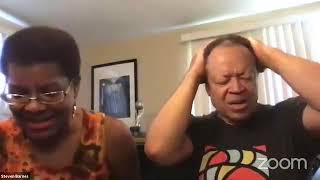
Steven Barnes and Tananarive Due discuss keeping creativity alive during COVID lockdown, with lessons from the film Aliens on character motivation and scene-building. They share experiences pitching screenplays in Hollywood and offer practical advice on networking and self-care for writers.
Chapters
We are about to go live, like, 5, 4, 3, 2, 1, and.
Hi, I'm Tananarive Dew.
And I'm Stephen Barnes.
Welcome to Life Writing Live.
This is Life Writing is my creation. It's the application of Joseph Campbell's model of the hero's journey to life and writing, the process of writing and the structure of writing also. But Tenananarive has, you know, when we do these, what we're doing is we're combining both the academic teaching and our own lives. What is going on in terms of our careers? What is going on in terms of our families, the life of the writer. That's right. So, you know, just in general, just. Kimmy, how are you doing? How are you holding up, huh?
Today has been a weird day of paying bills, making pesky phone calls to the insurance company. Like a bunch of stuff that's been piled up on my to do list because a couple of days ago I put aside a screenplay draft that had been work pretty deeply immersed in for a couple weeks or actually more two of these. And so there's this weird empty nest feeling that I get when I don't have a project to sink into, like from the minute I wake up and then look at it again before I go to bed. So I discovered my to do list. It's like, yeah, let me call the dentist's office. Let me call the dental insurance. Let me call, you know, things I haven't been doing for weeks, just catching up for me.
Today was tough. I am getting more strict with my fasting. And that means yesterday I ate nothing all day long. Then I worked out on an empty fasted stomach this morning. And let's just say that was not the happiest experience I have ever had in my life. I now, as I was telling Tanandarive, I now understand why people like food so much.
I could have told you that.
So there will be.
You will not catch me fasting.
There will be some adjustments to this. No, no question about it. But I'm working on multiple projects. How many projects are you working on, sweetie?
There's a novel I turned in. My agent gave me some notes. So I've been kind of procrastinating before I go back into there because that's also a very immersive space for me. And the world kind of disappears when I'm in there. And I really want to get going on that screenplay, get that sealed away. So I'm working on the screenplay, the novel. I have a short story. I work for hire. I agree to do well, what do you think?
How about we go, like, tomorrow? We have a meeting tomorrow, and we go deep into the screenplay. And just every day we work on the screenplay until we've broken it, and it's just a matter of dribs and drabs.
Let's do it. Let's do it.
Okay, good. I'm ready to do that because we.
Had a good meeting today.
We had a really terrific meeting. Yes, we can tell. A meeting today.
Yeah.
So go ahead, please.
Some of you may have heard our story of how we wrote a screenplay called the Keeper, which is an original script that we came up with together. Horror, of course. And we developed it with Monkeypox Productions, Jordan Peele's company, and they loved it. His company, Universal, who they have their deal with, not so much. They just said, we don't get it. That was our only note. We don't get it. And that was about a year ago. So it's been sitting. It's like, kind of weird. We went from having this amazing home to having no home, and there seemed to be, like, no in between. But today we had a zoom with some producers we'd been hooked up with for something else that we actually didn't want to do with them.
Right.
We declined.
Yeah. Basically, it's like, would you like to develop this such and such as a television series? And so I'm looking at it, and it's like, there's. There's no series there. We would have to actually create everything. Everything.
So why not just do it based on original work?
Yes.
Right. Somebody else's work. So we were like, no, thank you.
Keep more of the money.
But did I say that out loud? They were very polite and said, we love you guys. Anyway, we want to meet with you. Just based on a short film script, really. Mostly, I think, and a pilot we wrote together. But, yeah, they want to take the Keeper, which has been homeless for all.
We've got a graphic novel coming up. Right.
There's a graphic novel. So I thought, okay, well, maybe the Keeper was always supposed to be a graphic novel. When you write screenplays, because so few screenplays get produced, you really need to have a list of reasons you're writing the screenplay. So first for me is always learning experience. Like, right, become a better writer, stretch myself. Every new screenplay makes me a better screenwriter, et cetera, et cetera. Writing sample when you're up for jobs. We have used it as writing a writing sample for some jobs that we haven't gotten. But we were close. We were very, very close. People seemed to like it. What else is a good reason, by the way?
Just to stop here for a moment. You'll notice the conversation on. Most screenplays don't get produced. Most jobs you go out for, you're not gonna get. One of the things that it is critical for writers to do, for artists in any field to do, is to develop the skin of a rhino. I mean, what's called thick face, black heart, to be able to handle the slings and arrows of outraged fortune. Without taking it personally. It's nothing personal. If you take it personally, it will devastate you. So you have to both simultaneously care a lot about your work and simultaneously not be attached to any particular result. If you can do that, you have a chance in this business.
But if I can just tell you we had visions of Jordan Peele shadow directing in our head, because that was what we were told. You know, we'll get a young up and coming director. But don't worry, Jordan will be right there. It'll be one of our five projects. Anyway, so we got the phone call at Best Buy, and it was like a death when we got the call. But Universal had passed in many ways. I'm still not over it.
Yeah. But anyway, it really did rock her.
It did. It was like, are you kidding me? I thought. Not that I felt like, okay, well, of course we're going to be making a movie with Jordan Peele. It's not that I felt like that was, like, the reality I was just supposed to be walking into. But based on everything we'd been told, the enthusiasm of Monkey Pa, even our manager had kind of walked us through the scenario of how it might look in the meeting and kind of put us there like, oh, my gosh, this is gonna happen. It's all in the trades about this deal with Universal. We were among the first projects they took to Universal. Monkeypaw kept its word at every stage, which is why.
Yeah, Monkeypaw and Jordan Peele, these are great people. These are wonderful people.
Everything they say they're gonna do, they do. They did what they say they're gonna do.
So any disappointment we're feeling is they've actually. They've fulfilled their obligations. So let's see. Oh, okay. Is that how you do that?
Let me see if anybody's on.
Anybody's unmuted. I think that there might be some unmuted people. Nope, we're okay.
Everybody's good.
Okay, we're good. All right. So that's where that situation is. And then, of course, when we got Our Twilight Zone episode, you know, the feeling, the bad feelings about Monkey Paw and Universal and so forth just, Just went away.
Well, I didn't have any bad feelings.
Well, it's not Monkey Paw. It's bad feelings about any of the people there. But you do tend to associate. Not you personally, but we do tend to associate negative experiences with organizations, people, the things that were. Were around when that happened. So there was that little bit of a feeling that I had that, well, maybe this relationship isn't going to go any further.
Right. That's true. You know, you can have a meeting and part of what happens in a meeting is everybody's supposed to be vibing, like, hey, we could all be friends. Let's all like each other. So we work together. So everyone's putting their energy up to an 11, which is why you get that fakie Hol. Would I love that? Are you, like, if I'm super excited to be, yeah. Even in an email when you're saying, yeah, yeah, we can make it that date, the assistant's like, amazing. It's like, no, it's not amazing. It's just we've got to be able to come to the meeting.
Well, it may be amazing, but where's the money? Where's the contract?
Exactly. So a lot of that, even though you walk out feeling, oh, my God, we're all best friends now. And then. And then there's the silent no, someone's talking about the Hollywood no. No one likes to say no. So really what usually happens is that people just stop getting in touch with you. Like, your last message never gets returned. And then when you meet each other two years later at a party, it's like it never happened.
That's right.
Yeah.
Well, it's weird because, you know, my career got interrupted 25 years ago because I needed to move to the Northwest to raise my family, to raise my daughter. There was just a family situation. There was. And then it was interrupted again about eight years ago when we had to move to Atlanta for another family situation. And just to be honest with it, it was devastating. It was really tough because what I was hearing when I moved from the Northwest back to la, I was told, you are now too old to be working in television. In fact, they were saying that they didn't hire anybody to work in. Work in the room on television. It was all done by committee, by.
What do they call it?
By the writers rooms. It's my staff. And they said they didn't hire anybody for staff over 40, at least partially because it's Extremely grinding.
They used to now, but now they do.
Yeah. Well, I was already over 50 at that time, so you can imagine I'm feeling, you know, like my stomach's through the floor. So, you know, all of these things that were happening were both business things and they had to do with personal dreams. They had to do with my sense of honor and etiquette and, you know, what do you do and who am I? And what is true, but felt true to me was that you do what you need to do to take care of your family. Family first. You know, I thought that career was the most important thing for me, but it's not.
Now you can have a big house and a swimming pool and sort of all those symbols of stature, but if you're alone or you feel like you. You let yourself down in terms of what your values are, how much you were present for your kids or not present for your kids, all that stuff. I mean, you know, the trappings of wealth and success don't matter if you have this empty feeling. And, yeah, so he wants that.
So I was prepared to do whatever it is that I needed to do to just keep moving forward. I also saw that 10 honorees, several of Tananari's projects, were being courted by Hollywood. So it wasn't. I knew that things were going to happen Hollywood wise in the household.
Although I have to say, neither of us thought it would be this freaking long because we've been married for 22 years.
That's right.
We kind of felt like it was just.
Oh, and by the way, our. Our anniversary. Our 22nd anniversary is this Saturday.
Well, I've been married 22 years.
Yay.
22 years of collaborating, and they said it wouldn't last. Nobody said that.
Nobody said that. I could have sworn there was one.
Maybe it was my mother.
But no, no, no, no.
She never said that. She was afraid it would last because I had to move away.
So what has happened here is that with the Twilight Zone, I was able to feel like I was kind of getting back on the horse, that things were maybe coming back around. And there were people who basically told me, steve, don't expect anything to happen here. You are now too old. I did hear that.
And, Scott, I hear you saying that you decided to give up stunt work because someone told you you were too old. I mean, that is slightly different because of the physical component. So don't beat yourself up too much about that. But, yeah, it's hard.
It is hard. But we're now in a space where there are a Number of different projects that are circling around and there are two or three of them being negotiated right now. People supposed to call our agents. I think that if we were to take a look at the projects that people have said we're going to do or said they want to do with us and we haven't actually received the check yet, I think that there's four or five.
And talking to a friend of mine who's an up and coming director, she said she has 14 projects in the works and her manager was like take everything, go to every meeting and you know we're not going to do that. Still raising a 16 year old son and we're trying to have a semblance of a quote unquote normal life without burning ourselves out. We go to bed at a reasonable hour, we get enough sleep. You know, we're not the typical model of like going to Hollywood and going hogwarts.
I absolutely insist I must get to sleep. If I don't get the right sleep, I will fall apart. That is just true about me. Yes, I will literally get sick.
Yeah, we've been, you know, around the barn a few times. So we're not here to burn ourselves out. We're not bedazzled, you know, none of that. Even when we first came to Hollywood we used to get a little, you know, starstruck and, and now as a grown a woman I really feel like I'm more willing to stand up for myself. I'm willing to say what I'm thinking as opposed to being so worried I'm going to make a mistake that I'll never have a meeting again. I don't have that feeling now. So that helps. Taking care of ourselves helps and that's something that you can all apply, you know, no matter what you're doing. A lot of you obviously are trying to find time to write in the margins. Right. Which is still what I do. It's summer now, so I'm not teaching. But I still teach at ucla. I just signed a contract through next summer. So that'll be interesting to see how that plays out when a bunch of stuff starts colliding. And I always tell Steve, I'll know when it's time to stop teaching. It will be very clear.
I don't want you to stop teaching. I want you to stop teaching so much.
Right. Or do a class only once a week as opposed to whatever it is. But so right now I feel like in the time of a pandemic we have to go easy on ourselves. First of all, I told Myself in my head today. Well, we do have this one zoom with the producer, and we do have the life writing live. But in my head, it's the weekend and I'm on vacation. It's summer and I'm on vacation. I just, like, let myself be in a summer vacation frame of mind. So instead of spending my day at my desk typing like I usually do, I. Picking up chores around the house and cooking. I mean, just living, you know, we have to remember to embrace the part of our lives that is just living, appreciating the people we're with, you know?
Yeah. Otherwise, what's it all for?
Yeah.
I mean, you know, you write or you dance or you. You paint or whatever the art it is that you do out of joy. I would think because you find pleasure in this now. Yes. At some point, you might want to make it a career. You might want to make money from it. That's great. But never sacrifice the joy of life to chase after the dollars. Inevitably, that will bite you in the ass. That is that. I remember when I. When I first. One of my very first autograph parties, an older gentleman who was a writer came to my autographing and he gave me his business card, and it said. The business card said, freelance hack and literary mechanic. And this guy was dead of alcoholism within a year. I mean, this. You don't do that to yourself. So I'm very careful to make sure to protect my health, to get enough sleep to exercise, and to spend time with my family every night. We have a ritual every night where we watch Dick Van Dyke show or Mary Tyler Lamoura Show. Now we're working our way through the entire run of Columbo. We might run our way through the.
West Wing, comfort tv, especially the West Wing.
We're just winding down. It's not about what's on the screen. It's about we're both looking at something that we enjoy and we're having fun.
Relaxing, just being with each other. So there's that component. Don't forget that. Because I think a lot of artists are beating themselves up because they're not feeling productive. I hear this a lot, you see. I see it on Twitter a lot. How are you getting things done? In my case, some of it is my fear of mortality, especially early on when I was literally having panic attacks on a pretty regular basis, because I'm a little bit of a hypochondriac. I really come a long way with the panic attacks, but I'm still a hypochondriac. Even Just the other night, I was thinking, right as I was drifting to sleep, I felt a little phlegmy in my throat. I was like, how did I get Covid? But anyway, but without the panic attack, so that's progress for me.
I felt so dragged out after I got finished working out today.
When did I get Covid?
Yeah, it's like, oh, my God. Oh, that's right. I haven't eaten anything for 40 hours.
And of course we're going to get sniffles, we're going to get allergies. All the same stuff is going to be here. There will be times that we are very, very fearful. And that can be a huge dampening effect on creativity when you're fearful. But in my case, maybe it's because I write horror, and it ties in so deeply to the reason I write horror. I've learned over my lifetime to take my fears and process them almost directly through my writing. So if I feel like, oh, my God, I could be dead in six weeks, that's how I finished writing my novel. You know, I got serious about my page quota. I had a chart, and I was.
Like, okay, I'm gonna die.
Can you finish it for me?
Yeah, absolutely. I'm actually thinking, well, you know, okay, if she dies, then what I will do is I will find a black female horror writer or fantasist who will look over my shoulder and help me with it to make sure that the flavor of the characters has the same, close to the same feeling as possible. Because, you know, you never know. That's right. You might kick off.
Look, life, people do get sick.
You look a little peaking right now.
Yeah, people do get sick. Unexpected things happen. Not everyone, granted, can channel mortal fear into creativity. So maybe that's not universal advice, but I would say try to harness, you know, all these emotions that you're feeling and try to find out what is the best creative outlet for me to engage in, to help leach some of this out of my body and out of my mind. Like, I do another webinar series with a pastor named Reverend Monica Coleman that's around the work of Octavia Butler. And that's basically self care. And someone wrote and was like, I have. You know, nobody talks about how hard it is to be the only one who feels like they can see what's going on. When you're surrounded by people who are denying what's going on. Like, they. Let's say he knew a nurse who had been watching the news and was telling people back in January, oh, no, this is coming. This is Going to happen and no one will believe. Leave them. Or if you look at what's happening with protests right now, some of you sitting here might have been, people thought, well, this would never happen when, you know, look what's happening in terms of.
You have a good question right there.
What do writers as horror and circular fiction, which was, oh, what do we.
Do as writers of horror and speculative fiction when present reality begins to surpass the dystopian?
Yeah, I mean, it's already difficult, to be honest. I almost. Even though, like Contagion, for example, it's a much worse version of an illness and many, many, many more people get sick, there are some aspects of that film that I kind of long for, you know, like the feeling that there's confidence coming out of the authorities and, you know, there's no mask deny. Well, there is some mass denial. No, actually, there is no mask denial. So there are some things I look at and even contagious like, oh, I wish we had it that good. But yeah, it's a challenge. It's a challenge to try to write dystopian fiction. I was frankly already getting tired of all of the editors asking for dystopian stories, even in the past four years or so, no special reason, and feeling like it's. I don't know. That's not the only way to express anxiety. You know, another way to express anxiety might be through a humorous piece, you know, a lighthearted piece, a utopian vision, something that's completely unrelated to anxiety, or something that's nonfiction, if you're used to writing fiction. I suggested that this person who wrote to me about denial, that sounds like a great medium blog. I said, why don't you just write that up?
The life writing approach is to take a look at whatever powerful emotions you're experiencing in your life, and you specifically create a character in a situation that allows you to vent some of those emotions. So, you know, if you write a short story dealing with someone in the middle of a pandemic, trying to keep a garden alive, for instance, and finding one new sprout coming up through the ground and being able to find. To focus on that and to find some beauty and peace in that, that's.
Basically Octavia Butler's parable of the sower. In some ways it's like, oh, horror, horror, horror, horror sprouts. You know, just the slim, like, oh, but there's still hope. Yes, if you just look toward the hope.
So, yeah, if you are in a situation, one of the things you could also do is look back over your life to another time that you were feeling completely depressed and defeated, but you came out the other side. You write about that, and when you do that, a number of interesting things happen. One of them is that the pattern of the hero's journey, which is underlying all fiction, is one of crisis, struggle, learning, growing. And either you fail or you succeed. If you write a story in which a person fails because they did the wrong thing, then you are learning. If you write a story about somebody who succeeds because they did the right thing, you are learning. The only type of story I would not recommend is a story where everyone. Someone does everything right, and they still fail or even.
You know what? I just rewatched the Gray with Liam Neeson. And, well, we've. You know it. Spoiler if you haven't seen it. It's about a wolf attack or several wolves attacking, frankly. And they start out with a bunch of people. I forgot it wasn't just him, but they started with several people who survived a plane crash. And the wolves are picking them off one by one, and it's down to Liam Neeson, the only survivor. And there are a lot of ways to look at that movie as doing everything you can, right? And still failing. No matter what they did, no matter what strategies, no matter how big the fire, no matter how they change the route, the wolves are always there. And ultimately, the point of that story is that camera in Liam Neeson's eyes when he's about to face down with the alpha wolf. The part of him that was gonna give up is waking up saying, bring it. Fade to black.
Now what you have there.
Fade to black.
I could consider that movie triumphant in the sense that death is something that everyone faces. But there is choice in how we deal with that fear. The choice, how do we face the issues in our life? So in that sense, he died on his terms.
Right?
Okay. And I think that a story that says that is not an oppressive story, but I just would not recommend writing a story about a guy being eaten by a wolves. If you're being chased by wolves, that might conceivably be the wrong thing anyway.
It might not be a soothing experience if you do that, but. Yeah, but you want to find, you know, what is the subject, that theme that most appeals to you, you know, and I'm a bit of a scaredy cat. People are always surprised when I say, oh, I was too scared to finish playing the Last of Us, or, oh, I was too scared to finish reading this Paul Tremblay novel or whatever it's like, dude, you write horror. What do you mean, you're scared? It's like, well, I write horror because I'm scared. I see. That's the key. So I'm writing characters who are strong, who can stand up to something they didn't even know existed last week and at least plan how to vanquish it. You know, just the idea that they can keep their rationality enough to plan, to move, to run and not trip, you know, whatever it is. I'm always looking for those survival behaviors in the wake of, you know, sometimes. And some of you have experienced this. I know I have experienced it. When my mother got sick. It just feels like the bottom falls out of the world. And I think, especially now, if anyone is going through that. I have a dear writer friend who lost her husband right before the pandemic. And I said to her on the phone, it has to feel like the bottom fell out of your world, personally. And the whole earth is trembling.
Right?
The whole earth is trembling. And what. I mean, I can't even imagine what it would have been like to go through what I was going through with my mother during this era when. When you can't even hold hands, you can't be in the room.
Yeah, but yet you could have been trapped on this coast, unable to get back.
True. But people do it. I read their Facebook posts. So, okay, they're rational enough to create sentences.
They're.
They're logging onto their computers. They're going through something I can't even imagine, and they're still in there, and they're still fighting to be themselves, and it's really something.
Well, I can say that I think that this is a time when artists have the opportunity to shine. I mean, that people need. You know, we're all going through this together, but there are people that are hanging on by their fingernails.
Yeah.
So don't think that if you write a good story, if you just make somebody laugh or cry or vent an emotion, let alone, you know, expressing some wisdom of somebody, but if you just can entertain them for a little while, you can help keep somebody alive for another day. I'm seeing terrible posts. I mean, people stuff that people are just. Are just suffering. So you're not alone, and your artistic heart is important. It's part of what we need, is part of what keeps us alive as a species.
Yes.
Anyway, I wanted to talk about Saturday night.
Oh, my gosh.
So we have to be artfully oblique about this because we don't want to give names, but we.
We went out of the House.
We went out of the house. Tananarive got an email from a major Hollywood producer, showrunner, whose work you definitely would have heard of.
Yeah, I met him in a hallway. This is Hollywood, you know, and he was super, super friendly. And we've been in touch since then. Several Skypes, actually. We've been out twice. In person or no one's in person once before this, but it was.
But we met some people who he linked us together with, as I recall.
Right.
So basically he said that he was going to have a movie party at his house with a huge. A huge inflatable screen in his driveway. By huge, I mean like, as big as the side of a house.
I was thinking, like, maybe it would be the size of 60 inches. Well, not even a garage door. I was expecting it to be much smaller than it was. But he meant like a big screen, inflatable movie screen, great sound system.
Yeah, you're talking. You're Talking like a 30 foot diagonal movie screen.
And it was. And we were sitting in lawn chairs, like far away from everybody else, socially.
Distanced, wearing masks very responsibly. Nobody shook hands or hugged or anything. Yeah, we all gave each other the Wakanda salute. One of the things that's important that I wanted to touch on here is that I had been told a long time ago that a tremendous amount of the business in Hollywood takes place in social gatherings, you know, at parties, at restaurants, things like that. And it is true to a certain degree, a lot of people are producers simply because they know people. They can get people together. They can hand somebody a script, you know, that they know such and such a star, and they will just facilitate that.
He made a major introduction to us when we first walked in. And the name sounded vaguely familiar, but I didn't track. So later, as we were leaving, I looked him up and I was like, oh, that guy.
Yeah, that guy.
I could have said the creator.
The creator of a major horror series that you would recognize immediately were we to say something.
Darn it, even my sister, who's not in the industry at all, is like, even I know who that is.
So one of the things. Who was it that said that? Was it. Was it Angela that said that one of the greatest gifts somebody in Hollywood can do is introduce you to their friends?
She just showed us that. Angela. When we first moved to Hollywood, Angela Bassett used to invite us to her New Year's Day party. I'm not sure even how that was happening, but it was like two or three times.
Yeah.
And we met Wes Craven, I mean, you name it. Who's who? Forest Whitaker, in and out, you know, so. So yeah, they.
And he was also this guy, Stevie Wonder, Sam Jackson.
Yeah. So I don't know, we don't hang out anymore, but we did for like a minute. So this guy last night. It's the same thing. You're putting people together in a space and you're expecting that they'll recognize name and, and do what you do. I mean it's not like you go up and pitch people, but you try to establish human rapport. Yeah.
You know, Hollywood projects require so much investment of your emotion and your mind and your time and your energy that I think that the whole thing that you get the feeling that people are always glad handing you and they're always happy and we're super excited that that's not being fake. What that is doing is people wanting to raise the energy so that we can create a family, a temporary family. We're going to make a movie, we're going to, you know, it's Mickey Rooney and Judy Garland. Let's put on a show that's sincere. You know, there's real investment there. So if it's just meeting people via zoom or meeting people, you know, in an office or it's just business, that's one thing. But what I think one of the things people want to know is if I work with you on this project for a year maybe, will we have a good time together?
Are you going to be an a hole?
Are you going to be an a hole? But it's not even beyond the business thing. Will I be able to relax with you? Will I be able to enjoy you? Will we have a good time together? This is my lifetime investing here. So I can see that they need so friendships and romances and all sorts of things develop in that intense environment. So what I want to say is that if you, if you are intending to try to work your way into Hollywood, finding the social connections that will enable you to meet these people when their guard is down just a little bit is critical. And it will take you time to work your way into that position. But when you have worked your way into that position by doing favors for people, by being a sincere friend, by getting a job somewhere in the industry and making all the connections you can, the connections that you make with people are as critical as the skills you create at being an actor or a writer or a director or anything else. You need that connection. It is not a bluff. You need those connections because once that starts happening, people say Oh, I liked meeting them. I'd like to work with them. I wonder if we could work together.
And it's not just in Hollywood, you know, not everyone is trying to write screenplays. Although I will say as an aside, the producer we talked to today was agreeing with us that the virtual meeting is so much better than driving 90 minutes each way. And he's hoping it will become normalized. And I'm also hoping it will become normalized because that opens the door for people who don't live in Southern California to have more face to face meetings, even Comic Con. I've never been to a Comic Con. I moderated a Comic Con panel for the virtual Comic Con, but I'd never even been invited to the real Comic Con. So it really does sort of level the playing field a bit. It opens it up. More people can. So that means you can go to conferences, you can hear director talks, you know, you see all these virtual events. Go, go to these virtual writing events, see your favorite authors talk, find events about how to find an agent. You may be doing virtual meetings with agents in a way that wouldn't have been possible.
Yeah, I mean, the technology was there, but the habit pattern of meeting in person had been firmly entrenched for, you know, for decades, centuries. So Covid is going to change things. Society will not go back to the way it was. And one of the things that I do believe is going to happen is that these virtual meetings are going to be normed. You know, people are going to say, well, would you like to come in in person or would you like to meet via Zoom? And they're not going to hold it against you if you can't do that.
Even writing rooms, I mean, this is another thing. People who couldn't get a job in a writing room because they didn't live in la. Well, I'm sure there are people already who are now able to get jobs in a writing room because of the COVID world, so.
And there will be virtual writing rooms. Yeah, all of them are virtual writing rooms. You know, we've got a couple of television series possibilities, things that are happening, and if that happens, we'll be building virtual writers rooms.
Wouldn't that be amazing?
It'll be absolutely.
It'll be wonderful putting it out there. You never know how far these projects will get, which ones will take. But we are just learning and absorbing and meeting as many people as we can. There are a lot of people I've never had a conversation with, never exchanged an email with that all of a sudden I'M just like, let me just write this guy on Twitter and say, see if he'll give me his email address. And they say yes sometimes, you know. So I was like, oh, yeah, you.
Grabbed a big one.
So it's like, it's learning confidence. It's just learning how to sort of approach people in this virtual life. And to a large degree, when people know you're going to be polite, they'll know you're not going to ask them for anything right out, you know, that is difficult to give advice is something I think people like to give. It puts them in a teaching position. So it's a flattery to ask someone for advice or to congratulate someone. Just make sure you're doing this all, you know, sincerely.
Yeah. I would suggest you hear a lot about insincerity in Hollywood. I would suggest that you not pay attention to that. I would suggest that you do not think that you're going to move your career ahead by being insincere. I personally like very, very much the notion of the three gates. You know, is it true, is it useful, Is it kind?
But you can be true, useful and kind strategically is all I'm saying.
That's right.
As long as it's sincere, is it true?
That doesn't mean you have to say everything you're thinking.
It's true, you know, so people are people like anyone else. And I have found.
Except there's no one quite like you.
Aw. You either, darling. I have found that in spaces where you're kind of halfway vetted even, it's like, oh, it's a writer to writer space, or it's a conference, or it's a virtual panel, or it's a book signing, or you name it. In a space. A lot of people who have power and influence are very open once they feel like they're in vetted company, not surrounded by someone who's just going to ask, ask, ask, ask, ask.
Yeah. Now that's a critical thing. So as you begin to earn your way, you treat people with respect, whether or not they can directly help you, because everybody knows other people. So if you feel like you can be an asshole to the assistant because they're not Steven Spielberg, trust me, Spielberg is going to ask the assistant. It's going to happen. So keep yourself. There is no amount of money that is worth losing your sense of. Of who it is that you are along the way.
And you were.
Go ahead. No, please.
You were gonna tell an alien story. Yes, and I derailed it somehow.
No, no, no. I Was just gonna say that I was gonna talk first about the business aspect of things. And so it was social. We had a chance to go out. They had some delicious donuts, and in general, we had a great time. But the movie was Aliens, and I wanted to talk specifically about that just a bit. First of all, we had not seen aliens on. I have not seen aliens on the big screen in over 20 years.
I didn't know it was gonna be that big. We were just happy to be out of the house. I was gonna sit in someone's little driveway and look at their little screen, you know? But no, it was.
No, no, it was. It was. It was great. It was. It was. And the sound was fantastic.
And by driveway, he meant courtyard. I mean, it's like, huge.
Yes.
Yeah.
I had no idea what we were getting into.
So.
Aliens is one of those near perfect movies that accomplishes exactly what it set out to do so well, that there are a lot of lessons to be learned by looking at it. And I thought that there was one lesson that could be addressed that also has to do with the process of writing and rewriting. If you follow the process that I talk about, where you write a sentence a day, one to four short stories a month, finish and submit at least one of those stories every month, you don't rewrite, Accept to editorial request. You read 10 times what you write, and you repeat this process 100 times. The rewriting process, we could go deeply into that. But this is an example. I'm going to give you an example of rewriting. When you write the story, you write it as fast as possible, and you just let whatever is going to come out of you come out. And then when you're rereading it, you find those scenes, it's like you'll find, oh, this is really good. A particular line of dialogue or particular sequence or a particular action will strike you as being unusually true, unusually authentic, unusually powerful. And then what you can do is you can say, what would it take to make this moment even stronger? Especially if it's pivotal. And there is a moment in. There are a couple moments in Aliens that really rise out for me as being. Oh, my God. Moments. And one of them is the moment where Ripley is on the platform holding Newt, and the alien queen is coming up in the elevator, and the ship that she thought was gonna get her out of there before the hydrogen bomb goes off has gone. It is. All is lost. So if you look at that moment, I think that it's. You know, once you realize this is this is a moment of potential power. I remember when I saw that in the movie theaters, I was so tense that sweat was just rolling down my face. So asking myself the question, re experiencing it on the screen after all these years and knowing what I know now and having learned as much, I learned it was, how did Cameron create that scene? Why was that scene so powerful? I thought that we could talk about that as if we were writing the script ourselves and as if we were then rewriting to make that scene as powerful as possible. So what are the things that you saw in. In the movie that you think made that scene killer?
Oh, I didn't know there was gonna be a quiz. That particular scene.
Yeah.
Well, it's. Again, that question. Ripley has done everything right. She has. I mean, she is just the gold. The gold standard in terms of a protagonist who is not in denial, who is willing to take action, who is willing to take risks, who thinks it through from every direction. And what stands out to me about that scene is that at a certain point, she finally believed she had run out of options.
Yes.
And what she did was what we all do, hopefully, or we think about when we run out of options is that we think about the people we care about. She hugged Newt to her.
Yes.
It's like, well, if this is the.
End, she says, close your eyes.
Close your eyes. She's like, and her last moment is taking care of this child.
That's right.
Symbolically a replacement for the daughter she lost when she spent 50, 60 years in hypersleep.
Now, you don't find out that Ripley had a child in the theatrical version of the movie. You have to go to the special edition where there is a scene cut out that says, once again, while she was in hypersleep for 56 years, her daughter grew up, had a complete life, and died of old age. So that they did not need to tell you that because the audience was totally prepared to believe that Ripley would give her horror whole heart to saving this child.
As much as I hate losing that information, I can see why they edited it out. It was not necessary.
Like, yeah, it was not essential.
You know, you get it. It's a child. You're, you know, and a mother, you know, figure.
That's right. So. But. But take a look at something. There are some really important pieces of the puzzle here. When that movie came out, I guess it's 1986, Women as Action stars were a new thing. You've rarely seen something like that, at least partially because it goes against the cultural mythology which has now started Breaking down. Aliens is one of the movies that really helped break that down. So they're creating a female archetype. Aliens is an important piece of film, as was Terminator, as was Silence of the Lambs. These movies did something that had not been done before. Not in that way. Not quite. So when we first. First meet Ripley, always looking. How do you set up this moment over here? Back to the moment we meet Ripley. Ripley is awakened out of a hypersleep 56 years, and she finds out that her entire life has been destroyed. Nobody believes her story about what happened on the Nostromo. And her professional life is destroyed. She ends up doing. Being basically a. A forklift driver.
And I noticed, viewing it on the big old screen, that she lives in a wing of the craft that had a little bit of trash in the hallway, which. It's like, I've never seen trash in the hallway of a spacecraft. They were really trying to show she was living in a bad neighborhood. She's got, like, a bad pod and a bad side of the ship and a bad job.
Now they tell her that she will get a better job if she goes back to the planet and help them deal with. With the aliens. No way.
Right.
They tell her that there are families there that need her help. No way. Why does she go back? She is having nightmares.
Yeah.
What happened on that planet, what happened on the Nostromo has destroyed her psychologically, destroyed her emotionally. She cannot sleep. She's dreaming of an alien coming up out of her body. And so she agrees to go back, you know, in order to survive psychologically. That, you know, she says, you know, you're going back, you're not to bring back, not to study, but to kill them. In other words, she wants to destroy the demons of her dream. So she's not operating from macho motivations. This is not about how tough she is. And note that there are women Marines in there who are just as tough as the guys, just as macho as the guys.
Can't wait to get in it.
That's right. Anytime, anywhere.
They have no idea what they're up against.
Vasquez, we all love Vasquez, but Vasquez is basically a man with. With mammary glands, you know, that she. She does not have what we considered, especially at that time, to be feminine motivations. That, you know, it's like, well, why would a woman go out there and do something like that? That's. You know, it's. Think about all the time it's taken us to get used to the idea of Women in combat, we simply weren't willing to accept that. So in order to set Ripley up, you had to give her at that time believable motivations. Her motivation to save her sanity, okay? Not saving other people, not being tough just to, you know, not just to save her sanity. So she goes there and she's. She is an observer. What is the moment at which she stops being an observer?
T When the lieutenant can't command during the attack.
That's right. That's right. And she takes control of the rescue. She does not act out of ego. She does not act out of rank. She does not act for anything other than. There was no one else to do it.
Her lieutenant froze, completely frozen, completely out of his.
These people were going to die if someone didn't take action. And at that moment, Ripley became a.
Leader and she became the hero. She became the hero and she literally saved all those lives single handed.
That's right. Then later on, when they get to the center where they're barricading in, she's the one who's studying the schematics, who's coming up with the plans. We can seal this door. We can study how they get in here. We can do this. We can do this. Game over, man. Game over.
She's keeping her head.
The Marines have, you know, they have no leadership. So they have devolved into being individuals. And as individuals, they are weak. Unless they are reminded of their, their positions or the label. It's, let's go, Marines. As individuals, we're surrounded by aliens that are killing us. But that's right, I'm a Marine. I can fight. I've got my brothers to either side. Without leadership, that unit falls apart. So she becomes the natural leader. She is smarter. She knows more about the situation. And it's not that she's tougher. What she is ultimately is deadly. Because what happens is, even though we don't know that she lost a daughter, as soon as she meets Newt, they start bonding. We start seeing this woman and this little girl playing mommy and daughter games. And that human connection, that basic human drive to protect children is coming up, even if you don't know she lost her daughter. Now, once you know that, it's like, well, of course, you know, you know, absolutely, she's going to. But it's still a totally natural thing. In 1986, we believe that a woman would do that. We, you know, nowadays if you're going to have a woman like that, you just say, she was a Marine, you know, she was a soldier, okay? Now she's a soldier. Okay, she can do this stuff. But back then, you needed to set up your motivations. So you even have moments when you decrease the tension in the story and give a chance to deepen your characterization or even have a little bit of flirtation. The moment where Hicks is showing her how the. Over and under the rifle and so forth, he said, well, you started this. Show me everything. You know, it's like it doesn't take a lot of imagination to turn that into a sex, a sexual situation.
When you're writing horror suspense, you have to have moments where you turn down the valve with the steam and just let it. Let the characters react and reassemble.
Because you can't hit the same nerve over and over and over again. You have to hit it. And then literally, physiologically, you have to give the Golgi tendon, organs, the things that allow the messages to pass from the motor endplate to the tooth on the muscle to the nerve or from the nerve to the motor implant. You actually. It actually, actually has to reset. The chemicals have to reset. So the same thing happens psychologically in your audience. If you have horror and then more horror and then more horror and then more horror, and then you simply get fatigued and you stop caring.
And it's only scary. And as much as it's something that menaces the characters.
That's right.
That's what a lot of filmmakers, bad filmmakers don't realize is that we watched a really bad horror movie the other night where we didn't care about a single character. Please kill them all. You know, it was worse. You have to let. And every single character who didn't survive that film got their mini arc of going from fear to courage. All of them went out giving their all, you know, trying to protect someone else. I'm gonna sacrifice myself so you all can get away. I just ran out of bullets. We're gonna embrace. And just, you know, even the most fearful character, the one who was bringing everybody down. Cause he just didn't believe that they could win. Half of winning is believing you can win. So he could. He didn't believe he could win even. He went out like, oh, you want some of this? You know, just everything he had.
Yeah. What is his characterization when he has to wait, doesn't know what to do? He's a coward. But when he's in action, he's a hero.
Yeah. When he was convinced that there was a chance and Ripley gave him something to do, he's on it.
That's right.
Give me a job.
Give me A job.
And I think this is what appeals to me. I don't like meetings in real life, but I love meetings in these movies. When the characters have settled enough, they're no longer just in fear of survival mode. Hiding, running, shooting mode. It's like, okay, let's assemble. We have a safe space for five seconds. Let's have a meeting. What the hell are we going to do? And I love seeing which leaders emerge from those meetings, which plans emerge from those meetings.
What happens during this time? Burke is revealed as a corporate stooge. Hicks is revealed as someone who is totally competent. He's not a leader, really, he's a squad leader, but he absolutely is totally, 100%, immediately willing to accept Ripley as the leader. Vasquez, totally competent. You know, she's putting the nerve into other people. We see the moment where her nerve breaks. You know, the officer.
It's not enough to just shoot him like usual.
That's right. We see the officer who has been revealed as a coward and incompetent. And the fact that he, well, he tried. Yeah, yeah, that was a bad, bad, bad, bad situation. And then we see more time between Ripley and Newt. We build up this, this, this surrogate mother daughter relationship. And when you touch that, what you're doing is you're creating someone who is capable of doing anything because we will do anything for our children. So when the Marines are devastated, they're down to the last couple people, Newt is lost, they're in the ship, and Ripley is going to go back and get her. Now, if you don't believe that moment, the entire film doesn't work. But you can go back to the earlier movie where Ripley went back for the cat. And you know, if you bought Alien that she would go back for the cat. And I bought that, by the way, no problem. No one who believes Ripley going back for the cat is going to have any doubt whatsoever that she's going to leave that little girl.
And what I love is that Hicks, even though he's injured and, yeah, he wants to get the hell out of there too, he is behind her 1, 100%. No, we're not going to take off until you come back.
That's right.
Yes, I'm going to help you.
We ain't going nowhere, right?
Because ordinarily, a lot, you'd be like, look, you barely know that kid. We need to get out of here.
So, so from a woman who is plagued by nightmares, she has been transformed into someone who has moved beyond her fear, totally beyond fear, into being an agent of not vengeance, but rescue. And she goes into the belly of the beast. She goes down, literally into hell to face Satan in order to save this child. And she does it. She is not a normal human being at that point. We saw how scared those marines were down there. She is pure purpose. I'm gonna save this child. Pure purpose. And so when she gets that girl and she's trying to get out of there and she goes up to the platform and we have seen this woman for two hours do everything right. It's like you said, she has done everything right. And then Cameron takes everything away from her. No hope, nowhere to run, nowhere to go. This is death. Close your eyes, baby. That's how you create a moment that is absolutely incandescent. So that when that ship comes around, that ship comes around and picks her up. We are cheering, we are cheering now that the movie could have ended there. It sure could have. It really could have. But I remember Robert McKee talking about that if you want a classic, if you want a classic, you. You end the movie and then you show a way that the movie isn't over again, that completely takes your audience by surprise. So movie could have ended there. They could have flown away and the thing blows up. But the alien queen has gotten onto the ship. The absolute ultimate nightmare. And now what? What do they do? What do they do? They take Ripley's disgrace from the beginning of the movie and they turn it into her. Her. The. The instrument of deliverance. She was humiliated to be turned into a forklift drive, basically. But it's her ability to do that. She was trying to survive. She was. She kept going regardless. She had this set of skills.
And Cameron reminded us that she had this set of skills when she used the forklift again during this journey to build rapport with the Marines.
That's right.
Thought she was just a tag along, pain in the butt.
That's right.
And once she demonstrated that she could use this forklift, the commanding officer was.
Like, okay, that's right.
You're one of us.
That's right, you know. Bay four, please. So when she comes out in the power loader, I remember that audience. I'm gonna get choked up thinking about it because this is after everything I've been saying, where they built up this moment where, you know, of ultimate loss. After she had been as heroic as any character I've ever seen on screen. They take everything away from her. They give her an opportunity to survive and then they take it away again. So it's like you are just whiplash. You're like, no. So, you know, the Bishop has been torn in half. Newt is screaming for her life, and Ripley comes out. And when she comes out on the power loader and says, get away from her, you bitch. That was the first time I have ever seen an audience, a full audience, mostly guys cheering a woman in an action moment. I had never seen that before. Not like that. She. When you create a moment like that in a piece of fiction and you get people to invest in it emotionally, you have just changed the culture. You have just created a new possibility, new neural connections in every individual in there. They. As soon as they cheer, they're saying, yeah, women can do that. That's what they're doing.
Okay?
And I just. I feel like there are these movies. There are these movies that do that. There are these stories that do that. There are transformative works of art. And even though it's just, you know, a B movie done with a talent all the way around, it's just a creature feature. I mean, for God's sake, it's just a bug hunt, you know, in. In a lot of ways. But it's also an important piece of work. You know, I. It's. It's what's called elevated genre.
Yeah. And all of it, whether it's an action film or a quieter fiction, some of you all may write where it's about those epiphanies that we have in life. All of this art, I think, is designed to give us emotional support to draw upon when we face our turning points and challenges. And that final moment when we have done everything right but no one outruns death, where we have to realize, okay, then, how am I going to go out? Am I going to go out angry? Am I going to go out full of gratitude? Am I going to go out scared? I think one of the real problematic aspects of the way, especially I think US Culture, diminishes illness and death. I mean, look at. We're in the middle of a pandemic. Now. That's almost kind of a secret on some levels. But just with regular aging, you know that we have the ability to put our elders in homes where you don't have to look at illness up close. When I was eight years old, I spent the night with a great grandmother who was on an oxygen machine. And listening to that oxygen machine made me really think about my moral mortality. And that's a good thing. That's a good thing because we appreciate life more when we're aware that we're here for a finite time. Of course, we Spend a lot of our time in denial and not wanting to look at it. But if you can learn to look at it in a healthy way and find power from that, knowing, okay, well, I'm not gonna be here forever, so, damn it, I'd better.
I want my life to mean something.
Yeah. I'm gonna live to the fullest right now. I'm not gonna wait another year to start this, to start writing. I'm not going to, you know, wait another year to open a drawer and pull out this short story I've been meaning to polish for, like, the past five years. And I've never even looked at it there. You know, just. Just whatever. In a positive way. Find motivations from knowing that we don't have all the time in the world.
Tom Barkley asks, how did Cameron plan and drop the build up? Was it conscious or was it a gradual understanding during rewrites? I would suspect it. It was rewrites that he wrote it. He set the basic chunks of the puzzle together. And then he asked, you know, this is a puppet show. How do I get people to ignore the strings? How do you get people to say, stop saying, oh, nice special effects.
Down, up, down, up, down. When do we need a laugh? When do we need a jump?
How do we convince people we're dealing with real human beings, not actors, not puppets. You give them hopes, dreams, fears, needs, sexuality, fatigue, energy. And you actually, you take a look at a moment like the moments we were talking about here, and you ask what would be necessary for the audience to feel this most deeply? And that's where you know as well, we need, what is she doing in this moment when the moment she says, get away from her, you bitch. She is moving totally beyond fear. She is moving into the mommy space, right? She's moving into that parent space where nothing you will. There's nothing you will not do. So the question how do you move someone to that space? How do you create an epiphany? How do you create a glorious moment where we have suffered with this woman for four hours over two movies, and we are finally seeing her have the triumph that she deserves? How do you choreograph that? What do I need to do?
The first thing you do is pretend the third alien does not exist.
Absolutely.
I won't even go into that. But there are some decisions that the screenwriter made that pretty much negated everything.
We had, just, yeah, that movie doesn't exist. But it is that sense of looking at your benchmark scenes, the most important scenes, and maybe it's at the very end. What do you need? How do you want people to feel when they walk out of the theater? And then you, you, you write it so that when they're walking out of the theater, they will feel what you want them to feel when they close the book, how do you want them to feel when they put down the story? How do you want them to feel? And you watch the best movies, read the best books and read the best stories that you can. And you, you look at, how did they do it? You know, how. How do writers create these effects? Every library is an education, every book is an education. When you, this is why it's critical you read and watch the best movies you can and read scripts. And you're not just looking at the format, you're asking yourself questions like that, how did they do this? And you actually pick it apart. You watch the movie the first time for the fun, and after that you actually look at, how did they do that? How did they pull that off? How in the world did they get you to forget X? How did they get you so invested that you were willing to ignore slop? Some sloppy special effects, you know, how do you do that? This is what is so beautiful about film. And you know, in books that we have records of these things, they're not plays that are ephemeral. And once they're gone, they're gone. They're, they're documents. You can go back and study. And that's what you must do, is you go back and study. How did he do it? I mean, you do the same thing in many other ways. Once you see someone who got an effect that you want, be sure that you go in and learn how they did it.
Yeah. So, you know, as you look at your own work, I think it's about time to wrap up. I have to go check on the chicken. I'm cooking dinner. As you're looking at your own work, remember, artists are essential workers too. That even if you're unpublished, the stories that first of all that you're sharing with yourself are part of your own growth and self care. But if you are able to share them with wider readers, whether it's just people in your family, not just, but people in your family or beta readers, or you get published in a small press or you get published in a big press, that voice that you have is much, much needed. Your stories are much, much needed. So just don't forget to give yourself room to heal. And for some of you, that healing process will be writing. For some of you, that healing process will be knowing when you need to step away from writing for a little while until you can embrace it with joy again and not guilt.
Absolutely. If you would like to know more about our approach to looking at horror and science fiction, these things, we have two online courses. We have the afrofuturismwebinar.com we have the sunkenplaceclass.com and we have our weekly writing workshop, lifewritingpremium.com. we'd love to see you there. Or just, you know, next time we do one of these, we'll be back in about two weeks, and we'll let you know. And it's just great to be here with you.
Great to see everyone. I love the Zoom format when I just. I don't mind the Zoom world. I like the Zoom world.
We can stream to YouTube.
You don't get to see the faces when we do it straight on Facebook. Like, everyone in their little screen. So it's good to see everybody. Thank you all for your chat.
And we're gonna unmute everybody and let you guys say hello to each other.
Yay. Hello, everybody. Hi.
Hello.
Hi there.
You know, just have, you know, just have a wonderful evening. It's so great to have, you know, for. It's such a pleasure and an honor that you'd spend this time with us.
Absolutely. We know many, many other Zooms you could have attended, and you chose ours.
That's right. So you guys take very good care of yourselves. If there's anything that you'd like us to, you know, to talk, to, discuss in our next session, be sure to let us know. We're here for you. So you take care, and we're going to have dinner and enjoy and have the rest of our evening.
My jerk chicken paste arrived.
All right, take care, guys.
Bye.
Bye. Good night, ma'.
Am. Bye. Bye.







