Firedance Live 2/18/23
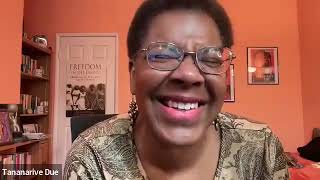
Steven Barnes and Tananarive Due host a live session on personal balance, money beliefs, and breaking into TV writers' rooms, anchored to morning fire dance and Tai Chi practices. They answer audience questions on self-care and fear of success.
Chapters
Hey, everybody. Welcome to the Life Writing Show. Actually, this is the Life Writing show as seen through fire dance, although we're going to really be addressing that more closely today just what that lineage is and how that lineage evolved. But we're starting just a little bit early because I wanted to be sure to record some part of a conversation that we were having with Mary. And so before we get back to that conversation, I'd really love for. For everybody to unmute yourselves and kind of say hello to everybody.
Hi, everybody. Hello.
Hello.
Hello. Nice to see you all. Hello.
Excellent, excellent, excellent. Jaime, you had your hand up. Is there something going on, buddy?
Yeah, Well, I had a question that I was going to throw in along with Mary's stuff. It's certainly nothing like what you and Tananarive were going through the last three weeks, but Sunday, Monday, and Tuesday this week, I got asked to help with an elderly couple in end of life stuff, and it went very well, and I was very grateful to be able to help. But then on Tuesday, I ended up with a subulated rib. One of my back ribs popped out of joint, and it really messed with my practices for my morning ritual and movement things. Yes, I recognize I have this pattern of carrying the world on my shoulders, and then sometimes I end up with things like this.
That's right.
It popped back in while I was asleep last night. So today I'm dealing with residual inflammation and soreness. But I noticed at the same time, as I was in pain all week, I wrote over a thousand words a day all week long and made progress on other things in my life that they weren't being neglected, but that everything we're doing here and everything I hear you share about the writers room, I'm applying and having incredible success with. But if there's any way you have anything to say about not taking the weight of the world on your shoulders and throwing your back out.
Yeah, I mean, you know, this is. Look at your values and look at your life and start with the most basic aspect of what it is to be alive, which is survival. And that means your own. And the more important it is for you to support the people around you, the more critical it is that you take care of yourself. Put your own mask on first. They talk about in the plans. It's easy to rescue other people. It's a hell of a lot harder to save yourself. It's easy to tell somebody else to go out and run five miles. Try doing it yourself. The difference between helping other people or projecting for other people and actually looking at our own self is enormous. Now, you've been wise enough to notice that you have a pattern of taking the world on your shoulders. And I'm going to guess that that pattern has not served you, that you have injuries, physical, emotional, and possibly financial from this. So what has happened is that you're not in touch with your own survival drive. The part of you that will protect the little boy that you were, that's the creative kid. So in other words, you're not protecting your creative child self. And your creativity will suffer down the road, as will your intuition if you don't take care of the feminine aspect of your energy. So you need to protect yourself. You need to ask yourself, why is it, under circumstances would anybody have the right to suggest that you are not as valuable as the people you're trying to help, Even if the people were more important, that you still had to take care of yourself? There is absolutely no percentage in you not taking care of yourself. So ask yourself, what's really going on? Are you. Some part of you considers what it is that you're doing to be reducing the pain in your life? Okay. Because everything we do is about either decreasing pain or increasing pleasure. So ask yourself. And I think that this would be a good idea for us to go a little bit deeply into this. What part of you does not want you to progress in life in the specific ways that you're trying to. That part of you will use your urge to help other people to slow you down. What part of you would that be if that. If that there was any reality in that?
I know there's certainly fear of success sometimes pops up. But what's really interesting is earlier in this process when we were setting out our goals for 2023.
Yes.
One of my goals was to double my income in this year.
Oh, cool.
Good goal. And I. I've made progress this week and gotten confirmation that starting in July, I will be 2/3 to 3/4 of the way there.
Excellent. Fantastic.
So that the work I'm doing here is having this real effect. I'm also in that position of waiting from now mid February until July for some of those benefits. So I have to stay the course.
Whether it hurts, you do. And here's what I need you to do now. The most important thing. God, I can say the most important thing about this process. The most important. That's nonsense. Everything is important. But I'm just. I'm trying to pull out some things and look at it. Balance. Balance. Okay. So your real personal progress will come from growing in all three major areas at the same time. Moving towards your physical goals, moving towards your financial goals, moving towards your relationship goals, strengthening your connection with your family, increasing your finances, losing some weight, whatever that is. At the same time, because you can't do all three without actually playing with the meat of who it is that you are as a living being. The part of you that does not want you to change will. Will give you apparent progress in one arena, but tempt you to neglect the other arena so you end up with the same number of net points.
Right.
Okay. It looks like progress. You know, God, I'm working 50 hours, I'm working 80 hours at the office, and I'm making a lot of money. Yeah, but you're destroying your body and you haven't seen your kids.
You know, that was really interesting because as I was waiting for this meeting to start, I got to doing my affirmations and I was thinking of the value of the I am phrases. And I got aware that I used to be an actor and a dancer, but now I am a writer and a gardener. And I'm not those things anymore. And that was very interesting to realize that I'm becoming something new to myself as we're doing it.
How about this? You never knew what you were. You never knew who you were. What you were doing was you were expressing yourself as a dancer. You're expressing yourself in this way now. You're expressing yourself in this way. You might ask if you are as pure and as honest an expression of yourself or as appropriate expression of yourself. But you were always there. When you were a child, you were there. When you're on your deathbed, you will be there and you will have many, many faces and wear many masks along the way. The trick is to be sure that you're on your authentic path and not just doing things. You're taking care of what's important, important instead of what is imperative. The imperative stuff is, you know, you know, oh, God, you know, there's. There's water on the couch coming out of the roof on the couch. There's water coming out of the roof over here. But not asking yourself, where's the hole in the roof? Right? You're running around and that's it. That can be another ego trap. Your ego mistakes makes a mistake of thinking that it's you. Okay? So anyway, I hope.
Honey, I'm sorry to interrupt. I just need to ask you to make me co host again. It didn't go through.
For some reason, it didn't go through. Let me see.
I remember seeing it and I thought I could. Yeah.
Here we go. I'm going to make you co host right now.
Great.
Anyway, let me. You know, Jamie, email me if you got more on this. I want to make sure that we move.
Thank you so much.
You betcha. So I wanted to make sure to start kind of over again now that Tananarive is here. This is my good lady wife, Tananarine Du, who is my co host and my partner in life. And the single smartest thing I ever did was surrendering my heart to this woman.
Sorry, I didn't mean that to sound like an evil laugh.
But it's not an evil laugh. It is a knowing laugh, which means that you know that deep in your heart you are evil. But that's another.
You see what he did there? The comedy is real. So yes, hi. I am so happy to be here this morning. Morning. And you all start early. I see people are here before noon trying to get a little bit of their fire dancing. So we appreciate you. And if anyone here subscribes to my newsletter, welcome. Talk a little bit about the Mastermind experience in the writer's room, which Steve and I have been practicing individually for 23 years or slightly longer, slightly before we got married. But yes, this group last week really helped me come up with my topic from my newsletter, which is the Power of the Mastermind. Because I was really struck by how much of what we were talking about from our writers room was striking chords with you in terms of your own lives and organizations and groups or even just families.
So sweetheart, don't go off of that subject right there. Just stay there for a second. Let's define a term because it's such a great term. Term comes out of this book, Think and Grow Rich by Napoleon Hill, one of Octavia Butler's favorites. One of Bruce Lee's favorites. One of my favorites. My mom gave me this book when I was a kid. She played audios of it when I was a kid until I was coming out of my ears. I hated it. Over and over again, the same thing, but it went in there deep. And I began to test the theories in it. And. And oh my God. My mom was a lot smarter than I thought. We may not have had money, but she made sure that I had the tools that I needed. She sent me in the right direction. And one of the things that this guy who studied some of the most successful human beings in the country talked about was the power of the Mastermind group. And he said several things about it that the mastermind Is two or more people working in a spirit of total cooperation to achieve a mutual goal. Okay, There has to be complete harmony, and you have to be heading in the same direction. All your dogs have to be pulling sled in the same direction. So your primary mastermind is your own heart to make sure that your own values and beliefs and the different parts of your identity all want the same things for you. That's primary. The next thing is your relationships. Your sweetheart, husband, wife, significant other, business partner, if you're talking about a business accomplishment, sports training, buddy. You have to be doing the same things at the same time at the same speed. Is said that the mastermind group is the only known way to compensate for lack of ability. In other words, literally lack of intelligence, lack of quote unquote talent. If you can create harmony, if you can create a group of people to accomplish a particular goal, you don't have to have all the characteristics necessary to accomplish that goal. The commander does not expect the privates to do the same job as the sergeants and the lieutenants and so forth, but you can still be part of a winning army in that sense. So on a smaller scale, if you lack a particular characteristic, you find somebody who has that characteristic and you offer them something of value. This works with an individual mentor, like I did with Larry Niven. I certainly had nothing like his level of compatibility or fame. So I offered him my energy, my sincerity, and I had done my homework. I had written lots of stories, I'd read. I knew his work. So I could then offer him my loyal heart and say, basically, empty my bowl, teach me sifu. That's one of the great strengths that I have, according to my teachers, is that I will actually empty my cup and ask for help, and then I will do what the teacher says. So what we're doing in that room is a single, spectacularly intelligent and talented individual. Our showrunner, who created the show, knowing he cannot write all the episodes of the show, bringing in other people that he considers are either near his level, at his level, or can be trained to do a piece of the process. Together, we work while he tries to communicate his vision to us. We offer ideas, and the people above us on the ladder take those ideas and fit them. Say, well, does this fit? Does that fit? And they keep moving up the ladder in a certain process until they reach the person at the very top. He has created a mastermind of people to help him achieve his vision. Some of us will write some of those scripts. He will write the first script. On the other hand, he's part of my mastermind. My mastermind is saying, I want my family to move forward in a particular way. What are the resources I need? I need resources in terms of my life and energy. Just take care of myself. I need resources in terms of my writing. I need resources in terms of finances. So who are these people in this particular instance? My resources here, my mentors, my compatriots, or other people in that writer's room. We're not competing with each other, although in certain ways we are. What we're really doing is we want that to be the best show it can possibly be. If it's the best show it can possibly be, it makes us all look good. So I'm there not to tell people that their ideas are wrong. I'm there to listen to what is being said in the room and find something I agree with and then put my push behind something that somebody else said that was positive. It's like, okay, I think that works, and then I'll give my reasons for it. I'll push for that. It's up to the story editors and the co showrunners and the showrunner to shoot people's ideas down.
And then use an example if I make that in. Something we would never do in the room, by the way, is interrupt someone when they're speaking. Or at least you try not to. But we had a situation where our showrunner sometimes leaves for a half hour to go take care of his dogs. So during that time, his second in command is running the room and running the conversation. And we were starting to break a brand new episode. So everything is game, you know, just what are your. All your ideas? And we started to coalesce around some ideas really quickly. It was like, pow, pow, pow, pow, pow. We came up with an idea that we were framing the entire episode around, and all of us were excited about it. And the show runner came back and he's like, wow, I like all the stuff you were talking about except that one central idea. And you basically have to sort of just, okay, wipe off your sleeves, dust yourself off rather, and boom, now we're like a school of fish. So we were a school of fish in this direction. When he was gone, he said, nah. And then we became a school of fish in this direction. And it's pretty amazing to be a part of that where nothing is sacred. You can't get attached to anything, but you have to be ready to build in another direction just like that.
Take this and see if you can come up with a life lesson out of this thing. You have to keep the whole pattern in mind to the degree that you can, which is almost like the showrunner knows the T. Rex from Jurassic Park. The rest of us, some of us are looking at pictures of the T. Rex. Most of us are digging up bones. We have no idea what we're digging up. He's trying to communicate the reality of a T. Rex to us. You have to stay in the moment with what's going on in that room, and you can't talk about something that's taking place in another episode or another season or even another scene. To a degree, you have to talk about what's happening right now. You can't go backwards too much, because once they've made certain choices that tie in with what was promised to the networks, that stuff ain't gonna change because you'd have to, like, pull out a Jenga block and the whole thing falls down and the clock is running. What have you done t. To adjust to this pace and that degree of specificity? And what am I not remembering about the process?
Now that. That sums it up. Those of you who listen to our podcast. Our podcast this Sunday is an interview with a writer slash producer named Al Letson. And he had a lot of wise words about breaking into television. And when we told him how mentally exhausted we were after every day in the office, something he said really stuck to me. He said, and I hope I can remember it correctly, but he said, of course you're mentally exhausted because you're. You're concentrating deeply for all that time. You have to concentrate deeply on what's being said. At the same time, you're trying to figure out how you might contribute to what's being said and not what was being said 20 minutes ago or 15 minutes ago. And you have to pick the right moments to present your ideas because there's the wrong idea at the wrong. The wrong idea by the wrong person at the wrong time, right? So the showrunner is always the right person. He's always the right person at the right time and the right idea. That's. He's the showrunner, right? But nobody else has that privilege, including his second. So his second is often the right person. And he might. He's always pretty much at the right time because he's the second. But he may have the wrong idea. Like, we were the school of fish following him, and the showrunners like, nap. So it's like, okay, back to you, boss. And the rest of us are basically, we could be the wrong person, the wrong idea at the wrong time. I mean, week one, that's how I felt like all day. Those first few days, I was the person, the wrong idea, the wrong time. And it's trying to calibrate all three of those things. That is the thing that makes you concentrate so hard all the time. Clarissa has a hand up. Hey, good afternoon. I just had a quick question while you were in that moment. T to just ask you your journalism experience, the immediacy of those deadlines and the quickness of that environment, did that help or not help? And if it did help, how? Absolutely. And what a great question. In fact, it was just Friday. I got to see the impact of that journalism experience because I am an obsessive note taker. Right. There's someone in the room whose job it is. He's the showrunner's assistant, I think, whose job it is to basically transcribe the whole day and take notes. But I'm kind of doing that and myself, like, it's more like keywords, things I circle that I want to come back to, or trying to keep track of what the showrunner was talking about as opposed to where the conversation has gone round robin since the last thing he said. But when I noticed that the showrunner's assistant was missing, he had to do something else. I went into copious note taking mode, copying his style of note taking, which is like everything, every detail, like, who liked what? Did the showrunner like it? Did his second like it? And I think that was incredibly helpful just in terms of a skill set and the ability to follow the conversation, because the ability to follow the conversation is 90% of where we need to be in terms of figuring out when to speak and how to speak. If you're not following the conversation while everyone is swimming this way, you said something that now the showrunner or his second half to sort of coach you. And we're not all swimming in the same direction anymore. We're treading water.
And sometimes our head fish will. Will say something that was not on point, and he will have to go back and explain something that was happening a couple minutes before. And he's patient with that. He's a wonderful teacher. Wonderful patient. But you can feel that if he didn't value you, he would be irritated.
Right, right, right, right.
He will take the time to. To bring you because he's betting that you're worth bringing up to speed. So it's like you have to leave your ego out of the room. But at the same time, you have to have enough ego to realize, no, I Belong here. I'm supposed to be here. And I guess I'm saying that because that's speaking to one of my senses of insecurity. We all have those voices in our head saying, what am I doing here? I don't belong here. What are they really thinking about what I'm saying, all of those moments if. If you're. Who's done river rafting, raise your hand if you've done river rafting, okay.
Or you can say so in chat, okay?
If you are going down the rapids, you can't be thinking about what it's like to be standing on the dock looking at you running the rapids. You have to be running the damn rapids. You have to be right there with what's happening, not thinking about what somebody's thinking about it. Not thinking about what was happening, not thinking about what is going to be happening. But right now, what's happening right here, right now, now you have to combine that a little bit with that thought of what happened before. That's how you learned what might be coming up. You know, let me save some energy. I know I'm going to need a lot of energy for this next turn, you know, whatever that is. But mostly you have to be in that moment that the story editor, the showrunner, has a vision that they have sold to the people with the big checkbooks. He has to deliver the stuff he promised to the big checkbooks. You see something different. I would do that differently. I think that violates what I think about human beings. And people have walked out of writers rooms, no slightest doubt, because it violated too much. But most of that time it's just ego. You wouldn't have written it that way. It's okay. It's not your story. If you want to write your.
Are you suggesting something? And you got crickets at the table, which happened to me just yesterday too.
Yep.
And it's like, okay, it doesn't feel good, but really, in three weeks, I've learned how to roll and move. I haven't quite moved on, but yeah, I've learned how to move on.
I don't know about you. I guess I do know about you, but I just want to reiterate that the level of specificity, the. The way story is being broken down so you can see how this works. And they're simultaneously thinking about production concerns, what time of year they'll do this, and they'll shoot this in a quarry and they'll do this.
The abilities of the actors, they're thinking about casting.
That's right. You know there's one actor who is probably being cast partially as fan service, you know, and that actor is going to also love being there and will bring a lot of energy to it. And you have to remember that you're not just telling a story, you're creating an experience. A story is part of that experience. This is business. Trying to understand all that, man. The first time I ran into that tea was when I was writing on Baywatch, to be honest with you, where the producers would take me inside and we talk about this or that actor and say, don't give them much public dialog. So it's like, yeah, yeah, we get. We get that. But understanding that there are literally thousands of people who are connected to this production whose jobs are connected to it working, you know, putting their families through college, you know, tens of millions of dollars, flowing with due dates. It's. Yeah. Iconic horror ip. That's right.
Can I. While you're reading my. My chat. So that was my diversion. No, I'm kidding. I wanted to go back to the river rafting example.
Yeah, please.
Because I think it's so apt and it also. I have an anecdote which explains why I have never been river rafting again. But we. We went twice. One, right after 9 11. I had a stitch in my side for days after 9 11. And my first time whitewater rafting, it was gone. It was like thinking about nothing but that completely present. I'm terrified of the water. You should know this about me. I'm not a strong swimmer. I'm terrified of the water. Even when I see CGI movies that are set underwater, sometimes I feel that panic response in my throat, like I'm drowning. So that's how afraid of the water I am. And I did it and I got past it and it was the right thing at the right time. The second time, months later, I didn't need it so much. It was scary to me. I didn't even understand how I had put myself through it the first time. I was very aware of every moment of my concentration. And these were individual rafts or kayaks. So I'm kayaking by myself. These rapids, I think it was like a level three rapid. I think like level four or five would have been River Wild with Meryl Streep. Right. Is that the name of that movie? So this is a notch below, but these were pretty churny waves. And I was okay until the. I thought. Until I thought I was finished. I felt my. My muscles unclench, my whole body relaxed. I thought we just had to round the corner and we were finished. But there was a huge boulder waiting for me. And on sight I told myself, it's going to get me. And it was a self fulfilling prophecy. I had stopped focusing and I had talked myself out of succeeding. It defeated me on site and I ran right into it and went into the water and someone had to pull me out.
You know, if you. So looking at that right there, what was needed was to have unconscious competence in the basic skills of rafting so that you know how to lean and how to do this and the timing of that and how to so the basics of doing it. The same way that you can't really ride a bicycle until you're not thinking about the pedaling, you know, and the handlebars and you're able to kind of go where you're looking. Once you're at that point, then you need. On the raft, you want to keep your eyes on the open spaces. Riding a bicycle through a forest, you keep your eyes on the open spaces between the trees. In life, you have to understand the issues, the problems that you're dealing with, but keep yourself trained to look for the openings between those problems. You know that you ask yourself, what are the component skills that I need to have at the level of unconscious competence? And Brendan Burchard, who I love, and I wanted to bring him up anyway because he said something so brilliant, I was listening to him this morning. Whatever that problem is, you break it up into five pieces. What are the five steps between you and whatever goal that you have? And then you ask yourself if those goals are too big. If you're still confused about it, you break those up into smaller chunks. The first one, you break that up into five and break that up into five until you see it small enough, you're starting to say, oh, okay, I can get this done this week or I can get this done today. And you have that. What are the skills that I need to do that? What do I need to do to acquire those skills? You might need to be breaking that down too. It's incredibly. The reason it's so frustrating is that as I was kind of saying to people before we started the advertisement, before we started the recording, that you can't quite see the shape of life. You can see aspects of it. The reason you can't see it is that you would have to be observing yourself. And the instant you observe yourself once again, you're stepping out of flow. So you're missing the flow of life. Also, words and concepts and pictures are not the things that they represent. And we will build these really great models that deal with words and pictures and schematics. And our temptation will be to mistake the models for the things and they're not. Life itself has to be experienced. So when we talk about the fire dance technique, which is to be moving and chanting and visualizing and flooding yourself with emotion, that. That moment, you're not just talking about your future. You're literally practicing in that moment how to be fully present. How do I be fully present? How do I move? How do I control my emotions? How do I learn? In this particular instance, how do I. If I say, well, what are the things that I really want? I want a television series and I want to move it. What are the five steps to get there? Well, to get a television series, I first have to understand everything that's needed to do in order to run a television series. So one of those things, one of those positions, and I've already found this out, is to literally define what the vocabulary of those positions are. Ah, showrunner, Bang. That's what I want to be. I want to be a writing showrunner. I don't want to write all the episodes that would be draining, but I'd love to be able to set the tone for it, so.
Or even like a co showrunner, where there's a more experienced showrunner who can deal with the network and the studio and all the budget crap. But you're more like the creative showrunner.
Absolutely. But I think that we would want to write at least one script, don't you think?
Oh, yeah, two.
Yeah. So we could do that. So it's trying to understand what these pieces are. Then what. What are the steps to learn that? Well, boys and girls, I can now tell you that I can see for the first time a road in for people who want to get into Hollywood. If you're living in, you know, where these things are being made, they, the writers rooms have assistance. They have people with no credits. They don't necessarily have even a finished project, but for minimum wage, they're willing to write on the boards and fetch and carry food and take care of the lights and take care of the sound and take notes and so forth and so on in that room. If these people are smart, and they are smart, they will keep working their way in, ingratiating themselves, finding out what it takes, and finally they make friends with somebody in that room. Be able to say, would you take a look at my script? Because they're demystifying the process, right? So that. That. That is the lowest Hanging fruit that I have seen in Hollywood. You know, before, my attitude would have been work at any studio, you know, running Xerox machines, you know, being a tour guide like I was. But now with the writers rooms, if I was starting over again and I was in my 20s, I would sleep in my car and I would be an assistant in a writer's room. That is exactly what I would do. And I would get to know everybody in that room, and I would be the nicest, smartest person, and I would bide my time, and from time to time, I would say something really, really, really smart. I would be so careful. I would be learning. I'd be realizing that everybody in that room is doing what it is that I want to do. Learn every one of those people, someone I could learn from. Who is it that I can help? What assistance can I be? I would worm my way in like that. And that is the lowest hanging fruit that I have seen in Hollywood. When people say, how would I get in? Tom Barkley said, how would I get into that? You know something? From what I can tell, they called around the studios, they called the production companies for the different shows that they liked and say, listen, I would like to be an assistant in a writer's room, you know, and I will do whatever it takes. I. If I had money, if I saved the money, I would do it for free as long as it was a union show, a real show. But I don't think the unions would let you do it for free. But I. It would not be about the money. It would be paid. Playing for position. So this is, you know, I was telling to telling Tonon finances come into this. You need to have enough of a cushion to be able to support you if things aren't going well. Clarity of your goals, dealing with fear, the ability to network with people, all of these things. The ability to day after day, knowing that what you're doing today is leading you towards the future you want. Sweetheart. Tananarive. What am I forgetting here?
I was so busy in chat. We're having a separate little party over in chat. So there's a lot there. You know, it is tougher, obviously, for older people, and not just older people, but people who don't have the luxury or the lack of responsibilities that would enable them to just pull up stakes and live on a friend's couch and start as a PA. No one's looking for PAs in their 40s or 50s. I mean, this is just reality. So I would say for a lot of you, your best route Into Hollywood is through IP is through writing your own original short stories.
IP is intellectual property.
Intellectual property. So you have work that other people. That's how I got in. People coming to me asking to option things, and I'm like, well, how come this is never going anywhere? And foolishly thinking, oh, well, if I learn screenwriting, I can help this along. Which wasn't so foolish in the end, but it seemed foolish for many years because it wasn't working. But learning how to write screenplays is where this all begins. I wouldn't even worry about positioning and meeting people and how you get a first job until you have a spec script you are proud of and that you have had vetted and read by people who are used to reading scripts who are not related to you. And then now it's like, okay, if you have that ip, you've written a short story. This happened to one of the women in the horror noir anthology movie. She'd only written a handful of short stories, maybe two or three, but one of them got produced with horror noir, and it turned out she wasn't a screenwriter. But if you're in a situation like that where you get approached by producers, even if it's not actually going to get produced, but to be in on those conversations, to learn pitching, all that is essential, and that doesn't happen unless you have a script that you can show. Because believe me, Hollywood is more open to bringing in prose writers and playwrights and people who don't have the experience, but not if they don't have the script samples. They're not in the business of trying to teach you how to write screenplays.
And how do we write? How do we learn how to write scripts?
T. You know, sentence day? No, actually, short scripts. Right. I would start with short. So what I would do is if, like, if I were in the position of trying to come in completely from the outside, find that favorite short story you have published or unpublished. Published is better. But it could be unpublished and write an adaptation of that as a script.
That's right.
It cheap. I mean, I don't know if you were talking about making it. I mean.
Well, you know something? No, no, no. I. I was looking for your view on it. Not really my view.
It starts with writing it. It starts with learning screenwriting. And it's not that you have to be, you know, an Emmy level screenwriter to get your foot in the door, but do expect it to be a fight. Like Victor Laval, for example, who has the changeling now over at Apple. Plus that. That's Going to come out. He was on the set. He was in the room. He had to fight for that. You know, his work was being just like. I had to fight for it. There were tons of people optioning my work before I was even approached as a screenwriter. Quite famously, not too long ago, the reason we started writing more speculative scripts was because I had a novel going into development at a major film studio, and we were not even interviewed or considered as the screenwriters. Despite having credits at that point, I only had one credit, but Steve had several. So it's about the work. I mean, that's the thing. Hollywood is very frustrating, and you can get really hung up on the obstacles, and the obstacles are real. But the fact of the matter is, sometimes people get lucky. And one of the ways you can make your own luck and the best way you can make your own luck is to be a good screenwriter, which means you're practicing. You're watching movies while you watch the scripture.
Every Saturday. Every Saturday, watch a movie and read the script to the movie. You go online. There are plenty of places online you can get scripts for movies. That's how you do it. In one year of watching movies and reading the script for that movie, you will know more about it. You will create that. That intellect, kinesthetic feel for when things are wrong. That only happens from. From over. Over learning. Sarah Siegel has her hand up.
Yeah. Can you guys hear me okay?
Yeah.
Okay. My path in, I couldn't take the path all the way to the end, but my path in was from writing reviews. When the X Files started coming out, the Internet was. Was brand new, and I was posting reviews of the show, and I was. That taught me to break that story. I was breaking the story because my. My question in every review is, what's working? What's not working? How does this part fit with this part? What?
What?
Where did the connection happen? Where did it go wrong? I was breaking all these stories and then writing reviews, and one day I got a call from Chris Carter, the showrunner. The creator of the X Files. Oh, yeah. And he. He had read one of my reviews, and he said, you know, in the middle of the phone call, you're not supposed to do this. WGA rules are against it. But he said, by any chance, have you written a script? Well, who hadn't? And so a lot of people haven't.
A lot of people I know, but I don't know.
I don't know if the WJ says so now, but you're not supposed to ask for a script. You Know, or at least that was true then. But, yeah, I. He faxed me a release. I sent him a script. I got four pages of notes back. I got invited. You know, I went down. I pitched, you know, a couple of ideas. He liked him. But at that point, I realized I am a married woman with two young children to support. I can't move to Hollywood. I can't. I. I am the support of five people. I can't do this. You know, but that was a totally.
Legitimate choice on your part.
I know, but my point is that this was a way in. Yeah, I didn't. I didn't. I didn't start it. I didn't start out that way. I didn't. I didn't aim it to be this way, but it did catch the. The eye. These reviews posted in the fan groups caught the eye of a very literate producer, you know, very literate showrunner, Chris Carter. And it told him I was on the right track.
Yes.
Yes.
That's a great. I love everything about that story, if you don't mind me.
It took everything. No, but what I wanted to say was that what you have the advantage of doing is looking at the process, the gap between where you wanted to be and being a writer on television. You saw. You could say that some of this was happening unconsciously, but you saw there that writing reviews and getting really good at that made you famous within that community, to the point that Chris Carter, the creator of the show, saw that you then had a chance to see an actual path to being a Hollywood writer and the cost of it. And you figured that at this particular time, you did not think that that was a cost. You cost. You were prepared to pay.
I love.
That was not in alignment with your values.
I love everything about that.
He was very generous to me. He threw me as much work my way as he could. You know, working on the first official guides, you know, doing all the research for that. Flew me all over, you know, to location shoots and everything, to interview people. Everything except an actual job on the show.
Right.
Well, it's. And that's grueling. And I applaud your decision. Decision, actually, Steve and I marvel all the time at how a year ago, even.
Yeah.
We could not have taken this job.
Yeah. And you know what? You know, you know what it's like. You have to choose between. Okay. My family.
Yeah.
And my dream. The family is also a dream.
But, you know, it's not that I have to choose between them. I've never chosen. I've never chosen between them. Overall, I have certainly chosen between them at certain times. There have been times when I had to choose between my career and my family. And I figured I could expend that time and get back to my career. I was aware that I was making it tougher for myself, that I was reducing my chances of reaching it. But I knew that my daughter or my son or my wife were more important, that I could live with nothing, with my career not getting to some particular point. But I could not live with not being a good father or not being a good husband to the woman who I promised I would be the best husband I was capable of being to. I promised her that. And I have to make the assumption that the deepest part of my heart understood that if I found a good woman and emptied my cup and dedicated myself to her, she would help me be a better man. And that part of that process would be uncomfortable. I understood that academically and abstractly. I did not understand when I was curled on the floor crying my eyes out because I couldn't see, because my former version of myself had been shattered. I was not able to be a sandwich about it. But I did know that I have mentors. When we connect this with this path. And what I love about what you said is how much we can analyze it because it's not really about getting into writing for the X Files. It's about getting into writing or is about finding any dream that you have or more importantly than that, to being clear on your values so that you can decide what is or is not appropriate for for you. So when we do the morning ritual stuff, that's what that's about is saying this is where I want to go is in alignment with my values. And these are the steps that I would need to take. And these are the mentors that can help me get there. And this is the energy that I'm going to need to learn how to vibrate to those mentors like a tuning fork so that I can do the things every day that will keep me on the path, that will get me into things. You know, it's really complicated unless you go over and over it enough that it starts feeling simple again. It's just chop would carry water. It's just you spend 15 minutes on every Sunday thinking about where it is that you want to go long term, short term, immediately you look at your values, you think about these things every day, and you get just a little bit better every day at just getting into your life and engaging completely and loving the people you love and doing the Things you do and taking care of your health and your pets and your children and yourself. And you look up after a few months and say, I like the way this year is going. Or after years, I like the way this year is going. Or after a decade saying, I'm at a completely different place in my life. This is good. This is in the alignment. And the beautiful thing about the hero's journey that underlies life writing, the application of Joseph Campbell's model of the hero's journey is it suggests that the structure of story appeals to us because it is the structure of life. We do interruptions in the story. We know what people love, and so we know if we wreak havoc with this, it's going to cause them to react like that. And that's all a story is. You take a character, you take a life situation, and you bump the life situation to the character, which forces the character to explain, explore the life situation, enforces the situation to reveal things about the character. What is it you want to show about a character? You create them and then you bump them into life in some way or another. You take, you know, John McClane, a. A cop who thinks he's an ordinary cop and he turns into super cop, who more than anything else in the world, loves his wife and is sorry that he was ever anything other than the best husband that she deserved. You know, he. We. He hits Dark Night of the Soul. He does that. But in order to get that. That moment of softness, you have to have Nakatomi Plaza and terrorists. But if you have the Nakatomi Plaza, the terrace, but you don't have that moment of softness, then you are not recognizing that life takes everything from everyone. Life will push you absolutely to the edge of what you are and force you to see things you've never seen. So, yes, you are going to end up curled on the floor crying your eyes out sometime because your old image of yourself wasn't who you really were, was it? You're bigger than that. You know, it's so many times parents, you know, I don't know how I'm going to be a parent, and I don't know this. And, oh, my God, you know, the world is such a terrible. And the first time they hold their child, boom, it's like a door opens up in their head and they say, yes, I understand. I will give more of myself than I thought I had. I will complete this journey for me, holding my son up to the sky, doing the roots thing. Behold the only thing greater than yourself and making a solemn Promise to God that I would deliver my son safely to his adulthood, that I'm not willing to let anything stand between me and them to be the best husband I could be. Tonight, I can't be perfect, but I can absolutely give it everything I have every day and try to apologize for any mistakes and learn from them and never make the same mistake twice. Because she deserves just that. Tananarive as any. As anyone who knows her knows she is. She has her own destiny. She has her own force. She is an amazing woman. Amazing woman. And if I could not walk at her side and watch her back, then I would want her to go off and do whatever she needed to do by herself because I will not hold her back. That would be a sin. That would be an actual sin. To the spirit of what it is that we are creating here. And the spirit of what you have with another person is actually an externalization of the spirit of the bonding of male and female or different aspects within yourself. So who it is within yourself is reflected in who you are in your most intimate relationships and your family and your career and your community. Going out to the world, that integrity goes out, out, out, out, out, or comes back, back, back, back, back to the one part of the entire process. You can control your own actions on a given day, your feelings about what are happening to you. And if you understand that feelings make it possible for us to continue to act, that just controlling emotions can help you create a better world, which will give you a better emotional experience, which then starts working in a positive spiral. Oh, God, so much, so much good stuff. So let's kind of get up and breathe for a minute. Yeah. First of all, just thanks. Thank everybody. Just unmute yourselves. And if you enjoyed what I was just saying here, you know, let me know. Make some noise because.
Phenomenal.
Interesting day.
Listening.
You know, this is the greatest thing about this, is this is not in the slightest degree what I was planning to talk about today. You know, it's like, I will make plans, and then what I will do is I will hope. Somebody will throw me a curve, throw me a curse, somebody bring me a problem, do something that I have no anticipation of. Because if I plan it out, that's coming no matter what I do. It's coming from my ego, it's coming from, you know, I know I can do this. But if somebody brings me something live, it's like, I don't have time to prepare for that. I don't have time to fake that out. All I can do is react like somebody Throwing a punch in my head. I don't have time to think about. Oh, it's karate. It's Covid. No, I better get my head out of the way. So. Oh, boy. Anyway, so. Ah. Okay. Let's rub our hands together. Shake them out. Get your hands really close. The more relaxed you are, the more you can feel the heat between your hands. The right hand should be able to feel the left, the left, the right. Little tingling. It's like you have a ball of warm air. And the more relaxed you are, the further apart your palms can get and have that tingling. Yeah, you're breathing down in your gut. Your head is held as if by a string from above. You feel as if you're suspended in water. Really, You're just floating there. Just floating there. Oh, that's nice. Okay. With my feet approximately one fist distance apart, my heels approximately one fist distance apart, just take a look at the very first move, the Tai Chi. It feels like I have a bubble expanding here. Expanding, contracting, expanding, contracting. And the very first move is called rising hands. It's like I'm expanding on the surface of that bubble. Expanding. Just going to do this for a moment. And you can do it seated. If I was seated. Expand and contract. Imagine you're floating in a hot tub, floating in the ocean. The smallest amount of exertion that makes your arms move. Inhale, exhale. Okay. That first movement in the form, Rising hands sets the tone for the entire form. Set the tone for the entire form. So now my favorite part, where I just kind of say comments, questions, requests on any. Anything that I have covered during the first part. We've done the work to get the car up to the top of the roller coaster. Now we can just let it go. You know me, and I would like to know you and your concerns and anything you would like me to talk about, whether it's Tai Chi or demonstrating something or applying this to some aspect of life or you want to hear anything whatsoever, this is my time to make sure that you feel that you've invested your time. Well, here I'm here to serve you and for no other reason. So. Okay, so, Ross Merker.
Yes, sir. This was something that I entered in chat a while ago when we were back on the whole im affirmations. And you know what you're coming from by way of personal qualities and core ideas and foundational abilities. And all of a sudden, I bridged a gap to something else. I'd seen a recent study in psychology. The putative idea was fitness and willpower. And they had half of their group saying, I will do this exercise regimen. I will do these diet regimens. I will. And they had the other half of the group turn the words around and frame it as a question. Will I? And the idea was to measure the efficacy of statement of fact that some part of your subconscious may not accept as true versus exploration of the question, will I? What will I do? And it occurred to me as you were talking to do that same thing against the I am statement.
Okay.
Or if you're struggling to believe I am worthy of success, I am this person. I am doing these things versus am I? Kind of a deeper, kind of a shortened version of who am I?
Yeah.
I think that there are definitely times when one lives in the question. But when it is time to take action, even though question is going to be a part of it, I wonder how he will respond if I jab the tip of his nose. Most of it. Our ability to act and act with courage depends upon the action matching our self image. That we believe that this is who we are. We believe we can and should do it. If we don't believe we can and should do it and it is who we are, we will hesitate. So the morning ritual fire dance specifically is not the time when we are questioning. It is in that sense a Yang time, an answer time. It is, I am this person. There are definitely time to sit quietly and ask those other questions. And ultimately, because you are all adults, what you're going to be doing is testing these different ideas and trying to see, well, does this apply? Does this apply? I can be as honest as I can possibly be about what my experiences are. And the reason I think these things are happening are these different techniques. But ultimately, each of you has to be a scientist in their own life. And I want you to find other role models at times to find other sources, experiment, come back to the community and share what you learned. Try it both ways, Russ. Find out what seems to work best for you. I know that I believe and that the path that I'm describing here is best served that. That particular thing, the finance, seems best served with positive statements. As if you were the person who could do this easily. And you have no doubt at all that you can do this. That I have seen that once you have that attitude, then questioning becomes. Has a different. Has a different complexion without that attitude. I think I've known too many people who just simply got lost in their questions. Can I. They question constantly and they never get anywhere. So I would be. It's a really vital Question. But it has to be imbalanced with the part of you that says, I am am I, and I am have to be in a. There's a balance that has to be there. So be sure that. That you experiment to find what that healthiest balance is for yourself. Okay.
Thank you.
You betcha. Who else got a comment, question or request? Anybody? Sarah Siegel.
Yeah. You have made a choice to go into screenwriting as opposed to continuing with a. An independent career as a novelist or short story writer.
What have you.
Correct.
Can you speak to that? How has your dream changed?
Absolutely. No. My dream. First of all, I would like to, you know, just kind of do a little break here for just a second before I answer that and say that this entire thing is brought to you by fire Dance, you know, and please join the program over@firedance tai chi.com so that I can really coach you more efficiently and effectively. I would love nothing more than that. So that's Firedance Tai chi dot com. So, yeah, I mean, basically what happened is that years back, 10 years ago, when I was in Atlanta, I did not have access to either Hollywood or books in terms of. I wasn't. I didn't have Larry and Jerry there. And New York was getting very uncertain. Ebooks were coming in, and New York was acting funny. People's advances were just crashing through the floor. And I'm talking about some of the best people in the field, some of the best people in the world were not able to sell books. And I was looking at myself and what I was doing there, and I was saying, this is ridiculous. And I wrote one book for which I got a pitifully small advance. And I thought at least I'd have a really good experience. Experience with the. With the editor. And the editor basically had a nervous breakdown. And I got no notes back on my book for over a year. I was already feeling incredibly insecure. And so when the book came out and I realized I got wonderful reviews from the three people who read it, I mean, it just. It was. It was so funny. It's like I felt like no matter what I do, I can't win. I can write the best book of my life that everybody who reads it loves, and it doesn't do anything for me, and the money is nothing here. And so what do I do here? Do I trust my retirement to this? Pattern intelligence, in some ways, is problem solving, but it requires some pattern recognition. And it says that I could see which direction this river was going, and it was off the cliff. You know, I had noticed that some of the very biggest people in the field, most honored people in the field, lived from convention to convention. They were poorest church mice. They won all these awards and we loved them, but they were destitute. And I said I happened to work in Hollywood enough to believe that this game is not impossible. That I probably would have been pretty successful if I hadn't had my life disrupted because I needed to be a dad and a husband twice. I lost at least 20 years off my career just like that. And so I thought to myself that if I thought I had enough energy to get myself to the next level of success in Hollywood or in literature, which one was likely to create a better life? And just as one thing that I can tell you is that the Science Fiction Writers of America, when they can put together $500 to send Ted Sturgeon because he has hospital bills, they quite rightfully celebrated. That was really a good thing. But the WGA has a friggin health plan. They've got retirement. I mean, you know, I'm talking about, you know, this is a Writers Guild. America is a union. Sappho is a club.
Yeah.
So I figured that I not only write, but I also have enough behavioral, perceptual flexibility that I can learn new things. I also got a partner who is uncannily lucky. Tananarive has her own destiny. When I say that I have just stood back sometimes and just had to shake my head and some of the stuff that will happen for. Because she is perfectly suited for her life. And so with Tanari, would you tell somebody? Somebody just. Just one of the lucky things that. That makes me shake my head.
Well, I mean, our current showrunner is someone I just met walking in a hallway when I was on a shoot. So there's that. And I was too shy to speak to him, so he was the one who actually had to initiate contact, which is the ironic part of the story.
It's like Jordan Peele seeing one of her tweets and showing up at her UCLA class. It's like, what?
There was a little bit more to it than that.
But yeah.
If you, if you see what I say, you know, there are times I don't know what I'm married to here, you know, All I know is I'd be the biggest fool that I could imagine not to realize there's some magic going on here. We got Kathy Fall and then Cecil Washington.
I see you caught me in the middle of sipping my tea. I wanted to ask about, you know, what I always come out of these with homework assignments. So one of them you were talking about, words, concepts and pictures are not the things they represent, which is such a wonderful way to put the map.
Is not the territory.
Yeah, that's Corzipski territory. The finger is not the moon. The finger pointing at the moon.
And that's Zim.
But in order for me to coach and teach and communicate, I have to use words and pictures.
That's right. So what could they be? They could be fingers pointing to the moon.
Yes, but how to. How to communicate and convey without having. I've had people get lost in the words in the pictures. Yeah, course. Makes sense to them. They got that, but they are not transferring. And so why.
Krishnamurti basically was my. Mentored me in a very specific way when he said that he was no longer teaching people who did not have a physical practice.
Well, yes, yes.
So what you do is you anchor it to physical action. If they take the action, they have the attribute. If they don't take the action, they don't. Simple as that. You take it out of the realm of the theoretical. And if you can connect it to, you know, it's like I connect mine to physical movement, Tai Chi, and like, let's say the five Tibetans. That enables me, literally, I can talk to somebody, say, well, you know, how's this going? How's that going? How many Tibetans are you doing? And I know exactly where they are. You know, the physical arena doesn't care what you think about it. It's just there. The physical world is just there. So I would say that you. You force them. You force them to do things. And you know that if they can do these things, then they have the attributes that you're trying to help them to get. In other words, you. If you ask and someone says, I have a problem, your problem. My problem is I'm really shy. Well, what kind of things would you do if you weren't shy? Well, I'd ask this girl to go to the dance, or I would go march up and ask my boss for a raise. So all you have to do then is to give them the support they need to take those actions. And once they've taken those actions, as soon as they can take those action regularly, for all practical purposes, that problem is over. Even if they feel uncomfortable about it. Who cares if you're having a good life? To a certain degree, it's like, if I'm in great shape and I'm making great money doing something I love doing, and I'm with the woman that I Love, you know, how bad can life be? Even if there isn't any higher meaning to life? Seriously. So does that answer your question, sweetheart?
It does. Thank you, Steve.
You betcha. Cecil Washington?
Yeah, I got a couple of questions. How can I say this one? I can understand the thinking to grow, but I think I might be afraid of the rich. Is it possible I could be afraid or scared to make money?
Okay, yeah, absolutely, 100%. It all depends on. You might have the belief that money is the root of all evil, or that only bad people have money, or that if you have money, you'll just attract more problems, or if you have money, people won't like you as much as any number of different things. The thing for you to do is to look at the beliefs you had about every single thing you or anyone else in the world has ever done has been to avoid pain and increase pleasure. So if you're not doing something, anything, the only reason that is ever true is that you associate more pain than pleasure with it. Because the instant you associate more pleasure than pain with doing the thing as well as having the thing, you'll automatically do it. So whenever people are stuck or engaged in self sabotage, you have to ask yourself, what are your beliefs about this? What are your emotions? What are your experiences? Who do you think you would be if you had that money? And this is where journaling comes in. Really, really. Well, in terms of my morning ritual fire dance, that would be one of my mentors. And I would literally visualize it'd be somebody who makes a transition, tremendous amount of money and does. Seems to be very, very happy and does a tremendous amount of good in the world with it, you know, and just, you know, who is that person? And you visualize somebody who started from with fewer resources than you have and made it to having far more resources than you've got. So that, you know, if you could model this person properly, you would not be being a bad person, you'd be a good person, more successful person. What I can guarantee you is that the internal representations of a person who can have your dreams are different from yours. They see the world differently, they take different actions every day. And if you start taking those actions, you start getting those results. Your emotions would bubble up to the surface, primarily fear. So the real question of all that stuff, what are you afraid of, Cecil? Tell me. On some level you already know. So what are you afraid of?
I think I might be afraid of losing touch with the people that I have.
Of.
Becoming like people I've criticized before. Yes, yes, of forgetting about the people that are important to me.
Yes, absolutely. Those kicking up.
Yeah.
What you do is you would study people who managed to become rich and take their loved ones with them and be benefits to their community and inspirational. You find the counterexamples, my friend. They may be rare for you, people who have your values and manage to thrive and never forgot who they are, but all you have to do is find one. All you have to do is find one person who didn't lose themselves and then ask yourself, what did they do every day? How did they make it happen? But make no mistake, you put your thumb squarely, finger squarely, on the issue that on some level, you both want and are afraid of success. And you will need to examine those beliefs. The armband flip theme. You're going to have to examine your beliefs, your values, and your positive and negative emotional charges when it comes to money. And until all those things are moving in the same direction, you will always fight yourself. So your work is. Is. Is just direct. It's. It's right there. And the beautiful thing is that once you know what the work is, all you have to do is take one step, step, just one step every day. You don't have to solve the whole problem. Right now, your first issue is to find role models of people who got rich and weren't fools, didn't lose themselves. Okay?
Okay.
You bet. You see some. Good luck to you, man. Keep us. Keep us, you know, informed as to what you're doing and how you're trying to. Where can you find how you're trying to keep moving forward?
That's just real. If I can jump in for a second?
Please do.
The fear that he expressed, I think, was part of the impetus for Jordan Peele making his movie, Us. We've talked about this on our podcast, the Doppelgangers. The version of you that's the have and the version of you that's the have not. And the conflicts he must have felt. I mean, imagine. I mean, he was doing all right. He was an actor already, and he was doing Key and Peele and Mad tv. But after get out, that's a whole different experience. And money he had never even dreamed of. So I. I think we're seeing that conversation in his work.
So ask yourself. Let me ask you a question. Tell me right now. And this, I think, is so important, because it's a third of our lives. Nothing works like money in the arenas in which money work. And if you think that if you did not grow up in a loving home where People did good things with money and had a lot of money, then you almost certainly have negative beliefs about it. You have to, because how could you possibly think my mom and dad are wonderful and brilliant, they work very, very hard, but they don't have money. It must be because money people are bad. Or if there's an entire community that has no money, they have to have a belief that it is impossible to make money money because otherwise they'd have to take more responsibility for the pain in their lives. So it's the man. Now, that's not to say that if you're part of an oppressed community, you don't have much more difficulty getting there. That's obviously the case. But it's also the case that we have to take total responsibility as individuals or life will just crush us sometime. It's not about whether or not it's fair. It's about whether or not you're going to provide for your family and survive as you also are taking the steps to help make it a more equitable society. It's both at the same time. So let me ask you the question directly, because I think everybody's kind of asking it one way. How do you define money? What is money?
Freedom and security.
Interesting.
That's exactly how I would define it.
I like those words, you know.
Now that's what it represents. If I had money, then I would have freedom and security. But what is money itself?
It's just a physical representation or digital representation of energy.
That's right.
What we value.
That's right. So what you need to do is find some way that what you do to make money is directly a benefit to your community. Directly. Directly. I mean, I don't know how you do that through donations or scholarships or whatever it is that you do, or turning around and starting a small business school to help others learn everything. Notice the first is that Tanandarive and I, as soon as we learn anything about screenwriting, we're immediately teaching it. You notice that? That's because we're dealing with our own sense of where's our community, how are we helping people if we succeed too much, where, you know, what. What is happening? Even the fact that I just use the term too much right there, you know, says. Says that. So it's like, you know, I'm always trying to teach everything that I need both to be able to bring people with me and also to be able to be sure that I know this stuff, when I know this stuff spontaneously. It's like in the martial arts, if you Know you're supposed to do a technique and the person is moving with you, that's one thing. But if you, out of the corner of your eye you see something coming at you and, and suddenly the guy's on the floor. I guess. I knew it. I remember. I remember a friend of mine was a. A security guard at a, at a prison up in, up in Portland. And he's also a high ranking jiu jitsu practitioner. And he told me about the day he was walking on the block and there was a riot. It was a fight. And he walks into a cell, this guy came at him and he took the guy down to the. He walked out of the break room with a coffee and the guy threw on him. And he took the guy down to the floor and handcuffed him and suddenly realized he was still holding his coffee and hadn't spilled it. He said from that day forward, it was no longer an adventure, it was just a job. That is unconscious competence. I remember with me. Okay, so I'm doing a demo at a convention and at one point I asked if there was anybody in the audience who had martial arts experience. And so a couple guys raised their hand. This one guy said he did mixed martial arts. Great. Come on up. So I continued the lecture. While I was doing it, I was dropping him and doing this, that and the other. And I could tell he was getting a little bit frustrated with me, which was okay. And at one point I took him down and he's on the ground, he reaches out and he grabs my hand, he starts to pull me down. And I realized if I fight, if I fought him, that I was actually going to land directly on him with my knee first and he was going to get hurt. And so I gave into it, let him pull me, heeled around behind him, got wrapped my legs around him from behind and got him in a chokehold and suddenly realized that I had never stopped talking to the group the entire thing. I continuing my lecture. And I think that that was one of the moments when I realized, oh, I guess I actually know this. It was funny, but that's the feeling we want all the time. That thinking back over moments like that, that. And then the little boy inside me who was always bullied, he loves the fact that I could tell a story like that. And it's the truth. So what does he do? Because he's happy, he gives me more creativity. He feels totally safe. He's happy with daddy. He gives me an endless stream of ideas. So I hope you're seeing how all of this stuff connects with everything else. This is all part of the same thing. Trying to understand a body mind system that's actually just a little complicated to wrap our minds around directly. All I can do is give you a practice. You know, the question of what do you do? People, they have these ideas. What I've done is I created fire dance so that if you will actually do these things every day, suddenly we will have a vocabulary that is not just words. Suddenly I can teach you things I can't do just with just words. You know, all I can do is say, are you doing it? What is your experience? I can give you some tweaks. So please, please, please, you know, just try it for a couple months. If you don't like it, I will personally refund your money. You know, just firedance Tai chi dot com. I cannot, cannot tell you how much I literally do this every, well, six days a week. I don't do it on Sundays. But it is the only is the practice I'm doing that allows me to be a husband and father, Hollywood screenwriter, martial artist, all at the same time. And if I'm not doing all three, I know my life is going to tear me apart. I know it. I have to do all three or I'm not functioning. So it's literally saving my life. I'm giving you the best program I know of and the best that I've got. And that's just the truth. Cecil, did you have another question?
Yeah. You were talking about before you started recording about geometry and it's kind of reminding me of what I've heard of Sacred Geometry. I just wonder if you knew a good place for me to start. Like a book, video, YouTube channel that will help me learn about sacred Geometry.
You know, I guess the short answer is no. I don't know. I. I have certainly engaged with, with sacred geometry in the martial arts, in things along the lines of the Enneagram with various meditative mantra, yantric structures or yantric structures. But I don't know who's really good with it. I honestly don't. Sorry.
That's okay.
Who else? Comments, questions, requests on anything that we're covering here? Tananarive.
I'm here.
Yes. Is there anything that you wanted to share with them today?
No. Just to sort of reiterate what you have been saying, I think I, I went back over week seven or eight, I think it was seven in the Tai Chi course. Yes. I'm also a student and I thought it was such an interesting topic. Not that you need to like Do a full, like, session on it. The idea of seeing Tai Chi not just as sort of a. A way to work on your joints and mindfulness, but also that it's a martial art. That it. Within it lies the core of a martial art and to sort of have a warrior spirit in terms of fighting for yourself and just having the 20 minutes a day that you take aside for yourself or the hour a day that you take aside for yourself. And how so many of us have convinced ourselves that we don't have 20 minutes for an hour that we can call hours, and how it's really getting in touch with the warrior within, which helps me with visualizations with the Tai chi. So they're not abstract, you know, they're like, they symbolize movements, fight motions. That helps me, that helps me remember, but also the emotional part, which is, yeah, I'm fighting for me, this is my time, I deserve it, I've earned it. And in fact, how can I take care of other people if I'm not taking care of myself? So I'm not really asking a question, it's more of a comment, but just, I like that. I liked that, that lesson. And I think, yeah, I think I.
Do have to address that.
Okay, so.
So physically, the difference between Tai chi and, let's say, yoga. Yoga tends to be, I think it's called a closed chain exercise. Quite often where your hands are on the ground at the same time your feet are on the ground, it's closed chain at those moments. Tai chi has very few closed chain moments. It's almost all open chain. Certainly it is in some ways a sequence of joint mobility drills in a very specific pattern.
But.
But it's not as generalized as something like yoga is. It is specific to martial arts. I mean, there are kicks, There are kicks, punches, holds, locks, throws, all encoded in there. In general, it's the skeletal alignment of these things. It is often the reverse of the breathing of them. But there are in movements like. Repulse the monkey. Repulse the monkey. Those movements here, if you ask, you might ask yourself, well, what, what is that? Okay, so the one thing, there's obviously a deflection, double deflection. Okay, so if that was something was coming more rapidly, I'd probably want to spit to the side at the same time that I'm doing the flipping like that, right? So. Down here, low, there is a deflection of like a kick or something. Something low. At the same time, there's a palm strike here. Now what is that palm strike? Consider that the leg Is going back at the same time. There's a throw there. I'm holding somebody here. Anybody who knows judo? Good. Kazushi. Here, hold him here. Leg sweep. Is that ciyo nage or something like that or what? If I looked at the upper body here, it's boom, boom. I've done deflection strike here. It's easy to see the flow. Tai chi as combative. When you take a look at the flow of, let's say kali or screamer, where there is. These are lines of combat. They're lines of movement at the same time that I'm breathing, at the same time that I'm shifting my body to get my hips. The rotation in there. Now there. There's a stick, right.
If I was.
Empty hands. It's just the hand here, and that's taken from the outside. Okay. Inside, inside, outside. It's all there. But most of it is just the feeling of the movement rather than the combative reality of it. We're kind of just dreaming our way through it, if that makes sense.
It does make sense.
Okay, great. Well, you know, if there aren't any more comments, questions, or requests, all I can ask you to do is please, please, please go to Firedance Tai Chi.com, get in there, practice so that next week we can answer your questions. We could help you as much as possible. Remember to save chat. Tanari, can you take care of saving chat?
Yes, it's in. What I'm doing is I'm going to my chat bars. If I want to type a message and instead I go underneath it, next to the emoji symbol, there are three dots, and when you click on those three dots, the first thing you see is save chat.
Did I finish the perspective discussion? Mary, would you ask me a specific question if that's. If there's anything that I needed to cover?
No, you were saying when I asked or said the windshield, looking through it versus added and then putting the, you know, the eraser in front of my face or moving it so you could see.
Yeah. When you're driving, if your vision is on the window rather than on the road, then you can't drive. If there are other contexts where something is too close and you need to make it further, something you need to further needs to be close. What you need is to know what is appropriate right now. Do I need the long view of what's happening in my life 20 years from now? Do I need the short view of what do I need to do in the next hour? Is there a problem that seems huge Do I believe that that problem will be solved five years from now? Oh, really? Then why not just kind of stop worrying about it now, Just like, let me just solve the problem. It's going to get handled eventually. I don't think it's going to be there forever. What perspective do you need? So always, always be prepared to have multiple perspectives on any particular problem. You know, look at it from the point of view of the hero's journey or what part of myself psychologically or physically is affected by this. Or do I need to divide this up into 5 chunks or do I need to do this or need to do this? The more different ways you have looking at it, the less likely you are to feel trapped by it. It's just an issue. There's just there are finite number of things that you can try. There's an answer out there someplace. You know, I keep digging in this pile of horse crap because I know there's a pony in there somewhere. Anyway, you know, folks, I knew.
Oh, sorry. I knew t when she mentioned the raft and, and focusing on stuff. When I first learned to drive, I was afraid of the concrete barrier on my left hand side. And I kept looking at it, but every time I looked at it, I would drift over to it. I had to learn to ignore that so I wouldn't run into the concrete barrier.
Where attention goes, energy flows and results show. You know, in general, at least once a day you should keep your eyes on what your long term goals are, whether or not and ask yourself whether your values, beliefs, emotions and actions are taking you where it is you want to go. So do that once a day. When you're doing fire dance in the morning, move your body as if you are the person walking that road. You know, is the person I am right now. Am I being the guy I need to be to do the things to get, you know, to take care of my family, to create my vision if it's in alignment with my childhood dreams and I'll have all the emotional energy that I ever that I could ever want. Megan Lancaster raised her hand.
I just wanted to throw something in about the perspective and the driving. When I went to Europe in 2019, I drove in England and I had never driven a right hand drive car before. And what I found out was that I kept going to be against the wall.
Mark was just like I got to hit the wall.
And what I realized was I was so used to aiming the car down the middle of the road from the left hand seat in the car that when I change to the right hand seat. It threw my perspective off. So I would say if something is changing, if something is new, if something is different in what it is you're looking at, then maybe you can't use your old perspective. Thank you.
Keep doing what you've done. You keep getting what you got. Simple as that. Take care, everybody. We'll see you next week. I hope you have a fantastic week. And I'd like to to end today with the Sanskrit expression that says that the divinity within me salutes and acknowledges the divinity within each and every one of you. Namaste. Take care. See you next time. Tai Chi. Com.
Sure.
Bye, everybody.
Take care.
Bye.
Bye. Bye, everybody. Have a fantastic. Bye, everybody.
I love you guys. This is so much fun.







