Firedance Tai Chi--overview, and some corrections
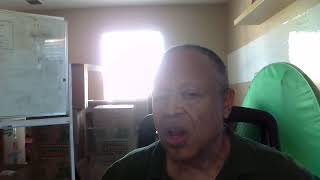
Steven Barnes introduces Firedance Tai Chi, a Wu-style form paired with a morning ritual. He walks through his five-part formula: map, daily actions, gratitude, intention, and courage. The video ends with a correction on hand placement during the transition from rising hands to push forward to seven star.
Chapters
Greetings. Steve Barnes here. Yeah, There is the light. Doing a live video here on Facebook regarding the fire dance Tai Chi course and a specific request that I had in connection with it. So one of the things that's going to be fun about doing this class is getting comments from people who are studying it and giving them an opportunity to, to see my interpretation of an answer to, to their questions. But if you're interested in that class, if you're interested in the concept, you can do the basic aspect of what it is that we're doing with other forms of martial arts, other forms of movement. Or you could crawl. Crawling is a great exercise. It does a lot of really positive things for your mind and body. Or you could join the Tai chi, the Fire dance Tai chi class@www.firedancetaichi.com. so let's take a look. What is Finance Tai Chi? What it is is a combination of the Wu style Tai Chi tuan form and the morning ritual concept, which has been around for thousands of years, I'm sure. Basically the morning ritual is doing a physical movement at the same time that you are saying affirmations and visualizing your mentors and flooding yourself with gratitude for the life that you have and just all the wonderful things in the world. Gratitude. And this is connected with the magic. What I call the magic formula, M A G I C, which is map actions, daily actions, gratitude, intention, goals and conviction or courage. When you combine these five things, if you have a clear map or model of what it is you're trying to accomplish, in other words, a way to get there, how am I going to get from where I am to where I'm going? If you don't know, then you find somebody who has already accomplished it and you model what their behaviors and their thought patterns and their emotional sets are. The actions of the daily actions you're going to take. Dividing the overall task into small enough chunks that you can accomplish one of those chunks every day. And that way you go to bed every night feeling like you're just a little bit closer to your goal. Just a little bit closer. Don't let a day go by without doing something that is helping you feel alive. I mean, I think it was Earl Nightingale said that success is the progressive realization of a worthy goal. So if you could take one step toward the mountain every day, you're in great shape. The G in magic is gratitude, and that is the emotional flood that you don't think to yourself, I'll be successful and then be happy. What you think is, let me be Happy and then succeed. Let me happily succeed. You have control over your emotions. Once you get control over your perspective. Once you get control, you can let go of fear and anger. Once you've learned the lesson that protects you. What protects you is not the negative emotion. What protects you is paying attention to the thing. So if you know that there's a snake in that burrow over there, you don't need to be afraid of the snake. You just need to be aware not to stick your foot in that burrow. The same thing is true of many things in life. The more clearly you understand your opponent or your negative situation, the easier is to avoid it. Now, by the way, I'm doing this video from my new office in my new home. You will see box moving boxes in the background. You see a whiteboard there. There's a whiteboard over on the wall over there. There's my green screen. You know, I could feel uncomfortable about the fact that this is a mess and think, well, I'll just wait until I've got everything perfect before I act. But if I did that, that would be cheating you, and I don't want to do that. I really want to serve you as much as I possibly can. So I'm just kind of trusting that you're going to look past the mess to my intent, which is to provide you the best information that I possibly can. So that's the G is the emotions, the negative emotions called fear, for instance, come up. For me, I'm thinking I might be judged because my office is messy. But then I think, you know, the person who I'm trying to reach on this will understand and appreciate it. So that is a way of me saying, I feel grateful to you. I feel grateful for you. You're my kind of person. So the I is intention. It's. That's your goal. Setting a clear goal. A goal is a dream with a deadline. So if you know what it is that you want and you can kind of photograph the last moment, you know, so you see yourself winning or cashing that check or getting married or stepping on the scale and seeing the reduced weight. Whatever it is that you want, can you see it? The more clearly you can see it. And you give yourself a day for when it's going to happen. Now you got a goal as opposed to just a vague dream. The C is the courage or conviction you have to believe that you can and should do this, that it is possible for you and good for you, that you will experience more pleasure than pain as a result of doing this. Thing. So that's the magic formula. And the morning ritual is doing nothing more than putting that magic formula into a series of affirmations and statements and visualizations and emotional floods that represent the person you would have to be to. To do the things you have to do over time to get the results that you want. Who is that person? What do they do? Then once you understand what the price is, either do it or you don't. Right. It's perfectly permissible for you to say, you know, I don't want to do this. The price is too high. But what you don't want to do is to keep a dream and know what the price is and know that you could have paid it, but you chose not to. There's nothing wrong with having a new dream, but if you're going to hold a dream in your heart, you don't want to say to the world, I couldn't do it. I didn't have the opportunity. I didn't know the people if the truth is, I wasn't willing to pay the price. So what I want to do now is, you know, we talk about these things in the course, but I specifically on this video, want to address a specific request that one of my students had. So he. He wanted to know about a transition between one movement and another movement. So let's go through that. I'm going to back my chair out of the way. I've got a little bit of room here. I'll have more room and look better in the future, but this will work. Okay. All right. So. So, okay, get the chair further out of the way. So rising hands. Push forward. Turn to seven star. Okay. Now what he didn't see is he wanted to see the right hand. He wanted to see what the right hand was doing. So let's turn in this direction and do the same thing. Push forward. Now I'm going to turn to seven star. See that? Now I'm gonna actually turn around and face the other direction. These fingers are touching the pulse point on my wrist. My hand is right in the middle, shoulders dropped, hips level, and there I am. So hopefully that showed you what you needed to make that correction. I believe that was Scott McIntosh. And we will be back. I'm going to try to do these more regularly. And if you have any comments, questions, or requests, be sure to leave a question. I'll be happy to answer them as much as I can. And if you'd like to join the class, it's www.firedance tai chi.com. take care.







