FIREDANCE: The Next Level from April 29, 2023
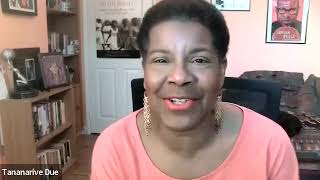
Steven Barnes and Tananarive Due lead a live session on personal development. They teach a 60-second breathing practice, a morning ritual combining movement and visualization, and a three-centers framework (body, heart, head) for managing stress and change. The Q&A covers parenting, creativity, and workload management.
Chapters
All right, it's recording here, it's recording over on Facebook. And welcome to life Writing live to Facebook Live to Fire Dance the next level. My name is Stephen Barnes. I'm a husband, father, writer and martial artist and teacher. And I enjoy sharing the things that I've learned along the way. That what I can say is that I had obstacles against me at every basic arena of my life. But luckily I also had wonderful allies and teachers. And all I'm doing here is trying to do the same thing for you guys that my teachers did for me, which is to speak to you honestly, to lay out a path to say, let's experiment with some things. The buy in for this process is taking one 60 minute breathing break, 60 second breathing break once every one to three hours. You know, if you're under a lot of stress, I do it at the top of every hour. If you're not under a lot of stress, do it every three hours. But that's where we start. And if you can do that, if you can begin with that, then I can help you. I honestly and firmly and deeply believe that this process will help you. The next step after that is the creation of a morning ritual where you're taking a short period of time, between 5 and 20 minutes, 5 minutes and 30 minutes, and you are moving, chanting, visualizing mentors, and flooding yourself with gratitude for life all at the same time in a sequence. But you're moving the whole time. If you will do that, then we can refine that and show you how you can choose. Make sure that your goals are aligned with your actions, that you have role models who can handle any problem you got. Are you having a problem with writing? You know, I've got, you know, Octavia Butler and Larry Niven and William Shakespeare among my models. If you don't think I can't take any problem I've got with one. Actually, I've also got Tananari due because I give thanks for her as my wife, but I've also got her as a mentor inside me. So when you've got problems, you choose a mentor. You ask yourself, who do I need to be to move and talk and hold my face the way as if I'm a hero in the adventure of my own life. I'm having a fantastic adventure. Here comes a challenge. What do I do? Here comes a dragon. Maybe I befriend the dragon. Maybe I slay the dragon, you know, maybe the dragon and I get jiggy. Who knows? It's your fantasy, it's your life. As long as you understand that nothing in life will stop you as much as you have stopped yourself. So the first thing you have to do is 100% become your own ally. Be your own ally. The way I put it is, life may beat me, but I will not beat myself. That's all I'm asking, is that you decide to be your own ally and fight as hard for your life and your joy as you would fight for a helpless child in your care. If you do that, if you tap into that, that's kind of the core emotional thing, our ability to fight for the helpless, helpless child. Any sense that you would fight less fiercely for yourself is a measure of the damage that you've taken in life. Things that happen to you along the way. So you can look at that. And if you're meditating, you're thinking to yourself, I would like to write this story. I would like to work out. I would like to do X, Y or Z. I can't do this for myself. But you think if I promised somebody else that I'd do this, I'd do it? Or if something bad was going to happen to somebody else, I'd do it. Somebody put a gun to my daughter's head, a dog, my dog's head. I'd do it. Absolutely. To ask yourself if this thing that you're doing is connected to your life, that the core joy in your life, your right to escape pain and gain pleasure in your life if you're not doing it, why? This is the reason why we created what we call atomic goals. Tiny little steps, like with a story, it's writing one sentence a day. There's never an excuse for not writing one sentence a day. The problem is never going to be logistical. It's going to be emotional. So by making the core goals so small that you can't come up with good excuses not to do it, you're faced with, well, what do I really believe about this thing? What do I really want from my life? What do I want today to mean in the overall course of my existence? Those kinds of questions will take you home. So before I go any further, I would like to introduce my good lady wife, Tananarib Dhu T. You there? Oh, she may not have been. She may not be there. She might. She cycles around because sometimes she knows I'm getting on a roll and she takes that opportunity.
I'm almost ready to turn my camera on. Just give me a second.
Okay. When you're ready, you just let me know. So let's everybody unmute yourselves and Say hi. And also we have a birthday girl who's our birthday girl again. Marielle and I would like. Everybody unmute and let's sing happy birthday to Mary, shall we?
Oh, my God, Mary. It's going to sound terrible.
Happy birthday to you.
Happy.
Birthday and many more.
Thank you, Mary. You did nothing to deserve that. That was beautiful.
That's so wonderful. Thank you, Mary. Many, many, many happy returns. Do you. What? Let's just say, how can I serve you today? I want to make sure that you're taken care of. What can I do for you, Mary?
Don't have a clue yet.
You don't have a clue yet? Okay, well, you got my marker, you know, and you reach out to me if you can think of what it is that you. That you would like from me, and I will do whatever it is that I can to take care of you. Okay? And there is my beautiful, wonderful wife, Tananarive.
Dude, do you know. Do you know somebody that has a million dollars to just sitting, waiting to give to you? Yes.
No, not off the top of my head. Not off the top of my head. But I will keep that in mind.
So it could be in increments of, you know.
Right. If. If money is a. Is a. Nothing works like money in the arenas in which money works. So one of the things we definitely want to look at is are you making the money that you need to be able to live a life joyfully? And if not, let's plot and plan to get you there. Simple as that. Let's plot the plan to get you there so we can. We can look at that as one of the. One of the intents that we have. I want. We want money. We want health and fitness. We want love and peace of mind. Okay. We want all three of those things. You know, it's not one or the other. So all three in balance. So that we can move away from trying to get away, running away from pain, so that we're living a life where the things we need to do to move away from pain are on unconscious competence. You just wake up in the morning and do it. Yeah, it's like changing the cat box. You want to play with the kitty, you got to change the cat box. The same thing is true of a lot of just work in life. You just got to do it. You just make up your mind, I'm just going to do it. And then you can focus all your time on what would give me joy and how can I be of service. So, Tananarif, how you doing, sweetie? What's up?
Well, you introduced me a bit ago. My camera wasn't on, and here I am. Nothing. You summoned me, darling. That's what's up. You conjured me.
I conjured you now you conjured me. You're the one.
I'll turn it back over to you and take the spotlights off in just a moment, but I wanted to say hello to the group, including a happy birthday to Bill, who has a secret birthday and has requested we do not sing for him. Take that as you will. It's not us. It's the song he doesn't like.
Okay, let's try another one. Happy Birthday.
No, no, no, no, no, no, no, no. I was so happy.
Without destruction and despair. People dying everywhere. Oh, hat. No, not that one either. Oh, well.
So just wanted. I don't know if anyone here. I don't know if anyone here is on my list. Tananarivelist Dot have seen our email about how we incorporated officially as Dark Dream Productions, and we're very excited about that. And I'll leave it at that. I wanted to. I. You know, we. We have a little temporary moving logo, but with our son when he was 8 years old. And yes, Vin Diesel did see our vanity license plate years ago that said DK Dream. And said to Steve, Duck Dream.
Which.
That's another way to go. That is definitely another way to go. But ours is Dark Dream, and I think that will be a nice segue, Steve, for what you want to talk about today in terms of preparing for the next level, because we've had a lot of signs literally, since we incorporated. It was almost as if it opened the gates, and a whole lot of interesting stuff has been happening since then. And you have to. To balance good news as well as bad news, you know? So I just wanted to share with the group. We're very excited that the name was even available. We've been using it for years in various capacities and never bothered to actually incorporate until just now.
So one of the things about incorporation is it provides a legal shield if somebody tries to come after our assets.
Right.
And also provides us a different taxation structure. Right. Saves us money. We're now employees of our corporation and that corporate taxes are at a different rate.
So that was it. I just wanted to share, and I'll just move aside right now.
Okay, great. Thank you very much, sweetheart. Last week, we talked about. And we often talk about the three centers, which are a simplification of the chakras, you know, belly, brain, heart center, head center. Now, last week we talked about this in connection with Tai Chi in terms of movement, but you can also associate them with other things. Let me just kind of choose my virtual background. Boom. Okay, so if I was looking at these three centers that higher, head center, heart center, belly brain, down here. And they can represent a lot of different things, tremendous number of different things. And one of them is, is it true? Is it kind. Is it useful in terms of movement? The belly brain is up, down, heart center is forward and back, head center is left and right. And you can diagram any movement based on one of those. Now, one of the things that we're doing here is creating what I call complex equivalence, simple things that represent a lot of different stuff. This. What is the simplest way to look? Now, the hero's journey is an example of a complex equivalent. It is saying that I can understand all human process with these 10 steps. It's also saying I can understand any story with these 10 steps. Is it the truth? It is true that that's what I think. Is it true that all stories fall into that? That all life events fall into that? No, it's a structure. It's a way of looking at this. And if you can grasp the way the hero's journey, which is represented in the way that I teach, you're confronted with a challenge. Initially, you reject it. Then you're allowed to or forced to accept it. You set out on the road of trials, during which you meet allies and gain powers. You have your initial confrontation with evil, in which you are defeated. That throws you into the dark night of the soul, which it feels that you just simply can't cope. You take the leap of faith, which is always faith in 1 of 3 Faith in yourself, faith in your companions, or faith in a higher power. If you do all of that, you have your next confrontation with evil, in which you are successful. And the last step is the student becomes a teacher of the movement to the higher level. I can take anything you want to do and put it on that pattern. Does that mean that there aren't other patterns? No. I can take any story and put it on that pattern, even if it's just the road of trials. In other words, my dinner with Andre is two guys sitting in a restaurant talking about life. Okay? And in terms of their physicality, there's no real change. Internally, there is change because the stories of one man influence the emotions of the other. But that's very subtle. You could do it. There are entire movies, entire plays that are nothing more than people sitting, talking about life. And the less events that take place in general, the better the writing. It better be that you are going deeper into the psychology of the people, deeper into some philosophical position. The poetry of the language or the way the images behind them in the set, in the film collide. The audiences for the movies that are such gentle pieces are generally more evolved audiences, more educated audiences, and smaller audiences. So the big movies, the ones that make, you know, a billion dollars, those are going to be very clear beats. You're going to see, Oh, I see exactly what the challenges and why they'd be afraid and the efforts that they're taking and the things they have to learn and the way they have to grow. And I see the moment which it feels like all is lost, and I see their triumph and how they move to the next level. That is the standard pattern. And I suggest that people, when they are beginning, use that standard pattern because it's so easy to understand. Because once you see it, you'll see it in every television episode, every movie, every story, every book, every comic book. And you get to tap into that wealth of knowledge. The beautiful thing about the hero's journey, the way we do it, is that it also connects to life. That I could put riding a bicycle or learning, you know, asking girl to the dance or losing weight or getting a writing career, anything else on that pattern, do that, right? And what you do in your writing starts influencing the way you see your life. And the things you do in your life influences your writing. So it creates a very nice structure. If you're willing to play the game of, yeah, this is not your favorite way to look at life, and this is not your favorite story pattern, but you can understand it. You can understand how these things work together. Now, what we said last week is that one of the things in the hero's journey is it begs the question, what is the hero? And in that sense, let's say that a hero is a human being who's overcoming a major challenge of some kind, could be internal or external. We are seeing them grow and change and move to the next level of their lives. The chakras, say, suggest seven different levels. We are simplifying that to just three, because if you can wrap your mind around how those three levels work, then we could talk about the seven levels label. Seven levels are going to be more complicated than three. So let's. Let's kind of start with this. And another way of looking at these three levels is the. What's called the persuasion framework. And the persuasion framework, this is how to help anybody change their mind and we talked about this just a little bit last week. I think the persuasion framework is primarily, you gain rapport with the person, you make sure that you. You're connected with them emotionally, then you interrupt their pattern. In other words, if they're spiraling into depression or anger or something else, you kill the monster while it's small. You know, you stomp on Godzilla while it's a lizard before it gets to stomping on Tokyo. That if you can see how this person goes through these patterns before they blow up and get angry. The first moment when they start heading down that path, you tell them a joke, or you take them out for a walk, or you tickle them. You do something to interrupt the pattern so that it does not build. Does that make sense? And with. If you learn to do this with yourself, you'll start learning how to do it with other people. So you gain rapport, you interrupt their pattern. And the third thing is, you take. Once you've interrupted the pattern, they're kind of, well, who am I in this context? Whatever behavior you want them to practice, you connect that behavior with their own highest values. What do they treasure? What do they want? How do they see themselves in 3 years, 5 years, 10 years? If you have achieved rapport with them, they're likely to tell you the things that matter to them. Then if you're trying to get them to stop doing a negative behavior, if they believe that you trust them and that you love them, that's achieving rapport. And you interrupt their pattern by tickling them or changing their mood or changing their focus or something. Change their physiology. You change the focus or you change the way they use language. It's always going to be one of those three things. Change the way they use their bodies, change what they're focused on, or change the language that they are using. You will notice that when we do the morning ritual, we are controlling all three of those things, aren't we? We're controlling our body movement, we're controlling the things that we say, and we're controlling what we focus on. So as soon as you've got that for yourself, it becomes easier to do that for somebody else because you've got those three things. Interrupt the pattern to be physical. Because the fastest way to interrupt somebody's pattern is change their physiology. But this is, once again, it's just a model, okay? Don't mistake it for reality. The menu is never the meal. The heart space is called that rapport. The headspace is the higher values. They're the ultimate intent. So if you can use these three centers as a mnemonic device to help you remember for yourself. You want to change your behavior pattern in yourself. Instead of going from the bottom to the top, this kind of goes from the middle to the bottom to the top. There are two different ways to awaken yourself. Achieve enlightenment, so to speak. That path that two different teachers of mine said. One said, start with the heart, you open your heart, then you connect with your body, and then you open your mind. The other one was you start by opening the body, and then you go to the heart and the mind. Nobody says open the mind first. So when you run across somebody who's all their arguments are logical and you know they're rational, they're always trying to convince people of things logically and rationally. These are people afraid of their bodies and their emotions. So by getting them into their emotion, getting them into their bodies and opening their hearts, you're automatically interrupting their pattern. But you can also use this just to help you remember. So Tom Barkley, I think last week was asking, well, how does this relate to writing, for instance? And so if you were to go down to the atomic minimum, which is a single sentence, and find out that you aren't doing it. I'm not even doing a single sentence. Why not? I'm getting too busy. So what you know is you have to interrupt the pattern that you know. For instance, you'd say, I don't get to eat until I have written one sentence. I don't even get to eat until I've written one sentence. Then if you eat anyway, then you know the problem is not the writing or anything else. The problem is that you don't yet keep your word to yourself. The fact is that once you've said something like that, I don't keep my word to myself. There are answers for that. Google is your friend. How do I become more consistent in keeping my word to myself? There are answers for that, but you have to be able to define the problem first. So if this is operating as a complex equivalent where you're identifying a whole bunch of different things and saying, how do I remember all that stuff? Because the human mind can only handle seven plus or minus two pieces of information at a time. You know that the over nine things you're trying to do at a time and it turns into purea batshit, you know? So I like to keep it down three to five things because, you know, people can really. And if you're dealing with a child, you make it fewer. Just three things. So what are we Talking about body, emotions, mind. Very simple. We can all get that. Could I break that into dozens of different things? You bet. And you could probably guess, but when I talk, I just love complications. I love bottles. I can keep, you know, a dozen different plates spinning at the same time. Is this all this stuff fun? But would that be useful? No. It would be useful to people who stay in their heads and enjoy complication. But the meat of life is in feeling. It's in that connection with your puppy. It's in hugging. Your child is looking at my son and knowing that he knows I love him with my whole heart. It's looking at my wife and saying, I'm having a problem right now. But the problem is not you. The problem is the way I reacted to something that happened because I am afraid. I'm dealing with fear. And so it. It diminishes my flexibility. So I love you, you know, And I'll work through this because I will not steal a moment of joy from our lives together. This is the only thing that we've got.
And I always know that's true, darling.
It's true. And this happens. I'm under a lot of stress right now. We're under a lot of stress right now, and we will talk specifically about that in just a moment. But what I wanted to do, and I sometimes forget to do this, is make sure every week, because we're using Tai Chi as the movement system to link these other things to. And I will tell you every week, no, you don't have to use Tai Chi. You can walk. But I like it because it provides a better metaphor and enables me to teach you in some deeper ways. So let's take a look at Tai Chi as it relates to the three centers, shall we? So let's say the first movement is just this. That's first center, right? Up, down. I just went up, down, up, down. So we could just work that for a second. So if you can stand up and let's just experience feeling our belly brain, this center just going up and down. We don't have to get into the complication of forward, back, left, right. Just inhale, exhale, Inhale, Exhale, Inhale, expand, Exhale, contract. Inhale, expand. Exhale, contract. Now, if I said that this center also relates to what is true, which is just a decision on my part. It's not objective fact. If I said this is true, then I can ask, how does this relate to truth? Gravity is truth. Movement is truth. Breathing is truth. There is truth. Once again, keep that going. Inhale, Exhale. The movement should be as soft as possible. If you're underwater, the water would be supporting your arms. You're using as little force as possible. I expand on the inhalations, I contract on the exhalations. And one thing that is true is that if I stuck your head in a bucket of water, you would trade everything you own for your next breath. It has infinite value. All the stuff that you own is nothing compared to what is free, which is that next breath of air. And we can have that at any moment. So when you're doing your Tai Chi, what is true about the movement that it should ride the bubble of air? What is true about gravity? It's there whether I think about it or not. What is true about my knees, my hips, my shoulders, my elbows, my wrists, each of these things? What's necessary for them to move? That? The qigong exercises are combining my mind, my eyesight, my breathing, and my movement all at the same time. Something that you can work on standing in line at the library or at the bank, laying in bed, sitting here, having these conversations. You can always look at your breathing and ask how the breathing is helping. You just kind of flow through your life. There's always a way in every moment to work these three centers. And I would suggest that you either start with your heart by listening to your heartbeat and then expand from there, or start with your breathing, but get out of your head. Your head will lie to you. The Hawaiian hunas say that the body is like a black bag where we store our unprocessed emotions. So fear will often live in your body. Check for it. Look for it. Remember that the meaning of life, of all living things is moving away from pain toward pleasure. And the human life is to be lived with joy and of service to those that we love. If you serve yourself first by 60 seconds of deep, slow breathing, every hour, you are serving the three centers. You're serving your life. You're connecting with what's most important. When we are afraid, the quality of our breathing changes. We start breathing up in our shoulders, shallowly and swiftly. When you slow your breathing down, relax your face, relax your breathing. If you do that for 60 seconds every hour, you are deliberately short circuiting the stress response. You are breaking the pattern of your stress response by changing your focus. You're paying attention to your breathing, changing the way you're using your body. And then if you say to yourself an affirmation of your own choice, something as simple as, all I need is within me now. All I need is within me now. Or every day, every way I'm getting better and better. The words matter. You know damn well that if you screamed at screamed curses at a child every day, that child would grow up with a real problem. There is a child within you. And the way you speak to that child, the way you speak to yourself, will help to guide your emotions. So before I go into some things I wanted to deal with today, any comments, questions or requests about any aspect of this process or things that are going on in your life that you would like me to try to relate these processes to. So we always take a break to do that, but before we do that, just remember that we'd love for you to join the program at www.firedance tai chi. Anyway, So what, you know, there are people who had some questions and this would be a great time to answer some questions.
Yes, Orion, how can I help someone else that's stressed out to the point that they can't focus on anything?
Okay, so teach. First of all, you do the breathing every, every hour. Teach it to them. First step, if you can teach them, if you can get them to do that every hour, you will start changing their stress response massively. It short circuits all the mental stuff. It has nothing to do with your beliefs or anything else. It is dealing with your physiology. And because of that, it's extremely powerful. Now, I would assume that depression is not a medical issue. If it's a medical issue, you want to have a doctor involved. We're not talking about, you know, medical depression that requires neurotransmitters in pill form in order to literally deal with a medical thing. Make sure that you have a medical expert in your resource circle. But assuming that that has been handled, the breathing by itself would be the first step. If you can get him to try that, great. If you can't get him to try that, then remember, then one of your tasks is to help him, is first of all to help yourself. You're dealing with stress because your son's under stress. So the first thing to do is help yourself. But then when you've got that, remember the persuasion framework, you achieve rapport with him. He knows you're his mommy, you're his friend, you're his friend, you know you're her sister, whatever it is, you connect with that person based on heart space so that they believe that you care. Once they believe that you care, then interrupt the pattern. You can interrupt their pattern by changing their focus, helping them change the language or change the way they use their bodies, one of those three things. So first Thing you, It's. It's rapport. You know, I've known you since we were in kindergarten together. I care about you.
I.
You know, we. We raised a puppy together. Whatever it is that you. That, you know, we've been married for 40 years. Whatever it is, be sure that they feel that connection. Then interrupt their pattern and then remind them that functioning at their very best helps them achieve the things that they want to achieve in life, that life is to be lived with joy. If you get them to believe that the meaning of life is. Is joy, that they have the right to be happy, you may not believe the number of people who don't even believe they have the right to be happy, that it's possible to make joy a goal in life. They're people who feel guilty if they take care of themselves, that feel guilty. Well, what do you mean? I want to be happy? No, I should be taking care of everybody around me. And since you can't take care of everybody, everybody around you, you have set yourself up for, you know, the standard for happiness is everybody around me is perfectly happy. All you've done is guaranteed that you'll never be happy.
Exactly.
Okay, so if. If you can get. If you can get her to breathe every hour at the top of her for just 60 seconds, you reset their metabolism, you reset their physiology. If you can then get them to consider that maybe joy in life is a goal. And it's a beautiful goal. This person should probably be fine with thinking other people can be happy, should be happy, but the idea that they should be happy is anathema. That indicates something that happened earlier in life. They got some kind of beliefs. It could be Calvinism. It could be, you know, abuse. It could be getting beaten down by their social group. It could be any number of different things. But somehow they stopped believing they had the right to just be happy. So you live with joy so that you can show her, you can show him, you can show them that it is possible to be happy and healthy and still care about the people around you, that you put on your air mask first when the cabin loses pressure, then you can take care of the people around you. That, in essence, if I don't prepare myself emotionally to be on this call with you people, I cannot serve you. If I don't take care of myself, I cannot serve. Resolve the contradictions within yourself and it is easier, not easy. It is easier to see how to help other people with it. Does that make sense? Okay, so make sure that it's not a medical thing. If it is get them to a doctor. But if it's not that, if it is shifted by behavior, then even if it is a medical thing, you can teach them techniques and help them in addition to the medication. And who knows, maybe it's not. Maybe it's not severe, maybe it's very mild, in which case you can tease them off the medication by teaching them how to control their breathing and their focus in their language. But the first thing to do is start with your primary responsibility, which is to live a life of joy. When you are living a life of joy, then you can live a life of joy and service. Okay, great question, Orion. Somebody is lucky you care. Who else has got a question for me? Boom. Boom. Boom.
Ella.
Maria.
Hi. I won't keep you. I just. So I. My question has to do with how do we remember to breathe?
Set an alarm, get a 60 minute timer or on your, on your phone or on your watch and simply set it for 60 minutes. Every time it goes off. Breathe for 60 seconds. Reset.
Okay. Before we get angry with our youth, I just barked at my son. And, and, and that wasn't fair.
No, but you understand that recognize the steps are. The first step is to recognize after the fact that you shouldn't have done that or that that was not optimal. No guilt, blame or shame. That was a non optimal response. You know, you said, did that response pass the three gates? Was it true? Was it kind? Was it useful? Wasn't useful. And it wasn't kind. It might have been true. Somebody did something that irritated me, but was it kind and useful? So the first thing to do is to after it's happened, recognize that you don't want that behavior anymore and you tell the truth about that. The second thing is if you do that often enough, you will start. It'll start being less and less time between the time that you do it and the time that you recognize that something needed to be different. Eventually you will start recognizing that you're doing it in the process of doing it. Okay. And that's a much that now you're reaching the threshold because just another inch and you're recognizing you're about to do it. You're feeling the changes in your body, your shoulders. If you practice being relaxed and powerful for 60 seconds every hour. Most people don't practice that every month. I'm suggesting you practice it every hour for one minute. Every hour you're practicing being centered, powerful, loving. Okay? You will start recognizing when you're losing it. You'll start saying, oh, my shoulders are getting tight. My Voice is changing. My vision is getting a little bit red. I'm going into tunnel vision. I'm, you know, my fists are bald. My voice is changing. You will start observing yourself so that you see before you get angry what the precursive steps to being angry are. Before I get angry, first I say to myself, this person is an idiot. They didn't do what I asked them to do. What are they thinking? When I hear that voice in my head, what I want is to program myself to notice that that's what I'm thinking. Oh, I'm heading down the anger tunnel again. Oh, anger is fear. What am I afraid of? So let me ask you that question. It's going to come back down to you. You were, you expressed anger, right? Can you identify what the fear at the base of that anger was?
I think my, my, I think I have sometimes fear that he's not going to be able to be self sufficient.
Thank you. Parents want their children to grow up and be self sufficient and to make grand babies for them, you know, in a, in a, in a legitimate, you know, according to our values, you know, grow up, fall in love, you know, get married, make babies, you know, you know, it's, you know what the Chinese recipe for happiness? Grandmother dies, mother dies, daughter dies, in that order that you, that, that's the process of life. And when you make your peace with that, then the fear that our children will not be self sufficient is a terrifying fear. It is terrifying. It's what it means for them because it's also what it means for us. If my son doesn't make it, does that mean I'm a bad father? And if you've got your ego invested in being a good parent, then you want your children to make it so. Part of that is fear for them. Part of it is fear for you. Ego, fear for you. Deal with your fear. If you are 100% committed to being the best mother you can be and you know that what you want is to help him become an adult, then you can say, well, what are the things that are stopping them? And we're giving you tools. In all likelihood, if he gets angry, it's fear. If he is avoiding a particular responsibility, it is either that he lacks an understanding of how that responsibility, how accepting that responsibility will increase the pleasure in his life and diminish the pain. Because once anybody can see that doing a particular thing will diminish the pain and increase the pleasure, they'll automatically do it. And you can actually know whether or not somebody gets that by Whether or not they're doing it, you can't resist doing it. If you feel that not doing it is painful and doing it is going to bring you pleasure, you're going to do it, period. So whatever it is that you want him to do, he does not associate doing this thing with bringing him more pleasure than pain. He says it's discipline or I'm doing what mom wants me to do. Why doesn't she just let me smoke dope? Why doesn't she just let me hang with my friends? Why doesn't he just. She just let me stay in VR territory. Why didn't she let me bring girls over to the house that I can bang in my room? Whatever it is that he wants, he's looking for the pleasure without the adult responsibility. Every kid is trying to figure out how much pleasure can I get being as little of an adult as possible. So they will settle for sex as opposed to love. Within the context of relationship where people are working together to do something, they will go for money as opposed to providing goods and services legally to their community, which then gets money returned. They will go for the feeling of being happy in their bodies, which you can get by eating caramel corn on the couch while you're watching cartoons. I feel great. I feel the same if I'm doing that. If I'm eating cookies and watching anime, sitting on the couch, I feel as good as I did when I was 8 years old. It's a great feeling. Now get up and touch your toes. Now look at your bank account. Now talk to the person that you love. The adult version of those childhood pleasures means that one part of your personality has to handle the adult responsibilities that your parents used to handle. That my joy in life comes from the fact that the little kid inside me knows that the father part of me is a saber toothed tiger. That the adult part of me will handle all that shit. I will work morning till night. I will use every kind of strategic think. I will model success on every level. I will scour my own ego because the little kid inside me deserves to play. Well, Stevie wants to play. Can I play? Can I get a How do I play today? What can I do that's going to be fun today? Well, I said, well, Stevie, do your homework first. Do your homework first. It's only going to be done by one. You wake up and by one o' clock you get to quit for the rest of the day. Really, dad? Yes, really. So how focused can you be? So you get all this work done so you can have all these career opportunities and all this fun. You can show off and dance and everybody thinks you're a clever boy. Literally. I have conversations like that, just like that with the little kid inside me, because that part of my personality understands simple language, simple images. And hugs. You know, it's a lot like a dog. You talk simply to the dog, you hug the dog, you feed the dog. And the dog just loves you. So the part of you that provides life force in your life. What he's trying to do is to ask how can he have as much joy as possible in as little pain as possible? And the doorway to getting those things is accepting responsibility. The more discipline and responsibility you have, the more freedom you get.
What is your son's course that he's developed?
Oh, it's called Magic for the number four teens. I would strongly, strongly suggest you go to magic number four teens dot com. Okay. He. It's his course. And then three hours of talk from me and Tananari on how we have helped him.
Okay.
So. So I, you know, you notice it didn't even occur to me to sell you anything. Yeah, well, it's help you.
I got my girlfriend visa.
Hey, there you go. And it's a fantastic course. And if you study it, it'll be much easier for me to help you because then you can ask specific questions. All of our courses connect to fire dance. Okay. But whether you're talking about writing or parenting or finding love or fitness, they all based on what are you willing to do every day? Are you willing to perform a simple ritual? Five minutes? If you're willing to spend five minutes a day, I can help you. If you're not willing to spend five minutes a day, you're going to argue with me about whether or not this stuff works. You're not willing to perform the experiment. God bless you. Go and find another teacher. I can't help you. But if you're willing to just, you know, five minutes a day, you can get the basics of everything that we're talking about here 100% for free. Then you can decide how to invest more time and energy and resources in this path. But this course, this thing that we do every Saturday, all I'm asking you to do is take care of yourselves. If you're going to take, if you'll take care of yourself, you are my people. If you love, if you love your families, if you love making money, trust me, when it in the realm of money, I'm all about the Benjamins. But I write for love and people who look at my courses and write me and say, steve, I have these challenges. I always say, well, how much can you afford? Let's just do this. I'm trying to build a tribe here, okay? And if you can't afford the money, I'm going to help you make money. And I'll give you what I need to give you so that you can make the money, so you can come back around and buy my courses. But it's all about creating the maximum amount of joy. Your son just wants to know, how do I live a life of joy and integrity? How do I become a man? How do I do that? And you show him that being a grown adult is beautiful and wonderful. You can handle that level of responsibility, and that you believe with all your heart that he can do it too, that you had the same fears, you had the same concerns. You tried to cheat in the same way. But ultimately, you realize if you wanted to have. If you wanted adult toys, you had to play by adult rules. And quite frankly, money and sex and power in your body after you get past about 25, 30, is all about being an adult. You try to be a child without having grown up. See, if you. If you handle your adult self, there's another party that never has to grow up, never has to go up. I'm gonna be Peter Pan till the moment I die. I'm having entirely too much fun to grow up because I have an adult's discipline. I have the discipline of a warrior. And that means that the little kid inside me can play all day long. I just play. And then there are problems. There are times when I have problems with things, and, you know, I might come inside myself and be turned off a little bit and so forth. And Tananarive is very sensitive to that because I'm. Ordinarily, the energy is flowing outwards. T. Would you like to make a comment about how you deal with me when you can feel that I'm having an issue?
Oh, okay. Well, be honest. There's always the sort of self assessment. You know, have I contributed to this or caused any kind of emotional upset? Is there anything I need to take responsibility for? And then I. I try to be very honest about that and interrogate that. That part. But then also, it's knowing that Steve needs space to process. Right. I knew exactly. Or at least I thought I knew exactly why you were sort of in your head last night, because we had sort of some unexpected news about a project that might go that we really didn't think was gonna go, and that.
Suddenly increased My stress.
And then it's like, oh, shoot.
And.
And so I. I feel like I got that. And I, I.
You did.
I give you your space. And I try to be sweet. So my struggle is not to have sort of codependency where my mood is tethered to your mood.
Right.
To try to stay within the integrity of my own joy. I'm excited that project could go. I mean, you know, because it's money, it's security, it's an opportunity to learn. That's really always my first thing. This is a narrative podcast, I don't mind saying, and that's something we've always wanted to do is storytelling through the podcast form. Life Writing. Write for your life, hopefully you all know, is our podcast about the writing life and breaking into Hollywood and work life balance a lot like this, but on Realm Media as a podcast. So that's lifewritingpodcast.com but we would like to tell stories through podcasting form. We both love audio. We would love to pitch original projects. This is an IP that was brought to us, so it doesn't have the same degree of emotional investment, but it's a great learning opportunity. It's a great way to make money during the potential writers strike coming up. Because it's not through the wga, I don't think. No, it's not. And so when we're mismatched in terms of our moods, I don't jump straight to, oh, he just needs to deal with that. Why is he being like this? It's like, okay, do I have any role here? Is there anything I need to address? If not, give him space, give him time, and to have a nurturing attitude about it.
Perfect, sweetheart. The. The circuit breaker is that you never cause me to be unhappy. I'm responsible for my emotions, not you. So if I am unhappy, it's never directly because of anything you did. It's not even possible. It has to be because of some way I interpreted something that you did. What? What. How I. What I said it meant, in other words, the language in my head, the part of the thing that I focused on. I could have focused on something completely different. I could have thought that the thing that happened was, oh, that was cute, and left. I could have. And it would have all gone away like a bird flying out of my mouth, you know?
And this is a sort of funny aside. When this news came via email, no one on the team responded. At first, I was the first person to respond, and then to respond, and then I saw later response saying, amazing. And I'M like, oh, who's this enthusiastic Steve person? And it was you.
Yeah, but I responded after you responded, I believe.
Yes, but your, your, your public face. I mean, and that's what you do in Hollywood. It's all a transfer of enthusiasm. Everything is amazing. Everyone's always so excited. We don't have to share every emotional moment we have with our team, you know, just like they don't share every emotional moment with us.
So, so let me, let me dig into the truth here and here. What you're going to get is a vision, a version of how do I process this stuff? And hopefully something will be useful. What I'm saying here, I've looked at all the different projects that we've got right now. There's a Star wars novel. I'm working on a Star wars novel. Oh, we just got nominated for, you know, for awards for, you know, for graphic novels and this and that and short story for Tonnery. So the, the world is giving us all these signs that we're going in the right direction, you know, that our natural way of working and being is being rewarded. And that's a beautiful thing. It puts us on what we call the next level because we have completions under those other levels. But one of the things that happens when you get everything that you want is you got to give everything you got. All it takes to get everything you want is everything you got or everything you need. Because you, as, as St. Mick said, you don't always get what you want, but you can get what you need. So I'm looking at this. So there's 400 pages of a Star wars novel. There is 60 pages of a. Of a television pilot. There's 300 pages. If this, if this narrative podcast goes, that's 300 pages of script. There is 50 pages of short stories. Because we're being recruited to write a bunch of flash fiction at a very, very good price. But this all totals up, and then there's at least 200 pages of a book I'm working on, Larry Nevitt. It totals up to close to a thousand pages of work that need to be done within the next year, that the Star wars novel has to be done by basically January 1st first. So if I, if I figure I can do five pages per day, roughly, or actually, let's not get to that. How do I balance a thousand pages of work with different timelines, different deadlines, different subjects, rewriting, polishing all of that stuff at the same time? I'm going to be honest with you. I am not Smart enough to keep all that in my head. I cannot balance 20 different storylines and all these different things. I can't do it. 30 different story. I can't do it. That risks panic. And if I panic, I'll be blocked. And if I'm blocked, then everything I have worked for, for decades falls apart. This is the moment when the band breaks up. This is the moment when you switch from I'm trying to do it to suddenly, God, it's all here. This is the moment when couples start going at each other's throats, where the band breaks up, where the external pressure that kept you together isn't there. And you start saying, my ego. What about me? Tananarive gets better responses from the world in terms of her writing than Munda. In other words, Hollywood does not love me as much as it loves Tananarive. She gets more awards than I get. She gets different kinds of reactions. If you don't think that the needy, wounded, abandoned child in my heart is not saying, where's mine? How come I don't get that? Ignoring all the awards that I've won and all the New York Times best, all that stuff doesn't matter. Look at what's happening right now. How come her? How come not me? That's the flip side of the little kid that does the work, is wanting to be, wanting the whole world to love me. That response could kill my marriage. That response could kill the partnership that creates the. The work that could create the wealth that would create the freedom and the power to help other people or to guide my son, in other words, my own. What I have to do is love myself and love my wife, period. Then I have to interrupt my pattern by noticing, is this real or is this the way I'm looking at it? Am I being my best person or am I falling into my needy, wounded, abandoned child? What is my commitment? My commitment is to be the best man I can be for my own life, my marriage, my family, my community. Reacting negatively at the wrong time is out of alignment with being the man I need to be to get where it is I'm trying to go, which is having fun, changing the world. That guy, the vision of that guy talks to me. Am I being that person at this moment? Yes. No. If no, no guilt, blame or shame about that. Let me reintegrate. What do I need to do? I need to organize all of this work, a thousand pages of work so that I can see how it all fits. A thousand is too much. I can get five pages a day done. So if I could organize 200 days of work, that will handle a thousand pages of work. A thousand days of work is 10 months because I can work five days a week at five pages a day, which will produce about a hundred pages a month. Now we're getting into a more manageable thing. Okay, so let me take a look. So the Star wars book is four months of work. It's due in eight months. Okay, so I've got a little wiggle room in there. I can fit in some other stuff. These stories are 50 pages of work. This other thing over here is 50 pages of work. This over here is 200 pages of work. How many months of work do I have stacked up? Now, I'm not going to do this all in one time, but I need some. I need a way to look at it. And I tried index cards. And I talked about the index card box and various forms of file folders and so forth and so on, and each of them have their use. But I ended up circling back around to something called scan cards. Scan cards are a system that I came across some years back. And each of the cards is. It's like this. And I can write on a separate card and put it into a holder like this. Now, I realized when I looked at this, which fits into a binder, that this is 20 cards. This is one month. Literally, if I say so, I say, okay, Star Wars. I don't want to panic about writing a Star wars book. I'm not even. I can't even start it because I'm going to Phoenix next weekend where I'm going to consult with the widow of my shamanism teacher who's going to teach me things about dream magic, which I'm going to integrate into the book, right? So I can't even get started until, you know, until I get finished with that. So in order for me to not panic, I need to hit the ground running on Monday. I cannot wait. So what can I work on starting on Monday that would take some of these cards and some of those thousand cards off there? Well, I've got 10 micro stories that I need to write. How about. And each of them won't take more than about a day. So how about I do five of those stories? 1, 2, 3, 4, 5. That opens up a little room. And how about the week after that I get back on the project working with Larry Nevitt. I'll have lunch with him for his birthday on Monday. We will talk story. I will shake and bake during the time. So in the morning, the done by One, I will do five pages a day on each of those stories. But in the afternoons, I'll make sure that I'm working to understand what. What I'm going to be writing with Larry next week. And I'm also cooking the outline of the Star wars novel. Those are different things. They're just kind of fun. I can. I can cook an outline while I'm watching cartoons. You know, I just sit in the living room with my laptop on my lap and just kind of go over it. Just read over and over. I just tweak little things. And I have found out over time that if I do that, my brain will come up with something new every time. Every time I got a problem. I don't know, like, there's a big problem. I don't know. In the book with Larry, I don't know how I'm going to answer a particular problem, but I'm going to guess that I've already set up the answer. I just haven't seen it. It's something there. So I just. Every night I can ask my brain come up with an answer. And that way I'm working on it as I sleep. But this enables me to look in an entire month of work in advance. Week one, week to week three, week four. I can look at that and I can create and see it's on the back, too. So this is months of work, you understand? That I can hold in my hands two months of work. Because each of these cards represents one day. All I have to do is take one card out of there. That's today. What do I need to do today? I don't have to worry about tomorrow. I don't have to worry about next week. I don't have to worry about next month or next quarter or what's due in January. All I have to do is. Is every week, say, does this pattern work? If I did this every day for 200 days, would I fulfill my goal or a thousand days or whatever? If it does, then if I did this week, does it. If I did this month this way, how would this be? That feels good. You know, I do this on like a Sunday or Saturday when I'm disconnected from the work, I'm not neck deep in it. And then every morning I take this out. Okay, today I need to write one story. One of these really short little stories. Maybe on Sunday, maybe after I get finished with this, I'll camp out in front of television and come up with 10 story ideas. Just like goofing. Well, here's an interesting plot There. What if they started that story somewhere differently? What if it went someplace different? I can use fiction that I'm watching as a springboard to create new ideas. We do that all the time. And in that way, I'm taking a year of work that would panic me. And boil it down to, did I do my five pages today? Yes. Then I'm fine. No. Why didn't I? Does that make sense to stay, to keep the fear from stopping the flow? Don't let your fear stop your flow. I'm actually going to use my fear to motivate me to think. Well, how can I handle this? You know, it's like you're about to walk down an alley. You're afraid there's a mugger in the alley. Use your fear to say, oh, man, I'm going to pick up a baseball bat before I go down that alley, you know, or I'm going to go a different direction. You don't ignore the symbol of fear, the signal of fear. You ask it, what is it trying to prepare me to do? I need to think about this. I need to look at my emotions about this. I need to design the actions about this. Then every day I just chop wood, carry water. It's just a day I need to take care of myself, love my wife, lead my son, take care of my family, take care of my community, deal with my allies, business allies. You know, there are going to be aspects of finances and aspects of work and aspects of nutrition, these things. But all of those things connect with the simple question, how do I avoid pain and gain pleasure? How do I live a life of joy and service? And all the complication is in service to the simplicity? Does that make sense? If every day I'm thinking about breathing so I balance myself, something happened yesterday. Finding out that I might have to do an additional 300 pages of work spun me. I was not able to respond in that moment as resourcefully as I wanted. It takes me a little time to integrate. I knew that I would, so I remained polite, even if I'm irritated. Always polite. I'm dealing with my irritation. That's my irritation. Nothing's wrong with my wife. I am irritated. How do I need to calm myself? What needs to be communicated? What needs to be done? How do I have a good weekend such that on Monday I can hit the ground running? How can I work hard? And my idea is I should need to have enough energy and emotion to work hard all week and party on the weekend? Joy. Every day of my life, I'm going to have Fun? Why? Well, I can tell you one thing, Ella Maria. If I am living a life of joy and passion and health and contribution, and I'm having a good time making serious money doing that, you think my son doesn't want to know how I'm doing this? You think he isn't looking at me and saying, I may not want to be totally like dad, but I want to be like that about dad. Dad is making six figures, having fun and playing games. How do I do that? Because the primary thing he wants is to have fun and to feel good about himself. And if that means escaping into virtual reality or other things that are less healthy than that, then that's what we'll do until we can see a path to living a life of joy that we can believe we can follow. Believe we can follow. So Tananariva has taken off. She has a book signing. She's off being famous. Bye. Bye, sweetie. You know, have a great time and I'll see you when you get back. Bye.
Bye, everybody.
You bet. So you know what we do at this point? You can unmute yourselves and say goodbye to Tadan Reef. Bye. Bye. Enjoy the bookstore.
I hope you have a lot of people come.
Yeah, well, she's been having a lot of fun with those things. I actually went to one with her and was, you know, and was her. Her questioner. I interviewed her for the crowd. It was. It was fun. You know, it's when she puts on her star face, you know, and is Ms. Do, as opposed to just my baby. It reminds me of what it was I fell in love with. I saw her. And if I ever feel, you know, resentful that people react to her that way, I remember all that's happening there is they're seeing the same thing in her that I saw. How can I blame a woman for being magnificent when it's the magnificence that I fell in love with? What kind of petty bullshit is that, Steve? That's my. That's my inner, inner, inner dialogue. Yeah. It's like I start interrogating my unhappiness, you know, that's my ego. What do I do? Well, be a better writer, Steve. Or recognize you've had tons of that. Maybe this is her time and I will be the knight protecting my princess, you know, whatever it is that I need. How do I represent this so that I can enjoy this? Because the fact is that. And this life is what I chose. This woman is who I chose. We chose each other. We chose to have our son, chose to have my daughter. I chose this career, warts and all. And once you realize you chose these things, life stops feeling like a burden. It starts feeling like an opportunity. My son made a real breakthrough just two weeks ago where instead of saying, I have to work out, he said, I get to work out. You know, you look at the things you need to do in life. What happens if you shift it so I don't have to write. I get to write. I don't have to do my fire dance with you guys. I get to. I hope you can tell how much I enjoy this, how much I love seeing all of you, and how much obligation it gives me to try to be as authentic as possible, to succeed as much as possible so that I can see what the steps are. I can solve my own problems. And if you hear about me solving a problem, maybe it will inspire you. I don't know what thing I might say that might touch you or you, I don't know. But if you tell me, then I can double down on that. So once again, I hope that you guys will all join me@firedance tai chi.com but now it's time for me to ask again. Questions, comments, requests, anything about anything that I'm covering here. And Tom Barkley, I believe you had some homework, Tom.
Yeah, it just takes me a while to mouse over to the microphone sometimes because I had the mic off. I did pretty well with the thing that I wanted to do the most, which was work on the initial Tai Chi steps. Did it Sunday, Sunday, Monday, Tuesday, Wednesday, Thursday. Yesterday I did not do it.
Okay.
So far I've run through the first five motions in the first video twice. And I'm thinking the smart thing for me will be to do it once in the morning while I'm getting ready to leave after I'm after I've gotten up, and then again at night right before I go.
I can tell you that exactly what my teacher recommended, that you do it twice. You bracket your dream time with it. First in the morning, last thing at night. Now you had some issues concerns about writing.
I am writing very full time for my day job right now. I didn't do as fiction.
Right.
I didn't do as much as I wanted to on one particular the fictional story that's right in my face right at the moment. But I did get an insight into where I can go with it that hadn't occurred to me before because I spent some brain time on it rather than fingers on keyboard time.
This is really good. But what we can measure is behavior. What measured what gets measured gets managed. Did you do one sentence a day?
And although I didn't do stroke it on the keys, I did more than that in my head. So now I've got stuff I can just pour out.
Yeah, I need you to do it on the keys. I know people who've done whole books in their head and let their entire lives go by and never wrote it down. So what I can, I can keep track of you if you'll tell me. I can help you if you will tell me I did just do at least one sentence a day. If you will promise to do one sentence a day between now and next week, then that's your next step. Just one sentence a day and then you can quit if you do one sentence a day. Your success if you do that. Can you make that commitment?
I can, I expect I will probably do a little more than that.
Fantastic.
But I'll settle for five sentences just for the sake of, of making the agreement.
Okay, Fair. Fair enough. So it's just, you know, you do that and you, you connect there and keep track of what happens. And if you find that something stops you, something gets in your way, just keep track of what happened so that we can workshop it. Because there is no rational reason why you can't do a sin today. But there will be emotional reasons. What I want to do is I want to find out what's going on with Tom, what is happening between his head, his heart and his body. The body says, sit down and put in the energy to write the emotion. The emotions are the, are the fuel that power your actions and the mind helps you develop the strategy. It also keeps you in touch with your long term goals. So doing just one sentence a day will help us to diagnose what's going on. Then we can give you resources until you're doing a sentence a day with joy every day. And then we can work on too. We can start going to a page today. My version of a sentence a day is five pages, five days a week.
Yeah, I've been watching that and. A little intimidating, Steve.
Yeah, yeah. Because. But the only difference is that I've been doing this for a long time. And so I've been applying these principles. You know, it's. I didn't start being able to do that, you know, I mean, not. Not once it became professional. Once I, once I actually started paying my bills with it, it was a nightmare because it's like, oh my God, all of a sudden this isn't just kid stuff anymore, so. But what I can Tell you is that the intimidation is saying is the part of you that thinks you should already be where I am. That's like saying me having three black belts is intimidating. I can understand that. But the fact is that you went. Did you go to class today? Fantastic. We're on the same path. And all there is is the path. And there are people who are ahead of me, and there are people who are behind me, but all there really is is the path. And if you're on the path, you're on the path. So as a writer, I'm where I am as a writer. Are you on the path? Then that's the only thing you need to worry about. It's literally the only thing is, are you on the path? The voice in your head that says you were supposed to be some other distance you know, Otherwise you're not a genius or you're not this. You'll never be able to do it. All those voices are lying to you.
All.
There is no.
What? I know where the blockage is.
What is it?
I think at least I know some of it. And it's the same blockage I have with music, with. And why. Why did I stop singing? Because it's hopeless. It hasn't gotten me much of anywhere. I see no reason to think that I will be able to sell what I write, which, you know, in my head is where the rubber hits the road. Where were the efforts that I've made in the past? And I've been writing a long time, Steve. I just haven't tried. I haven't made the big effort to sell.
Okay? That's the whole thing. So you let the voices in your head stop you. So you know the. If. If you're a writer, then you specifically look at those six steps. Write a sentence a day, one to four short stories a month. Polish and submit. Don't rewrite except to editorial request. Read 10 times as much as you write and Repeat this process 100 times. And I'll bet you $100 against nothing. Against nothing that if you will follow that pattern, you'll sell by story 20. You want to take that bet?
Take it.
Take it.
No, actually. But I will follow the pattern because I believe you're right.
Yeah, you bet I'm right. I'll put my money there. I'll put my money there right now. $100 against nothing. You owe me nothing. All I want from you is your success. And I will support you. I have more faith in you than you have in yourself, which is fine. Model me. Bring me into Your med. Bring me into your. How would Steve think about this? How would Steve think about that? Until you can find somebody better to model, go right ahead and model me. I'm fine. You know, I'm totally sanguine with that. But ultimately, you want to find better people that are more specific to you. Okay, Tom. All right. So somebody asked a question about writing by hand as opposed to typing. Try both. See which one you like better. Either one is okay. You know, they're professional writers. There are lots of professional writers who write everything in longhand, and then they have somebody else type it up or dictate and have somebody else type it up or use voice to text. How many words per page? Depends on the type size. Somewhere between 350 and 400, maybe approximately. Somewhere in there. 300 a page, something like that. So. Okay, next question. Because as you notice, you get me off on a subject and I can rattle on about it forever. So what's necessary is, hello, Maggie. Hello, Megan. Old friends. I love old friends. You cannot make new old friends. Comments, questions and requests about anything that we're doing here about issues in your own life, how you're set up, your morning ritual, you know, just. Just reminding yourself to breathe. Somebody raised their hand. I thought. Yes, Mary. Oh, Vicki Solomon. And then Mary. Okay.
Several weeks ago, you were talking about Pomodoros.
Yes.
So this week I had one day, and I thought, well, let me just break this down into Pomodoros. Right. Each one's about half an hour if you. You know. And I took all the things that I had to do, and I assigned how many they were going to take, and I had 17 of them. And I realized that's the problem.
Yeah. If you have a lot of things to do, then you want to apply the Pareto principle. What is the 20% of what you're doing that gets you 80% of the results? Make sure to do those things first.
Okay.
Okay. It's just, you don't try to get everything done. You get the most important things done. Yeah. So you take the time to say, what do I really need to do in order to get this? I don't need to call 20 people. I need to get a sale. So of these 20 people I was thinking about calling, which ones have I been, you know, which ones represent the demographic that's easiest to sell to? Which one have I. You know, and maybe that's people you've already sold something to. So I'm going to call the people who are already customers before I do cold calls. Because if I can get one sale today, I can quit. It's Miller time. So don't try to get it all done. Get the result. And aiming at the result means that do the important things first, okay? That's when I do my done by one. The things that I do between the time I wake up and one o' clock are the most important things I need to do that that day. The rest of the stuff is negotiable. Okay? Hey. Okay, Mary.
Okay, so I. I'm with someone and he goes into his head. And when he goes into his head and starts thinking, I can feel his energy shift. He gets him. He works himself up to angry and I'm at ground zero. So how do I not allow his energy to impact me? If he starts picking and saying little things, it's like, okay, where did that come from? The house isn't big enough for me to get fully away.
No, but your heart is big enough to hold you that. There's a book called. It's by Koichi Tohai on aikido and key and the power of Ki. Okay? And he was talking about how that you keep your energy flowing outwards. If your energy is flowing outwards, it's like a stream that empties into a sewer. As long as the stream is flowing out, the sewer doesn't back up into the bit into the stream bed. It's only when the stream stops flowing that the sewer can back up into the stream. So your job is to connect with your energy. Your survival energy first. First your survival energy. Then open your heart and allow it to radiate. And remember that anger is fear. When he projects anger toward you, ask what is he afraid of? And what do you know? He's afraid that he was not going to be able to grow up. He's afraid of the same thing that you're afraid of. Let's say you know. He's afraid that he won't be able to have his dreams. He's afraid that the best of life is behind him. He's afraid that he's not loved. He's afraid. He's afraid. He's afraid. It manifests his anger. If you can pay attention to the fear under the anger, you won't take it personally if you've dealt with your fear. Because your fear that you're not a good wife, not a good partner, not a good mother, not a good this, not a good that. Now his fear throws you into your needy, wounded, abandoned child. And now you've just got two ego shells bumping against each other. So you have to. And you can role play it. If you know that the three most painful things this person has said are done, Think through how do you. What is the most evolved way of dealing with this? And you can choose a role model. When you're doing your ritual in the morning, who is it that could handle this and not blink? Is it Oprah? Is it Jesus Christ? Is it, you know, I don't care who it is. Is it your mom, your grandmother, who could deal with this and keep their balance and not take it personally? Oh, poor baby is afraid. Let me love them. Let me give them so much love that they know that they have no need for fear. And if they never let my love in that. I have had years of practice being a loving human being, and I'm at peace with that. Because ultimately, you can't control what someone else's life is going to be. You can only open the door. You cannot make them walk through. But you can lead by example. You cannot push them unless you control them. If you control what they eat and where they sleep and stuff like this, now you can control them, you know, and as a parent to a child, you have that responsibility. But if you're talking about relationships between equals, you're going to have to use that persuasion framework in a different way. And you're going to have to start by loving yourself enough to take care of yourself so that you can stay calm and loving in the midst of the storm. So every hour for 60 seconds, you practice breathing. And then when that person tries to jump on you or tries to upset you, breathe, you're back in your calm, and you start noticing, oh, they're scared, poor baby. How can I help them out of their fear? But you never take it personally. You're taking it personally. It's your ego and their ego in a death match.
And don't try to channel Hannibal Lecter, huh?
So Pamela Booker has to take off. Pamela, it's been wonderful seeing you. We've only got. We got like nine more minutes and then I'm quitting. So any of the comments, questions or requests about any of this, Anything? Anything. Anything. Were there questions over in. Over in chat that I didn't see? Yes.
Can I ask a quick question?
Yes. And then Jaime.
Okay, so real fast. Do you think that it is useful to have a punching bag for.
Yes.
To deal with anger?
Hell, yes. What you do is. What you do is, first of all, you know, put wrap your wrists. You don't hurt your wrist. What you do is you work on you hit that heavy bag for between 13 and 15 minutes. You hit the heavy bag until you go into second wind. This is critical. Okay. If you can hit the head. First of all, heavy bags are great aerobic exercise, and they're both anaerobic exercise too, because you're working on explosiveness and you can actually, they're great for weight loss and they're great for, for, for healthy hormones. But if you could work on the heavy bag until you hit second wind, then there is something magical that you can do. What you do is before you start working on the heavy bags, this is called the spider technique. And it's one of the things in that. Www.lifewriting.firedance taichi.com of course, think about the thing that you're afraid of. And you think about it and you do a worst case scenario. You think about it until you're crying. Worst case scenario. This gets, this is going to get worse and worse and worse until your life falls apart. But you only do this once. You've learned how to hit the heavy bag until you go into second wind, you do not do this. But you can also do this on a treadmill, walking hills. You can do this with any activity where you go into second window. Okay? And then you, you spend about 10 minutes really getting into misery about the thing that you're afraid of, the thing that you're angry about. Remember, anger is fear. You really let the fear into you. And then you work on the heavy bag for 13 to 15 minutes or until, you know, you get heavy second winners. You get tired, tired, tired, tired. Then all of a sudden some more energy pops up. So, you know, you. Three minutes on, you know, minute rest. Three minutes on minute rest, Three minutes on minute rest. Doesn't matter. When you've got your second win, something very special happens inside you. And we don't need to go into that right now. But even if it didn't, if you visualize the thing that you're afraid of and then knock the hell out of it, you think that doesn't help. It helps a lot. It helps on a lot of different levels. And so, yes, punching back. Fantastic, Jaime.
Thank you.
You betcha, Jaime. And then Kathy. Hi, everybody.
Just a quick comment for anybody who.
Has not done the five minute miracle. I first learned it from Stephen about three years ago, and I can tell.
You this week that it is an.
Excellent pain reliever during a kidney stone attack. It gets you through the worst of a kidney stone. They remember something that part of that is because part of pain is fear. You know, fear that this means death. It means, you know, that it's. What does it mean? I mean, tearing myself apart. So if you can reduce the fear, all that's left is the sensation, and you don't have to attach the sensation. Well. And I think it's also the practice of.
As I'm doing the tai chi movements.
Never letting any pain go above 3, I've become pretty practiced at recognizing the pain level. And I know the difference between something that's one to three, four to seven.
Or, oh, my God, it's eight over eight.
I'm dying. There you go. You know, and having a real perspective on.
Is this serious enough to do something.
And what needs to be done? But I just wanted to let other people know. Just breathing can get you through some really awful moments. Absolutely true. Thank you very much, Heini and Kathy.
100% true. Thank you, Steve. I want to just say quickly to Ellen, Maria, When I practiced kung fu, we used to do kicks on the longboard on the long bag. And the catharsis of getting those kicks from both sides of my body with the image of my boss on the bag, just so wonderful. Really allows you to not take that to work because you've done it on the bag. I have a question that's kind of logistical. Maybe it's a silly question, but you were talking about your models, and you listed off, like, four or five of them. And when you were talking about the model or the mentor that you envision, I thought about just one because usually talked about it singular. And when you listed some, then I started. Because I told you before, Nikki G. Is who I settled on, I started listing some. And then I'm thinking, am I writing down too many? Is this something that you think about the problem first and then think of your mentor? Do you think about a set of three or four, maybe as your standard?
Ask yourself what you want to be.
Yes.
And physically, what you want to be in terms of your career, what you want in terms of relationships. Fine. I would suggest having at least one role model in each of those three. Okay, let's say that you have a perfect role model for all three. That'd be fantastic. But it hurt. If the mind can handle seven plus or minus two pieces of information, then you can handle seven plus or minus two role models easily. So if I have Larry Niven for science fiction, if I have Steve Muhammad for martial arts, if I have Dawn Callan martial arts and spiritual balance, if I have Octavia Butler writing, if I have Chin manching tai chi, if I have BKS Iyengar yoga. If I have Tim peering somebody, I'd actually like to get on here talking with you guys sometime. Just as close to enlightenment as anybody who has ever been a buddy and just amazingly accomplished in a balanced. In a balanced way. Harley Swift, Dear Reagan, a rogue, but a genius. Danny Inosanto, greatest, arguably the greatest martial artist who ever lived by some standards. And the fact that we'd recognize each other if we walked down the street is just fantastic. William Shakespeare on everybody's top list of the greatest writers in the English language. So some of those people have had long term successful relationships and are very happy with their lives. So in terms of. If it's a family issue, I've got role models. If it's a physical issue, I have role models. If it's a career issue, I have role models. And sometimes I just sit back and let them talk. Now, if I did not have role model yet, I might visualize my inner child and the old man I'm going to be on my deathbed who's on the other side of all this. I visualize him as having solved all these problems, has all that. All this shit together. I just step out of the way and let the two of them talk. And I'll listen. I'll be. When I'm meditating, I'll literally just listen to my old man talk to my little boy. You know, what do they want? What do they think? How am I doing? You know, just what do you want me to do next? I could, and I just shut up and let them talk. What you're looking for is play with different ways to play with these images, these role models, these symbols, until you keep track. You know, I did this and I got this much done and it felt this good. I did this and I got that much done and it felt that bad. You'll find your own way. I can give you general principles and we can discuss how we're using them and we will grow together.
Appreciate it. Thank you, Steve.
All right, so I'm just about to kick off here because I got a ton of stuff to do and I've been talking continuously for an hour and a half and, you know, I'm ready to kick back and watch some cartoons and maybe order some doordash. You know, I'm thinking about a tuna salad sandwich, you know, maybe just. And I didn't have dessert yesterday, so I'm thinking about it. A big nasty blizzard, you know, with Reese's Pieces and stuff like that. I don't happen to have any tuna salad in the house. And I'm feeling lazy. So what can I say? You know, I'm a fiend for work in some ways and I am just as lazy as a hound dog on a summer day and others. And it's time. I've worked hard all week. It's time for me to kick back. And I guess what I'd like to say is I just love you guys. I'm so glad you're here. Any. Just last call. Any comments, questions or requests before we sign off, huh? Thank you for everything you got.
Thank you.
I did, I did submit once upon a time. Indeed. Ex libris. And they said I had a storyboard and they gave me 50 off their price. Yeah, I'm not talking about. I'm not talking about self publication. Self publication is a complete. Well you pay them to publish your stuff, right? I didn't pay them but they wanted to be paid. Yeah. See I suggest people stay away from that. If you want to self publish, that's your business. There are plenty of people self publish. But. But as far as I'm concerned prey on people who are letting their fear of submitting or running their own little business. What I would suggest you do is you submit. Submit them for publication. You submit stories publication to people who pay you. People who pay you the sincerest compliment is a. That's why I didn't engage with them. Good, good. That. That's good. And ask more questions about that next week we can once again. That six part pattern that I talked about, not a single person who's followed that pattern has gotten beyond story story 24 I think. Yeah. I would like to learn more about the publishing industry. That is really what my interest is. When you say you're publishing publishing, you mean you want to own a publishing house. Yes, that's ultimate goal. Okay. Well that's. That's a different thing and I, I can't specifically help you. In other words, you want to publish other people's work. Yeah. If I were you then target. That makes it easier because it said that 63% of adults in the United States are illiterate or below reading levels. So that's really the target I'm going after. You know people over fear of reading. That's the fundamental thing problem I want to address then people over the fear of reading and provide reading materials and. And study guides. So. Okay, so what you have to identify are people who have accomplished the thing you're trying to accomplish. People who have started publishing companies from nothing. Find a few of those people and model them, study them. What do they do? How do they do it? Get in touch with them. You can often find their email address. Say, I would like to do this. How did you do it? If you ask enough different people, one of them will say, yes, I'll teach you. Okay. Is that good, David? Not really on the subject yet, but next week, you betcha. All right, guys, you take care, and let's. Let's. Let's unmute ourselves. Else, say goodbye to one another and happy. Everybody.
Happ. Working.
The divinity within me salutes and acknowledges the divinity within each and every one of you.
Namaste. Namaste. Namaste.
Bye. Bye.
Namaste.
Yay.







