Lifewriting Ep 4 1-30-22
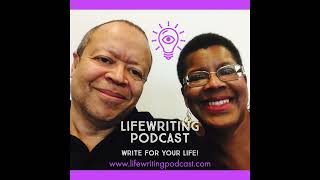
Tananarive Due and Steven Barnes discuss teaching Black horror at UCLA, how social media led to meeting Jordan Peele, and selling an episode of The Twilight Zone called 'A Small Town.' They share how they recovered from setbacks through crowdfunding and caregiving, and offer practical advice on designing a creative life.
Questions this video answers
January 30, 2022
Episode 4
"A Small Town"
$10,000
UCLA; Black horror and Afrofuturism (the Sunken Place class)
Chapters
Welcome to the Life Writing podcast, where married authors and screenwriters Stephen Barnes and.
Tananarine Du talk about writing during stressful times, breaking into Hollywood, and balancing life.
Every week, we'll share more tips on how to build a better life while you create your dream projects.
Even if it's only one sentence a day makes a difference. You could do this. Life writing is the application of the skills of writing to life.
And the tools of life apply to your writing.
That's right. Seeing yourself as the hero or heroine of your own adventure.
So. And that's, you know, we live by it.
Absolutely.
So we're going to start talking about life. Let's, let's. Let's do it. I'm. All those of you who are watching the video version on YouTube can see I'm in my Candyman garb, including a little golden Candyman. Hey, stop that.
Just canning it.
A zoom screen is like a mirror. Oh, okay. Because I teach a little.
Little hook.
I have a little golden hook that I got from Afro Horror. So in any case, I teach a black horror class at ucla and also Afrofuturism. It's called the Sunken Place. And today's lecture was about Candyman, comparing the 1992 version by Bernard Rose to the 2021 version by Nia DeCosta.
And whereas I'm not teaching at UCLA, I am one of the grand old men of Afrofutur futurism now, Becky.
Oh, boy. You know, honey, you do that voice a little too well.
Just a little too well. I know.
It's.
You know, we do. We do have our afrofuturism class that we. That we guide people through online.
Yeah.
Afrofuturismwebinar.com but basically, Afrofuturism is my life. I mean, you know, I looked out at the world when I was a kid, and I did not see images that looked like me and the kinds of adventures that I. And so I just had to start creating what I didn't see. And that was exactly the same thing that Octavia did.
Octavia Butler.
Octavia Butler.
Late, Great.
Late, great. And my great friend Octavia, my big sister in Afrofuturism. And she just decided to try to fill that gap, and she spent her life doing just that. And she lived long enough to actually see her work being revered in the way that it should have. Thank God. So many artists never get to see that they don't live long enough.
Absolutely do not. I mean, there are so many stories. I wrote a novel called Joplin's Ghost about the ragtime master Scott. Joplin I mean, he saw success, but he never saw the wealth to match that success. He basically died in poverty even as his music was being played all over the world in the White House.
You know, artists can have a problem defining success in a way that has objective measurements. In other words, money. You know, so, you know, they, they've got all the artistic chops, they. They master their, their skill. They're surrounded by people they respect who believe in their work, but the money doesn't come, you know, And I think that unfortunately, that pattern is common enough that it's one of the things that I like to try to break through. Because I think that, that if you have to work another job in order to support yourself, that's time you could have spent working on your writing and, or your art or your dance or your music or whatever it is that you do. So what we want you to do is to design the life that you want. What is it that you want? What is it that would turn you on?
My life actually does involve a day job, but I, I do so willingly because it's part time. I teach at UCLA just twice a week. I'm well paid for that. I'm teaching what I love. I'm teaching black horror and Afrofuturism. Are you kidding? You know, I've lectured on these subjects for free many, many times.
What I know about you is if we were billionaires, you pay them to let you teach.
I love teaching.
You do. You love teaching? So that's, that's your bliss.
Yes.
When your students get to sit in the presence of someone who is doing exactly what she wants to do with her life.
True.
And that's, you know, I envy your, Your students. I wish I could have taken your class as a young, as a young writer because of the fact you. Thank you. You love what you're doing.
Yes.
And you know what you're doing. And you can do what you're teaching. So you can do it, you can teach it, and you can make a living at it.
Right?
So that's, that's pretty rare. And I just, I constantly reminder Eve that what she is is, you know, she's a unicorn and that there is real value that she's giving to her students. And if she can't always sit right there in her presence, in their presence the way she'd really like to, she's still giving them gems. And so, you know, you're. You're the real deal, sweetie.
Well, and you know, that's part of the reason we started the online courses, because not everybody's a student at ucla and everybody has its chances. So we also. My black horror course, we taught an online version that we call the sunken place class. Www.sunkenplaceclass.com afrofuturismwebinar.com we do that.
It's a way of taking what we know and sharing it in a very specific way, in a structured way. And I'm very proud of. Proud of those things. This week.
I was just realizing we haven't had that pinch me moment when we talk about our podcast launch, honey. Because just a few weeks ago, this podcast was an idea we were talking about and now we're. This is our fourth episode.
That's right.
We've had Roy Wood Jr. One of my absolute favorite comics, and Pat Oswald.
Patton Oswald, one of those popular comics.
In the world, also one of my personal favorite comics. And that's all accidental, you know, it was just sort of zeitgeist stuff. And want to talk about what we have coming up. We have a very special guest coming up for the next podcast. N.K. jemisin. He's gonna be here to be joining us. She's won every prize there is to win in Afrofuturism.
She put her foot up in this industry.
Yes, she has. And I'm so excited to. To talk to her. So be sure to tune in next week for our interview with NK Jemisin.
That's right.
But today, today it' and it's fitting that I was teaching my black horror class at UCLA because the story.
What were you teaching them today?
Candyman.
Okay, cool.
Stop it.
I'm not gonna do that. I thought you were trying to. No, no, no, no, no, no, no.
And the reason it's interesting that I was teaching my black horror class is because Candyman is by Monkeypaw Productions, Jordan Peele's production company. And our story today also has to do. The thing we want to talk to you about today also has to do with Monkeypox Productions.
Okay.
Because I met Jordan Peele. We met Jordan Peele because, I mean, it all started on social media, people. I just announced on Twitter, which is where I live. Those of you who follow me know I'm always on Twitter. I announced that I wanted to teach a black horror class centered around Get Out. This was back in 2017. Get out had just come out. At the time, I was only teaching Afrofuturism at ucla. But the minute I saw Get Out, Get Out, I knew that that film, by the way, that Oscar winning screenplay.
By Jordan Peele considered to be one of the best screenplays of the last decade of the actually of the 21st century.
How about that? Yeah, how about that?
Jordan did it. So it's like, you need to read that screenplay if you want to understand how to do it and how to do it right.
And there is an anecdote he spent.
Years working on that screenplay.
Right. And our method for teaching screenwriting, which is another kind of course we've taught, our method for teaching screenwriting is that you watch the film, the screenplays, and it just so happens there is an annotated screenplay of Get Out. Jordan Peele asked me to write the foreword, which I'm still so excited he asked me to do that. So I basically encapsulated Game Knows Game, honey. You know, I. Well, okay, if I kill. But I actually used that introduction when I'm lecturing on get out in my class because it's like, okay, well, it's all right here. The relationship, history of black horror. All of that was so apparent to me in the unusual inclusion of a black protagonist. Black masculinity being portrayed as more fragile rather than monstrous in Get Out. A lot of. A lot of horror portrays black masculinity as monstrous. And so I was just chatting about it on Twitter, oh, I'm going to teach this class. And a reporter reached out to me and asked if he could write a story. I didn't even have a syllabus yet. I was just talking smack on Twitter. But when the reporter reached out, I was like, okay, let me get serious. I wrote a syllabus. Maybe it was about a month later he finally was able to interview me, write about the fact that I was going to teach a class called the Sunken Place. The same day his story came out, I heard Monkeypaw Productions followed me on Twitter. Now, those of you who are on Twitter know how it works. If I was following them, they followed me. Once you're both following each other, you can send messages. So I just sent a little innocent. Listen, I like to say I'm at a certain age now. Nothing ventured, nothing gained. So I was like, so it would be so great if Jordan Peele could visit my class. I just kind of left it out there within, I want to say, two hours. Jordan Peele's account. I'm not going to say it was him. I don't know for sure. But Jordan Peele's account wrote me back in a direct message saying, ha, ha, I could surprise them. And that's exactly what happened.
That's exactly what. We smuggled him into her class. It was just great.
We worked out a bit before.
Basically, what we did was the room was dark, and I smuggled him into the class, into a seat that we'd saved for him.
In the back.
In the back. And then what did you say to Nunnery?
Well, I also want to set the scene. Jordan came wearing both a hoodie and a baseball cap. Okay. He was completely incognito as he walked through that classroom. And I was showing the scene from Get Out. I'm sorry if this is a spoiler. You really should have seen the movie by now.
That's right.
When Rose, played by Allison Williams, is dangling those car keys he's trying to get. Chris is trying to get away. Daniel Kaluuya, as Chris is trying to get away, he thinks Rose is on his side, but she dangles the car keys and says, you know, you're not getting these keys, babe. And that's the revelation moment when the audience realizes that Rose is not an ally. That's the scene I was showing my class, and they were. They get so mad every time they see that scene. They're talking smack the screen. And at that moment, the lights come up and the rehearse line we came up with. What.
What.
What is the director trying to say about the coveting of black bodies?
And so Jordan, who's wearing a baseball cap and a hoodie and hunched over, raises his hand. A couple other people raised their hands, too. Tananarive said, you know, the gentleman in the back.
You in the back. Yeah, yeah.
And Jordan stood up, took off the baseball cap. The room went berserk.
I mean, they went nuts.
I mean, women were running out of the room crying.
It was like, because. Just. Just. It wasn't just because, oh, we have a celebrity in the classroom. It wasn't just, oh, we love Jord Peele from Key and Peele. Or even so much that they just liked watching Get Out. We had spent weeks prepping for get out in terms of. I mean, starting with W.E.B. du Bois, the Comet, which is a science fiction horror story. Like get out is a science fiction horror story, by the way, where the last two survivors are a black man and a white woman. We had looked at clips from Guests who's Coming to Dinner. We had looked at clips from the Birth of a Nation.
Have you done used cosmic slopes in that class?
Okay, so. So they. They understood not just that they had watched a very fine film, but the cinematic context for that film. So they treated Jordan Peele entering that room like he was a grand master.
Which he was yeah, which he is. That's the thing that you have to understand and I mean this really seriously, that Jordan is an unusual level of talent. He's, he's not a normal screenwriter in that sense. There's something going on where he has integrated his polit, emotions, his comic sensibilities and his horror head ness all at the same time so that his, his work is working on multiple levels at the same time. And I don't know why he's able, he's been able to, to knock it totally out of the park twice, then produce Candyman and co write and co write it, which is very, very successful. And now of course he's got a new one coming out called Nope. And you know, we cannot wait to get it because you know, if he can do it this third time, the third time is the charm. Once, once you've anchored yourself like that, you've really told the world who you are. And I'm just pulling for him to knock to get a home run because if he does, he's, he's going to change the world. He's going to change, he's going to change the field. And you always look for those people who are the game changers. Oh my gosh, who's the one who's going to show us what next level work is going to be? And you know, I, I feel no jealousy about that at all because I get to sit and enjoy him. And he is also just a superb human being. You know, he went up there and he gave an hour long talk to that class.
He took that class to church.
He blew their minds. He was so honest, so straightforward. And they sat there and their faces were so open and eager and that was just a peak moment. That's education.
One of those students, Camille Oshundara, actually went on later to work for Monkeypox Productions as an intern. They started as an intern and then went on to be. Next thing I knew they were in Hollywood Reporter Alex to Jordan Peele's face. I was like, okay, that's how it works in Hollywood. It's driven, it's a youth industry. But it was such an eye opening visit. And of course now this will lead to the actual story we want to tell, which is about how we wrote an episode of the Twilight Zone for then cbs, All Access Now Paramount.
So why don't you tell, why don't you tell the story from your point of view and then I'll tell it from my point of view?
Sure. The thing you have to understand is breaking into Hollywood from the Outside is such a difficult puzzle. Very, very difficult to do. And at first, I didn't know that that was what I wanted. I had the experience of some college friends when I was at Northwestern making a short film from one of my short stories. And I was so traumatized by just the lighting. Alone, like cold. You're standing there at night shivering, trying to get the lighting right. I thought I wanted nothing to do with the film industry. I am perfectly happy just to write prose and novels, thank you very much. But starting from the time I published my first novel, the between, in 1995, and then my soul to keep in 1997, I had producers reaching out to me, wanting to auction my work for film, which I naively thought I was like, okay, I'm gonna be in Hollywood. I'm gonna have my movie made. And then it wouldn't happen. And we'd be waiting and waiting. And the things that.
I remember that awful day when we sent in, you know, was it a treatment or script?
It was a treat.
It was a treatment, a one pager. And they said, you know, we love. And we just thought, yes, yes, yes, we did it. We love that we have this.
When I tell you we had just been married during this time. And one of the things Steve and I recognize about each other, we're both novelists, but only Steve had had any television writing and screenwriting experience. So we. I always knew that I wanted to collaborate with him. And that was our first. I think our first collaborative effort was writing that. That treatment for My Keep. Because they finally came to us, believe me, out of pure desperation. Back in those days, if a studio was calling the author, they were desperate because they were. They were having these internal conversations like, do the characters have to be black? My Soul to Keep is about an Ethiopian immortal who was enslaved in the American south when he was abducted into slavery. And yet their meetings are like, do the characters have to be black? So suddenly I was realizing, I see why these are getting stuck at the script stage, because these people don't know what they're doing. So, again, naively, I thought, let me learn how to write scripts. Steve and I will collaborate. And we were so broke. I mean, this is the part Steve didn't mention. We were newlyweds. I think I had just moved to Longview, Washington, which is where we live, for the first six years of our marriage. Broken. He broke. Okay. So this is when I first learned, really, the golden rule of Hollywood is that you cannot thrive in desperation.
No, Hollywood can smell desperation, you know, like flies can Smell, you know.
You know what? You know what? It's.
It's in. That's not what they want. What they want is the person who walks into the room totally confident and totally successful. That person is the one, oh, I'm going to hitch my wagon to that star.
Right. They're attracted to your light.
Yes, they're attracted to your light. If you don't have a lot of light, sometimes they'll work with you. But they cannot help but behave like predators. Well, and, you know, and manipulators. It's in the. And the worst mistake you can make is walk in there and admit that you don't know. I mean, I made that mistake very early in my career. You know, I knew I could write it, but I knew I needed some experience. I knew I needed some, you know, some help. And I let that slip. And that instant, the deal was dead.
It's so. So in this situation, it was Samuel Goldwyn Productions at the time, and I'd had a disastrous phone pitch with The Samuel Goldwyn Jr. Like one of the actual Samuel Goldwyns. It was such a bad phone pitch that the executive later called me to apologize for putting me on the phone with him. So in that context, we are now broke, desperate. We've already blown the phone pitch because back then I thought, well, you've read the book. We're just gonna do that. I didn't say that.
Bring a lunch.
That was kind of my attitude. It's like, what are you talking about? You read it, right?
That's what we're gonna do. Oh, my poor naive baby.
Our last chance was to knock their socks off with a one page, one and a half page treatment. And we just threw all of our integrity out of the window. Made one of the characters like a supervillain out of a comic book. And we were just trying whatever we thought they wanted. And so that's when we called us to check and see what happened with the pitch. And the guy was like, we love. And, man, when he said we love, I could hear a ka ching, ching.
Ching, cha, cha, ching.
Like, bills paid, dreams fulfilled, future set. And then he said that we have this, which is a zero content comment. It's like the fuel in Hollywood is enthusiasm. So when you see sort of those stereotypical movies and, like, everybody's like, hey, you know that.
Yeah, we're super excited to. They're not totally just, you know, playing with you. It's that passion and excitement as to not understand is the fuel. If you can't get excited about a project, you're not going to spend a year or more bringing it to life. So that way.
More.
Usually that pitch just died.
It was. It was. I mean, that was the last thing.
There is nothing in the world like the feeling of selling out and no one's buying.
Oh, my God. So I really almost still get a little bit of a sick feeling in my stomach when I think about it. We've had a few of those situations where you get that sick. I'm not going to go into all of them now. We'll save some for future podcasts. But, man, that was it. So long journey for me as an author. Frustrated, sort of on the outside looking in, never invited to the table when, you know, finally started getting a few opportunities to write scripts. When Blair Underwood optioned my novel the Good House at Fox Searchlight, we co wrote a couple of drafts of the Good House. Forest Whitaker was slated to be the director. Again, it didn't happen, but again, it.
Was, do the characters have to be black?
That's true at first. Not at Fox Searchlight. They didn't say that. But while we were pitching it, one of the producers was giving us that. So it's not anyone's imagination that it's such a struggle for marginalized people to make inroads in Hollywood. Which is one of the reasons I do admire Jordan Peele so much is not because, not just because of his own success, but because his success has opened the door for countless other people. And two of those people happen to be sitting in this podcast because, hey, we're no fools. Monkeypaw just came to my class, and so we set up a pitch meeting. What are we, idiots? Of course we're gonna go pitch at.
Monkey Paw and we find out that they're doing Twilight Zone, right?
Yeah, they were doing. Was that even.
Was that before Twilight Zone?
They might have just started even talking about doing Twilight Zone. So we went into Monkey Pop Productions. We had some short story ideas that we hoped we could translate to Twilight Zone episodes. And if, you know, in Hollywood, you can really tell when people are rooting for you, Steve, you've had some experiences.
Like, I'll talk about mine after.
So they were really rooting for us. They really wanted to make it work. And there was one story they kept circling around. We must have done three or four calls about it. But in season one, the Twilight Zone was really trying to do stories with more of a social justice theme. And my story did not have one. And no matter what we did, we could not shoehorn one. And so it kind of didn't happen. And, you know, again, disappointing, but I was just excited that we'd been in talks, that we'd been in the room, all of that. I'm on the outside looking in. This is all good. So fast forward a few months later, we get an email from Monkey Paw, Jordan Peele's assistant. They want us to come in and pitch for the second season of Twilight Zone. And like a personal invitation. So we went in and it was a combination again, of story ideas that we were coming up with and some snippets. I wouldn't call it story, but premise, you know, premise ideas that they had been throwing around in the room. So between those and our original story, I took some and fleshed them out to a paragraph. Steve took some, fleshed them out to a paragraph. We pitched them one by one. And the one we landed on was what eventually became the episode A Small Town, which. Which, Steve, you took lead on coming up with that. That story, that one appealed to you. The idea of a man who was wrestling with grief and has this power when he finds a model of the town where he lives and what he does with it. Right. So that was, you know, how that came about. It was a collaborative process, all of us sort of talking it out and landing on exactly what approach to take. But again, we came up with that one and a half page treatment, and this time we sold it.
Yeah, we sold it. And then they, you know, as always happens in the development process, you know, they put their stake on it. You know, they said, let's do this. They're the ones who understand what the. What the budget's going to be and what the production things are going to be and what other shows that they have going on so that they understand the thematic arc that they want to do for a given season. So what they're. One part of what they're looking for is who can roll with it.
Right.
So did you. Is that.
If that's.
If that's the climax of your tale, then I'll go back to mine.
One last thing.
Okay.
That is my first television credit, people. The Twilight Zone of all shows, iconic of all people, Jordan Peele. That is my first television credit. I had a couple little IMD things, IMDb things from work we created, like little shorts and this kind of thing, but that was it. And I'm so just full of gratitude for that opportunity. Now you go on and tell you, because this was not your first credit.
No, actually, Twilight Zone was my first credit, just not that Twilight Zone.
Right.
Basically I had always wanted to work in television and film, but my way in was through writing stories and books. And then my collaborator Larry Niven was contacted by Disney, Tad Stones at Disney, to ask if he would like to adapt a Stanislaw Limb short story. And Larry didn't want to do it, but he knew that I was interested. So that was how I did my very first script. It was not produced. It was for an anthology series that Disney science fiction series that Disney was planning to do. But I got paid and I got an agent out of it. And my agent then later on had a major client named Phil DeGuerre. And Phil DeGuer got the rights to do the Twilight Zone from Rod Serling's widow. So I ended up in part of the original group with Dorothy Fontana and Harlan Ellison and Jim Crocker and, and Phil DeGuerre at a, @ a motel in North Hollywood, you know, eating bear claws and talking stories and, and I sold them a story. He asked me whether or not there were other stories that I knew of that I thought would work well for the Twilight Zone. I suggested Robert Silverberg story to see the Invisible Man. But my first story was called, it's called Teacher's Aid. It started Adrienne Barbeau as an inner city remedial English teacher who is having trouble with the gangs in the school and gets possessed by a demon which helps her deal with the gangs. Now it was both, both absolutely wonderful and there were disappointments connected with it. And I won't go into too much at this moment, but the one thing that I that did happen is that the street, the gang was supposed to be black and they changed it to white. Now this happened to me again on the Outer Limits when I wrote an episode of the Outer Limits in which an inner city gang. Once again I kept trying to turn it to work with that hijacks a military convoy containing know stuff from Rosewell, New Mexico, including the. The pieces of a crashed UFO with something alive in there. And they're trapped in this, this warehouse with this and they're having to try to deal with it. And once again I was told, well, they felt they're going to film this up in Vancouver, British Columbia and there aren't enough black people. They'd have to import black people to Vancouver. So once again they whitewashed the cast. But you know, I worked for Outer Limits and Twilight Zone and Stargate, SG1 and Andromeda and, and things are going pretty well. And then the Sylmar earthquake hit in 94 or something like that and my wife at the time, Tony, the mother of my daughter, decided that she had had enough of Southern California for the. Because of the earthquake and some other things and that she was moving to, she wanted to move up to the Northwest. So I moved up to the Northwest. I figured I'd still be able to, to, you know, to work, you know, from Hollywood because I could drive back down to Hollywood and take pitch meetings. I could do pitch meetings over the phone and it worked out for a while. But the truth is you gotta be.
In Hollywood or at least then really before the Zoom era, you really did.
And so the, the jobs dried up. That's just all it was. The work just stopped. And so I was just, you know, know, marking time. It's like, okay, I have to stay up here until my daughter graduates high school. And as soon as my daughter graduates high school, I can get back down to Southern California. And we got married during that period of time. And Tinanari were, you know, I were doing some stuff in Hollywood and people would try to option her stuff. So I felt very optimistic about, about the chances of what I was going to do when I got back down here. But that optimism was misplaced, shall we say. When I got back down here. Jonathan was Westover, who was my agent and a good, a good guy, told me a couple things that were of interest. One was that he was retiring. Another was that I had aged out. I was too old to work in Hollywood because there was no longer freelance work done. Everything in Hollywood is being done by writers rooms and they didn't hire anybody for writers rooms over the age of 40 and I was already over 50. So I'm like, oh my God, what did I do? And I moved my family to one of those expensive areas of the country and I don't even know how I'm going to earn a living. So I felt panic and I managed to put a lid on that panic and started asking myself, well, what other skills do I have that I can use to make money while I'm making moves? As many moves as I can make in Hollywood. And so I was doing stress reduction work with people based on some physical, Russian, yoga sort of things that I'd learned in the Northwest? And I started writing. I got, I got an animation job. And through that animation job, yeah, that was Ben 10, alien. That's right.
Dwayne McDuffie, rest in peace.
So through that I got an agent. Reggie Hudlin reached out to me and asked me if I would like to work on the Hannibal on A series that he was doing with Vin Diesel for Hannibal. And I ended up getting the showrunner. I ended up getting the story editor on that. On that gig. Big. And that was nice, and it was good money. And I was starting to feel some optimism. Things were starting to work, really looking up. But then Vin Diesel pulled out of it. That fell apart. I said, okay, you know, we're still making money here. We've still got some momentum. Let's see what else we can do. And then disaster hit, and Tananari's mom contracted cancer.
Yes.
Was diagnosed with cancer, and we had to move the family to Georgia to basically help her through hospice.
Three years.
Yeah, for three years. It was devastating. It was the most painful experience of our lives in many ways, for many, many different reasons. But one of the things for me is that the 10 years I'd spent in the Northwest had damaged my career momentum. And it took me six years just to start getting things back together. And then I broke that momentum again with three years in Atlanta. By the time we got back, if I'd been too old nine years before to work in Hollywood, now, it's like. It seemed impossible. What the heck am I going to do? So it was. It was beyond panic, except that while we were in Atlanta, I was asked to judge a short film competition. And I looked at the short films that these students did with great creativity, with very little resources, except some cameras that they borrowed and friends that were actors. And I said, wow, we could do that.
Absolutely. I remember teaching at Spelman College, which is what I was doing when I was in Atlanta, and I was. I was a distinguished visiting scholar with a budget to bring in speakers. So I had an Octavia Butler celebration, two years, where I brought in, like, Samuel R. Delaney.
That's right. And we were able to pay them.
Right? And pay. I mean, so many Niecy Shaw. Just the names go on and on and on. It was beautiful. And as a part of that, I always had a. This short science fiction film festival. And even when I was teaching composition classes, the students were required to sometimes make little films. Like Steve, I was like, well, if they can do it, we can do it.
That's right.
So my best friend Lucina Fisher was already a filmmaker. She'd already made a short film, and she got excited. And it reminds me a lot of the podcast in the sense that no sooner do we kind of utter it aloud, like, mention it to a couple of people, then all of a sudden, they started showing us what the future could be. And it was very Similar with our short film. And although, yes, it was so painful, the separation from Hollywood and the lack of momentum on so many levels, but it was so empowering to actually crowdfund a short film. We raised the first half strictly from our readers and friends on Facebook.
That's right.
And the second half on Indiegogo where we had mother and daughter donors who gave us a total of $10,000.
That was just amazing. And one of these days we will talk about something called the magic formula, which we use to guide ourselves. There's so many things that we want to give you, so many tools, but that's. We're just going to have this conversation every week and we'll give you. We're not holding anything back.
No, we're not holding anything back. But yes, there were some shaky moments with Danger Word where we didn't think we would have enough money and we were like, okay, well, we'll just us get as far as we can.
Well, let's save that story.
All right, we'll save the story.
So anyway, so we. When we came back to Hollywood, the thing that was interesting was we were in a different position. We were producers.
Right.
You know, and I knew that Tananarive, if, if my brilliant baby had an opportunity to write and see people speaking her dialogue, that it would teach her some things that she did not know before. I mean, there are certain things you can only learn by doing. But there was another thing that during the production of the film, we ran into some problems and she came up with a brilliant solution on the fly at 3 o' clock in the morning. And I thought to myself, if she can think like that under pressure, she can do this. She, you know, this is. This is an arena that we can operate in. So when we came back to California, I did not just feel, you know, nine years older than the last time I moved to California. I also felt like we're different. There's something going on here. We could introduce ourselves to Hollywood in a different way. So she gets a job at ucla. You know, we're, you know, we're optioning things, we're doing things. We're making as many moves as we can.
Shout out Effie Brown, who is the. And Glendon Palmer, who was working with her at the time. They were the first producers when we moved back who reached out to us and started helping us shop our projects.
That's right. And things started happening. And then the Jordan Peel thing happened and then the Twilight Zone magic, you know, and it was. It was absolute magic. The one Thing that I, I, I will mention from the magic formula is you have to be doing everything you can where you are to make it happen. You cannot be sitting on your butt waiting for someone to call you and make it happen. You have to actually be when the call comes, it should almost be irritating that it is distracting you from the thing that you're trying to do.
Hey, I know that.
Yeah, it's.
So there's some truth to that. A lot of truth.
Oh, you, you. But you bet there's. You bet there's truth to it. So what we wanted to talk about here is that we each had these different roads to this place and that we. That we were looking at this mountain from slightly different directions, but we've been able to be allies to each other in making our common dream come true. And that was the thing that we saw with each other when we sat in that airport in Atlanta the very.
First time we met.
That's right. Holding hands, saying that we could build an empire.
Right. And the Twilight Zone situation, even though it would be many, many years later, was exactly the kind of thing we were imagining when we met. And we were sitting in that airport. We met, by the way, in case y' all haven't heard the story, we met at Clark Atlanta University when they had a black science fiction conference and Octavia Butler was there.
The African American Fantastic Imagination Conference.
Right. Octavia Butler was there.
Jewel Gomez.
Jewel Gomez. Samuel or Delaney.
That's right.
Who was Octavia's mentor was there. So, I mean, it was.
You could have rolled a grenade in that room and killed an entire generation of Afrofuturism, that's for sure.
It was probably the first conference of its kind. I felt just lucky to be in the room. I had only published one novel at that point, but Steve and I knew over a weekend that we wanted to pursue this relationship.
Absolutely. I got the strongest hunch I've ever had in my life. And once again, that's a story for another time. We will tell that story. But I think that we always try to tie this in with the teaching moment. And right now, the teaching moment that Tananari selected is the ninth step in the hero's journey, which is the hero confronts the challenge and confronts evil and is victorious. So it's, you know, everybody knows how to party, so we don't have to tell you how to party, but what we can tell you is that if you will look back over your life and find the times when you succeeded despite the fact that you went through the dark night of the soul and all the work and everything, you know, that you go through the times when it feels like nothing is working. But if you, if you can remember the times when despite your despair, you came out the other side and things worked, those sparks, if you'll keep those in your heart, you know, I don't care whether it was when you were first learning to ride a bicycle, first trying to, you know, being the first play that you were in, the first story that you sold, the first job that you got, there was a pattern that you went through of trying and being discouraged and then winning. If, if you can remember that, then right now, wherever you have challenges in your life, you can look at the times when it felt like there was no hope and it worked, worked anyway. And take and ask yourself, how did you get through? What did you do? How did you organize yourself? How did you deal with despair? How did you deal with depression? How did you deal with the stress? I mean, in life they pay you for how much stress you can take without breaking. What allies your friends come and help you. What did you use? Think about all that you have succeeded. I know so many people who will do this. I've never succeeded at anything thing. And if you sit them down and you have them look at all the things that they've done in their lives, what's happened is they've succeeded as much as anybody. But they don't consider their successes, they don't remember their successes, so they don't celebrate their successes. So we can say everybody knows how to party, but I just realized, no, we don't know how to party. What you do is when you succeed, make sure that you party hard, you know, that you have fun with it, that you celebrate. You lock in into your body, into your neurology, what it feels like. Because I'm telling you, the next time that you're down, if you have a memory and a matter of fact, the next, the next time you're up, write a letter to yourself, to the to be only, you know, put it behind a sheet of glass only to be read the next time you're down. You talk to that future you who's going to feel depressed, going to feel disheartened, going to be discouraged, going to feel defeated. What would you say to that person? And you take that, the joy, maybe you want to make a little zoom video, you know, where you're laughing and talking to that future self. The ability to control your emotions. You know, your emotions are the fuel, that power you, the ability to tap into your positive Emotions in the. In the worst of times is one of the most valuable things you can possibly do. T. How. Tell me about a real success that you had and how, you know, what did it feel like when you got the Twilight Zone episode? When did you know that that was a success? When did you know that this was celebrated?
I'm gonna go back even earlier, go for it in the Twilight Zone episode, and I'll answer your question, or at least, please remind me to. But I. You know, so few Hollywood stories are replicable, right? Like, I can't tell you, okay, you all just invite Jordan Peele to your class, and then you go to pitch with them, and that's how you do. It's not that. That's not the point of telling you that story. We started at our lowest point so that we could take you all the way to that moment of triumph, right? And when I think of a moment of triumph, especially set against that lowest point would be that time in Atlanta. My mother had just passed away. Devastating. You know, the worst thing I've ever been through and so far away from Hollywood. And at that moment, we took our power, honey. We said, why are we worried about the fact that we can't fly into LA comfortably and do pitch meetings with our hands out to people when we could just make our own damn movie?
Please, sir, I'd like a job.
And even though I had learned that lesson with Danger Word, I had to remind myself when we came back to Hollywood, because we were focused on adaptations where we were waiting for producers to come to us, and we were like, well, why don't we just write some original scripts even when we're not working with producers? Right? And that's. That has resulted in a graphic novel called the Keeper that's coming out later this year. But back to that moment of triumph.
Yes.
When we got that $10,000 contribution and when we screened Danger Word, whether it was that screening we had at our house for Friends and Family screening at Spelman College, just seeing the final project on a. On a little TV screen or computer screen, to see my name in credits as an executive producer, as a.
As a co.
I mean, that. That was such a beautiful moment. And also the little personal Easter eggs to myself. My mother's favorite hymn was Amazing Grace. We played it at her funeral. And there's a moment in the short film Danger Word, which is, by the way, it's set in the zombie apocalypse. It's about a grandfather who's trying to help his young granddaughter survive.
Yeah, I think they can see it isn't that on dangerwordfilm.com no, no, no.
Just dangerword.com dangerword.com www.dangerword yeah, it's free.
Just. It's on YouTube.
It stars Frankie Faison, who is a great character actor. You've seen him in Luke Cage, Silence of the Lambs, you know, and another newcomers, Scott, who had been on One Life to Live between the ages, I think of 4 and 8, and she could just cry on cue and boom, you're hired. So, I mean that part too. The collaboration with so many artists, I never had that experience, not since college had I been on a set like that where. And it was tough. And I remember I remembered how I felt about filmmaking in college because while we were on the set, it was like half the time I was like, oh, my God, this is, is like such a mistake. And the other times it was like, oh, this is the best. But to see the final product and to see those actors singing Amazing Grace, A love letter to my late mother, and how I know how proud she would have been to see that film because she loved horror so much. I just, I got to fly my.
Daughter out to, to be in her first little, little movie. Our son is in it, you know.
Playing everybody in it.
It's. It's so meaningful. You know, you. The artistic journey has positive things, but they're going to be. You're going to cry, you know, they're going to be times when things are not working well. So for God's sake, when things do work, celebrate. When you sell that story, do a happy dance, get together with your friends via Zoom. If nothing else, remember you will. You got to charge up your batteries.
Absolutely.
You need this. Why are you doing this? Why are you going through all this if you're not going to let yourself slow down and marinate in the positive emotions? I know so many people who will skip right over the positive emotions and then spend days feeling depressed about the negative stuff that goes on. At the very least, spend as much time happy as you do sad. But, you know, Dalai Lama said the meaning of life is to be joyful. So try to find the moments of joy and celebrate them. This is what it's about.
Let them sustain you. And one quick example of that would be, you know, we have a teenage son. So when it was time to shoot our episode, which I heard about by the way, over the news, because there were all these reports coming out of the small town in Canada where they were shooting, and I was like, oh.
My God, is that the car in.
Our episode, we weren't allowed to say a word about it. We had signed ideas and all this, but. But there was a big kerfuffle happening because the shoot had so many people, so many crew people coming in.
Are there any small kerfuffles?
There were so many crew people coming in that it was making the news. This town that was in a slump all of a sudden was having a boom, much like in the episode. It's kind of ironic because of us, because of us, we were giving all these people work. And so only one of us could go to the set. That's right, Steve. Because he had done many.
I'd done that many times.
He said, you should go. And that was in very, very early 2020. One of the very last trips I took before lockdown. And when you talk about hanging on to joy to sustain you through the negative, the negative meaning 2020, like literally being afraid I would die that year or that people I love would die. It was a horrible year. Continues to be horrible in a lot of ways. But that was really before vaccine and all the mystery and we don't know what's happening with the food supply. I could hold on to that memory of being on the set of the Twilight Zone, sitting in a chair, seeing. And I want to shout out the director, Alonso Alvarez. It starred Damon Wayans Jr Natalie Martinez.
David from Holtz, who we remember from Numbers.
Right. We used to watch numbers all the time. And that was in our episode.
Paula Newsom, who was just in no Way Home.
I know, right? So it was just this. I'm telling you, hang on to your victories. They may not be a Twilight Zone. They may. They may not even be a short film, but you are having victories.
Remember something, okay? So for. For Tananarive, this was her first television experience for me. I grew up watching the original Twilight Zone back in the Stone Age. Okay. And then my first television was the. The renewed Twilight Zone. And then my re. Entry into the field was this new Twilight Zone with Jordan Peele, who I consider to be. You know, I'm just. I'm hoping he's going to be the new Alfred Hitchcock. I'm hoping that. I'm hoping that that's who he is. And to be able to put words in his mouth, to be able to write dialogue for him.
Right.
As well as other people, you know, it's, you know, and be able to do that Rod Serley thing, you know, you know, in the Twilight Zone, you.
Know, kind of writing that dialogue to get that.
Get that voice. Right. And to feel like you're part of a tradition, you're part of something that is happening. These are the moments that you live for. These are the moments that on your deathbed, you're going to think back and giggle about, yeah, I did that. You know, I think that life, you know, life. There are always times when things go better and worse. And if you will just store those good moments inside you, they will help you believe that it is worth it to educe from yourself the best work you can do. Why am I doing this? The audience laughed the loudest or they screamed, or somebody put down your book and was crying with joy. Whatever it is that you do that you've done, save those good moments, you will need them.
Do the thing you're afraid to do. I was intimidated by the idea of making a short film. How are we going to raise the money? We figured it out. Of course. It's scary to go pitch at a production company when you don't have any credits, but I did that anyway. I was hungry. I wanted it. So do the thing you're afraid to do and empower yourself when other people will not empower you.
One of the things is, no, you're not going to get Jordan Peele to your class at ucla. However, if you do your homework, if you're ready for the world Game knows game. And what happened is that Tanonari was teaching at ucla. She had her game together, and she's a natural communicator via Twitter. And one thing just led to another. She was putting herself out there, saying interesting things, doing interesting things, helping interesting people, talking about the way the world is changing. And if you do that, it wasn't. If it wasn't going to be Jordan Peele, it would have been somebody else. Something else would have happened. Something else would have responded to how centered she was and how much energy she was putting out into the world. If you sing your song and you honestly tell the world who you are, you will begin to get the allies that you need. But you have to be willing to do your own work. You're not asking. We weren't asking for anything from the world at that moment. We were just giving to the world at that moment. That's right. And somebody turned around and gave to us that. The desire of Jordan Peele to be standing in a class with a room full of students who he could talk to, you know, that was a joyful thing for him.
Yeah. He talked about it on Colbert and he was so impressed by how intelligent the questions were and how in Depth. They were so. Yes.
So we provided a peak opportunity, a peak experience for a good man who then thought, hey, these people, you know, we got to bond with him and because of that we got, we got the opportunity. So no two people break into Hollywood the same way. The way I put it is whatever creativity you're going to use in Hollywood, you're going to use that same creativity to get into Hollywood in the first place. So what to life writing it? What you do is if you were characteristic in your life situation and you knew that at the end of the story that character got everything they wanted, what would you have the character do? You use intelligence as problem solving. So in stories you're solving one problem after another, after another after another. In life the same way, working backwards from a vision of your victory. Confront evil and succeed.
That's why we say make yourself the hero or heroine of your own story. Like Steve said, if you were writing it, what would they do? And then give yourself, yourself the courage to do those things.
Absolutely. And we'll, you know, at another time we'll talk about, you know, how do you get that courage? How do you break those things down? These are the things that we're going to talk about here. It's also what we talk about on in Life Writing Premium, you know, our flagship program where every week, you know, we communicate to you with, with videos and audios and essays and essays and we, we guide you. It's a year long program and it's designed to be worth 10 times as much as, as we're charging. It's, it's the best that we've got. And that's@lifewriting premium.com so that's. I got, you know, I can't tell you how much I just want you to know life is short. It passes so fast. Whatever your dreams are, whatever your hopes are, I want you to go out and get it. You know, we can guide you about writing and to a certain degree about Hollywood, maybe some other things. We'll have guests in here were actors, we had comedians, you know, on. So seeing how these principles apply not just to writers, but to other sorts of performers hopefully will give you ideas about how these ideas can work in.
Your own life for you. So thank you so much for listening to the podcast and tell your friends if you'd like to get on our mailing list, you can sign up@lifewritingweekly.com and see you next time with NK Jettison.
Absolutely cannot wait. You take care and write for your life.







