Lifewriting Live 2-7-21
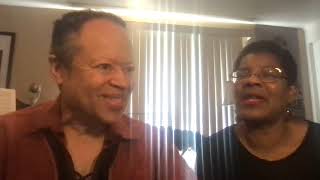
Steven Barnes and Stephen Tananarive discuss balancing family and creative work during the pandemic. They share daily routines, stolen writing time, and current projects including a haunted-house feature. They also talk about opportunities for Black creators in Afrofuturism and shifts in Hollywood.
Questions this video answers
About 40 miles and a little less than 45 minutes.
She said February 7, 2020 was the last time she went out in public in 2020.
The novel called The Reformatory (she said it will come out in 2022).
He said he is in training for a week-long Filipino martial arts conference in Manila "next year" (as stated in the talk).
Chapters
Welcome. Hello. Just to see how long it takes for the little circle to keep spinning, for us to get on track. It's spinning. It's spinning again. And I think that we have actually attained life writing live. So.
Hello.
Hello, hello. Hello. This is Steven Tananarive is my special guest today. Yes, we don't often. We don't always do it this way because we get pretty busy, but oh.
My gosh, it's been such a great period.
Yeah. So I just thought that it would be kind of fun to discuss just what's going on in our lives right now, especially since it's Valentine month, to talk about love and relationships, how that interacts with our writing and so forth and so on. So let's just kind of get started. Let's see, say, Nita Prices. Hi, Steven Tonarive. Love you too. Hello. How are you? Yeah, we're doing great. Doing great.
Absolutely. Anita, good to see everybody.
Yeah. So, you know, so t. We'll get some questions as we go beyond any doubt, but just kind of, you know, how are you doing?
Oh, my God. So good.
What's good about life?
Well, honey, as you know, we are reaching a whole another level in terms of our.
Another level.
Our screenwriting. We're working on several projects. We're coming to the end of the first draft on a feature film script that we've been hired to do by a studio. These are all like a bunch of firsts happening for us. Multiple projects. I mean, I'm almost speechless. It's just been such an amazing creative time. And of course that's juxtaposed with the stresses of pandemic life. Being holed up in this tiny house together, raising a 17 co. Raising a 17 year old son who was struggling a bit with the virtual learning environment. So, yeah, there's. There's a lot. There's like the great part of it. And then I'm sure a lot of you understand from 2020 especially and beyond the super challenging part, which is, oh my gosh, we can't go anywhere. We can't do anything. Yesterday we took a drive.
Yes, we took. We drove down to Seal Beach. Yeah, it's only about 40 miles away. So it took us about an hour to get there. Yeah, actually a little less than 45 minutes.
We had our ma masks on and we got some takeout and we just sat in the car and ate and walked on the sand.
Yeah. Took some pictures. I forgot to send you those pictures. Put them on Instagram.
We'll put them up. But that was a Much needed break from the four walls of the space.
Yeah, I mean those things are all, you know, what's going on in my life with the additional thing that I'm in training for a week long Filipino Martial arts conference in Manila next year. And you know, I've definitely whether, I'm certainly hoping that things will have changed enough for me to be able to go. But at any rate, it's good to have a goal and it's good to have something that is pushing you. You know, I don't want to go and embarrass myself.
No, you will not. Absolutely will not.
So let's kind of talk about. By the way, guys, you know, this is, you know, Life Writing Live is only grows when people share it. So if there is anything that you need from us, any questions you'd like to ask, please be sure to ask them. And so we would try to answer them about any, you know, writing or life and the life writing process or relationships or any number of different things. We can offer our perspective on those things. And to the degree that you find those perspectives useful, it'll be a good conversation.
Absolutely.
So it's also brought to you by our, you know, various, let's say.
Afrofuturismwebinar.com yeah, this life Writing Live segment is brought to you by afrofuturismwebinar.com that's afrofuturismweBinar.com a digital download course with everything you need to know about Afrofuture futurism from Octavia Butler, Samuel R. Delaney to Black Panther and beyond.
Great.
Was that a great ad?
It was a great ad. And you can type that in while I talk about my, talk about my perspective on what it is that we're doing. So, you know, there are. This has been an extraordinarily fertile period of time in, in my life. It's arguable that it's the most fertile of my, of my entire, of my entire life. And I, you know, there are books, there are short stories, there are essays, there are video projects for television, video projects for film, you know, cinematic projects, it long projects, short ones, you know, series, all sorts of different things. And I think what's critical is to try to find the place all these things connect.
Yeah.
You know, in other words, it's like people will sometimes say, well, short stories are totally different from novels or television. You know, movies are totally different from, from, from short stories or whatever. You have to find the place where all this stuff is the same. And I think that, that ultimately what I've tried to do is to find the place where it's the same even between my writing life and my personal life, or my personal life and the martial arts to find. Because if I can find a place where all these things flow from the same origin spot, then all I have to do every day is work on those core aspects, those core things, and everything else will flow from that.
So.
That has always been, that's, that's been my emphasis during my, all of my adult life is what are the core principles, ideas, perspectives that lead to excellence in all three arenas? And everything that I do relates to that. To the degree that I'm successful at that, I'll be successful in those arenas. But my success in those arenas doesn't necessarily mean I'm right. I might just be really, really lucky. I mean, that's certainly a possibility. So I try to cross reference that with what experts in different fields have said about these things and try to align myself there too. But it's, it's, you know, art life is art to a degree. It's not just science. It's not just, you know, numbers that can be added up. There's an element of the subjective in there. How do you navigate these territories? Huh?
I was so busy typing the URL and I did it wrong twice that I don't exactly know the whole question.
Well, you got it.
Okay, hold on. I'm just deleting the.
Yeah.
If it's about balancing the creative in life.
Yeah.
In general. Is that what it was?
Well, yeah. I mean, it's like if you wanted to talk about your, your working out, your parenting and you know, co spousing or your writing, you can talk about any one of those things. In terms of how you bring yourself to it, I think that it would be reasonable to consider you to be a success in all three. I'm not patting myself on the back to say, you know, well, you. What a great catch you got. So obviously you're successful in marriage. But I do think that it's there is that it is. It is a reasonable thing to say that someone who has achieved what you have achieved in, in your writing, someone who is in the kind of physical condition that you're in in terms of your body and someone who is happy in their, in their family situation is a success and therefore someone who should be modeled, you know, ask the question, how did you do this? What are you doing? So choose any one of those three areas and just talk to us about it a little bit.
Well, I think, darling, I'm relying On sort of your principle of balance. You know, those of you who are creative understand that it can be so tempting in those sometimes rare moments when you're in flow state to just disappear down a rabbit hole and let the world disappear. Wouldn't that be great? Like to let six hours go by and you wake up and oh, okay, here I am back in the world. I got a cabin in. Gosh, was it 2019? Now in the summer of 2019, I spent a weekend in a cabin. I really broke the back of my novel when I was in that cabin. Then we came back to the cabin and we did some brainstorming on a great Twilight Zone episode that we ended up writing.
Right. And also there was a touch of magic about it because it was on our way back from the cabin that we got the call that we were going to have the opportunity to pitch for Twilight.
Right, right, right.
So, you know, that ties it was to the cabin. And I thought it was on the way back.
I thought it was on the way too because I think, I thought we spent a lot of time sort of giggling about that while we were in.
I thought we were giggling on the way home. Okay, well, whatever it was, one or.
The other, the point is it. But writers don't always have the cabin. That was the first time I'd ever done a cabin was in the summer of 2019. All of my other writing is what I call in the margins. So my son's homeschooling starts at 8:30. We have a family meeting every morning at 8. So if I wake up at 7:15, then I might have 15, 20 minutes to jump in and, and write a little bit on a project that's on my mind. It's just like in the margins. 15 minutes here, 20 minutes there.
Stolen time, if you're lucky.
Yeah, if I'm lucky, I get that big two hour block. But the thing you can't do when you are in a relationship and especially when you're a parent, is you can't just vanish behind a closed door. It's not allowed, you know, so I've had to learn how to turn that flow faucet on and off.
Right.
You know, if our son comes in and, and wants something or needs something or needs help with an assignment for school, then I, you know, I'm going to get up and stop what I'm doing and go do that. I'm not going to say, no, no, no, I'm writing, son, I'm writing.
You know that the question of flow is important that Mikhail Csikszentmihaya who created the book Flow and really popularized the term, talked about it basically as the doorway to high level and excellent performance. I would tend to agree with that, that anytime you're in an activity where you know the basics of your activity and you can enter into flow state with it, this is the road to mastery, right? And so it's, if that's true in parenting, if it's true in relationships, if it's true in writing, then you can extract flow as a separate discipline in and of itself. It's like, how do I develop more flow? So that's what there's a lot of, you know, meditation and listening to Vivaldi and listening to, you know, to soft jazz or soaking in a hot tub. Any number of different things that allow you to. To relax and focus simultaneously open the doors to flow.
You know what, what, what? I use walking for that.
I talk about that.
A little cleaning for that. Well, if I'm walking, you know, usually I'm listening to something on audio, so maybe that's not my best flow time. But when I'm cleaning Especially, we have VR plate sets, the Oculus Quest 2. So there's this table tennis game that I play against an avatar who's better than I am while I'm working over story pieces, story puzzles, miniature golf last night, you know, and VR working out. So I like having the distraction of VR. I know not everybody has VR, so your aversion of VR when you don't have VR is just to get outside whatever safe space there is, whether it's a backyard, a porch, even an open window. You know, I saw a documentary about prisoners in jail, and that window was their portal to the outside. And they could just. They could leave the prison mentally, even if they couldn't physically. So we have to find ways to leave our daily routine sometimes, either physically or just mentally, and allow flow to seep in, rather than trying to push, push, push, push, push at the desk all the time. Sometimes you walk away from the desk.
Do you find flow? Are you able to access flow state in your physical activities in things like working out?
Not for some reason, not so much. When I'm working out physically, I'm really sort of in my body. We use kettlebells, and they require some concentration, so I don't smash it into my knee or drop it on my head.
Right.
So I really am very present when I'm working out. That's why walking would be better for. For listening. Flow state for me.
In other words, the. The potential risk takes you out of flow?
Yeah, for me, and that's part of the fun of working out, is to get out of my head and to be firmly invested in the body.
Yeah. What I find is that you can enter into flow state even in something like kettlebells, if you. If your primary focus is on your breathing. You know, if you're looking at, how is this, how do I exhale to create power here, how do I deal with the compression of my lungs here, you know, what is the inhalation moment here? Here. If you stay in that, then at some point the skills of the kettlebell are reduced to unconscious competence. And you actually. And there's a part of you. It's like driving on the freeway.
Okay.
You know, you're on a leap, you're in a lethal piece of equipment, traveling 65 miles an hour or whatever it is that you're doing and could die in an instant and kill people around you in an instant. But yet. And still you're. You're popping your fingers to the music on the radio or talking to somebody on the phone.
I don't know why it's still different for me than driving, but it definitely is.
I think that. That it's, you know, it's very real. In other words, that. That you do injure yourself. Little bits, you know, just you, you, you. You scrape this, you bang this, you. You come close to dropping this, and hopefully your foot isn't in the way. So it keeps you mindful.
Right?
Okay, so. But I think that that's life, isn't it? I mean, life, it's. Is a contact sport. Life is dangerous. There's, you know, saying the wrong word at the wrong time when we're talking here. When we're doing this, we're in flow state. We're not planning what we're doing. We're in. We're not thinking about what we said. Hopefully, we're not talking about. Think about what we're going to say. Hopefully we're in this moment. But there is danger in that, that you can't speak spontaneously for very long without saying what's really on your mind. So if you have some fear. I had some fear that I might accidentally tell you the truth about myself, about how I feel or what I'm doing.
I. Please do. Finally. Finally. That's right.
After 22 years, you think that a day would come. So it's. You have to have enough confidence that if you are just spontaneous and natural, it's going to be okay. And that is not always an easy thing.
No, it's really not. That's why this new app clubhouse doesn't really work that well for me, because I. I realize when I'm on Twitter, I spend a lot of time editing and delay and deciding not to tweet something. And when you're just. You can't just too. You know, I'll look at it. I know a lot of you like it, but there's no way to hide your appearance there. Everyone knows you just walked in the room, and it's just like, okay, it just feels like a spotlight in a way that Twitter is a little safer for me. But anyway, I'm off topic. I'm talking about social media distractions.
You're talking about your decision process, how you decide to do this, not do that. And I think that that is germane to the question of how do you survive, how do you thrive, how do you improve in anything, how do you make selections? And one of the ways you make selections that you need to feel comfortable. And you're not going to feel comfortable if you feel too exposed.
Yes, exactly.
So if there are. Aren't.
I'm not exactly doing these every day either.
That's right. If there are arenas in which exposure is necessary in order to be in the arena, how did you cope with that? In other words, being an author, you were making a decision to be public to a degree. How did that work?
And I think that's something that Octavia Butler struggled with. You know, she was extraordinarily shy. I mean, I'm just a little shy. A little bit. Like, given a choice between being in the room by myself or being down at the party, I have to kind of fight to leave the room, you know, to go to the party. I can go to the party. And I think Octavia learned how to. To be that public person. And you can. You can train yourself to be a public person.
Right.
And it's not that I don't genuinely enjoy those conversations. I have great memories of interactions with people at cons and parties and whatnot. But there's always this sense of relief when you. When I'm back in. In my own space, in a conf. Comfortable environment, whether it's at home here with you and Jason or in the hotel room. And it's not that you're pretending to be someone else, but the same thing happens with Zoom. The public face is a kind of a mask, right?
Yes.
So you're. You have. And. And sometimes it's a. It's a really heavy mask because you're. You're Feeling terrible, and you have to act like you feel great. But at the. What?
At the very least, no, you just tickled me.
You're so effusive. You're so alive. At the very least, it's some. You know, it's. You know how at the end of the zoom meeting. Here's a good example. Every zoom meeting has that moment where you have to put on that smile at the end. Because. Because otherwise you're going to be frozen, scowling at the camera, and it's not a good look. So we've all learned that when they say, okay, meeting over, we're all like, well, that's a mask. Okay, so it's not that you're not happy in that moment, but we don't express happiness with a big grin on our face all the time.
All the time.
So to that degree, I mean, even now, I'm gonna get to writing. I'm gonna be working on the script. I'm happy to be doing this, don't get me wrong. But I'm also. Also, when this is over, well, I'll be jumping into my script now.
And this is another important thing. A lot of the reason to have these conversations is to try to find moments of entry. Okay, so we're working on a script. It's a movie script.
Yes. And Haunted House.
We went back and forth over. We had. We were given an original idea by our partners, people who wanted to take us to a studio to. To see if we could do it. We developed that idea. It went back and forth between the two of us fighting like cats and dogs or loving each other's ideas or whatever. It is just all part of the creative process. And then we bounce it back and forth with them. And then when. When that all works, we. We took. They took what we'd done to the studio. The studio said yes. They made some suggestions. They wanted more of this, less of this. So we're having to. To compromise. We're having to do a tap dance. We're having. What I call is like threading a room full of moving needles that you've got different people with different objectives and different investments emotionally. And they all have to feel honored. So you've got all these. The eyes of all these different needles, and they're moving. And if you can thread them all without breaking the thread, that thread. Thread originates in your heart. If you can thread them all, then you can write for Hollywood, you know, And. And it's. It's different than it is than writing books. With books you might only have to satisfy one person, to get a book published. Just the editor. It's. It's arguable that. That, you know, that the editor and the publisher might be the same person.
Right.
And that's the only person you have to deal with is just you and the editor.
Yeah.
But with Hollywood, there could be a dozen different people who all have to agree. Agree that what you're doing is. Is. Is Right.
Yeah. The real joy is to sort of, like, with this script we're writing, to sort of feel like you're still hanging on to the original threads that you love.
Well, see, this is.
Even though there's a lot that's been taken away and added, I'm still holding on to that original.
This is what. This is what I was aiming at. And that is that a couple days ago, you were talking about how you were having fun.
Yes.
Working on it. In other words. I had done my work on experimenting, expanding it out because you were working on other things. So I took lead, and at the rate of five pages a day, I expanded this script out to about 90 pages. Okay. So you then go in and you begin to rewrite what I've done. And that means extent. Actually, no, no, that's not true. It was. I worked on the second of the last half of it expanding. You worked on the first half of it. Okay.
I wanted to start at the beginning. With the characters.
Yes. Because you access story.
I access story through characters. It's like when I wrote the Black Rose. Why did I start the Black rose when Madam C.J. walker was seven years old? Because I only had six months to write it and I needed to get to know her.
Yes.
So sorry. We're starting when she's seven, so you're gonna get her whole life story.
So what happened is that I was wondering whether or not I should take more responsibility. In other words, whether or not I should jump back in there, do some more work, whatever. And you said you were having fun.
I'm having a blast.
And. And when you said you were having fun, I realized that the little girl inside you, the one who wrote Baby Bobby all those years ago. Okay. Just, you know, that that creative infant had taken over control, that the adult part of you had navigated the Hollywood game. And all the different things you have to learn, as well as the structure of scripts and the format of script writing and. And being able to pitch in a room and being able to talk to the money people, all those different things, your adult self had mastered those things to the point where they're at Unconscious competence. So now the little girl just gets to come out and say, let's put on a show. This is fun. I'm in the dream.
You build a structure that is safe enough to house that inner child.
Yes.
That's what the adult thing is all. And Hollywood takes it to such a high level because you can get excited talking to your producers a year and a half ago, and then a year and a half later when the paperwork is signed, you're finally working on the project you were excited about a year and a half ago. So it has to, it has to be a flame of interest and excitement that, that survives the long legal process of paperwork and contracts and negotiations.
Well, to me, this is why everybody in Hollywood does that. You know, I'm super excited to meet you. I'm super excited to see this work. I'm so happy.
Because you can get fooled and think that means a check is coming. It's not. That doesn't mean tech is coming, but.
It also doesn't mean. It also doesn't mean that they're lying. It means that enthusiasm is the fuel.
Yes.
That it's the, the fuel or the fire that powers Hollywood, that powers any art. So if, if you cannot access the part of you that kind of says, you know, the, the Mickey Rooney, let's put on a show, then you can't play this game.
Right. And what would be worse right now than to be stuck. Stuck with a project we hated? Right. This is why you have to be so careful with collaboration. And I've decided that the theme of today's talk is collaboration. So it's whether it's the collaboration of you and your life and family so that you can create the space to write which all writers have to deal with, or collaboration, whether as Steve and I have collaborated on seven novels. Right.
Well, when you talk about prioritizing is important. What's the most important, important thing? The most important thing to me is my family. Okay. I prioritize my children even above my love for my wife. And I would expect her to do the exact same thing. So given that, that I, that I know what's most important to me after, after my family is probably my writing. And after my writing is probably martial arts. But those things all feed into each other. They all support each other. They're not in conflict. Conflict with each other. But if my son needs me, I will put anything aside. If my wife needs me, I will put anything, most things aside. Well, that's. That's true. That's true, I guess. But I would Expect you to filter the same way.
Yeah.
You know, I would expect you to, to only do those things that are in alignment with your dreams. Otherwise you, you know, you're on this march between being a little baby and being an older woman about to die. You have to place your feet on the path of life as, as genuinely as possible.
Every day.
Every day, you know, it's just chop wood, carry water. What are you going to do today to move to, to make that little girl inside you happy, but also make that old woman on her deathbed who is beyond fear and ego and just, you know, saying you want her to say, girl, you're doing it right.
And here's where those, the, the family collaboration piece comes in and potential conflicts. Right. The young girl inside me would be perfectly happy to be writing all day long, just behind the door, writing all day long. I mean, maybe take a break to be on.
It's true.
Go back to writing. I used to, when we first got married, remember I would regularly stay up till one in the morning just writing on my own. You were about 11, I'm up at 1, blah, blah, blah, writing. And then I learned I couldn't keep doing that. So this is a super, super exciting time for us in Hollywood. We have never had some of the opportunities we have right now. So I could be justified if my little girl is in lockstep with that process, to put all my energy into the writing, try to make as much money as we can make our bumble get out. You know what I mean? But we can't do that. We can't do that. We have a 17 year old son who's a junior in high school and this year and a half of his high school is going to be super, super important.
And he needs us to be present.
Right.
And my wife needs me to be present and I need her to be present. But we also both need to write and we also need to take care of the physical engine and our relationship.
Because if we're having issues that's derailing us both in the professional writing side and on the personal side in terms of, of presenting the relationship we want to present to our son. So there is a, I mean, balancing act isn't the word. We've had to become incredibly organized. I brought in my sister Lydia Grice as an assistant, who is amazing, smartest thing I ever did, by the way. Anyone listening? If you have a chance to work with a family member and create excuses to spend more time talking to each other, do that, do that.
Absolutely.
Because it's it's helped our relationship where I see new sides of her, she's seeing new sides of me, me. That's just an aside though. That's just speaking to the organization piece. But she knows as my assistant that my son's virtual schooling is Monday, Tuesday, Thursday, Friday until 12:30. So I don't for the most part, with one exception because they were in the UK and it was Idris Elba's company. I don't do meetings before my son is at a virtual school.
Right.
Because I'm like a teacher's aid at this point point. You know, we are co teaching our son while he's doing virtual learning.
And to be honest with you guys, Tananari is far more responsible for the day to day of teaching him. Not because I don't want to, I love it, but for, for, I think, ego reasons. It's easier for, for Jason to feel corrected by you than it is corrected by me. He reacts to it, but. So my responsibility is to try to keep tabs on the big picture. What are the skills that he needs in order to have to raise a family? Because that's really all that child rearing is about, is about replacing yourself. That doesn't mean making an adult, that means making another parent. If you're a parent, you're making another parent. So what is it that he's going to need? To support a family, to find a mate, to have a healthy relationship, to raise his children with honor and integrity, to be strong, healthy adults.
And we're bringing in. We could be split, spending our time and energy on screenwriting courses and, you know, how to network, you know, and all this kind of stuff. Instead, we're spending more time and energy and finding new resources in terms of how we can better help parent Jason, teach Jason, guide Jason. What is our week's goal? I mean, we are digging in. So to a degree, you know, the Hollywood stuff, the. Right. And I say Hollywood stuff because I'm not writing much prose right now. I'm writing almost exclusively scripts, except for a couple short stories I agree to do here and there. I have a novel coming out next year, though, the Reformatory. The novel I've been talking about forever.
It Smokes. She Brought the Fire.
Finally gonna come out in 2022. I can't say who's publishing it yet because it hasn't, paperwork hasn't, it's not official, but it's already optioned for tv, tv, SK Global and Missouri Kaplan. My former English teacher, Mitchell Kaplan with Missouri Kaplan. They said, what do you got. I sent her a manuscript that hadn't even been sold yet. And they were like, we're gonna do this.
See, this is who she is. That, that. It. It feels like the. The entire world conspires to bring to Nunarif what it is that she needs in order to actualize herself. That I would consider to be a hallmark of a family that raised her solid. That. That where. Where she's not fighting herself about. About who she is, what she wants, her values, her beliefs. It's all in alignment. It's kind of amazing to watch.
Well, and keeping our son centered. In my. My whole life, my relationship centered. I have always found that despite all the preparation it takes, I do best with Hollywood when it's sort of in the corner of my eye.
Yeah. Periphery. Yeah.
It's like right the side of it, because if you try to go right for it, it's smoking. You can't grab it.
It's a little bit like Hollywood is more like a cat than a dog. It's like if you. Hollywood simply doesn't come when you call. It's like you'll be doing something else. We had some questions here, and only.
God doesn't seem like it might be hard for a writer to be married to someone who is more of a 9 to 5 worker who leaves work behind at the office. Listen, Hillary, let me tell you something. Steve and I happen to both be writers, and that has worked out on so many levels. But if you're lucky enough to have a partner with.
I know where you're going.
A job, you know where you're gonna get a regular paycheck, nine to five health insurance. You're not wondering year by year, what is the income going to be?
That is a beautiful thing. Majority of writers are married to people who are not artists.
Lean in.
Absolutely. There are advantages to being with a writer, but there are serious disadvantages.
Right.
Our finances were never stable. It was feast or famine, and that could be deadly. I mean, it's like one of the things that produces obesity is coming from, you know, a genetic line that had experienced famine. So when you get food, you want to eat all that you got. When your feast or famine as an artist, then, you know, a check that comes in can be huge. But you're not factoring it over all the time it took you to make the thing and all the time it took you to position yourself to get it. So you're getting a very, very distorted view of your worth and the amount of money that's flowing to you and you can easily just kind of go, whoopee, let's spend. Because you've been on a budget for so long, you've been, you've been hurting for so long.
So to answer your question, Hillary, in terms of that nine to fiver who leaves work at the office, I mean, yes, sometimes you might have to explain obviously why your eyes are glazed over where your thoughts are. My mother used to always say that my head was always in the clouds, you know, and she didn't mean that as a compliment, by the way.
One of my friends told me that I had the unnerving habit of not just building cloud castles, but moving into them.
So that's the writer thing and people who shut it off, you know, and that's a gift, actually, to be able to shut it off, I guess. But people who can shut it off might not always understand. So, sure, there's room for potential conflicts, but I think you could, you could do similar things that Steve and I do. We have rules about when we can talk about story. You know, I mean, he might have a thought at 10:30 at night, you know, when I'm watching TV and it might be a great thought. And instead of getting irritated or feeling pulled out of a relaxed state, we just have gotten in the habit of saying, hey, that's a really good idea. Let's talk about that at the next meeting. We have meetings every morning. Or if it's a big thing, let's plan a meeting all about this thing tomorrow, right? And then we don't talk about it anymore.
And the same thing is true with waking up in the morning. So that's true in the evening, but in the morning, we can wake up at different speeds. Sometimes I wake up in the morning, boom, my brain is ready to go.
Sometimes. No, listen, this man wakes up ready to, like, talk it out. Like he's been thinking about it for like 20 minutes before he even sat up, and now he is ready to talk. And I'm so not like that.
Well, you know that. But that turns around.
It's a gift.
Well, it's, it's a curse.
The brain is always working and yeah.
It'S understanding, you know, relationships in that sense, you know, so we're both artists, we have competitive drives, and that can be positive when we want to one up each other or impress each other with something. But it can also be, well, you know, she's getting the attention and how come, how come Hollywood isn't paying that much attention to me when, you know, and I feel I've got to Be the one to comfort that little kid inside me. You know, if. If she's getting something, if I. If something is working for me and it's not working for her, then she might have to comfort herself. I mean, that's why I like it.
When we get to work on original scripts.
Yeah.
That are starting from scratch, you know, especially if you're taking lead on it or, you know, we have a TV project where he. You're taking lead. That didn't originate with me. Which is a nice break for you.
It is. It is nice. Because frankly, you know, it's. It's. You're. We're at a period right now where, for a variety of factors, including the fact that you're just really superb, Hollywood is being extremely responsive to your work. And you know it. I would be lying if I didn't say it was a part inside me that was saying, you know, why not me? You know, why isn't that happening with me and my work? And I have to separate that from our relationship or it will poison our relationship. I also have to separate that from my sense of what I'm capable of or I'll lose faith that I can bring my dreams into existence. It's not actually worse to live with somebody who is being treated that way than it is to observe someone at a distance who's being treated that way. At least if I'm observing it up close, I can take a look at your behaviors and ask myself, are there things that you're doing that I can model that I'm not doing with my own. With my own work, my own approach? And there are a lot of them.
Lots of practice, too. Right. So one thing about Hollywood and one thing about the pitching process is that obviously everything you pitch is not going to get picked up, will not get made. And that can often mean that you've spent who knows how many hours, like with this feature film we're working on. It died at a certain point.
Yes.
Right. The studio that our producers were originally dealing with, he left. The executive left in publishing. You know what that means. If your editor leaves, your book has no advocate. So it's the same thing with the film. If you're. If the executive who brought you in leaves, then you have no advocate. And it was just sitting there. It was just sitting there until, honestly, I have to say, because of George Floyd, I think in the Black Lives Matter movement last year, there was a renewed sweep in a lot of projects that had been left by the wayside. I think that Hollywood, this was one.
Of Them, I think we can naturally segue into. Into kind of a broader philosophical, almost political point of view on what's happening right now with things like Afrofuturism. It is my position, I've said this many times before, that the civil. That we are finally having the conversations about race that I've been waiting for America to have my entire life, that the Civil War was about the question, are they human? That the Civil rights movement was about, are they Americans? You know, so the Voting Rights Act.
And for a lot of people, the jury is still out on that.
That's right. But I think that what has happened now in the 21st century is that we're finally asking the question, are they actually equal? Because if black people have always been equal, then all you have to do is take a look at the unequal treatment and the unequal results in things like, you know, inherited wealth, infant mortality, lifespan and incarceration rates, and you can say, something is wrong here. If these people are equal, then the playing field can't be equal. If the playing field is equal, then the people can't be equal. And I think that. That what we want is to. What I want. All I want is to force people to. To make a stand, to force people to openly say which way they're actually voting. You know, do you believe that the. That the people are equal, or do you believe that the playing field is equal? Just line up one way or the other. Because the people who are. Can be allies to me are going to be the people who believe in equality. And therefore there's something wrong with the playing field. I think that we've. Especially for my brothers and sisters, who tend more towards the conservative, I think they want to believe that the playing field is more or less equal. You know, and I think that. That. That belief is one of the things that is breaking down right right now. You know, the Black Lives Matter, you know, that people said, well, it. It can't be. The. The police can't actually be discriminated. Even if you catch it on video, he must have caused it.
You know, it's such, you know, as sad as it was what happened at the Capitol on January 6, it was such a stark contrast that even sort of casual observers were like, wow, well, the police really aren't doing much. Look at this crowd. They're actually storming the Capitol. And the police aren't tear gassing them and using sound weapons. I mean, there are weapons being used against protesters. Black Lives Matter protesters still, frankly, in Portland, Seattle, if you live in the Pacific Northwest, where the brutality against protesters is such a contrast to the gentle hands with which these killer protesters, they literally killed this police officer.
Right. Well, look, the level of relative privilege was so high that a woman who broke into the facility, stored with a group that was storming past the guards, broke through a window, is climbing through a window to where the legislators were huddling, surrounded by bodyguards who were telling them back off, stop, stop, stop. And the in the guy finally fired that. If you went on sites you could find people saying that she was murdered. Yeah, you know, it's like. And these are the same, which is a taste.
Maybe they can empathize guys and how we feel when a 12 year old playing with a toy gun like Tamir Rice gets shot in a Cleveland just.
Standing there or somebody gets their head knelt on for seven, you know, they knelt on for seven minutes, that, that's not a problem. But a woman who is openly attacking, openly breaking, openly trespassing, who is ignoring the police saying stop, back away, she's being murdered. So if, if you can't see that there is a problem there.
Huge dispar.
Yeah. If you can't see that, then, you know, as far as I'm concerned, you are very likely to be one of the people who believes that the playing field is equal, but the people are not. If you see that difference, you're more likely to be one of the people who says, you know, there's some changes we need to be made that to the degree that it is true that we are basically equal and that those changes need to be made, the people are going to make those changes will be people who agree that we need to make them, that there is a problem. If you don't believe there's a problem, then nothing that you say about Black Lives Matter is going to make a difference. And you won't understand what is happening in Hollywood right now. Hollywood has operated on the assumption that on the cultural mythology that black people were a particular thing, that as individuals we are capable of rising. But you know, as, as a group, well, you know, it may not be politically correct to say say it but you know, they're not really as smart as we are.
Aside from some biopics of their, their favorite icons and you know, some very predictable kinds of trauma porn, there hasn't been much of an interest until very recently, a sustained interest. I'm not talking about the 90s. That was beautiful. But that came and went. So now we're back. So what you after the 12 punch of get out in Black Panther, Black Panther. And then even after that, it wasn't enough for some people. It really did take the Black Lives Matter movement so that now storytelling for all marginalized creators. And I think if you're paying attention, you've noticed it's not just black creators that are benefiting from this time.
There's like a swell Latino creators and queer creators. Like there's a swell, far more women creators.
So there's this growing awareness that more people need to be, be let in. And it's a good thing, you know, because even well meaning storytellers like we watched a movie last night that we were really, really enjoying until the third act, which turned our protagonist into a sacrificial Negro. Which is.
What was the name of it? Because I don't mind giving the names of the movies. It was the name of a drug. It was out of Mackie. It's on, it's on Amazon.
Anthony Mackie.
I forget what the name.
We were really, really enjoying it. But then it turned very tropey at the end and it was like, oh, you know, I, I just wish at that there would be more people in the room.
Look it up on your computer, see if you can find the title. Because Anthony Mackie, IMDb. What was the name of that movie? Because people should avoid it.
It's good until the very.
I mean, IMDb.
Spoiler. But yeah, spoiler. Spoiler alert.
Spoiler alert.
I'm just gonna say, let's say it turns very spiritual guide.
Okay, here it is. There it is.
Synchronic.
Yeah, it's called Synchronic and it's about a guy who comes in contact with a very unusual psychoactive drug that has a very unusual effect. And the movie really, really works up until the moment that they decided to make him not. Not just a sacrificial, you know, it was sacrificial Negro. It was, it was spiritual guide and it was vile in that sense. It. If, if you look at the racial pattern, it's vile. If you remove race from it, then it seems like, well, what's wrong with him sacrificing himself? You know, people sacrifice themselves in films all the time, but you just have to recognize that there aren't any movies in which all the white people sacrifice themselves to say black people. Those movies don't exist.
It's just a comfortable trust. So we're still. And again, I don't, I hate to denigrate any well meaning art, which I think this was because I admire the effort. I think it was actually very well done. I think it needed another polish in terms of getting away from the trope. And maybe no one thought of it.
You know, or maybe they needed to cast differently.
Right.
You know, but even then, even if, even if everybody had been white, they still would have needed to. To modify a couple of things to make the. All the behaviors feel really, really valid.
I love Anthony Mackie in the Afrofuturism space. He's been drawn to these kind of projects, and I really, really want him to keep it up. He did Black Mirror with Nicole Bahari, who, by the way, is also getting her roses. We're, we're going all over the place now. But the point is, this is a renaissance. And if you've taken our screenwriting course, you know, I've been saying this for years, that this was coming, it was bound to come. This is a renaissance for marginalized creators. Right? So if you're a writer, an author, you have some published short stories, you, you might be getting inquiries all of a sudden out of nowhere after years, you know, so if you, if you really would like to be a part of helping to shepherd your projects to the screen. And that's why I started screenwriting. I had no interest in screenwriting. I, I was on film. She shoots with my friends in college. And I was like, filmmaking is not fun like writing.
Marilyn Holt says, I see the woman shot was the only one shot. The men going in there were not shot. And they were obviously armed, too. It's true. And that's a completely separate discussion. I would say that could be misogyny. I would say it wasn't. I would say it wasn't misogyny because women don't get. Aren't the victims of violence as often as men are, although they are far more victimized by men than men are by women. There is a, There is a high.
Percentage of domestic abuse among police officers in particular.
No, what I'm talking. But this is the woman who was coming through the window, right?
I know you're already of that mindset.
Like, I would say that it was that what was responsible for that was her privilege, that she thought she wouldn't be shot because she was a woman, that she thought that nobody's going to shoot a, you know, cute, cute woman, you know, because of the fact that we're more reluctant to do that to, to express, express violence towards women. It's just, you know, even though women, you know, culturally can be, are. Are more victimized by men than vice versa, there's things like shot and stabbed less often than men are that men I think would have understood that climbing through the window like that was going to get him shot. I don't think she believed that it would happen to her.
And, and Marilyn, I think the whole thing is a tragedy. None of it is about wishing police officers would shoot more white people like they shoot black people. I would like fewer shootings. I, you know, this was a situation where the behavior was going to be very difficult for somebody not to get shot.
Right. You know, because especially you take a look at the, the gallows that were set up and what people saying, you know, hang pins and so forth and so on. You can say all you want to about. They were just kidding. It was just dialogue. It's all just rhetoric until someone pulls the switch. At which point it's like, oh, I didn't mean that to happen. I thought they were joking.
I saw an amazing. And we don't know who's who in this. I saw this amazing graphic that the New York Times put out yesterday that showed cellular activity from people. It's like green glows of the, from the cell phones of people who were at the speech. And you can track the motion to the Capitol as the sitting president in the United States creates an insurrection. I mean, you can just see it go from the speech to the Capitol. And unfortunately, you know, I've been in protests where I didn't plan to get swept in, you know, anti apartheid protests. In college when my fellow students at Northwestern had a sit in, in the administration building, I was planning, I had dinner plans with a friend. I didn't, I got. I understand that emotionalism. You're swept up in a cause, but A, we didn't hurt anybody and B, when you see that it's violent and people are shouting violent slogans, if you're that person who's just swept up, you walk away. Which by the way, a lot of people did.
So Marilyn is boring down on that, on that question. And I would say that if you believe that women are more likely to be shot in the same situations, in other words, the women are more likely to be shot, killed than men are, that we'd be able to. To data mine that and find the statistics that indicate are police, you know, more likely to shoot female perps than male perps, I would think that it would be possible to establish one way.
Or another is common in say, Black Lives Matter cases.
You know, I just, I just think that the statistics will be out there. There's. There's no need to speculate. Right on that. I think you could ask the question Directly take a look at, to, into the statistics. And I don't think that, no, I don't think that the men had more privilege. But I do think that if you, if you want to, to see whether or not it was more likely that a man in the exact, doing the exact same things would have been shot, that we could find that out by looking at statistics of who gets shot and who doesn't in a given situation. And there's, there's no point in speculating on that. Like I said, the statistics are out there. We can look for them. So what, what I, what we're trying to say is that the, is that the studios are now open to things like Afrofuturism, black people's stories, both because they can see that there's money involved.
Oh, that's the number one reason.
It's the number one reason. Because corporations eat money. That's the one thing they have to be sure that they'll be fed. But secondly, I think that the reason that these, one of the reasons these things can make money is not just that there is an audience of people who are of the same demographic of what's on the screen, but that citizens in general are asking, well, what are these other citizens that we live with? If they're not the image of step and fetch it in Aunt Jemima, then who are they? We need to have some sort of a sense of communication or to move forward towards the future. So to that degree then we, I think that you can take a look at movies like get out and Black Panther and both of them are to a certain degree asking questions about, about race or offering perspectives that have not been offered before, questions that have not been asked before that trigger new kinds of conversations. Those things have the potential to become, what do you call it, you know, not, not memetic. They become viral. You, you know, they become water cooler conversations. You know, what, what was this? What is Wakanda? Could Wakanda be? Why is Black Panther so popular? Why this?
Why that would be remiss. Not to mention that we wrote a few episodes of Cereal Box's new Marvel, Sins of the King, Black Panther Book and Cereal Box. If you're not familiar with this platform, I'm not shilling for them, but I'm an audio junkie. So I love this platform. This is, it's a digital book so, so you can read it, but it's also enhanced audio and it's, it's actually read by an Emmy nominated actor from the Good Place and even I loved it in oh My gosh. What's the name of the movie? Midsommar William Jackson Harper, right from the Good Place narrates this enhanced reading. So not only is he doing the accents, I mean, I even thought I heard a little Anthony Mackie and his Falcon. You know, he's like. So he. He sounds a lot. It's not really an imitation, but he sounds a lot like Chadwick Boseman. He's doing an homage. So even though it's set in the world of the comics, very clearly, a lot of the writers like me were influenced by the cinematic Marvel universe in the way we created some of these characters. And it's on Cereal box right now. And it's a really good listen. It explosions and sound effects.
It is. It is. You know, what happens now. What happens next with us in our career is one set of things. What happens now. What happens next in terms of diversity behind the camera is a separate thing. We're going to try to get into that position. We're already in that position. We're just trying to get deeper into that position.
But there's nothing we're going to do that would threaten, for me anyway, our relationship or our son's safety and his future. And we know that every day we wake up with that every day. No, you're not. I'm not taking any meetings before this or that.
And you also can't let the work damage your health. No, your personal health. So that's the third part of that triad is, you know, you take a look at stress levels as they manifest in stress eating and weight and energy level and how well you sleep. Sleep. You know, what are these measurements? Make sure that you're taking care of that. What are the measurements in terms of relationships? We go through a checklist on work days of all of our different projects. And one of the projects is just called us.
Right.
I will literally ask, how are we doing? How are we doing?
Right.
You know, so that she has an opportunity to tell me, you know, and. And the answer isn't always great. Sometimes the answer is, you know, we. We're. This is rocky.
Yeah. We're having a couple. We're having a moment.
We're having some problems here. So, you know, it's like, you know, we might need to, you know, set a special appointment.
Meeting.
Just set a meeting. Okay, let's. Let's get together and have a meeting where we're just kind of connecting and communicating. And we also have. You have rituals that we use. Would you like to share a rich.
Yeah. Yeah.
Okay. That's fine. You know that there are things that we do to connect with each other. There are things that we do to measure these things so that we never, we don't. What, what you don't want is the. God, I didn't know that she felt that way. You know, why didn't she ever tell me that she felt that way? You get, you get blindsided.
And when it comes to our son, you know, we have to say everything that's on our minds, everything we're thinking, because like I, I told Steve yesterday, we don't ever want to have a point like five years from now or one of us is wishing, I wish I had said something. I wish I had done this. I wish I had done that. We're trying to think of all that in advance. It's difficult. As a parent, the world changes rapidly. Kids have their own cultures. You can't predict most of what you're going to encounter with your kids.
What you can do is you can know what it is that kids want.
Yeah.
And the, the safest bet is that what kids want is to become adults. They want to move into that world of freedom and opportunity. Opportunity. If you know that, then even if they kind of say, I don't know what I want, you already know what they want because they're, they're descended from thousands of generations of people who did exactly that. Move from childhood to adulthood, produce kids that move from childhood to adulthood. So to a certain degree, all you have to do is to understand what the next developmental stages would be for the ultimate goal of, in most cases, becoming parents or having the level of respect, responsibility and authority that would make it possible to be parents if they decided to have kids. That, that, that's, that's critical, I think. I, I, it's, I don't know what Jason is going to want. I don't know whether or not he's going to get married, have kids. I don't know what kind of career he's going to want, but I do think that it is reasonable to say what he wants is to be able to organize his mind, his body, his emotions so as to provide goods and services to his community.
Yeah, he likes to be a leader.
He likes to be a leader. He likes to be appreciated.
Yeah.
You know, and if we know that, and even if he's confused about what he wants, we know what he wants, and we can, we can give him the tools to help him get there so that he can, you know, build his own life.
Right.
So it's, if we had a conversation about education recently. And, you know, should education provide you an opportunity to, to, you know, join the culture or should it be to transform the culture? You know, I think that, that those are not two different things. Those are the same process at a different point that, that you start with imitating the adults around you to be able to learn what they know. Then if you have the energy to achieve escape velocity, you can become one of the creators, creators and changers. But what you don't do is, is aim them at transforming the culture before they even understand the culture. There are plenty of people who have no idea how to earn a living who are going to try to tell you about money, you know, and how you earn it, so forth. And it's like, wait a minute, you know, get this first. So it's. These are all the different things that we have to think about in these different arenas. And, you know, none of this was planned in this conversation, was it? Hopefully you can see the differences between the way T looks at it and the way I look at it. And hopefully you've been able to extract something of value from it. You have any closing thoughts, T. No.
Just everybody get out there. Breathe. I know it feels a little less stressful than it did last year, especially this time last year when we were just beginning to realized that we were going to have to quarantine. And I believe February 7th was the last time I went out in public, as a matter of fact, in 2020. So we can breathe a little easier. But there's plenty, plenty, plenty left to do. So that's another part of.
We went out to public for my birthday at my birthday party last year. It was in March. So it was in March was the last time we went out. Yeah, I think it was March 1st.
Yeah.
So.
So in any case, relax, breathe. But remember, we have to re engage on the other side. There's a lot left to do and the problems have not all gone away. And find that balance with the way you collaborate within your household or with outside of your household to create your best you.
And if you like this conversation, please share it with your friends. The shares are the only way that we know which conversations are good for you. And if you're interested in Afrofuturism, just check out www.afrofuturismwebinar.com.
All right, everybody, have a great rest of your weekend and a fantastic week.
Take care. See you later.







