Lifewriting LIve: Twilight Zone and T's new novel; The Reformatory
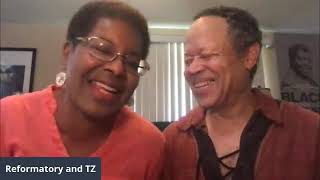
Live-stream conversation (May 7, 2020) with Tananarive Due and Steven Barnes about recent professional milestones and writing practice. Major items: official credit announced for a Twilight Zone Season 2 episode they co-wrote (episode 8, titled "A Small Town," starring Damon Wayans Jr., directed by Alonzo Alvarez Borda); Due finished her novel The Reformatory (final draft dated May 3), drawn from family history tied to the Dozier School for Boys and the death of her great-uncle Robert Stevens (1937); they discuss creative methods (sentence-a-day, writing charts, cabin retreats), promotion for the Octavia webinar (octaviawebinar.com), and other projects (graphic novels, Danger Word). The tone mixes celebration, somber reflection on institutional violence, and practical writing advice.
Chapters
We're live.
We're live.
Hey, everybody, it's Tananarive and Steve and we are testing a new piece of technology to do this live stream to Facebook. So hopefully it's coming out fine. I'm going to be checking my page from time to time.
Hopefully all is well and if there are any. Oh, great. There we are. So there's a little bit of. Is that frozen?
No, no, it's just not running.
It's not running.
Yeah. So you have to click play. But anyway, how are you? Great to see you. Thank you for coming. Becky Bryant and Trina and whoever else is here.
And then Tananariv and Steve. Oh, no, that's us.
Right, that's us.
And Zach. Yeah.
So just so long to have this talk.
God. But one of the things, we're using a new piece of technology called Streamyard that's going to enable us to stream to multiple platforms at the same time. We're always trying to upgrade our tech, upgrade our ability to connect with you, and it's. It's just such a joy. It's such a joy to be able to see.
Glad to be back doing Facebook. Basically. Life writing live.
It's just life writing live. We do different iterations of it.
Just cannot believe. Well, first of all, let's just acknowledge there's a lot going on in the world. So if you're out there listening and you are having a super hard time, I'm really sorry about that. I hope it will ease up for you. If you are mourning, if you know someone who is sick. Sick. If you're just worried about getting sick, which is something I was fighting so much the first few weeks especially. It is not your imagination that this is a tough, tough time.
So one of the things that I've been doing is posting every three hours during the day, posting reminders to breathe. So let's just take a moment right now.
From the diaphragm.
From the diaphragm. Diaphragm. So just. Just take a moment to. One more.
Okay.
Yeah.
I needed that last breath just for today's news alone. I mean, seriously, just so much going on.
Yeah.
Young man in Georgia, hunted down and shot. I just can't even.
Yeah, yeah. It's just. It's the purge out there basically.
And you know, we'll talk about the book a little bit more that I just finished my novel. Yes, the reformatory. We'll talk about that a bit more later. But one, there were many, many times in the seven year process of writing this that I Wanted to quit writing it.
Well, listen, do you want to talk about that first?
No, no, no, no. I do want to talk about the other thing first, but I just want to say that it's new stories like this one where things that seem like they're jumping out of headlines from 100 years ago or even 200 years ago kept me going because ultimately it is a novel about the criminal justice system and incarceration and all this kind of stuff. So I'll talk about that later, but first I want to talk about the Twilight.
Yes, we can finally. We can't talk about certain things, but.
We can talk more things really because.
There has been an official announcement. Finally, you know, finally. If you went over to IMDb Internet movie database, they would act. They are. Our CVs have been up updated.
That was the first thing the. I was just, I was obsessively checking my IMD page, you know, for weeks and then one day it was like boom, there it was. And we hadn't gotten any notice or anything. I was like, oh, hello Edward.
Hello Jason. Hello Tuli. Tuli Legacy and a couple names I can't pronounce. I'm sorry. And Devin.
Thank you, oh my God for people for being here.
And Stacy Patton. Hi Stacy.
Seen you in a very long time. Hope.
Good to see you. It's, I'm just, you know, I was not able to get in touch with my best friend for three, four days and I'm like, you know, he's in, in over in Pennsylvania and it's like I'm starting to, starting to worry. And then he called me back today, so all as well. So I don't take any of you for granted and I hope that you're not taking yourselves or your loved ones, your families, your friends for granted. Please, please, please reach out.
Check on your people.
Check on your people.
Some of them need money and don't even know how to ask for it.
That's right.
Check on your people.
So every day, if you were to spend 5 minutes phone every day just talking to one person, just connect with them, talk about how you feel, how they feel. It can be life saving. People are, are just boiling in stress. So you know, just don't want to actually want to talk about the good stuff.
Yeah, let's talk about the good stuff.
We'll talk about the good stuff.
You all know about the bad stuff.
Yes.
Right. So that's the good stuff. So first of all, as you might guess, this Twilight Zone episode may have a little bit to do with, with the relationship that I developed with Jordan Peele after inviting him to come to my class. You know, we've been to Monkey Potter pitch several times. Yes. Yeah.
So. And, and it been frustrating, you know, because we, I, I grew up on Twilight Zone. Twilight Zone was my favorite show when I was a kid. It was my first produced television episode back many years ago, back in the 80s with the reader, the, the revival of the Twilight Zone that was done by Phil Deguer. So the opportunity to do this with Jordan Peele, who I honestly believe to be a straight out genius.
Absolutely.
You know, I just, you know, like, I, I'm, I, I love that. The fact that he was taking it over, the opportunity to work with him. Yeah, just, you know, it was just amazing.
And of course, we've been driving Monkeypaw crazy. Like, can we talk about it? Can we talk about it? Like, the IMDb page came out, we're like, can we talk about it? It's like, well, you can say the IMDb credit is out, but that's all you can say. You can't say anything about the episode or anything. And then so finally, just this week, CBS announced the Season 2 lineup, including our episode, which I can now say is episode number eight.
It's called A Small Town.
And that's all we're allowed to say about it, except it's Twilight Zone and the star is Damon Wayans Jr. The director. I don't want to get any names wrong, but let's see what's quick.
Can you find that? And meanwhile, hello, Teresa. And Cheryl King. Weather is Realtor. And Ellie Z. And Tiffany and Maria Alexander. Hi, Maria. Love seeing you, darling. And Donna Gaddy Braxton. Just, you know, just. Thank you so much for being here. It's so wonderful to see your faces. We have missed you, you know, we.
So it's Alonzo Alvarez Bareda is the director of our episode. He is a Mexican director. The lead is black. It's Damon Wayans Jr. But it has a very diverse cast. See, all the names aren't even in this article, but I'll find the names later and mention them. But it has a very diverse cast. And that's really all I can say, except there's kind of a funny anecdote. I have a Twilight Zone Google alert. And one of the things you learn when you have a Twilight Zone Google alert is that Twilight Zone is one of the most overused terms on the Internet. Oh, my God. Every day, like, we're in the Twilight Zone. It's like the Twilight Zone. The commission is like The Twilight. So I was like, okay. But finally. And I would read every single one in the hopes of, like, some. Maybe some geek out there had found, like, a cast list. It might have, like, newspaper article. There were newspaper articles. Then all of a sudden, stories started cropping up out of a newspaper. And in fact, it was on cbc, which is the national news outlet in Canada, because our shoot in this small town in Canada was making headlines. The mayor was there taking selfies on the set, like, wait a minute, I can't talk about it. And it's like, in the national news in Canada. But the reason it was making news, and it seemed like everybody was talking about it, like there were columns, like, I was an extra. Here was my day. Or they're building this set or they're building that set. But they were so excited because this was their downtime. And typically they started laying people off that time of year. But because there was such a huge crew that came in for Twilight Zone, it was like a huge boost to the economy for this small town. And there must have been, I'm kid you not, at least six stories, none of which I was allowed to point to. This is our episode. This is so. I've been, like, covering my mouth for so long. So thank goodness, finally CBS made the announcement and we can say, yes, that was our episode, and we are super, super excited now.
One of the reasons I'm happy about this is that I had a commitment to Tananarive to help her have experiences with her writing that she hadn't had before. When we did Danger Word, College friend.
Oh, cool.
When we did Danger Word, part of that was. Was just about, you know, learning some new skills.
But for those of you who don't know, Danger Word is our short film we crowdfunded in large part due to you on Facebook.
That's right. You guys helped us do it.
Directed by Lucina Fisherman, starring Frankie Faison and Saoirse Scott.
That's right. So I wanted Tananarive to have the experience of seeing her words on screen, her dialogue spoken by actors, because there's nothing like real experience. And that was just something I really wanted for her. So we did that, and it was a lot of fun. But this is taking it to the next level.
I mean, we've done a lot of collaborating and a lot of screenwriting before. Now this is our first produced joint screenwriting effort that we didn't fund ourselves. Right.
So in many ways, it's the first professional one. I mean, we. We produce that ourselves. We created it ourselves. But you know, I, I just, I just feel like you stepped across a line and I want you to celebrate.
Oh, believe me, I am celebrating. I am pinching myself. I'm so excited. I can't start soon enough. I think the article said, and this is not me based on personal knowledge, but I think the article said that it's coming back this summer and we're episode eight, so it'll be sometime, hopefully by early fall or fall.
So this is a wonderful time. We've turned in a couple of graphic novels.
That's true.
My, my, my latest novel, like novel number 34 or something like that, came out about three weeks ago. Starboard and Godsons, you know, just completed just as Jerry Parnell passed away. And then, you know, just. We want to shift gears yet and talk about something else before.
Even though we've been away from you all for so long, we haven't even really talked about a couple of other things that happened. We wrote a screenplay together called the Keeper and we haven't set it up yet for the screen, but we did sell it as a graphic novel to Megascope, John Jennings new imprint over at Abrams Comic Arts. So I'm. We're about to co publish our first graphic novel. And you are doing.
Yes, I'm doing Eightfold Path. It is a collection of eight short stories. It's themed like EC Comics, you know, Tales from the Crypt, involved in horror and stuff like this. You know, crime, suspense stories. So each of them has a different theme, each of them has a different milieu, but each of them also has a serious intent in the sense that each of them represents one step in Buddhism's Eightfold path to awakening.
Who is your collaborator?
Charles Johnson.
National Book Award winning author Charles Johnson is collaborating with Steve on a graphic novel. So what we have, I mean, we just feel extraordinarily blessed. I mean, on the one level, it's almost surreal that there's so much terrible stuff happening on the outside at a time when we're having sort of an uptick, you know, So I really hold that gratitude in my heart. And I, and I know personally that the arts have been a big, big, big help for me through this period. Like, I don't know how many of you were on Facebook Live a couple weeks ago when Toshi Reagan did that concert. They live streamed that, that other, that concert that she did based on the music she composed with her mom, Bernice Johnson Reagan from Parable of the Sower. The Parable of the Sower Opera, which I was crying the whole way through it was so healing. So, yeah. And, and I've been stuff that I never would have watched otherwise, even much less watched every episode.
Do we want to drop in the comment about Octavia here? You know the.
Well, we can, I mean, yeah, there's.
No reason we can do it again.
Go ahead. Some of you may know that I've started co hosting a webinar series with the Reverend Dr. Monica A. Coleman called Activia tried to tell us parables for today's pandemic and the first one had more than 2,000 people register. It was a fantastic conversation. This Saturday, we're returning at it's noon Pacific Time, 3 o' clock Eastern Time with guests Toshi Ragan from the Parable of the Sower Opera and Ayanna Jamison from the Octavia Butler Legacy Network. And that is going to be octavia webinar.com you need to register to get the link. So it's www.octaviawebinar.com and it's totally free. And it's totally free.
We had a couple questions. One was what's the period of time between we turn it in and the time that the graphic novel comes out? We'll tell you after it comes out. I would estimate sometime next year.
No, no, no, no, no. The graphic novel, I'm unfortunately, as slated has a pretty long lead time. It's going to be a couple years. Is it? Yeah, but, but that would change if we set it up for film. So. Yeah, my goal has always been to get that story told as a film. And the minute we set it up, we can say to the editors, hey, you know, you don't want the film to come out before the graphic novel. So it'll be a couple years. Sorry for the wait, but yeah, that's. And I guess I can talk about the formatory now.
I would, I would love to. So no more about the Twilight on the Sea.
It was fun.
We worked on it together. We used Rider Duet as software.
Right, right, right.
The process was really wonderful and just, you know, we, I feel totally positive about the experience. So let's, let's go on to. Tanadarive has some wonderful news.
Y' all don't even know. Well, some of you do know. You may recall that in years past I have been a novelist.
You were really?
Yeah, yeah. Once upon a time I was a novelist and I was publishing novels like once every couple years and I have not published a novel. Let me think. I think it's been since Blood Colony. Is that the last.
Sounds right.
That is a long time ago. Yeah. And for the past seven, at least seven years I've been working on a novel called the Reformatory, which some of you may have seen me blogging about. It's based on real life family history about my great uncle Robert Stevens, who died at the Dozier School for Boys in Marianna, Florida in 1937. And you may be saying, hmm, the Dozier School for Boys. That sounds familiar. Why does that sound so familiar? Because Colson Whitehead just won a Pulitzer Prize for his novel the Nickel Boys, which is also set at the Dozier School. He probably thought to write the novel within the past two or three years and just bam, he wrote it. Meanwhile, I was like seven years of. There were a lot of reasons it took so long. I'm not going to blame teaching because yes, it is harder to find time to write when you're teaching, but I wrote my first two novels when I had a full time job, so I know how to write in the margins. And I had to relearn how to write in the margins. So I can't blame teaching for taking the time away from the novel. What teaching does do, however, especially if I'm teaching writing, which I had have been doing at Antioch University in their master's program, is that students stories sort of kind of scratch that creative itch a little bit, you know, so you don't feel the same urgency in storytelling because you're working with other students who are also telling amazing stories so that itch gets a little bit scratched. But the main thing I would say was two things. One, emotional avoidance. Some of you may be experiencing this now. I do not want in any way, shape or form for anyone watching this to feel like, oh wow, great, she's finishing a novel and I can't even write. Believe me, I have been through periods where I felt like I could not write. I did not write. There is no mandate. If writing is not healing for you right now, if writing feels like a chore and an obligation, then that is not what you should be seeking to do. Maybe what you need to be doing is dancing or like someone suggested, or watching some TV or just taking a bath, walking in your gardening, take up gardening, whatever, breathing, breathing, because it is not your imagination. This is a very difficult time to be creative. In my case, I've always been walking under sort of this emotional cloud with this book. Not because I even knew I had a great uncle until the state of Florida called me and said, hey, we want your permission to try to exhume these bodies I mean, Boot Hill is where Colson Whitehead opens his novel. And that was where my great uncle was buried in an unmarked grave. Often what would happen is a kid would die under whatever circumstances they would have other children burying. Like one kid had to bury his own brother. And then the parents weren't even there for the burial. They would get a letter later saying, oh, by the way, your kid is dead. Or in one case, they shipped a casket full of wood scraps to a family that they only realized was full of wood scraps decades later when they exhumed it to try to figure out cause of death. And there was no body inside. So shady, shady place. Violent, violent place. I visited the site several times. I interviewed survivors both on site at meetings and also on the phone. I was sad to hear that one of the survivors that I. That I, Robert Straley, one of the people who was fighting to bring this all out in the open, passed away last year. And I hadn't heard about it.
How old was he?
I don't know, but they had terrible. They never recovered. These were like grown men who. Older men who could be reduced to tears just with memories of the things. Sexual abuse, physical abuse, just, you know, all the reasons incarceration is terrible, especially for children. All of it there. And the research for this book would just make me cry, right. And especially since my son used to be about the age of my protagonist, who's 12 years old. So to. The idea of subjecting a 12 year old to these horrors was really hard. So what I did was I used the supernatural as a metaphor. I want to be honest about the brutality. I published a short story excerpted from a novel a couple years ago called the Reformatory that was in the Boston Review. That's actually one of the most brutal scenes in the book. I did not want to write page after page after page of brutality. So instead what I did was I was honest about the fact that the brutality existed. You have that one terrible scene in the whipping shed. When Florida, by the way, had outlawed flogging adults, they were whipping children until the skin came off their backs. And they had to go to the infirmary at this reformatory. I'm gonna cry just thinking about it. So I wanted to create a story where I'm using ghosts and haunting as sort of the way to create a metaphor for the more brutal acts of violence that might have happened. And ultimately, it's a story about friendship and it's a story about liberation, and it's a story about the importance. Importance of family and is what it all boils down to. But man, so hard. Like, there was a documentary about the Dozier School that came out like three years ago. And I had put it on the DVR meaning to watch it, and I just found it, like, last. Like, late last fall. I was like, oh, wait, I meant to watch this. And it was the burial of the remains of Robert Stevens. My family members were there, was like, attending his funeral. I cried all through that. So if you are working on a piece that is kicking your butt emotionally, I get it. It's not a memoir. Although I did do a memoir with my mother, which was very difficult for her. My late mother, Patricia Stevens Dhu, had a terrible time when we were working on her her stories from the civil rights era. So it's not a joke that when you're going back into your life history or you're writing about difficult subjects, sometimes you can feel paralyzed. And, you know, Steve was so helpful in so many ways. The way around it is through it, sentence a day, which is what we teach our life writing students. You've heard us teach that many times. That got me from outline like a beat sheet, like a line. If I could just write one line of the beat sheet, I'm still in the book. If I can just write one sentence in this chapter, I'm still in the book. So there were many days that was all I could do. Or not even that, but there were many days that was all I could do.
Yeah. If you'd like a copy of the book that I wrote on writing, which is called Chop Wood, Carry Water, that's all about that one sentence a day technique. You go to lifewritingpremium.com, you can scoop a copy up for a buck.
I'm get my chart.
You're going to get your chart. Get your chart. So, Michael, if you put that up on the screen while Tanari grabs her chart.
Yeah. And this was the other great innovation that hubby suggested was to make a writing chart.
Yes, I'm going to write.
So it's a writing chart where I could follow a schedule. Like, okay, I'm going to try to write five pages a day. As you can see, I didn't always succeed. Some days at zero. Some days you can see. Okay, what's standing in the way of my progress? Oh, this week it's a pandemic, you know, But I would write, you know, as many pages as I could. If I didn't, I would say that if I only revised, I would put a little R for revision. I do revise as I go often. I would start. Often I start my writing day with revision. That's how I find my way back into the flow state, is to revise what I wrote the day before. And then I try to pick up that creative string to start the new writing day. So I literally do revise every time I write. But there were some days all I did was revise. So I only would get an R if I did that. And it's. I stared at that thing every day I stared at it, and I was proud of myself. If I could put down 1, 2, 5 pages, I was a little disappointed in myself if I. If I wrote zero. And I think sometimes the reason we don't do charts like this is we're afraid. Look, we get people.
We get people saying that they love that chart.
Yeah.
So I would love you to do a little essay on that chart. We're going to drop it into the end of the book.
All right, that's fine.
Okay, great.
Yeah. And this was, again, Steve's idea. I'm pretty sure you gave me the idea.
Yeah, I did.
It really does sound like you, I have to say.
See, I like when everything is going right. Writing is like driving down a country road with the top down your car with the wind, you know, the wind in your hair and the sun on your face, and you've got your. Your best girl with you and the picnic basket in the back seat. But if the car is breaking down, you need to be able to haul out your toolbox and flip up the hood and get into the engine. So what I could see was that at a time when we were dealing with massive stress in the world, now, this was.
This was before the Pandemic, plus Twilight's own script and other things that she.
Was not able to lose herself into, a project that I felt was going to be, quite frankly, the best book she'd ever written, the amount that she had invested, the amount of emotion, I.
Hope it's at least good, and the.
Fact that she's a better writer now. So I. What I really thought was, if I can help her give birth to this book, it'll clear things out so she can go on to whatever is next in her life. And so I just said, well, you know, do the one sentence a day thing and let's create a chart so you can see exactly how long it would take you to finish this. If you fit. If you did X number pages, how many pages per day did you think you could do?
Five.
Five pages a day?
Six days a week? No, actually, I was trying to do it every day.
Okay, so five days a week. So if it was five days a week, then she'd be able to finish it in X amount of time. So by creating a chart, she could actually see, you know, did she do her work? Didn't she do her work?
About 100 pages of the book left. And I thought.
Did that turn out to be right?
I mean, yeah, I think it was about right. I thought I could knock it out in about a month. That did not turn out to be the case. It was all the way up until this month, April, that I was still working on it. But today, this is May. Oh, gosh. Nonetheless. Okay. Really? Yeah. The final date is May 3rd, which was my late grandmother's birthday. And I named one of my characters Lottie, after my late grandmother, Lottie Sears Houston. So I used her birthday as the final date. I used every incentive I could for deadline. Like, okay, I'll use December 9th, my mom's birthday. Blew past that. Okay, January 5th, my birthday. That was the draft. I stayed on the draft up until yesterday's was my birthday, which was on January 5th. So, anyway, every trick I could use. And I wrote a little bit about this on the Facebook page. You can refer to my post after this video. But it was the sentence a day method.
Somebody asked for that link again. Lifewriting premium.com. michael, would you please drop that in there, please?
Go ahead. Right. It's. You know, we teach it, but I also follow it. You know, that's why we teach it, because it works and it's powerful.
Somebody was asking whether or not teaching helps sharpen our writing.
Oh, absolutely.
Yeah. You got to be kidding. It's like if you teach something, you have to lead the way. You can't lead somebody someplace you haven't been. And I believe that you have to keep the fire alive inside you to be able to transfer that fire to somebody else. So I have. If I'm going to teach writing, I have to be writing. If I'm teaching martial arts, I have to be doing martial arts. Tananari writes and teaches all the time. This is who she is.
In fact, I like to say, you know what really helped my screenwriting jump up a level was teaching screenwriting at Antioch University, Santa Barbara. You know, that was tremendously helpful to me because it's not just the preparation for the lectures. It's. You really just have to be more mindful about process and call yourself on your own bs. So if I find myself doing things that I'm telling my students not to do. I don't have anything to hide behind. I need to stop doing that or start doing that and listen to my own advice. So teaching is hugely. Hugely. I can't blame teaching.
I love teaching. I mean, literally, I wake up every morning thinking, you know, what do I have to be grateful for? And one of the things I have to be grateful for is that the fact that I have the ability to teach people right. That I have life wisdom that earned at great cost and also given to me by wonderful mentors who trusted me with knowledge, trusting that I would turn around and give it, give it to other people. So it's like every morning, who can I help today?
Everyone.
What can I teach today? How can I be of service today? Every single day?
Yeah, it's absolutely true. And there's so many people who reach out to him and let him know how powerful and impactful those lessons. And so then. And I know my students come to me and talk about how grateful they are.
No, her students say that she is the best teacher they've ever had in their lives.
Well, whatever. But anyway, yeah, so teaching is not the thing in any way, shape or form that was holding me back in terms of the book. It was really mostly the emotional barriers. To be honest, if I could have just zipped it out, I would have just zipped it out. And of course, it's a challenge when one of your favorite authors writes a novel about the exact topic you're writing about. That kind of knocked me off my horse for a couple days because I was like, I wasn't, what's this going to mean for my book? Do I need to write my book? I had this conversation with my agent. He's like, yes, keep writing your book. So everybody faces these doubts, okay? Everybody faces these barriers. If you have a project you've been working on 2 years, 3 years, 5 years, 10 years, don't lose heart. The second thing that helped me, besides sentence a day, was actually, I don't know when we'll be able to do this again. But I got a cabin by myself for a weekend. And that's something that writers stereotypically have done. And I've always been like, well, wouldn't that be nice?
The fact is, have to.
Most of us have to just write in the margins in life. But I will tell you what was helpful about the cabin. That was the first time I really sat with it and nothing else. And I said, oh, wow. I didn't even know it was this long. I didn't even know I was this close to the end, I could hold it all in my head at once.
Let me really help. I have this. I have this relationship with writing. So, like, if you were to imagine a satellite going around a planet, that there is one point where, you know, the sun is here and this, and the sunlight is shining on my idea. But as the satellite starts going around the planet, I lose the light of the sun, I lose the heat. I mean, I'm in the penumbra, right? I'm in the shadow. I'm trusting the outline, I'm trusting my experience, but I lose perspective. It's nothing except the work. It's nothing except slog, slog, slog. I can't wrap my mind around. What keeps me going is my promise to myself that I was going to write. Then when I. At some point, I will emerge from that funk, that fugue state, and I'll start being able to see the project again. So what I wanted to know was you said that you were at a point where you could not feel your way into the project. And then there's another point where you felt like you were holding the entire project in your mind. Would you tell us a little bit about that feeling? Both the feeling of being lost a little bit and what it felt like when you were found?
The last part, to be honest, was just feeling dispirited at times and not wanting to live in the world of the book anymore. Being in 1950 in Florida as a young black child who has been incarcerated was just not a fun place to hang out. So it's no wonder. Any editor who was like, hey, well, you read a short story for my impulse, yes. I wrote so many short stories. Anything I could do not to be working on this book, spec scripts, I mean, whatever. Just so many things. So the. It was. The emotional. It was never that I felt like I had lost a thread of the story. I mean, there were some bumps along the way where I wasn't sure. I got some input from my agent. I got some input from you about, like, next moves and that kind of thing. But this was one of those rare cases where I was really writing up to the end. Like, you often talk about how Margaret Mitchell wrote up to the end of Gone with the Wind. I've never done that.
Yeah, she wrote the last chapter first.
Right. I didn't write the last chapter first, but I was holding this picture in my mind of the last scene of this. Like, I. So that helped propel me because I wanted so badly to get to that. And then, to be honest, you know, every time I would see Tamir rice's face, the 12 year old who was murdered by the police officer in Cleveland while he was playing with a toy gun in a park by himself, near no one, menacing no one. No. Anyway, you know the story of Tamir Rice. Every time I saw his face, I thought about my character. When I saw Emmett Till, I thought about my character. And frankly, when I looked at my son, you know, my son, our son was nine years old when we took him to the Dozier school site and he helped take part in the excavation and all that. But he's now six three and a high school sophomore who, when he has encounters with police walking with friends, has noticed how quick they are to move their hands toward their holster, help afraid they are of young black men. So I was writing it for him. I was writing it really for my mom. The character Gloria, the 17 year old who's trying so hard to get her brother out, is my mother's spirit, like what she would have done in this situation. My late mother, Patricia Stevens, due my father, John Dew, freedom lawyer who's still living, actually helped me come up with a scene in a courthouse with a southern judge, much like the scenes he had when he was working in the civil rights era in the 60s. Even though my novel is set a little bit earlier than that. So it's a real family testament for me. Trying to hold on to memories. Fewer and fewer people who are alive right now will even appreciate some of the family references that I'm making in the story.
This is history. And history sometimes becomes encoded in myth and sometimes you can say things in fiction that you can't say in a history book.
Right.
It's our way to be certain that our voices are heard, that we're not forgotten, that people understand that we're standing on the shoulders of people. We're standing on the shoulders of people who are standing on the shoulder of people who were horrifically hurt, who were deprived. And so when, when you look at various kinds of damage in the world, remember if you see somebody limping, there was a bus that hit them six weeks ago. It's not their fault that they're limping, but you know, it's our responsibility as individuals to strut, to stride, to, to, to heal ourselves as much as possible. But yeah, there really was a bus. And so stories like this remind people, yes, there was a bus. You both have the responsibility to be strong and healthy and take care of your families, but also to remember that the circumstances of life can cripple you absolutely. They can absolutely grind you into the dust. So neither one of us are going to write a book where ultimately the characters don't find some kind of peace. Oh, yeah, we're not like that.
I don't do unredemptive fiction, or at least I try to avoid it. It's a thin line because when you're writing horror, bad things have to happen. But in the reformatory, the horror is human. You know, the supernatural element is. I mean, there are times that part is also scary. But also, as my character realizes when he's being beaten and he knows that there are ghosts around him, that means that there's more than this. There's more than this. This isn't all there is. And that became a moment of inspiration for him rather than fright. So that's what I wanted to do with this story. Yeah. Someone. Melina Brooks, is saying our son was a baby when she met him in Maui. Yes. That son. Nine years old. We were doing our first research trip as a family to the Dozier School, and Now he is 16.
If you look on my page, you'll see a picture of me holding Jason. You can see the expression on his face. He was terrified.
That was when we were all there as a family. With the University of South Florida researchers led by Aaron Kimmerle, who's a forensic anthropologist who worked in Kosovo and other places where you have to find burial sites. This was how badly organized and frankly, I think intentionally so. The burials were at the Dozier School to try to hide how many kids had died and how they had died. So. What a horrific. What a horrific story. And, you know, with Colson Whitehead winning the Pulitzer the same week I basically finished my book. There's some kind of irony in there. I. I think overall it's a good thing that that story is getting out in a very, very wide way. And I will totally be hitting him up for a blurb.
And so you should.
Absolutely, I should. So thank you all so, so much for sharing this time with us, for sharing your enthusiasm. We haven't been able to call out everybody who has sent us look and.
See if there's some questions here you'd.
Like to deal with this.
We got a bunch of questions.
Such great things and congratulating us. And I love you all so much. People I've known my whole life, like Anna Price, who. Who, yes. Just means so much to our family. Dr. Anna Price. Forgive me. And so many doctors here, actually. Yeah. So many people. People. Amy Alexander. There's no pub date yet for the Reformatory, because guess what? I wrote it before I sold it. So I've sent it to my agent because we thought that that would be the. The best thing to do rather than selling it based on an idea of what it might be. Just finish it. It's the first time I've done that in a long time.
And that sets her up for a huge, you know, for some really good things could happen.
I'll just be happy when it finds a home and I can give you a pub date. But since it's done. Done. I mean, barring extensive revisions, and I don't usually have extensive revisions, although I will have some. Then it could be 2021 or maybe more likely 2022, but hopefully as soon as possible.
So.
Yes.
So listen, you know, there's not a whole lot more to say right now.
Wanted to have a quick visit to.
And test the technology, which seems to have worked just fine.
This technology publicly celebrates what for me is such a huge personal milestone and having my first TV writing credit.
So book and writing and a couple of graphic novels and a new novel and working on a new novel with.
Larry Niven and Won't be the Last People. We got other stuff going on we.
Can'T talk about short stories and. Yeah. And stuff that we can't talk about. Bunches of stuff. But we're going to try to come to you more regularly when we get the opportunity to. There's so much going on. The Octavia thing on Saturday. Octavia webinar.com Octaviawebinar.com is totally free.
Free. Register. Be sure you register as soon as possible. Don't try to register at the last minute. You register and then they'll send you the link on the morning. But if you wait until the last minute, you may not get the link in time, but you'll be.
You'll get a replay link.
You get a replay. But it's nice to be there live.
You got a lot of things that are going on.
I mean, if you've seen the Activia Butler opera. This is not a concert, though. It's a conversation with Toshi. If she bursts in the song, I'm not gonna be mad at her. But it's. It's the conversation. She's also brilliant with her commentary about Parable of the Se. And what we're doing is we're basically unpacking the ways that Octavia's prophecy, especially in those parable novels, was so instructive. What she was trying to tell us, the lessons we can draw from Them.
Also the intersection between art and spirituality.
Absolutely.
You know, especially in a time of stress. How we can. How you can turn the stress in your life and turn it into. Into art. This is what the. That's the life writing process. Like I said, the. My first writing book. You can. You can pick that up for a buck. Basically. If you get on to LifeWriting Premium.com LifeWriting Premium.com show up at the Octavia thing and.
Which is totally free.
And since this technology seems to be working really well, hopefully we'll be able to visit with you more often.
We'll do it more often. We've sort of fallen off. Well, you have things.
Do you have things to finish?
Yeah, I had to finish this book. Here's the bad thing, though. And you novelists know what I'm talking about. When you finish a novel and you send it off for comments that time you spent working on the novel or feeling guilty because you weren't working on the novel, what do you do with that? Because now I just. I feel like there's a phantom limb, you know, like I should be writing and I. And I. More stuff.
Yeah, we have a screenplay that we're working on. Yeah, I saw Frida. Sit her off, please. Say hi to Steve for me. You know, I miss. I miss you guys. Listen. Much love to everyone there. Stay safe. Make sure to let the people you love know that you love. This is not the time to keep this. The soft things, the supportive things, the inspiring things to yourself. This is the time to reach out to people and let them know you care, that they matter. There. You have no idea who might be hanging on by their fingernails. Absolutely. So be kind to each other and be kind to yourselves.
Great to see everybody. Thank you so much for spending this time with us. I'll see some of you Saturday and have a great week.
Take care. Bye. Bye.







