Lifewriting Podcast Episode 25! The Power of Love
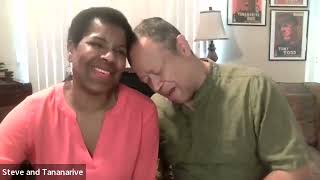
A transcript of Life Writing Podcast Episode 25 with married authors/screenwriters Steven Barnes and Tananarive Due discussing love, grief, creative collaboration, and resilience during stressful political times (notably the Supreme Court's overturning of Roe v. Wade). They describe personal practices for staying connected (silence, 'snuggle' ritual, blessings), reflect on their long partnership and creative collaboration, and promote a live course called the Soulmate Process (starting July 30) aimed at helping people prepare for healthy relationships.
Questions this video answers
Episode 25
Saturday, July 30 (starts Saturdays)
$297
$197
100 spaces
Chapters
Welcome to the Life Writing Podcast, where married authors and screenwriters Stephen Barnes and.
Tananarive Du talk about writing during stressful times, breaking into Hollywood and balancing life.
Every week we'll share more tips on how to build a better life while you create your dream projects, even if.
It'S only at the rate of one sentence a day. Life writing is the application of the tools of writing to life and the tools of life to your writing. Hey.
So here we are, everybody. 26. A lot of them don't make it past. What number is it?
Probably 2010, maybe 10. Awful lot. But we're just getting started.
We're an ancient, ancient 25 episode podcast. Welcome to you faithful listeners. We're hearing from you that you like to listen to this podcast while you're out walking, while you're grocery shopping, and you always learn something new, which is so exciting to hear.
Excellent. We're going to talk about love a lot today. Before we get to that.
Before we.
Get to that, hopefully we'll be seeing some of you guys at Bacon next weekend. We're going to be guests of honor, Bacon San Francisco, San Francisco. And then in Chicago in September, we're going to be guests of honor at the World Science Fiction Convention.
Can you believe it?
So if, if you have seen, if you have been listening to or watching these podcasts, come up to us and introduce yourselves as a podcast listener. We like to know who you are and, you know, if we, we might even be able to have a little talk or something like that where we kind of meet, you know, coffee, maybe we can catch coffee with a bunch of people we don't know yet. We're going to be working things out.
When he says we, he means him.
Because.
I am still shaking off. I'm not testing positive and I'm not contagious, but I am definitely still shaking off that little exhaustion.
I will not speak for my good lady wife. But anyway, we are Tananrac Dhu and Stephen Barnes. We're married authors. We've been through all of that and I just wanted to be sober for just a moment today because in talking about writing and talking about life, it is inevitable that we talk about the things that happen in the life of a writer. And one of my very favorite people, I won't go into any names right now because I don't know the degree to which they have made this public yet. Had been nursing a spouse for three years who had had a stroke and their spouse passed away yesterday. And of course they're devastated. Real love carries Real costs when you lose it, you know, and that's one of the hardest things to grasp, is that is that it takes courage to continue to open your heart once you've lost a few people that you love. You were kind of surprised about my attitude towards life, having lost both of my parents, as I recall.
Well, yeah. When I first met Steve, you know, we're. We're slightly different ages and slightly different phases, so he had already lost both of his parents when we met, and I still had both of my parents. And I do remember feeling sort of a sense of wonder that he could even smile and laugh and go on about, you know, it's like that naive thing that life for us stops when we lose someone. But that's what it feels like. It can very much feel that way.
It absolutely can feel that way. And you have to ask yourself, are you going to let the inevitability of loss stop you from opening your heart and considering. Boy meets girl, boy loses girl, boy gets girl, you know, is one of the most common character arcs in all of fiction, all over the world. It is a question that some of your characters are going to be facing. What is the cost of loving again? You know, if you've lost love, lost, you know, a spouse to, you know, heartbreak or cheating or death, what does it take to go on?
Yeah, once there's obviously a grieving period, no one expects you to go right back out jumping into the dating world. But after a grieving period, that might be a year, two years, some people, five years, at what point do you open your heart up again? And I'd like to add hope to that. Not just love, because I want to acknowledge very big news this week. Not unexpected, but still devastating to a lot of young people, especially of childbearing age, but really to everyone who cares. The Supreme Court this week struck down Roe vs Wade, and there is a feeling of hopelessness that begins to pervade social media in these times. You know, some anger, some blame, not just the gop, but your own. Like, why aren't you doing more? And all that. That frustration and anger and fear can create a feeling of hopelessness.
So what do you do to stop that feeling from taking root?
Well, for me, it's all about planning. This was true when I was on my back with COVID too. I never panicked because I always had a plan. All right, I'm going to do this. I'm going to follow these rules. I'm going to check my temperature. I'm going to take this medicine for three days. If that doesn't work, I'll do this. I'm going to call this person. I'm going to call that person. Really, the key was not feeling helpless. The key was that I had plans and momentum and I kept myself occupied. And I think that's very true in the political realm, too. And if we haven't learned this lesson since 2016 earlier, really, we need to learn it now. Yes, we're going to see a lot of shocking to some people changes. Not shocking to people who've been paying attention, but shocking for people who were really sort of feeling complacent and settled. And no, we're not settled. And so the same principle applies in the political realm, having a plan. A lot of people, even today, I think, are at the National Mall protesting. There have been protests all over the country, and then there's whatever, donating money to funds, donating money to organizations, raising your voice to help create awareness and get rid of misunderstandings about what this whole conversation is actually about. All of that. Taking action is to me, always the answer when you come to a loss of hope, the.
The proper use of emotion. Emotion is to create an action, to get your attention about something and then to get you to take an action. So for some of us that actually will be writing, you know, but this is definitely the kind of time where people who have the heart and the time and the. And are moved toward it, get out and move, you know, move your bodies. Maybe that means joining a protest, but the core of this is that same question I asked to Nautari, which is, how do you keep going when you are discouraged, when you feel under a lot of stress? The truth is that the way I'm wired up psychologically, I never feel hopelessness. I never feel like it's over. There's nothing I can do. I can feel like I don't see what to do. But I always know that there's something to do because everything that I do in my life is hooked into my core survival drive. And as I've said, the. The survival drive is such that you could take the most, you know, depressed suicidal person you can think of, stick their head in a bucket of water, and they'll fight for their life. That's just the way we're wired up. So everything, all the core things, my commitment to my family, my commitment to my body in terms of exercise, my commitment to my career, all those things are connected to the survival drive. So there is never a moment in which I hit that, oh, my God, there's nothing I Can do it'. It's over. Things may be over, but I'll still be trying to figure out a way to get out of it. Up until the last second, that's just kind of the way I'm hooked up. But part of the reason for that is because of love. It's that once you have the survival drive, that's not enough. You also, I think, need to have something to love. And that is, you know, love yourself, love at least one other person. Open yourself to loving. You know, most of us would like to have families, you know, all of us, you know, descended from people who made such decisions. You can not. You can make a different decision. And there are plenty of people who do make a different decision. And that's more and more valid as the overpopulation increases.
Oh, yeah. I hear a lot of people talking about not wanting kids.
That's right.
Even if they want a relationship, they don't want kids.
Yeah, I totally get that. Children are not for everybody.
It's not.
That is an adventure. That is not for everyone. However, I believe that loving yourself is absolutely essential. And loving another person is a really beautiful thing. Now I. I have this blessing that the person who I love is also my friend and my partner.
You know, who is this person?
Who is this person? I'll introduce you to her one day from.
No, I think he's talking about me. Yeah, I absolutely married for 23 years and we dated long distance about a year and a half before that. I mean, honestly, we barely knew each other in the physical sense. Like each other's tastes, how we comport each other in public. When you flew to Miami for the wedding, that two week period you came to Miami was the longest we had ever spent together after meeting. But we just knew.
Yeah, yeah, we did. But you had many, many hours of conversation because we were trying to work that through so that we could hit the ground running and we would have the best chance possible. I especially wanted you to have as much knowledge of this weird creature that I am as you possibly could. Because, you know, I'm kind of an alien in that. In that sense.
Well, you felt like an alien. Yeah.
Well, that's why I so desperately needed to find my tribe. And I made the comment that when I was at Clark Atlanta University for the African American Fantastic Imagination Conference, it was the first time in my life I'd been in a room full of black people who liked Rocky and Bullwinkle.
What is this, a speculative fiction conference? It was the African American Fantastic Imagination.
I just said that.
But I have the subtitle Explorations in Science Fiction, Fantasy and Horror. And it was a groundbreaking program in 1997. Some of you have heard me tell this story, but it was. I met Steve for the first time. Octavia E. Butler, Samuel Argelani and Jewel Gomez, all in the same space. And here I am, a new writer on the basis of my first book. Being able to commune with these titans, it was. I mean, I didn't even really know exactly who everyone was, but I came. I knew who Octavia was for sure. I came to figure it out.
Indeed you did. So we write together, and that means that we have artistic and financial interests in common that relate to the most sacred part of our external personality, the part of us that we give to other people. You first created work when you were three years old.
Four years old, I believe it was. Four years old.
Four years old. Baby Bobby the book Baby Bobby. I think that I probably wrote my first stories at around 7 or 8. Okay. The first one that I know that I shared with other people in the form of something I wrote wasn't until I was probably 12.
Okay, okay.
It was called the Yeti. It was. It was about an abominable snowman in a Canadian lumber camp.
Of course it was.
But when you decide that you're going to share something that deep a part of yourself, that's one thing. But when you share the creative space in which these things are created, in other words, for Tanan Rave and I to work together, I knew from the get go, from having experience, collaborations with Larry Niven and Jerry Pornell, as far as well as working in Hollywood, taking notes and having to make adjustment note and working with editors and so forth, that that collaborative space can be very high pressure. And because there's a lot of stake externally and internally, there was the potential for relationship damage.
Right. And we made the promise at the very beginning, and you knew to create this, that we would never let our collaborative disagreements get in the way of the relationship. The relationship always comes first. Well, 23 years later, I can tell you that is easier said than done.
Yeah, absolutely. Easier said than done. Because if your writing relates to you, if it's honest, then it relates to the way you see the world. A plot structure relates to the way you see the logical structure of the universe. You characters relate to your theories about what human beings are, which means what you think you are ultimately. So when you have arguments about plot or character, you're not talking about story, you're talking about life.
And in the beginning, you're Literally not seeing the same landscape. I mean, you can be talking about a room, for example, but each of.
You, in the beginning, you never see.
The same landscape, but you're really not in the beginning. Like the room you're picturing and the room I'm picturing, even as we're talking about it, are very different rooms.
That's right. You know, if you were talking about the bridge of the Enterprise, now you're both looking at a picture of something you know, and you're both in. So it's kind of. Kind of the same, but understanding that if I say tree and you say tree, we're looking at different trees.
I'm saying a banyan tree from South Florida with all the tendrils, and I'm.
Seeing an orange tree in California. So, you know, it's different, but without the specificity, you cannot see the same thing. And there will never be infinite specificity, which is what would be required to have absolute clarity. So what you have to have instead of that is a commitment to believe the other person is doing their best.
Doing their best.
They're doing. They're. They're doing their best.
In fact, doing brilliantly, might I say.
Well, I mean, I think that it is. It's fair for you to say that because you will run into me many times probably today as well, where I. I saw something that you did. I did not feel that it fit with my picture of what was. And if I'm taking lead, then I get to establish that. But there's an additional level of complication that the project we're working on at this moment is a horror project. And I let Tananarive have the ultimate say on horror. Unless, even if I'm taking lead, unless I have a damned good reason not to. And so there were several things. There were choices that you made about this story that I did not agree.
With, and where your first reaction is not, oh, my God, that's amazing.
No, it's. It's not. Because I believe that we see story differently, and I've talked to you a lot about the way that we. That we see it differently, and it's going to call. It's going to cause some different issues. I trust that if you're writing a story for yourself, quite often it's. I will not know how different pieces are fitting together in something I'm writing until the story ends and I rewrite, at which point I'm. I put. To put in the connective tissue. If so.
So we don't always get the immediate reactions we want from each other.
No, we don't get the immediate reactions. I was trying to explain why my lack of those immediate reactions is completely logical and reasonable.
And I sometimes have that lack of immediate reaction because I'm just preoccupied with, okay, what are the holes I'm trying to fix, what is the connective tissue I'm to create. But I think ultimately we've had, you know, we've had some difficult collaboration moments in our past, but often, sometimes the ones that are the most difficult collaborations turn out to be the best projects. And that's what I mean. I'm going to hold out hope for that with something we're working on now.
We will, you know, and there are some very specific things that we might want to get into on another podcast, right?
Absolutely. But, but let's go back to that bedrock.
Yes.
That foundation is the relationship. And there is no amount of collaboration to me that is worth putting our relationship at risk. So if I feel like our Hollywood dream means that we're going to be tight lipped and tense around each other, then that's not a dream that fits my life goals in terms of what I want my quality of life on a daily basis to look like.
Because working in Hollywood is so important to our career plans, our commitment has to be that, you know, the first step is to acknowledge that we're having a problem. And the next step after that would probably be to see whether or not we can solve the problems in house. If we can't solve them in house, then it's, can we find a counselor, somebody we can go to? We have not had to do that so far.
We haven't had to do that. But you know, what we did today? You want to talk about what we did today?
What do we do today?
So, you know, I had Covid and I was in an isolation room until fairly recently, I think I only moved back to the bedroom a week ago. Still kind of low energy. We've still been busy, both of us, working over the weekends, which I don't like. This weekend we're taking a little bit more time off, but we tend sometimes to work every day.
Yeah, this is something that I probably have as a greater sin than to nonreave. I can work seven days a week.
But as a collaborator, I also feel an obligation sometimes to try to keep up. And that's hard to do when you're low energy.
Not good.
So for a lot of reasons, we have been not as emotionally connected as we could have been for the past few years. The truth, Right. So Today.
And also, I tend to shut my emotions down under real stress. It's like, okay, you have Covid. You're probably not going to die, but you could, you know, let me. Let me move life forward. What do I do?
One step at a time.
Take care of Jason, take care of the household, Take care of you.
I saw you moving all my furniture out of the room. You're not trying to.
You're not fooling me, you know, And I'm telling you, I was just looking at the eharmony website. You know.
You guys, I was that. Not that funny laugh, but that wasn't that funny.
Okay, but.
Yeah, but in any case, so I told Steve this morning, this is fresh. This is like, fresh off the presses. I told Steve this morning that one of my lessons from COVID was the power, the healing power of silence. Because I was in my isolation room, there were some days I didn't even want to turn on the tv. I didn't have the energy to listen to a podcast. I would just sit in the chair and breathe and hope to feel better. And the silence. Linda Addison, right, she told me about that. She was literally having respiratory problems when she had Covid. It wasn't for me that I was having respiratory problems, but I was. There was nothing else to do except just sit there and to me, breathing. I guess ultimately it really helped me keep my anxiety at bay because for someone who's such a scaredy cat not to be lying awake at night afraid that I would end up in a hospital on a ventilator is a huge thing. So, I mean, this is the longest and worst illness I've ever had. Make no, no mistake. There's not even a close second. The closest second might be literally the flu, which maybe was eight days, not three weeks.
Breaking your.
Breaking my ankle in terms of the disruption to my life, absolutely. But not in terms of my energy level.
And you knew it wasn't going to kill you, right?
My energy level was fine. I wrote like a syllabi for a whole course while. I mean, despite the painkillers. But in any case, because. Because silence has helped me be more in the moment. I noticed it last night when I was at Antioch University at a reading. There's. Sometimes I go to group readings. I'm restless. I was very present. I've learned how to become more present in the moment. Maybe meditation. Maybe Covid and I wanted us to have a joint experience of just being present, like taking a bath inside of each other. Not in a sexual way. I mean, it can be but in this particular case, it was, honey, can we snuggle? And let's do a silent snuggle. And in that silent snuggle, I was wanting us. And I was thinking of our friend whose. Whose spouse recently passed away. I'm thinking of all the wonderful moments we've had in the past. I'm thinking of some of the tension and collaborating we had had recently. Our voices were failing us, so I wanted our bodies to take over the conversation just to remember who we are as a couple. What? You know, just the little nooks, the little crannies touching each other on the cheek. We did a long, long snuggle. And I thought it was. And it was silent. And I thought it was beautiful. What did you think about our silent snuggle today?
Oh, okay. So my primary thought was that she was correct, that we're. We're out of sync. We had lost many of our rituals, were under pressure, trying to get some career things going, waiting for contract. You know, I tend to get very, very directed under times like that. And I'm sure I can be a real pain in the ass. I pull back in emotionally during times like that. So I thought she is right that. That I'm not as present as I could be. So let me do what it is that she wants here, not just for her, but because it will help lead me back to where if she is feeling connected, then I figured that I would feel connected to on some level that I might not even be aware of. What is it that I need here? I'm aware of some of my needs, but I'm not aware of others. Because there is that. That thing of needing to protect myself emotionally, you know, just, you know, I could lose her now. I don't want to feel that at that time.
But at the same time, you also want to be nurturing.
Yes, exactly.
So.
So it's hard. So as we began to. We just kind of laid down in bed, clothes on, and kind of get.
That picture out of your heads.
Wrapped ourselves around each other and just kind of act as if we were almost going to fall asleep in that position. And I just. I felt her heartbeat and I felt her breathing. And it took me into a place where, especially because of my friend who lost their spouse recently, the realization that you never know when that last day is coming. You never know. And there was that question, how much would I miss her? And just horribly. I mean, just, just horribly. I don't even let myself go there except to remind myself sometimes when I get angry that I'm angry because of fear. And the fear is because there have been moments, so many moments of such perfection in terms of feeling connected to another human being who gets me at this phase in my life and with this person that I am committed to being and who knows me better than anybody ever has. In some really important ways, it took me into an appreciation of you.
I really.
And I stopped myself from speaking. I just had this. I was not going to speak until Tenananarif spoke first. And I kept that.
No, neither of us really spoke. And then we. Well, first of all, it felt like falling into each other. And I think this is an interesting thing that other couples can practice is to unselfconsciously stare into each other's eyes. This is something that we do on, usually a daily basis with our blessings.
Yeah, we actually did the blessing dance in bed.
Yeah, we usually were standing and holding each other's hands. But this time, since we were snuggling, even without agreement, without talking about it, we just sort of knew. We started staring into each other's eyes. We started matching our breathing.
Right.
And we fell into our blessing dance during the schnuggle. And I just thought it was one of the best snuggles we have ever, ever, ever, ever had. Just wanted to believe.
I believe. I mean, I'm just, you know, the question of. Of what is a relationship? I think it starts with, what is your relationship with yourself? And because this is really. I relate this to writing, which is, you know, the punitive theme of this podcast in a couple ways, both because you're writing about people who have relationships and because your relationship with yourself or with your collaborator, partner, manager, agents, editors, are critical to the production of things. So the question of how shall we be in relationship with others is connected to how shall we be in relationship with ourselves?
You cannot separate those two things.
You really cannot. And there is business and there is personal life, but as you can see, in our relationship, it's kind of messy that these things, the line isn't really clear on where one thing stops and the other starts. So with that, then I look at my relationship to Tananari as an externalization of my relationship with my own feminine self, and that it actually goes further than that. My relationship to women in general is a relationship to that. And I cannot nurture and protect and be with every woman in the world, but I can be with you as deeply as I possibly can. That is, serving the divine feminine. From that point of view, I can try to be the best man I can be to As a way of saying that you're the perfect woman for me.
And it sounds like what you're saying, and I agree, if it is. What you're saying is that feeding the relationship.
Yes.
Is also feeding yourself.
Yes, that's exactly correct. That, that I, in, in that sense, I go to my relationship not to get things, but to find a place to serve. Now, that only works if you're in relationship with another server, another person who likes to give.
He's not going to just take.
That's right. So you have. So that's why you have to start with your survival sense. That part of you that says, you know, I will survive, I will have mine. Because if you simply open your heart up, then you make yourself vulnerable to predators. You have to be lucky enough to come across someone who sees that you're open hearted but can't protect yourself and wants to step into that.
Right. Rather than take advantage of it.
Rather than take advantage of it. But what the implication of that is that why does that person need you? There's going to be a flaw someplace else that you balance, you know? So if you want. So such relationships can work. You can have two. Everybody's got wounds. There's no, no perfect people out there. But I think that you can have fairly big wounds. And if you find a balancing energy, somebody who has big wounds in another way, you guys can take care of.
Each other and heal together.
And heal together.
You can't fix each other.
No, you can't.
But you can heal.
And it isn't necessarily, it isn't always even healing together. As my friend who just lost their spouse said, we're all just walking each other home. You know, I'm sure that that was of great comfort to them during the three years after the stroke. The idea that, you know, yes, this is hard, but we kind of knew that this was going to be hard. We know that life isn't easy. Just take a look at what's going on around you. The trick is to engage with it authentically and still find joy. This, like you're, you know, just. Your writing isn't always easy, but if you find the thread of joy, then it's always satisfying.
Right.
You know, workouts are not supposed to be easy, but they can be joyful. I take, I take a certain amount of pleasure in the pain.
Listen, my first workout after Covid, which was really just like three days ago, I have the Supernatural app. I've talked about this before on Oculus, on my Oculus Quest, and it has several kinds of Workouts. I did boxing since Steve had been training me in boxing. And to be able to do a 14 minute boxing workout without feeling winded or like I was going to collapse to hear the music. My favorite Coach, Coach Doc. Shout out to Coach Doc. Motivating me as I worked. Oh my God. The endorph were just rushing through me because now I could finally acknowledge the part of myself lying in that bed for those couple weeks wondering if I would ever be able to do that again, would I ever have that energy again.
And in that sense, isn't it, isn't exercising giving thanks? Isn't it a prayer to your body? Absolutely. Thank you for being able to, to exert myself like this.
So much gratitude, so much joy working out, you know, so.
So if you fighting with someone that you love and you will fight because you fight even within yourself and this is a person who you're writing with, let's say, or you're trying to build a life with, can you switch to the gratitude to feel, oh my God, this. I'm in a relationship that's worth fighting for.
True.
And my partner fights for it too. We're part of the stress here is because it matters so much.
Absolutely. And Steve and I know we're soulmates. I mean we pretty much knew the weekend we met, but of course that doesn't make any sense. So it's really over time we came to better understand that we feel like we are soulmates. Okay. But to us, and we've been talking about this recently, the word soulmate is not a noun. It's not a destination, it's a verb, it's a journey. So we're on a soulmate process, you know, and.
Well, you know something, I love that reframe. And we haven't actually sat down and talked about it, but considering the definition of mastery that I got from Steve, Muhammad and elsewhere, that mastery is a verb, not a noun. It's a vector, not a position. And when you have the basics of your craft and unconscious competence and you have committed to that craft for a lifetime, you're on the path of mastery as much as anyone else on the path. So to that degree, if being a soulmate, then would be, are you in alignment with your own values? Are you being who it is that you feel like you need to be in the world and your writing should be a part of that is your. How does your writing express your values, your dreams, your hopes, your beliefs, your. Your emotional charges. Now if you're in alignment on those things, find a person whose Values, beliefs, direction whose flow is in the same life path that you're on now. You can walk. You can walk home together, and maybe one of you will get home first. That's the way it usually happens. But the fact is that the journey has been valid. And to me, that's what a soulmate is. You meet this person, you look at them and say, oh, my God, that. That could be my destiny. They look at you, and they're of your tribe, and they're available, and they say, oh, my God, this. You know, you could be my destiny. And both of you are available, and both of you are adult enough to make that decision, and you start taking your steps together.
Absolutely. And do not mistake us when we use the term soulmate, thinking that we mean there's only one person in the world for everybody. That is ridiculous. I mean, there are multiple people, people who live in countries we've never even met, who might be a potential soulmate.
I would guess that one out of every 10,000 people on the planet could be your soulmate. Maybe even less than that. I mean, it could be. Could be more of them than that. And considering that the average person knows 600 people and each of those 600 people knows 600 people in the United States, that gives you 360,000 people. Yeah. You know, and that means that just within the circle of people who you know directly, there are 36 potential soulmates.
Absolutely. You know, and I think sometimes people don't even really interrogate the question of how much they might want a relationship because they've convinced themselves they. They won't be able to find one for whatever reason. You know, I just heard a comedian on one of my favorite morning talk shows talking about the fact that he's a vegetarian, he doesn't drink, he doesn't smoke weed. Who's he going to find? Kind of thing. And I'm thinking, what are you talking about? Because there are probably plenty of vegetarians who are vegans who don't smoke or.
Drink, and you only need one.
And further, he was worried because he doesn't want to have kids. Well, that is a higher bar. It's finding that person who also either doesn't have kids or doesn't want kids. But in a world of 7 of.
8 billion people where you actually have access to media, in a sense, what he was doing when he said that was throwing his hat in the ring. He's saying, are there any ladies out there who vibe to this?
Well, it didn't sound like it, but I hope you're Right. Because to me, it sounded like a defeatist kind of position. Well, they're not even looking for a.
Relationship, so what else would have to happen? She would have to be just as defeatist, or she would have to be optimistic enough for both of them.
Right. You know, so I just bring that up in case anyone who's listening is in a similar situation where, you know, it could be because of where you live, it could be a confinement issue, which is the virtual world opens things up incredibly. There are many, many reasons that people feel like their case is special and that they.
Every case is special.
Every.
Every relationship you see out there was between two special people, two unique people. But what, if you will just ask questions of people, the way I put it, is who are grandparents who have still, you know, who still love each other, you know, and have been able to stay together, you will find that they have a different attitude towards love, sex, relationships than the people who bop, you know, into one relationship after another and just keep getting it wrong. Keep getting it wrong. That there are things you can do to get it right.
There absolutely are. You know, and one of the first steps, if you're. You're dating wrong person after wrong person after wrong person. Well, the first question is, okay, am I seeking out this trait in some of these people I'm dating? Why are these people attracted to me? And, boy, that's where the real work begins, is looking in the mirror.
Yeah. I would say that if you would be attracted to you, then you will be attracted to some of the people attracted to. If you're not attracted to any of the people attracted to you, I suspect on some core level, you're trying to cheat the game. You're trying to get more than you're willing or capable of offering, which means you either need to lower your standards or raise your game.
Boom. Some of you are listening right now, going. Steven Tononarive, why are you talking so much about Soulmates on your writing podcast? Well, I'll tell you why. Because we actually are about to launch a new course called the Soulmate Process, which is a live course. We haven't done a live course in many years.
That's right.
And it will start on July 30th, Saturday. And we'll. We'll run every Saturday.
It'll be on zoom.
On Zoom. And we already have people signing up. The idea is not that we are your therapist. We are not going to tell you the best online dating sites to use, because I know nothing about that at all.
But we know is how do you prepare yourself to be joyful in life even if you're alone? And then that person who is independent, who is healed, who is healthy, that is the person who can then create a relationship with another autonomous, healthy adult human being. How do you become someone who you'd want to be with? And then how do you broadcast that to the world so that the kind of person you're looking for will find you? Like I said, within your circle of people, right now, there are probably at least 36 potential soulmates. So how do you create yourself so that the people around you meet? You start talking about, oh, my God, I met this person that. That exact thing happened to us. Somebody had mentioned me to her. Someone had mentioned her to me before we ever met, because in our circles, we were being who we are. And so the people who know us and know of us feel that it's stochastic matchmaking. It is being who you are in the world and singing your song so that the person you're looking for knows you exist.
And by the time we got to Clark Atlanta, we had each done preparatory work, and we'll talk about it more in detail in the actual course, but independently, we had done very specific preparatory work to help raise that game, to help make ourselves another person who could attract the love of our lives.
Now, let me tell you something that's just honest here. I used to be really cocky about my stuff in Hollywood, and I think I needed that because of all the potential uncertainty, all the things that I didn't know over the years, you know, yeah, I've accomplished a lot of things, but I've also been beaten up. You know, I ran into this, ran into that. I lost almost 20 years out of my career due to. Due to family, things that happened before him and me there. I lost 10 of those years before I met you. And some of that had to do with the fact that the culture had to change. That literally, you know, the. The kinds of stories I wanted to tell the world was not ready for yet. There was. You know, that's why I was, like, the only black male science fiction writer in the world for 20 years. This was not an accident. And it said some things about what I would or would not be able to accomplish. But here's the thing. When I met Tananarif, I recognized that the two of us together had something very unusual, that I might doubt my ability to do it as an individual. But I knew that together we could. Now, the fact is that we've been able to help each other to the point that if something happened to one or the other of us, the progress we've made in Hollywood will enable either one of us to go and do our thing. But if you don't see the parallel between that and the power of having a partner at your side who you.
Can lean on and have your back.
And have your back. That's right. Whose shoulder I could pry on and she would not think me any less a man, a woman who can do that for you. Trust me, girls, you want to win a man's heart. If he knows he can do that, you got him. So, I mean, it's. When we talk about careers, don't underestimate the importance of having the right partner. Even if the person does not write with you. If Tonari been a schoolteacher or a lawyer or any number of other things as long as. And she had the same intelligence, the same drive, we're moving at the same speed in terms of the energetic of our life. She didn't have to be a writer. The fact that she was a writer was a miracle. That was. That was more than I had asked for.
It was like the universe, like. Like exaggerating our attraction. Like, hey, look, this would be the best partner for you.
Yeah, that's exactly what it was like. So, you know the idea that on the road of trials, on the hero's journey, one of the most important thing is allies and powers. You have to have the right allies. Now, people look at that as, you know, your agent, your editor, sometimes a writing partner. But don't underestimate the right mate. Do not. Because the wrong. They say behind every great man is a great woman. I don't know if that's true. I don't know if it's true, vice versa. But I do know that the partner you choose can make or break your life. I also know that I 100% believe in love. And I believe that, like I said, it starts with loving yourself and then externalizes out to creating a bond with one other person. Because that bond that you have made a commitment to you, then you're in the thick of it, my friends. You're. That's life.
But the commitment part is important, you know, and not getting daunted and losing hope when you have obstacles, as all relationships do. I'd like to go back to Clark Atlanta for just a minute. We've been talking about this just a little bit because this past week was the 75th birthday of the late Octavia Butler. And it just so happens that at Clark Atlanta University, when Octavia was there with her mentor, Samuel R. Delaney. He was her teacher at the Clarion Science Fiction Workshop. So they could see that we were sparking. They could tell we were sparking. And later on, Sam Delaney told Steve that they were giggling about watching us make a love connection at that conference. Yeah.
You know, it happened. And I think that after it happened, you know, within 72 hours after we met, we're sitting in the airport holding hands with our heads together, talking about how we could build an empire together.
Literally.
What we didn't understand was that we were going to have to build it together, which meant we had to build our marriage together, which meant that to have to get to the empire that we are building, we had to find each other, which meant that we had to prepare ourselves.
We had to find each other. We had to refine our working relationship. We had to come up with many, many, many, many story ideas together. And then we had to wait for the cultural shift. We had to. We had to survive long enough, and.
We had to survive with joy.
With joy.
We don't know how long it's going to take. I know I had estimated it would take about a generation and a half, 30 to 40 years. How do you keep your heart alive through all that? Well, isn't that part of what marriage is, what relationships are, and that what you're hoping for, you can go to someone and work hard with them, but then celebrate on the weekends.
Exactly.
So the soulmate process.
Yeah. This is.
Is. Is just like Tanarive teaches in college in other ways. I teach and I also coach. I've worked with. With individuals and groups of people. And so all the techniques in the soulmate process have been tested.
Yeah.
And we're going to workshop these things with you. And if you go to www.soulmate process.com, you will see that we even have a special price for you there. And, you know, because the people who are going to help us do this first workshop are different from the group that are then going to look at the videos after they're canned.
Right. And that's an important thing to mention. If, you know, you're thinking, oh, I would love to take this course, but I can't make it every Saturday. That's fine. Because the videos will be in a library that you can access at any time. On the course page, we'll have a social media page where you can actually talk to each other. I mean, who knows, you might even meet somebody.
There are always some hookups going on.
In the workshop, but it's absolutely evergreen and you take it at your own pace. Yes. Being there live is fun. You can ask us questions and interact with us, but if you can't make it live, you can still take the course.
Now, the truth is that the tools in this workshop, primarily the first thing we're going to do is to get you in touch with yourself and get in touch with that creative flow. So there are tools there that work for writers, even if you're on a desert island. Okay. And they would also work for writers looking to create a partnership that is not a romance or a love connection. That's true, because the rules of friendships and collaborations are not that different from the rules of love. They really are the same. Tonarive is just a collaborator with benefits. That's all she is.
Yes. Oh, God.
So that's, you know, I guess that's the message for today.
Yeah.
You know, and just especially thinking about, like I said, our friend who came to the end of their journey with. With their partner of many years. They still have those memories. They still have all those moments of love and passion. It's worth it. Love hurts, but it is worth it.
As painful as that kind of loss is and like you said, unimaginable. They were together more than 50 years.
That's right.
Unimaginable. But I'm sure if I talked to him, he would not trade a single moment of that time to ease his pain. So we can't be afraid to open our hearts to love just because, as Octavia said, the only lasting truth is change. Life is change. Of course life comes to an end. But being committed on that path to finding your soulmate is the kind of mindfulness in the now and basically claiming your joy in the now. Even if you're in a relationship, you just want to make it a better relationship. Don't settle. Don't settle. You can. You can come up with techniques like the ones we've talked about, even just in this podcast, to create more intimacy and joy with an existing partner.
Yeah, I forget what the exact line is, but I can do bad all by myself.
Exactly.
You know, it's like, you know, you can be happy by yourself. In fact, the only way to be happy with another person ultimately, is to learn how to be happy just by yourself.
Yes. So check out www.soulmateprocess.com. when it actually goes for sale to the wider audience, it's going to be $297, but there's a discount on the website for 1. 97 for pre registration. That's the price you should grab while you can. We only have 100 spaces. We're saving at that price. And we really hope you have a chance to check it out. And maybe we'll see you every Saturday in July.
Sounds great. You know, take care of yourselves. Tell the people that you love, that you love them. You never know when that last time is going to come. So I just want to kind of say, sweetheart, I love you with all my heart and the greatest gift of my life. Anything that I did consciously was deciding to take a chance with you. You. You're everything I could have asked for.
Honey, I could not agree with you more. You are everything I wanted and things I didn't even think of. You've given me so much and taught me so much. I continue to learn and grow with you. Very much looking forward to every new chapter ahead. So we're going to keep soul mating and we're going to help teach you how to soulmate@www.soulmateprocess.com. everybody take care. Have a great week. Stay safe out there. Keep masking.
That's right.
And don't lose hope. After Roe vs. Wade, the fight continues. The struggle continues.
Hugs. You know, dealing with stress. Get hugs. Make sure every three hours, breathe, you know, deep, slow, abdominal, diaphragmatic breathing for 60 seconds. You know, don't let the bastards drag you down.
We'll see you next time. Absolutely. And well put. See you next time, everybody. Take care. Bye. Bye.
Bye.
Bye, everyone.







