Lifewriting Steve Muhammad 5 21 22
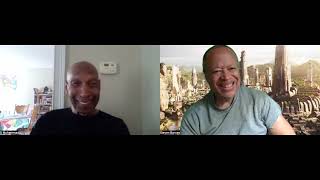
Steve Muhammad grew up in Mississippi sharecropping country, trained as a warrior by his grandfather starting at age four, then served in the Marines during Vietnam. He talks about what makes a true warrior, how his family used drums for coded communication, and the fighting principles he learned from Chuck Sullivan and Dan Inosanto.
Chapters
So if. If it says this meeting is being recorded, it pro. There's probably a button that says, you know, yes or no accept or something like that.
It says. It says it only had. It's a leaving meeting. And it says, I got it.
It just push. I got it.
Okay. Oh, okay.
Yeah, There you go. See, I got. I got Wakanda behind me.
That's right.
So see, now we can see each other, man, finally.
Wakanda. Wakanda.
That's right. Wakanda forever. Oh, man, don't you wish you could have seen Black Panther when you were 15 years old?
It would have made a big difference.
Yeah. Think about how different the world would be. A world in which it, you know, every young black child got to see that level of magnificence and the fact that it took so long to get an image like that. It has to be a different world just for somebody to say, okay, we'll put $150 million into this. So, you know, that's. To me. That meant a lot to me for a lot of different reasons.
Yes, sir.
Now you tell us a little bit about, you know, you were born in. You were raised in Mississippi by your grandparents who had been slaves.
That's right. I was born in Mississippi.
You were born in Mississippi. What year?
I was born into what they call sharecroppers. That name, sharecropper is a new. Was a new name for slave, rather than say, these people are slaves, which meant that they were saying that we shared in the profit of where they had us working. But that's not true. You know, they owned us and they didn't treat us like. They didn't beat us like they did. They could catch you and lynch you, but they wouldn't just outright beating us wherever they saw us at. But we were still slaves.
Now, a lot of your warrior attitude you said your grandfather gave you started with that. How did your grandfather give you the warrior heart that you have to this very day?
I went to live with my grandfather. So siblings, I think when I was born, there was three before me, and then I think one more was born after me. So my mother and father couldn't keep all of them where they lived. So, like, the grandmother and grandfather would take their aunties and stuff would take another one. So they were kind of like we were living apart. We would see each other on the weekend. I stayed with my grandfather on my father's side, and he was a big man.
So listen at the bottom of your screen. Look at the bottom of your screen. Do you see A little.
I can't hear you.
Look at the bottom of your screen. On. On the zoom thing, there should be a little microphone. You see a little microphone with a red line through it at the left. At the bottom left corner of your screen. The same. You know, it's near where you see my picture.
I see the word Steve Barnes, and there's a. Look like a microphone next to them.
Yeah. Do you see it? And is there a little. Is there a little red line through it?
No.
Because your. Your. Your sound isn't coming through the computer, so that means that your microphone isn't turned on. Now, if you can't do that, I can keep them. I can keep the sound coming using my phone. And then we'll just keep experimenting with it week to week until we figure this out. So don't worry about it too much. If you should see a little. Yeah. Try clicking on it and see what happens.
Let me see. Every time I. It shows an earpiece with a green arrow going through it, I'm gonna touch it and see if you can hear me. How about now? You can't hear me.
No, you're still. You're coming through my phone, but you're not coming through the computer. Try clicking it again. It should be right next to a little camera.
It is next to a camera. It says join. Join Auto.
Okay, well, if it. If it's not, don't worry. I can. I can have. It's gonna. It's working with. With the phone.
We'll just. We'll.
We'll do that. That's fine. I don't. You know, there's. There's no reason to worry about it.
Yes, I went to live with my grandparents, and undoubtedly I went there to be with them at a very young age, because most of my memory in dealing with my grandfather to teach me to be a warrior was when I was about four.
Four years old.
I was about four years old. And he told me that he used the language, grandson, you need to learn how to chunk them, which means, you know, to throw hands and stuff. He said, grandson, you need to know how to chunk them. He said, it's time that you start going on that path. And he used the word warrior.
Okay, tilt your camera down a little bit so I can see your whole face. Yeah, I can see your whole face. Yeah, that's fine. That's perfect. That's perfect. So you use the word chunkum, huh?
And he puts your hands up, throwing fists and stuff. Everybody back in those days called it chunking, you know, so he's going to teach me how to do it. He says the best way to teach you is that I put something up where you can hit it. And in the smokehouse, which is where you kept all the canned foods, and not canned food, but bottle, where you put it in a jar.
Canning, bottling, jarring, preserving.
Preserving, yes. All the food was in this smokehouse. So what he did, he went out the field and he got some cotton. He put it inside of what we call a pro sack, which is a big bean sack. In the bottom of it, he either put dirt or something that was kind of heavy, but then he packed over the top of it, all the cotton and stuff and put it in the smokehouse. And he told me, you can, you know, you can. You hit it, you can kick it. And he gave me a stick so long, he said, you can even get with a stick at all. Kind of different way. He showed me how to do that all kind of different ways. And I got out there and I was doing it, and the more I did it, I didn't mind doing it, but my hands were getting beat up, so my hands started bleeding. My grandmother came out to check on me. She said, oh, why are your hands bleeding? And I didn't know how to answer her. So she took me nails and wrapped my hands up like a box and wrapped her hands up like boxes. She took me back out there in the smoke house, tapped me on my backside, and so continued. I looked at her in a mess. Grandma, you're not going to make me stop her. But she said. She looked back at me and said, no. She didn't say it, but she looked at me and said, no, hit that bag. So that's what I started doing. I must have hit that bag up until I was around 8 you years.
Of age, like every day.
And say it again.
Like every day you're out there hitting that bag.
Oh, that was. That was part of me actually having to learn how to fight. Yes. Every day, including Saturday or Sunday. Whenever it was. We came from church, I changed clothes, went out in that smokehouse, and I hit and kicked and I hit it with a. With a stick, a sticky game. And as I grew bigger, he gave me a bigger stick to be able to hit with. And I did that. And there were other things. Like, he took me to town and he said, there are very evil people on this planet. And he said, I want to let you know what a pickle wood is. And he said, don't you ever be afraid of a Pecklewood. And we went to Town. And we sitting on this bench, and I was sitting next to him. He's always teaching me. And he said, there's a white guy walking by. A white man walking by. He kind of nudged me with his right arm. And he said, see that? And I said, yes, grandfather. He said, that's a peck of wood. He said, don't you ever be afraid. He said it with such a language, it kind of made me nervous because he doesn't. He's not that type of man that he speaks in that manner. But he said, don't you ever be afraid of a Pecklewood. He said, they want to fight you. He said, there's a lot of them. Get away from him. He said, but if there's one. He said, you fight that, you know. He said, you will always. Anytime you get in front of them, he said, because they will kill you. He explained. I never explained it this way. When I'm talking just publicly, I don't. I explain about the Peckham wood and all that. But there are things that I'm saying now that I didn't say to the public, if you understand what I'm saying. But he said, never be afraid of one. Fight them if they want to fight. There were weapons that they used that like bow and arrows, spears. Because in the bushes, those things don't make any noise. And if there's a group of them coming, you can hit them with bow and arrows. They won't even. Oh, you can just hear it making sound, but you don't hear no bang, bang, bang, bang. They don't even know what's happening to them.
So you're saying that. That when, like, lynch mobs would head into the black part of town, those lynch mobs would sometimes be met by groups of black people with bows and arrows and spears who would hunt them in the forest and then. And then take their bodies into the swamp?
That is correct. They not only did with bow and arrows, but they did with spears and stuff, too. And some of the stuff was close range. Because they had rifles. Very few of them carried shotguns. We carried shotguns. When they would let us. We had a way of actually purchasing them so we could get that. But they knew that when they got ready to fight us, they didn't want to fight us close range. They wanted to stand out with the rifles because the rifle bullets carry a lot farther than shotguns. But they had. In order to get into the area where we were, it had a bridge. And at night, Mr. Boyer, which was the owner of the farm, would let. Let Our fathers and stuff take the tractors home. And when they. Over the weekends, usually when the white man came out there to rape our little daughters and stuff like that and kill or whatever they wanted to do, they. We put tractors on that bridge. They couldn't drive by so they had to get out and walking it. They couldn't come across the bridge because we had men all night long waiting for them to come. They had to go down a little ways and wait across that area. And it was only that way area in which you could wait across was only about 150 yards. So we had men waiting there too.
You know what else you probably could have done is you probably could have butchered some hogs and thrown raw pork in there so that the gators were used to getting fed right there where those men crossed. That sounds like a movie scene, doesn't it?
And what the police actually knew where they were supposed to go that night to do whatever they're going to do to us. So they would come to the plantation to try and find out did anybody come here last night or did anybody do anything? Was anybody harmed? We didn't know nothing about that, even though we knew about that. Do you understand?
I understand exactly what you're saying.
We don't have problems like that. And I think I told you too that we use drugs for talking. Did I tell you that?
No, I don't think. Well, it may be a long time ago, but please tell me.
They could communicate with wooden drums. Every house on the plantation, it was Boyer's plantation. Every house had a code and there wasn't a lot of, you know, they didn't hold conversations and stuff. But if it was state, it was my house here in and 30005. Well, it had a code for that, like say nine plus one. So we would know that's Steve Muhammad's house. 9.8 or something like that. That's Steve Barnes house we knew. And they could actually tap those numbers out in however way they did because I never learned to do it. But they could tap those numbers out and then they would give another code to tell you what was going to be a get together or it was a danger coming that particular night. And they could all read those codes. You hear what I'm saying?
I hear what you're saying. That's fantastic.
Yeah. I mean it was magnificent how they set that stuff up and they tried to come out to the farms and find those drums that we had, but they never thought it would be wood. So the drums could be sitting right There. And they would never know that it was a drum because you can't make those sounds with wood, if you understand what I'm saying. But yes, they did do that, you know, and sometimes we. They can do them at night because they would see them and spot them and do it at night. And as soon as they did, that's like. There may be 150 people on that one farm, 200 people on there. Many of them are men, more men than women. Every man who come to that location, if it was 150 of us, 150 of us would be at that location. Man, that was something. How they set that up and how they.
You know, I'm going to be honest with you. I think that this is important for our people to hear, to know that we fought back. I mean, nobody who was back there doing this is still alive today. You can't hurt them. I think that this is something to be proud of. Steve, I can understand why you did not want to say this when you were much younger, but at this point in our history, I think we are preserving the courage and wisdom of our elders. I would like. I would ask your permission to be able to share this. I think that this is. This is wonderful. And it's part of our heritage to know that we all, we were always strong.
And I thought that if I. They said to us, never speak of this, because if we speak of it, they can go down there and get those people who did.
That's right.
That, you know, at the age, hell, my mother, father, I didn't even know about, they gonna die or something like that. I thought they would be around forever, you know, so I never spoke on it before.
Well, this is with. With your permission. I have. There's no one on this planet I have more respect for than I have for you. You know, I would never consciously do anything to hurt you or disrespect you. But I do ask your permission to be able to share these stories. I believe that the history that you are saying, if you die without preserving these stories, these stories are gone. And I believe that this is part of what we need to know, that we could always fight back.
I can say, rather than say I was there, I can say that this is what I was told.
Yes, well, you didn't do any of it anyway. You never said you did anything. You said, you know, you were told things. Even if you saw things, you know, that's. That was another state at another time and place, you know, so long ago that there's no corroborating. Evidence. It's gone. It might as well. You might as well be talking about John Henry. You know, there's. There's no evidence.
They'd have to go talk to the alligators.
That's right. Oh, my God. You are too much. You are too much. So when you practice karate, you were not practicing a sport or learning how to move your hands or culture thing. You were building on top of a foundation of having been trained as a warrior from the age of four and growing up in a context in which the warriors of the community, the men of the community, literally were the difference between life and death and dishonor. That this was not a joke and it was not theoretical. This was real and you knew it was real. And that was part of your frustration with us when we're practicing karate, goofing around. Because you knew what real was and you wanted us to be able to cope with what was real.
Oh, yes, sir. I saw real from my. From my grandfather and father. And because of what they had to go through, what they dealt with and how they handled and that stuff was real, if you understand what I'm saying. So I learned from what they were doing. Can you hear me?
Yes, I can. I absolutely can. No, I. Oh, go ahead. No, I mean, it's. You're talking about the difference between technique or athleticism and what Bruce Lee called real emotional content. But also the question, why am I practicing? Why do I do this? And your answer is to keep alive and to protect your family. That it was never a game for you.
That is right when I first started learning, because in the military, I was starting to pick up bits and pieces of it, but those bits and pieces didn't help me in real time combat because of the difference in getting in front of somebody and just fighting them. Like two guys in the street just fighting and not trying to kill each other. It wasn't like that. So you have to have a certain mindset to become a warrior.
What is that mindset, sir? What is the warrior mindset from your perspective?
First of all, you have to be taught certain things to get the aggression that you need. And I'm talking about war. Get the aggression in which you need to be able to do what you do, which is kill people. And I found that in the Marine Corps, we repeated stuff over and over and over and we got better and better and better and better. Every time we did this, we got better. And after a while it seemed like. Like your weapon can become part of you because when you turn it, you no Longer have to go like this and fire. You can bring it up, but you could put the front sights on and kill it. Just with the front sights. You don't have to use the back sights to be able to kill it. But that takes time for you to be able to do that. Because when you first try it, you fire that weapon. He can fire over here. It can be too high, it can be too low, but you practice long enough, and when you do that, you put it right on him. Do you hear what I'm saying?
Yes, I do.
It repeated over and over and over again. So you didn't have to aim anymore. So you didn't have to close any eye or anything. You kept both eyes open and you could hit that target. Now, sometimes in practice, every time, when it came time to go into real combat, you hit the enemy with you shot, and you hit him every time. Unless you say he's 100 yards. And beyond that point, you may have to target.
So tell me, give me a definition. What is a warrior?
I would say that a warrior is someone that has been trained as a soldier to go to war. But a warrior is someone who has actually been in a war up until that time. You're not really a warrior until you've been physically tested and you become a warrior. Otherwise, you just a soldier that has been trained. It's like if I take karate, never had a fight. Do you hear what I'm saying? If I've never had a fight, I've been trained to be a warrior, but how can I say that I am? I don't have a fight.
Yes, I do. So warrior is someone who has been to war. It may be of interpersonal conflict. It may be, you know, a nation with. Was Martin Luther King a warrior? Had he gone to war for his.
People, I would say that he went to jail and did all that kind of stuff. There were people that tried to fight him. There are people that tried to protect him. He had to fight for his life. Physically, I would say he's a warrior.
Yes. Yes. So a warrior, then is someone who's willing to put their life on the line or someone who has put their life on the line, their honor on the line, their freedom on the line for something important enough to take that risk. And I know that you were. You were working to prepare us all to go to war for our families, for our honor, you know, for our hearts. And I. Do you believe that anyone is capable of finding that within themselves?
Oh, yes, I agree. And if you look at a child, how he doesn't stop if he wants to do something. Like he's constantly looking up at somebody. They're walking around, running around, and you see him crawling or they're running. He's crawling, but he's trying to crawl as fast as they're running. So he keeps looking at that brother Steve. Pretty soon he's going to crawl up on something and stand up and just try to leave that and go somewhere else. He falls down, he goes right back. He never stopped trying. Do you understand?
Yes.
And pretty soon you'll be standing there and, oh, look at Billy. He's walking. And you give him a month later, somebody runs so past the door at high speed.
Whoa.
Was that Billy that went by him? You go look and see. He's running now. It doesn't take long. He finds everything that he need to do to start surviving and getting what he needs. He starts figuring out how to do that. If you watch a child in the bed, he's peeking through the little bars that they have there on the bed, you know. And after a while, you see him. How did he. The thing is this high. He's got one leg over the top of it now. He's almost upside down trying to get out of that bed. And one day he comes into the kitchen where you are. He's actually learning how to get out of that bed. They never stop. You got to carry that with you the rest of your life.
You have an expression that you use that. That failure does not exist in your fighting science. You will find a way or make one.
That's right. If there's doubt, there is no doubt. You make or find a way that shouldn't exist in your head. When you become over hell, there's no doubt I'm gonna accomplish this thing. A doubt. See, that is the kind of mindset in which you have. And the thought of losing, quitting, or having doubt does not exist in my head. My heart are my weapon. Science. Do you hear what I'm saying?
Yes, I do, sir.
Not just speak the words. You have to believe, but in order to believe in hell, you got to train that way.
You have to live that way.
That's right. The and you have to take away and find a way. Absent in my fighting sign. It is absent of doubt or fear. You hear what I'm saying? It doesn't mean that you can't be feel something even if you call it, man, I'm afraid right now. But that's not theory. That's because there's a chance that you can die. Right now. But it won't keep you from doing what you are supposed to do. That's okay. But when you get to a point where you just fear, you can't even move. You can't do nothing. You just kind of like air you. I can't get you to fire your weapon. Hell, you just drop it and lay down or something. That's fear.
You saw that happen to men in Vietnam, didn't you?
Oh, yeah.
They're so scared that they just. They just froze. They just gave up.
And they've been trained to be awarded. They're in an area where now they have to show that all that training that they have, they understand and know how to use that training. And once you go into combat, you are a warrior. You're not just trained for. You're a warrior now. You tasted that thing of going into battle, and it's scary as hell, but there's something in you. Wake up and you say, damn, let me do my job. You and I are moving together. I look over at you as we're fighting this war. I said, I'm not letting you down.
That's right. I look over at you and I say, I'm not letting him down.
That's right.
You know that you're. You're my mentor. You are. You are my guide. You are my father in the martial arts. And the number of times I say to myself, what would Mr. Muhammad think? What would Mr. Muhammad think? Mr. Muhammad says, I'm. I'm one of his. So that gives me a standard that I have to try to live up to. And I have become a better man because I had that standard. I think that that is something that we give each other, that we have to give our children. What is the standard that they must rise to, to be men and women in this world.
There's a saying in the Marine Corps, when you move with your guns, you say, never above you, but below you. Always, always by your side. That says a lot. You hear what I'm saying?
Repeat that, please.
Never above you, never below you. But always, always by your side.
Never above me. Never below me, but always, always at your side.
That's right. And that means something, brother. When you. When you have man that you go to come, he is. He's not going to leave you. And he will push you to the side, keep someone from killing you. He'll jump on a grenade to keep you from dying. This is something that you. I've seen those things before. And after he does it, I'll say to myself, can Can I do that? If that time comes and you don't know until that time come because you don't want to die, but you dare, and the fear of dying actually go away when you get into combat, you killing the enemy, you don't think about dying. Think about how to kill this animal so that if anybody go home, it's gonna be me. It's not gonna be the enemy if I can kill all of them. So that training that they give you actually help you. But the camaraderie between you and the people that are around you has to be 100%.
Were you considering where you came from? Were you surprised to discover that you could feel that way for people of other races? That other people of other races could feel that way about you?
Well, you don't have a choice. There's some of them good old boys in the military that don't feel that way. We didn't feel that way about them either. But usually when they go out in the field, the white boys that are with us, that are mixed with the blacks, we all feel that way about each other. Yes, but you have the good old boys. If we happen to join forces to be able to attack something, to be truthful, at the time, I didn't really give a damn about them crackers. They didn't give a damn about us. But they knew they had to take care of their side. We knew we had to take care of our side because if we let them through, we would be there too.
Right.
So we had to make sure we covered each other left and right.
Yeah. You don't have to like each other, but you gotta. You gotta take care of it. I think that that's a lesson for the world. I mean, maybe you found it out in Vietnam, but isn't that true of the world in general? We need to be taking care of each other. We need to watch each other's backs. You know, whether we love each other or not, whether we like each other or not, we better act like brothers and sisters or this world isn't going to work.
Now, if you if. See like I feel now, I would never go to war for America done that. Been there. And each time that they did it, it was America's fault because of the war that went on. Other than, you know, maybe First World War and Second World War, I don't know what happened in that. But the rest of them, like Korea and Vietnam and all the other little things, it's because of America. It's things that they did like Vietnam, they had what they Call a Bay of Pig. They started some garbage over there. It's like they threw a brick and hit somebody. People who got hit with the brick want to know who the hell did. Well, America was right there saying, well, I think it came from over there, But America threw the damn brick. But I think he came from over there. So they jump on him. So we jump on the other side, the side that we want to actually win this war that we started. Do you understand what I'm saying? Yes, man. Really? I'm thinking, I wouldn't care if they. But this white man, not just this one, is wicked, 100% wicked. And every we had, they asked. One day, I saw this on the Internet. It said, white people asking white people, what have white people done? And they done it first, you know, like heart surgery or something like that. There wasn't one that could say, oh, we invented that. We invented this. Not one of them. And these were brilliant people.
So what I wanted to look at here then is when you came back from. From Vietnam with what you learned there, and you began to practice karate, and Chuck Sullivan and Danny Inosanto were your teachers. Is that correct?
That's correct.
You were the only black man in the class.
At the center. There was at the time that I joined, there was one other guy, he was at Chuck Sullivan school that was black. I was at the Santa Monica school, you know, but I didn't know about him. At La Brea school, I didn't know about him.
So you said it was kind of rough on you.
Kind of.
It was very rough. You got the hell beat out of you every day. Okay.
They did not want me there because there was no black. There were Mexicans. There may have been a couple of oriental brothers there. 90% of them was white that was there. And in the class, there was probably about 50 of us there. It may have been various classes, like you had Tuesdays and Thursdays you go to training. It may have had other classes on Wednesday and Friday, so something like that. But my classes were set up for the tipping game, and there was no black other black there other than myself.
Well, if you were being treated that way, what is it that kept you coming back? Because you had to come back long enough to begin to learn, enough to be able to find your power and your way of doing it so that you could begin to stop them from hurting you. What motivated. How did you keep your motivation?
You were so alone at the time. They didn't know. I was still in the Marine Corps at the time. I was coming Taking that training. And in the Marine Corps, they said, never quit. You never quit, no matter what. And I had that mindset. They ain't gonna make me quit, you know, Even though they bust my lip, make my nose bleed, blacken my eyes, all kinds of stuff. Had cuts on the side of my face where they hit me. So I'm sorry, you know, and everybody started laughing. The blood in that school on the floor, on the walls, belonged to me. So as they began. As they. As I began to grow in the martial arts, I began to see that I could see things and be able to not let them hurt me like they were before. They were grabbing me, man. They were doing grab me because I didn't know how to stop them. Do judo throw. They throw me down onto the floor because I didn't know what they were trying to do. So you don't know how to stop it. Do you understand? But once I began to train with it, it took about, oh, man, close to a year, because the Kenpo for me was very difficult to learn because they have a lot of foot movements and stuff that I didn't understand. And nor was I able to make those footworks in that way. And even today, it would be difficult for. How many really bad brothers come out of Kenpo, of the dkn. Kenpo itself doesn't make you a fighter. The base, the foundation of Kenpo that you take from whomever you learn it from, it didn't matter whether it came from Danny and Santo or Chuck Sullivan. I have to change it around with either one of them because the bone structure of every race is different. If I took karate from a Japanese, I could become very strong in their science for fighting, but never like them. I'm gonna have to figure out a way to change it.
What were the biggest. What were the most important changes that you had to make?
The hardest one was getting into the horse. That horse killed me for about six or seven or eight months. And I told Daddy one day, I said, daddy, man, I can't stand that stance anymore and try to fight that stance. He says, why, Steve? I said, it's killing my leg, my knees and my ankles and stuff. It's killing me. I said, I go home and rub down every night that I trained. And I said, and it doesn't change anything. So he said, he change your stance. I thought to myself, damn, I've been hurting for six or seven months, and all I gotta do is change my stance. You know, I thought, why the hell didn't I do it? Because I thought I had to have that Kel base for that stance, you understand? But Danny and Osako gave me a beautiful base with some of the other things. And he allowed me to change my fighting stance of the base so I can make the same movements. Another thing I couldn't do was I couldn't do like five swords. I couldn't whip through them. My mind didn't work that way. Where I go, you know, check in, they go 1, 2, 3, and change and hit and do a foot scoop. I could do those techniques, but I never could fold like the rest of them could. So when I went with Chuck, he noticed that I was having a hard time doing those techniques. He said, steve, when I see you over there and you teach, there's something, he says, you never teach the techniques that we teach you. He said, where do you get those techniques from? I said, but the movements that I do are similar. He says, yeah, that's because they're all going to be similar in some kind of way. But he said, how do you come up with the techniques? Because you can do that technique, and we wait three or four minutes, you show something else, go back to that technique, hell, you change it. And he said, how do you do that? The technique is a technique. It is supposed to be done the same way. I said, I don't know in the flow of that movement. Now, if he went one way, I would hit him like this. If he went another way, I'd hit him like this. What I was learning that didn't know it, I was learning to read the language of the body. And when you can read the language of the body, they said, well, you swing at somebody, he duck. How do you read that? Well, hell, how did you know he duck. And when he duck, he also speaks a language of angles. So every time he duck or move or shift, he speaks a language of angle. You teach your brain to read those angles, ethanol, with no delay. And teach the brain instantly when you see a movement and it's going to a certain place, there is a that in. In that science you have to put up in there distance, angles, time, targeting. And you have to know that you have to need these things in order to do that. Because, brother Steve, I can shoot a left hand cross angle your face. That hits you on the opposite side of your page, which means I have to go across your face to hit you on this bone. You can lean away from that and I can miss that because I'm trying to hit you here. And when you do, I can shoot it across that arm. And just whip it over into his eyes. If you understand, shoot it. You mean boom. And fire on his jaw. Well, that's what. Now I'm reading the language of the body. Do you understand?
Yes, I do, sir.
Yeah. And see, I never. I don't really explain that because you can't read. The body doesn't speak the language. I said, yes, it does, because. Boom. I hit you in the groin. What's your head gonna do? That's right. It's going to come down. What you do, Your head's gonna come down.
That's right.
It can come down and change the angle, but it's going to do this first and maybe lean left or right.
Yeah. So if I hit. If I hit him in the groin and he bucks up, that my elbow is in a perfect position to come straight up. If I miss him on the. On, you know, miss targeting that jawbone and he slips out of the way, I can. That hand can come back across or I can even grab an ear pulling in elbow. So his body, his body has to move somewhere. My job is to maintain a particular relationship with his body. Keep looking for openings. And your. Your brilliance is that you maintain a position where you can see him from his heel to his hair. You see everything that his body is doing. So no matter what he does, you've trained yourself to find the negative space, the opening that takes you in there. So you can speak a language of pain on his body.
That's right. But remember that she speaks a language. That's when you were talking like that, see, when you grabbed his head and hit him with an elbow. That's a language that you're speaking.
Yes, sir.
Something else. But that is a language that you speak.
Yes.
If his head, like you grab his head, he dropped his head down, you can change the angle. That's a. That's a language. Yeah. You saw it. Hit him in the face, he dropped his head down. Oh, you just send that elbow down into his face. That's a language. Yeah. In order to do it, you have to see. I call that brain.
Yes, sir. And you have to make contact with the part of you that thinks this is kind of fun. I mean, it's like, it's not polite to talk about this publicly, but if you don't find the part of you that just a little bit enjoys hurting somebody who has messed with you, you know, it's. What can I say? Like, I. I give. I give anybody every opportunity to back down or change the subject or go away. But if they insist on making this happen. There's a part of me that's that kind of says, I've been waiting. Please, let's do this.
Yes, sir.
Is that evil? Is that sick of me to admit that I have that part?
Oh, no, sir. Brother. It's like, brother. Now, I'm 82 years old and my legs aren't that good. So I know that I'm limited in leg movement. I have no limits in my hands. But because I don't have legs, it limits me. If I'm in the right position, I can generate whatever I need to generate by moving my feet. And I find sometimes that even though my legs become heavy when it's time to fight, it's not as heavy as it would be if I'm just walking around. Yes. I don't know where it comes from, but there is energy there. Because that warrior thing actually come out. The thought of not being able to protect myself, it doesn't exist. Even with what I have now, it doesn't exist. And when I get ready to fight for the Steve, I am absent of doubt or fear. Do you hear what I'm saying?
I absolutely do that, sir. That was beautiful. We've been talking for about an hour, so. Whoa.
We've been here for an hour.
Yes, we have. Isn't this great? Because we're just two old friends talking about something we both love. So the time just flies, you know, like God. God help me. I love this.
Me too, bro. Especially about fighting. I love that.
Absolutely. So what I wanted to say is that let you know, I always ask you, you taking care of yourself? You're working out?
Oh, yes, sir.
All right.
And I'm getting better at it now because in my class, now I'm starting to work with the class. I can't work the whole time that we're down there because we'd be down there about two and a half hours. But I work quite a bit. I might be on that floor for about an hour.
That's fantastic. I think I might be. I might be coming out there around Father's Day, and if I am, you can be absolutely sure we will work it out so I have a chance to. To work and to share with your students and time to see you. But I love. I love the fact that we just recorded this whole hour and some good stuff got sold, got told. So I'm going to. I'm going to go through it and be sure to. To clip out anything that might can possibly embarrass you, but leave the wisdom.
I don't want to offend people.
I know that, you know, you. You made one comment that I think that. Yeah, that might. That one might be best left out.
So I will.
I will try to be careful about that. But I wanted to. I wanted to thank you, sir, so much for giving me the gift of actually being able to see you while we're having these conversations. This is. This is great. And we can do this every week.
Oh, yes, sir. But I can tell you this, brother Steve.
Yeah.
If you ask me a question, even if it offends you, if you ask me, I'm going to answer you in the manner in which actually have actually experienced that type of thing.
Well, you have given me answers that I needed to hear, but I did not want to hear. You know that you helped me with my marriage, you know, and you. You helped me understand what my duties are as a man and as a husband and as a father. And I will love you forever for that. Because I needed to hear the truth. And I knew that I could trust you to tell me the truth as you saw it. And that's. That's like having a compass that points true north. You know, I know that if I want to be a man like you, and there are ways in which that is exactly what I. What I desired, then I need to listen to your attitudes, your actions, you know, your beliefs, your values. I can make a decision about how much of that I want to adapt. But I need to empty my cup and let you in. And because. Because you're gifting me with your time and perspective. So why would I not want to listen?
You know, I found that when I had a true friend, he would tell me the truth. Would I like it or not? Yes, that's a friend.
That's a friend.
And I found that in the beginning, I would be angry about that. You know, I said, oh, man, he's right. You know, I had to sit there for a few minutes and think about it, maybe even a few days, and go back and say, oh, but, Steve, I understand better now what you told me so.
Well, I hope I've always been a good friend to you. I hope I've always. I've always tried to speak the truth to you. And I hope that some of the things, conversations you've had have been useful to you as yours have been useful to me.
Oh, yes. Oh, yes, without a doubt, my friend.
Excellent.
Just me speaking to you help me be more honest and what my beliefs are. Because I may have something that say, man, I ain't doing it that way, but I know that that's wrong. I'm not going to tell you to do it the same way I do it.
Right.
This is what you should do.
Yes, sir.
That's a friend.
Yes, sir. Well, we are definitely friends and family, sir.
Yes, sir.
Absolutely. So I will talk to you next week. We will. I'll reach out to you. But about this time on Saturday, we'll try to do this and we'll make it a little bit better every time.
Oh, yes, sir.
All right.
If the mature man forget, you can call me brother and I'll do it when you call me.
Fair enough. No problem. You know, and if you're busy, I understand completely. And we'll just, you know, work it out the next time we both, you know, we're both available. It doesn't have to be some big complicated thing, just two old friends talking.
Yes, sir. I thank you for honoring me, my brother, and believing that I have something to say about, you know, the martial science.
It's not that I believe it, it's that I have experienced it. That you are, you are compass, you are true north. Of course, there are other great martial artists, but you speak truth and you've been there and you've experienced it, and you're a genuine warrior and you love to teach and you love to share, and you love to fight and you love to talk about fighting. Yes, sir. So you take care, my brother. Have a wonderful day. My love to your beautiful family. And keep punching, brother.
Oh, yes, sir. You do the same, please. Give you my love to your beautiful family.
Indeed. I will take care.







