Morning Thoughts 11-9-23
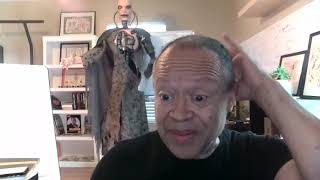
Steven Barnes explores the Three Gates ethical guideline: is it true, kind, and useful? He argues the framework bends under extreme duress, traces anger back to fear as a mobilization tool, and shows how fear-driven anger shapes politics and tribal loyalty.
Chapters
Hello there. Hi. I'm doing another one of these early morning meetings. This is early morning for me. I'm just kind of getting up and getting my brain into it and I'll be. See, what will I be doing? Oh, yeah, I'm still waking up. You're seeing me before I completely wake up. This is the. My morning tea. I've got a lot of stuff to do today. I've got 54 days to deliver the Star wars novel. But I have an essay and I'm also in training for Manila. And I've got an essay that a magazine asked me to do on the three Gates. And the three Gates are a really. They're a secular approach developing spiritual or ethical system in the sense that you don't need anything spiritual, you don't need anything supernatural to evolve an ethical system that the three Gates. The question, you know, is it true? Is it kind? Is it useful? Evolve from individual human needs. You could be a person alone on an island and you would need to know what was true. You would want to be kind to yourself, you know, moving away from pain toward pleasure. And you would want to be as useful as possible. You would want to multiply the force of your actions even by yourself on an island. If pretty girl washed up on the island, now there's two of you and you got along well, then obviously the question of what is true, I think is useful. The question of being able to communicate rapidly for mutual survival and benefit. What is kind. You certainly want to be as nice to each other as possible. You're under fantastic stress. The stress itself is going to create a bond if you can connect to each other and that can actually benefit both of you. I remember the movie Swept Away by Lena Wert Miller, not the Madonna version, dealt with that. That the survival drive brought out really passionate, deep survival emotions. Sexuality and love. Bring children into the equation and the question of what is useful becomes even more important. We tend to be kind to them because they're very helpless and without kindness, they die. And the question of what is true is very, very important because otherwise you can't avoid things that would kill your kids. Now, in ordinary life, moving from there to community activities and expanding your sense of the three gates within your family or within your cup, within your relationship or within your own heart becomes a matter of how do we create community rules? And I think that it'd be easy to see how all laws evolve from those basic concerns. You know, the basic philosophical, you know, what is true, you know, what is the world. Who am I so these things, you know, I'm not confused about how I will expand those things outwards, but one of the things that did hit me is the fact that there is a certain sort of person, I've alluded to this indirectly, who seems to be offended by the gates or feels that they're not practical, and especially have a sense that they're not practical when one is under pressure. And I was actually told that, well, this, this doesn't work for oppressed communities. What are you going to do, you know, you know, tell the people sheltering hell, sheltering a Jew, that they should tell the, the, the Nazis where they are because of the three gates? And you're supposed to be honest. And I think to myself, they're smarter than this. They know perfectly well that there is flexible thinking in any system, that under horrible situations there's that expression that the first casualty of war is innocence. And others have said the first casualty of war is the truth. So we know that under extreme circumstances, rules like this are tested, as a matter of fact, as one of the reasons why we want to avoid extreme circumstances. But we all have them from time to time. So, you know, a closeted gay man in a southern town that would beat him to death for being gay, Are you kidding? Of course he wouldn't go, you know, walk down the street saying, I'm gay. It might be that he would need to have a circle of allies with whom he could be himself, that he would tell the truth to the degree that he can without risking his life, because survival trumps everything. What I look at here is since it seems kind of obvious that survival circumstances would warp this, that the three gates are a standard not just for survival, but for growth as a human being while it contributes to survival. There are times in dealing with other people, especially when you're in conflict with them, where war is deception. You know, Sun Tzu, the Art of War says that very clearly, even if something is relatively trivial as a martial arts contest, faking somebody out and getting them to believe you're going to do one thing when you're really going to do something else, that dishonesty, and you're not being kind to hit them, except that you are. I mean, in a karate tournament, people go to test their skills. If you don't hit them, they can't find out where their flaws are. So you have permission, they have implicit permission by entering the arena. And in terms of what is true, I mean, it's a little bit like saying you go to a movie and you watch actors Acting and they're not telling the truth, so they're breaking the three gates. That kind of rigidity is a protective mechanism. You know better than that. So the question is, why do people know better than that, but in essence lie to themselves and say this set of principles, which is designed to help create an awake, aware adult human being, don't work in the real world because we've got threats. Now I have to ask myself, what's going on that they stop applying their creativity, what's up? They stop applying their flexibility, their rationality, their common sense, even what shuts that part of their brain down. And I'm going to suggest it's fear. That what they're looking at is that if they were to apply the three gates to their own behavior, they don't like what they'd see. They feel that they have been dishonest in times when they felt like they needed to. But the three gates are asking them to consider that they have been cruel, maybe even celebrated hurting people. But they felt it was necessary without looking for the fact, looking at the fact that they went out of their way to find circumstances in which they could get upset. They triggered on things that other people would not that this was their reaction, that the three gates are asking to look at themselves or else it's not useful in looking at other people. It's a guide for our behavior, our words. You know, before you speak or act, ask yourself those three questions. Is it kind, Is it true? Is it useful? So what is it that's going on there? And my suspicion is that I can look at a pattern of people who have objected to this, and there's some interesting similarities. And some of them, you know. Well, you know, one of them is racial. They were mostly white guys. So, you know, there's a gender thing in there. A lot of them were creatives in one way or the other. And another one was they're kind of. Kind of alpha, kind of aggressive. You know, martial artists, fighters, soldiers. It's kind of interesting, you know, the. The commonality. And there's. There's one in particular that I been thinking about a lot. A person of tremendous intelligence and somebody I really like quite a bit who constantly was battering at me about things like the three gates and also about whether anger is fear. He get really angry about the concept that I was saying, you know something, you got some fear that you need to deal with. I. I think that when people aren't ready to hear something, they will create strawman arguments. They will distort what it Is that you're saying, oh, Julius asked, who is that monster behind you? Is that a video game? No, it's part of our Halloween display, Julius. It's an animatronic. It actually talks and moves. And after Halloween, I brought it in. Let's look at something. I see people, once again, not using their common sense. Because I think that when you have creative, intelligent people who are not thinking, using any kind of fuzzy thinking at all, that they're taking the narrowest, most rigid definitions of something that they possibly can. I kind of think, you know something, you're smarter than this. Why are you doing this? And if I looked at that, you know, one of the things people say is, you know, anger isn't exactly the same thing as fear. I never said it was. What I said was that anger is a mask over fear. I've said that anger is. Is the way you mobilize fear, that you feel fear. And that some people, and a lot of people you know, feel fear weakens you. Fear, um, let's see, what is it? Fear is shameful. Fear is not manly. But anger, on the other hand, that's manly and useful and dynamic. And the truth is it is very, very useful for people who are not integrated. And we all go into less integrated states at times. That's. That's a very common thing. So look at it like the fire triad. You know, you don't have a fire. You need oxygen and you need heat and you need fuel. So let's say that fear is the fuel. Okay? And I don't know what the other two thirds of the triangle might be. This is just something I was thinking about today. So this is very imprecise, but let's, for the sake of argument, just throwing this out there. You also need a target. And what might the third. What might the third one be? I don't know. Maybe. So. So you are afraid of something. Maybe you connect it with past patterns, you know, memory. Maybe you need. Maybe you need fear and you need a memory and you need a target. Let's say that that was a triad. But I'm not. I'm not dogmatic about that at all. What I'm saying is that anger is the way people mobilize their fear. If you break, if you have fire and you remove fuel or you move oxygen or you remove heat, the fire dies. If you. But the fire is not heat. Fire is not fuel. Fire is not oxygen. Fire is a result of these things, and if you remove any one of them, it disappears. The same thing is true of Fear, these inexact metaphors, because nothing is exactly like anything else. And words are just patterns that we use to try to communicate meaning. If you can look at somebody's anger and ask, what are they afraid of? And this is something that does not happen in our political arena. I think that we have a tremendous amount of anger right now on one side of the political spectrum, maybe both, but I think you have more on one. I think that there is tribal extinction fear that is manifesting right now that is being used to manipulate people and move them into a state of constant anger. In that state of constant, well, constant fear, which is then mobilized with anger, you know, pointing, saying, that's these are the people who are hurting us, so let's go get them. Okay. If you want to calm that down, the first thing you have to, you would have to do is you'd have to remove whatever it is that they're afraid of or you'd have to. In order to deal with them most efficiently, you need to understand what they are afraid of. And I think that because anger is a mobilization of fear, people who are in a state of anger are ready to fight. You ask them to look at the fear inside them and they have to go into a place where they feel weaker. Because if they associate fear with weakness. And remember, fear isn't necessarily fear of something happening to you. It's. It could also be fear of something happening to someone you care about or someone that you empathize with. You know, fear, a powerful negative emotion, something you know, you want to avoid X happening again. You feel fear in connection with that. You use anger to stop the thing. If you're, if you're asking someone who's highly politicized, and this is another thing that was true of these people, to empathize with their enemies. It feels like weakness. It feels like, what kind of nonsense is that? No, we have to hurt them. I'm not going to empathize with them. But if you don't empathize, if you don't understand, if you're going to fight a tiger, if you're going to hunt a tiger, you better understand tiger behavior. You better understand what motivates tigers. You better understand what tigers want, how tigers act. This path, asking what is true. And I'm asking, I'm saying in this particular case, what is true is anger is a mask over fear. Is that kind? I would think it's massively kind. It's leading you to empathy. Is it useful? Tremendously useful. If you can isolate what the person is afraid of. You can address it or you cannot trigger it. Or what boxers and martial artists do quite frequently is they deliberately trigger anger. They deliberately trigger anger in their opponent because they know they're dealing with fear. Do that and the person does not have as much access to conscious skills and it's possible to confuse them, get them to chew up a lot of their own energy. These are just, like I said, morning thoughts. I'm experimenting with seeing whether or not it is useful to share my thinking before my brain is completely clicked on in the morning. We will see. But I just kind of wanted to share that with you because I'm going to be, you know, doing an essay later today and some of these thoughts may very well get into it. Anyway, I hope you can have a fantastic day and, you know, you take care of yourselves. And if there are specific subjects that you would like me to handle in these little essays, I'm trying to see whether that this works better than the written essays. We'll see. And just have a great day and I'll talk to you later. Bye bye. Oh Join our Saturday morning Zoom groups and you can join it just by signing up on the mailing list@www.stephenbarnslist.com.







