"Remo Williams" (1985) and the meaning of Fear
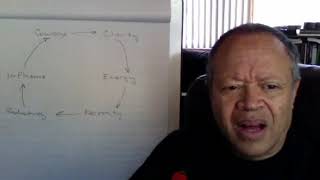
Steven Barnes on how fear blocks creativity and what to do about it. Start with one sentence a day to break paralysis. He used a visualization he calls glitter-in-water to gain clarity, and connects fear to six principles high performers share: clarity, energy, necessity, productivity, influence, and courage.
Chapters
Hi, Steve Barnes here with Life Writing Live once again as always, if you enjoy these talks, be sure to share them with your friends. That's how we know which ones are working for people. And that's the primary thing that we're trying to do, is to make sure that we are being of use one way or the other. God, it's so busy right now. There are probably a dozen different writing projects. There's a couple of novels, there's a couple of books, movies, television series that people want us to help them create. There are short stories, there are articles, there's this, there's that. And what I'm trying to do is to set myself up so that I can do each of these things as efficiently and effectively as possible, because otherwise I will absolutely freeze. I mean, there is so much that is happening now. I can remember very clearly. Very early in my career, there were several times I worked for Outer Limits. I worked in Twilight Zone. And the first thing I did for these people knocked it out of the park. They literally told me that it was the best first draft script they'd ever seen. And then I froze. Literally. They asked me to rewrite it, they asked me to expand it, and I couldn't do it. That's what happened to me on the Twilight Zone. And it was such a frustrating experience. Didn't happen quite that way on the Outer Limits. I was able to get in and do the rewriting, and I did a pretty good job. But I. You know, it's actually. I think that's probably the best job I'd ever done for television. But the subsequent scripts that I wrote for them, I was never able to hit that level of skill again. I just wasn't. I could feel that something inside me was holding back. So, as you know, life often happens in a way that things will cycle back around. You'll get additional opportunities to do something if you keep at it long enough. And it's pretty clear to me, and Tenonarive and I have spoken about this a lot, that that opportunity seems to be happening right now. There seem to have been enough changes culturally that our particular set of skills are being appreciated. We'll talk some more about that. But I wanted to kind of focus in because the conversation that I had at the Greater Los Angeles Writers Society was about that, the system of taking of creating a career, a writing career based upon the smallest possible block of work, which would be one sentence a day, doing at least one sentence a day, committing to that, and then building everything on top of that. And the Reason that that's important is that if you say, well, I can't do it because I don't have the time, I don't have the energy, I don't have this, I don't have that, all of those things will disguise the act problem, which is, could very well be fear. And so I wanted to discuss fear from a couple different points of view. And one of the points of view would be, as you guys also know, that I've been experimenting, every few months to a year I'll experiment with a completely different way of looking at the question how do we perform? And compare and see whether or not I have the best model operation that I can possibly have. Because I really, my commitment is to operating at the highest level of efficiency and effectiveness that I possibly can so I can take care of my family and, you know, express myself and have fun in life. Okay, so Brandon Bouchard has this thing, it's the six principles of high performing people. And you know, he says that you, you have clarity, energy, a sense of necessity, productivity, influence and courage. That these things are the six pieces that fit together to make high performing people. As he studied them in something like 30,000 cases. And working with over a million students seems perfectly reasonable to me. I like it because they're characteristics that anybody can develop there. You know, no one is born with these things. They're all a matter of attitudes and actions. And so anything that is a matter of attitudes and actions is whatever one's innate capacities are. Like how high are you? But in basketball, let's say being able to jump is more based on how well you use the characteristics that you have. So I tend to focus there because I can't do anything about my innate capabilities, but I can do a lot about the technologies that I use to bring to bear to control my emotions and my actions and so forth. So to the degree that these do connect with being high performing people, and to the degree that none of these are innate and all of them can be developed, you know, I like it. I've been experimenting with this for a couple months now. And right now my attitude is that, you know, has a pretty low bullshit quotient. So let's looking at this, the question of fear, what's going to come up, you know, because oh my God, there's all this stuff that I'm going to have the opportunity to do which is going to make me money, which is, you know, definitely part of a goal, also getting out there and having fun and creating images that I enjoy. So if the Minimum component piece of a sentence a day is largely important because it reveals fear. Where does fear fit into here? Well, you know, fatigue makes cowards of us all. You know, the more frightened you are of something happening, for instance, to yourself or someone who loves you, the greater sense of necessity which drives productivity. You can influence people by manipulating their fear and to go to the dark side there for a moment. And of course, courage is the capacity to do things in spite of your fear. So fear seems to be kind of central in here. But I wanted to talk specifically about clarity because it'd be very easy for me to confuse the emotion of, let's say being feeling eager, oh my God, all this opportunity with the emotion of fear. Oh my God, how am I going to do it? And so what I have to do is to allow myself to feel the emotion, the raw emotion, without defining it in a way that is damaging or limiting. And that's a trick. That's a trick. And we're going to have to be very, very careful about that moving forward. Because what I'm going to end up doing is similar to what a chess master does. Who's playing mult games of chess. As I've often said, in a chess master doesn't, you know, moving from board to board to board isn't really playing all those games at the same time. What they're doing is looking at the board and making a decision about what the next move is based upon, what the positions are. They don't try to, you know, they're not memorizing everything that came before. So if you have a procedure, most high performing people have a procedure that they go through again and again and again to get a positive result. And it's going to involve kinesthetics. What I do with my body, what's my self talk, what I focus on, what's the order in which I do things. That precise thinking is one of the things that enables them to function despite the fact that confusion, fear, fatigue, so forth can naturally come in. If you saw the movie Mask of Zorro with Antonio Banderas, you remember the Spanish circle that they used for directing fencing. Now the Spanish circle operates in a couple of different really interesting ways. One, of course, is the mathematics of engagement. You try to position yourself so that you can reach the other person, but they're in a position where they cannot reach you, which can easily be done if they allow their shoulders and hips to get out of position. So literally they, they can't reach you over here, but you're standing in position where you can get directly to them. But the other things that that Spanish circle does is it enables you to focus on the mathematics of the engagement so you're not thinking about where your opponent is trying to stick the pointy into the sword. So, you know, it's the. How. How concise can I be? You know, how precise can I be in this particular situation? Very, very necessary. I'm going to need to be able to switch from project to project to project. Do at least a little bit on it every time I'm working at it, so that I'm maintaining the forward momentum, because if I don't. Action itself is one of the antidotes for fear. But there are other antidotes for fear. And I thought, once again, to zoom in on. On that, there's a movie. Let's see. I'm not going to talk about the movie first. I'm going to talk about the fact that it took me, as I've mentioned to people many times, 17 years to earn my first black belt because I was dealing with so much fear left over from my childhood, having been bullied and beaten and things of this nature, and growing up without a father in the home. So I literally did not understand male energy, how to deal with this, how to deal with it, how to evoke it within myself. And as a result, the feelings of fear were often overwhelming and emotionally crippling, triggering all sorts of negative emotions. So I went from teacher to teacher to coach to guru to therapist to hypnotherapist, just asking, can you help me deal with this fear? And, you know, nobody can help me. And this went on for years, years, years. It was just awful. I just trudged from one losing experience to another. I would go into a new school. I start with enthusiasm. I'd do really well. And then one day I'd wake up and the fear was back and I'd start missing classes. It was just dreadful because it tied into shame. And I remember very clearly driving down La Brea Avenue in Los Angeles, afraid to go back to school, to pick up a jacket. I left there because I was afraid that somebody in the school would ask me to spar with them. And I was good at it. I just hated it. It was just. God, it was awful. And I just remember driving down the street with tears streaming down my face, saying, God, will you either take away my urge to practice this stuff or just let me practice it? So I would ask all these teachers, you know, do you have anything for me? And they would say things like, you know, have you Bought my book yet? You know, it's just, it was awful. And then one day I was with my, my brother in law, Patrick Young, who was studying Shore Shitaru karate with a guy named Terry Leto. And Terry taught out of his garage. Just typical garage, you know, backyard martial arts instructor. The backbone of the entire art. People teach for love of it, you know, not money. And Terry is just an animal. I mean, just fabulously, you know, efficient and effective martial artist. Just a guy who could make classical martial arts really work. You think classical martial arts don't work? You've never met somebody like Terry. They do work, but you, you have to make them work. He was lined up to do it. He was deadly. And after class, he, we were having coffee or something of this nature, relaxing. And I remember watching them working out and envying just how easy, easily Pat could do it. I mean, he could just get out there and work out, man, and just, you know, he didn't, he wasn't tied up into an emotional ball like I was. And Terry, of course, just loved it. Just, just, just absolutely. Doherty, that's. He felt more himself out on the mat than, I think, doing anything else in his life. So I asked Terry the same question that I'd asked so many other people. And any of you ever felt fear? Any of you ever let fear stop you from doing things that you love doing and felt that, that combination of fear and shame and pain? Anyway, I asked him the same question. You know, I told him that I had this problem with fear and waited for him to tell me the same thing everybody else had told me. But instead he said to me, your problem isn't fear. Your problem is lack of clarity. I said, lack of clarity? He said, yes. I said, is there a cure for that? He said, oh, yeah, sure. You just visualize a glass tube filled water and there's glitter suspended in the water. You just wait for all the glitter to settle to the bottom and see what you see. I said, what? He said, yeah. So I went home and I started that day visualizing a glass tube filled with water. The tube, the water of the tube was roiling. It was swirling and it was suspended with, with glitter. And the glitter was swirling all around. And I would spend 30 to 40, 30 minutes to an hour a day just visualizing this tube. And slowly, day after day, the water began to calm, the glitter began to settle. It took about six weeks maybe. And finally one day, the water was clear, all the glitter had settled at the bottom, and bang. I saw it. I saw that the fear, the Problem I had wasn't the fear. The problem was that I thought the fear meant something. I thought that it meant that I couldn't or I shouldn't or I mustn't. I thought that it meant that I was small and weak and a coward. No, it just meant I was afraid. And here I want to reference an otherwise unremarkable movie called Remo Williams the Adventure Begins. It was done in 1985. And any of you who know how irritated I am by yellowface casting will know that I was not at all happy with the casting of Joel Gray as the Korean martial arts instructor who is teaching Fred Ward, playing Remo, to be a super ninja secret agent, basically. And like I said, you know, it's from a silly series of books. And that was offensive casting, especially when they tried to pretend that they could not find any Asians to cast in the role. They actually said that it was. It was absurd. But there is a scene that I do remember with fondness. I mean, real fondness. And what happened in the scene was that Remo is being, like said, trained to be this super ninja, the art of Sen Onju, the sons source of all the martial arts. God, I used to love those books. And Chun has him running around on the the edge of a tall building. And Remo freezes, terrified of falling. And Chun says, you know, what is wrong? You know? And Rima says, I'm scared. And Chun says the following. He says, fear is nothing more than a feeling. You feel hot, you feel hungry, you feel angry, you feel afraid. Fear can never kill you. It's just a feeling. See, the problem is you've got this feeling called fear. And if you then attach to it a lot of extraneous meanings, you know, it's like it becomes like an infinite hall of mirrors. You know, you deal with the fear and then you're ashamed of the fear, and then you're worried about the shame about the fear, and then you're guilty about the worry about the shame about the fear. And it becomes an infinite chain, and each of those additional emotions drains your energy. Whereas if you were just dealing with the fear itself, if it's just I am afraid, if you could honestly say I am afraid without thinking it means any of that other stuff, now you can leverage all of your effort to dealing with the fear directly without having to deal with all the other emotions. And the truth is that once I did the glitter and water technique and I saw that I was afraid, admitted that I was afraid, but did not own all the other stuff, I'd been stacking on top of it. Suddenly the fear. I mean, I'd been able to get myself to go to class despite the fact that I was draining all my energy with these other definitions and meanings and interpretations and emotions, secondary, tertiary and so forth emotions. But if all I had to deal with was the fear, it was much easier. The same amount of energy dealing with just one emotion was so much stronger than that amount of energy divided with a bunch and understand something. That was exactly what it was that my ego was trying to do, that I was limited by my past belief in myself, my past image of myself from when I was a much younger child. And also that if you do something that will transform you, you will shatter your, your, your current ego belief, you know, you shatter your current identity. Unless the thing you're trying to do is already something you believe in. It's already something you define yourself as doing. There's going to be a small death as you move from one state to the next. It's like, God, I love these boards. Here's your current belief in yourself and here's the person that you have to be in order to accomplish the thing that you want to accomplish. Well, as you expand from here to there, you know, this is a matter of, you know, I've said this before, you add up the characteristics that you have here. You model people who have the other characteristics, figure out what their beliefs, their behaviors and so forth are that you're not currently doing. You subtract what you are from what that is and what you get is the gap that you have to follow. And this gap, then you just divide it up into its component parts, one little part at a time. And how do you eat an elephant? One forkful at a time. But what I'm saying is that this part of you, your identity, your current identity, dies. It dies and it begins to fall apart. And it will protest that death. It will give you fear to stop you from moving forward. So what you have to do is first of all not fall for the trick. Not fall for the trick of lying to yourself about the fact that you're afraid, or lying to you about the fact that the fear means you can't do it. No, it's just fear. And now you can deal with it. Now, if it is true, if it is true, back to the beginning. If it is true, the clarity, energy, necessity, productivity, influence and courage are all the basic characteristics of high performing people. And if it is also true that if you work on any of them, that the others begin to Increase as well. That means that if you lack courage, if fear is bothering you, that you can literally begin to address it by increasing clarity, which is what that exercise did for me. How about raising your energy level? You could do that. How about increasing your sense of you must do it. Would that affect your courage? You bet it does. How about increasing productivity? Well, that is what writing a paragraph rather a short story, one to four short stories a month in the sentence a day. If my productivity is up to four stories a month and I'm afraid of being rejected, then my fear of being rejected is going to be divided between all those stories. If I have, if I spent a year writing a novel, I'm going to feel horrific fear in connection with potentially being rejected. As opposed to if I had done 52 short stories, sent them off. That amount of fear has been divided into 52 because no single story is that determinative of who it is that I am. So if I produce enough, then I have more opportunities to fail. How about influence? This has to do with gathering people together, your ability to communicate with people. Well, in terms of being a leader, one of the most important things you can do is to demonstrate courage and clarity and energy. But the other thing is that if you're going to gather a tribe around you to support you in doing the things that you want to do to influence people to care about you, you can actually have friends who you can actually find friends with courage in the arena that you wish to express courage. And by hanging around them, by associating with them, you will begin to pick up courage from them. So if you can influence your way into a group of people who feel courage in a specific arena that concerns you, you can begin to influence it. So all you have to do is think about these six characteristics. Realize I feel fear here. But gain greater clarity. Increase your physical and emotional energy, increase your sense of necessity, increase your productivity, change your influence reference group and your courage will rise. Now, I think that this makes sense to me and as I Francis said that my therapist and I just had some of this conversation. Good. I think it is fabulous to have a therapist in your resource circle. God knows I have been greatly advantaged with therapists and coaches of various kinds. You can't do it alone. Nobody does it alone. Find people who can help you. I'm sharing as much as I can on these things. But although I had some extraordinary experiences in coaching people, I'm not there with you. I'm not doing one on one coaching anymore. So what I could do is try to share things that are true and useful and generative. And then if this is a problem that you have at a deep level, please develop a resource circle with professionals who can work with you, who get to know you, who care about you. Shift your friendships. Get clearer on why you want to do the thing that you want to do. Increase your physical energy and emotional energy. Increasing clarity will increase your emotional energy, but changing your physical energy. Understand why the things you're doing are important. Get more done every day. Get something done every day. Take one step toward the thing that you want to do every day. One of the people who just joined is a gentleman named Cecil Peoples, who was a great, great martial artist. And one of the people that I looked up to when I was coming up in the ranks, the Black Karate Federation. He seemed not just fast and strong, but brave, but courageous. You know, he. He seemed to enjoy this interaction. He's one of the people I looked at me so why can't I move like that? Why can't I enjoy it like that? You know? And I would try to pretend to be like fighters like Cecil Peoples, you know, and on the inside, I feel fear, but on the outside, I was like, oh, yeah, I'm brave. I'm. And eventually, by faking it, if I began to develop some of those characteristics. So it's really, really good to see people pop up on here, part of my past or part of that, and to be able to say, you know, thank you for providing role models for me. This. This is important. So look at this. If one of these things is the problem, just tell yourself the truth about it, that you'd like to have, you know, a better group of reference, group of friends. You'd like to produce more. You'd like to, you know, be able to believe that you had motivation to do the things that you'd like. Greater energy, like, greater clarity, you'd like more courage. Work on any of them. Work on the one that's easiest for you to work on, to affect, the one that's most difficult for you to work on. But understand that the point is to try to become a complete human being. I remember Jerry Pornell telling me that once you've mastered anything, you know how to master anything else, that the skills of becoming excellent at anything in your life are the skills that you need to become excellent. Anything else. So take a look at the things that you've already accomplished. Look at how these six characteristics affected it. And I think that you're going to have, you know, you might be able to have a breakthrough. If you have that, please let me know how these things affected that for you. And once again, if you found this talk useful, let me know. Share it with people. If you want to find out more about the sentence a day system for becoming a published writer, just go to lifewritingcentence.com www.lifewriting sentence.com. you take care of yourselves and be gentle with yourself. I know I beat the hell out of myself for years because I thought I was a coward. And, you know, the fear was enough. Adding shame and guilt on top of it is just like beating the hell out of your child when he's already, you know, got struck out at the plate. You know, just love that kid. Take him out for ice cream. Tell him, you know, we'll try again tomorrow. Tiger. Take care. Bye bye.







