Three Things You Need to Know About Meditation
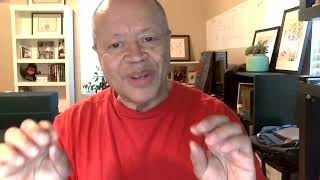
Steven Barnes, novelist and martial artist, explains meditation as intentionally directing your mind and emotions into a relaxed-but-focused state. He covers techniques like breath work, visualization, and moving practices like Tai Chi, then shows how ordinary actions like getting up off the ground or walking can become brief meditations that build everyday mindfulness.
Chapters
Foreign. Hello, Steve Barnes here with Life Writing Live. And what I wanted to do today is just look at meditation. Okay, once again, Steve Barnes, I'm a novelist and television writer and martial artist. And, and it's my pleasure to be able to interact with people. Meditation is a really important subject. If what you have to do, if what you're trying to do is to focus your mind on things or to, let's say, release stress from yourself. Most of the time meditation is, well, let's say number one, the first thing is to define what the term, what is meditation. Meditation in a lot of ways, putting your mind and your emotions in a particular place. In other words, if you imagine an old fashioned radio or just tuning a radio, they had a, there's a long, you know, 93, 94, 95.5 and stuff like that. Every activity that you do has a perfect range, a perfect, you know, not too much, not too little. I'm focusing just enough to get it done. And that's what you want. You don't want, if you're picking something up off the ground, you don't want to use more energy than you need and nor do you want to use less energy than is required. Neither one of those would make sense. Right. So, and by the way, we've got some viewers here. I just want to type into the comments here, hi there. And just you can answer me if, and also if there are questions that you have, this will be a perfectly good time for you to do that. I really want to contribute to you as much as I possibly can. So meditating could be any number of different things. It could be counting your breaths and then extending the inhalation cycles or extending the period where you are holding empty, or extending the exhalation part, or breathing in different parts of, of your body, diaphragm, chest and so forth and so on. Lots of different things, a tremendous amount of variation, each of which has a different meaning and a different impact. So if I want to write, for instance, I have to get into a flow state. To get into a flow state, what you need is a thing that it's both focused and relaxed. Both focused and relaxed. So I'm concentrating on something. Flow state is generally accessed through. You're engaged enough that it's got your attention, but it's not so challenging that you're getting confused. Okay, so engaged, but a little bit relaxed. And there is that place. And if you don't know what the flow state is, think about falling asleep. So Sylvia Porres Rodriguez says hi from Macon, Georgia. Hello, Sylvia. There's anything I can do for you? Please, just. Just type it in. This is. This is your time. This is about nothing other than connecting with my friends and family, my community out there. So there are people who will focus on, like, let's say a candle flame, you know, a visual meditation or a sound or a feeling or an emotion. There are lots of different things that you can do. So that's the first thing. And meditation is about putting your mind, your emotions where you need them to be in order for you to live the life that you want to live in an elegant and efficient way, with joy. And if, you know, when they said that the meaning of life is to be joyful and of service, I think that's because when we are genuinely joyful, when we genuinely are not being driven by fear, we automatically become expansive. We automatically want to help other people. Just like I want to help you, you automatically want to help other people, and you actually start seeing other people as part of yourself, which is just a beautiful thing. So of course you want to help them. I mean, and just. Just frankly being able to kind of slip into that. That position of thou. You and I are the same. We're part of the same dynamic. We're part of the same. Existence is one of the most beautiful things in the world. Most of us will experience this during sexuality. We experience it with our children. You know, that sense that we are our children, so we want to give to our children. If you start with that sense of centering and you deal with your own fear, you automatically begin to expand, and you automatically want to touch and help because you feel that connection to the world and you feel your connection to others, and you want to fill them with the nectar that you're filling yourself with now. That's what one for meditation. They're meditations for becoming agitated. You know, you might as well call it meditation when a football player slams his helmet into the locker before he goes out on the field, he's getting his mind and body where it needs to be. So for every event that you want in your life, if you were to ask yourself, who do I need to be in order to do the things that will take me where I want to go, or maybe you don't want to go anywhere. You just want to feel more peaceful and more centered right now where you are, you know, both of those things are perfectly valid. You can. You can do it to achieve, or you can do it to feel centered and just be. To just be the person. There is the, you know, you Most people say, I will have the things and then I will do the things and then I'll be the person. Okay, but you can turn that around. You can be the person that does the things to get the things. You have to decide where you want to start. But I would suggest that you start with the being of the thing, the being of the person and the inquiry. What is true is about the external world. The inquiry, who am I? Is about what's going on inside us. So a meditation could simply be sitting quietly saying to yourself, who am I? And an answer will come up. I'm Steve Barnes. No, no, no, that's just my name. Okay. I'm a writer. No, that's, that's your job. That's your hobby. Okay, I'm a father. That's your role. And you keep going through that. I live in such and such a place now. That's just where you live. I have these things, I have these possessions. That's just what you own. If you go through these questions of who am I? You will eventually get to a point where you have answers that are not contained within words. So that is the kind of meditation that leads you to dismantling the ego cocoon and to full awakening. And that state that people refer to as enlightenment, which is on the other side of being non dualistic, not this, not this. It's not this or this, it's this and this. You know, but you know, then even non dualism is dualism because there's a non dual, there's a dualistic state in a non dualistic state. So how do you define that without dualism? And you start running into the limits of language. So sort of a language based meditation, following your breathing, like I said, visual listening to a sound kinesthetic, following your breathing. Tai Chi, you know, like the, the fire dance Tai Chi program. Tai. Tai Chi is a moving meditation, but there are many, many different kinds. So you can turn anything into a meditation by focusing that the thing is being done for its own sake. You generally have to remove it from the context of I'm cooking in order to make a meal for someone. It can be a meditation when you lose yourself in the process of the thing, when you find that you're entering that flow state with it itself. So we've covered a number of different things that have to do with meditation. And I, I wanted to answer one thing. We talked about doing the morning ritual with things other than Tai Chi. I'm not going to lie to you, you know, I'd love it if you Were in the fire dance program. But the fact is, you can do the fire dance program with many different kinds of movement. You could do it with walking, you could do it with. Let's see, you could do with dancing. You could do it with yoga. You could even do it just getting up and down off the ground. So it could work like this. And one of the beautiful things I love about my new office is that I've actually got enough space here that I can do things. So somebody asked the question, can you get up and down off the ground without using your hand? Well, first, it's a matter. Let's use our hands. If I'm standing, how do you get down to the ground? Okay, so let's say I might get down to the ground by lowering myself, putting down a hand. Now I'm on the ground. How do I get off the ground? I'm using my hand again, Roll up and get up. But I don't need to use my hands. I don't need to use my hands. Getting. So if I. If I do without using my hands, and I'm using every step of the way as a meditation, I'm thinking, my balance is changing here. How is my balance changing now? How is my balance changing now? And at every step, I have my balance right. So. So reversing that process, centering myself, how am I changing my balance? I'm rolling up and I'm standing up without my hands. I could do it with a chair. I could do it using anything I want. Because the point isn't to push your body beyond what it can do. If you're having any kind of impingements, if your knees aren't healthy, anything like that, It's a matter of getting up and down off the ground is a primal motion. It's a motion that we all did when we were growing as children. So taking a movement like that, getting up and down off the ground, or crawling is going back to the basic movements that we used. Oh, my God, yes. Getting up and down off the ground is so basic for maintaining mobility as we age. This is 100% truth. So if you ask yourself, okay, what is required to do that? You're talking flexibility in the hips, in the knees, in the ankles, in the feet. You need balance, you need strength. You need to be able to relax through it. All of those things are potential rooms for meditation where you are focusing on what's happening inside your body. You're thinking about what's happening inside your body as you slowly rise. And then once you do that, you can incorporate just that movement into a morning ritual. In other words, if we know that we need to be able to get up and down off the ground, then that's what you're working on with your physical therapist. What are the individual links in the process? That's what you're working on with your yoga teacher. I want to be able to get up and down off the ground easily, smoothly, elegantly. And then as you're moving up and down off the ground repeatedly. Now, you could do this one of two ways. As the last thing I wanted to say was that you can meditate for a very brief moment, like 60 seconds. So you could go up and down off the ground once, five times a day, right? So now you're, you're working yourself. You're, you're, you're. Look, you're using that as a skill, not an exercise. You're learning how to operate your body. Okay? But if you were going to do it more times, you could use that for the morning ritual where you go up and down, up and down off the ground, saying, you know, every day in every way, I'm getting better and better. Every day in every way, I'm getting stronger and stronger. And you do it while you're moving up and down. Now what happens when you do that? And this is my favorite form of meditation, where you are challenging yourself. In other words, there's something that is reasonably complex in what you're doing. Reasonably complex. This is, this is a little bit of a challenge. I'm having to watch my balance. I'm having to watch my breathing. This is, you know, having to make sure my pain doesn't go above a 2 on a scale of 1 to 10. Everything that I'm doing is working together. And that's in the back of your head. In the same way that you used to be driving on the freeway and be worried about what you're doing. And then you get to another point where you're driving on the freeway and you're talking to friend, you're listening to the radio, or you're talking on your phone, all at the same time. Because the basic skills are at what's called unconscious competence. You know, it's the look ma, no hands moment. And that's, by the way, anything that you do in the martial arts, anything you do in any art has to be at the level of unconscious competence. The basics do for you to be able to then let it go and be able to emerge just as an artist, to be able to express your emotions. You can't Be thinking, oh God, what am I supposed to be doing next? The basics have to be in there. So the basics of getting up and getting down off the floor, you can do it, let's say once a day, use your hands, use a chair, use whatever you need. So if I'm here, you know, I could get down, I could get down to the ground without my hands, Or I could use my hands to get up. But notice every segment of that I'm sitting here and now I lean over here, I get up to this point, I get my balance and I stand up, or I use a chair, I come down, brace myself on the chair, brace myself on the ground. Now I'm on the ground, brace myself on the chair, brace myself on the ground. Ah, I'm up. Okay, so whatever it is that you need to get up and down, that's where you are. And if you forgive yourself for not being 12 years old anymore and just practice that sequence, you become a lot safer. You also say, oh, my hips are too tight, you know, I'm sitting too much and so my body's freezing. In this position, you know what to work on in your flexibility, you know what to work on with your breathing. But once that movement of getting up and down, smooth, and once you know it, then you can begin to chant, you can begin to visualize mentors, you can begin to think about all the things that you're grateful for. And if you're thinking to yourself, my body is stiff, I don't have anything to be grateful for about this body, Are you kidding me? In 10 years when your body is really stiff, trust me, you're going to wish you appreciated what you've got now. Okay, so controlling just this phrase of thought, sound, hearing, vision, movement, controlling it so that you are thinking about it consciously while you're doing it, you can turn it into a life changing activity simply by being grateful for who you are committing to moving further down the path. You know, frankly, just being grateful, visualizing the mentors who helped you get to where you are or who have the skills and the abilities that would solve any problems in your life. Doing this every day. And you don't have to get up and down off the ground, that was just an example. You could do it while you're walking, being totally conscious of every step you take. You could do it while you're cleaning, while you're gardening, but being conscious of everything you're doing. Because what you want is the ability to take that sense of consciousness into your whole life by connecting it with your breathing and then thinking about your breathing five times a day. You're entering what might be called perpetual meditation, where every step, every breath, every movement has meaning and significance and helps you build the life that you desire. A life of joy, which as soon as the joy outpaces the fear, automatically evolves into being. A desire for a life of service. And that's all for today. It's been delightful to interact with you. If you have any comments, questions or requests about what I can do for you, please put it here. Otherwise, I'll see you later. You know, Visit my website, www.stephen-barnes.com. take care. Bye. Bye.







