What's Up Pitches?
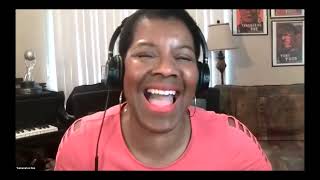
Episode of the Life Writing podcast (hosts Tananarive Due and Steven Barnes) focused on how to pitch projects in Hollywood. Hosts discuss their current projects, contrast prose vs. screenplay drafting, give practical pitching tactics (how to prepare, virtual-pitch tips, use of pitch decks, loglines, Q&A), and present a full example pitch—"Tiny Town," a model-town supernatural story Barnes pitched (which was later produced for Jordan Peele's Twilight Zone as "A Small Town"). They also share pitching horror stories, advice on building industry connections, and information about their Life Writing Premium course.
Questions this video answers
"A Small Town"
About $3 million an episode.
Episode nine.
Chapters
Welcome to the Life Writing podcast, where married authors and screenwriters Stephen Barnes and.
Tananarive due talk about writing during stressful times, breaking into Hollywood, and balancing life.
Every week, we'll share more tips on how to build a better life while you create your dream projects, even if.
It'S only at the rate of one sentence a day. Life writing is the application of the tools of writing to life and the.
Tools of life to your writing. And welcome, welcome, welcome. I think we're on episode nine now.
Cool. Eight or nine.
One, two, three, four, five, six.
Yeah, nine.
I guess it is episodes. And we had.
How quickly things happen. You know, just. It seems like only yesterday we were starting this.
It really only seems like yesterday we were dreaming this. That's what I love about this process, is one day we were just talking about it, and then it seemed like no sooner had we uttered the words, it was like an incantation. And the next thing we knew, we were interviewing Roy Wood Jr. And Patton Oswalt and N.K. jemisin and Dr. Charles Johnson and John Jennings and so many amazing guests.
It's true. And we're just getting started. We're still probably. Until we've done 20 of these, we won't even know what we're doing. We won't even understand what we're really doing in terms of the guests and the kinds of questions that we ask them and the thematic core. I know that I like the life writing itself is the application specifically of Joseph Campbell's model of the hero's journey or my interpretation of that to the process of both writing and life. But that could evolve over time when we, as we figure out, what tools do you need? What do you need from us? So please be sure to leave comments, you know, in, you know, wherever you're downloading this, leave comments so that we can see what you're thinking and feeling, what it is we can do for you.
Today we're going to be talking all about pitching. Pitching primarily for Hollywood, correct, sweetie?
I would say it is for Hollywood. Go ahead.
I was just gonna say before that we're just gonna catch up.
Yeah, let's see. I guess I'd like to, you know, before we. Before we just kind of catch up, I'd like to define what pitching is. If you don't know this, pitching is basically telling a story to the people who can say yes and write you a check and put your show and buy your script, put your show on the air or whatever it is that you're doing. So the. It's storytelling and so the more comfortable you are with that process, the better you're going to be. But we'll get back to that, you know, in a minute. So, you know, from your perspective, what's been going on for the last week?
Well, I just want to tell people if they missed the Last Life writing podcast with our three guests, Dr. Charles Johnson, John Jennings, and Brian Christopher Moss. Run, don't walk, and listen to that. Watch that podcast as soon as you can. It was a really, really good podcast about how comics can change the world, specifically tied to the upcoming publication of Steve's first major graphic novel, which is the Eightfold Path, which I am very excited about and cannot wait for you to share with the world.
Yeah, in some ways, I was just another guest, and you interviewed all of us. That's been 10 years coming. And it will, you know, by the time most people listen to this and see this, it'll be out, but it'll be out on 22 March. It was supposed to been out on 22 February, but the supply chain, damn you, Covid. The supply chain has been flawed. Nobody's fault. But it's going to be beautiful when it comes out. But I do have the anxiety. How many points along the way? Anxiety about will it ever find a home? Anxiety about what resources and allies will I need? Anxiety about how do I organize the writing of it. Anxiety about how do I integrate the philosophy of it, because it was. It's connected very directly to Buddhism. And I'm not a Buddhist, although I've meditated and studied, so I wanted to get those things correct. And now it's just like wait and wait and wait. And so it's like, you know, I find that the easiest way for me to deal with the stress of waiting for a project to come out is to be working on another project. You know, that to always have multiple projects going. So no one project, you know, you don't have your entire ego leaning on one project. What about you?
Absolutely. Well, I'm very excited to have reached the writing stage for a pilot revision that we've mentioned a couple times on this podcast. But, you know, writing treatments is okay. But the real joy for me is when I can take those breaks off, start adding that dialogue, and actually get down into the script. So it's like slipping into old slippers.
Yeah, it really does work that way. I think it works that way best for everybody. And I think that. That I tend to feel like I understand things about my story or I try to understand things about my story before I've gone there. But I'm not sure that that knowledge is as deep as the knowledge that you get from actually writing. And I. It's one of those situations where I suspect your approach might be the better approach. I'm trying to. You know, I think that. That in. In always learning from your partner, you know, and you should never have a collaboration with anybody who you're. Who doesn't have skills you don't have, so that you. You actually can learn, you can turn aspects over to. So I'm not putting myself down. I'm just saying that when I observe you, one of the things I look for is what are the things that you do differently? Because if you get a slightly different reaction from people, I'm going to assume that that reaction is because you did certain things differently. If I did those same things, I'd get those same reactions. That's the theory. And this is one of those where it's like looking at your process, you know, I wonder about that. And so, yeah, it's. I'm glad that you're at that point with that project. We have to prioritize which projects are at what stages, which projects do we want to turn in on a schedule, because you turn this in, you get paid. On the other hand, if you turn this in, then you can begin the process of trying to sell it.
Right. Pitching. As a matter of fact, we're working on a couple of pitches now.
So we have projects I take a look at. Well, what else are you doing? Let's just stick with you first. Just in terms of what have you been working on this week, that's really.
The main thing is finally getting to slip my feet into those slippers. Having this story come to life with characters in interaction. One of the things that Steve and I have agreed upon in collaborating, and don't miss our episode on collaborating as well, is that the treatment primarily is exposition. Action. This happens, this happens, this happens. Dialogue is very rare. And the reason for that is. Well, there are many reasons for that. But for simplicity's sake, but also to make sure the story holds up, just the story itself should be able to hold up. You can just tell someone a story and they're hanging on your every word before the characters have even started talking to each other. So for me, and I teach this to my writing students too, there are ways in which characters don't come to life for me until they are in conversation with another character. That's why it can be a little difficult for some of you if you're writing a character in isolation who's just alone with his or her thoughts, and it can become very backstory story heavy and, you know, whereas when someone walks in, we can learn what kind of mood they're in, how they're hiding their mood from the other character as opposed to how they're really feeling. There are just so many ways characters come to life with dialogue. I love it.
Well said. I mean, I think that there are ways in which human beings don't exist as fully in isolation anyway. True that we, to a degree, if we're defined partially by what we do, we're also defined by the nature of the people around us and the way we react to them. And you're going to reveal things in that way as well. We've been watching episodes of Ted Lasso. Yay. Ted is defined by being apparently naively optimistic. There are times when he is. And that would give you tooth decay if he weren't surrounded by people, some of whom were being real a holes. You know, we're being overwhelmed with anger and fear. And his whole thing seems to be that love and communication breaks things through. So his. His strategy is not necessarily to know anything about football, soccer. His strategy is to know things about people and to know that he needs to build a team. So watching him interacting with people helps us to understand him, the character. You know, I think. And I think the same thing is true with almost any show. We. If a person is sitting alone in a room, that's one thing, but when they interact with the people, that's when we begin to see their character in a very real way. So that's, you know, I can't. Can't argue with that. What else are you working on? Anything else?
That's the main thing I'd like to talk about, I think so far, yes. The pilot.
I've got a story I'm collaborating on with Larry Niven, and I went out and saw him yesterday and we talked about it. We are also offered another story that sounds like. Like it could be a lot of fun. We'll see whether or not that happens. We're working on a treatment for a film, a movie that we want to do. Ten years ago, it's hard to believe. We did Danger Word and we're ready to do it again. Every 10 years, we're going to do a movie. No.
Thank you. Don't have to. You don't have to do that.
So it's, you know, trying to put that together in the middle of a pandemic, you know, not A small thing. And then there are a couple of other treatments. You know, we. Some people sent us some material on some very, very nice pitch deck. Basically. We'll be talking more about that later on a project. And I had. I fleshed out a potential take on it, and then Tananarive, you know, put her stank on it, and then we went back and forth and then sent it back to them.
Now it's real stanky.
That's right. On Monday. So basically we took a meeting with them on, like, Thursday. Last Thursday, yeah.
And Steve likes to turn things around fast.
So I write quickly. That doesn't make me write better. You know, I think that Tonnery tends to write slowly and more deeply. I write quickly, and then I have to go back to it and dig. Dig in. Okay, so it's, you know, it takes me. Maybe takes us the same amount of time to produce the same number of cubic inches of writing, but we approach it differently. Let's see, what else is it? There might be something else, but I'm not remembering what it is off the top of my head. I had a birthday Tuesday.
Someone's playing with her new sound effects deck. Sorry.
I'd spent a lot of time thinking about it because it was, you know, one of those big birthdays in terms of who I am and what my life has been, what I want it to mean, what I want the next 10 years of my life to be. And I think that the end of the year and, you know, birthdays, and especially those big birthdays are really good times to do that. To ask yourself, you know, to clarify your values. Ask yourself, are your goals in alignment with the values? Are your actions to achieve those goals in alignment with your values? You know, are you having experiences along the way that are more important than the goals themselves? Because the most important thing about a goal is what. Who do you have to be in order to accomplish that goal? What will you be along the way? You don't want to become someone who is out of alignment with your values. You don't want to select goals that poison you or paths to those goals that tear you apart. Hopefully you choose goals that are joyful and things that you do for nothing. You know, it's like if you find yourself doing something you don't like to do to earn money, you'll end up spending some of that money to help you forget how you earned it. So the real, the best thing you can do, I think, is to try to find goals that are so worthy that the process of meeting that goal are things that you would do even if you had all the money in the world. This is just who you are and what you want to be.
You know, all the money in the world and all the time in the world.
And all the time in the world.
And it's not every day, darling, that you turn 40, so. As well, you should commemorate it.
Not every day. No, no, no. I remember that day very clearly. So anyway, so that's. That's kind of getting us caught up. So what do we want to give people today?
Let's charge into it. Speaking of charging. I'm sorry, I'm just. I got the sound bank and I'm playing with it. But.
But you should. We're talking about pitching fun with this. You know, we're still feeling our way into this podcast thing, and I think the best thing we can do is have a good time and be kind of relaxed with it.
Yes. And the reason you have to sound the cavalry call is because it is like warfare trying to get into Hollywood. Hollywood is not set up for anybody who is not already in Hollywood. Okay. Whether you're marginalized, not marginalized. It is a club that is perfectly happy with its own members.
That's right.
And we have to just sort of kind of force our way in, and pitching is our entree point, often into Hollywood.
So here's what I would say. The process is. First is to decide that you want to work in Hollywood. Then it's to try to get a map of what is Hollywood, you know, and to not deceive yourself about that. And I think that the, you know, Hollywood is this place where art and commerce meet sufficiently that an artist who can play the game can get health care, get retirement benefits. I mean, that's. That's unique. The book industry has nothing like that. You're either going to be poor or, you know, middle class. If you've got a spouse who's working or you're going to be rich, you know, it's there. It's very, very difficult to find a lot in between. Hollywood is a place where middle class writers, middling writers, can actually earn a good living. And so the understanding what that game is, if you happen to live in Southern California or you've got connections, is, I think, a valuable thing. So the question of how you get into Hollywood, once upon a time, it was a matter of. And I think that this might come back, but because it's been. It's been my experience, it was, you find someone who will listen to you. Now, that may be because you find an agent who looks at your work and you can. You can write the Writers Guild, Writers Guild of America, and get a list of agents who will look at the work of newbies. Now, these are going to be low level agents, but they do have a way in. So if you write a script for a show that you like, not the show you want to write for a show that you like, not on the air yet, or it's been on the air, maybe it's on the air in the past, or it's just another show and you show some chops there and they can look at this script and say, oh, this person knows what they're doing. They might be willing to talk to you and send your scripts out. Because what you want ultimately is for somebody on a show who has an open call for writers to be willing to take a chance on you before you've worked your way in. It takes work. And I think that every writer who's gotten in has gotten in a slightly different way.
Yeah, there's definitely no one story or one way when it comes to getting.
Talk a little bit about how you got your first meeting.
Yeah, I think a lot of, hopefully a lot of our listeners might be in a position similar to mine. You started out as a prose writer, and then producers started approaching you saying, hey, I want to option your script. I want to make a movie, I want to make a series. And in the beginning, I was content to sort of hand it off and wait for the checks to come in. You know, I was like, all right, I'm about to have a movie. I'm about to have a series. And I waited and I waited and crickets. Because guess what? I figured out right or wrong. My idea was I needed to learn how to write screenplays so that I could help move that process along. It has not been a quick nor easy process, nor have people often wanted me to even be in that conversation. We are today still fighting to be screenwriters on projects based on our own ip. Like, it's not a given even at this stage in our careers.
I do think that your best bet is what you mentioned, that is to write shorts, write fiction first. To write novels or short stories. I would say start with short stories, move from there to novels, and then you've got IP that you can send out and say, listen, I want to write in Hollywood. You find one of those agents who's willing to look at unpublished stuff. If you are people who are not yet produced unproduced writers, and they know that you're not typical because You've already been published. You've already published short stories or novels. If you get lucky, you will also have people trying to option your work for Hollywood.
And that was my, my, my in. That was my in Blair Underwood option. My Soul to Keep. And between Blair Underwood and Fox Searchlight, where he and his producers, Nia Hill and d', Angela, who was called Steve then d', Angelo, got set up at Fox Searchlight. That was a 10 year process. But again, we were never invited to pitch for My Soul to Keep. It was always another screenwriter. It was always out of our hands. The first opportunity that I had to pitch for one of my own works, I believe would have been the Good House. Blair Underwood, again, had produced it. It was the same team. Blair, Nia, d', Angela, we all went in. Forest Whitaker, I mean, we wrote the heck out of that pitch. We walked them through the story. It was a feature version we were pitching. And I always made the joke that we should have brought popcorn because it was so tight. And it was such a tight pitch, in fact, that when someone finally said yes, it only took us two weeks to write a first draft. Because the pitch itself was so detailed, so strong, and told such a great story.
Yeah, from there you just break out. Me personally, I like to have a treatment that's so solid that it's bursting. You know, these characters are dying to talk to you. Yes. And then all you do is you, you, you. You break down synopsis into conversation and the script organically begins to expand. What my agent said to me 20 years ago when he was retiring, that, that they didn't hire. They didn't. They didn't hire people for freelance assignments anymore. It was all for writers rooms. That is not true that there are freelance assignments, because the things that we've had published in the last couple of years were all freelance assignments.
Produced.
Yeah, produced. That's right. So I don't know what is happening, but I do think that the path that I know, the path that I took to getting into Hollywood, which was writing books and then being known for that, and then somebody who I knew, Larry Niven, in fact, was invited to write a script for Disney. And he didn't want to do it. He knew I wanted to do it, and so he got me in touch with him and suddenly I was through the door. And like I said, every time you talk with a writer in Hollywood, ask them what they do, it might be someone they knew. I would suggest moving to Southern California and getting a job in the industry, any job you can, just so that you're seeing the situation from the other.
Side or find a way to get to people even if you aren't in contact with them. Because as I think about it, I was a reporter for the Miami Herald. I just happened to have a conversation with someone who knew Blair Underwood. I must have been just like, yeah, and I just wrote this book, and, ooh, I was picturing Blair Underwood the whole time. I mean, I must have just been going on and on. I didn't even know he knew Blair Underwood. But he said, oh, yeah, Blair Underwood goes to my church. I'm doing a project with him right now. I'll send him a copy. Now, life doesn't always work like that. No, you'd be surprised.
I think life does work that way, but it doesn't work that way directly. It's that stochastic thing. The same thing we talk about in the soulmate process, where you know what your goal is, and you'd be sure that you're flexible enough to know that there are a thousand different routes you could take to get there. And so you. You put yourself out there, you do your part of the equation, and then you listen very carefully to the reaction that the world gets, and you put yourself out there and you meet people, and you start meeting people who are closer to your goal than you are. And remember that if the average person knows 600 people, each of those 600 people also knows 600 people on average. If you put it out there enough, you will find a zigzag connection to where it is that you're trying to get to. So I believe that the understanding, the skill of selling the. In the room, because that's what it is if you get in the room, if you have a chance, if you sit down with a director, you sit down with a producer, you meet somebody at a restaurant, and they say, what do you got? If. If you are ready to go, if you are ready with an idea, you might get that chance once. And, yeah, it's good to have a short version of your idea. But I think that having that, if you get the chance to actually tell them the story, then it's important to know. I mean, J. Michael Straczynski, who was the story editor on Babylon 5, sat me down once and walked me through a pitch which was basically just telling me a story of a Twilight Zone episode. If you saw the Twilight Zone episode a couple times and you wanted to explain to somebody what it was that you saw, this is what you'd say. This happened, then this happened. This happened. We're going to give you a very specific walkthrough of that process so you can see one way, one time that it worked. But that's the thing. It's just storytelling. And the simpler you are about it, the more the person has the chance to kind of drop into that story trance. Suddenly they're not an executive. They're somebody who is being entertained by a story, and they kind of go into that sense of, oh, and what happens next, and what happens next and what happens next. If you got that, then they. They will figure that the audience is going to have the same reaction. Absolutely.
I'm disagreeing with you wholeheartedly. And I was trying to decide if this is a good time to bring up how scared you'll be during this pitch. Of course, because especially as prose writers, we are not accustomed to having to explain our stories verbally. Very often if we sold a story to an editor, it was via email or a query letter or something from a distance, maybe face to face. But Hollywood is either virtual face to face or in the room face to face. You tell me a story, you're not handing them a piece of paper. I had a manager once tell me, don't leave paper behind. It just gives them something to tear apart. So imagine you're supposed to go in with this story, your heart pounding, your palms sweating. Keep your composure, look cheerful somehow, because enthusiasm. You come in with enthusiasm. You spread your enthusiasm to them so you can't look like you're as terrified as you are. Part of it is honestly acting.
You have critical point there. I have been in situations where I let people know that I was nervous about writing for them, and that killed the deal instantly. The instant I let them know that I was anything but 100% confident and cocky, it was doomed. You know, being honest is.
Lose the momentum.
You're too funny.
You can't let them know.
You can't let them know, you know. And so that means that if what you're thinking is, but that's not honest, and I think that. That it is important to be honest, then you need to rehearse until you're not nervous.
You know, it's in.
I think that one of the things that makes you nervous is desperation. If you don't have any money and you desperately need this, you got a problem because you got to find some way to feel confident, and that means you'd have the capacity to walk away. Another day. We'll talk about a situation which I did not have that capacity, and it. It was damaging psychologically but just. Let's just say that you have to deal with that fear. They want confidence. The average television show costs about $3 million an episode. So if you walk in there and say, you can Trust me with $3 million of your money, let alone if you're trying to create a series, that's creating a series. People often say, I got an idea for television series. If you've never written an episode, you're not going to have a chance to create a series. The only exception to that that I know of is if you go in with. With an IP that they already want, like a book, or.
Or you've paired yourself with. With the producer, and. And that's like a partnership thing. But yet we can talk about, you know, partners.
That's probably another conversation, is finding those allies. So if you. If you notice, in terms of, you know, the hero's journey here, we're talking about, you know, committing the road of trials, you know, allies and powers. Dark night of the soul. And the way through the dark night of the soul is faith. How do you get faith? Practice, you know, same way you get to Carnegie Hall. Practice, practice, practice.
Exactly. So I just remember from the early pitching days with Blair Underwood, because I'm trying to absorb all this like a sponge. I'm new, I'm terrified all the time in the meeting. Thank goodness I had Steve, because I was very shy sometimes about speaking and Steve wasn't. And I've learned how to be better about that. But you're walking in, I'm kind of like, really, really nervous. And one of the first things Blair taught me was to try to sit closest to the most important person in the room. Now, that's not so much a thing with zoom pitching, because you're all in gallery, everyone's equal, but. And sometimes you can't figure out who the most important person in the room is. Right? It's like this. You should know who you're pitching with before you show up. Typically, your representatives or a producer, if you're working with one, will send you a list of the names of the people you'll be pitching. Don't just put those names in the calendar. Look those people up, see what they've done, see what they're interested in, have something nice to say about something they've worked on. Right?
Remember that you're selling to people. You're not selling to a faceless company. You're selling to human beings who have their own needs and desires. They're not going to buy something for you to be nice to you, they'll buy something from you if they believe it will further their lives and careers.
Absolutely. And one time, which was really funny, we actually pitched at MTV Films. It was an Octavia Butler project that we were invited. Someone had already optioned it. Their script wasn't working. They were inviting us in as potential writers with a take. A take means they want to know, what do you do with this story? And you might end up with a script assignment. Like Steve said, freelance. Right. So we're walking in. I'm trying to think of Blair's rule. Sit next to the most important person. Well, guess who was in that meeting. Andre 3000 was in that meeting. I thought he was the most important person. I was wrong. The most important person was this dude in the corner I had never seen or heard of named Aaron Warner, who happened to have been the producer of a little movie called Shrek. Hello. So he was the one who actually had the Octavia Butler property. I'm talking to Audrey 3000. So sometimes trying to figure out who the most important person is isn't the most important part of the meeting. It is really more. Steve was saying that confidence. Yes, you can use notes. I do not memorize pitches. Steve has better than I have. Some of you might prefer to. But when I say you can use notes, I don't mean you can have it, like, in front of your face. You have. Your face should be showing. You should be glancing down. You should know the pitch well enough that you can go on a sentence or two ahead and find your place.
You might want to write out a pitch, study it, but then create a. An outline, a series of index cards that trigger your memory, move from image to image. Okay. And I think that practicing with a friend, you know.
Yes.
Is a very valuable thing. You practice it. This is important. This is the gateway. What they. And what they want to know is, are you a storyteller?
Right.
You know, and if. Can you thrill them? These people are not monsters. They're people who often love story. That's why they're working in Hollywood. They can often, you know, do much better, you know, in some other career. But they love being part of this thing. So if you look at them as allies, their allies, they know the money people. They know what it takes to produce a television episode. They know that process, you know, hopefully better know how to write story. So if you can understand that they have legitimate needs and desires and skills, and you bring your legitimate needs, desire, and skills, and you put on the table and say, can we play together? So Knowing how to pitch is, that's the language. So what will happen is that you will walk into the room, you will be, you'll, you'll wait in the, in the exterior room, and they will ask, can I bring you a drink? Take the drink.
Water. I always take the water.
Yeah, fuzzy fizzy water works for me. You know, you take the drink, that makes you part of it. You know, there's, there's a reciprocal trust thing that happens. You go in there, they will sit you down there might, you know, probably one executive and a couple of their, their wingmen.
Assistants taking notes.
That's right, systems taking notes. And you will sit there and they will first engage in chit chat. And then at some point, you don't want to know who you are, where you came from, how you got to be in that room. And you know, because I think that there, it's just, why do you belong here? Because once again, you're asking them to, to gamble $3 million of their money on you. So they want to make sure that you didn't get there by accident. You didn't just stumble in there. You're a writer. Okay? And then at some point, they will say something to the effect of what do you have for us? And then you go into a pitch. So I'm quick addendum.
There's a lot of virtual pitching right now. So if you're pitching virtually, there's a little bit of screen crafts. I'm looking right now into what's called a center camera. You don't want to be way down here looking up at your camera. You don't want to be badly lit. You know, make sure you have good lighting, make sure you're wearing something that pops. Is something someone suggested to me because they've heard 20 other pitches today, right? And then the pitch begins.
Okay, so what I have for you today, it's called Tiny Town. Now, before I get into this, what you need to understand is that what I'm about to read to you was actually produced on Jordan Peele's Twilight Zone under the name A Small Town. So this was an intermediate level pitch that we'd already passed the initial stage. But this pitch is not what you will see on the screen if you watch the episode. But it kept us in the game. They saw something that was close enough to what they needed that they could make suggestions that took it the rest of the way so that we could write and they could rewrite for their production necessities. So this, it's, it's back and forth. So I just wanted, wanted to make sure that you understood that when you see a small town, it is not exactly what I'm about to say. So, okay, so see me, Steve is sitting in the room with Tananarive. Ordinarily we bounce these things back and forth, but just for simplicity's sake, I'm going to pitch this by myself. Tananarive is going to take. Take control with it, with another section of this. So what I have for you today is called a tiny town. So the log line is a handyman discovers a model of a one horse town that he served. One horse town he lives in, which allows him to control town events with magic. Okay, so here's the story. Michael Grant is a drifter, the new caretaker of a tiny church in a tiny town. He wants to rebuild his life after his wife's unexpected death. Struggling to believe in a God that would allow bad things, things to happen. He's treated as if he's invisible, and he desperately wants more power. Now the story is Littleton is a dying strip of nothing on a dusty quarter mile of Route 66 that used to thrive before the freeways stole their traffic. Michael lives humbly in the church attic overlooking the town, where he sees problems that need fixing everywhere. The diner, an apartment building, the old road on Main street itself. On the street, the imperious Mayor Riley literally bumps past Michael as if he isn't there. As Michael watches the mayor preen in his 1960s era mint Corvette, he mutters to himself that if he had the power in this town, he'd turn it around fast. Michael keeps an obsessively neat garden at the church, and when he expands it by clearing away trash, he finds a remarkably accurate diorama of the town in fair condition, a clockwork thing. He turns the key and to his delight, sees the little pieces starting to move. A car parking in a driveway that looks like the house next door. What the. When Michael accidentally moves the town to his little living space in the church attic, he accidentally jars it. And the real neighborhood is shaken by an earthquake. Car alarms go off. Dogs are barking up and down the street. Odd coincidence, don't you think? In the diner across the street, everyone is talking about the first earthquake in a generation. While Michael eats dinner, the owner, Marta, says that she recently moved to town, too. She took over the failing diner to flee the big city's bad influence on her teen son, the artistic Emilio, who washes dishes there. Littleton feels like hitting bottom to Michael, but Marie considers it a fresh start. Emilio is miserable. Michael returns to the town model that night, working late to polish and fix it. He sprays a fine mist in the air over the model, and outside it starts to rain.
Get out.
Another strange coincidence. Michael digs out a whiskey bottle while he stares at an old wedding photo. But he doesn't drink. Instead, he finds the minister to confide that this would have been his wedding anniversary. Pastor Jane tries to comfort him, telling him to dwell instead on life's small miracles. That night, Michael dreams of misting the model in the sudden rain, of jarring it in the earthquake that immediately followed. He awakens, his hands shaking and shines a flash onto the model. And immediately the night clouds part and moonlight floods the streets. Let there be light, he whispers, giddy with possibilities. He has the power of a God. Michael starts tinkering with small things, making improvements in the town to the baffled surprise of its citizens. Pastor Jane commends him on his work at the church. How did he do major repairs so fast? After Mayor Riley calls Maria's comic artist son a thug at the diner that night, Michael drops a little rock on the model, Mayor Riley's prized vintage automobile. Immediately, a meteor hits the car. The town is puzzled and secretly amused, Especially Emilio. Michael is invisible as ever. But now he's a secret guardian angel, eavesdropping to the surprise and delight of residents. After his fixing and tinkering, the church pews are filled with grateful prayer. But Mayor Riley tells Marie he's going to double her rent when her lease is up. Petty revenge for Emilio laughing at his destroyed car in the middle of the night, while Michael is sleeping, a daddy long legged spider crawls onto the model, which materializes as a giant arachnid stalking the street. Emilio, half asleep, sees the spider walk past his bedroom window, sure that he's dreaming. Working late at the bank, Mayor Riley looks up and sees the spider staring at him through the window and screams. Michael wakes up and sees the spider in the street from his attic window. He rushes to the model and carefully removes the spider, gently setting it free outside in time to see the giant disappear. Poof. No one believes Mayor Riley's story, but the mayor sees Emilio painting a giant spider on the side of the diner. Michael has an inspiration when he hears Maria complaining about poor business because the state never finished the freeway off ramp. And he builds an off ramp to the town from a replica freeway. Overnight traffic increases and business booms again. There are consequences. Mayor Riley tells Maria he's going to cancel a lease and sell his diner to a chain now that its value has increased, she argues with him, saying he's turning a blessing into a curse. When Emilio joins the argument, Mir Reilly shoves him away, and Emilio stumbles into the street with a truck barreling straight at him. Emilio is frozen, arms raised. Michael sees the danger and without thinking, finger flicks the model truck out of Emilio's path. It crashes into a nearby warehouse, people scattering, and starts a fire. Michael pours water on the model of the burning warehouse, putting out the flames, but also flooding people into the street. Shocked and terrified Michael, townsfolk flock to the church for an emergency meeting to discuss the town's strange events. Mayor Riley points the finger at Emilio. He conjured the spider somehow. He repelled the truck as if by magic. And the problem started within weeks after he and his mother arrived in town. Where the hell did that off ramp comes from? What if this boy is a witch? The mood gets uglier, and finally someone throws a punch at the boy, hitting Maria. And instead it threatens to become a lynch mob. And Michael steps in. Don't you understand? I control everything here. I'm doing it. It's me. I made the car blow up. I put out your house fire. I hold your miserable lives in my hands. Michael leads the hostile crowd up to the attic to show them the tiny town. And there's nothing there. The frightened, angry people turn on Michael, beating him down until Pastor Jane stops him, stops them. Overcome by guilt and shame, they realize their fear turned miracles into horrors. Michael sitting alone on the edge of his lonely bed, nursing his battered body. He reaches for the bottle and is on the verge of taking a drink. Maria comes in and gives him a handkerchief. Emilio daubs at the blood on Michael's face. Koda, A Los Angeles homeless encampment. A few people are struggling to create a vegetable garden in a vacant lot. One old lady turns over a crate, and under it is a model of the neighborhood with a key. She bends to wind it up. Yay.
How about that? I had forgotten about the lynch mob. Let's just suffice it to say we did not have a lynch mobile.
We did not have a lynch mob. Although there was some stress.
Yeah, there was some stress, but. But, yeah, there's so much in there.
Watch the episode, look at the changes, because that will give you a sense of how things have to change for production. You know, the amount of money things cost, any number of different things. But if you will listen to the pitch. That's it. I just told a story, right? In essence.
And so we have the characters that's right. We have the setting and we have the. The basic events of the episode in the pitch. And the reason I was leaning forward into my camera, those of you who are watching the video, is because that's what you want your executives to do. You want to see them leaning in. It's a term, but it's also a reality. It's like they're leaning closer. You can see whether or not listeners are under your spell or if they're just going through the motions of getting this meeting done because they have three meetings right after you.
You don't want that very well done. It's a reality. You know, they're taking meetings all day long. They're praying that somebody will drop them, will kick them out of the trance that they're in of just job. Oh, here's another one. Here's another one. Here they're praying that someone is going to be a real storyteller who also is businesslike enough that they can trust you with that three million dollar episode.
Absolutely. So that's great. That is a pitch for an individual episode. And imagine how nervous you are when the other the person you're pitching to is Jordan Peele. Okay. Which was the case when we were pitching for the Twilight Zone. He and Wynn Rosenfeld. Another kind of pitching we've been doing quite a bit of based on IP is having opportunities partnered with producers usually to try to create an entire series. So sometimes, especially if you're the author of a novel series or you're the author of a book, that naturally opens up to suggest what a series might look like, you might find yourself in that situation. And you know that that is also first just sort of introducing yourselves, who you are, why are you here? That's the first thing they're wondering. Who are you people? Why have you earned your place into this room? You try to keep it light. You try to find things in common. For the chit chat portion, we have a pitch for the Good House we're doing as a series where we basically talked about our life story and living in a small town in Washington State for six years and how that gave birth to this idea for a novel that is set in a small town. More than ever, Americans today are struggling with the concept of what a nation means and whether the fractures in our foundation are too deep for us to build a solid, lasting structure. This is what the Good House represents. A terrible event took place on the 4th of July and the town has never healed. And then we're just kind of setting the table you know, how they've hidden away these secrets. Character sketches. Once you're doing a longer pitch for like a television series, you will have to sort of tell them who the main characters are, a hint of what their arcs will be, what the world of the series will be. So it's not enough just to say they're going to move into this small town. Well, tell us about this small town. What makes this small town special? What is the Big Bad, as they call it? What is the antagonistic force that is endangering the town and. Or the characters? And then depending. We've had a couple different situations where we've pitched and they wanted to hear the whole pilot, by a couple, I mean at least three in the past year where we had to pitch out the whole pilot episode. So basically that would be a slightly longer version of what Steve just pitched with the introduction. And then just when you've got all that out and you think you can relax, you can't. Because then you ask, does anyone have any questions? This is the ad libbed portion of the pitch. And it to me is the most frightening part is because some of those questions could come out of left field and you need to, even though you're not obviously expected to know everything about the series, you are expected to be able to jazz a little bit and present them with possibilities of how you might answer that question. Steve is very good at that, answering questions. I used to like, defer to him completely during the Q and A portion because I was terrified to go off script. So in terms of that, and I just wanted to know, for those of you who are watching this podcast, one of the features we came very close to setting up, just not quite, was something called the Keeper, which you've probably heard me talk about because it's coming out as a graphic novel this year. But before there was any thought of turning it into a graphic novel, Camille Oshundara at a production company was, was gracious enough to walk me through what a deck is. I had no idea. I had never heard the term pitch deck. Okay. Because all my pitching had been from paper. But more and more now, and I see this with the projects that people are bringing to us, and I see this in the effort that production companies are making to create the visual component, including a reel, like a film reel of clips from similar projects. The deck is what helps the executive move from the oral storytelling that they're hearing to the visual storytelling that we want them to buy. Right. So for this Keeper deck, I had some artwork that had run In Fangoria, where a prologue of this film had appeared as a short story of Fangoria magazine. So there was some art that already existed. I have this overarching thing about the Keeper and the black horror aesthetic. Trying to sort of contextualize where this story fits in the growing sub genre of black horror. What's called a log line. The log line is basically one sentence, maybe two sentences that sums up what your story is about. So the log line of the key, and you should know your log line, like you shouldn't have to look at your notes to tell people the log line. So the log line for the Keeper is after a 10 year old. After 10 year old orphan, Aisha's frail grandmother dies. A mysterious entity nests in grandma's corpse, offering protection at a horrifying cost. So that's just the bare bones logline. Then in the pitch deck, a longer synopsis, not the full story, but kind of the arc of the full story. We have a section on the writer's vision, a child's worst nightmare, and then casting possibilities. So even if you don't have a visual pitch deck, it's very helpful when you are working on your pitch and you're in the room to be able to mention actors who are currently working who might be able to play these parts. So that's, that's the other part of pitching. It really is like a dog and pony show, you know, and everything from individual episodes, like Steve pitched for freelancers in the Twilight Zone, to you have a book series that someone wants to make into a television series and the producer has enlisted you, which is happening more and more. Writers used to be shut out quite a bit from this process, like we frankly have been many times. But now I think in part because of the growing sensitivity to at least marginalized voices, and also just the fact that people have learned that the author sometimes actually does have a little bit of something to contribute to this conversation. More and more authors are actually getting into the room and part of what we wanted to do here was to make sure you are as well prepared emotionally. And also in terms of what you should be, what you can expect.
One of the things they're going to look for is whether or not you can be flexible. Yes, because you can't translate something directly from one medium to another without changes. It's just not even possible. You forget about it. But there are questions of the kinds of things that can and cannot be changed. And you have to be prepared. Hopefully you'll find people who are on, on the same page as You. They really do love your material. And even then, they're going to have to be changes. But know the things that you're willing to change and the places we will draw the line and be willing to walk away.
Absolutely. That gets back to the desperation piece. When you're desperate and you find yourself just saying yes, yes, yes to everything an executive says, that won't necessarily endear you to that executive. We had an executive tell us, you know, that they like the fact that we're collaborative, but we also push back because we push back in ways that were smart and in ways that made it a better project. And, you know, you're going to have horror stories. I'd love to, if you want to. Now, Steve, talk about some of our pitching horror stories.
I'm not going to tell my best one. We'll save that for another time. But you have. You had one in mind? Please be my guest. Please kick it off.
This makes me tired just remembering back in the days before video pitching and zoom pitching, when every meeting meant it was going to take us between an hour and a half or two hours to drive into Hollywood. We were in a series of talks with, I think it was mostly a comics production company that had. Was bringing us in to pitch a take on an existing ip. Right. It was an existing comic. But how would we tell it as a film, as I recall, right, honey?
I believe so.
So our very first meeting, we landed, all of us in the room had landed on the idea that it centered around a white tiger. I have no idea what the IP was, what the story was. I don't remember why we have.
We have flensed that from our memory.
Yeah, we flynzed it, but I think we were on our third go route. So we go in, the meeting goes well, they give us homework. Yeah, go back, do this, come back again. So we did their homework. We did everything they asked. We came back a second time, I believe, honey. It was even the third time. We had made that long commute, thinking we must be getting closer to this brass ring. I will never forget the way these guys, I think they were 30 or under. Not that that matters, but that's just. I'm deceived.
It matters. Yes, it does matter.
They're sitting around the table casually drinking their water, you know, like we clearly are. Their eighth pitch meeting that morning, and one of them says casually, does it have to be a tiger?
That's that joke, you know, how many producers does it take to change a light bulb?
Does it have to be a light bulb?
That's right. So, you know, and you run into that. What's the name of that movie, you know, that great movie about making the. Making that movie in the town and just everything goes wrong.
Oh, right. State in Maine. I love that state.
Maine. It's wonderful. It's true. It's true.
So. And the reason, by the way, that was such a transgression was that the entire pitch rested on the tiger. And if they didn't like the tiger, then maybe they should have just. They should have just not had us have a tiger in the first place.
And wasted our time. These guys get paid by the hour. We get paid by the job. So they are literally wasting our life energy saying, come in there and then having us spend time at home thinking about it and then coming in there and then nothing comes of it. Like I said, they get their check at the end of the week regardless.
Exactly. So that was just one of those situations that made it so clear. They don't care. They don't care about our time, they don't care about energy. They never cared about our story.
Right. So understanding that, you know, we are determined. Describing a path that has worked for me and to a certain degree, for Tenananarive, there are slightly different destinations. One is getting something set up, the other is getting something actually made onto the screen. As soon as we get one of these series made it on the screen and it will happen, then we'll have slightly different stories to tell you. But right now it's. You start with short stories that be sort of the. The life writing method. You start with short stories. You go from short stories to books. You begin to write scripts. You show people your published works that they know that you're not an amateur. You're always working on your chops. You're always working, always working. You're also talking to people in the industry because there are going to be things that change. And you never know who might be an angel who's willing to look at your work and say, wow, you're really talented. Let me take this across the transom. But if you don't get that, then you write the writer's guild. You find the agencies that will look at raw work from unproduced people. You keep testing on doors. In other words, if you were writing a story about a writer trying to get into Hollywood, what would you have that writer do? And you do that. So your creativity is what you're going to need, both on the page and to get into the offices, you know, where. Where the business happens. So That's, I think the most important thing we could say this encompasses the entire hero's journey. I think you can hear it there. So one of the things that I wanted to say, we always talk about Life Writing Premium, which is our way of giving the best trail of breadcrumbs that we possibly can to show you how to get into the industry. Whether you're talking about books or short stories or television, it's as close to the honest truth we can. But because we're also talking about fear and dealing with how do you not stumble over your words and how do you not be intimidated by people who can write you checks for tens of thousands of dollars just by saying it's a horrifying situation. So one of the things I wanted to suggest also is our the Warrior's Journey program, which deals specifically with fear. And you can take a look at that@www.realwarriorsjourney.com. it's basically the mindset of an advanced martial artist without getting punched in the face for 20 years. But I just wanted to went off because it's, it's a spectacularly good program. But tell us a little bit about why you think that the Life Writing Premium is. Which is the, the, the sponsor of our show in a very real way, why it's an important thing.
Well, that's our flagship course. And if you enjoy this podcast, if you enjoy the two of us sharing our experiences and our advice, it really runs the gamut. We talk a lot about breaking into Hollywood in this podcast. But the Life Writing Premium course is applicable to screenwriters. It's all kinds of writers, prose writers. We encourage everyone to start short with short stories. We have craft prompts, we have essays that I've taught everywhere from the Geneva Writers Conference to when I was in the MFA program at Antioch University of Los Angeles. Basically, we're emptying our joint cups into the Life Writing Premium program, but in bite sized morsels. You get a different module every week.
A week for a year.
Right.
And in addition, we have an online community to support you. And we also have one once a month. One lucky Life Writing Premium member gets to submit. You know, our members get to submit stories. And every month one person will be chosen. And a live zoom for our community, it is private for that community. We will then analyze that story and show you from our point of view what you can do to strengthen it. And there's no amount of money that you can get that for anymore. We used to charge, you know, it basically got absurdly expensive for us. To do that. And I don't like charging people the amount of money that I would need to charge them to do this. So I'd rather find a way to give it away for free. So the Life Writing Premium program is just the best thing we have. And that's@lifewritingpremium.com right? If you're seeing this on Sunday the 7th, the Sunday the 7th is technically the drop dead date to submit a story. But if you join Life Writing Premium and you have a story to submit, it comes in on the 8th. You know, I would kind of pretend it came in on the seventh.
Wow.
The is on is the following weekend. So that's, that's the best thing we've got, as hopefully you can tell. We're really trying to be as honest with you and direct and helpful as we can be. And if there's anything you can you need from us or how you feel about it, please drop it into the comments section. It's the only way we know what we're doing right and you know, tell friends about it, you know, and share the link to, to get the podcast and let us know what you would like us to talk about next and hopefully we'll see your, your comment, your request, and we'll do everything that we can.
So I hate to say this, honey, but we run out of time. But we'll be back, we'll be back next time with all kinds of great advice, writing advice, advice for dealing with stress. And just remember, it only takes a sentence a day to write the project of your dreams.
Absolutely. I'd like to remind you that our whole theme here is that your life is the most important story that you're writing and to be the hero in the adventure or the heroine in the adventure of your lifetime. Take care and we'll see you next week.
Thanks, everybody. We'll see you next time. Bye Bye. Thank you. You guys are too much.
Oh, come on.
Embarrassing. They really like me. See you next time, everybody.







