When Is It Safe To Open Your Heart?
Steven Barnes argues you need physical and financial stability before opening your heart emotionally. He warns that ungrounded spirituality leaves you vulnerable to repeated harm, and suggests yoga, breath work, and skill-building to process stored trauma first.
Chapters
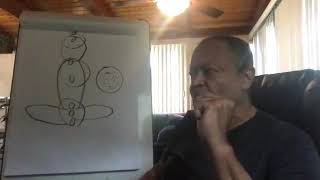
Hi, Steve Barnes here with Life Writing Live. And it has been a long time since I've done Life Writing Live, although I have been doing a lot of essays and things of that nature. But this is gonna come back into my schedule now and into rotation. I've figured out what it is that I need to do and how I need to do it. And I wanted to kind of get people caught up a little bit on what's been going on in my life. There are ways in which I've closed the door on an entire first section of my life in the sense that I went through. Well, as I did not going through from the time that I was a child. I decided that I wanted to have balance in the three major areas of my life, you know, body, mind, and spirit. Let's say I probably realized that that was important when I was 12 years old or something like that. But there was an error in that I had not put money. In other words, if body, mind and spirit, if I do say martial arts, yoga for body and career for mind and relationship for spirit, I was not paying attention to the fact that my career, I could be very good in my career. I could make a lot of money in my career, but not protect my money. And I didn't. And this led to some really interesting problems. I operated as if I was always going to make more money next year, which was not the smartest thing in the world that I could have done. So when you do that, if you ever go through a couple years where you're earning less than you did the previous year, you're in trouble. And that's exactly what happened to me. So I realized I needed to rebalance that with it. So it's body, mind, spirit, you know, so, you know, body fitness, career, family, and money. You know, specific how do I protect that? And it actually took several years to rebalance that. It was no joke. So I wanted to. I wanted to talk about what has happened since that period of time. And I also wanted to speak specifically about the heart space, what happens when we open it. So, you know, with that. That preamble was sort of to let you know that there is a specific intent here that they. I think that the things that I talk about and the way I talk about them will be shifting and that I brought in. I've brought in some additional resources so that what it is that I offer you will hopefully be of greater value. So what I wanted to talk about today related to a bit of coaching that I was doing not too long ago, where I was consulting with someone who was being asked to be more emotionally open in their relationships. But this person came from a context in which the display of any kind of weakness at all was interpreted as an invitation to do death. I mean, to literally display any kind of weakness was a dropping of the armor. It was not. It was not interpreted as vulnerability. It was not interpreted as something that was attractive or even manly. And this is not totally nonsense. There really are contexts in life in which it is unwise to reveal your emotions. There really are contexts in life in which anything other than strength and burying your emotions and in some ways pretending you don't feel them will lead to greater pain than pleasure. And there is a truth that I think that it is useful to notice, and that is that whether you are the smartest human being in the world or whether you are a worm, you're going to move away from pain and move toward pleasure. That is just a reality. Everything that anybody does has always been a matter of moving away from pain toward pleasure. That you've never done anything other than that. If you are stuck in pain, it's because you don't see a more pleasurable way to function. You don't believe that taking efforts will get you there, or you don't see a way to take efforts. In other words, if you know that, you know. For instance, this was recently said, a guy says, I know that if I go to the gym, I'm going to feel better. I believe it. I know how to lift weights, and yet I will sit on the edge of my bed and not get myself to the gym. Therefore, it is not true that you could know what to do and believe that it will give you positive consequences and you will still do it. Well, it is important to ask yourself the question, what are the component steps to accomplishing the thing? Because if you say, if I get off the bed and get to the gym, then I will feel good. Then the question is, get off the bed. You can sit there and literally, I don't know, I'm so depressed. I am. I am so frozen in place that I don't know how to take that first step. I don't know what to do. Now, under the right circumstances, it could be that, you know. You know that if. If your friend were to call you and say, my car is burning. I'm trapped in it, Come and help me, you would get off that bet. If you know that you will lose, you know, some large amount of. If you don't get to the gym a particular day because you've Made that bet with your, your training partner. You. Will you get off the bed? So, but, so it would be reasonable to say that I know that lifting the weights would make me feel better, but I don't know how to get myself to the gym. So you keep going and you're taking a smaller and smaller and smaller piece of it until you're at the point where it's, it's. I literally don't know how to operate my body. There's so much, so much pain, so much depression, so much, you know, so many conflicts, values, conflicts, so much pain anchored in my body that I don't know how to function. I literally don't know how to motivate myself to do this thing that I know that if I could do it, I would feel better about my life and better about myself. So the question comes up, what's going on? And I thought that it would be useful to, to ask a question or to examine a belief pattern that has passed down to us through the Hawaiian huna magicians. So I'm gonna, you know, once again, I'm gonna demonstrate why I'm a writer and not an artist by drawing a picture of a man sitting in a cross legged position. Okay, there's his knees, his head. He's smiling, just a little guy. And we can talk about the chakras. You know, you have the, the root chakra and the central chakra and the power chakra. And here's the heart, and here's the throat chakra for communication. Here's the head and the intellect and spiritual chakra. But a. I hope you can see that. And let me actually use a broader, a broader pin. Just a second. Be right back. Okay, Broader pitch. I'm gonna go over this again. Hopefully make it easier to see this. No, it doesn't. Okay, So here's his knees, there's the body, heart chakra, third chakra, his head. Somewhat disproportionate with the body, but, you know, nobody's got every skill but 1, 2, 3, 4, 5, 6, 7. Okay, so it's useful to simplify this and in working with my very, very dear friend and mentor, Dawn Callan, she just, she uses a shamanic model that she, I believe got from Harley Swift Gear Reagan that just talks about the belly brain, the body center, the heart center, which is here, and the head center. Okay, so the belly brain would be core survival, sexuality and power. The heart center would be emotions and communication. The head center would be intellect and spirit. What the Hawaiian huna say is that the body is Like a black bag where you store all your unprocessed emotions. In other words, if you've had trauma, depression, pain, things like that, the body, the primary message of the body is to protect you, to keep you alive. So if you have these problems, if you have issues, the body remembers every pain that you've been in. In pain rates more highly than pleasure in the sense that we will do more to avoid pain than we will to gain pleasure. You know, it's, you know, a piece of cake is nice, but one tiger will ruin your whole day. So something that happens to you that's painful when you're young is going to create an aversion pattern that can be very, very difficult to root out. And for a lot of people, what they will do is if they, if they carry a lot of pain here, so like this, draw this circle representing the belly brain, and you got all this pain that has happened, all this pain. So you can get to the point, especially if you've been abused, have had extreme stresses in your life where you store that stuff, someplace where it doesn't poison your heart. So you can still, you know, enjoy life to a degree. But you've got all these toxins down here. You've got all these toxins connected, you know, stored up in the physical body. And you will, and this is to a degree, this is an analogy rather than a literal truth. But it's really strange, really very interesting the way people will, how hard they will work to avoid engaging with their body on a regular basis. It really is fascinating. And the comment that you can awaken your human energies from the heart out or from the belly, the root up, but never from the top down is so interesting because when you talk to people who are completely unphysical, who do not exercise, who do not engage with their bodies in any sort of pattern way, you will often find that they get stuck. They have theories about the way the world works that has nothing to do with reality. They don't test those theories in reality. They can open their hearts. They can open their hearts wide, but not protect themselves. And they end up in relationships where they make what they think is a heart to heart space communication with somebody. And they end up getting hurt again and again. And every time they get hurt, of course it puts more pain down here in the belly brain. So, you know, it's like, you know, I'm in love, you know, I want to trust everybody, I want to be expansive and connected, but I'm doing it with the wrong people. So I get hurt, the pain goes down here. And as soon as you recover, it's like, well, I'm ready to get back out there and try again. So I'm going to open my heart again and give my heart away to somebody. But I don't have, have my instincts. I don't have the instincts elevated, refined to a point where I can trust my own perceptions. See, this is deadly because if you don't trust your instincts, then what happens is people can actually gaslight you into believing what they say more than what you perceive them doing. You have to be able to look at a person's behavior and say, you know, if I listen to their words, they're saying this, but if I look at their behaviors, they're doing this. If you don't have connection with this, you will pay attention to what they say more than what you perceive them doing. Get hurt and you will actually begin to mistrust the voice inside you. You will actually stop believing in yourself because your heart is open so wide and you're so caring and sometimes even, you know, spiritual. And I just, I noticed this with people in several spiritual paths that I'd had a chance to be involved with where they would be so open hearted and so spiritual, but broke, I mean, totally broke, living in their van. I mean, that's bad enough if they are, you know, individuals, but I saw people doing this with their families. You know, they had little kids and their kids had no home because mommy and or daddy were so committed to the path of the spirit or the open heart that they weren't rooted. This is, this is our survival stuff down here. In order for the heart to be safe, the survival stuff has to be activated. You have to, you know, it's, it can be heartbreaking to watch this. Some of the nicest, most spiritual people, most open hearted, loving people lurch from disaster to disaster because they refuse to have any kind of objective reality in their lives. They refuse to, to root themselves. They refuse to develop skills that are high enough that they can exchange those skills with their communities in order to make money, support themselves like an adult. Now they drift. They, you know, they throw themselves on the universe. They trust, you know, they trust in people around them. And then they will lie and say, I don't care about money. But then you will hear them complaining about circumstances in their lives that could be solved with money. They will say, I don't care about relationships and then complain about being lonely. They say, I don't care about my body. But then complain about aches and pains or the way people discriminate against them because they are obese or whatever, and past the age of 50, their bodies start breaking down. The fact that they use their bodies to store negativity, that they refuse to engage with the physical and root themselves to take care of their adult responsibilities as adults catches up with them. And it's horrible to watch. I can't. I can't emphasize enough that the path of adulting in this sense is very simple, but it's confrontational. That in this world, with the threats that we have, with the pressures that we're under, what's critically important is to master this first, to learn how to trust your instincts, learn how to control and keep your body healthy, to learn how to protect yourself, learn how to earn money. Those things are down here. Learn how to make responsible sexual choices. The number of people who damage their lives because they made irresponsible sexual choices incalculable. Then after you have this opened, anchored, after you have taken care of that, then it is safe to open your heart and care because you know that if you get your heart broken, you can retreat to this position. You're going to be safe. And people cannot manipulate you on the basis of, you know, of threatening you or gaslighting you. You. If you trust your instincts about them. And they can't manipulate you with fear if you know that you have access to your animal survival instincts. So I just kind of wanted to talk about that today to kind of get the conversation going about why these basic awarenesses are important. I mean, I had to literally, like I said, if I had my, my martial arts and yoga and my relationships and my career all together, I had to literally go back here and look at my beliefs, money, my beliefs about power in that sense, my belief about the relationship of the adult self and the child self in order to rewire myself to literally operate differently. And there was fear and confusion involved. But if you're connected with your survival plays, you'll move through these things. So how can you do that? Yoga is a fantastic way to engage with the body. And I saw a note today, somebody talking about how they got into yin yoga. And it was excruciatingly painful at first, but now they look forward to it. And one of the things I could think of was just a little, a little secret that I wanted to give you that I got from the guy with whom I did my training as a yoga instructor, Rod Stryker. And the comment was that if you never go in yoga so hard that you break the thread of breath, yoga is not supposed to be A painful thing. There could be some discomfort, there could be some intensity, but you don't go so deeply into a pose that you cannot breathe smoothly. So, you know, I think that there is a level to which this is going to be true with any activity. You should be able to maintain the thread of your breath that you should never go, you know, higher than a 7 on a scale of 1 to 10 in terms of pain. The intensity is all right. Pain is not. You're starting to learn how to control the body, how to control the breath so that you don't go into injury. Because this black bag stuff, if this doesn't want to be processed, one of the things it will do is get you to push yourself so hard that you hurt yourself so you can then have an excuse to stop. So small efforts, taking a walk, stretching, breathing, tai chi, yoga, anchoring yourself into the realities of power, money, those adult responsibilities, survival things, you know, engaging with sexuality in a way that you are asking questions about the ethics of what you're doing, the responsibilities of what you're doing. All those things are dealing with this belly brain stuff. And this is the stuff that will keep you safe, by the way, that if you make contact with this, you're making contact with the animal survival part of your personality, the part that knows that you deserve to breathe, you deserve to live, that you have the right to be here as a being. Very, very important. And given that grounding, now you can open your heart. Now you can step into the world of the spirit. If you enjoyed this talk, please be sure to pass it on. We are doing. We're going to be doing something new very, very soon, a very important course. And I'll be giving you information about that. You can find out about that. You'll be able to start learning about that over@www.thefiredance.com. other than that, you know, take care. Have a wonderful day and I will see you soon. Bye bye.







