women afrofuturists
Tananarive Due and Steven Barnes discuss Afrofuturism and Black representation in media, tracing influences from Octavia Butler to Black Panther. They share how to start writing: a sentence a day, then short films before features, and offer a 10-week course called Afrofuturism: Dreams to Banish Nightmares.
Chapters
And there we are.
There we are. Close the door.
Welcome, everybody. This is Tananarive due.
And this is Stephen Barnes.
Welcome to Afrofuturism Live. We've been away for a couple weeks. We have missed you terribly. But now we are back. And you are back.
You're back. You got that? You got that on your. Yes, that's right. We'll kind of formally get started in just a minute. We're just making sure that. There it is. Okay, now you share it to my page. And lots of stuff going on, as always. And our subject tonight will be the empowerment of women. We will touch on other subjects, of course. We always do. But Tanarive has got a lot to say and I can't wait to hear what that is. So she is typing over on the other screen. We're jury rig our technology to make things work.
So here. Here we are. But in any case, you know, this topic dawned on me because it's been a very, well, interesting week. Disappointing week. There are a lot of adjectives I could use in terms of a lot of revelations coming out of the both Hollywood. The world of politics, frankly, probably a lot of other industries where we just don't hear the stories. Hollywood, of course, gets preference because we all know these people. They're like friends. And I've had a few daggers to my heart in the last few days.
Yes.
In terms of revelation, I don't even want to mention names.
I do not like. I do not allow certain revelations to stop me from appreciating that artist's earlier work. I just don't. I think that I.
That's where we differ.
I just don't.
I've had some newly canceled. I've had some newly canceled folks this week. And really, the most important point is not to focus on the canceled folks or whether or not we cancel the folks. But the real emphasis is the courage it takes for men and women to come forward and talk about abuses against them to help create a safer and more nurturing work environment. And it's sort of the roar of the oppressed in the workplace saying no more, which is great. And I think this is a good thing. And this also coincides with a bunch of great new posters that dropped this week for Black Panther. Could you go to one of the. Later, like, way down in the stack to one of the new posters?
Not one of those.
No, no, no. Go down, go down.
You did put the posters in there?
Yeah, yeah, there's a couple.
Okay. No, I said something like, okay, okay.
Well, here, let's do this one. Let's do the gift.
Oh, okay.
They've been teasing us with new images from Black Panther, and almost all of them focus on the partnership between strong women, strong black women, strong Wakandan women, I should say, and t' Challa and their men. So, you know, I've talked about this before, ever since Marvel's Civil war. From the first time the actress Florence Kasumba said, move or you will be moved, I was like, yes, more of this. And Black Panther is only one film, and Afrofuturism is a vast topic, but it's such a great visual embodiment of what Afrofuturism is. And women are coming out strong in Wakanda, just like women are coming out strong here in the United States and most importantly, throughout Afrofuturism.
Absolutely. And I think one of the things we wanted to talk about, first of all, make sure. Let's go to the beginning, that our art. Let's introduce ourselves. So let's say, who in the world are we? Who are these two people, and what are they doing here? I am Tananarive Du and I'm Stephen Barnes.
I'm author. I'm a screenwriter. I'm currently teaching black horror, a course called the Sunken Place at ucla, but previously I have taught an Afrofuturism course. I also teach in the creative writing MFA program at Antioch University, Santa Barbara and Antioch University, Los Angeles.
And I'm Stephen Barnes, and I'm a novelist and a television writer and teacher. I taught at UCLA and Seattle University and lectured at Mensa and the Smithsonian Institute on creativity and things of that nature. And I think that one of the things that I'm really happiest about is what my partnership with my good lady wife Tananarive has brought into the world, which is a certain number of techniques for enhancing creativity that we can offer people.
Should we go to our faces?
You want to go to our faces? Well, there's Tananarive Do.
They're tail dapping.
That's right. They're tail dapping. Is there anything else in the world? Look. Because, look, the reason I was on that is that our goal is to create thousands of successful Afrofuturists. I believe that we can change the world if we can do that. So what we want is to talk to the fans. We're hoping that among the fans are people really want to create this material. I know that my perfect person to be listening to this is a younger version of me. It's like you've often felt that your perfect version is A younger version of you. So although we're talking to everybody, if.
Only I had heard of such a thing called afrofuturism. If only I had taken. Picked up even a single Octavia Butler novel as a learning writer when I was developing my skills before I was published.
Well, what we want to do is we want to take. Let me move back to our faces now. What I wanted to do is to take the. Beep. Okay. Is to take everything that we have done, and we choose a little sliver of it every week. A tiny sliver. Basically, everything that we've done, everything that we have taught goes into our afrofuturism dreams to banish nightmares class. That's just straight up. But what we do is we take a little sliver of what's in there every week, and we expand right on it. And this week, we've got three. Three goodies for you. Three. Three great expansions. And they're all to do with women and the creation of images and why these images are important and what I. And then there is going to be. So one secret is going to be. What is it? The next secret is going. Is going to be why it's easy to create it, why it's easy to create it authentically. And the next secret will be how to get it into the market. Okay, so we're gonna be going through that. So we. There's a lot. So let's start. Let's. I'd like to start with questions about Lil Tananarif. And. Yeah, okay, so let me. Yeah, we're gonna. We're gonna go to that one secret, number one, which is the how and the why of it.
Because I love you all. Do I show you this picture? So this is me.
Okay, hold on, hold on, hold on. Beep, beep, beep.
This is me at 11 years old.
11. There's 11 years old. Lil Tana.
I had my own bedroom. I. That was the first time having my own bedroom. So every time I see that picture, I'm like, yes. I have two younger sisters. So, okay. This is a project I did called my own Roots, which coincided with the publication of Alex Haley's book Roots, which was a really transformative moment for me as a young person who wanted to be a writer because it was a story I immediately could relate to. I was so relieved to learn that there had been a history before slavery that was probably the most important thing that I took away from Roots. I mean, the multi generational saga was also nice. It encouraged me to interview my own great grandmother and Hear stories about my own roots. But it's very interesting, you know, As I progressed throughout more of my studies in school, because of lack of representation, I started to drift away from writing about black characters.
And really, what did you do?
Well, especially, I started out pretty much as a futurist. I wrote before roots came along. I was writing stories about specific spaceships and stowing aboard spaceships and talking cats and that kind of thing. But as I was more exposed to the quote, unquote canon, as I progressed through college and graduate school, the picture of what a writer was did not fit what I was. Okay. So I started writing more white male characters, more white women characters, sort of small epiphany stories without any kind of supernatural or magical or futuristic elements whatsoever. It really did take me a while to discover that part of myself. I had to sort of shake off some of that training, although that training was valuable. And two things happened.
What happened?
Am I supposed. Okay, no, two things happened. You can tell us, please. Well, I was already working and had a job at the Miami Herald before my true transformation came. I was still writing about white men into my early 20s.
So you were not able to write about women or black people.
It was really. I didn't have enough of them. I hadn't found Octavia Butler yet. I hadn't found Stephen Barnes yet. So I didn't know yet. And I did my best just to sort of learn the craft. But the two things that happened, one was as a reporter for the Miami Herald, I interviewed Anne Rice. And just by way of background, my parents, my father, John Dew, and my late mother, Patricia Stevens, DU civil rights activist, very respected in the community. I could look up the index in a college history book and find my mother's name, find my father's name.
That's a trope.
So I had sort of this burden of respectability on my shoulders, I felt, which really did inhibit any thought of writing. Something like horror, which I sensed through college, was not respected, you know. And the other thing was the black aspect. The black writers I admired, Alice Walker, Toni Morrison, they were writing about the Color Purple, the rural Southern experience. And I had been blessed not to have had those kinds of abuses. I had been blessed to have been raised in a later time in the suburbs. So the turning point for me was interviewing Anne Rice on the phone, who gave me permission to write horror. Basically, she didn't know she was doing that.
What did she say?
She said, I asked her, not telling her that I wanted to be a writer. I said, how do you respond to criticism that you're wasting your talents writing about vampires. And she literally laughed and said, oh, that used to bother me, but my books are taught in colleges, which, wow, how prophetic. Because now my books are taught in colleges. And the second thing was reading a novel called Mama Day by Gloria Naylor. Mama Day, Gloria Naylor, very highly respected writer. She's passed away, unfortunately. But she had those metaphysical elements in her story that further gave me permission. So Anne Rice was like, yes, you can write horror with Mama Day and Gloria Naylor, it was like, oh, you can be a black woman and write horror. So I was like, yeah, I was in. I never looked back from that point on.
Right. So you had to search to find role models. Once you found them, you were off.
I did. I had to search to find those role models. And, of course, some of you know the rest. I've been publishing since 1995. I've won awards, and I started teaching. We discovered. Let's Put up the Picture with all of us. I discovered that I was a part of a community in 1997, when Steve and I were invited to Clark Atlanta University to take part in a conference called the African American Fantastic Explorations in Science Fiction, Fantasy, and Horror. This is not from Clark Atlanta. This is actually Howard University.
Howard University.
Some of you will recognize this, but it's a similar feeling because I met Octavia Butler there. I met Steve there, and there's Nalo Hopkinson, who was not there at the time, but she came along later. Jewel Gomez was the one who was there at the time, but that was when I realized that I wasn't alone. You know, it's like we were kind of like a little family. Someone just told me at World Fantasy that every time she sees me, she remembers going to visit Octavia's house, seeing the picture of you and me on her wall, honey. And I suspect it was that picture from Clark Atlanta that she used to keep on her wall. So she considered us family, too.
Yeah, well, she was family. We lived close enough that we could get together for dinner. You know, just. She could walk over to my house for dinner.
Right.
That was just. That was wonderful.
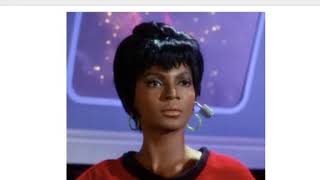
So it's very empowering. And this term, Afrofuturism, had been bandied about a little bit. It was coined in 1994, I believe, but I hadn't heard it by the time I was at Clark. Really. It only came to my attention only recently. So after years of publishing, after. Sure, of course. Nichelle Nichols as Lt. Uhura had been a great inspiration. Growing up watching Star Wars. I'm sorry, I'm sorry. Star Trek. Don't throw tomatoes. It was a slip of the tongue.
God, she was beautiful.
It will never happen again.
That's an amazing.
She is still beautiful, but in any.
Case, amazing looking woman.
So there was this sort of vague idea back in my early childhood that I could project myself into a future through art, at least in watching Star Trek. But as I said, it took a while for me to come back to that as a writer. I kind of lost it and had to get it back again. And then when I found it and we were really sort of secure in it, I started teaching Afrofuturism and I was teaching Afrofuturism at ucla. What do you want to put up?
Do I want to put up the next picture? Sure. Okay. Absolutely.
This is Adore Milaje Warrior women. Can you tell I'm excited about this movie? I know a lot of you are too. So, yes, started teaching Afrofuturism. And what I love about Black Panther imagery is that it combines very often the ancient and the futuristic. Much like my background with Roots was about the history. I had to understand the history before I could move forward even to project into the future.
Put us back on the screen.
Yeah, and that's. That's a very important component of Afrofuturism because we've been so erased in the past. Even look at how history is rewritten, even with something that we thought we all understood, like slavery.
Right. We can't even.
We can't even agree that slavery was bad. We can't even agree that the Civil War was not something that could be compromised. You know, it's just a really interesting time. So Afrofuturism embodies all of that. It is the music, the literature and the cinema of the black diasporan experience that has speculative elements. So it's fantasy, like Black Panther, it's science fiction. Like I will say get out is science fiction.
Well, Black Panther is science fiction. Although it's gonna have some fantasy elements. I think that most of what. Most of what it is really is science fiction.
Okay. Black Panther, science fiction and horror. Of course. My favorite one, definitely get out is horror.
It's horror, but it's. It's science fiction horror. It's not supernatural.
Right. It's science fictional, horror. So that is what, in case you're wondering, what is Afrofuturism? That is what Afrofuturism is. It's all these works. Is the late, great Octavia E. Butler behind me and wanted to have wanted to help people get the Same kind of empowerment from Afrofuturism that I was getting. But of course, teaching at ucla, you're limited by the students who are enrolled in your class and you can only reach so many at a time. And it's expensive and it is very expensive. So last was it, just this spring, Steve and I did a 10 week course, Afrofuturism Dreams to banish nightmares. And the nightmares, you can imagine what those are. A lot of them are on the pool front. And a lot of us are looking for sustenance and guidance from the arts and want to be creators in the arts and consumers of the arts. So, yeah, we offered that course. And while I was at World Fantasy, I ran into a couple of students, you know, who have been working on their own for the first time even, you know, because this one lady in particular, I won't, I won't talk about your privacy here, but she's a white lady who was writing a novel, you know, where she's doing a lot of research into Africa and African culture because she really wants to incorporate some of that in her own work.
I'd like to take this picture, which I think is just wonderful. I'm gonna put it on the screen and bang, there it is. I asked you a question. It's like, see, this is Afrofuturism. Now, this is a mock up of a Wired cover.
Right.
It's not a real. But the fact is, and I want.
To give a shout out to the artist, the artist is Darian Robbins, who did this mock up. He's been doing several mock ups like this to help us get even more excited about this.
Absolutely.
But what were you going to say?
Well, what I was going to say is that I asked you a question, you know, how do you think it would have felt as a young black girl to see an image like, like this? Even if it's a mock up image, I personally think that it would have been transformative.
Yeah. You know, and I've said previously, I know, I see the hearts. Everybody loves this.
Yes.
This is. I mean, if you guys love this.
Image, if you're thinking, oh, my God, I wish I had seen an image like this when I, when I was in college or when I was, you know, in grade school, you know, give us some love, give us some hearts. Because.
Okay, so, so, so, yeah, a lot of excitement about that. And to answer your question, I guess it's a twofold answer to your question. I see the hearts, people.
Yes.
Because first of all, hidden figures would have just changed my life if I had Seen that as a child, I was very math phobic, not the least bit interested in science. But I really believe that because I had such a strong sense of reverence for history through my parents and my parents storytelling and the heroes and heroines of the 60s, it would have helped me see myself differently. Maybe I could learn math. Maybe it's not like you're born good at math, but you can actually learn to be good at math, you know, or learn to be good at science. So in combination with that, seeing that Wired magazine with Shuri, and let me tell y', all, for y' all who don't know, Shuri is the technological genius behind the Wakandan Empire. She is the brother of t'. Challa. I'm sorry, t' Challa is her brother. And she is the greatest inventor in the world, I imagine.
Well, basically, she rivals or surpasses Tony Stark.
They say. Surpasses. You know, they say she surprised. We'll see. This is what's so fun. When the Marvel movies come out, you can sort of measure the characters against each other, what their capabilities are, what their strengths and weaknesses are. So we'll see if Shuri bests Tony Stark. I suspect she does because she has unfair advantage.
She has all that Vibranium.
Sisters with Vibranium.
That's right.
Are unstoppable. Unstoppable.
So look, this is what I'm looking at here. I believe that men and women have had a very specific relationship to each other for thousands of years because it served the purpose of getting maximum grandchildren to the next generation. But that that has changed. And that part of that change is that we get to negotiate new roles. And that this is causing a lot of guys who can't handle the idea that the world they grew up in is not going to be the world that their grandchildren grew up in. People are flipping out because of things that have to do with race, have to do with gender. But in terms of Afrofuturism and in terms of the black community, white people want to renegotiate the relationship between men and women. I think black people have to. I think that our relationships were damaged by our history. That we've literally got to find ways to love each other, embrace each other, take care of each other. That are a little different, you know, that we need to ask. We have. We can actually ask ourselves questions. What do we want to be to each other?
And there's a question here on the timeline. What's the question? Afrofuturism. Just entertainment. The question vanished. Someone I don't see it anymore.
Okay.
But someone said, is Afrofuturism just entertainment? Well, in the sense that much of it is rooted in the arts. I, you know, is it art or is it entertainment? That's up for debate, depending on what the.
No, I think that it's not the difference between art and entertainment. It's a difference between, for instance, history, science, philosophical speculation, serious scholarly inquiry.
Because Afrofuturism also does involve serious study into, say, the digital divide. And those were the kinds of conversations that were coming up on the Afrofutures and listservice when Alondra Nelson started it way back in the day, trying to.
Understand what the future of Africa might be. In other words, to come up with the African diaspora in the Africa. Well, it's. Yes. I mean, if you ask in areas in Africa that are running technologically behind what is necessary to help them catch up and spring ahead, you know that what is the future of Africa going to be as well as the future of the children of the diaspora.
Yeah, because, you know, a lot of us are feeling a little bit homeless right now too, and they're wishing we could go move Wakanda. So and not just in the United States, but there's a backlash around the world to difference and other.
Don't think that this is all just passive. There are people who really are threatened by change. And I think that a lot of women are feeling that pushback. And I think that I remember when Blair Underwood was part of that thing, the sister. I'm sorry.
Yes. For background, please go for it. Through his church ministry, actor Blair Underwood and several other actors, including including Michael beach and others, I can't remember, basically stood as stand ins for men who had treated women badly. And it was like close on their faces, looking right at the camera, saying, I'm sorry I wasn't there for you. You trusted me. I betrayed you, sister. I'm sorry. And each one for a different scenario. You cheated, you were abusive, you know, and it was a really. That was actually how I first came into contact with Blair because I met the producer of that tape and he had just done it with Blair and sent me a copy. And it's like, oh, that's fantastic. He's the one who got us in touch.
Is that when you have enough waking you up, you know that you cannot remain asleep, right? That we've been having kind of a nightmare. And I think that black men and black women have been put at each other's throats in ugly, ugly ways.
Go back to slavery to find the Roots of that.
That's right.
Yes.
And I think that we get to redefine ourselves. And I think that if you take a look at people like Octavia Butler and Nnedi Okorafor and Nalo Hopkinson. And Nalo Hopkinson, all these people, women, women, women, women, creating images of powerful women who are in. Often in healthy relationships with healthy men. What I hope, what I pray for, for the sisters to show us what they need from us, to feel safe, to feel secure, to feel empowered, that I believe that any force that has. Any people that have been kept down has something special to offer. And if women have not been able to express themselves as fully as men in the world, and I think that that is the truth, then I believe that they. They're going to have special gifts.
Well, look at a great example is Octavia. I like to. I often like to say that the more comfortable you are in the world or in society, the less likely you are to interrogate that society, to question it, to find fault with it. Right? So someone like Octavia was made to be very uncomfortable from a young age. She had poverty. She had her height. She was an outcast. She was very, very shy. So from a very young age, she.
Saw no images of herself in the movies that she loved. Neither did you. Neither did I.
So she was an outsider looking in. There's no comfort in that position. So those of us from marginalized groups, no matter what that group. You're in the LGBT community, you are a woman. You are disabled in some way. So you're not comfortable in the status quo, and you have to push for change, and you have to question and you have to critique. And when we're lucky, lot of people actually start to listen. And that's what we're seeing right now.
So what we're saying to you is, we want your art. We want you to express yourself, that we. Either you or somebody that you love has those stories inside them that they have not been able to express. We want to create a bridge between your dreams and your reality. It's as simple as that. We know how to do this. We've watched people do this. To Nonari, you had to put together scraps of different people from different places to give yourself permission to do this.
And even though I was raised by civil rights activists who steeped me in black history and stories and oral storytelling and comic books about black heroes, even with all that, my exposure to the canon made me feel invisible in my own future, in my own work, in my own writing. How many of you have ever felt invisible. I know a lot of you have. You were not seen, you were not heard, your concerns were not taken seriously. You were afraid to speak up. The way so many are speaking up right now in Hollywood are speaking up in politics or speaking up in the workplace.
If you have ever felt invisible, like you were a ghost walking through your own life, come on, give us some likes, give us some loves. Because I know that was me. I know that was to non rate. If you felt that way and they do, they felt that. I see those hearts. Thank you. You're the ones that we're talking to. We're begging you, share your stories. We will give you every week. We're going to give you all the tools that we possibly can. It's only one tool at a time. We need to go deep a little bit and we'll talk more about what we can do to work with you more closely later on. But this is, this is critical. It's critical that you know that this is the time that we have been waiting for for 400 years.
Absolutely.
This is it.
As frightening as this time is, as heartbreaking in some ways as this time is, as people that we consider role models fall, you know, they're very, very sad.
This is when we need new role models.
It's a growth period. Yes. And I've seen people tweeting, you know, instead of feeling bad for the people who are falling from grace, why not celebrate those who will now have a chance to rise up and hopefully that will be you.
They're going to be you. That's who we're talking to. You, please, by the way, share this with your friends, with your pages, any writers, groups that you have, send us questions about anything you want to know about this process and we will give everything that we possibly can. I'm going to switch to the next slide now because the talking about exclusion. Does anybody recognize this picture? I actually happen to be watching this.
What is this from?
What is that? That's from When Worlds Collide.
Oh, is this all the survivors of Earth?
Yes, it's all the survivors of Earth. And you'll notice the one black couple in this picture. Oh, that's right. They're not there.
You fooled me. I was looking, I was like, really?
No, they're not there. They pack chickens, they pack pigs, they pack cows.
Well, they had to bring women.
No black people.
They had to bring women, right?
Well, absolutely. They're women in this. You know, there's no question about that.
But honestly, what's so funny to me about these 1950s era Science fiction radio plays and films is that when they do have women, they're still stuck in those roles that they were playing in the 50s as secretaries and getting coffee. So wait, let me get this straight. I'm an astronaut.
Oh, and doing the dishes. Yeah, well, that's, you know, it. The Terror From Beyond Space. One of my favorite movies.
So. But you're actually. You've actually been a part of helping to change this futuristic imagery as a teacher.
Well, I.
And as a writer, I would like.
To think that I've had some pieces of this and what, what I did. Well, yes. Well, we will get to Nettie. She's not on the screen.
Yes, yes. You guys can't see her, but I could see her.
You can see it. So what I wanted to talk about was my own. My own journey, just the process that I really went through in the. In that sense. So what happened with me is that I saw movies like When Worlds Collide, you know, or Logan's Run, you know, Star Wars. And when I was watching this stuff when I was a little kid on television, it hit me that there was nobody who looked like me there. It hit me what that implied what they thought about me. I mean, when they had saved, you know, these are all the people in the world who are going to be saved as far as anything that we see. And there's nobody there who looks like me. You know, I'm sorry, I can't. I can't not take that seriously.
It's actually, you know, it was. I'm sure it was, on the one hand, kind of a blind spot for some of the creators, but when you combine all of the blind spots together, it's a very hostile act of erasure that reflected the very hostile act of erasure during that time period, you know, because the disenfranchised were kind of in the corner and in the dark and not really noticed. We didn't show up in those crowd scenes in the 1940s. Was it Boris Karloff? I told you?
Yes.
Boris Karloff was a member of the anti Discrimination Committee for SAG back in 1947, I think it was. And one of the things he asked to do was to make all crowds seem 10% black people, which doesn't sound like a lot. It was like sort of a fallback position.
Oh, that's. No, that sounds wonderful. When you've been excluded.
Yeah. Well, first of all, if only that. Imagine. Because there are honestly people walking around right now who think we weren't there, you know, that there weren't blacks, there weren't any people of color in those crowds, in those Western.
And even worse are the people who know that we were there but don't want us in their fantasies. Do not want us in their fantasies.
It was a fallback position because Karloff knew that if he pushed for, you know, better roles and less cooning and that kind of thing, he would get nowhere. They would basically just not have any blacks in their movies before they would make blacks full humans on a regular basis. So it was the crowd scenes and. Yeah, so I was so happy to learn Boris Karloff was woke. And don't anyone tell me anything bad about it. Well, not today.
The struggle to believe that I could have my dream, to believe that I could create a life of meaning despite that exclusion, it took everything that I had. I mean, it took all of the love, all the faith. It was a constant fight every day, especially when people would try to tell me. I would have people tell me black people don't write. My mother would burn my stories.
To try to protect you.
Well, yes, trying to protect you.
I'm a life in the arts. It was going to eat you alive.
And I understand that. But it's all I wanted. That was the life that I wanted. I wanted it desperately. So I fought to get through there. But then it was the same thing that happened with you, is that I started writing about white people because that was what the audience was. And it was very painful for me. And I remember the day that that changed for me. I was talking with my friend. I think I've spoken about this computer engineer, Darnell Gadberry. And I was conveying to him my fear that if I did not speak my truth, that I would. I'd die inside. But that if I did speak my truth, I did write about my own ethnicity, I literally wouldn't be able to survive in the field. And he said one of the best things anybody's ever said to me, which is, you know, Steve, eventually someone's going to have to start writing stories, making movies that depict us that put us into the future, too. If not you, who? If not now, when? And why would you want to write images for the pleasure people you would not want to have in your home?
That's profound.
It really was. And so I started doing it. I did books like Lion's Blood and Zulu Hart and Great Sky Woman and Shadow Valley and Blood Brothers. And I got my heart broken because I ran right into racism. I found out that the publisher of the biggest magazine in the Field had, you know, blackballed me on racial grounds. But I kept going anyway and I. I found allies and I put pieces together and I wasn't sure how much value there would be to this. But then I was asked to teach at Clarion University. And one of my students at Clarion was Nettie Okorafor.
Oh, the Clarion Science Fiction Fantasy.
Clarion Science Fiction, that's right.
So, by the way, before we start talking about Nettie, thank you for joining us. If you're here, this is Afrofuturism Live. And I just wanted to mention that if you stay until the end of the broadcast, we have a special secret for you. What's the secret?
The secret is why Black Panther is guaranteed to make a billion dollars.
Steve says Black Panther is guaranteed to make a billion dollars. And we'll tell you why.
Yes, absolutely.
It's a pretty good reason. Let's go back now. You were teaching at the Clarion Science Fiction and Fantasy Writers Workshop.
Yes, and Nnedi Okorafor was one of my students. I don't believe that she'd pull published then, but the question that she had was, you know, was there room in the field for someone who wanted to write the kinds of things she wanted to write? Was there, Was there a place for her?
And in case y' all don't know, let me tell you just a little bit about who Nnedi Okorco is.
Go for it. No, no, no. Please do.
So do you want to talk about.
No. Talk about what it was that I. That I said there and then we'll talk about what it is that happened.
Okay?
So what I told her was that art is self expression, that you have to speak your truth. You can run out of clever, but you can never run out of your truth. That we needed her voice, that she could be important and if she could take. She was so obviously brilliant, she was so obviously driven, she was so obviously had done her homework that all I could do was tell her, we need your voice. Now, she took that advice as well as all that skill and everything she'd been doing. Because Nettie's a four. She was going to be a four no matter what. It was just one of the voices here. Now you tell us what happened.
Well, yes, I'm sure many of you have read Nnedi Korafor, but if you have not, she has won the Hugo Award, the Nebula Award, the World Fantasy Award, the Wale Shoenka Prize for Fiction in Nigeria. Her novels are many. They include Benti Home, you see here, which is A sequel to her novel Benti who Fears Death is what she won the World Fantasy Award for the Book of Phoenix. Akato Witch Zara the Windseeker, the Shadow Speaker Kabukabu Short Stories.
If you love NYDE404, if you have read her and you love her, show us some love right now. Because Nettie is the real thing. She is my little sister. I'm her big brother. I am so proud of her. I cannot say how proud of her I am. I want her to go all the way to the stars. She is one of these people. She's there. She's in the stars. That's right. She's one of these people who is going to change things because she's creating images. What I'm praying, what we're praying. And this is what I wanted to say that what I said to her was. It seemed to have an impact. And what I wanted was, how do I do this? How do I take this knowledge that I was giving them over a week at Clarion, that I was able to give netifi personal contact and make it available to everybody? That was why the whole Afrofuturism, dreams to banish nightmares course came about. Because take that same knowledge, the thing that is enabling these people or things that I learned from these people, and give it to everybody.
And can I just say, because we have some great comments coming out from people reminding me I have not even begun to delve into the greatness that is Nydia Core for Go for It Blue Fear's Death is in development at hbo. Yes, she's got a TV series in development. She just did a TED Talk that is now live on the TED website, if you want to put that. So she is no longer a rising star. She's just a star.
She's just a star right now. And she has her insecurities. She worries about life, she worries about this. She worries about that. She is a human being.
She's just like you.
She's got the insecurities that you have. She has the trouble that you have. And yet she is also magnificent. She is wonderful. She is brilliant. In other words, she is that human potential that we see in you. And she simply has been willing to put herself out there. And if enough of you will do that, one of you is the next Nnedi Okorafor. Just not the next Nnedi Okorafor. There is no next Nnedi Okoro. But there is a first you. There's a first you. That's right. And that's what we're looking for is the ones who. You have a voice inside you that says, I'm next. That voice inside you that says I'm next. You had that little voice inside you when you wrote Baby Bobby when you were five years old. You were four years old. I didn't start writing until I was six. So she got a head start on me.
Adapter to writing. Yes. I was writing Baby Bobby and. Absolutely.
And there was a thing inside you just said, I do this.
I'm an author. This is.
I'm an author.
The rest was finding out what I wanted to say. Having permission to say it.
Yes.
Literally having permission to see my own face and my own future in my work.
So how many of you have that voice inside you saying, I'm next? I can do this. I'm an author. I'm a writer. Or. Or love someone who says that, who looks at the world and has a story. If you have a story inside you that you cannot wait to get out, come on, show us some love. Show us some hearts. Because this is why we're doing this. This is for you. This is for you. And we see that. We see those hearts, and we love you right back.
It's about writing your truth. I could write, okay, what I call epiphany fiction, which was sort of small stories where a character came to a small realization at the end with no supernatural element, no magic, no suspense. I could do okay. But I am good at writing my heart. I'm good at writing suspense. I'm good at writing horror. And if I had shied away from that for whatever reasons, I never would have discovered my true potential as a writer.
So the first secret model, the success of people came before you. The second secret, Trust your heart. That art is what's within you. You have everything you need to succeed inside you. That if I don't believe in talent, I believe in hard work and honest storytelling over time. That you're willing to do the work. Willing to do the work. Willing to tell your truth.
Should we tell the secret about how you create that word?
We can't. Who. Who would like. Who would like to hear the secret of how you get from zero to where you want to A billion dollars.
To the success that you're looking for?
Well, because I'm. I'm telling you, it's going to be a billion dollars. It's going to get all the way there. We're going all the way.
Remember, we're going to tell you why Black Panther is going to make a billion dollars.
That's right. So we can get from zero to a billion dollars. And I want to give them the secret.
Okay.
Okay. Can I give them the secrets? I have your permission? Okay. Okay. Going to do that. All right, so we're going to go over here. Stair Stephen.
She's next. I love it.
She's next.
Has never pursued writing, but she's thinking about it. And I think this will be very.
Helpful, you know, if. Look, this. This is what I want to say before we switch over to the picture. If there is anything inside you that says that you would like to write, write. See your name in print once. Then if you decide you don't want to do it again, let it go. But if there's that little voice inside you, what happens if the only thing that's been stopping you is parents or somebody who said, you know, there's no money down that road or you'll hurt yourself?
You know what I sense? I'm not psychic, but I feel. I feel there are people listening who are writers but don't call themselves writers.
What do they call themselves?
They don't. They just. They write, but they don't call themselves writers because they're not published yet. So they don't know they're writers. They say they want to be writers. They say they're hoping to be writers. But let me tell you, if you're writing all those stories you have in your drawer, those little poems, those little fractions, that little flash fiction, you are a writer. Congratulations.
Well, I have never told you this, but I got my secret certification, and I can now certify writers. I have the ability to write it. So those of you listening out there, raise your right hand. Repeat after me. I like to write. I like to write. I am a writer.
Shout out to Victoria Adams Kennedy, who says she just published her first book. Yes. At the age of 53.
Thank you. Thank you, thank you, thank you. Teach us. Show us. Share your life with us, please. We're begging you to help. And congratulations. At 53, you have courage.
Let's show them the not so secret formula.
The not so secret formula. All right, so what we have here is sort of a stair step, and it gets clumsy. The bottom is. The bottom is cut off. There it is. Okay, so the bottom is you write a sentence a day or a sentence. You know, you write a sentence a day. That's the bottom. Remember, I said that you go from there to writing one to four short stories a month. You build your way up to novelettes and novellas, and you work there to novels. This is the way. And we could go into this. I could teach a class on this for a year.
And we have.
And we have.
I know that some of you are already working on novels and you're like, oh, a short story. I am a huge believer in short stories. I just published a short story in the Boston Review in the issue edited by Junot Diaz, on dystopias that is literally from my novel in progress. So. And that novel in progress got its jumpstart with the sentence a day technique because it's a very difficult subject. It's set in the 19th century, so.
We'Re talking about volume. We're going from small volume to larger volume, short length to larger length.
So the sentence a day helped me get through my outline. It helped me, like, even today, I had very little time to write. My son was awake at 8 in the morning. It happens. I love him very much, but he was up very early during the writing time, so I didn't get far. But I was just going to write a sentence and it already had turned into like a couple paragraphs. And that's the secret to the sentence today. Once you've committed to writing the sentence, you almost can't stop there, but you have permission to stop there. Yes, it's just difficult.
So you don't get to have the guilt voice in your head, your ego voice, stopping you by saying, oh, well, you didn't do a thousand words today, or you didn't do a whole page today, so you can't do it. But that's not. That's not the point. We will go into that. Other times, the stair step works not just with volume, but also works with the size and expense of the project. So this is the thing that I really wanted to go through.
And this also works for filmmakers. Did we want to move to that?
Well, that's what we're going to right.
Now, because some of you are writers who are already published. And if you're like me, you've been waiting a long time for someone else to make a movie from one of your books. And I've learned the hard way and the long way that the best way to get a project made is just to make it yourself. The only movie I have adapted for my work is the one we made, and that was directed by Lucina Fisher.
That's right. So let's take a look at the way this works. We see how it works with short stories and novels. This is how it works from having no entry into the field, into being having a chance to make a major Motion picture.
You can learn how to write a script just like you learned how to write.
That's right, that's right.
Just learn. There's a great program, in fact, Rider.
Duet, there's a great program. And there's another program that's great called Dreams, Dreams to Banish Nightmares. It's a great program, but you start with a script and you go from there to making a short film or a micro short film. And you use the leverage from having done that to raise the money to make a small film. And you make. And if that small, if you're successful, each of these steps, you'll get your chance to make a major. So let's talk about how this actually works in the real world.
I, like a lot of you, was just interested in being a writer. I wanted to be a novelist. But once I got a taste of Hollywood trying to adapt my works, I said, well, let me learn a little bit about screenwriting. And then it became, well, let me learn a little bit about filmmaking. And I started out with very small projects. I did book trailers, I did little mini movies about Jason. But this is a still from a nine minute short film I shot by myself called Lost. I starred in it, I directed it, I wrote it, and I literally, I did it, you know, as if this woman who was lost on a hiking trail had her video camera running. So it's a cinema verite kind of approach to it. But I was. But that enabled me to do it without a crew. Okay, so when I say I spent no money on this, I mean I spent no money except to buy this or orange Halloween prison inmate costume which I doused with some blood that might have cost a couple bucks, but it really was next to nothing to shoot it. All of it was just the story. And I'm teaching a black horror class at UCLA right now and I'm allowing my students to make short films as a final project. Some of them haven't made short films. So I'm giving them these tools. This is what you do. You make it story driven, you make it premise driven. Then we moved from that to actually first was Danger Word.
Yes. But the reason that we put the. Even though you made that little tiny microfilm after we did Danger Word is to show that. See, we were able to raise the money for Danger Word because we already had a reputation, we already had the following. But if you didn't, we had great.
People who helped us crowdfund that.
If we did not have that, then if we'd made a tiny little movie of our Own and then put even push that out to the, to the public and said, listen, take a look at my Movie over on YouTube. If people like that, then you can do a crowdfunder then, you know, and make a movie that's a little bit bigger and you stair step your stuff up that way. But we made this.
This is danger where it started. Go back to that picture for a second. It starts. Frankie Faison, you've seen him as pops on Luke Cage. He's been in every single Hannibal Lecter film. And wonderful actress named Saoirse Scott, who had worked for four years on One Life to Live and could cry on cue, is a great actress. And we were able to hire professional actors and do a professional shoot. Professional cinematographer. There's our crew, crew shot. Lucina Fisher, the director on the far right, Eric Schneider, who. Who is a cinematographer. And there are Steve and I as the screenwriters. I should also mention Terence Taylor, also a horror writer.
Hey, Terence.
Great editor. And he did a great job editing the film. But that again, that was just like, like an idea on Facebook one day. Do you think we can make a movie? You know, being exposed again, this is the power of inspiration. Ava DuVernay out there funding films. This was long before she was Ava DuVernay that everybody knows, doing a Wrinkle in Time and did Selma. But she just done a couple of small films at that point. And I had watched her uplifting other filmmakers while she uplifting herself. Right? And so. And there are a lot of role models. Brie Newsome, who made her little short film Wake Again, a short horror film.
So, yes, so the short films are critical. You make the short films. Because now we're going to tell the story of Ryan Coogler. Now, the first time you heard his name was Fruitvale Station, right? Which, which cost $900,000. So how do you get to make a $900,000 movie? The. The classic answer is, first you make a $90,000 movie. How do you get to a $90,000 movie? First you make a $9,000 movie. How do you do that? You make a $900 movie. You get all the way down to the ninety dollar movie which you make or less. So he made four short films. He basically was studying finance and movies and cinema because he studied finance, he knew about raising money. He knew how to. How to communicate that value to people. So he was. He knew how to sell, he knew how to market. He made little teeny movies. He made Fruitvale State. Those little movies won awards. Those awards got him a contract. To make a movie got him the money to make a $900,000 movie. That $900,000 movie won awards and got him all the way to a 35 million dollar movie. Creed. Now you. He could not have done this had he not had all his ducks in a row. Because in order to make Creed, he had to go to Sylvester Stallone and show Sylvester Stallone his oeuvre and his script. And Stallone, he was asking us to.
Go back to the stairs, okay?
And Stallone is the one who said yes. So here is this young black man who wants to write, do a movie about a black boxer. And he goes to one of the most conservative white guys in Hollywood. And because he had done his homework and because he was honoring this man's lifetime of work, Stallone said yes. And because he said yes, we got Creed. And because we got Creed, we got Black Panther. Black Panther.
And I want to address. There's a comment from Christie Abbas where she started out with a novel and she won her award for. And of course, there are exceptions to every rule. I just know it would have taken me a lot longer to develop my skills as a writer if I had started with novels.
Look what we've done. The dreams to banish nightmares. Course. And what we're doing here in Afrofuturism is stair stepping it from the smallest piece. If you have the heart to go ahead and take a huge jump, a huge bite, that's fine. But you don't have to. If you choke on that and you freeze on that, then you get back down to just one sentence a day.
In all seriousness, I know writers who stopped writing altogether because they were frustrated with a novel project that they couldn't tackle. So, yeah. But yeah, this is all about stair stepping and getting to that next level, partnering with each other, watching women come into power as we all come into power together, and giving us all space to create change, to elevate voices that have not been heard. New ways of approaching everything from organizing to leadership. All that stuff can be embedded in Afrofuturism in stories.
Well, it's not only that, but if you're telling your truth, if I'm doing a movie, if I'm doing a story and I'm dealing with my feelings, then there is no way that I cannot talk about my world the way I see my world. I am communicating. I am building bridges of humanity. The person who reads that story understands me and my inwardness. And one of the things that is true is it is much harder to hurt someone if you see them as a human being. So every one of you who shares your story, who is willing to take the courage to write just one sentence a day to begin to share your story and then create these stories and start sending them out, every single one of you is a soldier. Every single one of you is. Is a healer, a teacher, a preacher. You're helping to change the world so the next generation of artists can stand on your shoulders like we're hoping. You're going to stand on our shoulders like we stood on the shoulders of the people came before us?
Yes, Absolutely.
You know, it's. It's. So. So what have we talked about here today? The secrets we're talking about is first, model success. The second thing.
Tell your truth.
Tell your truth. Believe in yourself. Believe in who you. You are. Believe.
Have that confidence. And our advice is to bite off small pieces. Small pieces master beginning, middle, and end. This is something my MFA students hear from me all the time. If you're able to jump right into a novel, fantastic. In fact, I never discourage students from continuing their novels. I just say, while you're working on.
This novel, do some short stories. Because if you come to us and you say, if you say to me, steve, would you read my short story? I'm going to say no. I mean, if you read my novel, I'm going to say no. I will read a treatment, an outline of your novel so I can see whether or not you understand structure. Another thing that I will do is I will read one of your short stories sometime. And we have our students submit short stories, and we workshop them in teleconferences in the Dreams to Banish Nightmares program. And in a short story, I can look at everything that you do. I can look at your plot, your character, your sense of rhythm, your sense.
Of poetic use of language.
Yeah, absolutely. Well, you're the one who told me that I needed to include poetics. You know, it was always. It was character and plot.
Yeah.
Language.
The elegance of the language.
The elegance of the language. And that's its own. Its own field. It's its own depth. It's its own technology. So this is that last thing. Small pieces. So it's model success. Trust your own voice. Small pieces. And that's. Those are the most important things that we have to talk to you about.
Would you like to learn more?
Yes.
About how you can use modeling success.
And believing in yourself and taking small.
Pieces to bring your game up to another level.
Look, if you can't tell that we are doing literally everything we can here to communicate everything to you, all the knowledge, all the passion. If there is a part of you that says, we would like to spend more time with Steve and Tanana, you would like to go deeper into these things. If there are people out there who would like to go deeper into, into this, you know, tell us.
Just a little sign.
Yeah, give us, give us a little sign, you know, and give us permission to talk to you because we enjoy talking to you about what else we're doing and how we're doing it and the specific program that we've created that allows us to go very deep actually to give you everything you need in. Or thank you, everything you need in order to take whatever is in your heart, your mind, put your body behind it and get her done and help.
Create the real future through our art.
So, yeah, okay. So, you know, you know, it is. Sometimes it feels like there are people who are standing against you. I mean, when the Black Panther trailer came out and the Black Panther posters came out, one of the things that is true is that the hate started.
Literally.
There are people hoping that that movie fails. Well, guess what? It ain't gonna fail. And if you stay to the end, we're tell you why, it's gonna make a billion dollars. But we wanted to talk, we're. It's got a guarantee built in. We wanted to talk about the boom.
So earlier in this broadcast, we talked about how it was frustrating that I could only share afrofuturism with my UCLA students. And Steve and I did a 10 week online virtual Afrofuturism class, Dreams to Banish Nightmares. Digital download.
That's right.
Basically what we've done is we've taken that class and we are offering it again. It's 10 weeks. So what does that mean? That means every week you get a new link with the syllabus. And the syllabus includes the work that the homework. Yes, there is homework for the class a little bit, not too much. But we're asking you, of course you want to be exposed to some of these artists you haven't been exposed to, or some of their work you've never been exposed to. Some of you might have read a lot of Nnedi Okorafor's novels, but you haven't read her short stories or you haven't seen the short film Wake by Brie Newsome, or you haven't, you know. So you do have homework. Not that much for week one. Just to give you an example for the Afrofuturism class, it's a lecture format, just like what Steve and I Did here, except it's more teaching.
Yeah.
And then at the end there's usually about a 20 minute interview with each either an artist or a producer. So for the first class, it was Luke Cage, showrunner Cheo Hodari Coker.
That was a great interview.
You know, you're looking forward to season two. And Chao tells some great stories about working on Luke Cage and what he's trying to do as an Afrofuturist. And so the course is an overview course. It is the literature, the music. So yes, we do watch Beyonce and the kind of Afrofuturistic imagery she uses and a of lot, lot of her new videos and performances and the films. It's a combination, it's an overview. We have Nnedi Okorafor speaking. She's right here as one of our guests. We have Reginald Hudlin, who is produced producer on Django Unchained. We have Bree Newsom as a guest and she talks about things I hadn't known about the day she climbed up to take down that Confederate flag.
Now she's a real life hero. You want to know about women who are heroes, you want to know about a wonder Woman, you gotta meet Brie Newsome.
Brie Newsom is fantastic. And not only is she an activist, but she's also an artist and an Afro futurist. And I don't think that's a coincidence. There's a definite relationship between the kind of people who are drawn to the kind of art we do and people who want to change the world.
Our commitment is to give you everything that you need to create. And I think that we have created because we been on the inside of this and the outside of it, because we've created it and taught it, because we've had access to the greatest in the field, people like Chip Delaney and Octavia Butler. That's right. I think that we've created the very best course that it is possible to create. And we're enlarging on it, we're making things better. And we're using this class right now on Saturdays to expand even further. So what we, what we've got is the most wonderful foundation possible. And it's worked for writers, filmmakers, just fans and teachers. And it's, it's just an amazing, it's an amazing thing. And what you're gonna get from this is 10 weeks of these, of these lessons, 10 weeks of this. And if you were to, if you were to do this through a university, it would cost you close to 13. We're talking about interviews, movies, Books, short stories, art, music. It's all digital download. You can watch it at home on your. At your convenience.
Yeah, that's the beautiful thing. It's at your own pace. So if you get behind and a couple of emails stack up, that's fine. You can catch up when you have time to catch up.
Let's take a look at what one of the students said that Rory still said. Read that for us.
I love this class. Afrofuturism has been a powerful tool in helping we as people, peoples of color, to quote Hamilton, right our way out of the oppression that would try to annihilate us. I must say that Sanadarev and Steven are two of the most encouraging teachers, mentors that I've ever had. We appreciate that.
Thank you, Rory. And we have Misty Newton says. Several of my friends asked me if I felt the class had been worth it, if I had learned things that I would apply in my own writing. My answer to both questions is in an emphatic yes. So yes. 10 weeks of classes, all the interviews, the value. And don't worry, we have a deal for you guys. But what we want to do is we want you to understand what it is that we've put together for you. Because it isn't just the things we've already said. We've also added bonuses. The emotions, the raw emotions. Artists have to reveal their emotions. And revealing your emotions at a time like this can be a painful process. So we put together one of the other hats I wear is life coach, a hypnotist and things of that nature. Done that for years and paid as much as a thousand dollars an hour for my work there. And I took the best of the self care material that I've created.
That's true. You've been a life coach and therapist to the stars.
Yeah. Just recently we were watching somebody that I worked with who tried to kick my butt during a session that was fun. Anyway, on a movie that I will not. Whose name I will not say. But that was fun. A story I cannot tell, but we've created a really fabulous package and it includes how to develop focus, how to develop, how to go into flow state on demand. Emotional healing, creativity, how to control fear.
This is a big one for a lot of people. We're living in times that create a lot of fear. We hear stories that remind us of past events that then again fill us with fear once again. So control of fear, Stress relief, banishing insomnia.
Insomnia. We got the warrior sleep package, which is just great. If you have problems going to sleep. We can help you with that.
I love the warrior sleep.
So do I. Actually. It's based on a thousand year old technique. Once again, a lot of this stuff is relatively secretive, but I just love sharing these things. And this package would be worth at least, I don't know, $250. I mean, it's hard to put a label on it, but I know that that's. It would cost at least that if you were to buy these things separately on my site. And we've also got, you know, something I'm really proud of is the three greatest mistakes made by new writers. Tell us about that.
The three greatest mistakes new writers make does not have homework. This is a straight lecture. Very similar to what we've been doing.
You know, with only it's really specific.
Yeah, except it's very. Yes, it's much more specific and it's designed to help cut through some of the mistakes that I've watched my students make teaching in the master's program and coaching writers in the past. And there are so many mistakes that come up over and over and over again. Things I wish someone had told me when I started out.
Same here. In other words, I would estimate that if I've been able to listen to this, I would have saved five years on my career if I had had this information. So it's all about sending information, like sending a message in a bottle back to the younger writer I was or the younger writer that Tananari was. What is it that we would say to those people? And one of the things you would say to them is write. Finish what you write and get it sold. And that can be a really difficult thing for artists is how do you sell your work with integrity? How do you put it out into the market? What in the world do you do? Because it can feel horrible opening your heart and then trying to share it with people, ask them for money. It can feel like the worst thing in the world.
Selling is very hard.
It is very, very hard. But there is a group of people, the Sufis, the sort of charismatic Islam who have the reputation of being excellent business people, very moral business people. They're always a part, a valuable part of their community, but they do fine financially. And a friend of mine, Mushtaq Ali Al Ansari, is a Sufi master and I begged him to create a lecture, create a course that would enable people to sell the goods and services they create with integrity in a way that is in alignment with their spiritual and emotional needs. And you might recognize the symbol that you see here, it's called an Enneagram. And an enneagram is generally only known in the Western world for dealing with personality, like a horoscope. But this goes way beyond that. The Enneagram is actually the process. It's about shows the internal connections between different aspects of a process. So we created a pattern for the process of selling with integrity and then we can show you the internals. And it's so easy because all you have to do is answer a series of questions and you'll come up with, there's nothing like this and the information is not available anywhere else. So if you were to take a look with what we've put together for you, there's the Afrofuturism course. Be like a 12, $1200 value. The self Care for Social Justice Warriors. Social justice writers at 250. The three greatest mistakes at 200. The spiritual entrepreneur at 300 plus. We've got a social media platform for you with a $300 value. And we're doing. We're going to. We workshop your stories on teleconferences. You can't get us as coaches anymore. We just don't have the time to do it. So the total value of all this together is now is close to $3,000 now.
But we're not even done yet. We're not done yet because the next extra is one of my favorites, which again was an entire course, a six week course called Revolutionary Writing. And this happened to be the course we were teaching when the election hit. So like in the middle of the course, we kind of shifted gears after the election results last fall. But it was also a lecture format similar to the Afrofuturism course, where we talked about the issues writers face when they want to write impactful fiction that tends to takes on social themes in a more direct way. So how you use theme first, it's like storytelling, period, how you use theme writing. The other. You see Niecy Shaw there? She was one of our guests to talk about writing the Other, which she's done workshops on.
You have David Jarrell, who was one of the first science fiction writers to come out. He was a man of fantastic courage and integrity, as well as having written the most popular episode of Star Trek ever. The Trouble with Tribbles.
He gave our son a tribble when he was.
Yes, he did. Yeah.
David Gerald is one of our guests. Daniel Jose Older is one of my former students. Like you have many. I have Daniel. He is also a superstar in speculative fiction right now. And There's Zach Stance, the screenwriter who wrote Thor, Thor and X Men. First Class, right?
Yes. And we're talking about people who can tell you what the industry really is. And you're getting to listen in on these conversations that we had. No holds barred. If you are a fly on the wall in our private conversations with our friends talking about what the business is really like, what's really going on. So it's not the Afrofuturism. It's a self care package. It's the three greatest mistakes. It's a spiritual entrepreneur. It's a revolutionary writing class. Total value, we're up there above $3,000.
That's how much you would have to pay if we didn't have.
And what we're doing is we're going to do the whole thing today for just $297. Because we need to get this out. We need to give this to as many people as possible. We're doing everything we can to get that out. And we believe that there are real writers who are listening to this or you know, who the real writers are. And we want to make it possible for you.
And you can also gift it to someone.
That's right.
So it's www.afrofuturismwebinar.com www.AfrofuturismWebinar.com.
And there's even a time payment. We've got time payments available for you too. So we've done everything that we can to make this available to you.
If you can't spend it all up front, we definitely have those time payments.
That's right.
We want to make it as accessible as possible. We give it away completely free if we could. But we really.
But we can. We got to eat. I mean, we spend a day and a half. Sometimes I will spend two days just getting ready for these talks. There's no way for us to give this kind of value and we're not shy about that. Just like we don't want you to be shy about charging for what you are worth. We believe that you are worth it. You have things within you. We've got what we call our 30 day, 30 story guarantee. You sign up today and if you don't like it for any reason, I don't care if it's 29 days, 23 hours and 59 minutes from now, just let me know and we'll give your money back. But it gets even better than that. The 30 story part. Sign up today. Start working at your writing. Aim at writing 100 stories using the knowledge we give you modeling the masters. If you get to story 30 without selling one, I'll give you your money back. We don't want your money if we cannot help you. We believe we can help you. We believe that we can change your life. We absolutely believe that. The real question is, are you willing to have your life changed? Are you willing to let it be good for yourself? Other courses can give you that. Academic or pop cultural understanding. But dreams to banish nightmares. Afrofugism. You're going to get everything you need to create and sell your Afrofuturism products. Www.afrofuturism.com Afrofuturism webinar Afrofuturismwebinar.com and we have.
Another testimonial from a writer named Denny Upkins.
That's right.
And he said after each class I felt galvanized to tackle my writing. And as a result, I have made sales. If you're serious about taking your writing to the next level, then I can't recommend this class enough. You'll be more enlightened and richer for the experience. Did I say Danny?
Denny.
It's Denny.
It's Denny Upkins. Denny, with that beautiful smile, you realize you sell one story and you've made your money back. Just one. We're going to coach you as carefully as possible to doing your best work. Story after story after story. And those are not the only comments we've gotten. Ginny Underwood says the 10 year old is watching parts of the Afrofuturism class with me and already wants to write when she grows up. Thank you, Antonandarib Du, for helping to teach my family. So what?
And if you're out there, Jenny, she doesn't have to wait till she grows up. She can start writing now.
That's right. You started when you were how old? 4.
Www.afrofuturismwebinar.com it will all be yours.
Take a look at everything we're going.
To give you to get your first class immediately. You get 10 weeks of the classes and then the rest comes in week 11 with all the other extras.
Yes, we give you. We give you the store. We give you the store. Www.afrofuturismwebinar.com and it's just, you know, it's, it's. It's everything that I wish I had been able to have when I was younger, when I was, you know, 20 years old, 25 years old. And it's just wonderful. So listen, we promised people, we made a promise.
Let's go back to our faces.
Let's go Back to our faces that.
If you stayed until the end of the broadcast, we would tell you how. We know for a fact.
We know for a fact.
That Black Panther is going to earn a billion plus dollars.
Okay?
A billion plus.
A billion plus dollars. And what it is, is the gossip, if you have not heard, is that Chadwick Boseman was voted most popular US Star by China and China. China. Now you understand that people talk about black actors, not. Not communicating across cultural.
Some of you have been to those pitch meetings where people have told you that black doesn't sell overseas. Well, guess what? Black Panther is going to sell overseas.
That's right.
If Chadwick Boseman is the most popular actor in China and he is the star of Black Panther and we have all those fierce sisters with Vibranium at his side, that movie is about to print. Paper, print, paper.
So listen, you're next. That's the thing we're trying to tell you. We're trying to tell you model the people that you have that have already succeeded.
Yes.
And tell your truth and just start with little chunks. Yeah, little chunks. Let us guide you from one side of the abyss to the other side of the abyss. We guarantee it 30 days. Turn it in for nothing. You write 30 stories under our guidance, and if you're not selling, we'll give you your money back. Who's ever made a deal like that?
You have some time because Black Panther doesn't open until February. We've talked about some of the authors who have busted the doors open for Afrofuturism and literature. Film has been slower to catch on. So just as the popularity of Jordan Peele's get out opened a door for me to teach this black horror class at UCLA that's had a lot of attention, a lot of excitement, and Black horror is galvanizing. Black horror has been around for a long time, but it's. It's actually stronger now because that work is out. Guess what Black Panther does for Afrofuturism?
It's gonna be huge.
It's going to have this. This galvanizing effect was like, people who don't know will know.
Get out made a quarter billion dollars.
Yes.
Black Panther is going to make a billion. This is the time you're waiting for.
Never been a better time.
Never been a better time. So what we want to do now is we want to answer questions from you guys. I'm going to switch back over to our countdown timer clock and I want.
To go back to. It's hard for some reason, to access comments on these videos, but I saw a follow up comment from the writer who said she started with novels and she won an award, that she was saying that she. She didn't mean it as a criticism. She was just saying she went about things wrong maybe. No, you did not go about things wrong if you won an award with your novel. But I would say this, if you find yourself struggling with any subsequent novels, then maybe going back to short stories might be good for you. You know, and not that good that short stories are always just a starter step. They're very difficult to write. I'm not saying short stories are easy to write. They are difficult to write, but it lets you kind of grow some muscles in terms of creating new characters. It helps you learn how to plot something that isn't the novel that's been sitting in your head maybe all the time. Second and third novels can be tough. In fact, it can get tougher to write the longer you write. If you're a writer and you've been writing for a long time, you know this is true. It gets harder, it seems, the longer you do it. So you guys are lucky if you're beginners.
Yes. So look, Sheena Carey says I write all the time, but I don't do anything with it. Let us support you in doing something with it. We've got the full program, including social media. We can help hold you responsible. We can help you find partners to hold you responsible. We'll put you on a very specific program where the all you have to do is write one sentence a day. Just commit to writing one sentence a day. You can get where you're trying to get to.
I'm trying to see what Jade Rogers wrote here. Help. I used to write fiction. And then it cuts off in the middle of.
Okay, Jade Rogers. I used to write.
Oh, there it is.
Okay. What?
And then became a historian and can't get back. I see.
Well, no, what you do is you make a commitment to writing one sentence a day and then you use the tools that we're going to give you to take it the rest of the way. In other words, you're dealing with fear. You're dealing with. With time pressure. You don't have enough reasons to do it. You're letting things get in the way. Well, your life does not have to stop you.
And I would also say this about history because history is a huge component of a lot of what I write. And what's so frustrating about history is that it's so easily forgotten and so many people just don't know it. So, yes, why don't you take just a tidbit, something that really shocks you to learn, and find a way to write a short short story about it in a way that it's both a great story and teaches us about that history.
Okay, somebody wants to see the writer's stair step again. We will absolutely put that back on the screen. So it's, you know, keep, keep talking while I do that. While I find it to you, right. Hello.
Stephen Barnes and Sonata Reeve Doer here. This is just the last couple of minutes of Afrofuturism Live. We are answering questions from you, the audience.
So look, here we go. The most basic thing that you do is you write a sentence a day. And then you go from a sentence a day with the goal of writing one to four short stories a month. You work up to the length. After you've sold a few of those, you work up to the length of novellas. After you've sold a couple of those, you work up to the length of novels. Now you can skip these steps, but if you're not successful, fall back to the lower level so that you're building your foundation. Now, this works great with fiction, but it also works with film. You start by writing scripts, you know, short scripts. And you go from there to write to making a micro movie or a short subject.
I know there's somebody out there who has published a short story or published a novel and has thought about maybe writing a script, but you were just a little overwhelmed. It's different format. Just try it. Just call it an exercise. I did a film adaptation of one of my short stories just as an exercise, you know, to build up my screenwriting muscles. And then as I mentioned earlier, I did go out and shoot that nine minute short. If you shoot it yourself, you can do it with an iPhone. You don't even have to buy equipment if you have a smartphone with a good video recorder. And I edited my short on my phone as well. I did not even use a desktop version of Imovie. I shot it and I edited it right on my iPhone. And you can do that too. And it's so fun to learn.
It's just great. The technology is changing everything. Technology is changing access to media, it's changing access to distribution. It allows you to find your audience. And we get into these things. We go into these things in the course. So we, we don't hold anything back. There's no reason to hold anything back. So what other questions do we have?
Oh, I want to shout out Alo Greer. She was one of Our producers on Danger Word, she and her mom. It's so good to see your name and your face, and I hope you are both well. Think of you often. We were just shouting you out a couple weeks ago on our Danger Word episode of Afrofuturism Live, so thank you for being there. Alo Greer.
Okay, so let's go back to our faces.
Yes. So listen, as we mentioned at the beginning of the broadcast, it has been a difficult news week. Some of us are feeling wounded by the loss of favorite celebrities who are behaving in ways we did not expect them to behave. The glass, it's just like the illusion is shattering. It's like being in the Matrix, you know?
Well, when your heroes fall back. Yes, when your heroes fall down, that's the sign it's time for you to stand up.
And. And that's what the good side of it is. People are standing up. People who did not have courage are being.
Look at these women standing up to these men of power and saying, no more.
No more. And it. And if you feel. If you have a story, but you feel like you're not ready to go forward, that's okay. There are a lot of women who are. Who are at a place and men who are at a place where they feel like they can go forward. So don't. You don't have to go outside of your comfort zone unless you think it would bring you comfort. But know that this is the time women are saying, no more and rising and helping others to rise with us. Because Terry Crews also came forward and said, that's right, he had been assaulted. So women coming forward.
When somebody like Terry Crews, when someone like Terry Crews can be so intimidated by the money that he would let himself be groped in front of his wife and the shame of a man that it's hard for me to even wrap my mind around the entitlement images.
Of, like, the slavery era, you know, where people just poke and prod and touch and you can't do anything. Well, guess what? We can do something, and we are doing something. And one of the ways you can do something is through your art. So maybe the story you have to tell is not your story. It's a story that's fictionalized or is about a character who only shares some characteristics with you. But that story can also help give other people courage and can help them see themselves in the future, see themselves as leaders, see themselves as magicians, as witches, as vampires, as zombies. Whatever it is that you like to tell, this is the time to tell that story.
This is the time to tell that story.
So check out www.afrofuturismwebinar.com.
Www.Afrofuturismwebinar.Com. and now I think we're gonna let people get back to their evening.
Have a great Saturday night, everyone, and thank you.
Happy Veterans Day. Any veterans out there, thank you so much for your service. But the rest of you can serve us, too. The rest of you can be brave. The rest of you can find your courage, speak your truth, bite off one little chunk at a time. Model the actions of the people who've come before. Let us help you. Let us serve you, you know? Www.afrofuturismwebinar.com thank you so much.







