Write a book a year in a sentence a day!
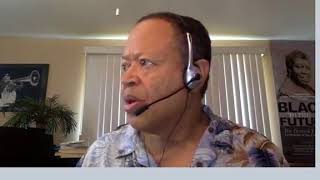
Steven Barnes outlines a system to write a book yearly: write one sentence daily, produce 1-4 short stories monthly, finish without rewriting unless an editor asks, and read ten times what you write. He illustrates with personal stories and classroom examples, then pitches a paid course called Life Writing Ultra.
Chapters
Okay. Okay, Here we go. I am sorry for that. We have not been doing these for a while, so the technology is a little. Little shaky. I'm not quite certain what I'm doing. But hopefully, if you'll bear with me, we're gonna have a good time today. My name is Steven Barnes, and I'm here with. With Life Writing Live. First one we've done in a long time. And you can count on this being a more regular thing now, because I've got a framework that I'm going to be using to communicate something of hopefully real value to my listeners. And I'm glad that you can see and hear me, because I just miss you guys, and I love being able to communicate with you. So I see Cliff and Michael and Mark and Juan Pablo and Jake Rainwater and Warren Lupine and Becky Kyle, and I love you guys, too. It's. It's great to be here. I saw some of you guys up at worldcon, and those who came to my tai chi workshops, you know, thank you for making them a huge success. Some of the best workshops that we've done, even though I was teaching smaller pieces of it, I mean, I used to go through the whole form, and then I found out that the entire form was just too much. There was no way that I could. I mean, I could come back to a convention for 10 years teaching the whole form, and people wouldn't have anything. So I began to simplify. And I've been doing the same thing with my other teachings, trying to figure out what is the minimum piece that if I can drill it, drill it, drill it, drill it, give it to you, that you'll be able to benefit. Because that's what this is all about, is trying to find a way to communicate with my tribe in a way that benefits you. Allow me to introduce myself over the next few weeks. The way I will format this will be refined, some of the material. We're going to cover a lot. So after you've seen it a few times, just tell your friends. You may not want to watch it every week, but what I want to say is that my name is Stephen Barnes. I'm a novelist and television writer and martial artist. And the thing I'm most proud of is that my family is all the way inside my heart. I love them. I love them terribly. And what I wanted to say to you guys about why you should be watching this is that my promise to you is that by the end of this period of time that we have together here, maybe approximately an hour, you will Know how to write a book, a year and a sentence a day. Trust me, I can do the math. I understand how crazy that sounds, but it's the truth. And I'm going to prove it to you. I'm experimenting, like I said, I'm experimenting with the technologies here. And so let's take a look. This is the first slide. This is, you know, how to write a book a year and a sentence a day. An introduction. And let's see, the first rule is write at least one sentence every day. Now, there are going to be six principles that are primary here that are going to be the closest to what you have to pay attention to. So I'm going to switch back over to my picture. Beep. There we go. Alright, so the question that you have to ask yourself is, you know what, what am I talking about? How could it possibly be true? How can you write a book a year and a sentence a day? And I want to give you an analogy. Let's say that it's your goal to run five miles, okay? And you wake up in the morning and you think about running five miles and you think, oh my God, I'm not fit enough to do that. I'm too tired to do that. I just don't want to do that. And you just roll over and go back to sleep. You do that. And the next day when you try to run five miles, you're actually a little weaker because of the fact that you broke your promise to yourself. You know, the night before you'd said, I'm going to run five miles. You wake up in the morning, you're all tired, low G, and you say, I don't want to do this. So your ability to do that, to actually do the thing that you said you're going to do diminishes. It actually drops over time. But what if instead of doing that, you said, I want to run five miles, but all I have to do today is run one. One lap, Just one lap. You know what would happen? What's more likely to happen? You wake up in the morning and you think, okay, I'm just going to run one lap. And that doesn't sound like too much. So you roll out of bed and you put on your jogging pants and your sweatshirt and you put on your shoes and you brush your teeth. You walk down to the track, you're still yawning. And you get down there and you stretch and you walk one lap and then you run one lap. And by the time you've run one lap, you've done 80% of what it takes to run a mile. So you're already warmed up. Now, if you wanted to quit after one lap, you absolutely can. And you have done everything you said you're going to do. You've kept your word to yourself. And there's a fantastic thing that happens when you start keeping your word to yourself. You start developing confidence that you can do it. So if you have a tiny little goal like running one lap, you're very likely to start developing the habits that lead you running five miles. So if you have a goal like, I'm going to write one sentence every day, and you say, I want to be a writer, and I don't have the time to be a writer. I don't have the energy to be a writer. I don't have the ideas to write. But all you have to do to be a writer is write, is be on the road of being a writer. And if you say, all I have to do is write one sentence a day and I'm a writer, then you get to be in on the joke. You get to be on the right side of the issue. You don't have to do that much. You just have to take a step. And if you take a step, you gain confidence in yourself and you start really understanding. This isn't so hard. What did you have to do to write that one sentence? You had to have an idea about what you're going to write. You had to get out of bed or wherever and get in front of your computer or get to your yellow pad or whatever you're writing on. You had to open the file. You had to find where you are. You had to maybe close the door, put on the music that you like, whatever. And you had to start typing one sentence, maybe five minutes, maybe less, to write one sentence, maybe just one minute if you type that. And once you've done that, you can stop if you want to. But here's the thing that is true. If you go through all of that, just like with having run one lap, you've done 80% of what it takes to write an entire page because you've done all the preliminary steps. And even if you only write one sentence, you've kept your word to yourself. That means you are strengthening your confidence in yourself. Now there are what I call atomic actions. The minimum daily dose of something. The minimum daily dose of fathering is spending five minutes with my son every morning. The minimum daily dose of exercise is probably doing my tai chi, which I combined with the morning ritual. The minimum daily dose of my Writing is one sentence a day. Now what do I actually write every day? I'm usually writing three pages approximately in a day. But the minimum, whether I'm traveling on the road, no matter where I am, one sentence. That means every single day I keep my word to myself. So that's the first step. That's the first step and it is an important one, the next step. And once again, I'm fiddling around with the technology here to make this work properly. The next step is to write one to four stories a month. One to four stories a month. Now there are people who say, well, I want to write a trilogy, or I want to write a novel, or I want to write a script. The equivalent to a script. Novel, script, short story, short film. The idea is that a short story contains all the pieces that you need to actually create a novel. There's discipline, there's plotting, there's characterization, there's all these different things. They're all contained within a short story. So many people set out to write novels before they've done short stories, which is a lot like, you know, trying to run a marathon before you've run around the block. You're, you're sabotaging yourself, you're setting yourself up for failure. There's so many ways that we can sabotage themselves. Let me tell you a story. There was a lady I knew in college who wanted to be a writer and she told me that she had an idea for story. I said, that's great. She was going to start writing it. Fantastic. So a couple weeks later I asked her how the story was going. She says, hey, I'm working on it, but it's getting a little long. It's getting, turning into a novelette. I said, okay, that's fine. So about a month later, I asked her how the novelette was going. She said, well, you know, it keeps growing. I think I've got a novella, you know. I said, oh, okay. A couple months later I asked her how the novella was going. And she said, well, God, it's just so, you know, there's just so meaty, there's so much there. I think it's turning into a novel. Uh huh. Okay. Well, about a year later I asked her how the novel was going. She said, well, you know, the idea was just, it was just so filled with action and romance, adventure. I think what I've really got is a trilogy. Stopped asking her after college. Ten years after college, my wife and I are traveling on the east coast and we happen to be going through the town where this lady and her husband live. And we decided to go over there for dinner. We were invited and had a very nice time. And finally at some point I asked her how the trilogy was going. And yeah, you know, you know where this goes. She said, oh, well, it just got to be too much. I got bored with it and I put it away. But you know, I got this new idea for a story I'm starting to work on, but it's getting a little long. Needless to say, I never asked her about her writing again. My guess is she doesn't either doesn't have the discipline to finish or the idea of working on this project for years, years and having it rejected is so painful that she won't let herself finish. This is what we do to ourselves. Rather than having some small and manageable thing that we can do every day to move our lives forward, we make it huge, sprawling, the kind of thing that, you know, we've never had that much discipline. In essence, we're setting ourselves up for failure. The part of us that does not want to change will set challenges for us that we cannot fulfill. This is totally common. You know, all it takes, you could become, you could, you could get stronger and stronger and stronger every day and still lose every weightlifting contest you win in by the simple expedient of putting £1 more on the bars than you can lift at that time. You could be the strongest person in the world and not be able to demonstrate it if you just put £1 too many on the bar. It's so critical to make sure that the things we ask ourselves to do in order to move forward in our lives are small enough that we can actually do it. Because the fact is, when it comes right down to it, if we have the right perspective on our lives, we can solve most of the problems that we run into. I mean, the entire life writing concept came when I was teaching at ucla. I was teaching a writer's toolbox, you know, flow state management, organization research and breaking writer's block and all kinds of stuff like this. And we were having a great time. It was a two day workshop and I was blowing people away. It was really, really, really fun. And on the second day, this one guy said to me, Mr. Barnes, you've given us all these wonderful tools, but I really don't think I'm going to be able to use them. I said, why not? Well, my wife doesn't really understand my wanting to be a writer. My kids make fun of me. The work takes so much of my time. And as he started Talking, you could feel the energy draining out of the room as everybody in the room starts thinking, oh, yeah, yeah. It's just, yeah, that's real. I can't do that. There's this expression that from time to time, life gives you a cubic inch of opportunity. And at that moment, I got one of my cubic inches. I don't know where it came from. Like, it floated by, and I grabbed it. What I said to him was, if you were a character in a story you were writing, what would you have that character do now? And to my shock, he started coming up with all of his own answers. He said, well, I could trade jobs with my wife so that I'm handling more of the heavy things that take less time, that are more effort, that would give me some additional time. I could enroll my kids in the idea of me being a writer, and they might be excited about that if they thought that dad might end up being famous at work. I could take my lunch to work and eat at my desk and work while I'm listening to this. And I realized that. Oh, my God. That the exact same creative intelligence that had been coming up with all the reasons why he couldn't do it were suddenly employed in how and why he could do it. The exact same guy, exact same mind. But something had shifted. And I realized that it was that notion of thinking of himself as a character story. Because we're used to characters, you know, stories that have upbeat endings at the end of the second act. Everything's going wrong, right? So no matter what's wrong in your life, we're programmed as storytellers to think of answers. But when his nose was up against the tree, so to speak, he couldn't see the forest. So thinking about your life as a story that you're telling can help provide you with this perspective that you need to succeed. It's just, you know, we're wired up that way. That's what storytellers are. That's what storytelling is. So I want to kind of offer that to you. So take the small piece. One to four stories a month. Short stories in every way. Short stories are. Especially if you've never published anything, Short stories are the way to get into the field. They're the way to accelerate your work. I was talking with Chris Rush today, who's taught many, many students. With a former editor of magazine fantasy and science fiction written over 150 novels, she believes, as I do, that short stories are the way to get into the field. Now, looking at Ray Bradbury's advice, he advised Writing a story a week or a story every other week. So I'm willing to be a little bit more flexible than that. You write one to four short stories a month. Okay, do that and you're on your path. Alright, so let's see what the next step is. So you're going to boom. You're going to finish what you write and submit what you write. In other words, you finish those stories and you send them in for publication. Now, when you're doing this, by the way, one of the things you're going to have to do is you're going to have to do market research. You're actually going to have to take a look at where stories are published, magazines, anthologies, web zines. Get out there and do a search. Google is your friend who is publishing the kind of stuff that you want to publish, the way you know that. Where are you reading the stuff that you like to read? The same places you're reading it are probably places where you could conceivably publish it. You take a look at the masthead, you take a look at the editors, the submission editors, and you start. You start understanding what the field looks like from the other side of the line. What are the first three things? You write at least one sentence every day. That gets you off your duck, that gets you moving. Write one to four short stories a month. A story every week, or a story every other week, or one story a month, fine, it's okay. But never less than that. Never less than one story a month. And it can be a one page story, very short stories, flash fiction, I don't care. You get yourself started. Get moving people, get moving. And then you finish what you write and you submit it. You're starting to toughen up your skin. You're starting to learn how to take rejection failure. And it won't hurt that much because by the time the rejection slip comes, if it comes, and probably will, a writer papers their walls with rejection slips. That's what we do. You will have already moved on to several stories. At least one story you're actually working on the next thing. So if you're rejected there, it doesn't sting so much. Okay, so those are the first three principles. Got it? Get it. Got it. Good. Okay, now the next step is boom. Don't rewrite. Once you've submitted that story, don't rewrite. Accept to editorial request. In other words, if you submit a story and an editor says, I love this story, if you would just change the name on this character, if you would just change this, if you would just cut this. If you would just add this. Do it. Look, no criticism or compliment is equal to a check that clears the bank. What you want is a professional editor saying that they're willing to risk their mortgage on your work. When you send stories in, you're going to go into the slush pot over and over and over again. It's just the way it is. And what, when that happens, it's fine. You're getting up to plate and you're taking a swim. You're asking one girl after another for a date. Eventually you're knocking on doors trying to sell vacuum cleaners. Eventually somebody's going to let you in. Eventually somebody's going to say yes. But you have to keep it up. If an editor pokes their nose up and says, wait a minute, you, you've got something. In other words, if you're not just getting a rejection slip, but you're getting a letter, that is a fantastic clue that you're heading in the right direction. It's like seeing pieces of driftwood. You're getting close to the shore. Now it's okay to write that story. Otherwise you just keep writing and submitting. Okay, so what have we got so far? Write a sentence every day, one to four short stories a month. Finish what you write, don't rewrite, except to editorial request. Those are our first four. Okay, so let's move on to the next one. And I love technology. Don't you read 10 times what you write? Now this is important. You read 10 times what you write. Writers who do not read are like athletes who don't eat. Okay? You don't. You can't move forward in life unless you are programming yourself, preferably with material that is better than where you are right now. Aim at the level that you'd like to write at, or even higher. 10 times what you write. If you're supposed to write, you know, a story every month, so you have to read 10 stories a month. If you're going to write, try to write. You know, an ideal situation. Read a story every day. Get self collections of short stories. Read, read, read. It is feeding your heart, feeding your soul, feeding your aesthetic sense. It's how you learn. And as you learn techniques, start looking at the stories you're reading and developing a sense of theory of how these people are utilized, the ideas, how are they, you know, whatever models of plot, characterization, theme, counter, theme, and this stuff that you go through, how are these writers using these things? You know, and quite frankly, on a day when you can't Come up with an original sentence. If you forced yourself to write, to type out a thousand words of somebody else's short story, that would be fantastic. If you wrote it in longhand, it would be better. I mean, the point is to get. Get moving, get in the process, get on the road. There are technical things and so forth with what it is that I'm doing here today. But I have to get started on this process of doing one of these every week. Because there are so many pieces to the puzzle to make this work. And the only way to get it working right is through experience. The same thing is going to be true with your writing. Everything that you want, a writer has to move from unconscious incompetence, you don't even know that you don't know, to conscious incompetence, you know that you don't know, to conscious competence. You can do it as long as you're focused on it, to unconscious competence. It is natural, it's normal. Same way that if you practice yoga long enough, your breathing changes even in your sleep. That's what you want. What you. In all art, a matter of self expression. It's a matter of emotional flow. So any technical things you have to do have to be at the level of reflex, or else it won't work. Okay, so read 10 times what you write. Absorb, absorb, absorb, absorb. That's your route. Okay? And the, the last step here is Repeat this process 100 times. Let me tell you a little story. When I was getting started in the field, I was writing like a demon. But I wasn't getting anywhere. I wasn't selling anything. And I was getting very discouraged, you know, because all I wanted in life was to be a writer. I mean, I decided that I'd rather fail at being a writer than succeed at anything else. It was like I. I hadn't given myself any room for my life to be anything else. I burned my bridges behind me. I burned the boats. But the voices in my head that were telling me that I couldn't or I shouldn't or I mustn't, that I was on the wrong track, that I didn't have any talent, I didn't have the ability to do this, you know something? There was a chance they were right. And there was a really serious question. Was I willing to sacrifice everything? Was I willing, literally, to destroy my life for my dream? No. But I wanted to have every conceivable chance to have my dream. So I made a deal with myself. You know, I had done a lot of research on successful writers and all of them suggested that the. They had to write dozens of stories before they were able to accomplish anything, before they were able to sell sometimes several novels, a foot of scripts. The average seemed to be about maybe 30 stories, something like that. So I decided I would triple that and I would write 100 stories before and write them, put them through this process, send them in publication. 100 stories before I would even seriously entertain the notion of quitting. 100. Man, my demons hit me with everything they had, every bit of doubt and pain and fear letting the woman I love down because, you know, we hope to married, have a family one day. But I kept plugging and kept plugging and kept plugging, and you know what happened? I got to story number 23 and it sold. And I, number 26, I think, sold too. And then number 27 sold. And basically I've sold almost everything I've written instant. But I had to give myself the room to fail. Now, I taught this system to thousands of people and to the people who have actually done it, the people who've actually tried stick, stuck with it. Not one person has made it past story 27, not one. So if you're willing to, to follow what I'm saying here, let's take a look at all these steps switching back and forth again. Write a sentence a day or. Yeah, write a sentence every single day. Write one to four stories a month. Finish and submit them. Don't rewrite. Accept to editorial request. Read 10 times what you write and repeat this pattern 100 times. If you will do this, you'll be a writer. Now you know, how good a writer will you be? How far will your talent take you? Things like that, you know, nobody can make you those kinds of promises. But what I do believe from observation, from knowing hundreds of writers, is that the average writer is no smarter than the average person. You know what they are? They're obsessive. They keep working and they keep learning. I remember what it was like to be on the wrong side of that line. And when I talk about writing, maybe half the people in the room, you know, are polite. And the other half of the room feel like I'm talking to them, feel like the way I'm representing the question of their career is something that works for them. And what I would like is I would like your permission to share an offer with you, something that I'm going to be talking about, you know, from now on. You know, just we're going to be going over, we're going to be answering questions, we're going to be going over these six pieces, but I'm also going to be giving you a chance to work with me more closely. And what I've done is I've created something that I think is the best package that I've ever created. I don't want to be moving back and forth between the slides right now. So what I've done is I've created a package that I wanted it to be worth more than anything I've ever done. What I will do is I'll talk about what's in it and it's called Life Writing Ultra. Life Writing Ultra is in many ways the culmination of everything that I've been doing. Because it's. What it's designed to do is to take you wherever you are in your life, wherever you are in your career, and take you up one level. Okay. So that means that if you've never finished a story, it's designed, you're going to finish, start. If you've never finished and haven't had the nerve to submit one, you're going to submit. If you've submitted but you haven't published, you're going to publish something. If you're, if you publish but you haven't been able to publish, you know, multiple times, you're going to get to that level. If you've published multiple times, you're going to be able to move to longer work, you're going to be able to take those steps that you want to take. That the promise that I'm making you is that if you will make a commitment to doing that minimum of writing a sentence every day for a year, I will get you to the next level in your career. That's, that's my guarantee to you. So in order to do this, I had to combine pieces of everything that I've been teaching and I had to go reach way back into the vault for the original Life Writing year long program, which I put out there almost 10 years ago. And I compiled it and put it together and it was the single best thing I'd ever done. But much like a number of other authors who've just given away the story, it was a little scary because I realized I was giving away all my secrets. It was like, why am I telling them this? But I've reached a point in my life where I don't care about that anymore. What I care about is doing the absolute best that I can for the people who trust me. So, you know, at this point, you know, I have to ask with all these things, how much Would I if I did not have this information, how much would I pay for it? And the fact is, if I did not have this information, I pay $1,000. The life writing Year Long program. It's just that good. Combined with that, for people who need kind of a nudge, is the full Life Writing Premium program. And that is 52 weekly messages every week, writing prompts and advice. And some of it is drawn from the Life Writing Year Long program. So the original value of this was designed to once again be, you know, if you what would I pay to have somebody nudging me every week? I Personally, I pay $1,000 for that too. But there is some overlap between them. That's the honest truth. If you were part of the Life Writing Premium program, then you already understand how valuable these things are. So we had to add a lot of other things. One of the things I added was the video lectures, Future Perfect, which was my video lecture on writing science fiction. And it's professionally produced and you know, it sold for $100. So we've included that as well. And we also had the Art of Horror, which was my lecture on horror and dark fantasy. Once again professionally video production, professional video production worth, you know, hundred dollars because it's, it's packed. It's just, you know, I hope you can tell that I'm. My commitment is to helping writers write. If that's what you want, that's what I want for you. But we did more. A really interesting thing happened about 10 years ago, maybe nine years ago. I'm teaching at Clarion Science Fiction Workshop and I always use the Hero's Journey. I love the Hero's Journey. And a lady at that workshop asked, is there heroine's journey? And my first answer was that there's no difference. That there may be some differences in how much of the journey is external, internal, or it involves action as opposed to emotion or relationships as opposed to this, it doesn't matter. But when I was on my way home, I thought again, I said, what if I looked at that question a different way? What if the hero's journey, the 10 steps of the hero's journey, which you will learn, you know, exhaustively, if you get this program, it's linear. What if she was asking, is there such a thing as a non linear story structure? And I said, wouldn't that be amazing? What would that even be? How would you even approach something like that? What in the world is nonlinear story structure? So I talked with my Sufi friend, Mushtaq Ali Al Ansari, who had helped me to map the hero's journey on something called an Enneagram. We've talked about the Enneagram other times, but there are nine positions on the Enneagram. And I looked at it, and what I did was I looked at the interconnection between the different points of the hero's journey. Not the points themselves, but the way they related to each other. And I created a cluster of questions. And when I was done, I realized that what I had was an approach to understanding your story. That if you just ask these questions. It's about 15 to 20 questions. If you will ask yourself these questions about the work that you're doing in any order that you want to. You can write each individual question on a separate three by five card. And by the time you have answered these questions, you will know your story inside and out better than most people ever do, including professional novelists. In other words, it's a way of faking being smarter and better than you may be at this point in your life. It's an amazing tool. It's so. I mean, it's only like three pages of paper, but what's on there is a lifetime of experience. I don't know how to set a price or something like this. I'm just going to say it's priceless because I'd give anything what, once again, to have that. We also have the complete Route 101 program. Now, the Route 101 program is 101 days, over three months of looking at the question, who are you? And what is true? And how can you express yourself more fully? Because that's what it is that an artist has to give the world. Don't you understand? If you know yourself? And I believe that Chekhov, the playwright, said that everything he knows about characters, about people, came from knowing himself. So the more you know yourself, the easier it is to write and the easier it is to live. So the 101 program is a compilation of the ideas about personal, mental and physical development that. That once again gained over a lifetime of study in so many different disciplines. And this is another one of those things that I sold, pulled off the market, but decided to go deep into the vault to find the very best things that I had ever done and combine them and to offer them to you guys worth at least $400. In addition, I created something called the Zero Net Time Program for busy writers and busy people. Basically, it's a fitness program that takes zero net time. It takes no time out of your day and out of your life at all. I'm not bluffing about this. And it will provide all the basic fitness that you need. And if you follow it, you actually gain time rather than losing time. An amazing, amazing addition for people who consider that they don't have the time to take care of themselves. You know, I just came back from WorldCom and saw a lot of old friends, people that I've known for many years. And quite frankly, they have not been taking care of themselves. And in some cases they're reaching. They're finally reaching the point of success that they wanted and their bodies are failing. You need energy. You need aliveness. You need some sense of being here in your body in order to learn from the world, in order to have the courage to keep going when things go bad. And they will go bad. So the zero net Time program is beautiful for that it's self contained. The Fear program. The zero net Time program once again is worth hundreds of dollars. The Fear Program F E A R. You've heard, you know, false evidence appearing real. This is a fountain of energy for active response. It is learning how to take the fear in your life and turn it into energy. And if fear has stopped you from finishing your work, you need what's in this. And once again worth hundreds of dollars. Audio. These are audio combinations of audio, video and PDF, MP3s. All this is downloadable. You get it immediately. The folks Focus and flow program. If you have had problems with writer's block, this will knock it out forever. Because writer's block is nothing but a confusion of two different states. The editing state where you're judging what you've done and the flow state where you're actually creating what you do. You have to learn how to separate those two things. And once you do, writer's blocks will never bother you again. You have to learn how to identify the editing mode and flow mode. Once you do, that world is yours. And I don't know how much would you pay to never have writer's block again. I would consider that pretty valuable. So let's call that, you know, $300 and then you know my wife. British fantasy award winner Tananarib Dhu did us, did a lecture for us called Tananari due Secrets of a writer's life. Digging into her emotional process, how she does this. It's a fabulous talk. It's worth at least 100, probably more. But all these things in the life writing year long premium focus and flow. You know, the the future perfect video lecture. The art of horror lecture. The secrets of a writer's life, the zero net time, the fear program. I don't know what you, what value you would put on something like this. Especially like the non linear story structure. That one thing by itself will change everything. So what I wanted to do was to create a total value of as close to $5,000 as I could get. Because what I was going to do is not charge you $5,000 but my intention was to charge you $500, a tenth of that. But here's the truth. We're just getting started with this phase of my career of what I'm doing with my business at the same time that I'm working in Hollywood. And every week when we talk about this, I'll be talking about Hollywood. I'll be talking about working on books. I'll be taking my experience and mapping it over these different principles. You can see how these things work for the time being. For the people who are like on my Facebook feed, who are on my mailing list, my friends, my family, I'm going to do it for half that. What I'm going to do is the entire package going to be only 297. It's going to be 297. And you can take a look. You can go to www.writingerwebinar.com. that's www.Writeerwebinar.com. you do that. And until you know, for the first, I don't know, let's call it 50, let's call it 50 people to make sure that everybody who I'm connected to via heart space has an opportunity to do this, then the price is going to go up to, it's going to be 497 because like I said, the idea is to try to put together packages worth 10 times as much as I'm charging for. That's my commitment. That's my commitment to you all. So if you will go there and you'll be one of the first 50 people. 297. So that's, that's what we're doing. This is the first thing. If you have questions, things you would like me to address during these talks, they're going to be weekly so send me personal messages. Comment right here on the, on the comment stream. I will take a look. I'll be keeping, I'll be keeping track of it. I just want to know what is it that you need to get to the next level of your career. That's what these talks are going to be about, taking you to the next level of your career. And if you're not A writer, then what you want to do is you want to listen between the lines because there is some minimum that will work for you as well. Some minimum. Whether it's your body, my body, like I said, minimum. Tai chi, maybe the five Tibetans. With my finances, it's saving 5% every week, taking it out of my checking account, putting it into my retirement account. With my relationships, it's spending at least five minutes with Jason every morning. That's just the minimum. With my writing, it's a sentence every day. So that is. That's all of that stuff. So this is. It's good to be back. It's good to be talking to you. I will talk about any aspect of writing that fits into that question. How do you get from this level of your career to the next? And we will be talking about what's in the Ultra program if you tell me something that you need, that you. That you would like to have in there. Oh, my God. I just did an interview today with Chris Rush about marketing, you know, helping. You know, helping you make the first 10 sales. So I'm going to make a package that I want it to be the best and strongest package for writers that exists anywhere in the world. You tell me what you need, I'll do what I can to get it. So listen, guys, thank you so much for being here today. It's been a while. I promise to be talking to you more regularly. And if you like this, please share it. If you feel that I fulfilled my promise, which was by the end of this, you are going to know how to write a book. A year sentence a day. If you feel that way, share it with your friends. That's how we know that you liked it. That's how we know that things are working. So you have a wonderful day and be the hero in the adventure of your lifetime. You take care. Bye. Bye.







