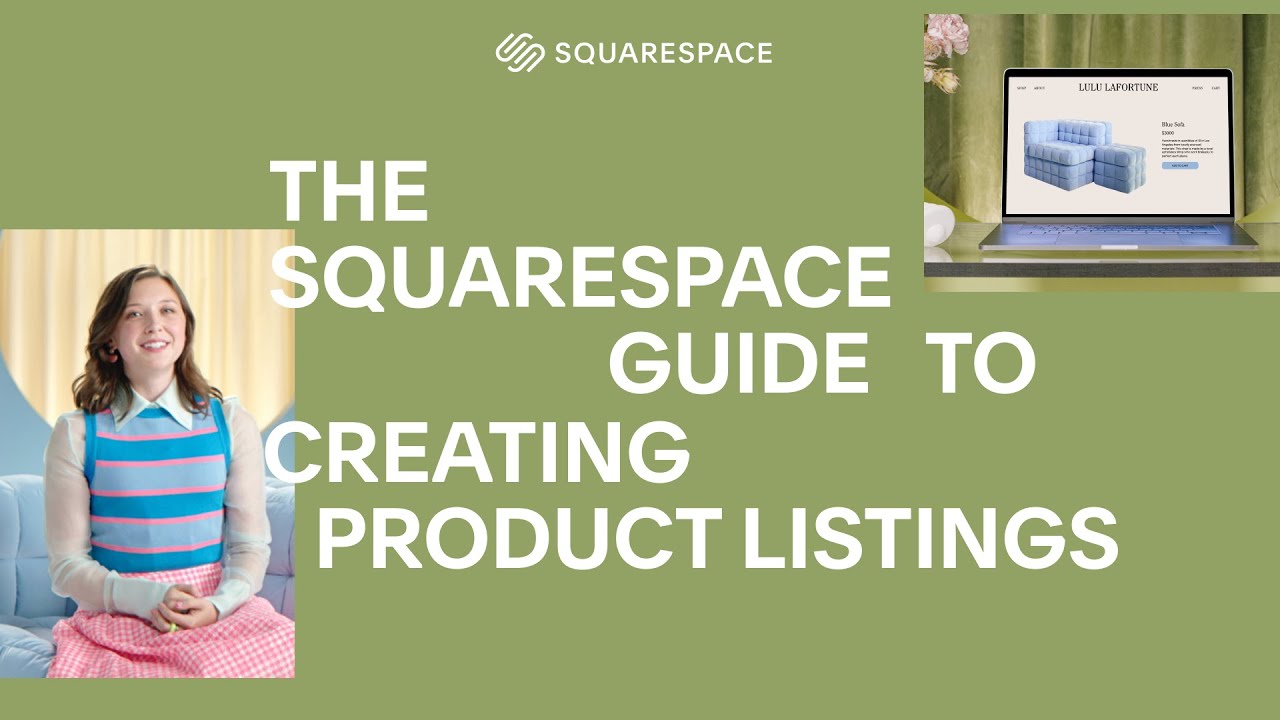
Learn how to write and photograph product listings on Squarespace. The guide covers what to show versus what to tell: photos work best for physical goods, while services and digital products need longer descriptions. Include price, title, video if possible, detailed specs, and testimonials to build trust.
Chapters
If you've ever been in a creative writing class, you've likely been told to show, not tell. Well, when it comes to creating product listings, you have to do both. You need to show your customers what you're selling. If it's a product, show your product. If it's a service, show images or visuals that communicate your offering. And you need to tell them any key details that would prove why they should buy it. Unlike physical While it's obvious to sell products, choosing imagery or visuals to help sell a service or membership is sometimes a little less obvious. Prioritize visuals that work to communicate what you're selling, the feeling your content or services offers your customers, and/or your legitimacy.
Video is fantastic. We use video all the time because part of what you're buying in this digital content is this. It's the entertainment factor of it, and it's also the trust too that I'm not gonna bore you. We use video as much as possible just to establish that trust and that approachability. So basically, if someone's thinking in their head when they're watching our video, yeah, I could stand watching this for another 6 hours, then we've done our job.
With your visuals covered, it's time to move on to the tell portion of your product listings, AKA your product descriptions.
Ultimately, when you're selling products online, what you're doing is telling a story. So anything that is unique or interesting your product is going to get people excited about it. An easy way to figure this out is to go and talk to your customers. If anyone's bought your product before, ask them why they bought that product, what got them excited about it, and then ask yourself, what's going to keep people from buying this? Things like dimensions on furniture or fabric on clothing— ultimately, the things that people can't experience in real life because they're online. Every one of those details is important to helping them gain the confidence to purchase your product online. So physical Physical products often have pictures that help tell the story of the product, so you don't need as long of a description. For services, it's harder to tell the story with photos, so longer descriptions help your customer understand why they're buying that online.
Let's see what these look like in action, shall we?
I think it's important for my pieces of furniture to have kind of a lot of information about them and a lot of story because, you know, they're kind of in the higher price range, and I want people to understand that, you know, these are handmade in LA, these are the materials Here's the person making it, and this is why it exists. So it's kind of like this little story about each piece that I want people to learn about before they commit to buying it.
So if you're selling digital content, digital services, digital something, it's something that you can't see, you can't touch, you can't smell. You have to really tell and inform whoever's looking at your webpage exactly what they're getting. They need to feel like, okay, I have a pretty good idea of what I'm getting. What I'm getting, why I need it, and if in my case for online courses, who's gonna be delivering it? That's me. You need what the product title is and the price, the description, some photos help, and testimonials. I mean, people who have purchased your course can say much better things about your course than you can, so put 'em on there.
And with that, we'll leave you to craft your show-and-tell moment.