Building Rapport with Nate Auffort
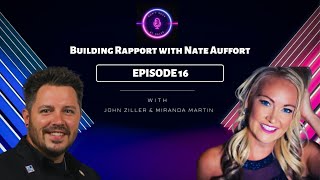
Nate Auffort, a $36 million annual premium agent, shares four rapport-building tactics: mirroring the last few words someone says, naming their feelings back to them, asking closed questions to force decisions, and letting them reach their own conclusion they need the product. Practice with friends first.
Questions this video answers
"well over $36 million in annual premium volume".
Around 12–15 minutes.
Chapters
Yeah, yeah, yeah.
So hold on. This might be the very first time that you've actually worn the same glasses.
I really like these ones. I really.
I've 100 seen these before, and I have not been able to say that throughout an entire episode.
Miranda, these are limited edition neon like that. You can't even get them anymore.
So, yeah, my disappointment is through the rope. I thought we were going to make it to episode number 50 before I had to say that.
And I actually almost didn't wear glasses just to screw with you. And I was like, nah, Nate has to see these pink ones.
I like them, I like them.
But, buddy, how was your week last week? Merry.
Amazing. Fantastical. Rad tastical.
Rad tastical. I haven't heard that one yet. Mine. Mine was amazing. Thank you so much for asking.
Is rad tastic?
I knew you were gonna tell me anyway, so I couldn't. I didn't have to ask because I knew that you were just gonna like, is that.
Is that in the book of awesome? Rad tastical.
It was actually. I made it up. Driving my kids to school. I was like, rad tastical. And I'm like, it's capital R, A D and lowercase tastical. They're like, that's not going to stick, Mom. And I was like, oh, yeah, it is.
You know what, Miranda? I am bound and determined to help you help this stick.
Yep.
So at the end of this, if you guys think that it is a rad tactical call, will you please put it in the comments so Miranda can show her two boys that rad testicle is about to catch on fire? That's what we want you guys to do. So I would appreciate it. Miranda, would you appreciate it?
I would definitely appreciate it. You got to show the small girl what's up, you know, and our esteemed.
Guests would appreciate it, too, because I promise you, here's what I'm going to tell you. All right, so again, today, I always started off with how excited I am, but I mean it for sure today. I mean, although I'm always really excited. But this dude, I mean, we could go through his accolades. We could go through how he was the number one producer in, in all Asymmetry Financial group. We can go through how he was a rookie of the year. I mean, I did it too. So it's not that big of a deal, but built a massive, massive agency. And I think year to date has done. Not year to date, but throughout his career, he's done well over $36 million in annual premium volume. I got so envious of this particular gentleman because I remember this is a little while back, he brought a dude on, and this kid did, like, I want to say, well over $100,000 in annual premium volume in, like, 30 days or 45 days. It was something crazy. And I was like. I was jealous. I'm like, damn. Like, I can bring on a rock star producer. I just don't know if I can get him to do that. Right. And we could all sit here and say, well, yeah, no, it was the kid. Well, no, like, we did it twice.
Now, so now it's not the kid. We did it twice.
Right, right, right, exactly. So we could all sit here and say, well, it's the person. Well, no. How many people do we stumble across that are just absolute rock stars? They just need to be led the proper way. And you just have this tendency to do that, and you have this tendency to just bring people to the top and show them how to perform at the highest level. And so, again, like, your accolades obviously speak for themselves, but, man, I've been so impressed with you. And every single time I hear you speak, I promise you, I learned something. And I can't say that about everyone, and it's just the way that you explain things for my brain. So, guys, you're gonna literally have to, like. Like, I think there's an option where you can kind of like press it back to even slow it down a little bit when he's talking. Because. Because it's gonna come at you fast here over these next. Whatever, 10, 12, 15 minutes. But I promise you, this dude is a rock star. And Nate offered. Nate, what is up, brother?
What has happened to my favorite people, Miranda Martin and John Zeller? So I have a question for you.
Yes.
Why did you guys decide to start this podcast?
That's a really good question. So we kind of. We kind of got into that on the first tidbit of it. And I'll let kind of mer answer as well. But, man, you know what? Like, back in 2017, Miranda and I actually led the Tuesday Waylon call for a year and a half. And it's so crazy, man. Like, we literally have podcasts from six and seven years ago that people still implement today, and they're taking those old calls and, like, using those calls from what we did way back then that are still relevant today.
So they're implementing them today.
What's that?
They're still implementing them today. Today.
Yeah. Like, we. I just talked to Marty Velour and He's like, every single person that comes on board, they listen to you. And Miranda's. Which McCall it training, the critical period. Equity protection training. He said, not a single person comes on my team without listening to that. I had. I don't want to start dropping names. There's several people that. That. Yeah. That use those calls from way back when that weren't even a part of our hierarchy.
Or they weren't a part of your hierarchy.
No. You make me feel dumb by continuing to explain.
No, but they're not a part of your hierarchy. But they're still using your stuff. So you let people use your stuff even though you're not making money on them.
Correct. Yeah.
Awesome. So it sounds like you guys really like to help people whether you make money on them or not.
That's right, man. Yeah. So there you go. I mean, that boils into a nutshell. Miranda, what you say?
I would say the same thing. Like. Yeah, those episodes were like an hour. Okay. So this whole thing with this. The don't suck at sales. We don't want people to suck at sales, but our goal is to keep it, like, around 12, 15 minutes or so, which is the hardest part, actually. Yeah. So it's to bring it into, like, real time and keep it short. So. But yeah, we have a lot of fun doing it and we love helping people.
So.
All right, so we can keep doing this. Right. I could spend for the next 15 minutes and have Miranda and John keep talking. Now, John, what you. What you know is not John. John's in sales. So he caught it because he goes. I feel almost like you make me feel stupid repeating myself. But see, the. The major problem or misconception that people, when they sell, they think they have to make their case. They think that the art, you know, make their argument why that that client needs to have this. So they need to come prepared with their value proposition. How would the. You know what they had that they need and lay out all. And benefits and features. And you need to talk a lot, ask a bunch of questions and find out something in common so they can trust you. And it's all garbage. Because the best way to build rapport is let people talk about themselves. Right. And the best questions to ask is. Depends on the situation. Because I was always taught someone has a TV screen in front of them and they're watching tv, but they're behind me. I can't see what they're watching. I need to find out what they're watching.
Right.
I need to engage the other side to find out what's possible, what their thoughts are, so they feel involved in the process. And then consequently, they'll want to deal with me and do business with me. And they come. This is the key part, right? They've come to their own conclusion that they need what I have. See, when you can create a realization in the mind of a buyer that they need what you have, they'll buy whatever you're selling. So the negotiation is the art of letting the other side have your way. And they feel like it's their idea. So people go, what kind of questions I ask when you're brand new? What I was doing to him is nothing more than what interrogators do. You know, they do what's called mirroring, right? I don't have to have any type of a question. All I gotta do is listen to the last. And I was rushing it because we have 12 or 15 minutes, right? I would slow it down. No one ever. Go practice it on your kid, practice it on your wife, practice on your neighbor, whatever, at the very end of the sentence. Because here's what happens. The very end of the sentence, all I have to do is repeat one or two or three words back what they said with a question mark. Hey, you know what? So what would happen financially if you're in a situation where you lost your husband yesterday? What would that look like? It'd be bad. It'd be bad. Well, yeah. And they're automatically going to go, well, it'd be bad because I don't have enough, you know, money to pay your bills. Oh, you don't have enough money to pay your bills? Yeah, I mean, like, I have my car payment and I have this and I lose my husband, and they keep going and going and going. And then when I get to something that I want them to feel like is their id, I'm going to label it sounds to me like you love helping people. You saw, Miranda ended her end of their sentence. I labeled it in her brain. So when she was done, she said, I love helping people. Whose idea was it? Her idea. I'm just saying I'm repeating stuff back. And when I find what I want, I go, oh, there it is. There's a bullet in my gun. I got it. Now I'm going to label it, and I label them and I make it have their idea. Well, it sounds to me like you'd be in a situation where if you lost your husband's income, then you'd be in a world of trouble. Well, yeah, we would. Whose idea it was theirs. We would be in a world of trouble. And we could spend hours teaching on this. Right. But it's. It's. I'm teasing out information that I may have not gotten otherwise. I don't have to have some fantastical. What was the word? What's the radcastical question? Right. It just gets them talking and creates opportunity to present to you what it is that they really want or what they really need. Right. The other person feels listened to. It connects their thoughts in their head. Part of the message sends the other person is that, I've heard everything you said. I just don't have enough information. And I still don't quite understand, but I'm generally interested in what you're saying. That's it.
That's so good. You're just. You're literally regurgitating a few bits of what they're saying already. Like, it doesn't get any simpler than that, Miranda.
And see, people love it when they know you're paying attention.
Yeah.
They know it when you. They love it when you gently let them know what they said is not enough information. But you're not accusing them of not answering the question. And people continue to go on and on and on and on. We would do an exercise, and the exercise was, go meet someone at lunch. You can't tell their name. Start asking them questions and come back. And they can know their dog. They can know their dog's name, where they live, everything else. Because people love to be encouraged to go on. Interesting. People are interested in the other party. And if you keep doing that, you're going to be a very. I've had people leave and go, man, I feel like I've known you for years, and they don't even know my name. I don't need to go. Hey, Bob, you like fishing? Oh, I like fishing, too. Oh, really? We're all catching. That doesn't build rapport building for wiifm. What's in it for me? That's what they want. Not that your kid plays Little League baseball and he played little. I can do that. That's. That's. To me, building that rapport throughout the presentation is where I make that connection. I don't have to sit there. I mean, imagine going to the doctor. What's going on with your. My throat hurts. Your throat hurts? Well, yeah, I had a scratch in here, so. Scratch is where? Oh, it's right back here. Can Maddie sit down? 15 minutes. Hey, Nate, how you doing? It's good to see you here. I haven't seen you for a while. So how's the kids? How's it. He may ask that in passing as he's doing his thing. He's not gonna sit there for 15 minutes. It's awkward. So people sit there for 15, 20 minutes, build report. And all of a sudden I'm just gonna ask questions. And the questions I'm going to ask maybe one simple question. I'm just going to back to what they say. And they will naturally going to continue to regurgitate, not recurring. They're going to continue to provide more information. Until you get that information that you need. Because what am I doing creating that need. As soon as I find that that need, I go, I have a solution for that. I can't go, oh, wait, John, you're screwed. I have a solution. No, sounds to me like. Or it feels to me like your husband really cares about your well being, the children's well being. And it doesn't want to leave you in a financial situation, situation of hardship. And they go, yes, great. So, I mean, again.
Oh, damn. Good. And Miranda, like, I. Like I think of like on the golf course. And some of the best conversations like I've had is where I'm doing exactly what Nate's talking about. Like, I'm being inquisitive about their life, their livelihood. And it's a majority of them talking and less of me. But I'm genuinely interested.
Well, and, and what I'm doing is kindergarten 101. But there's a lot of people never done sales before. As you graduate, your questions become less. You know, you're in sales on the sales. I've never sat down with anybody and did that where someone felt awkward with it. But like, as you get better and better, you can start formulating questions a different way. But how hard is it? Because people always ask, what questions do I ask? How do I dig for their why? How do I do this? Just repeat what they said back to them and then quiz his own. Yeah, actually, yeah, I lived here for five years. You lived here for five years? Well, yeah, we used to live here and then we moved there. Just do it. Practice it first before you practice it on a live lead. Just practically your freaking kid or your husband or your wife or your friend or next person at the restaurant you meet. Just practice it. What do you say, Miranda?
So I would. I didn't actually do it. This, this is awesome. I wish I heard this a long time ago, but when I was like trying to figure out how to sell, all I would do is write down everything that they would Say, on a piece of paper. And then before I was ready to transfer to the next thing, I would just read off everything that they said and say, so do it. Does that kind of sound like, you know, and just ask if they agreed with so. But what you're doing is way more simple. But, like, that was, like, the only thing. Like, that was my. My one move. I'm like, oh, yeah.
So that's so good. Because what she's referring to, Nate, is like, you would have, like, seven or eight questions just locked and loaded, right? And then whatever their response was, just take it, write it right down, try it, like, as fast as you can, verbatim exactly what it was, and then the exact same thing and be like, all right, so here's. Let me. Let me tell you, if I got this right.
Hey, big mistake right there. They didn't teach you. You don't say. It's. It sounds to me like. Because now it's about you. If you notice, I don't use the word. It sounds like that you and Miranda. I need to keep putting in their ball and their cord. This is their idea and their idea and the brains. My method. I said a brain is like looking. A dog looking for somewhere to pee, and you hold the leash. So if you know these simple things, right, that people want what they can't have. You guys talked about fear, loss before. They want what they can have. They move towards things that move away from them. They only value what they pay for in time and money. So if I know that and I can lead them to make a decision that they feel like it's their decision. I have nothing to sell, people. This is my last. I'll tell you. People always say sales is a number game. If you suck, it's a numbers game.
Sorry.
It is a numbers game, right? Because you go in there and you got your gun. You're like, same pitch, same questions, same deal. And you're like. You talk to 10 people, three sign up.
Yeah.
I go in there for 12 weeks straight and have 100 close ratio with every family I sat in there, wrote an application with, because I didn't. I had an empty gun when I went in, and I wasn't shooting the same bullets at every presentation. I asked them questions. As soon as they go, whoa. Sounds. Sounds like that you're in a situation where you'd be. Bullet chamber. Yeah, Situation. Reverse, boom. Bullet chamber. Bullet chamber. So if they stand there, my mental said, they have all the bullets and ammunition you need to close the sale in their pocket. And the Only way you can get it out of their pocket from the hand it over to shoot them later is by asking questions. So, guys, quit worrying about questions. Just repeat the last two or three things they said and watch what happens. Watch how the doors match. They will continue to talk about themselves over and over. As soon as you hear what you want them to feel like they do, just label it.
Awesome. That's so good.
If you don't want to suck at sales, just repeat the last few things that they said. I love it.
But it is, though. It's. It's so funny. Like, I was talking to an agent, I don't know, a couple weeks ago, and I was getting. Not. Not like this, but I was getting into it. I'm like, man, like, I never had it, like, planned out what I was going to do when I was sitting with the family. And it's like, I would always just find the avenue. There's. There's 12 or 13 different things that I know for a fact that they need. And I'm. All I'm doing is asking questions just to kind of find the hot button. And once I found their hot button, like, it was boom. And then I finagled down that alley to ensure that I could get. And he's like, why don't you train on that? And I'm like, well, that's like. That's like. That kind of, like third layer of, like, psychological, you know, like, we don't need to get into all that. I'm just trying to, like, teach what. What's transferable, you know, but so damn good. Nate Offert. And yes, Miranda Martin.
Can you repeat the line about the puppy peeing one more time? I didn't write.
My mentor said a person's brain is like a dog looking for somewhere to pee. Ever see a dog? And you hold the leash, right? And you get to direct that dog's brain where it's going to go. You're not going to pee here. You're going to pee over here. You're going to pee over here. So, you know, then you get into the whole asking leading questions and don't ask questions that you already know the answer to. It just simplified stuff. People complicate it so much. It's like, if I can ask a question and go, oh, Larry took care of that. Oh, before you hang up, shock them. That crocodile brain fight or flight. Whoa. Before I hang up, Listen, I don't think you want 100 of me calling for the next six months. If you hang up right now, that's what's going to happen? I need 30 seconds of your time. Answer a simple question for me, and I promise you I'll never call you again. So when you say you took care of it already, did you up your coverage at work? Did you sell your house? Or you just plan on not dying anymore?
Boom.
I have an answer to all three. Or, hey, did you up your coverage at work? Or do you sit down with someone like myself? The brain 99.9% of the time will pick one of the options. Hey, sweetheart, where do you want to go to dinner? She's going to say some Mexican restaurant, right? But I said, hey, babe, would you rather go to Perry Steakhouse? We all get dressed up. You want to go more relaxed environment. Hit Kenny's burger joint. Gets her brain 99 to do. She's gonna pick one of those. And so that's another, you know, another thing. I know we got the subject, but, you know, it. Sales is very simple. If you just know the simple tools that these guys are teaching you and the other guests that you have on there to make it. It's not a complicated game. Really is.
It's not.
Look at my wife and look at me and you'll tell me it's. I'm good at sales. Should I flash. Should I flash a picture of her up there? So you okay?
Great.
Yeah.
This guy got that girl. This guy again, got that girl. Right? And I didn't have big time money, so know that.
We should open with that, Right?
Exactly. We're going to. All right, well, listen, made offer. We are, and we will. And we need to have you back, buddy.
I might break wall next time for you.
You're. Will you. You promise? You are amazing. Guys, Listen, if. If something that he talked about today made an impact, we're going to take a screenshot of it too in the comments section. Comment rad tactical. Say Nate offer is rad tastical.
I want to be the first human being labeled rad tastical. Honestly. I'll have T shirts.
Hit the like button. Hit the subscribe button. We appreciate you all so much. Thanks for listening. Thanks for following. Click like, click subscribe. And if you don't want to suck at sales, Miranda Martin, what should they do?
Hashtag don't suck at sales. Click like subscribe. Do you want me to wrap it or not?
We're gonna save that for another day.
All right.
Thank you.
Yeah, yeah, yeah. Show me some, show me, show me some show me.
More from Nate

What If You Could Solve the 3 Biggest Problems Every Insurance Agent Faces? |




Inspiring Insights: Dallas S.W.A.T Insurance #shorts #events #dallas #business

Unleashing the Power of Insurance: Dallas S.W.A.T in June #shorts #events #dallas #business

Dallas S.W.A.T: Inspiring Insights from Insurance Experts #shorts #events #dallas #business