S.W.A.T. Financial's Nate Auffort | CEO Talks with Paul Whitley

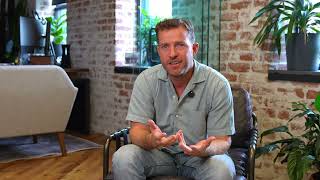
A recorded CEO Talk interview (YouTube) hosted by Paul Whitley featuring Nate Auffort (founder of SWAT Financial) with contributor Stephen Guilfold. The conversation covers Nate's personal background (college dropout, mentorship), his sales philosophy (communication, asking questions, practicing more than playing), the SWAT (Strategic Wealth Accumulation Tactics) training program (events, curriculum, kid-focused variant), and practical advice for business owners and salespeople about aligning sales with company strategy and gratitude.
Chapters
Paul Whitley is the fractional CFO at C Suite Support with a real passion for helping companies set up and implement financial transformations. Paul gives you the tips to improve processes and drive up bottom line profits, helping your business grow exponentially. Simply put, his goal is to help you achieve your goals. This is CEO Talk with Paul Whitley.
Hello there, this is Paul Whitley. C Suite Support CEO talks with Paul Whitley. Today we're talking with another character that we want introduce you to that has a business. He has a great business. But before that, C Suite Support. We're a group of fractional CFOs. I have CFOs, controllers, accountants that work for me and our job is to come in to help you if you need financing for your company, if you need your financials in better shape, where you understand where your profitability is or where you have issues with either your product to profitability or your expenses, we certainly can help with that. Some of the more recent things are the PPP loans. We helped a lot of companies do that. But right now one of the bigger things that most companies don't know about is employment retention credits. Virtually every company that was eligible for PPP1 payroll protection loan1 is going to be eligible for up to $5,000 credit for each employee for last year. If certain conditions are required and you were eligible for PPP2, you're probably going to be almost 90% eligible for taking out the 2021 Employment Retention Credit, which gives you up to $7,000 per employee per quarter for 2021. So if you had 10 employees last year, and I've got a company right now that I'm working with that had 20 employees last year. We're in the process of filing for $100,000 for last year. This year we're filing for $70,000 for each quarter so far. So they're going to get basically $240,000 in tax free credits and they had no idea that it even existed. It's out there for all companies right now and if you qualify, you get 70,000 a quarter for the rest of this year. So I'm printing. One of the things that we do is that we're strategic alliance partners with the Entrepreneur Organization. Next week I'm presenting to a group of 100 CEOs this same subject. Have you filed, do you know that you can get employee retention credits? One other thing we're very heavy on working with is a lot of companies have research and development. They create a process that doesn't necessarily mean that it's IT software. If you create a process that has a public offering face forward. It may qualify for R and D tech tax credits. Last year for seven companies, we were able to go and get almost a million dollars in tax credits for that. So 80% of the companies in the United States are eligible in one form or another for the R and D. So they just don't know it. The big companies use it, take care of it. The smaller companies don't know about it. Those are some of the things that we help you with. But we're going to change the subject today, and we're going to talk about how do you sell? How do you move from being the guy that is a wannabe into somebody that performs, takes your job seriously, but at the same time, you understand your job and you understand your product to where when you go in, if you. Somebody said no to you, it meant you didn't ask the right question. So with that, we're gonna be talking with Nate today. Nate has a little company, and he does a little bit of training. And this character was brought into us by Stephen Guilfold here. And I'm gonna ask Steven to tell us a little bit about him first so that we can then turn the focus on to Nate and what he's doing.
Well, I always thought we were going to the beach after Viva, apparently going during the video.
So wasn't like two days the official launch of summer. And we're in Dallas, Texas. So, you know, let's go. You gotta dress that way, right?
So we do major medical and individual health insurance, and we actually use Nate for all of our training for agents across the country. He does a phenomenal job with all the events he's done. And we'll talk more about that. But we have been blessed and honored to have had his intelligence and knowledge. Well, intelligence I use as a vague term, but a very loose term.
It should be a very loose term.
For intelligence, but really, really incredible. So I'm really excited for you guys to meet him and hear more about what he does.
Well, Nate, tell me a little bit about you. How did you get started? And why did you decide to go into selling instead of other trades or other businesses to where it was get the education, find a job, and spend the rest of your life doing that job so you could retire?
Yeah, well, yeah, exactly. Paul and I appreciate being on here, but me is not that impressive. You know, I'm a college dropout. You know, I was told, like, a lot of people to go to school, get good grades, a better job, to get better. You Know, one day the boss rewards your efforts. You work real hard and do what they say. And I got kicked out of college for the second time. And so I didn't really have a lot of self confidence. I didn't have a lot of direction. And I was introduced, long story short, which is impressive. I was introduced to somebody who was making about a million dollars a week, net.
Net.
And that was back in the 90s, when it was cool to show off your stuff, right? You had seven Lamborghinis and nine Ferraris and had a watch that cost more than most people's home. I know. Now it's a little different now you're supposed to make a million dollars, give it all away, and drive a Prius. I get it. But, you know, back then it was the flashing cash place, right? You know, so I was in my 20s. I was like going, man, and there's so much to talk about with him. And he just started to open my eyes to how pretty much for 14,000 hours. Going through kindergarten to the 12th grade, I learned nothing about the real world. Even though they said, hey, welcome to the real world. Like, the rest of it was all pretend. Like, I didn't know about relationships and how to communicate with people and how to raise a family. I mean, you gotta have a license to drive a car, shoot a gun and fish. But anyone can have a kid, right? And so for the first time my life, I realized, hey, here I am being broke. I'm $100,000 in debt. And I realized, hey, it wasn't my fault. It's not our fault. Like, we were never really prepared. Unless you grew up in a home where you were my dad. I think I'd have a different outlook. I know I'd have a different outlook in life.
People do confuse him as my dad.
Don't confuse the idea that I grew up in that kind of a situation.
No, Mike grew up here, My dad, right? Things would be different. So he changed my whole mental outlook. So choose sales, per se. It just was a happy meeting through a friend, and I got a chance to get mentored by him. And he just, you know, changed the entire way I thought, my entire thought process.
One of the things I learned in my early part of the career, I went through the same process that you're talking about. Went to the school, got 14,000 hours, and I added on. I went to college. College was a necessary step for me. Get in, get out and go on. Now, when I went to college, I went as a music major. I was going to do I was going to be the next Chris Bode or whatever. When I got out there and I had the opportunity playing Dallas Symphony and North Texas jazz. And this is the way I was going to go. Some things changed, but I also came to realization that with music, I couldn't live on with the amount of money I could make in music to live the way I wanted to live or at least have a normal lifestyle that made a change. So I made the switch over into the accounting world, finance world. But one of the main things that I found as I went into the career, and I'm going to say this very briefly but in the front side, for years I was on the backside of running the group. I'm going to be the guy that's running all the account. At one time I was over a thousand locations doing financials every month. And on +7 I had a thousand financials come to my desk and had 1200 people working for me. So these things would be filtered out fixed by seven and a half. And what that meant was month we had retail. Month plus seven meant seven days after month end. I had on plus seven go through a thousand load P and LS by seven and a half, correct a thousand PLs and then by plus 14 I was going to SEC. So you know, to file these things. So that was my mentality, here's my crunch, I'm going to retire. This way things happen. And I realized that, well, I didn't realize I was put in the same kind of position that others are put in. You're trying to find a job, you're trying to find something because that company had issues. I got into the real world because to me that was like working for the IRS or the government. You were in this big 7 billion dollar company with thousands of employees. But when I got into the other business and started running a business, I went in as cfo, became the coo, became the cmo, and then I started running the business and grew a six million dollar business to $180 million.
Wow.
First four years we had 18% per month compounded growth, learned that I could do that. But one of the things I learned is coming out of college like a cadet that comes out of, you know, West Point. You go in as the lieutenant or you go in as whatever your officer position is. You don't have a clue how to do that job. You know how to manage people, maybe you know how to get into those pieces. So I had a different respect. And this is what I want to bring this around. We're going to talk about this pretty extensively in a minute. Salespeople were a necessary evil. They were the guys that gave me the most problems Because I had the most paperwork issues. I had the most back end shop. My warehouse was in trouble. All of these things just came around constantly. But then I had an epiphany. I worked with a company called america's research group to help grow that company. And in that process of working with them, I had to get into the weeds of what was going on in all of the departments. Not at the executive level looking down, but at the bottom level looking up. So I changed that culture in that company by having every person in that company working everybody's job.
Smart.
So I had a warehouse person working on a sales floor for a week out of the year so they understood what a salesperson went through. A salesperson working in a warehouse or in the front office. But it took that one step further that all the executives had to do that. I had to work on sales floor.
So you did that before undercover boss came around, Right before.
A long time ago. Before it was a teenage. Yeah, that's exactly the kind of thing. But it started giving us a different perspective of what life is in the real world in that business. Now, that didn't happen the first year I was out there, but it did happen about the third year. I was out there because I wanted to continue to figure out how to be better. Better in search of excellence, as the old book used to say. Now, what I also became aware of that was twofold. Number one, I was a pretty darn good salesperson. The week I'd be on the floor, I'd be the top salesperson in the company. I'm going, huh? Okay, this is fun. I also learned I loved working with people Rather than working with processes and things. But the last piece of that that's important today is I learned that a salesperson is the reason you're in business. If you don't have revenue, you don't have anything to manage, and then you don't have anything to count if you're the bean counter on the back end. So if you're a cfo or a controller, whatever, you're an accountant, you're going in to bayonet the wounded. If you're not involved in the revenue stream, then your third man in that process. From that point on, I made every effort that I knew how to drive revenue as well as I knew how to operate the revenue to profitability, to count the money to go to the bank with. That made me Learn businesses that also when years later, when that business had issues because our lender went under. When I became a lender, it gave me the empathy to understand how businesses ran and what a business owner dealt with. And it helped me be very good in business development sales to go back. So all of that just kind of grew up to give me an opportunity. Now I'm going to stop there and say, I used to hate you guys. I thought you were, you know, you were just the taking advantage. You were prima donnas, you're whatever. And I didn't have a clue. And I'm going to say half the CEOs that are going to be watching this, that are going to be dealing with this, they're going to have the same impression that the salesperson is a primadot on their company, that they're the worst person as far as paperwork, they're the worst person as whatever. And I'm going to turn that back around with one last comment. I finally figured out that my top salesperson, I'd hired admin to work for him because he could produce more money for me as a company than any of these mayors that were down here trying to do a business. I wanted stallions, racehorses, and I'd support them. That attitude allowed me to grow that company. Now, where do you fit into all of that to make sure that you get that company? I had 800 salespeople at that point.
I agree with the prima donna and the paperwork, though.
I'll give you that.
Salespeople or just prima donnas, how do you change that and fix that?
Wow, look at that. See, to me, I think a lot of sales guys, I don't consider myself a sales guy. I think if you're alive, you're in sales, you're either buying someone else's idea or you're selling your own. You're talking to your children. You're in sales. Are you married?
Yeah.
You're a closer, right? You got somebody. I convinced my wife. You ever seen her? She's as beautiful as I'll get out. To spend the rest of her life with me. That's a good close, right? It took me two years and a little bit extra time on that. So one of the things that I was taught by my mentor, well, I've taught thousands of things, but was really, you know, we're all in sales. And again, you're either buying someone else's idea or you're selling them yours, right? And it all has to come down with communication. So what I like to. What I was Taught. I feel like I'm a messenger to deliver the information that I was taught that changed my life. The way I think, the way I communicate. I mean, if you're talking most sales guys, I guess you want to classify them as that or most people, they try to pitch their product, pitch their idea, or pitch their opportunity. Well, when I got taught by him, it works a small percentage of the time. So they go, it's all about the numbers. Well, no, if I'm able to ask you questions to find out what your pain points are or what your needs are, and I can provide a solution. And I, more importantly, can create a realization in the mind of the buyer or the potential recruit that they need what I have. They'll buy anything that you're selling. They got to come to the conclusion in their own mind that the decision I'm about to make is the right one for me. Not being told to make that decision, because then when they leave, they all feel like they won because. And it's an art. It's like, we weren't taught that in, you know, like I said, math class. Right. All this stuff. You know, I never went. I was taught money's not that important. And, you know, money doesn't buy happiness. I disagree. Money buys happiness. It just doesn't buy fulfillment.
Right.
You know, when you get a bunch of Christmas presents, you're happy. When you go on a nice vacation, you're happy. No one walked in the jet Ski. Ah, it sucks. I'm on Jet skis. You're happy. So when I was involved in this business, money doesn't buy happiness. But, you know, money buys happiness but doesn't buy fulfillment. What it really came down to was communicating to that individual in number one by asking questions.
Right.
And then we could spend all day on this part of it to be able to lead them to make a decision they, most of the time, already made. And the other thing was, is that everyone communicates and responds differently, whether it's you're trying to sell them something, get involved in an opportunity, or whether you're managing them or whether you're attempting to motivate them. And most sales guys, right, it's all about the numbers. Right. You know, go through all the numbers. Yeah. If you have a pitch, you got to go through a bunch of numbers. If you learn to communicate to them in the language that you speak. I mean, Paul, if you had 100 people lined up and 25% spoke Chinese, 25% spoke Mandarin, 25% spoke English, and 25% spoke Spanish, and you could only speak English, how much of your audience did you lose? 75%. So if you're an 80% closer, right, because you're close, you learned all these closing techniques, you know, that you got, and you're dealing with 25%, you close 80% of them, what do you got? 18, 19 guys. What if I learned the art of communicating and I didn't have to close anybody and I got to talk to all hundred, I could be twice as less talented than you and still do more production.
And you're selling me? You're going to try to sell me on this idea?
No, no, you pass. But where do I fit in? So what I was taught was that, again, how to identify them rather quickly with different triggers and different points, to be able to deliver information from the tonality of your voice to the speed of your voice, to how you're talking to them, the questions, how they respond, you know. And you've learned all this through doing what you did? I didn't get to do what you did. I had to be taught that kind of stuff. And so few, even managers, CEOs, salespeople, have ever been been taught that. You know, that's what made me. You know, that's kind of where I guess I would fit into the arena of the sales world.
One of my acronyms is fuds. I want to know what your FUDS are. Fears, Uncertainty and Doubts. Because if you will discuss whatever those are, be it the product, be it the service, be it the. The communication or the negotiation, if I listen, and that's one of the key points. And you know, when I'm in. In my negotiations or I'm in dealing with something, I always want another person with me. I want someone like this character that's been so quiet over here, I thought he went to sleep. But, you know, I want somebody there that is paying attention to your body language, to your reactions, to your eye movements, or they're interjecting so that it gives me the chance to do the same thing, because those are going to tell me, are you engaged? Is this something you're interested in? Where did you wince when something was said? Because that's an uncertainty or a doubt. So that gives me information. I once went into a meeting with a full crew with Trammel Crow. One time. I was the largest lease or footage in the city of Dallas with Trammel crowd. And I went into a meeting with some of the executives of Trammel Crow. And the guy I went in with, a guy by the name of Mark Meyer. He headed up their commercial division. When we walked out of there, he said, I need to take you into more meetings. I've never gone into a meeting that had more people shaking their head than no. When I walked in and walked out with an agreement, the only way it was done was what you were just saying. So I want you to expand upon how do you develop understanding what they want, regardless of what the widget is. I don't care if it's a car, it's a building, it's a roof. I don't care what that product is. How do you. You're talking to them because they have a need. How do you get that need out of them and what their concerns are?
You know, I like how you said doesn't matter the product or the widget because, you know, I did network marketing for years and used the same skills to make, you know, millions of dollars in that, and then went to credit card processing and used those same skills and make millions of dollars in that. And then it kind of accidentally, which we'll leave this story out, fell into the insurance world and was able to make millions of dollars and continue making millions of dollars in that. And, you know, you have a lot of these things that are out there and there's good, you know, getting to know yourself and your inner child and all that stuff is great. Through, you know, Myers Briggs and, you know, the disc assessment and, you know, but like, what are 28 different things? Are you an ESTJ or ENTP and this and that. Like, I'm gonna hand you a test. Hey, before I talk to you, try to send me a product. Why don't you take this test real quick? Or I was at a thing where they're talking about the disc and I think they're great, they're awesome. You want to do that? You know, the five voices, leadership voices, all that stuff is great. It's like algebraic equations, though. It's like calculus up here. Right. And so I'm not dogging them in any way, shape or form, but, you know, we do it at our SWAT trainings, which is basically strategic wealth accumulation tactics.
I was going to ask you where in the world swat. I'm going in there. SWAT team. You're gonna go in there and conquer whatever the evil is.
Yeah, you got.
So you're going after this. The evil is not having what you need.
And I'll come back to this. So I'm gonna go on a segue here. So just, you know, you know how it happened. I was sitting in a thing talking, you know, Writing down different names for things. And it was strategic wealth accumulation, tactics, swat, you know, it's the elite of the elite. You know, the special weapons tactical unit. And it also has a double meaning for which is my real passion, which we won't go down the road too much, but which is students with advanced training. Because I have a son, my stepson, I met him when he was 4 and he had some challenges, like all kids do in terms. And they want to label him with this thing or label him with that thing. I don't believe in labeling people. But I started teaching him this stuff when he was 5 or 6 years old. And he listens to 15 minutes of personal growth every day. And he gets done and he writes down, what did I learn? And how can I apply it to my life? And I thought, man, I didn't learn this stuff until my 20s. Where would I be in my life if, number one, they taught it in school? And where would I be if I would have learned these techniques? How to be a pioneer versus being a puppet. How to control your environment by being controlled by your environment. And I looked at all these, you know, incredible seminar companies, or, you know, herbalife has a big event, or, you know, pfizer has a big event, or, you know, people got the 10x and all, they get all these adults in a room and they all go back and they're charged and personal growth. And I believe in that 100%. But where are the kids? You're all at home. They're not learning the language. So now you got these parents that are growing and a bunch of kids that don't know the language of their parents that said, what if, what if? And this is a long term thing, but hopefully shorter than longer. What if? When you did these events, there was a curriculum put together, was, hey, bring your kids. Obviously you're not going to bring your three year old toddler, but, you know, six to 12, bring your kids and they sit in a room, they learn the same thing at their level. And you get other kids coaching kids that went through that. So now you're a swat kid. You know, how cool is that? You know, students with advanced training, you know, so that, that's kind of a passion as well.
Do you do that training or work with people to do that training?
Well, we're start. We're just, we're getting. We're starting. I've done all this. So here's how. I've done all this internally with all my sales organizations for the last 20 years. And it wasn't until I had coach Michael Burt and Cody Askins came to one of my events and they said, why are you not doing this, like, outside of your. Just on your own sales team? And I was like, you know, I'm just. I'm not motivated to be. I don't want to throw names out. I just don't want to. I'm not looking to be a guru to somebody or, you know, fill stadiums full of 20,000, 30,000 people and do 20 of these a month and all around the, you know, the world. And that kind of stuff was just, you know, I was just sharing with the guys in my organization that generated me the income. Basically how my life changed. So they encouraged me to do a one day event. It was only a couple months ago, and we had 85 people in the room. And I always say, you can always determine the value of the information or the product you bring based upon how people reach in their wallet. You can talk all good game, but they ain't paying. You're not doing a good job. The value. And so I asked everybody, would you guys like to do another one? You were there. It was the first one. It was a one day event, and we talked about the personalities and stuff, and everyone's like, yeah. I'm like, okay, we'll see. So I had my assistant put some forms together and passed them out during a break. And next day she came over to the house. I said, how we do? She said, we sold 122 tickets, so there's only 85 people there. And 20 of them were staff members and their wives. Like, how do we do that? She says people are buying them for their team. Steve came and then in the next training, brought almost 30 of his people back. I was like, wow.
I GUESS he was 30 of the 122.
No, no, it was two of them out of the. Out of the 85. Right? No, he didn't do that. He ended up buying. We had 250 people at the next event.
Yeah, that was just after one day. So let me actually talk in this. So as a sales guy, and I'm taking some of these words out of your mouth, but as a sales guy, you don't go to college to be a sales guy. You go to college to be a doctor, a lawyer, like something that's a very specialized job. Well, when you talk about what we do growing up, the entire childhood, you don't learn how to get into people's deepest, darkest feelings, emotions, and have the ability to relate to people more than just doing math. And algebra and can you read and write? So what SWOT does is it teaches us how to basically have gone to school for a four year degree in three days of what we actually needed to have. And there was never a class for. So that's what I love about. And so since then, swot's grown so much. My question for you is what do you think is kind of the biggest things of what's caused it to erupt the way that it has?
That's a great question. I haven't really thought about that. I know what it made it erupt for me. When I was sitting in a chair in my 20s and my mental was teaching the stuff that I do my best to teach. I'm not getting 100% of the information. I do my best. He was making a million dollars a week, net. Net. I'm not at that level yet, so obviously I'm still learning. And I was on the phone with him today and actually for about an hour and I'm just like. The wealth of knowledge that he has is just amazing. But what was it for me is that whenever you can learn something that you've never learned before, that can help you grow and help you increase your mental, physical, spiritual, social, not just financial. Right? Financial is important only if you don't have the money. Because once you get out of the way, you can focus on what's really important in life, in my opinion.
Right?
Because it's hard to have good mental health if you're always broke. You know, people, oh my God, you know, by health. Really. Well, if I go shop at Whole Foods, which we do, that's better than shopping at Aldi's. I'm in college, where you could buy, you know, 10 Brolo loaves of bread for 50 cents. Remember that? I don't know if they have them out here in Texas. So people gravitate. I know. I gravitated towards that because I was hungry to learn how to better myself in all areas of my life. And so what's blown up, I believe is that there's a lot of, especially in our industry. There's a lot of motivation, excitement and powerful stories that only goes so far. Like how do I do? I understand you were broke and you were homeless. Now you're making millions of dollars. Like, what do I do? Like what? What are the actionable steps, the strategic wealth accumulation tactics? What makes you different? Because I know a lot of people in your situation who didn't have success, who did fail. So if I can deliver the whole part of the Two and a half day workshop is to deliver actionable, like I said, strategic wealth accumulation tactics, steps where they can leave there and they can apply it immediately. One of the coolest things that happened to me is that I went to Ty James, who was a brother in law of Cody Askin. He went to the event and he called me up and he said, hey, we're doing a small event for me and my dad's company where they sell insurance. Would you come up and do a couple hours of training? I said, absolutely. You don't have to pay. I'll come up there because I love these guys. And his wife pulled me aside and she just grabs me in the forehead and she goes, I don't know what.
You did to him.
I'm like, oh boy, I'm in trouble now. What did I do to him? She's like, he is 100% completely different person. And I'm like, I didn't do anything to him. I gave him information that my mentor gave me and he got the information and he applied it immediately. He said, he's a different father, he's a different husband. He can't stop talking about how his life has changed. He treats his employees different, he treats me different, he treats his kid different. And it was just because they're, you know, we have blinders on. We don't know what we don't know. Right? It doesn't make you special because you know something someone else does. It just, you don't know what you don't know. I learn from people every day. I learn from you. I've learned from him in the first five minutes of sitting here, I'm sitting there going, man, okay, I need to get your phone number because I literally Learned more than 5 minutes about how business operating when we were before this show started than I have from probably 20 people I've had dinner with. So, I mean, you are by far one of the most intelligent individuals in terms of running businesses that I've met just the short time I've known you.
But you doing what you pay just a little while.
No, you don't have to pay me, right. 100 bucks. But doing what you did with that organization to grow it, I mean, you learned hands on, right? So when people leave this workshop, it's not something that they have to like reread their notes because. Which you should, however, something you just got to practice. Right. You know, you can be the greatest. You know, I was on the phone with my mentor so today and he was, we were talking back and forth and he said, you know, you watch any of the playoffs lately? I said, well, yeah, it's kind of in the background when I'm working and stuff like that. He's like, what do they do before they go on the court to start the game? Like, well, they warm up, right? True or false? They warm up. It's like, why? What do you mean why? They're warming up for the game. He's like, yeah, but they're professional athletes. They're the best of the best in the world, man. They're making tens, if not hundreds of millions of dollars. Why are they warming up? Why don't they save that energy? So in the fourth quarter, they're not as tired. What are they doing? I said, well, they're getting ready for the game. They're practicing. He goes, exactly. He goes, how many people do you know, Nate, that practice their craft every morning for an hour before they start their day? They just get up, oh, yeah, time to go call, get on the phone, start calling leads. So if you have the best athletes in the world, he said, that are smart enough to realize they practice more than they play. How many people do you know in your industry, Nate, that are in sales that practice more than they play? I said, none. He said, if you learn to practice more than you play, guess what? He told me this today. He's never taught me that. I was like going, wow, what an epiphany. I don't practice more than I play. So now I know tomorrow morning, guess what I'm doing? I'm going to start practicing more than I play. Because even though I think I'm great in sales and communicating and everything else, I need to do what the professionals do. And that's, I mean, that was another thing I just learned four hours ago today.
And that's exactly why when I left there, I've always been under the impression that tomorrow could be the best day of your life. Somebody you can make that call of a lifetime that came in that you never knew. Being in that training and looking around, maybe five guys with us looked around and was like, if we had 100 people here, how much would all their lives have changed if they had heard what I heard? And I can't repeat that three hour days in a stuff, in a phone call. So that was probably the biggest reason that we right there. I knew that the people I cared about, that I saw the longest term of what people actually want to be successful, they needed to be there. And so when is the next one you guys have next SWAT transit?
It's going to be here in Dallas September 23rd and 25th.
So it's a Thursday through, so kind of putting things in here. How do people get a hold of you? Why do they. We've already talked about why they want to get a hold of you, but why do they want to join this swat? We've got a couple minutes left here. How do they get ahold of you to get involved and move from there? And then I want you to wrap that up with what does gratitude mean to you?
Awesome. That's great. You can go to swattraining.infos wat training.info events. You can email me directly. I put my pants on the same way everyone else does and myself or my assistant or shorts and flip flops. But, you know, you got to be you. Be you. I always say be you@natewat financial.com so n a t e@swat financial.com and you know, the events page will keep you up with the different events and, and it's not just for the insurance industry. Eventually we'll go, you know, wider and. Yeah, and, and like, to me, it's like, you know, I have licensing, you know, that I do for my mentor and everything else. It's like we, you know, you know, I don't need to be the deal that doesn't need to be about Nate Offert. It's about changing lives and children's future generations, their lives. And so we need, you know, hundreds of people that are interested in doing, training and learn the material and be able to deliver the information. Deliver the material because everyone. I also realized not everyone likes your voice. Not everyone likes my voice. Not everyone likes his voice. Yeah. So we need more than just one voice. And even at our trainings now, we have know, 5, 10, 15 speakers that are up there at only giving time so far. So, you know, gratitude to me may be different than it is to other people because I'm a firm believer that obstacles are put in your, in your, in your way to see are you man or woman enough, you know, to overcome that. And the miracle is always on the other side. And so many people miss this. And I missed this my whole life. And my mentor said that it's easy to have an attitude of gratitude when things are going good, but it's tough to have an attitude of gratitude when the world's going to hell around you and everything's falling apart and everyone has different beliefs. But, you know, I think it was in Think and Grow Rich they talked about, you can judge the man or the woman by the size of the obstacle it takes to overcome them, which I think is great. But so many people miss the miracle because they don't continue to have that attitude of gratitude during the times when they're toughest. There was a formula he gave me. I won't have time to go through it all, but it included, is this really going to matter in 10 years? Is one of the things I ask myself, do you know anybody else who's going through this and has made it through? Does it really affect anyone else around you, or does it affect you and your immediate family? They don't really care. Steve loves me, but if I can't pay my mortgage, he's not going to be cutting me a check. And then one of the biggest things was, do you know anyone else who's been gone through what you're going through and made it? And then do you know anybody else who is experiencing anything worse than you are? See, that's the point, because people go, when my house flooded and there was $100,000 of damage on it, and I couldn't even afford to fix it, and the insurance didn't cover it, and I'm struggling to start a new business and. And I'm losing my rental income. I wasn't like, yeah, this is awesome, man. All right, my house is flooded. But I was able to sit down. I had the same feeling. Same, oh, my gosh, what am I going to do? And sit down and go through the process and we teach it a lot at SWAT 2. And when you get to that final one, I didn't wake up and find out that my wife was beheaded for her religion this morning and my son was killed. I didn't wake up and find out that I have stage 4 terminal cancer this morning. I didn't wake up and fill in the blank. And all of a sudden, you start to have this feeling of great gratefulness, gratitude. Like, wow, I'm fortunate. I'm sitting here feeling sorry for myself at the time. A $700,000 house and my rental property is flooded. Woe is me. And what happens? You start to have that gratitude. And then, hey, there is a miracle that came out of that. So everything. So, like now when I get hit, no one likes it when I get hit hard. I think I always go, hey, there's a miracle. Something good's good about to happen. But I got to keep that gratitude even when the world's going the shit around me. Pardon the French. Going the heck around me. Is that really French? I don't know, I'm sorry. I was doing good, right? And that's my definition of gratitude is realizing that you need to be thankful every day at every given moment of what you have. And I never seen a hearse pulling a U Haul, right? So you can't take it with you. And you're probably not gonna want that stuff, materialistic stuff, 10 years from now anyway. So who cares? My mentor said don't fall in love with your step. Right.
Well, I appreciate that. Gratitude to me is very important and I found out a long time ago the more you help people get what they need and what they want, the more you're going to have to receive. So humility, care, gratitude, we all know where we came where we should and we hopefully all know where we're going. So with that, thank you for being here today. Paul Whitley CEO talks. We hope to see you next time.
More from Nate

What If You Could Solve the 3 Biggest Problems Every Insurance Agent Faces? |

Inspiring Insights: Dallas S.W.A.T Insurance #shorts #events #dallas #business
Unleashing the Power of Insurance: Dallas S.W.A.T in June #shorts #events #dallas #business
Dallas S.W.A.T: Inspiring Insights from Insurance Experts #shorts #events #dallas #business