Episode 18: Tai Morshed on Ringing the Bell, Teaming with Heroes, & Connecting a Continent With MMA
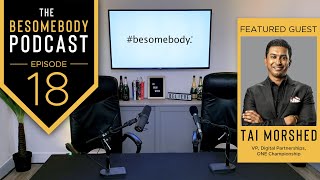
In this Be Somebody podcast episode, hosts Cash Shake and Herbie interview Tai Morshed, Vice President of Digital Partnerships at ONE Championship. The conversation weaves through Tai’s personal background as a first‑generation Bangladeshi‑American, his early career in tech (Dell, a startup, TubeMogul’s IPO, Adobe) and his move to Singapore to lead digital strategy for ONE, Asia’s largest mixed‑martial‑arts media property. Tai explains the distinction between ad‑tech and mar‑tech, the cultural and business rationale behind ONE’s rapid growth (30‑40 million digital viewers, 85 million on a single day, free‑to‑air distribution across 150 countries), and how the pandemic forced the league to pioneer closed‑door events, shift revenue focus from ticket sales to media rights, and expand digital/ESports content. He shares leadership lessons—clear mission, acronyms like FSO, MSH, GSD, and the belief‑vs‑building mindset—and personal motivations, citing Hakeem Olajuwon as a role model and the importance of storytelling that highlights athletes’ personal struggles. The episode ends with reflections on globalization of media, the power of micro‑stories to connect audiences, and a mutual pledge to collaborate on future marketing initiatives.
Chapters
Ladies and gentlemen, everybody wants the prize, but nobody wants to pay the price. Can they be pushed? Do they have a sense of urgency? Do they want to be great? And then of course you look at them, you're like, yeah, right. Everybody wants to be on your team when you're on top. I saw the angel in the marble and I carved until I set him free. Go be somebody, bro. But the most important part of the Be Somebody journey is the resilience.
Welcome to the Be Somebody podcast, your and raw destination for all things entrepreneurship, leadership, and culture. One of the top-rated business podcasts in the world. Now give it up for your host, Be Somebody Inc. and BSP Group International founder and CEO, Cash Shake.
Welcome to the Be Somebody Podcast. Herbie, you're looking good as always.
Thank you, Cash. I appreciate it. Wish I was in my Be Somebody tee though. I feel a little dressed up for the episode.
I feel like you're recycling the same outfit over and over, and that's why I like to go with the white shirt or the Be Somebody tee, because then Nobody knows. No one knows if I'm recycling or not. Like, I could be wearing the same thing every episode. Y'all don't know.
You just have 10 Be Somebody t-shirts, 20, who knows, right?
But you wear the same thing every time, which I appreciate. It's good luck.
Absolutely. I take it off, I put it right on the chair behind me.
Oh man, you know what I was just thinking of? Because everybody who's been watching the show hopefully also follows our social media accounts on Instagram, Facebook, Twitter, and we always do the little pregame Pop a shot, which by the way, Josh saw that I hit what, 75, 75, 77. I destroyed Jordan Moore on our team, 75 to 21. But we always use that as our early warmup before the show. And today when we were playing, man, I was just thinking about again, how much we're missing live sports.
Yeah, you're right.
The only sporting event that I've seen live the last few months has been the UFC, which was a little crazy to watch because you had like the title fights going on, but no one in the crowd. And when Bruce Buffer is giving that intro, you're so used to hearing the roar of the crowd and feeling that energy when you see the fighters walking up, seeing everybody taking pictures and just waving flags and all that. And you didn't have that. But on the flip side, it still felt really good. To be watching live sports.
I can't imagine how it feels from like the fighter standpoint to not have the energy of the crowd. Like, I mean, I feel like I played baseball growing up, not a ton of energy, you know, high school baseball, but still like the UFC fighters coming out and you've got the crowd everywhere and they're chanting your name and you're coming out.
That adrenaline.
And it's empty.
Yeah, I think that, I was thinking that too. It's like, how much does the lack of adrenaline that you no longer have because there's no one in the stands, how much does that affect the performance. And if you think about other team sports, typically the energy of the crowd is what fuels the athletes on the court or the ice or the field. And they talk about, I mean, you work all season to get home field advantage so you can have the crowd roaring. But it was interesting to me as a viewer to be watching the mixed martial arts fights and even without the crowd still being excited, that we have live sports back on. Yes. So I'm really excited about the guest that we have today, somebody I went to college with and somebody that I've just been following as a professional as he's been making waves across the advertising industry, the digital media industry, the content industry, and now he's leading work at ONE Championship. Which a lot of people in the US don't know about, but it's actually Asia's largest global sports media property. It's a mixed martial arts powerhouse based in Singapore, and they are growing really fast, man. If you think about the viewership in China, billions of people, you think about what's happening with sports in general, and also just the legacy and the history and heritage of mixed martial arts. That's where it all started.
So true.
Mixed martial arts actually has been a core part of the Be Somebody journey as we've been growing and expanding as a content platform over the last few years. And you know, we had Henry Cejudo, one of the greatest combat sports athletes of all time, UFC champion, Triple C, on episode 6. So I'm super excited to hear from our guest. I'll say his name because I know like the suspense is killing everybody. Tye Moorshed. To see what they're doing and how they're thinking about the sport, how it'll evolve, how in-person attendance is going to be changed moving forward. Because when you look, Herbie, you know, we always talk about, you know, the data, the stats behind it. There was nearly 50,000 sporting events scheduled for 2020. And as of today, what experts believe is that only 53% are likely to take place this year. And honestly, and that's from a CBS Sports study, honestly, I don't think it's going to be that many. I think, I honestly believe it's going to be less than that because as we've been seeing what's been happening with the different policies and restrictions that have been put in place, and we talked about it with multiple guests, like, when are you going to pack 50,000, 60,000, 70,000 people in stadium? Like, I honestly don't think that's going to happen in 2020. I would be shocked if that happens in 2020. So this stat on CBS Sports that Henry StackGirl gave us, I mean, it says 53%.
Holding you to it, Henry.
And the global value of the sports industry is estimated to be about $470 billion. And due to the pandemic, it's expected to generate $61.6 billion less than originally projected. In 2020. These numbers are massive. And the ripple effects and the trickle-down from not only the athletes, but the vendors, the surrounding bars and restaurants, to all these venues and stadiums, the TV deals, it's huge.
Yeah, I mean, it's everything. And it's crazy to think about walking to a game, you do, you grab that drink at that bar that's right outside the stadium, or you've got the vendor selling t-shirts. Like, All of that is gone and it's impacted not only from, you know, coronavirus and people not coming into their establishments, but also then not being able, once they reopen, to have the crowds even come in.
Right. So, you know, I think it's going to be one of the most fascinating things to watch as these leagues start to open up and how they do it. And I got a chance last time I was up in Singapore and I went to go see the ONE Championship office, man, it's amazing what they're building. And at that point they were just planning out their rollout to all these live events. They did one of the biggest events ever in Tokyo. They were planning their whole cadence for the rest of, at that time, the end of 2019 and all of 2020. And obviously that's been affected drastically. They're pivoting with their global platform and global following, man. So I'm excited. I'm excited, Herbie. Give him a good intro.
All right, Cash, let's do this. Here we go. Let's welcome to the show a leader who graduated with a degree in corporate communications from the University of University of Texas at Austin, a digital marketing and advertising professional with over 10 years of experience in numerous roles in digital video, email, and social, including at Adobe in Southeast Asia. Today he's the Vice President of Digital Partnerships at ONE Championship. From Houston, Texas and based in Singapore, please welcome Ty Marshall!
What's going on, Ty?
Hey, what's up, buddy? How you doing, brother?
Good, man. So great to hear your voice. So great to know that you're safe at home. Are you still down in Houston?
Yeah, I'm down in H-Town, my folks' place, man. I've been here for 3 months. It's interesting to be, you know, not living at home so long and then come back and kind of be back in your old room. Right, right, right. Yeah, but it's a blessing, man. It's a blessing. It's been awesome to be here with my folks. Ramadan, Eid, everything just passed and, you know, did that with them. I normally don't get these opportunities. Right, right, right.
Like you said, silver lining. But you got stuck over here because of the restrictions with travel, right?
Yeah. So I was coming over here actually for a friend's wedding in Cancun, which I kind of knew before leaving that this wedding probably wasn't going to happen. Just leaving Asia and seeing kind of how bad it had gotten in Asia and the U.S. was just starting to really get a sense of what was coming down. So I kind of knew that there's a risk. But, you know, we were working remotely. Remote in Singapore. No one was allowed to go to the office, they had already shut down, so I could work remote. Plus, I think my folks needed a little help at home, so I just said, you know what, let's go. I actually looked at my girlfriend and said, hey, like, let's go. Worst case scenario, we work there, we help our parents, and we're stuck there for a few months. So all things, like you said, blessed and thankful that I made that decision. I wouldn't want to be in Singapore living comfortably if my parents needed my help, right? So, uh, you know, this is, this is the way the world turns, right?
Right, right. Well, that's awesome, man. I'm glad you're— glad you're home safe in Houston, Texas, man. You go by—
it's time.
Yeah, you need to go by my parents' house, tell them I said what's up, man, because I miss being home. I miss being home. I haven't been able to be down there since all this hit. But, but man, there's so much to talk about, Ty. I'm really excited about everything that you and the team at ONE are doing. But before we get into all that, I'd love for you just to share a little bit about your personal background and your professional journey.
I guess it really starts with my parents, uh, is the reality. So my You know, my parents are from Bangladesh. They're first-generation immigrants to the US. You know, they grew up in Bangladesh, but they moved to actually Libya in like the '70s or at least late '60s. So my dad was actually an expat back in the day working for Mobil Oil. Essentially, when the British and the US found oil, they went and Mobil Oil hired, you know, essentially a bunch of Asians who could do all the engineering, accounting, and stuff like that. So my dad I lived in Libya for about 20 years. I was born in Libya.
Oh, wow. I didn't know that. How do I not know that?
Yes. I guess I'm African as well as I am Asian and American. I'm all of it. So yeah, I was born in Libya, Tripoli. I was only there 4 years, but my brothers and sisters were all born there. They went to boarding school in Malta. I mean, their lives just looked awesome. Even that, like, nanny. That's how good— that's how good it was for them in Libya. But Things were getting a little crazy in like '84 with Gaddafi starting to kind of itch, and my oldest brother was about to hit college, so my dad wanted him to come to the US, create some more opportunities. So we moved to Houston, Texas in '84. Essentially grew up in Houston, went to school at UT Austin, as you guys mentioned. Lived in Austin for about another 4 years post-school, college, really working tech. So I worked at Dell, it was great, but I realized very quickly it wasn't for me. I needed something smaller, something I could feel my impact on. So, I got some good corporate experience at Dell, but then I went to a really small startup company that was in email marketing when, I mean, email was spam. That's all people— like, no brands communicated with people over email. Now, all brands communicate over email. There's newsletters and everything, right? Right. So, we were a part of that early days, and that company grew. It eventually got bought by a company in New York. I moved up to New York with that opportunity and then lived in New York there for a while and kind of wanted to get into a new space. At that time, video was booming as far as digital video. And so I moved over to an ad tech company called TubeMogul. And then TubeMogul from New York went IPO. So got to grow that company from like 100 to 800. It was an amazing ride to kind of see everything they did right.
Right.
I mean, how they got to that point.
What, what, how would you define ad tech, Ty?
Yeah, good question. So yeah, I mean, so I was in MarTech and MarTech is marketing technology and that is literally, uh, the, you know, literally the tech software that's used to communicate with, uh, you know, between a brand like B2C primarily, uh, a brand to a consumer. So your text messages that you get alerts that, you know, your Walgreens order is ready to pick up. That's MarTech. Your email newsletter, that's MarTech. The push notification you get from the app, that's MarTech. Now, AdTech is more literally the advertising. So when you see ads on YouTube that run, you see ads before the ESPN, you know, The Last Dance that's running in between, advertising tech allows to essentially automate that process. So what took hundreds of people to literally run ads across all these different platforms. Now it's done by machines, right? So, you know, essentially I was a part of that evolution in the States, let's say.
So what were you guys doing at Tube Mogul?
Yeah. So that was kind of— that was the epitome. We had a software where advertisers, whether it's a brand, an agency, could log in and essentially see all inventory that they could place their 15, 30-second ads on. And that could be on, again, ESPN, NBC, YouTube, it doesn't matter, they could just buy all in one place. And again, instead of sending Excel spreadsheets, it would report everything back in a really automated way so you can make quick decisions. So you'd have to call someone and say, hey, actually stop my buy on NBC, move it to ESPN. You just logged in and switched the money, you know, adjusted your performance. And of course that meant you had a more effective campaign, your investment, your ROI was generally better. And efficient. So, yeah, you know, that was something that, you know, was ahead of its time, right? That tech, you know, really rode a wave of digital video consumption in the US. So, I think TubeMogul, you know, did an amazing job, had amazing leadership, who really just kind of got it. And even though we grew from 100 to 800 while I was there, it felt still like 100 people at 800. We were all really focused on this bigger goal. And, you know, not crapping on my previous startup, but the startup out of Austin, the email, they never really got to that point. They got from like 100, 20 to 100 to 300. But after 300, they never really could figure out how to keep that singular focus.
Right.
And that's kind of part of why I had left. So it was great to see what got us to 300, then what didn't get us past it, and then go to another company and see what took the company from 100 to 800 to IPO, and then eventually, you know, opportunities to Singapore and Adobe, which I can talk more about. But yeah, great.
Well, I think, I think the— yeah, it's such an important point that you guys not only were able to maintain the focus and the growth but maintain the culture, it sounds like. Because we talk about, you know, here that there's nothing more important than company culture. Um, it's kind of what we preach on with our sister company BSB Group International. And we even talk here, I mean, we're a tiny company, like 20 people, and we're like, man, you know, even when we go from 20 to 25, 25 to 30, how do we make sure that we stay true to our values, our principles, our culture? How do you think you guys were able to do that as you scaled like 8x in a short period of time?
Yeah, you know, I think essentially the leadership team, you know, obviously start from the CEO, you know, just was really clear about what our mission and goal was and our culture. You know, I think that messaging top-down, so regardless if you were in engineering or client services, you really understood that we're all trying to accomplish this greater vision of, I mean, at that time is really just creating transparency about how you were buying your digital media and the performance of it. Unfortunately, there was a lot of black boxes where people would just throw millions of dollars at things and hope it worked. We really believed technology could solve the problem. And if you think about it, TV advertising is like the biggest, you know, market in the world as far as like the pure marketing platform. So we were attacking that market. So we were disruptors. So we kind of really felt like we were all in a fight together for a bigger, greater cause. The leadership team did a good job of that. And another thing is there was this Very simple thing. I think hopefully it's okay to curse. I won't curse too much, but we had a— I won't go too far, but we had a couple of great acronyms. There's FSO, figure your shit out, MSH, make shit happen, and GSD, get shit done. And it was just like we lived by a lot of that. And there was one other one that was always like, have a higher do than to say ratio. So do, say. And we always said like, you know, don't say a bunch, just go do it.
I love that.
I think those like acronyms like literally wherever we went, we just, people rallied.
I love those and I love do, say. I mean, we talk about it so much. We say gratitude is an action. We say show your work. I think that's so important. It would be great to hear the feeling and the experience that you had going through an IPO. Because even myself, like I was just months away from an IPO at GoPro when I decided to leave. You know, maybe if there's a few things I would like to say, let me run back and see, you know, just to experience, you know, the ringing of the bell and stuff. But, you know, I'm so grateful for the timing of when I left, but I'm always like, what the hell would that have felt like? So how did that feel for you?
Yeah, no, it was phenomenal, man. I mean, you know, look, I took a risk leaving somewhere else where I was comfortable, things were easy. I took a risk leaving Austin going to New York, you know, this is a lot of risks that I took. And, you know, that was really gratifying to, you know, see us IPO and I was there on the floor. I didn't ring the bell, but I was, I was like trying like a row or two right behind them waving.
Hey, you were in the picture, man. You were in the picture. That's all that matters.
Yeah, yeah, I was in the picture. And like, I, I even got— so everyone gets a chance basically that goes there to get like their own solo shot in front of the NY Stock Exchange like sign. And so you know, that big board or that big like screen right outside right there in Times Square, right? There's my face. You know, I got a picture of that and I was just like, you know, I mean, it's like, look, Mom, I made it. You know, like all these things I did, all these things I tried, like, you know, all these years. You know, it was really just a gratifying moment to essentially be able to own that space and say, you know what, I deserved this. You know, it was a hardworking team. I took some risks and, you know, this is where it pays off.
That's awesome, man. That's awesome. And, you know, we were just talking with our team last week about the difference between believing and building, you know, because I started learning that, you know, even as we've been growing our company over the years, thankfully we've had a lot of people who believed in our mission and our vision and our purpose, our values, our principles. But it's important to differentiate and to create that distinction between those who believe but also want to build. You know, we said believing in the vision and mission principles, that's price of entry. If you don't believe, like, I don't want you to even walk in the door of Be Somebody Inc. or BSB Group International. But believing isn't enough because you got to want to build. And what does that mean? It means you want to, you have to be able to make the sacrifices, put in the work, you know, produce the results necessary for the company to grow.
Yeah, 100%. I mean, look, yeah, you got to start with believers. And, you know, obviously your core, I mean, your core team has to believe in the mission, the opportunity, the, you know, you know, the goals. But yeah, if you have a bunch of believers but no doers, that's not going to help. And when I say do, I mean, I mean build. And so that means like, Look, I know my parameters if I'm a dealmaker, what deals I can negotiate, but you know what? We're a young startup. I also know that I got to maybe go outside some parameters, be strategic, and get a deal done that otherwise is not A or B. There's a C that I just created, which allows this deal to get done because that deal can get done. Maybe that starts to create momentum for more similar type deals. So actually, at TubeMogul, that was a bit of what I did. I kind of found a space that wasn't really being actively pursued as far as a partnership effort to bring on more essentially content creators and getting them more inventory so they could monetize their content on video. And so, you know, I kind of helped kind of create this niche that started to become another pillar of revenue for the company. And so I did that, plus there's probably another 20, 30 people who are doing those same sorts of things, building more pillars, more pillars, more pillars. And as people just prop up these pillars, that's the, you know, that's the doing part of it. That's the building that allows this company to really go even further on top of whatever the goal and mission was. So I think, Yeah, absolutely. You got to have people who will believe as well as go in and build the foundation, and that foundation may not always be what is, uh, right in front of you. You have to kind of look outside the box.
Right, right, exactly. Well, you somehow made your way over to Southeast Asia. You know, I was lucky because I got to spend a lot of time in that part of the world when I was with Procter Gamble. We had, we had our headquarters, our Asia headquarters in Singapore. I love Singapore. I always call it Asia-lite, you know, because you get the, you know, the experience without, but everybody still speaks English. It's easy to move around. It's very clean and safe. But how was that experience jumping from the US first, from Texas to New York and then over to Asia?
Yeah, you know, it was awesome. So luckily, you know, essentially after we had IPO'd at TubeMogul, I just kind of saw we had this small team out in Singapore, almost about 8, 9 folks. They were doing well, but they were all hired there. They never saw the blueprint of success in America and what we did to win the American market. And so, I really wanted to go out there and take my knowledge because reality is from an advertising perspective, they were a few years behind. America's the most advanced, at least if not top 2 or 3 most advanced marketing countries in the world from tech and everything. So, they were just going to be seeing what we saw a couple of years later. So I wanted to go in, take that, as well as I knew our culture, I knew our leadership, our leadership trusted me. I could be a direct line back to the headquarters. So I said, hey, you know, if something could open up for me there, I would love to go there. And I kind of, you know, I planted the seed. I went out to Asia. My brother actually had moved out to Jakarta as an expat for Chevron, visited him, just stopped by Singapore, checked out the office, met the team. And a couple months later, they're like, hey, actually, if you want to go, like, we could use your help out there. So, you know, made the jump. And I think, look, it's absolutely awesome. I mean, I wanted to get international experience. I wanted to grow my network. I wanted to grow in ways that maybe I wasn't going to get to grow in the States because there was just people above me that had to move up too. And here, those layers were suddenly gone. As well as I saw a green market, right? Like I looked at it and said like Southeast Asia is just growing. It's just starting. There's so many people who are just now getting their first phones. That's actually what happened to me is I went out to Vietnam and I hiked this like crazy, like 13-hour hike one day to this like most remote area of Vietnam and China border. And when I got to the house, you know, they welcomed me, we had food, we had a great time. But I look over and the kids are sitting there like using their phone watching YouTube.
Right. Right.
Kind of like, holy crap, like this is— they're gonna skip a whole generation of TVs and like satellites and landlines. So it was a— it was, it was an awesome opportunity. And so Singapore has been great, man. I mean, you know, it's definitely an amazing international city that's really grown a ton last few years, and I've been a part of that. And I've been lucky to be a part of growing with it.
Yeah. I remember when I was traveling overseas in 2010, 2011, you know, 10 years ago with P&G in developing markets and being in Vietnam, being in the Philippines and seeing that even back then people had phones but no TV, you know? Yeah. And realizing how can we communicate? And that was still 10 years ago where, as you know, advertising marketing budgets were so TV-centric. And we were just starting to tip, like the tip of the iceberg of digital. I think, you know, at that time on the Tide brand at P&G, it was like 1 to 5% of our marketing budget was digital. Even though those markets were behind in some ways and developing in some ways, it was almost the future foreshadowing of where marketing needed to go 10 years ago.
Yeah, and then absolutely the truth. Look, you know, I tell people this often, like, I truly believe, you know, markets like Southeast Asia, you know, are leapfrogging the US and other markets. I'm not saying they're going to be bigger. So that's not my claim. But there's so much growth and the audience of the, you know, the country's average age is like, you know, Vietnam is like 25 to 30 or something.
Right.
Right. So you're serving as a product and as a business, your audience age is just younger. So your solutions have to be different. What they have access to is different versus in the US. You've got to feed not only 13 through 25, but you also got to serve, you know, 25, 35, 45, 50, you know, older generations too. So it's hard for you to have, you know, this like leapfrog, like, screw it, I'm just going to cut straight to the next thing. Like, you still got to maintain things. Uh, so I mean, look, a lot of things are coming now from Asia and are now being imported into the West.. And that's, you know, this is a great kind of concept for the one championship. But like, this is, this is the— it was always the case that, you know, the West— the East always imported from the West. Movies were imported into the West and into India. Now we grew up, I'd go home to Bangladesh, like, it was all American movies, American music. We all wanted American products. It's all about being, you know, Western.
I remember, yeah, you go to— you go to India or Pakistan, and they'd have like the DVDs of the movies before they even were in the theater. They somehow had that like the black market, you know, movies out beforehand, man. You get them for like $5, you get like 10 new movies that were coming out like in 6 months.
Yeah, no, 100%. And you know, and I mean, there's still some of that, but like now there's like, hey, there's companies from Asia that are coming over to the West. There's products, there's K-pop is like huge here now, right? And so All these things that are coming over is finally this like migration back. And so I think, you know, being a part of there and seeing Southeast Asia be a part of something that's kind of leapfrogging solutions, uh, in China. And I mean, who knows what's going to come out of Africa. So I think developing nations just generally are going to have to get, you know, very creative and take what resources they have. And generally those things are actually what 15 to 25-year-old here in America wants too, uh, and they just don't— they don't know that it exists. But the, you know, the world is more global, they're finding out about these things, right?
Yeah, it really speaks to how because of the globalization of, of the planet, because of social media technology, no matter where you are, you could have the same shared interests and passions and, and viewing habits as someone literally across the world. But it's interesting because, you know, when I think back to, to that role that I had on developing markets, my job was to go to different countries and train them on certain marketing initiatives as well as launch different brands. And when I took— when I went to places within the US, different offices, or honestly in Europe, there was always a bit more kind of pushback. But whenever we went to those pure developing markets, Latin America, Africa, Asia, they were always so respectful and excited and open to embrace these new ideas. And like, I always really genuinely loved going out there because they were so grateful to be trained on what the core market was doing and take that and customize it for their local market. Now it's the reverse. Now there's a lot of things coming out of those markets to the US. But still, I really believe that that kind of excitement and gratitude and that desire to partner and share learnings across the globe is so impactful in those developing markets.
Yeah, yeah. 100% agree. And I think, look, there's people there that, you know, in all these regions that, you know, just want an opportunity and, you know, want an opportunity to build something that's their own. And it can be fine, it's, you know, P&G products, but like, let's localize it for the Indonesian market. Let's not call it Tide, you know, like, let's call it what it needs to be called, you know, which is sensitive to the local needs. You got to have local marketing, local, you know, respect for the cultures, the Eid, you know, Ramadan time, or what are we marketing during that time? That's actually the biggest budget time of advertising in Indonesia and a lot of countries in that region. It's not Christmas, it's not other things. And so I think I think it was a two-way street, as you said, like Western companies are coming into these markets and learning and are teaching people and helping them learn these bigger best practices of marketing, but at the same point, they also had to learn from locals what is the sensitivities of the local culture, how do you speak to these audiences, because what you think is a great product may actually be something that's potentially offensive. So, I think those are some great learnings.
Yep, yep. Well, Ty, so now just get into what you're doing now. I know you spent some time in Adobe and did some great work there, but just speaking towards what you're doing at ONE Championship, I was telling the guys and girls in the studio here earlier that I had the chance to come visit you when I was in Singapore last year and come see the ONE Championship office and just see how you guys have been growing, how you were building the team, and just the aggressive growth roadmap you had for different events and marketing activities. One, I just would love for you to share a bit more about the history and story behind ONE, and then we can tackle what's the challenges moving forward, 'cause I know there's a lot of them.
Yeah, yeah. And actually, you know, I'm gonna share something that I think you'll appreciate. And sometimes I share this story 'cause I think it's just relevant. Look, I had been 10 years in ad tech, martech, which was amazing, or 15 years at that point. I had such a great ride. I was at T-Mobile, which eventually got bought by Adobe while I was in Singapore. And so, for years, I had been, you know, you have all these techie names and trying to go get deals. It's not the easiest thing to do, but suddenly you show up with an Adobe card and kind of deals just happen. So, suddenly it got easy, but in a weird way, it got too easy for me to the point where it was just no longer a challenge. And I wasn't actively looking, but for, man, about 15 years, that whole time, I had always known two of my biggest passions in life were music and sports. And I'd always like manifested that in weird ways. You know, our boy Kunal, he DJs. I'd help him like, I'd help him pick music. You know, I'd go to the studio and listen to that. I always applied to sports and like music opportunities if I saw them, just not the right thing, just never worked out the right time. And, you know, oddly enough, I go to, with Adobe, I go to a conference in Phuket because that's just where they do conferences to get people to come. So, it's great because you're just chilling at a conference but, you know, most people are having a great time and they wake up and come to these sessions, and a lot of them probably just aren't really paying attention because they're just kind of networking, right? So, I happened to really prepare for mine. It was a presentation with Intel, and, you know, I think I just did a really, really good job in my presentation. Happened to be in the back of the audience was like one other person that was probably paying attention, and he was one of the original founders of ONE. And, at that point, I didn't know much about ONE. And I just kind of knew there was some up-and-coming company. Well, he delivered the next day the keynote, and I was like, oh my God, this company is like really onto something. Like, what a great opportunity. And it kind of hit me in the gut, like, oh man, I was supposed to leave Austin. I was supposed to go to New York. I was supposed to join this startup. I was supposed to move to Singapore. And I was supposed to come to this conference and actually practice my pitch the night before. And this guy, you know, I'm supposed to meet this guy and afterwards he kind of comes off the stage, he's got to run to his taxi and he just says, "Hey man, I thought your presentation was awesome. Like, we need a lot of help. Can you walk me to my taxi?" And from there, you know, it was like, there was no digital partnership team. They just knew they needed people who knew digital and it took about 9 to 10 months of just conversations, but, you know, we got there. But the side story to this that I think you'll really appreciate is, you know, like, you know, Asian moms, like, they want to tell all the other Asian moms, like, oh, my, you know, son works at Google, my son works at this law firm, McKinsey, and they got all impressed. Well, my mom for like 15 years is saying like these techie names that no one understands. Right, right, right. And so they're not really impressed. And so she knew I was doing well, she's proud of me, but she couldn't really show me off in a way. And finally, I'm at Adobe. And, you know, she says Adobe and people are like, oh yeah, Adobe, that's great. Well, now I'm telling you, I had Herbie work it into your intro.
He didn't put Adobe in there. I'm like, you gotta put Adobe, you gotta put the brand name in there, man. Yeah.
And so now I'm trying to tell my mom, like, oh man, I gotta tell my mom I'm gonna leave Adobe to go join a martial arts fighting company. Like, how am I gonna do this? Like, this is such a disappointment. And actually, I went to her, and this is like the epitome of Juan, is like, I said, hey mom, remember when I was a kid I was an immigrant. I didn't have many people to look up to. I was a Muslim, darker color. I didn't have people to look up to that looked like me. I basically wanted to assimilate at that time and just be like as American as I could be and almost ashamed of my culture and religion. And out of nowhere came Hakeem Olajuwon and he was Muslim and he was tall, he was dark, he had good values. And my mom didn't understand basketball, didn't care for basketball, but she knew Hakeem Olajuwon, right? Knew that was a good dude. So when I wanted to put posters up of Hakeem, go for it. When I wanted to go to the mosque to see Hakeem, she would take me. And so I just told her, Mom, I want to join this company, but look, it's not about the fighting. What they're really trying to do is build heroes, and they're putting heroes in places where people need it the most. They need people who look like them or like them. They give them a sense of hope and inspiration that they could do more and be more in life. And the way Hakeem was to me, like, I want to go build those throughout Asia. And she didn't quite get it, but she was like, yeah, go do it.
That's amazing, man. And it's so true. I mean, it's those serendipitous moments where you just know you're in the right place at the right time. And it's hard to tell it in the moment, but when you look back, you're like, man, that had to have happened. And that's why it happened for me to be right there at that time, to have that 9-minute conversation. And when I look back at the Be Somebody journey and story, there's been so many of those. And I really love that you recognize that and kind of cherish that because that's what makes you so much more grateful and so much more focused when you get these opportunities. Because you recognize, man, that was my moment and I took it and now I'm going to make the most of it.
Yeah. You know, look, there's a lot of missteps and, you know, hey, just like yourself, right? There's a lot of struggles. A lot of questioning. Would I ever get to what I really want to do in sports and have impact? I mean, not to say ad tech wasn't impactful, but like it just wasn't the end goal of what I wanted to accomplish. But having patience and focus and putting my effort into everything led me to that moment where I was able to finally get that job that really married everything together. And so, yeah, you know, look, One Championship is— it's been an amazing journey. 2 years ago when I joined, now about 2.5 years, we were not where we are today. I think it was maybe, I think I was employee 80 or something, so we were pretty small. You know, it was a big risk to leave Adobe to join this company at that time, but, you know, I believe in the mission and, you know, now we're Asia's largest global sports media property. You know, we broadcast to 150 countries. I think, you know, on average we're doing about 30 million viewers across digital and, and TV. And a few years ago, that was like less than a million. Wow. We actually hit— we hit 85 million on two events in one day last year in Tokyo. One of those did 54 million.
For context, Super Bowl status.
Yeah, Super Bowl is 100 million, right? And so in 8 years, we're basically inching towards the Super Bowl, right? And we just opened up in India. We're really getting it going in China, Indonesia. These are millions of people. And the concept was really just like, you've got 4 billion people in Asia that essentially share a similar time zone. Everyone's off by 2-3 hours, but there was no sport in Asia where, you know, you could see people who look like you that dominated primetime live on a Friday or Saturday night. It was like EPL, which is like the biggest thing over there, but that was like Saturdays at random times.— and for lack of better words, they're all Europeans. Right. You know, India's got cricket, but it's only relevant in India. So, our founders essentially looked and said, "Okay. If there's a sport that could unify the region, it's martial arts because martial arts has been here for years, thousands of years." Right. Actually, if you're 5'5" and 150 pounds, you're as competitive as an Asian or an American or Australian or anyone. There's no advantage in basketball in that sense of like, "Okay. You've got to be at least 6-foot-something to compete." Right. Going to be the best at basketball. We're starting to get there, but it's going to be a while. And so, those concepts and then I think added with this, which you know very well, our values that we really just looked at and said, "What are martial arts values?" Like, why do parents send their kids to do judo? It's not to like talk crap and become like a bully. It's to learn respect, honor, dignity, integrity, these really good martial arts values that many carry on throughout their lives as they continue to practice. And we wanted to celebrate those values and focus on those and the stories of these athletes who used martial arts to get out of hard places in Thailand and Malaysia and Indonesia, anywhere in the world, and tell those stories. I know you had Henry Cejudo on your podcast. I mean, look, he's got an amazing story. Immigrant parents from Mexico that came into the U.S. at 4 years old, parents separated. Lived with like brothers and sisters and never had his own room until he went off to train for the wrestling team. Like, what a crazy inspiring story that millions of Hispanics in America probably don't know about him, right? All right. And like, our difference is like, we want to focus on those stories and tell those stories. And so I think when you combine all those and doing events across Asia— we did 24 last year, you know, millions of people were reaching— We're not niche, so we're going broad. You look at our canvas, we've got banks, telcos, family-friendly brands, not tobacco, alcohol, liquor. It's very different in our approach. Our events are like a concert. So, I think all these little touches that our founders did from this core concept of how do we unify 4 billion people in Asia and give them something to believe in and give them that hope and have these great values that anyone can resonate with. It, you know, is kind of what took us, and then a lot of luck in the fact that digital took off in Asia, and martial arts is perfect for digital. It's 2 people, it's fast, it's quick, it's high action, it's not a 90-minute football— soccer game, a 48-minute basketball game, and so all these kind of little bits just hit at the right time, but it took years of failure, which I wasn't around for, but our founders definitely failed a lot before they achieved what they—
where we are today. People want to be able to believe and see people and connect with people who look like them, who've been through what they've been through, who understand their, their history, their, their values, their culture. I think that's been one of the most exciting evolutions in marketing and advertising over the last couple years. It's funny, we were doing a project with one of our partners and looking back at their historical advertising footage, and I'm talking historical, I'm talking about the '80s, the '90s, like not too long ago, and every single model, every single person looked the same even though it was a global brand. And when you think about now, the necessity for us to come up with not just, okay, a white person, a brown person, a black person, but somebody who came up from your same neighborhood, who speaks the same dialect, who has the same challenges, like that ability to connect at a niche and specific level is so powerful. And when you think about the infinite number of stories you can tell, especially across the Asian continent, with these, with these athletes. It's pretty powerful, and I'm sure for you, really exciting to see where you can take the sport.
Yeah, absolutely, man. I've seen little kids' eyes light up, you know, on their dad's shoulders looking up to one of our athletes during like a face-off, and I'm like, oh man, like, that was me, uh, when I was a kid. And how awesome is it to see this, you know, Filipino kid doing the same? But I've also seen adults, you know, like, uh, had a guest come to one of our events and they never watched, you know, uh, they bought their wife who'd never watched any sort of combat sports, didn't care for it, but came. And like halfway through one of the matches, I see her like jumping up and down and screaming and like rooting for one of them. And I was like, hey, at the end of the match, like, why were you rooting for that person? They're like, oh, you guys show the video of their history and where they— what they— what they went through in life. And that Japanese athlete got bullied as a kid because he read comic books. And me and my brother got bullied as a kid did. So I wanted to see him win. And she's not Japanese. She's not, you know, she can't, you know, but she related to that story. That is a universal story for a lot of people, probably. Right. So you're right, if there's some culture, there's some like, just, you know, adversity in life. And in all these places are these great stories. And while if we just showed knockouts all day, we know our numbers would be higher, but we're not building the brand that we believe that can have an impact and that has long-term value. And that's why we take the time to make sure these stories unearthed.
Awesome, man. Well, I know when, when I was out there, you were leading up to the biggest event in ONE history, and, and I was following it, and I saw you involved in the, in the mix over there, um, the Tokyo event and some of the events that followed. And so I know that those things were such a huge part of, of the growth and the growth plan for last year and the year ahead. How has now the pandemic and kind of the new reality of social distancing, the inability to pack people into arenas? Like, how has that affected your strategy and plans moving forward?
Yeah, great question. I mean, look, you know, this stuff hit Asia a few months before it hit here. So, actually, February 28th or so, you know, the end of February, we did an event in Singapore, and we did that closed doors. So I think we may have been the first sports league globally to do a closed-door event with no audience. Events. And then a few weeks, like a week later, EPL and a few others started to do the same, even like runway shows. So we were actually already ahead of that curve. And what ended up happening is our average viewership's about 30 million. The last, you know, 12 months, viewership went up to about 38-40 million because people are at home, right? And they didn't have much to watch. So it was a good thing. Now, of course, with the government and everything being shut down, we literally just cannot do events at this point, right, in most Asian countries. But Some are starting to come back up. We're very much aligned with the governments. You know, look, we have to— it's a different beast there to just make sure you're aligning with, you know, all the different governments and their protocols and their regulations. You know, we don't want to disrespect any of those relationships that are very strong at this point. So, you know, we're working on those. We have teams in China. We have teams in Philippines, Thailand. Singapore is the headquarters. So, you know, we've pretty much got every country ready to go. As soon as we get the green light. And it may just be, hey, only athletes in Singapore competing in Singapore, or as green lanes are opening up between countries— New Zealand, Australia, China are green-laned into Singapore now, so we can bring some athletes over. So we're just, you know, planning, and you'll hear some news in the next 30 days about— not even, maybe 2 weeks max— about our events that are going to be coming back. Look, we're looking at the U.S. You never know. Things are obviously open back here.— but most of our team's there. We've kind of got a rogue team here with myself, but we could pull it off need be. We've got a great partner in TNT Turner, so we're looking at those situations. But look, our digital content's been rocking it. We're doing a lot of re-airs. We're having our athletes talk over their old events, talk about what were they thinking at these moments. People are doing workouts from home videos. So all of our digital numbers are off the charts. I don't think even we really talked about it, We'll have a bunch today, but we also got into esports, which is all basically streamed online. That part of our business is taking off. We're actually doing The Apprentice One Championship Asia Edition, so we're getting prepared for that. We're going to tell the story of all these big companies coming out of Asia and how you could really be a part of the growth there. Our founder's got this crazy inspirational story and will essentially become the apprentice to our founder, chief of staff, and so just all this other content. So we're no longer just like, when there's an event, we do stuff. Like, no, we're still, we're still working. And actually, we're, we're IP-heavy, asset-light. So we don't have buildings, we have things to worry about. Like, we just have a ton of great IP which we can then go leverage. And so at a time like this, we're actually very well positioned.
Yeah, I mean, it's funny, we've been talking, I think, all season 1 One, we talked about now is the time for great content creators and tripling down on content and expanding the storytelling zones, expanding the depth of what you share as a brand. I mean, there's no better time than now with screen time up higher than ever, with digital experience higher than ever. But I'd be interested to see, Tyler, what percent of y'all's revenue is from the actual live event? So like ticket sales, because obviously that's taken a hit, have gone down to zero basically And I know you said you guys are compensating with more awareness and more reach on the content side, but from just a bottom line revenue perspective, how has it affected you guys?
Yeah, so, you know, naturally we're a private company. I can't go into the specifics of like how much revenue it is, but what I'll tell you is we've always been focused on, you know, we want an amazing—
Herbie, that means 99.9% of their revenue. I wrote that down.
No, no, look, we want an amazing experience in our state.
Stadium.
Like, we're almost like rather— like, look, in Thailand, like, you can't— in Bangkok, some of our biggest fans can't afford $2, right? Like, I don't want the kid who can't afford $2 to have to pay for like 18 pay-per-view passes to watch our athletes. So that's why in the US— or sorry, in Asia, most places we're on free-to-air, we're on our app, we're on YouTube, we're free. Like, you can easily watch us. Like, any kid, parent, anyone should be able to watch us, you know. It was kind of always our mission there. We want to be broad. And then when it comes to our events, we don't want to charge people so much they can't literally come to experience. We'd rather have rabid fans who just love this experience and are just— I mean, you come to our events in the Philippines, like, you can hear the stadium, you know, yelling, "Philippines! Philippines!" I mean, it is— Mabuhay! Yeah, yeah, exactly. So, it's such crazy energy because, you know, we allow all sorts of kind of, you know, income brackets to get in. So we can maybe make more, but like, we'd rather have that because what does it do on TV, on digital video? It resonates. If you watch any of our events, like, you know, wherever, you'll see like you can actually hear the crowd is really into it, right? It's a show show. So what my point of this is that like, you know, the crowd not being there is not as important as it is because as you know, in digital rights, media rights, like NFL goes from like $100 million to $200 million in a year when they do a renewal for media rights. That is so much a bigger opportunity than ticket sales, and particularly in areas like Asia because they're still developing their GDP. Now, in a few years from now, that's going to change as the GDP comes up. The revenue we get from that would be more significant. So I, I would say we're okay. Um, you know, we like the revenue from ticket sales, but it's not truly affecting us, uh, to the point where our bottom line is drastically affected. Right. Um, if anything, you know, we're a bit protected given our approach.
Right. Your founders will like that, and they like the politically correct answer, Ty. But you know, it's all— it also was great is that, you know, what we've seen with a lot of companies, and we've talked to big and small companies across multiple industries over few months of the podcast. I mean, it's forcing innovation and speeding up innovation and basically taking people's plans, whether it's expanding content strategies or digital marketing or regional expansion, and the pandemic is enabling people to move faster than they ever would have before because it's giving them more clarity and focus and giving them more opportunity to focus because of what's been going on.
Yeah, no, no, 100%. I mean, there's things that we're doing now that we had talked about doing. As I think I mentioned to you, we had a podcast that we actually started to do now that had always been in, in one of our, uh, kind of VP's, uh, hind— like, he was always thinking about it, but now he's doing it. And now he's got a great podcast going. We've got, you know, just all this sort of, uh— we had always talked about doing a studio event event. So, not a stadium event, but just get a studio, have 100 people in the audience, and build out that studio front to end so that the experience is always there. And regardless if we do it in the morning or night, we can make content all the time out of that sort of a setup. But we just never really pulled the trigger because we were just focused on growing so much. And you're doing 24 events, which is 2 a month around the whole— all of Asia. You just don't have time to sit and think about it, well, now all that stuff is getting thought out. All that stuff is getting planned. We're creating these scenarios because this is probably not the last COVID scenario, right? And so how do we ensure that moving forward we've protected ourselves from this sort of a scenario and can make sure the show goes on even if people are watching at home? So I think you're absolutely right. You got to get really creative.
If you're not adapting and evolving during this time, you probably don't come out of this Right. Well, well, there's something I'm going to share with you soon in the next couple weeks and months about something that we're working on as part of our Be Somebody Inc. family that really speaks to exactly that. How do you enable people to have that fan experience, that, that real live entertainment experience, but, but from home? Um, so, so that, that's the next thing that we're going to talk about when we get, get back together again, man. But yes, man, man, I can't believe that, that's, that I'm looking at the clock here that Herbie's like mentioned to me that we're almost at our time, and I can't because we could talk forever, Tai. I mean, it's so great to talk to you because you've got so much knowledge on the digital marketing side, but also just on the inspirational entrepreneurship kind of personal passion side. So it's like the perfect— hey, Tai, you know, we're hiring, by the way. You know, I'm looking for, I'm looking for like a VP. What, what, what, what? Well, you're a VP right now, so Chief Marketing Officer, Tai, come on.
Cincinnati, baby. Let's go, man. Yeah, man, I, I definitely keep that in mind. Look, uh, I really appreciate everything you've been doing. You know, we said we've known each other 20 years, we've gone through a lot. Uh, we may have not always stayed like directly in touch, but we always followed each other, respected one another. And, you know, I've definitely respected the decisions you've made and the challenges you've taken. And, you know, I think you've always known, uh, even during the hard times, you know, I had your back and believed in what you're doing. And And I think that stuff's coming to fruition. So, I definitely support the positive cause and the mission at hand and the team you're building and the learning. So, I'm learning from you even if I don't talk to you about it. I see all your stuff and I learn from it. And so, it's great when you have great like minds and just like causes. We want to support one another. So, appreciate you, man. And definitely could talk a lot more, but I think definitely I think You guys are doing awesome jobs.
Thanks for having me on today, man. Well, thanks, man. I really appreciate that time. Before you head out, I mean, I remember being in New York with you and Kunal, right before I was thinking of leaving GoPro. I remember telling you guys like, you know, about the IPO, you know, there's a potential big payday around the corner, but like I just had this feeling with Be Somebody and I, you know, I just want to go after it and try to help people, inspire people. And the whole journey obviously evolved in so many different ways, and we're so blessed and grateful to have two great companies now with Be Somebody Inc. and BSB Group International, and really a clear path forward for each of them. But what I remember from that conversation is you saying, man, go for it, go for it. You know, I love what you're doing, just go for it, and I believe in you.. And it's those conversations and those moments that add up and that give people the courage to take the leap and move forward, man. So I appreciate you, man. And thank you for always supporting along the way.
Yeah, no problem, brother. Appreciate it. And look, man, hashtag Be Somebody for life, right? That's right. You guys are only going to go bigger and bigger. And so don't forget about me. And I may need to talk to you about that CMO job eventually.
Hey, you, hey, you, you and I talk about the CMO job, and then I want to talk to you about, you know, marketing for the ONE Championship when y'all come to the US, right? BSB Group International, man. Let's, let's do it. Let's bring the forces together, Ty. Come on, number one podcast in Pakistan, gonna be number one in Bangladesh soon. Oh man, we'll get it done, man. Awesome, brother. Thank you so much. Please, uh, give your family my best, man, and yeah, we'll talk to you soon.
Soon. All right, buddy, you guys take care.
All right, bye-bye. All right, bye, man. Herbie Tai is a wealth of knowledge, man.
Yeah, it's so great to hear, you know, you guys have been connected for 20 years, which, which I can't even believe. But you can, you can feel the, the, uh, the friendship between you two, the brotherhood between you two.
So it's always wonderful to hear those conversations. I'm excited to see what ONE Championship does and how far they grow because it's so cool to to see a company rally around values and purpose and stories and storytelling. And that's what they're doing. So it's way bigger than sports for them. I think it's going to be a powerful recipe for their success.
All right, Cash, from our conversation with Ty, what was your one big thing?
I really think it was the point about creating and identifying stories that connect with people on the most individual and personal level, you know, like way beyond the big buckets of race and ethnicity and culture, but going into those stories of the person that was bullied reading comic books, or the person that got made fun of because maybe they couldn't jump as high or run as fast as someone next to them, or the person that, you know, didn't have have his mom or dad around while he was trying to make it through school. I mean, we think about the micro stories that are out there that unify us and connect us. It's way past the old school marketing days of 45-year-old white male or, you know, single mom. It's way beyond that. And when you can get deeper into those nuances of what makes people different, but also connects them, that's when you can create that emotional bond with people. When you look at the future of content, the future of marketing, the future of storytelling, that's where it is. It's endless, the amount of avenues and connection points that we have now on social media and digital, and the companies that are going to be able to tell those micro stories in a a personal and authentic and relevant way, I really believe those are the ones that are going to win.
So true, Kash. Thank you. And thank you for listening to the Be Somebody Podcast. Check out besomebody.com for our full audio and video experience or listen, subscribe on Apple Podcasts, Spotify, or wherever you get yours.
We out. Bang the desk.