This is a YouTube video titled "Newborns and Short Naps" containing a monologue by Cara Dumaplin recorded in early 2022. In this video, Cara provides detailed advice and tips on managing newborn sleep patterns, particularly focusing on short naps, sleep pressure, and intentional feeding and awake times to improve infant sleep.
If you're only doing naps out in the living room, try a nap in the nursery or a bedroom. Starting at about six to 10 weeks.
Weeks.
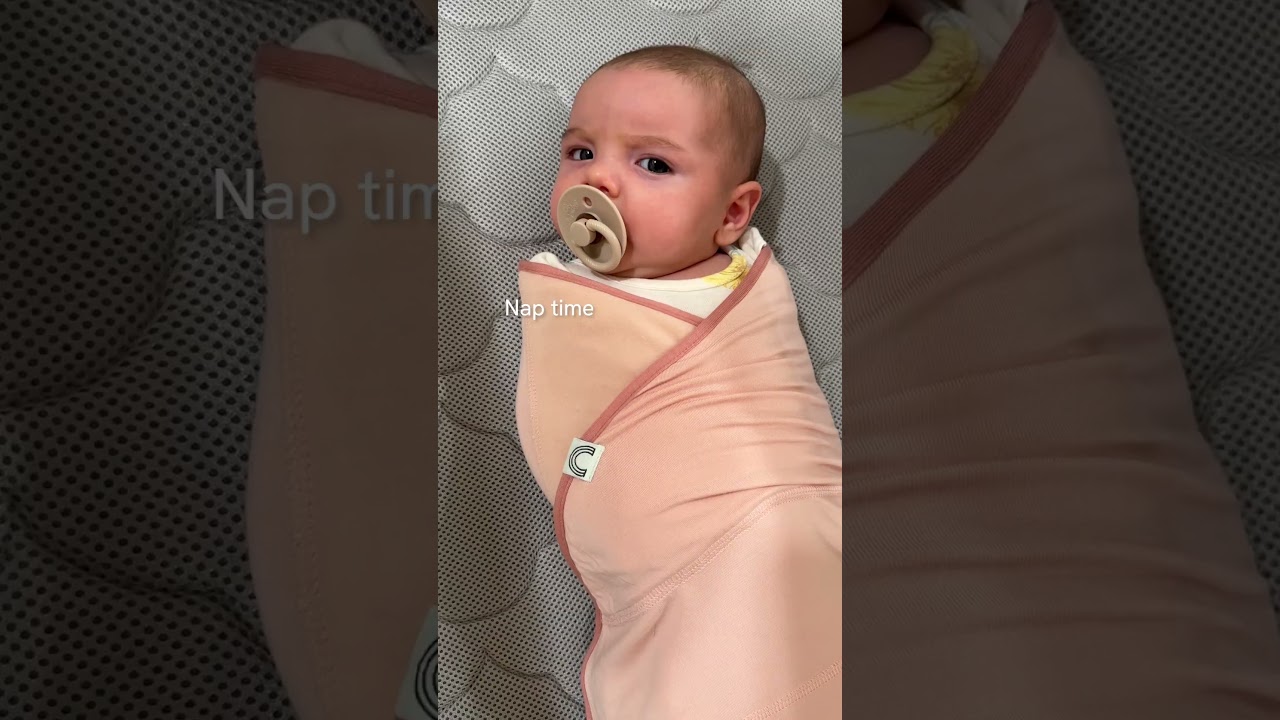
This really can make a big difference. A darkened room with the sound machine going, less stimulation. Try. Remember, any length of nap in the crib or bassinet counts 2 minutes, 5 minutes, 8 minutes. However long it is you practiced once or twice a day, it's a win. Infant development is fairly predictable. Most of us babble before we talk, most of us crawl before we walk, and most of us learn night sleep before we learn naps. So start on nights. And if you need help, I have a class for you.
If your little one takes a short.
Nap, let's say less than 40 to.
50 minutes, you can try to extend it.
How do you do that?
Replace the pacifier.
Pick them up, hold them, rock them, baby wear.
Try for about five to 15 minutes.
To get them back to sleep. If it's not happening, it's time to move on.
Go out in the living room, be done with the nap. I don't want you locking yourself in.
A dark nursery all day trying to get a nap.
We're going to try for five to 15 minutes and then we're going to let it go. Worrying about naps at this age will.
Only rob me of my joy.
Will you say that worrying about naps.
At this age will only rob me of my joy. That's your mantra right now? Okay.
Those longer naps will come. I want you to focus. Instead of the length of the nap, I want you to focus on the wake window. Make sure that you're watching for those sleepy cues, that you're getting adequate wake windows. And you know, if you need help, I have a class for you. The newborn class will teach you all of this. And if you've taken the newborn class, make sure you check out the help section. Okay. Do you know that there's a two hour help section in the newborn class? You can find whatever you're struggling with.
And I'm going to walk you through it.
We're struggling with our days and nights being mixed up. We're struggling with falling asleep independently. We're struggling with so many things. It's all there for you, so you're not alone. Okay? So yes, this is your bonus tip. The goal is just to be really intentional with each one with eat time.
Awake time, and then nap time.
I don't know if you've experienced this.
But I experienced this with Ella.
She would eat a little bit and then she would doze off. Then she would wake up, and I'm like, well, I probably should feed her.
More, because she kind of didn't really get a full feeding. So I'd feed her a little more.
And then I'm like, okay, well, it's.
Probably time for a nap.
So she'd start to get fussy, and.
Then I'd feed her to sleep, and.
Then she'd sleep for like 10 minutes.
And then I would start that cycle over again.
So do you see how it was.
All kind of a blur with eating, sleeping, waking, all of it just kind of blurred together?
So this tip, and in the very beginning, I'm going to tell you it is like that. And that's okay. There's no guilt. But the goal is to be really intentional with each of those three things. We really want to build the sleep pressure. Now, how do we do that?
We do that by having a baby.
Awake during a feeding and then having active awake time, so then that sleep pressure builds up so that they take a good nap. Now, remember, those short naps are still common. Even if you do everything right, it's still common to have those short naps. But helping build that sleep pressure by being intentional with each of those three.