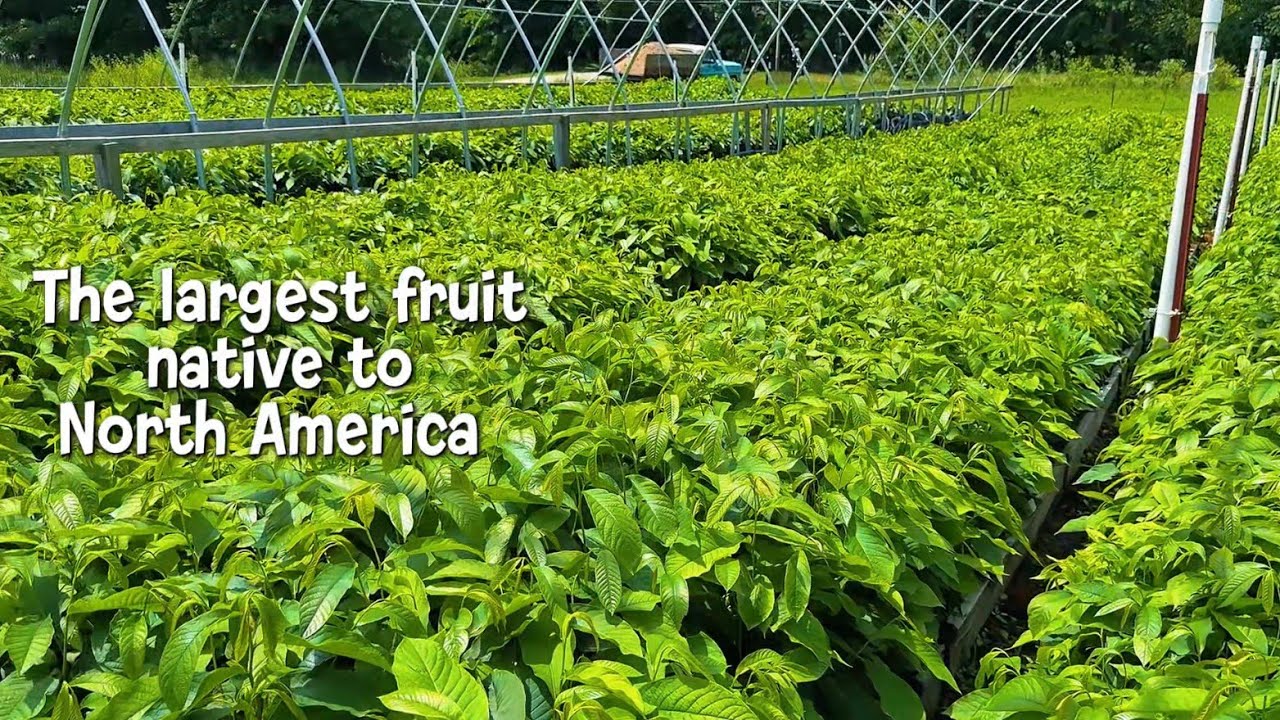
The video presents an informational tour of TN Nursery, one of the United States’ largest mail‑order native plant growers, focusing on the pawpaw tree (Asimina triloba). It explains that the pawpaw is the largest edible fruit native to North America, with a distinctive flavor described as a blend of banana, mango, pineapple, and vanilla custard. The tree thrives in USDA zones 5‑9, favoring rich, moist, well‑draining soil, and can grow in partial shade as seedlings and full sun when mature. Pawpaws are pollinated by flies and beetles rather than bees, and they typically begin fruiting 4‑6 years after planting. Ecologically, the species supports biodiversity, serving as the sole host for the zebra swallowtail butterfly. Commercially, the fruit’s soft, delicate nature makes it unsuitable for long‑distance shipping and storage, limiting its presence in grocery stores. TN Nursery mitigates this by producing roughly 2 tons of pawpaw seeds annually, maintaining a massive inventory of bare‑root trees shipped directly to customers, often with a buy‑one‑get‑one promotion. The video concludes with a call to action to visit tannursery.net, subscribe, and consider planting pawpaws for both culinary and ecological benefits.
Chapters
Have you ever heard of a fruit that tastes like banana, mango, and custard? Meet the pawpaw tree. It is the largest edible fruit native to North America. Well, chances are you've never tasted one, and that's exactly why I'm here today. This Tennessee nursery grows millions of pawpaw trees every year, and most Americans have never even tasted the fruit. Today I'm taking you behind the scenes here at TN Nursery, one of America's largest mail-order native plant nurseries, to talk about a fruit that people have been calling the forgotten fruit. The pawpaw tree, sign Scientifically known as Asimina triloba, it's actually the largest edible fruit native to North America. Unlike having to import tropical fruit from overseas, the pawpaw tree is native to the eastern side of the United States. In the wild, you'll often find them growing along riverbanks, woodland edges, and forest understories. One of the first things you'll notice about a pawpaw tree is it doesn't even look like it even belongs here. The large leaves give it a tropical appearance that make many people think it came from somewhere much farther south. Although a pawpaw tree looks like a tropical fruit tree, it is actually surprisingly cold hardy, which it can grow in USDA zones 5 to 9. The fruit itself is what makes this tree so fascinating. People often describe the flavor as a combination of banana, mango, pineapple, and vanilla custard. In fact, many gardeners say it's one of the best tasting fruits they've ever grown. So if this fruit is so delicious, why don't we grow it in a grocery store? The answer is actually pretty simple. The pawpaw fruit is so soft and delicate that it doesn't ship or store well compared to apples, oranges, or bananas. Because of that, it never became a large commercial crop and slowly faded from mainstream awareness, but that's beginning to change. But because of people's interest in native plants, backyard orchards, and homesteading, it has brought a whole new light to this native fruit tree. And that's where T&N Nursery comes in. Here at T&N Nursery, we plant 2 tons of pawpaw seeds every single year, making us have millions of pawpaw trees in inventory, which makes us one of the largest pawpaw tree producers in America. Walking through the nursery, it's impressive to see the scale involved in producing native plants and trees on this level. One thing that makes pawpaw trees especially interesting is their value beyond its producing fruit. These trees support biodiversity and native ecosystems. The pawpaw tree is also the host to the zebra swallowtail butterfly, so without this tree, the butterfly could not complete its life cycle. So when you're growing a pawpaw pawpaw tree, you're not just growing it to produce fruit for you, you're also supporting wildlife and pollinators. So if you're thinking of growing a pawpaw tree, here's a few things you should know. They love rich, moist, well-draining soil. While little seedlings will need part shade, once they get more established after a few years, they can handle that full sun. One of the most common questions gardeners ask is how long is it going to take for your pawpaw tree to produce fruit? Here at TN Nursery, fruit production typically begins around 4 to 6 years after planting depending on the growing conditions and care. Like many other fruit trees, patience pays off. Another unique fact about pawpaw trees is the pollination. They do not need bees to pollinate. Instead, they are pollinated by flies and beetles. What's fascinating is that the pawpaw trees are both beautiful landscape trees and productive fruit trees. Their large leaves create a lush tropical appearance while the fruit offers something completely different from apples, peaches, and pears most gardeners are used to growing. And that's why interest in pawpaw trees continues to grow. Because people have been discovering a fruit tree that's been hidden in plain sight for generations. So if you've never heard of a pawpaw tree, you're not alone. But after seeing the scale of production here at TN Nursery and learning about the history, flavor, and ecological value of this native fruit tree, it's easy to understand why so many gardeners are starting to plant them. Have you ever tasted a pawpaw fruit tree before? Let me know in the comments below. Here at TN Nursery, we ship all of our plants bare root, meaning they will be in a dormant state, but as soon as you plant them, they will start to thrive. That is how we give the affordable option of a buy one get one free. So if you're ready to be growing a native fruit tree in your backyard, be sure to check out tannursery.net and all the other flowering shrubs and native plants we have to offer. Be sure to subscribe so that way you guys can see the beautiful pollinators and wildlife we are saving here at the nursery.