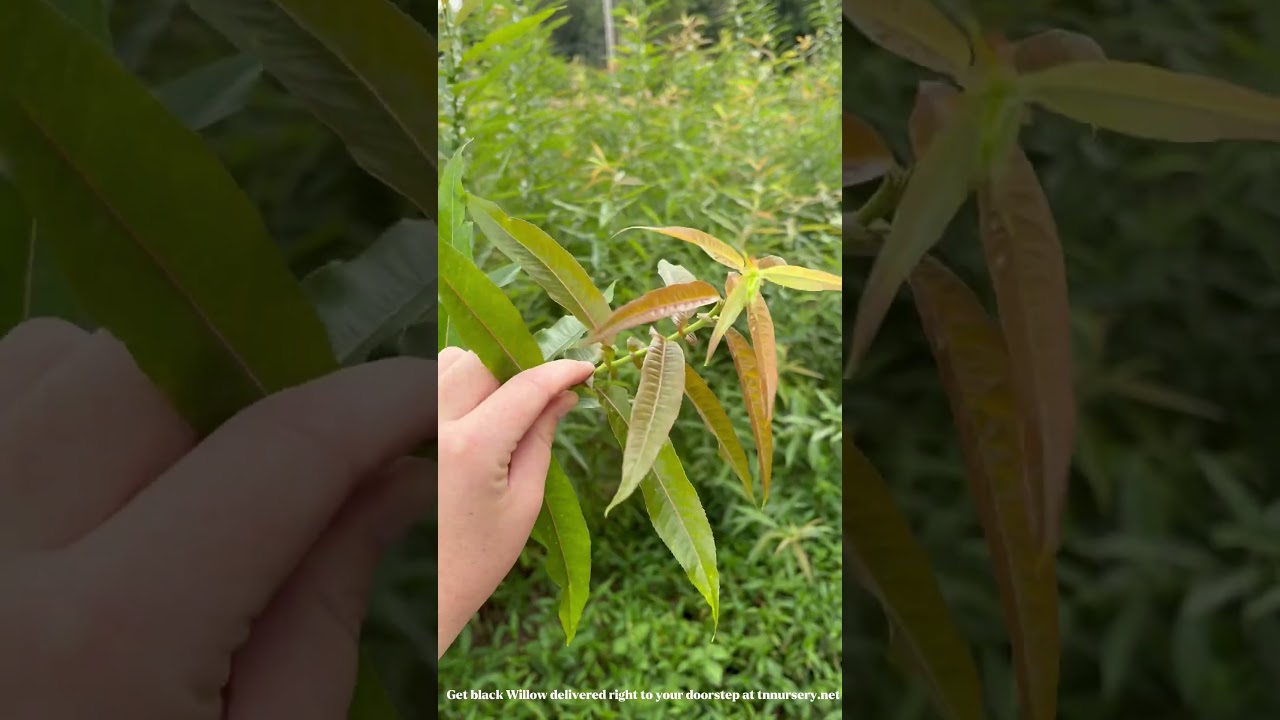
Black willow is a native North American tree that hosts over 300 butterfly and moth species, from Luna moths to the viceroy. Its yellow spring catkins feed pollinators early in the season, and Native Americans used its bark as a natural pain reliever because it contains salicin, the basis of aspirin.
Chapters
Hey guys, it's Bailey with TN Nursery, and I want to show y'all our little black willows today. They're not so little anymore. They're really fast growers, and they've got really big this summer. Black willow is native to North America. It thrives near rivers and wetlands and floodplains. It's one of the largest native willows, reaching over 100 feet tall. Its yellow catkins bloom in early spring and one of the first food sources for pollinators. The leaves are narrow and long and gives it a graceful look in gardens. Native American tribes use the bark as a natural pain reliever. It contains the base of aspirin. The black willow is a host for over 300 different species of butterflies and moths. It's the host plant for 300 different species. One of them is the mourning cloak butterfly. The next one is a viceroy butterfly. It's a host plant for the Eastern Tiger Swallowtail. The Crowned Slug Moth lays its eggs on the leaves. Black willow supports the Polyandryth moth, which is a rare silk moth. It also hosts the Cicapora moth, which is North America's largest native moth. And it relies only on willows. The Luna moth also uses it for a host plant. The rosy maple moth occasionally feeds on the willow. It hosts so many different type of species of moths and butterflies. The tiger moth, the sphinx moth, the giant leopard moth, and the list goes on and on and on. It is a wonderful addition to landscapes, and without this little tree right here, our shrub, hundreds of species would die. Help us save all of the beautiful pollinators that's facing extinction because of us at TNNursery.net.