R.I.P. Computer Keyboard (1964 – 2025)
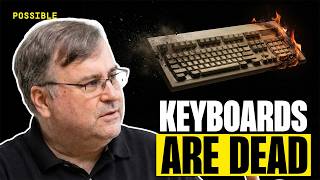
Tanay Kothari, founder of Whisperflow, argues that voice should replace the keyboard. His dictation platform reaches 89% zero-edit accuracy, with 75% of characters now generated by voice instead of typing. He built a voice assistant at 11 and sees keyboards as barriers for people with dyslexia, Parkinson's, and ALS.
Chapters
Why are we still stuck with keyboards? There are 700 million people with dyslexia, and for them, using technology means spelling words with a keyboard, which is the literal hardest thing for them to do. The first time people use Flow, just give it one minute. That is all I want from you. The first dictation people do, they just speak something and they see within half a second, it's perfectly there. It got everything they wanted. When people see that, that is the biggest aha moment for them.
I need to start with a confession. I am voicepilled. Here's why that matters. Humans speak at roughly 150 words per minute, but we think at closer to 400. The average typing speed is only 40 words per minute, creating a massive I/O bottleneck between thought and interface. Voice isn't just older than writing, it's been our primary communication medium for 200,000 years of human evolution. The next leap in human-computer interaction isn't just about bigger language models. It involves voice, thinking out loud at the speed of thought with systems that actually keep up.
And today's guest is one of the people making that shift real, and he has been since junior high. At 11, he built one of the world's first voice assistants, 3 years before Siri. And when he hit his teens, he'd already built and sold his first company. And now, as founder and CEO of Whisperflow, he's behind one of the fastest growing AI products in the world at the forefront of the post-keyboard future.
I've experimented with Whisperflow and so has my team. Here are some of the actual words from the biggest Whisperflow user on our team. Everyone I introduce to Whisperflow buys it. Take Whisperflow away from me and I'm going to be upset. Why are you still typing?
So today's conversation is about that shift. Why voice and why now? And what changes when speaking becomes the primary way we interact with computers? We'll also dig into Whisperflow's origin story and the future that appears when thought and creation start to merge.
Here's our conversation with Tanay Kothari.
Reid and I are obsessed with Westbound and everything that you all do. So just a huge thank you for letting us be here. We have guests all the time, but only once or twice a year are we in a live podcast setting. And so we are so thrilled to be here today, especially with Tanay Kothari, who is doing an incredible job building his new company Whisper, translating speech to incredible, beautiful, polished text. So I will let Reid take it away.
All right. Again, to echo what Westbound does and the community you guys are part of is extremely important. It's an honor and delight to be here. And we don't do that many of these live things, so that was part of the bow. So let's start with the kid version of Tanay, because legend has it that you started programming at the age of 10, and secretly coding into the night when your parents thought you were asleep. So who was that kid, and what do you remember about building that first voice assistant.
So the story goes way back, because when I was young, I was good at math. So what I convinced my math teacher to let me do is spend the math classes in the computer lab so I could play Pokémon. And one of those days I was sitting there, I'm 4th grade, 9 years old, and there is this 12th grader sitting beside me and he's building something which looks like a new game. So I go up to him and I'm like, oh hey, what are you doing? And he just looks at me with disgust and he's like, you wouldn't understand. Not disgust, slight over-exaggeration, but to me it was like, no one talks to me like that. And so I go back home, I just remember I saw it said Visual Basic on the top of the screen and I started teaching myself on YouTube how to write code. And from that day, what started off with me just naturally being a rebel and never taking no for an answer started to become an obsession, and I started to enjoy it for just the fact that I could think about something and just build it. And then I saw the Iron Man movie, and I saw Jarvis, and then I was like, that is what I want to build. And so I came back home, and then I called one of my friends up. He was in the same class as me, so now we're in 5th grade. And I was like, let's build Jarvis. And he's like, that's a great idea, let's do that. And so for the next 2 years we slept alternate nights. I would wait until my parents went to bed, then grab my mom's laptop, 'cause I didn't have one. And then I would call him up, we'd be on the phone call all night together, and we would just build this thing. And 2 years later we launched what was then one of the world's first voice assistants. This is before Siri, before Alexa. Hit about 2.5 million users in the first 6 months. And then Google shut us down. And it was a whole roller coaster back then doing it hidden from my parents, but fun childhood memories.
When, if at all, did they figure out what you were doing?
So I had to tell my dad when I got that letter from Google, and I was terrified. It's like juvenile something something. And so I showed it to him one morning, he was having tea, and then he was just— he had no idea I wrote code or did anything. And so then I told him parts of it, but I think the whole story I told him maybe when I went to college. Like, I actually never slept when I said good night to you.
Well, it's a good prep for startups. And speaking of startups, so with Whisper, Is that— are you still on the Iron Man Jarvis mission?
I'm still on that same mission. I feel a lot of what you do as adults is just what you wanted to do as a child, and it makes the inner child happy when you find that right mix of your career and making the young you happy. I don't think any other feeling beats that.
So I have a 10-year-old, and he plays Pokémon, but I don't think he does any of the other things. But now I'm going to check on that. So you're a kid, you get the cease and desist from Google, you have 2.5 million users. How did that experience of Google shutting you down sort of shape the rise of Whisper and your interest in voice?
I was initially really pissed, right? Because I'd spent so much, like I spent 2 years building this thing and one day it was just gone off of the App Store. I was mad, annoyed at them for a couple of days, but then I was like, wait, I can just build this other thing. And they just took my app down, like they didn't stop me from doing anything else. And so over the next— we're middle school, high school, 7-8 years there— probably built and shipped 50-60 different products with friends. And these are all things that were just like, oh, I wish there was an app for that. And then we just go build it. And then for some, other people wanted it, some other people didn't want it. And for Whisper, it all came back when my co-founder, now Sehej, he reached out to me and he said, Tanay, I'm leaving my company, I'm thinking about starting something new. And I was like, you know, there's this one thing I've always wanted to build. And I explained this like vision to him of a, it's a personal assistant that just gets you. It doesn't make you sink time into screens, but more so just helps you be a lot more present. And if we can actually build technology that essentially just feels like a second brain, I think we can get there. And that resonated with both of us, and that was the birth of Whisper.
So we're always talking about how AI can actually make people feel more human And so, you know, speaking and voice is like the oldest human technology, older than writing. It's what people have been doing forever. Like, how does that— how does voice matter to the future of computing and technology?
When I hear that, the thing I think about is like, that is such an obvious question where the question should really be like, why are we still stuck with keyboards? Because they came as an intermediate hack in a way to help people use technology, use computers for the few decades in between where they didn't really understand language. And now that we have it, we can continue to make this interaction just a lot more seamless because the thing with keyboards is it is inaccessible to a lot of people. Like if you've ever seen like an old person like type this, like this is not what their life should look like and they should not be subject to this pain and this is almost like a discrimination of some sort to being more tech savvy because it's a skill that they didn't learn growing up.
It's interesting, the two people in my life who use voice the most are my 7-year-old son and my 80-year-old father.
Yeah.
So to your point, like absolutely accessibility up and down the chain. And so what do you think people misunderstand about how speech speaking sort of reorganizes thought and what it captures that's different than typing.
So when I talk to a lot of people about why dictation, people are like, oh, you know, I type very fast. It's like, yes, you speak faster, but at the end of the day, the speed, to me, it's— yes, it's there, but that's not the biggest thing that matters. The biggest thing that matters is when you have an idea, you want your brain to go like this, like you're in the flow, your idea is coming out. But what happens when you're right there typing it out is, "Da da da, oh, should I put a comma here? How do you spell this word? Maybe I should put it in a new line. I should put the sentence elsewhere." And in the middle of what you want to just be a stream of thought, be in the flow, your brain is constantly getting distracted by the formatting and all the small nuances that come with actually writing it down. And so the biggest thing that we saw when we started people using WhisperFlow, they didn't talk about how much time it saved them. They felt about how much easier life felt because this cognitive load that they had all the time, that's just like this mental process that goes on, it just went away. You just speak whatever you want and like, it's just like an assistant who like, I'll write this whole thing for you. Just like tell me your gibberish, I'll take care of it. And somebody just saying that and somebody you trust, that is the biggest value I think Whisperflow delivered to people, which I wasn't expecting, but something that we learned because that is how every single person described the product.
Yeah, really amazing. And you know, obviously part of the thing is there's a reason why like when we three are communicating, we're not sitting here typing, we're actually using our voice. And it's like, like go back to that kind of, naturalness about how we operate. And of course, there's also the, the insanity of the QWERTY keyboard, which is let's deliberately slow it down 30%, which comes from the mechanical typewriter. So you've seen people go from, frankly, you know, quite skeptical to instantly obsessed with Whisper. So what do you think creates that voice-pilled, you know, kind of moment? Where suddenly they realize the obsolescence of the keyboard?
There's a lot of reasons why people are skeptics. One, again, there's a lot of really fast typers who are like, ah, I'm like great at this keyboard thing. There are some people who've just been disappointed with voice, which is anybody who's used Siri in the last 10 years, you know what I'm talking about. And 3 is just people who've never seen it work. So they're just resistant to adopt new AI and technology and all of that, and this is like, for example, my dad. The key thing that we put that does the aha moment is the first time people use Flow. What I tell anybody is just like, just give it 1 minute, that is all I want from you, and the first dictation people do, they just speak something and they see within half a second perfectly there, it got everything they wanted, it is written exactly in the way, and small things, if you change your mind, it cleans all of that up for you. When people see that, that is the biggest aha moment for them, and then 5 minutes later, you know, they're telling everybody. But we realize it doesn't stop there. Once they realize that, hey, Wwise can work, we get them to the second aha moment, is making it work for you. Hey, what is the problem that you're just feeling in your life? Do you wake up every day with 50 emails in your inbox and that's exhausting for you? Cool, let's work on that. And when people find this first workflow that makes life really easy for them, that's their second aha moment, 'cause now they've built a habit of voice. That is when I call people being voice-built, 'cause there is something in their life that they're just now doing purely with voice. Could be Slack, could be emails, could be like texting your mom, could be you are in Cursor or other tools white coding. And then the third aha moment is this metric we track which is like flow versus keyboard, how much do you use it? Keyboard just almost becomes extinct. It's less than 5% of what people use. And that to me is what true behavior change looks like.
100%. Are there any specific features or experiences, like tracking that metric, that switches, that gets to that, oh my gosh, I have now been voice-pilled?
Yeah, it is literally the keyboard versus flow rate, like the number of characters you're typing with your keyboard versus how much you do with flow. And You just see that it just goes up like this. And I think across, so this is something we measured some time back, across every Flow user ever, it's about 75% is Flow, 25% is keyboard. And that has never happened in the history of computing that something has actually replaced what has been a part of our life for the last 150 years.
So I think Reid, let's skip to the demo.
Yeah.
I think this is I think this is a really good time to do that.
Okay, great.
And so I think Marcus is here. I mean, if you want to tee it up, what we're going to be doing right now.
All right. So we've been talking about the transformative power of voice. We'll actually come back to its impact in AI and a bunch of other things as part of this. But I'm sure at least some of you are wondering, what does this actually look like in real life? So we decided to actually, in fact, do a quick demo. So Tanay, we believe voice is faster, clearer, more natural than typing. So we're gonna put that to the test. And in this case, a race. Voice versus typing. So our competitors tonight are actually colleagues. Tanay and Marcus, who has proven to be an incredibly fast typist at something I can't do, 110 words per minute. Marcus, thank you for joining us. Yes, good to meet you as well.
So I'm gonna hand each of them a piece of paper. It says the same thing. It is a ChatGPT prompt. And I think Tanay wanted to make it, he was like, I got this in the bag. So he's gonna drink red wine while he's doing it. He's getting a little cocky over here. Our coworker Thanasi has $100 on Tanay. So if anyone else wants to take the other end of that bet, Marcus also, even though he works whisper, promised he wouldn't sandbag, like, gonna try his best. And so we are gonna watch them both on the screens. I'm gonna give them the papers at the same time, one typing, one using voice, and we'll see what happens.
Marcus, what's your typing speed? I type usually at 117 words per minute.
Oh, so I sandbagged it in my— in my—
Don't open it, don't open it.
Yep.
All right, I'm gonna say On your marks, get set, go!
Build a Gantt-style timeline product for a product launch spanning 12 weeks. Phase 1 is market research, weeks 1 through 3. Phase 2 is design and prototyping, weeks 3 through 7, with a 2-week overlap. Phase 3 is development, weeks 6 through 10. Phase 4 is testing, refinement, weeks 9 through 11. Final phase is launch—
oops.
Final phase is launch preparation, weeks 11 through 12. Use different colors for each phase. Show dependencies with connecting lines. Highlight the current week. Add milestone markers for stakeholder reviews in week 4, 8, and 11.
I didn't know there were 11 phases. So do try this at home.
I mean, I want to see— come on, ChatGPT, make it happen.
Come on. We got to get some feedback to Sam Altman here.
Oh, there you go.
All right.
Round of applause for both contestants.
This podcast is sponsored by Google. Hey folks, I'm Amar, Product and Design Lead at Google DeepMind. We just launched a revamped vibe coding experience in AI Studio that lets you mix and match AI capabilities to turn your ideas into reality faster than ever. Just describe your app and Gemini will automatically wire up the right models and APIs for you. And if you need a spark, hit I'm feeling lucky and we'll help you get started. Head to ai.studio/build to create your first app.
So it's a whole stack of things. So now we've kind of introduced why voice building is important, why it's a transformation in terms of how we're going to be engaging in compute and the environment around us. But let's start with— in a whole bunch of these areas as we get into what this means for how we work, how we live, how we navigate compute. One of the most interesting ideas is app-level awareness. The idea that voice assistants can understand the context. So what does Whisper let people do that typing fundamentally cannot? Not just the speed issue, but like this churning, this human messiness into clarity.
It just genuinely feels like it gives you superpowers. And so imagine if there was an extremely smart person who knew everything about everything. Who surprisingly happens to also be your assistant, and they're just sitting there listening to everything that you're saying and just doing things on your behalf. This is somebody you trust. There's somebody that learns from you whenever it makes a mistake and you correct them. And this is somebody that just has context about everything that you're doing. So it's not just ChatGPT Memories that just knows all the prompts you've written in ChatGPT, but no, It knows that you were just sending an email to this person, then you're writing a message to somebody else. And the fact that Whisper is there across your devices, you use it across every single application, and it knows all of those things about you makes it essentially this ideal assistant, very similar again to Iron Man's Jarvis, which was the dream behind it. And so The other magical thing that it does is when I'm thinking about, say, the AI adoption around the world, us in this office, we're all Silicon Valley techies, like, great, we write our prompts, we do our things, we build our AI agents. But my dad is never going to write a system prompt. My grandfather doesn't even know what an LLM is. And so if they're using, say, an LLM to write an email, like my dad has to write write hundreds of them every day. He's going to be stuck. With Whisper, what we just say is like, hey, you know what, don't worry about prompting. There's no prompt, there's no setup. Just do what you're doing. We'll just be here, we'll look at your screen, we'll figure out this email thread, we'll write it to the right person in your style, and we'll take care of all of that. And so on the surface, it looks like a very simple product that you just press a button and it works every time. But under the hood, there needs to be so much hard work that we're doing because we're just taking all this pain away from the user. And about 20% of our user base is what we call silvers, is like people above the age of 60. And for them, it is the most delightful AI product that they use, 'cause it's just like one button and it just works.
I mean, also to your point, like if you think about accessibility globally, not everyone has a laptop, most people don't. And so it enables you actually to get so much work done or joy on your phone. And some of us— not going to name any names— might be a little excitable and put too many exclamation points in their emails. And Whisper can help with that to make you sound more professional. So my question is, is there like a surprising action? Like, what's the most surprising action that you've seen Whisper users take with your platform?
So this was really surprising in the early days where No, actually, you know what? There's a more recent one. There was a dude— this is last week— in Amsterdam who just ran an entire marathon while whiteboarding an app. So he had a laptop in his backpack, AR glasses or like VR glasses to just see the screen, a Nintendo Switch controller that just toggled the function key, right? It's like press a button and Whisper works. And he also completed the marathon in like a solid 4.5 hours while wipe coding this app. And once some wire fell off and he had to replug it in. And that to me, when I just saw that, I was just like, this is ridiculous.
Now I feel bad about myself. I neither wipe coded the app nor did I run the marathon.
Yeah, well, actually, and obviously the question of if you're actually running a marathon, being able to speak while you're doing that is also quite impressive. Yeah.
Yeah.
So, so one of the real metrics that you care about is zero-edit messages, which is, you know, how often when someone speaks, you know, see what Whisper produces and then send it without changing a word. Yeah. And, you know, Apple, Google, OpenAI, it's around 5 or 10%. With WhisperFlow, it jumps to 85%. How did you accomplish that?
It's 89% now with the new model that we just released.
Yeah, awesome. Yes, exactly.
So to me, the answer is really simple, which is everybody has been solving the wrong problem up till now. There is one problem, which is transcription, which is, hey, I need movie subtitles. So everything that is said, you want that word for word. Then there is another problem which is dictation, which is I say something and I want it written the way I want. Everybody has solved this transcription problem or tried to solve it and then assumed they were also solving this other problem, but humans speak differently than they write. The moment you realize this extremely obvious fact, you just look at all these tools and you're like, this is all kind of garbage for this specific solution, and we just focused on that. I want people to say something, and I want whatever is in front of them for the user to be so happy with it they just press enter.
Yeah.
And at the start of it this year, it happened about 45% of the time. Now it happens about 89% of the time. The crazy fact is, for the, the median time from when you see a Whisper message to pressing send, like you also saw in the demo that I did, It's half a second. People don't even read what Whisper writes anymore. They just trust the system to get it right. And to me, that is extremely important because when I think about where we're going in the next 5 years, it's moving to away from our phones and laptops to a world where we have immersive computing devices, smart glasses, smart rings, anything and everything that looks like that. And in a world like that, you don't always have displays to verify what you've said. And so that was the initial reason for why Whisper, to build it as your ever-present assistant. And this is one thing we just want to nail from the get-go.
And one of the things that I think is particularly good about that realization is if people haven't done this, when you get this new age of AI, it's much better when it has a much richer prompt. And so if people are happy with the prompts, this is part of the whole voice billing thing. So say a little bit about kind of like what that engagement loop with the AI systems looks like in addition, not just writing emails, but like being in this kind of new world of AI compute.
Yeah, that's actually huge because we've seen so many CTOs and VP of engineering at companies who are now forced forcing their teams to use Whisper Flow just because it makes their AI prompting so much better. So here's an example. You're an engineer, and engineers are lazy. As an engineer, I can say that. You go into Cursor, you're writing code, and there's a bug, and you write like, fix bug. Cursor is not gonna fix bug because it barely knows anything about what's happening. But when you use Whisper, you start rambling like, hey, you know, I tried this thing, then this happened, and you know, maybe like this thing I did 5 days ago might have triggered the issue, yada yada yada. Takes the same time to like speak this 30-second prompt, but now it just one-shots it every time. And most people in the world, like, somewhat impatient, somewhat lazy, they don't want to type out entire prompts. And so by giving a lot of context to AI, which AI needs, people are actually way happier with the result. For people and inside companies, what you see is just like much higher AI adoption when they start using voice input as a tool to do that. And you don't have to do back and forth by giving it more context sequentially. You just ramble it out at once.
I feel like it's also gonna be huge for e-commerce because if I'm on an e-commerce website and I'm not gonna take the time to type out like, I want jeans that are black, that are wide leg, but I'm super tall, but I need this, but I'll say it easily. And so it'll actually just make the user user experience so much better. But this one is for the skeptics out there. There might be skeptics in the room. Why is Whisper a standalone company and not just a feature bolted onto Apple or Google? Make the case.
The way I think about it is when we're building Whisper, we are challenging a lot of the norms that exist in the world today. A lot of the core ways people build technology, a lot of core ways technology itself yourself is built, and it's not impossible to happen inside a Google or inside an Apple, but the bureaucracy and systems there just make it really hard to challenge the status quo. Like imagine going into Apple and just saying Siri sucks, we need to kill this team and I'm gonna build a much better Siri from scratch, and that's a 6,000-person organization and no one's gonna let you do that, Which is why that assistant is still coming.
At a year now.
At a year now.
Do you think there's— we've obviously talked about there's so many things you gain from speaking, you have a richer conversation, all of these things. Do you think there's anything we lose from not typing, from going from typing to voice? The answer could be nothing.
So what you lose at times is the precision. There are times where you really need to craft your words and how they're going to be delivered. The thing is, that doesn't need to happen all the time, but sometimes you do need it. And that is the one place where I would say people resort back to editing with their keyboard. Another thing that I feel, and this is the one exception to my belief that everything should be voice-built, is when you're journaling. I think people have different modes in which they journal. Some people are great, they think as they speak, and so Whisper's great for that. But some people think even better when they write, and so that's why they still love using a pen and paper and writing in a diary. So those things I don't want to force on anybody to do a different way, but for everything else, I think it's just a net positive.
Awesome.
So say a little bit about one of the natural questions that a lot of our local audience and obviously our recorded audience would have, which is, okay, look, I get the, the all the benefits you've been talking about. Like you can do it much more naturally. There's less cognitive overload. You can, you know, do rich, you know, AI prompts, but you're in an office, we're sitting next to each other and we're like, and it's like, you know, and maybe you don't want to be sharing or maybe you don't want to be interrupting. You've already— I know some of the answer to this because we've talked about it already, but share for the audience, like, what is that new office of the future look like? Why does it actually work? You know, what— how is that kind of voice collision navigated?
Yeah, so I don't have a perfect answer to this, but I do have some instances that drive us towards the direction of what this could look like. What we have seen in some of the offices that are just fully on Whisper today is everybody on their desk has one of these podium mics that comes up to your mouth and they're just whispering into it. Entire office floor, 100 people, they're just whispering into these little mics. Now with Whisper Flow, we added this feature so you can whisper insanely quietly so the person beside you can't hear what you're saying and it just which still works for this exact reason. And the way they describe it is like it almost forms a community, which was so interesting to hear from this group of people in this office who are now just starting to get voice built. That I think is the first step in which companies are gonna adopt. And now whenever we go to a Fortune 500 company, deploy Whisper there, we just give them these mics so that they can use it in their open office. This isn't an anomaly though. Like many years ago, there are people inside offices and you're just taking calls around everybody else. You might have some barriers that like give you some noise cancellation. And about 20, 30 years ago, we all just got used to having phone calls around everybody else, which again wasn't the norm before that. So when you start doing human behavior change in in small ways that leads to societal change happening in bigger waves, which sometimes you can't predict. But that is the one thing like I have personally seen the best companies in the world do. Like Nike made it normal for people to run outside without being chased by a bear. Airbnb—
You just may be faster than the person without the Nike, but yeah.
Airbnb made it normal to stay normal to stay in strangers' homes. Zoom made it normal to like work in your pajamas. And those are the companies that truly shift, say, like how human society works overall. And when I think about kind of the mission we have with Whisper, it's not just the human change, it's the societal change that comes with it.
I feel like it's when AirPods first were introduced, like in the very beginning, people just thought everyone was like, like a little crazy walking down the street talking to themselves. And now it's just unbelievably normal, 100%. And so do you think there's a tipping point? Like, oh, in 5 years voice is going to be everything. Or how long does that tipping point take?
The tipping point can take really long if just left to it. We don't want the tipping point to take that long. So for me, the reason we build this team with incredible people, we're all in the office like pretty much like 6 days a week, mornings and nights working is 'cause I wanna see this happen in the next 2 years. The next 2 years I want this to become a household name. When you go to a cafe and you see somebody talking to their laptop, you're just like, oh, they're just using Whisper. And that is the world we're pushing for. And I do genuinely believe it is a net positive for humanity and I want to get it in the hands of as many people people as fast as possible.
Do you think there's a change in emotional honesty or creativity, or sort of does the, does the content of what people say actually change when that friction of typing disappears?
People get a lot nicer. Oh, you'd be surprised. So we did this experiment where at this company we gave it to half the people in the sales half were still typing. The customer said that this was the nicest sales team that they'd interacted with. 'Cause if you're just like typing, it's kind of mechanical, it's unemotional, like you lose the humanity of it, it's more robotic. But when these salespeople were just like voice typing their emails with Whisper, like parts of their personality and their emotions fell through it. And so the customers on the other side felt that they were talking to a real person. To actual people, and that just had a resounding kind of success for them. Similarly for customer support, and personally I've seen that. I'm a bad texter, right? You all likely have a friend who's a bad texter. If you don't, then it's likely you. And I had so many messages in my inbox all the time, and with Whisper, the cognitive load goes away. So it was just easier to message back to people. And like, my friends were like, Tanay, what happened? You like suddenly changed and you send us these long messages. And they were like, please go back, stop sending us these long texts. No one has explicitly said that yet. And I was just very pleasantly surprised to, to see that and like just see that behavior change within myself. And I've heard that from a number of other people people as well. So I think there's some interesting other behavior changes that are just unintended consequences that we're just starting to see happen. Awesome.
Another thing that's interesting in these kind of platform modality interface shifts is that it changes kind of who's advantaged, who's disadvantaged. Does a voice-first world start advantaging extroverts, storytellers, verbose people? You know, the, the stereotypical extrovert versus introvert, etc. How do you see this pattern changing if the— if everyone starts adopting this mode change?
There might be some of that, but I'll tell you where we're coming from. We're coming from a world where the only entryway to technology is keyboards. There's 10 million people with Parkinson's. Who can't use them. There are a number of people with ALS, different kinds of disabilities, who genuinely are unable to type. People with dwarfism, their thumbs are too big to press a single key, they can't type on their phones. There are 700 million people with dyslexia, and for them, using technology means spelling words with a keyboard, which is the literal hardest thing for them to do. Do, and then we were talking about kind of the old people who didn't grow up with it who are doing this, and so it makes it a level playing field for all of them, and at that point, if it's like, hey, it makes extroverts a little better at this, I'm fine taking those odds any day.
That's awesome.
Reid, do you have a final question before we move to rapid fire?
So I guess probably what I'll do is say, do you Do you think— do you believe that voice computing will reshape human relationships, right, and the human-to-human connection?
I think in a huge way. I think when we started going from speaking with each other like this to going through text and using the minimal number of characters to message another human being, I think there's parts of us that we lost in that. And with this, my hope is if we can start to get more of that personality and all back. Technology is today and always will be a medium for people to communicate with each other. And we just want to make it as easy and simple for that to happen. Where my vision for Whisper is like it doesn't just communicate your thoughts to the other person, but It can also go a level deeper and understand how the other person perceives things and writes things better for it to be even more understandable to them. Because a lot of time you say something and somebody else hears something else. And so I think that goes really deep into communication. And that is really like one of the big problems that we are solving.
I think that's very elegantly said in voice about the importance of voice communication for humans. So let's move to rapid fire.
I just thought of one very New York question, which is, I'm from New York, and when you're in New York on the subway, the biggest faux pas is when people listen to music without headphones in, and it's so infuriating, and people do it all the time, and it's so rude. Do you think it's okay if people on the New York City subway whisper in public?
Let me show you. Oh! This is totally unscripted, by the way.
Yes.
It is!
Yeah.
Okay, so you can whisper extremely quietly. I'm gonna do it here. I'm gonna also like pull this mic up to my mouth so it's a true test. And so you can speak.
Is that a joke? That really went through?
That would go through.
Okay, all right, it's official. You can whisper in the New York City subway.
Try it on your phones. This is not Staged.
But isn't New York supposed to be the city of rudeness?
Rude? New York is one of the greatest cities in the world.
If you say so.
We say from San Francisco.
I know, I was trying, I was trying.
So, all right, rapid fire?
Yes, please.
So Tanay, is there a movie, song, or book that fills you with optimism for the future?
Siddhartha by Hermann Hesse.
Yep, great choice.
What is a question that you wish people would ask you more often?
What am I obsessed with right now? Because I feel like that changes time after time, and I'm a very obsessive person, so if I'm obsessed with something, I'm thinking about it always.
What are you obsessed with right now?
I'm thinking about getting a bike.
What kind of bike?
Motorbike, Kawasaki Ninja.
All right.
So I'm gonna get my biking license 2 weekends from now, and then much to my fiancée's dismay, I'm gonna get a bike.
Be careful.
Yeah, exactly. I think there's a thing called key man insurance you may want to look into. But with that, where do you see progress or momentum outside of your field that inspires you?
Like, one of my favorite companies that I'm really excited about right now is Boom Supersonic. Earlier this year, for people who don't know, they actually had the first flight which was supersonic without the sonic boom, which is insane because that was the reason the Concorde never got that. And I've been following this company for the last 4+ years or so since whenever they started, and I cannot wait to be in one of those planes.
That is awesome.
As an investor, I also want to be in one of those planes. It's possible San Francisco to Tokyo, 4.5 hours.
That would be insane.
Yes.
I do San Francisco to India flights a lot.
Yes.
And those would be amazing if it's not 17 hours.
So Tanay, can you leave us with a final thought on what you think is possible to achieve if everything breaks humanity's way in the next 15 years? And what's our first step in that direction?
Okay, so I'll tell you one of like my big motivations for Jarvis and beyond that, just beyond technology period, is I don't want my kids to grow up in a world where they're stuck to their screens like this all day long. That would be the most depressing thing to me. And so what I want to see in the world is technology doesn't pull you into screens, lets you be a lot more present. And one day I'll walk down on the street, there's nobody stuck on their screens, everybody's just looking up, enjoying the view around, listening to the birds chirping, whatever they want. You likely have still an AI in your ear, but at least your eyes are not glued away to something else. And the biggest thing that I think like —this is a nice crowd of investors—to do is invest in the deep tech founders. Invest in the founders who are building technologies and ways of interaction that are hard, that are building new hardware that is hard. I keep shitting on Apple, but like genuinely, guys, like this is 17 generations old. We need something better now. Because it's going to require a lot of people working incredibly hard for the next 10 years to break away from this this world we're stuck in right now, where we're always scrolling on TikTok and Instagram, onto just something else which is much greener pastures.
I hope so too. So let's give Tanay a round of applause.
And, uh, thank you all for having me here.
This was absolutely— and hopefully we've helped some more people get voice built. Let's make it happen. All right, thanks.
Thank you. Clip.
Possible is produced by Palette Media. It's hosted by Ari Finger and me, Reid Hoffman. Our showrunner is Sean Young. Possible is produced by Tanay Kothari, Katie Sanders, Spencer Strasmore, Imo Zou, Trent Barbosa, and Tafadzwa Nimarundwe.
And a big thanks to Sean Mendy, Amanda Irizarry, and the Westbound Equity Partners team, David Stiepelmann and the Sixth Street team, Isabella Sikafi and the Florabella Studios team, Marshall Potter and the Push Record team, and last but certainly not least, Marcus Schwa and the Whisperflow team.
This podcast is supported by Google. Hey folks, Stephen Johnson here, co-founder of NotebookLM. As an author, I've always been obsessed with how software could help organize ideas and make connections. So we built NotebookLM as an AI-first tool. For anyone trying to make sense of complex information. Upload your documents and NotebookLM instantly becomes your personal expert, uncovering insights and helping you brainstorm. Try it at notebooklm.google.com.
More from Tanay

Finding Real PMF in the AI Era with Tanay Kothari (Wispr Flow) + Hans Tung (Notable Capital)
Wispr Flow: The AI Siri & Alexa Couldn’t Build | AI Siri | Alexa | Young Turks Reloaded | CNBC TV18
Signal Dialogues #02 | Wispr Flow CEO Tanay Kothari on Beating Apple & Google at Voice