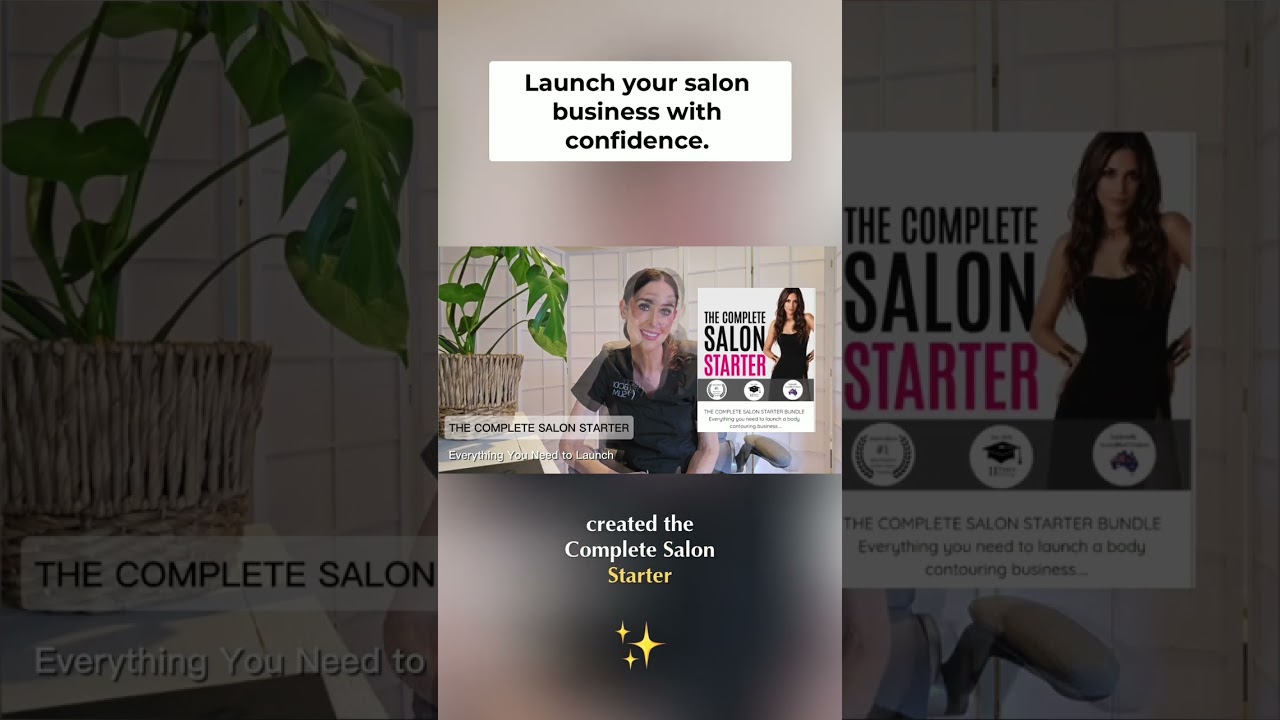
In this interview-style discussion, hosts A and B critique the entrenched beauty‑pain mantra and explore microchanneling as a disruptive alternative to traditional microneedling. They explain the mechanical shift from angled, dragging needle strokes that create V‑shaped micro‑tears to a vertical stamping motion that opens clean channels, thereby bypassing the inflammatory emergency response and accelerating collagen regeneration. The conversation then delves into the bio‑engineered serums delivered through those channels—recombinant growth factors, cytokines, and DNA‑repair enzymes—that act as precise molecular messengers, providing “spell‑check” for skin cells while minimizing irritation. Because inflammation is low, the treatment is presented as safe for all Fitzpatrick skin types, addressing historic hyperpigmentation concerns. The second half of the dialogue turns to the business side, describing Tanya White’s dual nursing‑beauty background, her BODi Slim Training Academy, and the “dusty‑machine” problem that plagues salon owners who invest in expensive, under‑used laser equipment. White’s model offers a low‑cost entry kit ($3‑7k), high‑margin service packages ($1,800 for four sessions), and intensive mentorship, promising rapid ROI and democratizing medical‑grade results for small‑business owners worldwide. The hosts close by summarizing three pillars—technology, chemistry, and business model—and suggest the industry is shifting from a war‑like, aggressive approach to a cooperative, bio‑hacking dialogue with our cells.
Chapters
You know, there's this, this idea in our culture, especially with skincare and anti-aging.
Yeah.
That if it doesn't hurt, it's not working.
Oh, absolutely. The old beauty is pain mantra.
Exactly. It's like we've all been trained to think we have to burn or, or peel our way to better skin. Mm-hmm. It's almost this badge of honor, you know, oh, my face is falling off right now, but just you wait till next week.
It's the burn to build mentality. The logic for so long has been that You have to, um, traumatize the tissue to force the body to wake up and fix it.
Right. Controlled damage to trigger a healing response.
Supposedly controlled. Yes.
But today we're looking at a whole stack of research that suggests the entire methodology might be, well, kind of obsolete.
It's a big shift.
We're doing a deep dive into a technology called microchanneling, and it's claiming to flip that whole script. The premise is What if you could get all the regeneration without the trauma?
And that's huge. We're moving from what's basically a battlefield approach to skincare, attacking the skin, to more of a communication approach. And our source material for this comes from the BODi Slim Training Academy and its founder, Tanya White.
And looking at the notes on Tanya, she's not your typical beauty influencer. Her background is actually pretty unique.
It really is. And it's crucial for understanding this. She has over 15 years in the industry, sure, But she also holds a diploma in nursing and patient care.
Oh, okay.
And she's a certified trainer. So she's bringing a clinical, safety-conscious standard to the beauty world.
She's straddling two worlds then.
Precisely. She's merging that beauty perspective with, you know, rigorous nursing standards. And she runs Australia's number one mentoring academy for body sculpting. So she has that credibility.
So the mission for this deep dive is kind of twofold. First, understand the biology. How do you regenerate skin without burning it?
Mm-hmm.
And second, look at the business model she's built because she's pitching this as a fix for what she calls dusty machine syndrome.
That's a fascinating angle and we'll get to it, but let's start with the biology. The core difference Bodhi Sim highlights is between microneedling and microchanneling.
To me, those sound like the exact same thing. Yeah. Tiny needles, right?
They both use tiny needles. Yes. But the way the needle interacts with the skin is fundamentally different. The sources use two words: dragging versus stamping.
Dragging immediately sounds bad.
It is. If you look at it up close, traditional microneedling, like those rollers you see online—
The derma rollers, yeah.
As the wheel turns, the needle enters at an angle, pivots while it's inside the tissue, and then exits at an angle.
So it's not a clean puncture. It's more of a slice.
It's exactly a slice. It creates a V-shaped tear. We call them microtears. You're literally slicing the tissue to create that trauma response.
And for a long time, we thought that inflammation was the goal. I mean, people online will boast about how red they are.
Look how red I am, it must be working! That's the old thinking. The research we're looking at argues that inflammation is actually a distraction. The body goes into emergency mode. It's just trying to stop the attack.
So it's spending its energy putting out the fire instead of rebuilding the house.
That is the perfect analogy. It can't focus on efficient repair. Now compare that to microchanneling.
Which is vertical stamping?
Straight in, straight out, no drag, no angle.
Just a clean perpendicular channel.
A clean channel. And because you aren't tearing the tissue's integrity, you're tricking the body. You signal an injury without the actual trauma.
Ah, so you don't need that massive inflammatory crisis response.
Exactly. The cells can skip the emergency phase and go straight to the regeneration phase.
Which would mean faster recovery times.
Significantly faster and much more consistent results because you're stimulating fresh collagen, not fighting scar tissue formation.
I guess that's why the downtime is so much less. You're not walking around looking like you've had a run-in with a sandblaster.
Right. The channels close up quickly. Redness goes down fast. You don't have thousands of little micro slices healing.
Okay, so we've got the hardware sorted. We've moved from a pizza cutter to a sewing machine.
Huh. That's a good way to put it.
But the source material makes a really big deal about the needles being only half the story.
Right. Because if you just poke holes, you get some stimulation.
Yeah.
But the real protocol is about what you put into those channels.
This is the bioengineering part. And there are so many buzzwords in skincare like stem cells and growth factors. What's actually going on here?
So it's a delivery system. You've created these perfect little tunnels into the deeper layers of the skin. The protocol pairs this with advanced serums that contain growth factors and cytokines.
Okay, let's break those down. Growth factors sounds pretty intense.
Think of them as, um, the foreman on a job site. They're proteins that act as messengers. They tell the cells, okay, time to make collagen, time to create elastin.
They're the instruction manual for repair.
They kickstart the whole process. And then you have cytokines.
And what do they do?
They're the traffic controllers. They regulate the immune response. Remember how we want to avoid massive inflammation?
Yeah.
Cytokines help downregulate that.
They tell the skin, "Okay, heal, but stay calm about it." So one protein hits the gas on repair and another hits the brakes on inflammation.
It's a very controlled, modulated heal. But there's a really crucial detail in the source material about where these come from.
I saw this. They're recombinant or bioengineered.
Yes.
Which means not from humans. Correct.
And that's a huge deal. It's not like the vampire facial where they use your own blood or products that use human donor tissue.
Which has always been a little bit creepy to me.
It's also highly variable. My blood today might not be as potent as my blood tomorrow. Bioengineered means they're grown in a lab.
So they're synthesized.
They take the genetic code for a specific human growth factor and synthesize it. Every single drop is the same. Same potency, same purity. No risk of contamination.
That consistency feels key. You want a pharmaceutical-grade standard if you're paying for this.
Absolutely. But there's one more ingredient in this serum that I think is maybe the most revolutionary part.
The DNA repair enzymes.
Yeah.
This part blew my mind. Usually skincare is about preventing future damage with sunscreen. This claims to fix damage that's already there.
That's the claim. Yeah. And the science is that we know UV exposure damages our DNA, creates little errors in the genetic code of our skin cells.
And those errors build up over time. That's what wrinkles and sunspots are.
Right. Sunscreen is a shield, but it doesn't fix the damage from 5 years ago. These enzymes are designed to recognize those errors in the DNA and help the cell repair them.
That's like spell check for your skin cells.
That's a great way to put it. It's retroactive repair.
And because this whole system is so low inflammation, the documentation says it's suitable for almost everyone.
Yes, and this is so important for inclusivity. Historically, if you have a darker skin tone, a Fitzpatrick 4, 5, or 6, you have to be incredibly careful with things like lasers or aggressive needling.
Because of the risk of hyperpigmentation. Irritating darker skin can make it stain darker.
Exactly, post-inflammatory hyperpigmentation. But because this minimizes inflammation, the Bode Slim notes, They say it's suitable for all Fitzpatrick types. It democratizes high-end treatments.
Okay, so the science makes sense. Vertical stamp, lab-grown messengers, DNA spell check. I get why a client would want this. But let's pivot to the business side.
The salon owner's perspective.
Right. Because Tanya White and Bodhi Slim are training salon owners. And the source material points out this really specific pain point in the industry.
The dusty machine problem.
Such a sad, vivid image.
But it's so real. An owner goes to a trade show, gets sold on a $50,000 laser, takes out a loan, gets a one-day training, and then the sales rep is gone.
And 6 months later, it's just sitting in a corner.
It's in the corner gathering dust because the staff has changed. No one feels confident using it, and the owner's still making payments on it. It becomes a liability.
That sounds unbelievably stressful.
It is. So Tanya's approach isn't just, here's a device. It's a full business-in-a-box model.
How do the numbers compare to buying that big laser?
The barrier to entry is just— it's worlds apart. The source says the investment starts around $3,000 for an entry kit, maybe up to $7,000 for an advanced setup.
In the world of aesthetics, $3,000 is nothing. That's incredibly low overhead.
It's very accessible. But the key is the return on investment, the ROI.
I was looking at the prices. They're premium. This is not a $50 facial.
No, a face and neck session is around $450 to $500. Hair regrowth is about $500.
And nobody gets just one.
Right. It's a process. The example package in the notes is a series of 4 treatments for around $1,800.
So if I'm a salon owner, I buy the $3,000 kit, I just need to sell 2 of those packages to break even.
That's the math. 2 clients.
Wow.
After that, it's all profit. It completely changes the cash flow of a salon. Low risk, high reward.
And Tanya advises them on how to position it on their menu, right? Keep it simple.
That's the antidote to the dusty machine. Integrate it as your premium tier. You still have your relaxing facials for people who want to chill.
And you have this for clients who want medical-grade results.
Exactly. And the low downtime makes it an easier sell than, "Hey, pay me $1,000 and hide in your house for a week." Now, Tanya's role here seems more than just a distributor.
The source details her own journey with this.
And that's key for her credibility. She didn't just pick this from a catalog. The notes say she had the treatment herself in Ballarat, saw the results on her own skin, and had that aha moment.
She realized her students needed it.
She vetted it personally. Then she aligned with the team to offer what she calls VIP-level support. This is where her nursing and training background really comes in.
It's not just shipping a box. It mentions she facilitates a personal intro to a VIP manager.
It's a warm handoff. You get the strategy, how to price it, how to market it. Her academy won an award for best online training. So education is their core product. They're selling competence, not just a machine.
Which is probably worth more in the long run.
Absolutely. If you don't know what you're doing, the machine is worthless.
So for a salon owner listening, what's the actual process? How do they get involved?
It's pretty structured. You submit an expression of interest on their website, bodyslim.com.au. You get a brochure, but the key is the consultation to make sure you get the right kit for your business.
It's not one size fits all.
No, a solo practitioner needs a different setup than a big med spa. Tanya facilitates that, and then the mentorship begins.
And this isn't just an Australian thing, right?
No, it's a global shift. Microchanneling is seeing rapid adoption in the US and Europe. The whole industry is moving toward this model of Maximum results with minimum downtime.
It feels like it fits perfectly into that whole biohacking trend.
It absolutely is. People are smarter now. They want to work with their biology, not beat it into submission. This is biohacking for your skin.
So we've covered a lot from the geometry of needles to profit margins. If you had to distill this down, what are the big takeaways?
I think there are 3 main pillars here.
Okay, lay them on me.
Pillar 1 is the technology itself. We're moving from dragging to stamping, from microneedling to microchanneling. The big takeaway is we can stimulate the skin without tearing it apart.
Safer. Okay, pillar 2.
Pillar 2 is the chemistry. We're using clean science—lab-grown, bioengineered growth factors and cytokines to send precise messages, and those DNA enzymes to repair past damage.
That spill check idea is gonna stick with me. And the third pillar?
The business model, it's high support, high ROI. Tanya White is showing that you don't need a massive $50,000 machine to get medical-grade results. You just need the right tool and the right education. Empowering for the small business owner. It is. It creates a safer industry and, you know, better skin for everyone.
We started this whole thing talking about beauty is pain and looking at all this, the stamping, the cell signaling, it makes me think we're at a real turning point. How do you mean? Well, here's a thought to leave everyone with. For decades, we've treated aging like a war. We've attacked it with lasers, burned it with acids, sliced it with needles.
A very adversarial relationship with our own bodies.
Exactly. But if this technology is proving that a whisper works, that you don't have to shout at your cells to get them to repair themselves, are we finally moving toward a future where we stop fighting our own biology and maybe just start having a conversation with it?
Cooperation over conquest. That is the ultimate shift.
Something to think about. Thanks for diving in with us.