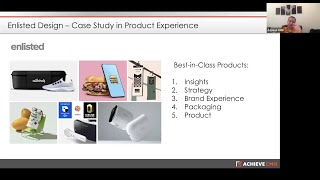
Product design wins when it starts with consumer insight and stays consistent across packaging, experience, and ecosystem. MrBeast Burger built a ghost kitchen around Gen Z audiences, Allbirds aligned packaging with sustainability, and Arlo created a flexible home-security ecosystem. Design thinking applies to services too, not just physical products.
Chapters
In marketing, there's things that are called the 4 Ps of marketing: product, place, promotion, price, right? So we, we've talked a lot about the product. You know, one of the things I wanna dive a little bit deeper into the product is this, this idea of design around your product and creating best-in-class products or services and using design. There's, there's a company called Enlisted and they actually work with one of our clients, Pattern. And they're owned by Pattern, but they do a lot of product design and they gave this phenomenal class at one of these events. I think it was a Silicon Slopes event or maybe it was the Pattern eCommerce event, but they talk about how do you create best-in-class products and they talk about using insight, strategy, brand experience, packaging and product to do that. And so one of the examples they gave was this company called MrBeast. Um, so who knows who MrBeast is? We know who MrBeast is. I do. You do, Jenna? Yes. Um, when I was in this, in this group, there was like 2 people that raised their hand. If you ask my kids who MrBeast is, they, they totally know who he is, right? Um, he's the number 2 YouTube creator in the world. He has over 71 billion See those zeros? YouTube subscribers, um, 13.7 million, uh, Instagram followers, right? And he does— basically just gives away a lot of cash, right? So he had this idea, I wanted to do— he had this insight of trying to do a MrBeast burger and just say, no, he didn't think the food brands were paying attention to Gen Z. COVID sucks, kids are stuck at home. Kids love burgers, they couldn't go to get one, restaurants and drivers are slow, and it was digitally native, right? So this is kind of during COVID So, hey, I want to create this hamburger, right? And it's not, not a new thing, but he had this large audience, says, I think I can do it. So the other thing, they look at the competition too. Their strategy says, hey, I want to create a MrBeast-sized experience. For digitally native shopping models. They would utilize what are called ghost kitchens, and they would launch in 300 locations. And he would utilize his audience, um, his large audience to do this. I guess maybe it was $70 million, maybe they put too many zeros on that last one. Um, but they would use their large audience, uh, to do this, right? So this is kind of their strategy on this. So they went and they created this branded experience around MrBeast, right? They said, okay, we're gonna really hone in on MrBeast's kind of brand. They would target Gen Z customers. They clearly differentiate themselves in the market and they would go out in a digital way, right? And so, you know, this company then created around this product, right? So MrBeast is kind of a bigger brand. They're really looking at this product, MrBeast Burgers. And then they created a look and feel for all of this, right? Another company, they were in this company called Allbirds. And so the insight was people want better products that don't destroy our planet. And so they were looking at, hey, how do we create packaging for this company that is, you know, environmentally conscious, conscious about this? And so they also wanna create a positive impact through sustainable practices. And so what they did is they actually created the packaging that aligned with that brand, right? And they went through all these iterations, they tried all these materials to try to create a product that, or a packaging that could decompose and would be friendly to the market or to the environment. So that's what, you know, they did. They actually used packaging as part of that. Another company they work with is a company called Arlo. And so creating that cohesive experience, when you're looking at multiple products or multiple services, you want to keep them— the design to be consistent as well. And so, you know, in this case they said, okay, the insight is people want to know what's going on in my home. Strategies: let's go create products that belong in the home, that are inviting, aware, meaning they're flexible, you know, they have flex— the packaging is easy to understand, and the cohesive design works in the home. So they created this series of security products that did that and they had a unique feel and that was what became Arlo. A lot of our companies are service-based companies and so service design is also equally important, right? So when you're looking at service design, you're looking at the policy. So the rules, the standard operating procedures, the workflows that go into the design of the service. You're looking at the assets that are being used. The physical and digital touch points that the customer interacts with. These are the tools that your employees are using. It's also about the culture. So the unwritten rules that dictate attitudes and approaches, right? And it's the people, right? Um, so people that you hire, the core values that they represent, the interactions that they have with customers, right? That experience and that design is just as important as if you're designing a physical product, right? So, um, let's take a few minutes, for example, and think about your product or your service. What kind of design improvements could you make to that product that would create a better experience? We're thinking about, again, on, on the service side, the service design, or if you're looking at customer, we're looking at, or like a physical product, you know, what are the— what is the brand, the packaging, the product, um, look like, and how can you improve that experience? Let's go ahead and take 5 more minutes. We're, we're wrapping up last 15 minutes of the, of the boot camp, so stick with me. We've got one more topic to discuss around pricing strategy, and then we'll be done. So let's take, let's take some time. Let's just go 3 minutes for this one, but think about what is the, how do you improve your product design or your service design to, to create a better experience around that?