Bootcamp 5 #1- Mapping the jourey.mp4
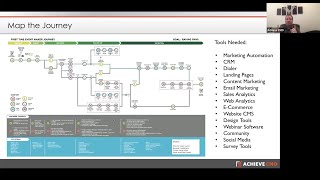
Map your customer journey first, then build your marketing tech stack around it. The session covers front-end tools like ads and forms, back-end systems like CRM and marketing automation, and how to track every touchpoint with UTM parameters and Google Tag Manager so you can measure what actually works.
Chapters
Well, so where do you start with all of this, right? How do you use technology to really move your company forward? And it really starts— and we talked about this before— it starts with mapping your journey and the customer journey and the thing you're trying to create for your customer. What is that brand experience? And then how do you leverage technology on that journey to be able to get those raving fans, right? So in this case, How do I take somebody who's never heard of me all the way through to becoming a raving customer, raving fan, and customer with a lot of retention, right? Well, it turns out there's actually quite a few tools that you need to know to do this well. On the front end, if you're doing the lead generation and demand generation efforts, the, the platforms, the social and advertising platforms, right? That's tech that's being used in those tools that are being used to start that journey. You might have your website that could be built on a CMS like a WordPress, um, or a Webflow or some other tool, right? That's technology. The form that collects that information, there's tech that drives that lead into a CRM or into a marketing automation tool. If you're doing e-commerce, right, you might have um, you know, product inventory management tool like a PIM or a DAM that's managing all of your, your products and the, the pictures and the inventory and the descriptions and all that kind of stuff, right? Guess what? That's all part of your tech stack. When somebody finally submits a lead, what happens? You know, do you send an email and thank them for that lead? Guess what? That's part of your tech stack, right? Do you call them? Well, guess what? You have to have a phone system. You have to dial that. Uh, if you want to send email, you have to have email marketing. If you want to analyze your website, you need web analytics, right? If you need to design your website, there's probably some Photoshop or Illustrator involved, right? There might be community tools or social media or survey, right? Your journey— if you can map your journey, you can identify the kinds of of resources and tools that you need in that, in that, right? When you look at it from like a technical perspective, right? Let's say take out that journey and you might be like, okay, I've got leads coming in from a Google Sheet. Let's just say for example, right? You know, I got leads coming in from a spreadsheet. I'm importing those leads into Zoho. I've also got maybe leads coming in from other partners, other CRMs are coming in. You know, I'm gonna send a text over here. I'm gonna, you know, log a reply, or I'm going to make a phone call and, you know, send an email, whatever. This is just an example of one that was built. But you can diagram the, the tech used. Here's another example of a data flow project, right? You know, so here's the ad platforms that are being used. There's a website, and in this case, this particular customer had two different websites, right? They bought it, they had acquired another company, so Guess what? They were on Contentful and Marketo, and they were also on HubSpot and using HubSpot's marketing automation tool, and they were using two instances of Salesforce. And, you know, they had to merge those tools. There's analytics, and, you know, they're, they're using revenue attribution and lead-to-account matching and revenue operations and product analytics, right? So they have— and this probably is only like a small fraction of what everything they're doing— but all of these tools The end goal is to help them generate and close more revenue, right? Um, when you think about— I'm going to take lead gen as kind of the primary example here. There's definitely applications to e-commerce as well. But when you look at like, how do leads enter your CRM? Guess what? They're coming from a variety of sources and you need to be able to track and record those sources and that journey. So that you know what's working and what's not, right? So you might have, for example, different sources to bring to the website. So we'd have direct traffic, organic search, referring sites, organic social, right? So all of this is kind of happening organically, but guess what? They're landing on your website and then they might call you, or they might interact with the live chat, or they might start a product trial, or they might fill out a website form. All of these are different touchpoints that bring them into the marketing automation or the CRM tool. If you're paying and you're doing paid advertising, right, you have paid search or paid display, they're coming to landing pages. You might have Facebook ads or Google or LinkedIn ads that are driving the landing page. You might also be using forms on these platforms. Um, on a lot of B2B lead gen initiatives, we like to use forms because the ROI is a lot higher. You get more leads and more interest by using those forms. But guess what? That becomes another touchpoint. You might have partners that are sending you leads and affiliates, and they have to come in through an API into your, your tool. You might be importing lists from a trade show or an event. You might get people that are just emailing you, or you might be doing outbound email and get email introductions that totally skip this whole process, and, or, or a referral, and they just get manually entered into the CRM. So what you're seeing is that you have all of these leads coming in from a variety of sources, and the technology— if you can leverage the technology, you can track that journey, right? One of the ways that I like to do this is by using what are called UTM values, or Universal Tracking Metrics. This is originally, I think, created by Google Analytics as a way of kind of standardizing What are the UTM values? So typically you see things like medium, source, campaign, tactics one you don't usually see, or ad group. It's, you can add as many as you want to, but term and content. So these 5 are the common ones, medium, source, campaign, term, and content. But you can really have as many tracking metrics as you want. But the point is that you collect this data so that you can see the journey as you go through. So one of the exercises that we like to run through with clients, and if you're a smaller client right now, or, you know, your company's small, this problem is a lot smaller. But as your company gets bigger, and then you, now you're running, you know, I've got 5 events going on, and I'm spending $100,000 on paid search, and spending money on paid social, and you're looking at hundreds of thousands of dollars in spend every month. This kind of tracking, it becomes critical to know what is working and what is not working. And even if you're not spending all that money, guess what? Small businesses, cash is king, right? You need cash. You need to know that things you're working on are driving results. Guess what? To do that, you need to set up tracking templates. You need to set up the tracking on the back end to make this happen, right? So one of the things to do is to set up a campaign or tracking structure Right? So in this case, we might be, you know, like, hey, here's the different— in this example, mediums. Here's the different sources. You know, I might say his organic search Google, organic search Bing, the referring site. This is organic social Facebook, and they came from the social feed or the stories or whatever it is. But if you can map this all out, then you can create a formula just as, hey, here's the link that I use when I'm sending traffic there, right? And you can have— and this, I'm not going to get all the technical side of this, but you can set this up so that anytime it goes into a link, you can save it in a cookie. And then when they fill out the form, guess what you get? You get all of that data. What ends up happening is that then, because you're collecting all of this data, you can actually track the journey of your customer end to end, you know, and especially as you get, you know, the larger accounts and things like that, what you're looking at is like, okay, I've got this paid social ad, they interacted with that, and here's all the details of it. And then they went and clicked on a retargeting ad, and then they— turns out they did a branded search for us and clicked on our branded ad. And then we did a retargeting ad in Facebook and they clicked on that. If you're, you're able to store and track all of those variables, guess what? You can now report on those, right? And so this campaign tracking attribution is a key part of measuring success, and it has to do with the technology you use. Um, tools like Google Tag Manager are really helpful. Google Analytics is really helpful. Your marketing automation tool is really helpful and critical in getting this set up and working correctly. Okay, here's your exercise. If you were to draw your customer journey— everybody take out a piece of paper, we're gonna take 5 minutes— just try to draw as much as you can that customer journey map and the interaction points your customer has on that journey. Don't worry about the technology yet, we'll get there. But the question is, can you track and measure the progression of that journey? And what is that journey? So I'm gonna, I'm gonna pull back to this, maybe a couple of examples over here. Um, well, let's just throw here. I'll give you 5 minutes and then I would love for you guys to draw that journey and just think through, like, what is the journey that my customers are going to, to all the way to a closed deal? And maybe it's short, maybe it's long. Well, let's spend a little bit of time there, and then we'll come back and talk about it.









