mvp.mp4
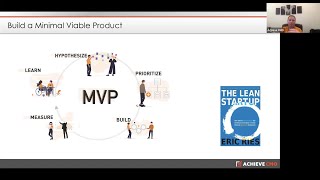
An MVP solves your core customer problem, not isolated features. Test it fast with a sales pitch or Typeform before building. Actify started with a simple form to capture event leads, discovered they could be sold, then iterated through warm calls and AI automation based on what customers actually wanted.
Chapters
So in the book The Lean Startup, they talk about this idea of building a minimal viable product, excuse me, where you can then go and actually take it to market and try to sell it and get real-time feedback in it. This loop is called— it's basically a build-measure-learn loop. The idea is that you have a hypothesis and you say, great, I believe that there's this unresolved problem in the market. And then if I create a solution for that, then, then we'll have success, right? So what you do is you, you take these ideas, you prioritize them and say, okay, great, if I could just deliver something, what would it look like? And then build it, I launch it, I measure it, I learn from it, and I do it again. And it's called the feedback loop— build, measure, learn feedback loop. When you're building a minimal viable product, and this goes for a service as well, when we're not saying, hey, let's take the individual components of the product and try like, okay, I've got a wheel now, okay, I've got two wheels, I've got an engine, right? That's not what we're saying, because those independently don't solve the problem, right? What we're saying is like, can we create a service that's going to be of value to the client even though maybe we're trying to build the, the, a car over here What we're trying to say is, hey, how do I get from point A to point B? And is there a version that I could create with minimal effort to go and test my hypothesis against the market? So in this case, I might start with a skateboard and then get to a scooter, to a bike, to motorcycle, to a car. This is the right way to build a minimal viable product versus like, hey, I'm gonna take apart the components and try to sell them individually that don't really solve the problem unless they're together, right? What we're talking about is, can I solve the problem? Not can I build the components to the solution, if that makes sense. Does that make sense, everyone? Okay. There's nothing like trying to go out and actually sell your MVP, right? Um, one, it forces you to complete an MVP, so you have to have something to sell. So even if it's not perfect, even if you have like a presentation, you know, and, and I, you know, I, I would coach and tell people, you know, hey, you've got this idea, great, do people want to buy it? Well, guess what, you don't have to write a line of code or create a physical product yet. You just have to find out, hey, would people actually buy this product or service if I had it available to them, right? So I could create a sales presentation I could go out and actually try to sell it and you would know really quick. You get real-time feedback from customers or prospects that says, hey, yes or no, right? So one of the challenges I've seen is, is a company will go and they'll spend 6 months, a year going and developing a product or service, and they're like, hey, tell me, help me take it to market. And guess what? The product or service might not actually be the right— it doesn't actually solve the problems or the pains. So This happens a lot in larger companies. There's a ton of waste here of like these products that get created and then are never actually pushed into the market. You know, they, they go and incubate and try to solve this, and then they actually never get it into market because the thing they're innovating, actually the market evolved or changed, or the market actually doesn't need it, right? When you go from an MVP idea requires that you create sales and marketing materials. It allows you to get that real-world feedback. It also helps you determine the best pricing model, right? You might go and be like, I have no idea what this is, the value of the market is. We're gonna talk about pricing strategies a little later. But you can uncover those market pain points and opportunities that then result in validated learnings, and they lead to the next version of the MVP. So the idea of the Lean Start is saying, hey, guess what? You can go and create a startup that's really lean, that solves problems. By solving those problems, you can actually make money, which then facilitates the growth and the ongoing movement of, of the product, right? So here's an example that I, that I like to use. So I helped start a company called Actify, and, uh, Jeff's not on, on the call here, but he and I were both at Actify. And we had this idea, we had this hypothesis, let's go turn event attendees into high-quality business prospects. So can we take any consumer event, say a fair or something like that, and use tickets as a way to kind of incentivize people to give their lead information to other companies? So we didn't know, there was, it was a big question. There's this hypothesis, right? So we launched it and the first MVP we built was this basically a form using Typeform. And we would ask people to, to, to see if they would give us their information in exchange for a ticket. Guess what? We found out they would. We also found out that events were willing to sell tickets at discount. We learned that people were willing to opt in for a free ticket, that people were willing to share the offer with their friends. We also learned that companies were willing to buy leads from us in this context. So if I could get people to get a free ticket in exchange for talking to a company, guess what? They would actually pay us for that lead. So that was a validated assumption. If those things were broken, if I wasn't able to actually turn an event attendee into a business lead, and say we did that and nobody wanted to buy the lead, it would've been futile, right? Why go develop the product, a big development product when I can't get people to do it or they don't want to do it, right? And so we started going down this path and what we learned interestingly enough is that when we got to a point where we're actually making warm transfers into the company, right? So we'd say, hey, would you like a ticket to the Parade of Homes, right? That's something going on right now. And the people are like, yes, I would love a ticket to the Parade of Homes. And we'd say, okay, we'd actually have them talk to somebody. We opened a call center in the Philippines and we said, hey, in exchange for this ticket, do you understand that you have to talk with Vivint Smart Home in exchange for the free ticket? Are you willing to do that? And they would say, yes, I would. I'm willing to talk to Vivint Smart Home to get this free ticket. So what was interesting is we then tried transferring the call to the company, and guess what would happen? They wouldn't actually answer their phone. The company that's buying leads from us won't answer the warm transfers that we're sending over to them. And we realized, hey, if you're not— if you're treating our leads this bad, what are you doing with all your other leads? And so it actually changed the whole market where we said, hey, let's just take your old leads instead of selling an event. The bigger opportunity in the market was actually, hey, let's just re-engage your old leads. And so we ended up building an AI chatbot that would talk back and forth with the client, and then it would transfer calls. And that's really what, you know, you know, when I'm no longer with there, work them, but, you know, they were doing, you know, $300,000 a month kind of a thing, right? Where They were able to take that idea, the real resonator in the market that had nothing to do with event attendees. But had we gone in and spent all this time and energy building this model with all the best tech on the back end of it that worked with events, we would have wasted a lot of time and energy to actually get to the true problem, right? And so that's, that's the power of an MVP. So we're talking, you know, this build, measure, learn feedback loop. In a lot of ways, it's like the scientific method, right? You, you have an observation which leads to an idea. You have questions that leads to hypothesis. You run an experiment, you draw a conclusion, you get results, and then you do it again. That's essentially what we're talking about, the build, measure, learn feedback loop. This also allows you to then prioritize and create a product roadmap. That says, hey, based on our research, based on the MVPs that we're running, we've learned that these are the things that are of most importance to get out first and then second and then third and fourth until finally you maybe get a version of your product where you're like, hey, this is really go-to-market ready. Let's go and, and, and spend money on marketing and everything else, right?









