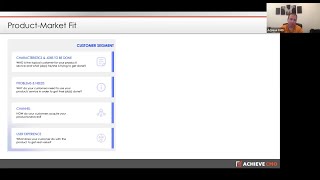
Product-market fit means solving a market's unmet problems. Using Uber as an example, the speaker shows how to identify the core job (getting from A to B), customer pain points, and alternatives, then measure fit with Net Promoter Score, retention, and revenue growth. If you answer no to any of 14 self-assessment questions about demand, willingness to pay, and repeat usage, you need to iterate.
Chapters
One of the, the ways you do this, right, is what is called product market fit, right? So product market fit basically says, hey, there's a market and there's some challenges with the market, and then there's a product that fits the needs of that market, right? So when we think about the market and the customer segment and the problems they're having, so these are— you remember we talked about Jobs to Be Done framework a little bit in, in one of the previous conversations. You know, what or who is the typical customer of your product or service? What is the job they're trying to get done? Let's take the Uber example. What's the job they're trying to get done? Well, the job they're trying to get done is they're trying to get from point A to point B. And, you know, they could do that in a lot of different ways, right? They could call a taxi, they could drive their car, they could ride a bike, you know, that's the job to be done is I gotta get from point A to point B. Why do your customers need to use your product and service to get their job done, right? So now we're talking about, okay, what are the problems that they have? If you're looking at Uber, like, what's the problem they have? What's the customer's problem? To get from point A to point B, I might not have a car. So maybe I don't have a car, maybe I'm traveling, and so I, I could rent a car, you know, and so that's an option if I wanted it to, but maybe that I'm not going around enough, that the costs don't justify it, right? So you kind of think through like, what is the problem? What are the problems with the job that needs to be done? And then how are they acquiring your product or service, right? So in the case of Uber, if you think about the problem, okay, they need to get from point A to point B, it's difficult. Today they could go out into the market and find those products and services, If they're trying to find you specifically, what would they do? And then what is that user experience? When you have product market fit, right, you're taking this customer segment and you're saying, hey, my products and services align with those things, right? So when you talk about like the jobs to be done and the characteristics, one, we're gonna understand the alternatives that they have, right? So they can get jobs done multiple ways, but our product should be able to also accomplish that job to be done, right? So at a high level, it needs to solve the problem, right? The features and the elements of that product need to meet the needs of those customers and their unresolved problems, right? So if Uber, for example, would have just said, hey, you know, I know you need to get from point A to point B, and here's an app that connects you with the taxi service, They might have solved a lot of the problem, right? But they also uncovered another opportunity, which is, hey, people also want to rent out their cars, right? But the challenge of like, hey, I gotta get point A to point B and I can do it really quick and I can make the experience on my phone. I just have to tap a button, right? And pay. It makes it very simple. If you're going through any kind of channels, you also have to think about how your product meets the needs of those channels. So, you know, if you think of like you're selling a product in a store like a Walmart, right, that's a channel partner. You also have to think about those needs and, and really the, the ultimate success here, right? Are you, you know, how do you measure the, the key metrics that say, hey, I have product market fit, right? And that, that can be things like a net promoter score or customer satisfaction score. It can also be like just growing revenue, right? If you're meeting the needs of the users, you're going to grow, and we'll talk about that a little bit more. So does your product or service resonate? I want you— I'm going to go read through these questions, and I want you to mentally go through your head and just say yes or no, right? Does your product solve a specific problem or address a significant need in the market? Do people immediately recognize the value of your product? Does your, does your product establish a real and direct connection with your buyer? Are customers actively seeking out your product or expressing interest in it? Does your product receive positive feedback and reviews from customers? Are customers willing to pay for your product or service? Are you experiencing growth in terms of customer acquisition and retention? Do customers continue to use your product or come back for repeat purchases? Are customers recommending your product to others or providing referrals? Are you receiving unsolicited testimonials or positive word of mouth about your product? Are you observing positive trends in key performance metrics such as sales, conversion rates, or customer satisfaction scores? Are customers engaged with your product, showing active usage and exploring its full potential? Does your product have a competitive advantage over alternatives in the market? Now, if you said yes to all of those, you have a product that resonates, right? You, you develop a product. If you said no to any of those, what it does, it's an opportunity for you to improve. Right? So there might be some aspects of your product or service that aren't quite resonating that says, hey, we're not actually getting those unsolicited testimonials, for example, or hey, we're not, you know, people are sometimes willing to pay, but I have to really cajole them, right? So there's something off about, about that, right? I love this quote. I've said it many times. Your opinion, although interesting, is irrelevant, right? Basically what this is saying is, hey, you have an opinion about what, what this is, but unless you have data to back it up, it's still just an opinion, right? So if you're like, hey, I'm going through this and I feel really good, but you don't have any data that says, hey, yeah, this, our customers love this, right? It's just an opinion, right? A lot of times we create an companies will create products or services because they just really believe in the product and they're like, hey man, I have really strong opinion on this, but in reality the data doesn't back it up, right? And so when you can marry the data with your opinion, you're gonna have a much better result. Okay, we're gonna do just another exercise. We're gonna take 3 minutes on this one, but my question is, is how can you create a better product-market fit with your company. So first of all, the question is, does your company have product-market fit? If not, why? Is your product actually better than your competition? If not, why? What are the gaps in your product or service? If you could wave the magic wand and reinvent your product, what problems would it solve? And what are the must-have features that your product or service is missing?