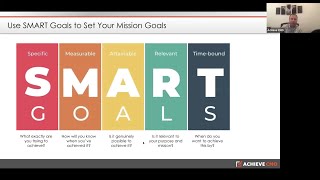
Learn the SMART goals framework: Specific, Measurable, Attainable, Relevant, and Time-bound. Turn vague aspirations like "get more volunteers" into quantifiable targets with deadlines, and use charts to visualize what done looks like.
Chapters
Okay, so SMART goals. This is probably not new to anyone who's heard the term SMART goals before, right? So SMART goals, right? Specific, measurable, attainable, relevant, time-bound goals, right? So the, the question here is, as you set your mission goals, you have these metrics in mind. Okay, I know I need to go get demo requests. I know I need to go I need to get more volunteers, right? I need to get more bookings. I need to have more conversations and send out more proposals, right? As we think about it in terms of SMART goals and to set your mission goals, right? We need to think about like, okay, what exactly am I trying to achieve? Achieve? How will I know? How will you know when you've achieved it? Is it actually possible to achieve? You know, I think Steve, you mentioned this like, Okay, I think I can maybe get to $1,000, but man, $10,000, that's big and hairy and audacious. But let's think of $1,000. Okay, maybe I can get there. That's attainable for me this year. Is it relevant to your mission and your purpose? Does the goal you have actually relate to the thing that you're trying to do and that guiding north star? And then when do you want to achieve it by? So let's— here's some examples. SMART mission goals, right? I want to increase annual revenue by 15% by the end of the year 2023. I want to reduce customer churn by 20% within 6 months. I want to increase website conversion rate from 2% to 4% in the next 3 months. I want to enhance customer satisfaction rating from 4.2 to 4.5 by the end of the quarter. I want to reduce manufacturing defects by 10% by implementing quality control measures within 6 months. Right? So now we're getting really specific about this goal. Right now it's not just, hey, I wanna go get 1,000 volunteers, right? It's I wanna increase my volunteer rate from my baseline to whatever it is in a year, right? And then from that we can look at this, the how do we then go do that, right? We're not gonna take a full 3 minutes or 5 minutes here, but I want you to think about this, right? Think about the goal you just set for this year. What are you trying to achieve? How will you know when you've achieved that goal? Is it possible? Is it relevant? When do you want to achieve that goal, right? I like to think of it this way. Can I put it on a slide? Do I know what done looks like? When I've arrived, do I know that I actually completed my mission, right? So if my mission again is I want to reduce churn, I should be able to say in a chart, in a graph, here's where I started and here's where I ended. I was successful, I was not successful, and that goal was— helped me get me where I wanted to go. That makes sense. So ask yourself this question: was the goal that you put, your 1-year goal, was it a SMART goal?