The Achieve Podcast - Adam Aronovitz (Ascentric)
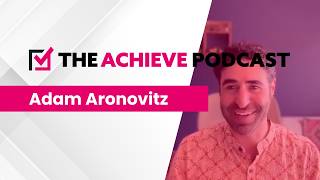
In this episode of the Achieve Podcast, host Taylor Baker interviews Adam Aronovitz (who prefers Aronovich), the founder of Ascentric (also branded as Eccentric). Adam shares the origin story of Ascentric, a leadership development organization that translates his two‑decades of experience leading youth and global expeditions into accessible programs for leaders and teams. He explains his concept of “culture cartography,” turning abstract company values into lived, 3‑dimensional experiences, and uses the metaphor of outrigger canoe paddling in unison to illustrate shared velocity and direction. Adam discusses the growth engines for his early‑stage startup—primarily referrals, personal networks, a new business‑development lead, and emerging AI tools—while emphasizing the importance of friend‑making and asking for advice rather than direct pitches. He reflects on pivotal moments, such as the acquisition of his previous venture Global Roots, which taught him that trust and credibility must be re‑earned in new organizations. Major bottlenecks he identifies are his own tendency toward shiny‑object distraction and perfectionism, which hinder focus and timely product launch. Adam outlines his marketing philosophy: authenticity, leveraging close connections, and avoiding noisy outbound messages. He describes his use of AI as a thought partner and workflow automator, while cautioning that AI cannot replace human curiosity, empathy, and the heart‑centered aspects of leadership, especially for Gen Z. The conversation concludes with his excitement about an upcoming launch, the need to define ideal customer profiles and pricing, and a 90‑day constraint to move from “97 % ready” to actually setting sail. Throughout, Adam emphasizes feedback circles, psychological safety, and the power of gratitude and acknowledgment in building cohesive teams.
Chapters
Welcome to another episode of the Achieve Podcast, a show where we highlight leaders, creators, and entrepreneurs who are building meaningful businesses, shaping their industries, and having an impact. I'm Taylor Baker Baker, your host, and today I'm excited to learn from Adam. Adam, again, I'm going to butcher that last name. Aronovich.
It's Aronovich. That was a unique take though. That's cool. That's a new one.
I, I am sorry about butchering that one, but looking at— you have several businesses you're working on. The one specifically want to look at is Eccentric, and you can find it at eccentric.io. Give us the backstory, how you got into the space and who you're currently targeting and serving.
Yeah, it's a great question, and Taylor, stoked to be here and love the work that you do. And, um, yeah, big props to your community of listeners and just, yeah, eager to learn and do new things and contribute in the world. So Um, Ascentric.io, it's kind of this funny play between, um, ascent, growing, going towards that summit, but also eccentric. You know, we're kind of— entrepreneurs are kind of weird, um, and we want to own like the amazing weirdo parts of ourselves that inspire us to start businesses and to try new things and to get out of the mold. Um, and so Ascentric is a leadership organization. Um, I've been working 20+ years now in leadership development, starting with working with youth, teaching in the Boston Public Schools, instructor for Outward Bound. I led programs through two of my other companies, Global Roots and Carpe Diem Education, for 18 years, guiding leaders in Costa Rica, Ecuador, Tanzania, Hawaii, Nepal, all over the world, these— on these epic journeys. And I My work is all about helping people see the incredible parts of themselves in the mirror through these, through these experiences. And so Centric.io takes the work that I've been doing on these sort of epic leadership journeys across the world and making a little bit more accessible for people that may not have 6 weeks to go to the Himalayas. And so I really focus on helping leaders and teams get aligned during moments of change, moments of growth, to be aligned what matters most. And more than anything, it's a term that I use called culture cartography, is how do we take these expressed values? Every company is like, okay, this is what we believe in, these are our touchpoints, but how do we take those values from the 2D and make them 3D, make them real, make them felt? And so Eccentric, it's a combination of, Executive coaching, that's sort of the first step that most people take. And I did my training with, through UC Berkeley at the Berkeley Executive Coaching Institute. And then that typically moves towards more group dynamics and teamwork. How do we work together? Amazing feedback cycles. Learn. I spend a lot of my time on the Big Island of Hawaii and I got super into canoeing, outrigger canoeing the last couple years. And I think about a team. How do we get everybody in the canoe stroking in unison? When we're switching sides, it happens like on a beat. It's all about shared velocity, speed, and shared direction. So that's sort of a, yeah, a rambling overview of what I do. I'm just so excited about it. And yeah, that's been my focus over the last year is building this new company, which is my fourth company.
I love that. I love that. And I love that analogy you brought up, the 2D to 3D, taking it from pen and paper to real-life application.
Yeah. So when it's something from organizations, you know, a lot of leaders, they start off as these individual contributors. They're so good at their work. And then eventually they become leaders. And leadership, you're no longer— it's no longer pen on the pages. How do you guide and inspire the people around you? And a lot of times things get lost in the, in the dust of, you know, the fog of war, the dust of moving forward, the important things of like, how do we communicate with each other? How do we work together as a community? It's so important. And being able to have those touchpoints, you know, it's basically getting back to the basics. I had a good friend who's a founder, you know, said to me recently, he's like, you know, you have a bad business model, doesn't matter, you know, you're going to fail, you know, but if you have a good business model, but the culture isn't strong, you're also going to fail. And so, you know, the culture is that it's going going to be that, um, either an accelerator or super intense headwinds.
Yeah. And in today's changing, changing topography, it is more essential than ever.
Yeah. Yeah. And it's like, there's, uh, Seth Godin. Do you familiar with him? He's a marketing expert I love. I'll never forget, I, um, I remember he said one time, what do people, especially young people, need to learn? Uh, they need to learn how to solve interesting problems and they need to learn leadership skills. And from my decades of working with high school, college students, young adults, those skills are in really short supply. The combination of, you know, if you want to call it helicopter or snowplow parenting, whatever you want to call it, it just means they don't get access to these important skills. So then when they show up in the workforce, either as a contributor or a team member or a leader, they haven't built those skills. And so Accentric.io is really, it's set up as a way to support people in accentuating those skills, or if they didn't really have access to them, to be able to build them now. I love that.
Now, what would you say is actually driving growth for you right now?
Uh, you know, and Taylor, it's a good question because Accentric is very early startup mode. I, um, I built another company in, uh, 2024 and was able to get to, um, you know, a great place where my business partner, um, is, is running that. That's been sort of my, my M.O. is, you know, join companies or start companies, um, and then once they're in a solid operating place, I'm like, okay, well, I'm gonna— now I want to go do something new. So, um, what's driving growth right now is, you know, it's through my network, it's through referrals, through the people I'm, you know, I'm working with. Uh, part of my work is still in a prototype phase, so some of the culture cartography, um, and team culture work, those are in some pilot phases. So piling that with different organizations and If you're listening and you want to check out this methodology, reach out. Maybe a pilot would be, you know, good work for your organization. Yeah, so most of it's referral. And I say this all the time, I think life is 90% friend-making, you know. So people that I've got shared experiences with, I've built things together with, who are the biggest champions for, you know, ways that I'm wishing to be able to contribute in the world, that tends to lead to the most growth. Talk to me in a couple weeks because I'm— I just brought on a, a biz dev, um, a biz dev lead. Um, you know, I'm chatting with some agencies that do, you know, a lot of outbound. Then of course the AI tools at our disposal, you know, are growing exponentially every 45 minutes. So, um, that's another piece of the puzzle. So true.
Now looking back for you personally, what turning points, positive or negative, have molded the way you think about running an organization?
I mean, so there's— I mean, so many— I've just been really blessed to be able to always do really meaningful work. I think, you know, I think a big turning point, um, when, uh, my, uh, my company Global Roots was acquired, uh, went through a merger with another amazing organization, Carpe Diem Education, uh, and I'm still very involved, um, you know, chair of the board and work on a lot of strategic advising. But something that I didn't realize when, um, was when my company was acquired and then I was the leader of this larger company. Um, something that I didn't understand was that the trust and the credibility and the authority— are you familiar with the trust equation? A little bit. Yeah, that those don't, you know, you don't just carry that cape into a new organization, that I had to earn it again. Um, and that's something that I think a lot of— and it, it cost me, it cost me time, it cost me a lot of energy. It was a lot harder than I imagined. And so going through that experience and understanding what leadership really takes inspired me to shift the work that I've been doing with emerging leaders and to be able to make that more accessible to current leaders.
That's awesome. That is so true. Like leadership and the success is rented and not owned.
I never thought of it that way. That's, yeah, that's, that's spot on. It's rented, it's not owned. Yeah. When you, you move, you need to refurnish your leadership lab, you know, like re-earn that. Yeah. It's a really good metaphor.
Now, when you try to grow and expand, what are the biggest bottlenecks or obstacles that keep showing up?
It's me. I mean, we're always, you know, you know, that little, like, little meme of like the person that fell over on the bike and that, but they, they had like stuck their own, like, I, I think that I just get so excited about so many different ideas, so there's a lot of distractions and bright shiny objects, um, and so it can be hard to have that again. Um, for— I don't know if people remember learning in physics. I remember like in high school learning the difference between speed and velocity. Speed is just the rate at which you're moving, but velocity is— it's speed plus direction. So you can be moving really fast like this, but you're not going anywhere. And so yeah, the biggest obstacle, like, you know, for me, it's narrowing down possibility. And, you know, I start when I built Ascentric.io, at first I was like, okay, this is going to be, you know, we're going to start with team expeditions to the Himalayas. You know, we're going to— it's going to be when, you know, a Series A company hires 15 new, 20 new employees, We're gonna do an orientation like in the mountains in the Himalayas. And I was like, okay, like let's slow this down. It's a little bit of a leap. If you're listening out there and you want to do that, great, let's talk about it. But, you know, this work is going to happen at a more granular, lower altitude first as you build trust, you build reps. Yeah, so the biggest challenge is, um, it's focus. And this would be the same thing that my, you know, 4th grade teacher, you know, told me. So it's always a journey.
I understand that. I understand that all too well. Now, when it comes to your messaging, your outreach, your marketing systems, where— what's been working well, and where do you feel the gaps and frustrations?
Ah, some of the best advice I ever got when I was a fundraiser. I'd started a food literacy education nonprofit, super cool, called the Cocoa Project. Led programming like all over Asia and Eastern and Southern Africa. Um, but when I was going, like, starting to raise a lot of funds, um, there was a consultant and coach I was working with, and she said, Adam, uh, it was just like a big fundraising email. She's like, Adam, if you ask for money, you're gonna get advice, but if you ask for advice, you're gonna get money. Um, and so I think one of the greatest things, um, anyone can do when you're building your business is the people that you trust, the people that you know are rooting for you Ask them for advice. The more people that you bring into the inner orbit, then they all of a sudden, you know, if I'm speaking to a good friend of mine from college, like, oh, I'm working on Eccentric.io, I'm trying to decide what's the right pathway to work with, let's say like VCs, to be their go-to person to implement team culture work. When I ask that question, we're having a conversation, you know, that person's starting to get a little like eccentric.io neck tattoo, you know, like they're now part of the organization. And so I really believe when I said, you know, life's 90% friend-making, it's who the— who are the people that trust you, that are rooting for you, they want you to be successful, that believe in your vision. And the more you bring them into the inner fold, you multiply the people that are a part of your company, the people when they're You know, at their Super Bowl party or, you know, family reunion are gonna be like, oh, you're dealing with this thing at work. Like, I think you should, you should talk to my friend Adam. Like, he's got a great idea. 'Cause of course, like, they contributed too. So there's, I don't know. I just think about these like soft elements a lot rather than, you know, if I go on my LinkedIn messaging right now, I'm gonna have 15 messages from people that are like, we help executive coaches like scaling business through outbound. And I'm sure they do great work. But I don't open those messages. I don't respond to those messages because it all feels noisy. So it's that I really believe in the authenticity of close connections. I love that.
I love that. So true. You remind me of a book by Dan Sullivan, Who Not How.
I haven't heard of that. I love that.
Good book. Really good book. He talks about bringing the right who's involved. Not thinking, how do I do this? Who do I need? To get this done.
I see that, like, you've seen the movie Rudy? Yeah, back in the day, about like that, like, play like a champion today that they hit. I can see like the who, not how, like, as you walk into your, you know, like an office building or something like that. That's the, like, yeah, it's the people. And especially in a world that's moving more, uh, robotic, um, it, it's, it's the people, it's the curiosity. It's the energy that's going to really move, like, move the ball forward.
That's so true in so many ways, so many ways. Now, speaking of that aspect, the AI, the automation, where have you guys— where have you found ways to utilize it, and where do you still see opportunity on the table?
Oh, there's a lot there. You know, I use AI tools and LLMs, you know, I think really more than like a thought partner. And I always— I'm like, challenge me on this. I don't want— don't be a sycophant. Don't I say every idea I come up with is the best idea, and then I'm gonna be a, you know, it's gonna make a zillion dollars, you know.
Certified genius.
Yeah, totally. So I really like to be challenged, like poke holes in this, you know, help me think through this. What am I missing? What sounds compelling? You know, put your, you know, VC founder, you know, hat on. You know, so there's like the classic stuff like that. I'm really lucky to have a team. An executive assistant that I worked with for many years that a friend introduced me to, is based overseas, based in the Philippines, and she's become an extremely close friend. Her name's Katz. And when I was leaving an ops role, my last company, she pitched me on starting an executive assistant, sort of like a matchmaking firm with her. And so we have like almost 30 employees now based in the— anyways, So I've got a team of amazing people who are extremely competent in AI, AI workflows, automations, um, that are gonna be, are better than I am at the nuts and bolts. I was recently doing an AI course, um, uh, super cool, check it out, AI Captains Academy, uh, my dear friend in Hawaii, Jordan, um, Urbanovich created, which is all about learning how to use N8N and creating all these cool workflows and using Cloud Code to build websites. And it's amazing, but I also recognize I'm not— I don't have the attention span to like be the person hitting the keys to create these things. It's really important to understand how everything works and where things are going. So I use AI quite a bit of my work. Yeah, mostly as a thought partner. But I try and really hold this line in terms of creativity. Like, I'll— I'm down to get some bullet points from, you know, AI. Like, oh, I'm thinking about this thing. Like, what do you think? But it's really important, like, I like to do my own writing. I like to make sure I'm thinking out of the box, and I very much, as a longtime educator, I believe— I mean, AI's gonna disrupt so many industries. It's gonna disrupt a lot of jobs. What it is gonna do, it's gonna make the people that ask great questions, the people that are curious, the people that experience feeling and can experience their bodies, those are the people that are gonna really be able to walk hand in hand with those tools and succeed. I love that. I love that.
And there's just something about the human element that just cannot be replaced. And so you see it in writing, you see it in all these things where it's like, all right, that just has a telltale sign and it becomes soulless. That's the best way I can think of.
Yeah. I hope that this happens soon, especially some of the like deepfake, you know, memes in like the political world these days. I hope we find just this, like, almost like Fairtrade certified, like, it's just like, this is a, this is, this isn't like not AI generated, you know, whether it's text or something like that, just some sort of stamp of approval. Um, because it's, I mean, a lot of AI stuff, it's like, it does synthesize information really quickly and can like bullet point things. It's really great for getting information across, but it's not great at getting us connected to our hearts. And I think that's something that, especially as I think about the workforce and Gen Z, and there's a lot of people that, you know, struggle with Gen Z. I love Gen Z. The trick there is, you know, Gen Z just needs to feel value and they need to feel like they're doing something meaningful and they're part of something. They're part of a community of effort. To borrow a phrase from Ed Tyson, who's a leadership expert that I love, check out his his book out, uh, From Expert to Executive. That's awesome. Um, yeah, that, uh, I'm rambling a little bit here, but, uh, yeah, so I think there's, you know, it's that balance of efficiency and authenticity. Like, how do we find, how do we find the right balance for, for whatever your organization is?
I love that. I love that quote. It's like, AI is not great at getting us connected with our hearts. It's like, it works in our head really well, but the heart's different. I love that. And the Gen Z comment, so true, where they're lacking good leadership often is all it is. Like, there's a lot of potential.
I mean, I, but I feel like it's like, you know, somebody, um, I've been super fortunate to travel, you know, a ton, but it's like somebody, you know, getting off the plane in, um, I don't know, let's say in Vietnam and being like, why don't you speak Vietnamese? You know, like, I think that's like what we, the way that we like treat Gen Z, like, why don't you have like a certain work ethic or why don't you, you know, they just didn't, they weren't even, they never were able to take like Duolingo Vietnamese. Like they weren't given any tools. And like, like it or not, if you're a business leader, like you have this amazing opportunity to help guide these amazing young people. And there's also this balance of like Gen Z and like baby boomers. We gotta create, there's a bridge there. Like everyone's gotta stretch. Everyone's gotta be willing to stretch.
So true.
Yeah. So true.
Now, when you think about the next stages of the business, what are you most excited about? And what do you feel like you need to fix or build to reach the next peak? Yeah.
Great. That's a great question, Taylor. And I, you know, I wanna shout out to Jess May, who I've been working with on biz dev, who's really been pushing me to like focus on like, what are your ICPs? Like, what are your offers? What does your pricing look like? Cause I've been dragging my feet, you know, a little bit. I've been so excited about all the ideas. And so what's exciting, you know, later this month will be the actual like launch launch. You know, I do work with clients right now, but that's all like super referral inbound style, but a much more targeted outreach and like kind of really like opening our doors for business. So that's what's coming up. I'm just super stoked about it. I, you know, stay tuned, you know, if you follow me on LinkedIn or, you know, check out eccentric.io, you'll see what's coming down the pipeline. But it's really exciting and it's such transformational work. And yeah, I'm just excited to be able to do more of it.
That's awesome. Now when you look at your own journey, the wins, the mistakes, What lessons stand out to you, and what do you wish you understood sooner?
Something I wish I had learned sooner is to slow down, to ask questions, to think about— like a game of chess— to think about the cascading impacts, you know, in, in certain spaces. I mean, there's— I mean, I've fallen on my face so many times, you know, and luckily like nothing catastrophic. Yeah, I mean, it's like there's just like an element of slowing down, focus, and really trying to really understand like the people that you work with, the people that you serve? What are they wishing for? Like, what are they struggling with? I think I wished that more early in my career that I had integrated some of the things that I always did so well with students, which are feedback circles. And this is whether it's, you know, I try and do at least once a week, but a time to come together and, you know, and share gratitudes, like really clearly, like, you know, I want to send a gratitude to Taylor Baker Baker, you know, for inviting me for this call, for showing up with awesome questions and energy, you know. You know, sometimes I do it like campy style, like I want to send shooting stars to Taylor Baker Baker.
Shh.
Celebrate highs and lows. And then also something I love the most is acknowledgments or ownerships. You know, like I want to acknowledge that, you know, on Wednesday I wasn't prepared for, you know, the marketing meeting. You know, I want to acknowledge I meant to be prepared. You know, some stuff was going on the night before, and I know that made, you know, the job harder for everyone else because those types of things, they let the seeds of resentment that might be growing in other people— it just gives a space for that to be aired out. And so people— it's things like that. I really believe in carving out time for people to connect. It's this element I'll tell one more story. When I, my first year teaching in the Boston Public Schools, I didn't do, I was a math teacher, um, teaching 6th grade. The first week of school, there, we weren't, there was no math happening. It was all community building. It was like, how do we, um, how do we resolve conflict? What are our values? We spent 2 days making this like beautiful flag called the Full Value Contract of, you know, what are our values? It's positivity, it's helping, it's patience. It's discipline, it's focus, you know, and what do we want outside of our value system? And it was like judgment and meanness, you know, these are 6th graders that are writing them. And anytime there was an issue that year, I was like, hey, let's take a look, you know, like what's going on right now and what value are we falling short on? And so it was something, it wasn't the teacher being like, I want y'all to be positive. Like they came up with those words. And I could see the vice principal in there the first week being like, what is this guy doing? What are you doing? Like, you're falling behind. But by the end of the year, we were moving with a greater velocity because we were all paddling together. And so I just, I really believe in taking, I think in some elements of business, I just got sucked into the metrics of the, you know, we need to be getting stuff done, you know, KPIs and progress and like all these things and sometimes forgetting about the human beings who are all so unique. And making sure that they feel understood, that they feel cared for, that they feel included, that they feel safe to share feedback, that there's psychological safety within the organization. So, yeah, that's one thing. And then, you know, except for focus, it's just like picking, picking a lane and paddling really hard in that direction and not thinking so much of like, oh, that island looks kind of— I wonder if there's mangoes over there. You know, just being able to have like discipline and focus without losing sight of the sense of awe and possibility.
I love that.
I love that.
Now, if you had to pick one constraint to focus on and solve over the next 90 days, what would it be?
Over the next 90 days, the biggest constraint I would say is, um, I think launching, like getting off the dock. I think there's been so much time prepping the ship, you know, making sure, okay, let's triple check how much, how much rice do we have, you know, does everything match, how's the paint on the side of the boat, um, and I just want to get out of the harbor, um, and so that the biggest constraint is letting go. Because you're seeing this is such a unique time between like, I feel like it's all built and now we're ready to set sail. Um, and just being okay with the 97%, you know, it takes as much time to get from 97% to 100% as it does to get from 0% to 97%. Um, and so like being okay, like we're at 97%, this, we're doing great work already. We're going to do incredible work, you know, in the next, next several months and just being okay. You know, just not getting bogged down in perfection, but not letting perfection be the— let's say like, don't let perfection get in the way of progress or block progress, whatever it is. Yeah. Love that.
Love that. Adam, thank you so much. You have shared so many good nuggets along the way. I have a whole page of notes. And the feedback circle, I love that concept. It's just like, get it out before it grows too big. Like, just go through that.
I mean, this is like my life. Like, I've got sitting around like all my manuals, you know, like all of these group dynamics manuals and things like that. There's so much magic in the group experience. And most adults and leaders, they didn't get to be a part of that when they were young. They didn't know what it felt like to feel totally seen and totally accepted and loved. And so there's such simple tools. To do that in a business environment that people just aren't aware of. And it's like, I just love that in a 90-minute conversation or workshop with a leader, we can, you know, we can turn culture around, we can bring it alive in these really impactful ways. That's so true.
That's so true. I mean, so many people don't feel like they have a voice because they're like, yeah, I can't say, I can't, I want to. And you're bringing out that that authenticity you bring in, that vulnerability and the cohesiveness that comes from that when you're open. And then you said the unison in the paddling, like the momentum that comes just stacks and it just builds and builds.
Yeah, it's a— what a blessing to be able to be creating together and doing this cool work together. So yeah, I love it. So true.
So for those who want to reach out and learn more, again, eccentric.io, anywhere else you want to send them.
Yeah, and Ascentric, you know, it's spelled like ascent, like ascending amount, like the first ascent, Ascentric.io. Um, you can find me on LinkedIn, Adam Aronowitz, uh, on LinkedIn. Um, I, I plan to be posting more, so if you see I haven't posted anything, hold me to that. Um, yeah, but you can— adam@ascentric.io. Um, you can find me on LinkedIn. I don't use Instagram that much, but you can find me on there, um, if you look up Adam Aronowitz. But yeah, LinkedIn and my website are probably the best best place to find me.
Awesome. Well, thank you so much, Adam, for coming on and sharing that. And thank you to today's sponsors of the episode: Achieve Bootcamps, where entrepreneurs learn hands-on how to build their own marketing systems, automations, and AI-powered tools. And Achieve CMO, which provides fractional marketing leadership for growing businesses. So reach out again to Adam and the team, and if you have any questions, like, reach out Get involved in your organization, make the difference, connect the human experience with work, with what you're doing. Like, we are human beings, enjoy the process. So thank you again, and we will see you all in the next episode of the Achieve Podcast.









