The Achieve Podcast - Ali Fakih (AIAEC)
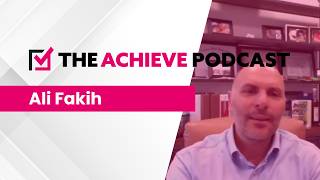
In this episode of the Achieve Podcast, host Taylor Baker interviews Ali Fakih, founder and CEO of AI AEC, a startup that applies large‑language‑model AI to the fragmented permitting and entitlement workflow in architecture, engineering, and construction (AEC). Fakih, a civil engineer with 20 years of experience, explains how his daily frustrations with manual code, ordinance, and design‑guideline research inspired the creation of AI AEC three years ago. He describes the rapid growth of the company to a 50‑person team, the recent launch of its first platform on March 17, and the roadmap of four integrated products. The conversation covers the technical bottlenecks of building AI‑driven software without a software background, the steep learning curve in software development, and the shift from engineering to business leadership (including an OPM executive program). Fakih highlights the importance of trust‑based, one‑on‑one customer outreach for early marketing, the evolving Ideal Customer Profile (ICP) that reshapes sales strategy, and the company’s go‑to‑market focus on Arizona before expanding to ten more states and eventually nationwide. He shares his vision of dramatically shortening permitting timelines—from 120 days to as few as five days—by delivering instant, AI‑generated answers to developers, contractors, and owners. The episode ends with a call‑to‑action for listeners to try the free tool at aiaec.com and provide feedback.
Chapters
Welcome to another episode of the Achieve Podcast, the show where we highlight leaders, creators, and entrepreneurs who are building meaningful businesses, shaping their industries, and having an impact. I'm Taylor, your host, and excited today to be joined by Ali Fekih, the founder and CEO of AI AEC. You can find them at aiaec.com. So, Ali, give us the backstory. First off, thank you for coming on and joining us today.
Thank you. Thank you for having me, Taylor Baker Baker. So I appreciate it. You know, a couple of things. I, I'm a background, I'm a civil engineer background, been doing this for the last 20 years. So we had, and I founded AIAC about 3 years ago, and it all started based on what I do, obviously, on my daily operation at SEG. We have— and we do a lot of planning entitlement. We assist on the processes through the permitting. And it's, as you know, it's not as easy as it could be. It's very fragmented information. There is a lot of code and ordinances and design guidelines and requirements. That an individual has to go through to make sure a project assessment and feasibility is probably done to the best information out there. Okay, so I'm a big believer that us niche, you know, professional has to play a role, especially with all of the movement in AI to develop our own tool. I think the LLM out there, what ChatGPT, Claude, and all of these guys doing is amazing. But at the same time, they're not going to get into the niches and the vertical where our expertise is. And this is how I started. I, you know, I joke around, my wife, you know, tell people it's like my husband, you know, like goes through his midlife crisis and he started a tech company. And it's been an amazing journey. I'm so glad I've done it. And it's been really, really a humbling, amazing journey. Journey so far. But the whole thing started 3 years ago when AI obviously get to be a very more distribution of AI went to the roof. But none of it is related to what our field is. And this is where the idea started. Gotcha.
Now, how big is the team in the organization now?
We have 50 people in AIC right now. And I look back into it, you know, it happens so quick. But when you're passionate about something, it's You know, I go back, I'm working more today than I was working 2 years ago. And but it's added so much value to the product as well. But yeah, it's an amazing team and it's tough for— I present myself as a nerd. I'm still a nerd, right? You go through being a nerd on what you do, you're good at something. And I joke, I tell my staff here, it's like, hey, I am really a good engineer. And along the way, someone said, hey, you're a good engineer, we should start your own business. And what they're telling you, you're a good engineer, you should stop what you're doing and do something else that you don't know anything about. And I did this on the engineering side, and then I've done it on the tech side. When I started AIEC, it's like I didn't have much background on software when I started. And it's been an amazing journey. It's really been. I've been learning a lot. I've been learning a lot.
Wow. That is impressive. And I like that line. That's a good joke there. Thank you. I'm sure it's just humility coming out though.
You know, it lowered expectations for people too. So it's like, oh, he told us he's not like a CEO of Apple. He's a nerd trying to run a company. And it's humbling, but you learn really quick. That sometimes you have some skills, you have to adapt really quick, and your entrepreneur starts showing up more and more the more you practice it. And I'm a believer of that. It's like you have your entrepreneur in you, but it will show up more and more along time if you're able to adapt to new skills, for sure.
That makes sense. And what would you say right now is actually driving growth for the organization?
What is it?
What?
I'm sorry.
What would you say right now is driving growth for the organization?
You know, I think so. We just launched on March 17th. We launched our first product. So we have a platform. We're working on 4 different products and we went to market on the 17th. It's been an amazing, overwhelmingly positive feedback so far. So we've been— I've been personally presented— presenting a lot of demo slash coordinating with a lot of our existing clients or potential clients for AIC. And the feedback been overwhelmingly positive. And this has been really great for us. We hired our gross marketing team, we brought in— we're in process right now to grow our sales team, and we're looking forward to distribution. So we have this— our focus right now for the coming 2 months is going to be Arizona, and then we're going in to go from Arizona to 10 states, and after that we'll We'll be looking at nationwide, but this is how it's going along the way too, Taylor. We are working with other tools that kind of like get to be attached to the platform that help chat AAC, and I'm excited about that too, you know. Wow.
And so looking back for you personally, the turning points that you feel like have molded the way you run the organization.
Oh, you know, it's, I think the adaptation honestly from being a technical person to adapt to be a business person is completely different skill set. It truly is. And you go in and you're not just talking about the technical part of it. It's not just the finance and the HR part and the legal part. There is a lot of things along the way that you learn. Of related to the business that you truly either you didn't know about, you didn't take it in school, you didn't have experience on it, and then you just now have to do it and not just have to do it, you have to be good at it, right? And if you're not good at it, it will affect your whole business. It's not like an option. You cannot be— you could be the best engineer ever, and if you don't know how to run a business or you don't know how to strategically expand the business, your business is not going to do well. So I think this has been the biggest challenge slash breakthrough for me on start adapting in new skills and whatnot. I mean, I love learning. As I mentioned, one of the best passions I have, even starting AIC, was how much I learned. And I've been going through some program. I just came back from my OPM, actually, which is a program mainly for business owners. And every time I go there, it's like you're learning something new. And it's really exciting. So I think adapting to have business skills and expand on it, I think it's been really a big transformation for me and it's still ongoing. I mean, it's just like we still have a way to go, but it's been, it's been really good.
I love that. There's a quote by John Maxwell I love where he says, too many people view education as a period in life and not a way of life.
Yeah, this is, this is awesome. And you know, the, the thing is you still have a personal life, right, that goes through the business and how you bring them together, how you bring them to be aligned really well. And this is strategic alignment. Sometimes we're doing strategy for business on Bubble outside the personal, but it's amazing how much they have to be running in parallel because one could affect the other and you cannot afford the cross. So it has to be aligned really well. And I think this is one of the things I learned probably the last 5 years. I didn't learn it recently, I guess, but how you can bring everyone on board. Everyone knows what you're doing, uh, your family, your people you work with, that they know where you're going and what you're trying to do.
I like that. Now, as you guys try to grow and expand, what have been the biggest bottlenecks or obstacles that keep getting in the way?
The tech, you know, like not knowing in the tech field. When I started the AIC, I thought, okay, it's going to be— I have my business for 20 years, it's going to be, you know, like, uh, similar, right? I mean, you're learning, or 17 years, I guess, and you're going to have similar challenges, and I'm going to take all my knowledge for the last 17 and put it in this new startup. I was wrong. I was so wrong. And, you know, the funny— I tell this, and I'll share with you, it's fine. You know, I say where when I started the company 3 years ago, because of how the passion is and how You see an opportunity and you're going in tons of direction. And I don't have investor, it's my company. I started from scratch. So I'm doing things that I really believe in, right? And I look back into it like, I mean, I start to think about 3 to 4 product together. It's like no one will do that. It's like anyone who knows tech and know how software company will never do this. But this is how I started. It's like I think all of those 3 product work together. And I think it's luck, honestly, because it wasn't the— probably decision-making, business decision-making is not the right thing to do. 3 years later, it was the best thing ever done. And it's a big luck because bringing all of those 3 products in one platform, I think is going to be one of the best added value for what we're trying to do. And I'm a big believer that luck plays a big role in business, it really do, and personal, but luck like help me with this. So the bottleneck for me always been the technical side. So when I go back to AIC, I deal with a lot of smart people. Honest to God, like some of my AI guy or computer visioning guys, they're brilliant. They're brilliant. And I'm sitting around the room, it's like, man, I'm lucky to be around those guys. I mean, they can go in there. I cannot challenge them in technical. I'm really good on big picture. I'm really good on strategy. I'm really good on where the product needs to be. And I think this affected the process a little bit, right? Because I'm the boss and I may have some ideas that doesn't make sense to them. And it's like, oh yeah, we'll look into it, you know, and to figure it out. So I think I lost probably 6 to 12 months early on by me not knowing the process, not knowing what kind of gap I have on my team, what the structure need to be on attack, where the business, chart should be compared to other business because a little bit different, right? So I think the first 12 months, it was a learning. It wasn't the loss because it was me learning a lot about the software development. But this has been the biggest challenge that I had to overcome and be able to figure out, you know, what's software development look like and what's a tech company look like. And now we're in this next level of challenge on figuring out distribution, sales, marketing. Which is completely different than my other business. So it's pretty humbling.
Wow, that's a sign of a good leader though. Surround yourself with people better than you and still you have to follow you.
Yeah, you have to, you have to, and you have to be a little bit uncomfortable too. And probably this is why I enjoy this so much because every day you're out of your comfort zone, you're learning something new and it's been awesome.
Well, that's awesome. So, so this next question is kind of a two-part question. First part, when you look at your messaging, your outreach, your marketing systems, what's been working well to keep and attract customers?
You know, I think the biggest part for me right now has been creating trust on one-on-one based on existing, uh, customer or existing connection that we have. And these are people who we knew for a while that we have a lot of trust with and trust level, and we have a lot of credibility. So I think getting direct feedback from them, but really a very encouraging for our marketing. And I think this is what been, especially where I am right now in those coming 2 months, I'm looking, my marketing right now is focused on people I trust, people I respect, and to give me direct and open feedback. And candid feedback. And this is what we've been achieving. So yeah, we're doing all of the typical outreach that we need to do. But I think the best thing we have right now is from several corporate, from several developer, from end users, from brokerage company, owner rep company. Having this direct feedback been amazing for us and been the best marketing, honestly, marketing tool been going after. So it's shaped keeping how we're going to be positioning this product and positioning our sales strategy.
Okay. And so the second part of the question is, where do you feel like you're still leaving money on the table right now? Like, where can you improve?
You know, I think the biggest part of it right now is focusing more and more on the ICP. Okay. And you know what I learned on leaving money? Like, when I started this, let's say when the vision was fully kind of like shaped about 2 years ago or 18 months ago, my ICP are different than 3 months ago. Okay. And I tell you right now, my ICP today is a little bit different also than 3 months ago. And it's amazing how it changed. Like, I mean, when you start getting direct feedback, you're getting in, it's like, oh, you guys really like this. It's like, yeah. I mean, we had some ICP that was really low priority that we felt maybe this this is not our first go-to. And we did a couple of presentations and there were some of the most excited, you know, about the product. So it changed my whole strategy and my whole sales. You know, I don't know if this answered your question, but it's shaping, you know, like shaping our sales for sure and shaping our strategy.
That's awesome. Now, when you think about the next stages of the business, What are you most excited about?
Oh my God. You know, I think what I'm doing could be really disruptive. I think we're disrupting a very fragmented sector. Okay. And I'm so excited to see how the private and the public sector will be reacting to those tools. I see the gap. I see the opportunity. I see the pain. I mean, I've done it in my daily work. Work for the last 17 years, right? And I'm just excited to see, you know, like, where— how the adoption will happen. And, you know, like, and how much difference we will be able to make into the process. I mean, everyone complain about timing of permitting, everyone complain about assessment due diligence, how long take, everyone complain about how tough it's get information. Anyone who's building a house to all the way, if you're building a bought a multi-billion-dollar commercial center, you have similar challenges like how can I get to access the information? Who should I call? How long it will take me to do my addition for my house? How much I have to pay to pull a permit for my retail store? How much is going to be, you know, like how much, you know, like unit I could do in this project? What's the maximum height? I'm buying this property. What's my surrounding could do? All of these questions that people have to have answer to, that is not easily available. If you're not professional, if you're not a planner, if you're not an engineer, if you're not an architect, if you don't do this for a living, it's not something will be easy for you. You're going to go through tons of hoop to do it. So for me to come in and give you information within second, for you to make early decision if you're making this project or not, it's, it's out of this world. And this is what I'm excited the most about. Is to start see how this could shape development, how this could change the process, honestly, you know.
Wow, that's fascinating to see these product rollouts. I come from a construction background, my dad's a general contractor, awesome. And so I know the pain of the permitting process and the questions.
And oh yeah, I mean, I had— we were doing presentation and the question came up is like everyone talking about the AUD and how much unit you could do, and it's like Municipalities now, they have their own requirement on it outside of state, right? How can you position it where the information is easy to access, right? Budgeting— our client till today sometimes struggle to budget for the review fee. How can you make it easy for them early on to make it part of their pro forma without waiting weeks to get an answer, right? I've been part of a project where the broker is early on trying to figure out who is should be on their list because they have the long list who they should call about this property, but they don't know what's allowed use here. If they knew, they would have this list of all the people calling, and it's like, hey, I have this property, it could be ready for you to develop, right? If you provide this information handy to them, they put the address, you get an allowed use, and now they know, oh, it's my SCP, but I know this, this, this. I mean, it facilitates the whole business cycle, I guess. And it's so exciting, it's really exciting interesting to me to see the adaptation. I hope, I hope in the coming 3 to 6, 12 months, we start seeing more and more adoption from our obviously end users. So I'm really curious and excited. So awesome.
Now, Ali, when you look back at your own journey, the wins, the mistakes, the lessons, what stands out to you and what do you wish you understood sooner?
Oh God, you know, I had— there is a lot of lessons that I learned. Okay. And I think I already attacked the business part. I think the business part is a big deal because for a technical person, none of us technical people, we go to school because we're really good technical. We're good at something.
Okay.
This is why you go to school. You go to engineering school, like you went to engineering school and then you transfer to a business domain, obviously. So this wasn't a challenge. The other thing honestly is learning more about myself. Like you get in, you at one point of time in your career, either you know what you're good at, what you don't, you're not good at, but you don't admit it, right? And then you go through it and now you know exactly what you are good at or what you're not good at and you're willing to be vulnerable with it. Like I'm willing to tell you, Taylor Baker Baker, I'm really horrible at this and I'm really good at that. And it's fine. I mean, to come to this realization, it's like, you know, I am, I'm great here. But I'm not good here. And this is okay because, you know, I want majority what I do is going to be what I'm great at. And I'm going to try to reduce doing in this area when I'm not good at. And this was an amazing thing for me, okay? Because it was really learning on finding the right people. And it's still a journey, like it's still learning on how to position what you're really good at, what you're not, because this is it has to be this way and spend the time on where you're good at. And this is where you're going to be happier and this is going to be full of energy. And this is where you're going to make a great thing. And there is stuff you're not good at, you still have to do, but make sure it's the smallest part. And I think this is what I've done really well. I have done really well splitting personal and business in a way. And this was really a big shift in my life where it doesn't— they, as I mentioned earlier, it align. It doesn't cross to create challenges. It's more aligning. And I think this is another big lesson learned for me where I brought my family, my kids. I have 4 kids. They're all under 10. They all know what I do. They all know what's my challenge today, what I'm good at, what I'm not. And they joke about it. And it's just like it's part of the process and make it really easy easier to communicate with them on it. So that's fascinating.
I love that. Now, last question: if you had to pick one constraint to solve over the next 90 days, what would it be?
Oh, in my— in the AIC, the one constraint I would love to solve is, um, I will say permitting process. I will— I would love to reduce permitting from 120 days process after you submit plan to 5 days. And this is where I think, you know, like if— I mean, 90 days will be tough to implement this. But since you ask about almost a wish list, right, this is what I would love to do. I would love to get to a point where we're reducing a permitting process to a maximum 5 days. And it's definitely doable with no question in my mind. You can definitely reduce it with the right trust and the right, you know, partnership. We are at the stage right now where it's going to happen. It's just a matter of time. So if we get there in 90 days, I'll be the happiest person ever. But I don't think it's achievable in the near time.
But you'd make a lot of people happy, a lot of contractors if you give them days.
Oh my goodness. Yeah, it makes the whole cycle of construction easier. And it goes back to fun because even contractors, developers, they don't like the permitting process because they don't control it. And there is a lot of unknown to it and there is a lot of paperwork to to it, right? So if you could make it, uh, and they're not good at it, a lot of us not good at it because again, there is a lot of, you know, like process to it. So if you make this part less important in the process, you can just imagine, I mean, it's just, uh, it could make a big difference. Yeah. Yeah.
And so, and this grows and you go into different areas, cities, states, and, and beyond.
Oh yeah. Oh, for sure. For sure. For sure.
So for those who want to learn more, then go to aiaec.com, go to LinkedIn. Where else do you want to send them?
You know, I mean, we— I know, you know, like, we have some Instagram going on too, but I think our website would be the best place, aiec.com. Obviously, we can— for anyone who would like to try the tool, we have it here live now in Arizona. If you go into chat AIC through aiec.com, anyone could sign up for free by just creating an email and password, and they can start using the tool tool for free. They get a number of questions for free, and I would love to get people's feedback. Would love people who use it to shoot me notes like, this is awesome, or hey, I mean, I tried this and I don't like the answer, you know, like, I mean, I would love to get both feedback.
That's awesome. Yeah, I will definitely pass that out as I share this with other friends and colleagues and people in the construction space. So Wow, thank you so much for coming on, and what you're building is going to help change a lot of lives.
I appreciate it.
I'm excited to see that.
Yeah, it's my first podcast for this product, so I hope, you know, I came, I put, bring my point to you, and I was clear. So I appreciate you spending time with me. So it's pretty exciting, and I really appreciate your time.
So I appreciate you coming on, sharing your wisdom and your passion, and I love it.
Thank you.
Awesome. And thank you to our sponsors of today's episode, Achieve Fractional, which provides fractional executive leadership for growing businesses. And if you enjoyed today's episode, share it with a friend, with a colleague. If you're building in the Arizona space, reach out, see what's going on. Just jump on, become a member, and start using the tool. It's amazing what it can do, the time it can save you. So reach out to Ali and the team. And we'll see you in the next episode of the Achieve Podcast.









