The Achieve Podcast - Alok Datta (Alchemist Solutions Inc.)
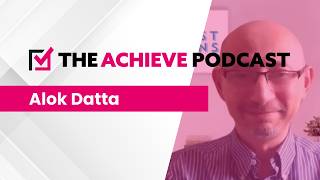
In this episode of the Achieve Podcast, host Jesse Warner interviews Alok Datta, founder and CEO of Alchemist Solutions. Alok shares his three‑decade career in financial services, from banking at Bank of America to a decade at GE and later building and selling a $150 million fintech startup. After the exit, he launched Alchemist Solutions to apply AI‑driven low‑code/no‑code technology to automate back‑office processes in mortgage and consumer lending. He explains how the platform ingests documents, classifies and extracts data, runs rule‑engine and pre‑underwriting models, and how modern low‑code tools reduced development time from years to under a year and cut costs dramatically. The conversation covers Alchemist’s target market (mid‑tier banks, independent lenders, appraisal and title companies), go‑to‑market tactics (relationship‑based sales, LinkedIn, podcasts, word‑of‑mouth), and internal use of AI tools like ChatGPT for ideation and messaging. Alok discusses scaling challenges—talent acquisition, prioritizing growth versus revenue, and building a sales engine—while highlighting recent growth (230 % last year, aiming for 200 % this year) and the need to sustain momentum. He reflects on leadership lessons, emphasizing the three pillars of people, processes, and customer focus, and advises entrepreneurs to play the long game, be patient, and avoid short‑term AI hype, instead offering pilots and sandbox experiences to earn trust. The episode ends with a call to learn more at alchemistsolutions.io.
Chapters
Welcome to the Achieve Podcast, the show where we highlight the leaders, creators, and entrepreneurs who are building meaningful businesses and shaping their industries. My name is Jesse Warner and I'll be your host today. Today we're excited to have Alok Datta, who is the founder and CEO of Alchemist Solutions Incorporated. Alok, it's a pleasure to have you on the show today.
Same, same here, Jesse. Glad to be here.
So our audience can get to know you a little bit better, give us your backstory of your business. What do you do? How to get started? Tell us your journey.
Let me, let me start with a little bit about myself before I come to Alchemist, because it's kind of intertwined in that. So I've been in financial services for a little over 3 decades now. Started as a banker way back in the '90s with Bank of America. And then sometime towards 2000, I joined GE and was with them for about 10 years. But what that did was that just kind of gave me a strong foundation in the financial services space, both mortgage and banking, and then spent next 10, 12 years with a startup and we grew that to about $150 million and sold that in 2021. And throughout this journey, we were focused on building strong operational excellence and delivering to customer requirements, but primarily leveraging people. And somewhere in the 2015-2016 timeframe, we realized that the technology was changing rapidly. We acquired a products company, and then after 2021, when we we sold that startup to a larger IT firm. I had a lock-in with them for about 18 months, and post that, I decided to venture into the same operational fulfillment, but through technology. So the Alchemist Solutions came about where we started leveraging new age AI-led technology to fulfill business processes, say backend of mortgage or fulfillment of mortgage, or check services or other banking processes. So that's, that's been the journey. It's been extremely rewarding and exciting at the same time. We are in this for about 3 years now. And as I go along, I'll share more details, but that's, that's a quick snapshot of where we are.
Well, first of all, congratulations on building and selling a business. Not a lot of people have done that.
So I was more part of a larger business, but it was more an entrepreneurial journey. So I was the president and the chief operating officer for the business that we eventually sold, but take great pride in building and eventually selling it.
Yes. So you got some good experience behind you. Tell me a little bit how the business has changed since 2021. And obviously AI is impacting everything you're doing. The, you know, the official announcement. It's been happening behind the scenes for a long time, but as OpenAI released ChatGPT and kind of unlocked the world to everybody else, uh, tell us a little bit about how your company's changed since starting. What does it look like today versus when you originally started it?
So there's been a massive amount of change in a very short period of time, to be honest, and, uh, Literally, as you adapt to a new tool or a technology, you have a new release or a new company come up with something which is rapidly different. So our focus has been on ensuring that we stay true to the domain that we have built and then leverage technology to build solutions because technology is ever evolving and it'll keep changing. But to answer your question, the same thing that we have, we've kind of done, say, in last couple of years, if we were to do this a decade back, it would have taken us significant amount of money and time as compared to what it's done now. And the reason for that is that because of low-code, no-code rules engines, because of AI, you are able to access and work through large amount of data in a short period of time and with comparatively less investment as compared to what it was, say, 10 years back. Today, what we have built is an intelligent digital platform that takes in a whole amount of data, ingests it, does the classification of documents, does the extraction using AI tools, and then is able to run through rules engine to come up with pre-underwriting or more complex decision models, which were not necessarily as easily accessible, say, 5, 7, 10 years back. And we were able to do that, all of that built in about 9 to 12 months, which compared to where we were, say, about 5 years back, it would have taken us at least a couple of years and couple of million dollars to do that. And we were able to do that in much shorter period and much smaller budget size. This is a bootstrap company that, that we run. So we are conscious of every penny that we spend. So that's the big change. And the other thing is no customer has a one-size-fits-all kind of a solution that works for them. So we have to customize our solutions to their requirements. And because of the way technology is today, it allows us to curate a solution or customize a solution to their requirements. So when we meet with the customers, we have a framework and we have an existing solution, but if they were to say that they have guidelines which are varied from what we have, takes us literally hours to plug in those, put it in a sandbox, get them to see it and experience the changes. And that in a traditional form would have gone back to coding, would have been an SIT or a system integration testing, user acceptance testing, would have been weeks. So times curtailed significantly through the new technology, and you have far better results in a short period of time.
Talking about who are your customers, you mentioned banking. Do you specifically focus on banking or do you have other industries as well?
We work with banks, we work with the independent lenders. So to begin with, the focus area is consumer lending and mortgage. So it's primarily either mid-tier banks or independent mortgage companies. And then within that sphere, you are also working with appraisal companies, title companies, which is the whole mortgage universe, if you were to. And we service all of them through our technology. So yeah, that, that sector— financial services, banking, mortgage.
When you look at sales, marketing, outreach, where are you seeing the most traction? What's working for you?
Again, I think initially it was more relationship-based. We came through the existing relationship that we had built in the industry, primarily through me and some of the senior leaders. And then we kind of— this has been an evolving space. We initially thought of doing outreach mails and things like that, and we quickly realized that the industry had changed significantly. I think the social media presence has significantly started impacting how customers perceive you. So LinkedIn, and there also it is more personalized than just kind of always having a salesy message out there, but we are kind of using LinkedIn more just to get our word out there. We are still using Insta and some of the others, but I think we have seen results from LinkedIn and then The podcast. So what we are doing right now is a way of getting your message across. Uh, we have toyed with the marketing companies or lead gen companies with the limited results, to be honest. I think it's more just me and some of the— our head of sales being in the industry for, say, a couple of decades and the relationships that we built, and then word of mouth from our existing customers and LinkedIn. That's where we have seen maximum traction, so to say.
So obviously you are an AI company. You're using it with your clients as well. How are you using it internally for your business to help you grow your business?
Great question. And while we are an AI company, our, our emphasis in terms of using AI internally is more about just making it part of our overall mindset. So today, if I have to think of a new idea, I am leveraging the, uh, existing base that I have of board of directors and things like that. But I'm also throwing it to ChatGPT to see as to what's coming back as what their recommendation is. As far as marketing is concerned, uh, to be honest, it's not that we have actively leveraged AI for marketing. That would be an area which is still something that we are kind of exploring. But even if we have to look at our vendor partners or when we are creating pitch decks, for example, as we are kind of looking at raising capital, some of the AI tools have been extremely helpful in terms of how we can position ourselves and how we can differentiate ourselves vis-à-vis some of the competitors. You'd be surprised, and I am a late entrant to that, even the messaging that we are talking about, whether it's Insta or LinkedIn, we run it through to see what kind of a response you may get and then kind of validate through the clicks and through the likes that you get on your messages as to how that's kind of adding up. And so, yeah, so far It's early days as far as marketing is concerned, but yes, actively leveraging it wherever we can. Honestly, the focus is more about ensuring that the product is tied up and it delivers what the customers ask, which is more around ensuring better cost, improved quality, reduced turn times, and greater market share. So if we are able to focus on those through those, Yeah, that's, that's been the focus area so far.
As you try to scale, what are some of the constraints that are showing up? Think time, people, systems, capital, leadership. Like, what are those things that, those constraints that are preventing you from growing the way you want to grow?
That is a great question and something that most entrepreneurs kind of work through as they scale. I think the experience of taking a startup and building it and eventually selling it has been very helpful. But the reality is that you're always fighting through competing priorities. So you have, say for example, you are pitching to 5 large clients. You can't wait for them to say yes and then build the team around it. So you're kind of building the team in anticipation of some of the growth that's coming. That's just one aspect. The other is talent. It's very important to ensure that you acquire the right talent and while you're doing it, ensure that you're able to clearly articulate the vision that you have for the business for that talent to come at the right price and come for the right purpose. And so those are some of the pieces that I have personally worked through. In terms of ensuring having the right people on my bus, ensuring they understand what we are going for, and scaling up ahead of time. At times means that you have to incur the expense before the revenue comes in, but that's just the nature of the beast. And then kind of work through and give the initial wow factor to the customers for them to stay with you and for us to be able to mind them through the journey. But yeah, I think getting the right team, ensuring that you're able to prioritize and focus on what the customers want is some of the pieces which we have focused on, not necessarily been a struggle, but in this journey, you take your eye off the ball for half a second and the business will come and teach you that you made a mistake there.
Alok, as you look forward to the next stage of growth, what are you most excited about?
I think, uh, the most exciting part is how the industry is starting to recognize us and how, uh, each stage of evolution is asking new questions of us. Just to, just to kind of put that in perspective, we spent first couple of years just for the industry to understand what we are doing and give us an opportunity. So took us a while to build the platform, then it took us about 6 to 8 months to take it to market, to get customers to sign up even for pilots. And now today we are at a stage where we have 8 to 10 live customers. We are— we have a reasonable size of revenue flowing in. And at this stage, the focus is How do you double down on that? So we had about a 230% growth last year and we are anticipating about 200% growth this year. But how do you sustain that momentum? And at what stage do you kind of rationalize that because the absolute numbers have grown to a stage, do those percentages start to change? Ideally, we would not want them to change, but reality is sustaining a 200% growth year over year for say 5, 7, 10 years may not be feasible, or at least that's what experience tells us. And that's where we're trying to change the paradigm and say if we continue to stay ahead of the curve, if we continue to invest in sales, if we continue to have the best service out there, is there a way for us to buck the trend and be a company which is kind of growing at that rate consistently. But to your point, I think it was Establishing yourself, it was winning initial customers, and now it is ensuring that you are able to scale with the existing ones and have the sales teams which are going out and bringing the new ones. One big change is I could do that through my relationships till now, and now we are at a stage where we have a process where there's a sales funnel where you have people going out there. So your role keeps evolving. You're not just focused on building a product or or initial sales. Now you're stepping back and saying, create that organization which is able to take care of the products, which is able to ensure that you have the right sales engine and then wherever need be managed through exceptions. So put in a process, have the dashboards, see as to what's working and what's not and focus your energies on what's— where you should be. You can't possibly do everything at all times yourself. So from being a hands-on entrepreneur to being a delegated leader is a transition. Thankfully, I've played it in my past life, so we're just kind of leveraging from that experience.
Let's talk about your past life for a minute. You know, looking back on your journey, some of your wins, some of your mistakes, what are some of the lessons that stand out?
You know, uh, we keep saying that, uh, the business world keeps evolving And you know, every time it's a new challenge. But if you get the basics right, I think it always helps. And what I mean by that is focus on 3 pillars for any business, which is your people, your employees, the processes that you've established, and your customer needs. At times we are so focused on our product that we don't listen to what the customer is saying. Uh, or we are so focused on ensuring that our deliverables are met that we push our people so hard that they do it under duress, but they don't do it with their heart. And in longer term, all this comes back, uh, to bite us. So ensuring that you're at all times able to see the people aspect, the processes that you've laid down, invest in those and focus on your customer always helps. And I think one thing that I've kind of learned quickly in, say, last couple of years is that being an entrepreneur is a lonely journey. You need to have tons of patience. You work through a long period of time and then you see success and then you kind of thrive in that success and then you again go back to the grind and doing the right things. Over a period of time. So there is literally no magic wand which kind of gives you success overnight. You kind of draw a process, follow this. If you're following the process correctly, results would come through. And having that mindset, I think, takes some doing. And that's been a learning. But going back to your question, I think ensuring that you are able to emphasize on your employees and their requirements understand what your customers need and are able to have a process that kind of meets those, uh, keeps you in good state.
And last question for you here, what advice would you give to other leaders and entrepreneurs who are on a similar journey as you?
Play for the long haul. Uh, I see a lot of entrepreneurs wanting to, uh, jump on this AI bandwagon, uh, and try build a revenue model with a view of quickly churning it around and selling it. Nothing wrong with that. It's just that if you don't have a solution that's actually meeting the requirements that the customer has, and you're only kind of working through a seed investor to a VC to a PE, and then eventually potentially selling out, it just creates an environment where the customer is less trusting of the vendor network. So from our standpoint, we— one, you have a solid product and you're able to showcase that. But even besides that, when it comes to our contractuals or contracts with the customers, we don't necessarily tie them into a 3 to 5-year contract from the get-go. We would rather them experience the solutions and then on the back of the success, build on those. Create free pilots, create sandbox where they can experience this and not have to sign multi-year contracts on a promise because most times those are not delivered to. So I would recommend that folks getting into this play for the long haul, have tons of patience, have energy levels that allow them to do what's required and also energize their teams. Because there's a whole ton of force which is looking up to you in terms of how you conduct yourself and goes out and fights your battle in the battlefield. So my message would be, get yourself in a good frame, both from your mental, physical, spiritual self, and get ready for, doing this for many years rather than just turning it around in a couple of years.
Uh, fantastic advice, Alok. I really appreciate you sharing your story, your insights with us today. Uh, for those listening, if you want to learn more about Alchemist Solutions, you can visit their website alchemistsolutions.io. And that'll wrap up today's episode of the Achieve Podcast. A big thank you to our sponsor Achieve Fractional, which provides fractional executives for growing businesses. And if you enjoyed today's conversation, follow the show and share with another entrepreneur who'd also find value in it. And again, thanks for listening, and we'll see you on the next episode of the Achieve Podcast.









