The Achieve Podcast - Arto Bendiken (Asimov Systems)
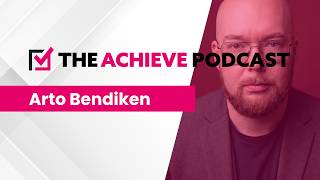
In this episode of the Achieve Podcast, host Taylor Baker interviews Arto Bendeken, founder of Asimov Systems, a seed‑stage startup building a "personal intelligence" platform that aggregates a user's fragmented personal data into a secure, device‑first personal data warehouse – described as a "Palantir in your pocket." Arto recounts his 30‑year software career, multiple prior startups, and the personal drive he calls an "affliction" that pushes him back into entrepreneurship. He explains the company’s current size (nine core team members plus contributors), the decision to relocate from Dubai to the Bay Area to improve fundraising prospects, and the challenges of raising capital outside Silicon Valley. The conversation delves into the product’s technical underpinnings—enterprise data integration, knowledge graphs, and encrypted peer‑to‑peer sync—along with a strong emphasis on privacy (open‑source code, on‑device storage). Arto outlines the target market: relationship‑heavy professionals (founders, investors, salespeople) who suffer from cognitive overload due to massive contact networks. He discusses marketing hurdles of defining a new category, the need for a "wow factor" and "double virality," and the upcoming launch across iOS, Android, and desktop. The interview wraps with reflections on past mistakes, lessons about the importance of business talent, timing, and location for fundraising, and a 90‑day focus on gaining traction through beta testing and A/B experiments. Contact and sign‑up information for early access is provided at asimov.systems.
Chapters
Welcome to another episode of the Achieve Podcast, the show where we highlight leaders, creators, entrepreneurs who are building meaningful businesses, shaping their industries, and having an impact. I'm Taylor Baker Baker, your host, and today we're excited to be joined by Arto Bendevik, the tech and the founder of Asimov Systems. It's A-S-I-M-O-V. Systems. Now, Artur, this is your fourth startup you have done, very versed in the tech industry in that space, and there's a lot of questions around that. How did you get into this space and who are you currently serving?
Thanks for inviting me, Taylor Baker Baker. Yeah, so I've been doing software for 30 years now, so I'm older than I look perhaps, or alternatively we could say that I got started very young. So I got started at 11, started working professionally at 13, full-time. Full-time programmer at 15, formed my first own company the moment I turned 18, hired a bunch of my ex-colleagues. Those were good times, consulting.com, all of that. This was all back in Finland. And since then, done a number of startups. Some did okay, one did well, several did badly. And once again into the fray because the way I put it to the wife is that I have an affliction. The affliction is The sensible thing would be to sort of retire and sit on savings, but no, I feel like I must go back into the fray. And so, it must be considered an affliction. It's not necessarily rational. I love that.
Now, how big is the organization currently?
Currently, we are 9 people and a bunch of contributors. And we've been at this now for, depending where you start counting, several years at least. Wonderful.
And what would you say is actually driving growth for the business right now?
Well, we are still in a sort of seed stage. So we've been developing some foundational technologies that pretty much wrapped up with and now getting closer to the product launch. So we'll be launching our first product in the next few months. And it's been a long road to that. Bootstrapped for more than a year, raised some money from friends and family, and now almost there for the product launch at long last.
That's wonderful. That's exciting to see that coming. Now, looking back for you personally, what turning points, positive or negative, have molded the way you think about running the organization?
Well, one big realization sometime in the last year or so was that we actually had to rebase ourselves in the Bay Area. So coming to you live from the SF Peninsula, undisclosed location. And yeah, I've been spending more and more time over here. So effectively, just in terms of the funding landscape, investors are not particularly interested in any kind of AI startups outside of the Bay Area. Okay.
Now, as you guys try to grow and expand, what have been some of the biggest bottlenecks or obstacles that are popping up and getting in the way?
Well, certainly fundraising has been bumpy, as I, as I mentioned, just because of the geographical location. So we were based in Dubai for the last years. I lived 4 and a half years in Dubai moved there after the invasion of Ukraine, where I lived previously and married my sweetheart there. So the bootstrapping has, on the other hand, also forced a frugality that perhaps in, you know, a better funding landscape would have been not there. So I think that there's been The funding journey has been sort of the thing that has weighed on us the most, and that's now much alleviated by being over in the Bay Area where, you know, I go up on stage, I come off stage, somebody offers to invest into my startup, right? It just doesn't happen elsewhere. So this is much, much easier. Everything over here feels like easy mode after After, you know, a few other locals.
You were building the tenacity, the muscle, the grit over there.
Yeah, that's right. That's right.
That's good. Now, when it comes to your outreach, your messaging, your marketing systems, what's been working well and where are you filling the gaps and frustrations?
Well, I said we are still in the seed stage. So we have currently just a private beta out there for our personal intelligence products. And we also face the uphill battle in terms of your question in defining something new. It's a new category, personal intelligence, and happy to expand on that. So we have an interesting messaging situation on that because one of the things that hampered our product launch is that we clearly were a little bit ahead of the market. The market was obsessed with, shall we say, surface-level toys that the AI revolution now has given everybody. And we were working on something a little bit deeper, as in the product itself is tying together all of the data, the sharded data in your life. So, my background for the last 20+ years has been in enterprise data integration. One of my backgrounds. And they built out data warehouses for the US Navy, for the European Space Agency, and some of the S&P 500, for example, NXP Semiconductors, one of the top 10 semiconductor manufacturers in the world. And no modern enterprise would be possible without data integration, without data warehousing, without the, the analytics and intelligence of being able to gain those actionable insights. But in our personal lives, we are all, shall we say, back in the Stone Age still. So you have, you same as me, same as everybody, you have your personal data, your family data splintered over likely hundreds of service providers in the cloud. Very few of those talk to each other, with the exception perhaps of some health data. And that's not a great situation in terms of having AI really benefit your life. So what we are doing is tying together all of those shards of data, all of those slivers of data, into effectively like a personal data warehouse. Very much, I think of it as democratizing the technologies that we deployed in the enterprise in previous decades. One of the ways that I'm framing this, which gets emotional reactions, which tends to be good. As in, there's a certain controversy to this. I frame it as Palantir in your pocket. And then depending on what somebody feels about Palantir, I mean, most likely they will feel something. It's likely not to be a zero. Then I get certain kinds of reactions. But in any case, nobody doubts that the technologies that power Palantir are effective. And those we are building on the same technology basis. So my background for more than 20 years has been knowledge representation and reasoning that I've used in enterprise data integration cases. And that's knowledge graphs, ontologies, you know, a lot of technical stuff that we don't need to go into. But the same thing as Palantir is based on.
So with all this talk around AI and automation, one of the concerns that keeps coming up in servicing is the security aspect. And so having all that stuff warehoused in one location, what are you guys doing to utilize and protect some of that?
Well, for me as a cypherpunk, this is really important. That's my second background, cypherpunk and activist in digital currencies prior to Bitcoin, and then in the Bitcoin era, certain highlights you can look up. So we think of this as an entirely on-your-device story. Everything is only on your device. Nothing is shared into the cloud without your permission. The default is device-only and P2P sync to your other devices. Locally encrypted, of course, the synchronization itself is encrypted. So it means that nobody is going to utilize any software that gets at all of your most intimate messages, all of your intimate pictures, everything personal and private in your life if they don't have a certain level of trust to it. So, for us, this is very, very clearly a non-cloud story in order to drive that trust. And also, about 99% of what we are doing is open source. So, we, we have a whole open source platform, and just a little fraction of the application is our proprietary mode. Everything else is out there to be audited.
Oh, wonderful. That's good. Now, as you get ready to launch this, what are you most excited about with the next stage of the business?
Well, growth, certainly. It's— we had such a long R&D journey here that it's really been exciting now in the last month or so to be putting this in early testers' hands and see those reactions. So we have— one of the reasons we took extra time on the development journey is so that we could have a substantial wow factor and what we call double virality in it. And the wow factor is working very well in an in-person setting. Now, better Whether that will be sufficient to drive the growth is another matter, as in we do need the growth to happen also when we are not in the room demonstrating it.
Yeah.
But very, very, very keen to just basically unveil all of this that I think is going to get a very, very strong reaction, including in the tech press, because there are controversial bits here. Yeah. In terms of capabilities, like, you walk into a room with Asimov. Asimov is something like a personal intelligence agency in your pocket. So again, democratizing the kind of tools that, you know, the big boys have access to for a long time. In that room, Asimov is going to be able to recognize people from the camera, from their voices. So we'll be able to recognize people by their voice signatures as well as their face. It pulls down all the information about them from all of the data sources out there on the web and compiles dossiers. So you get invited to a private lunch or dinner, you don't know who the people around the table are, but Asimov will tell you with a good likelihood of success. So this is, this is what's launching soon.
Yeah. So have you identified a little bit who your ideal client, your ICP, as far as users on this? Yes.
Yes. So basically anybody whose job revolves around relationships and who is cognitively overloaded. I think that describes a fairly large portion of people, but it certainly describes founders like myself. It certainly describes the other side of the table, investors. One institutional investor we talked to told me that He has, what was it, more than 3,000 group chats in Telegram. Oh, this, this, there's just no, no brain on this earth that can manage that without a little help.
Yeah. Oh my word, that's astronomical.
Yeah. Yeah. I mean, I'm, I'm, I, I feel overwhelmed by Telegram and I'm nowhere near those numbers, so I guess it can always be worse, right? But, um, but really the, the thing is, um, you probably heard about the Donbass number. Is that familiar? So about 150 is the postulated maximum that our noggin can handle in terms of the biological wetware because we evolved in villages of yay size. And all of us are just way, way, way past that. We have thousands of people in our lives. I'd say that the number of meaningful relationships is likely quite a bit larger than 150. In the average case. And then for these kind of super networkers that, you know, an investor, a founder, or any number of other professions, sales and the like, it's just phenomenal. I just met one person the other week who has 15,000 people in his address book, and he's very systematic and meticulous about organizing that address book. But I was just astounded that anybody could have the discipline to to manually effectively do that. And obviously, what we are building is a godsend to him. He's very keen to get his hands on that.
Yeah, I'll bet. 15,000. I mean, that is a lot. I mean, I have, I think, 2,500 of mine, and it's not that well organized.
Yeah. So, people who go to, you know, for example, people who go to a lot of events, right? So, here in the Bay Area, there's something happening every day, way too much happening every day, actually. And so, Phil I feel a little bit, you know, opportunity cost of all the events I don't have time for. But even the ones that I do go to, you just end up meeting, you know, a dozen, two dozen new people a night, and that's just massive overload.
Yeah, yeah, wow, that is amazing. Now, when you look at your journey, Arto, the wins, the mistakes, what lessons stand out to you? And what do you wish you understood sooner?
Well, certainly I've come to understand a lot about, shall we say, investor perspectives. For example, why they tend to not want to fund first-time founders, because back in the day as a first-time founder, I made so many mistakes that now looking back are so ridiculous and trivial. So for example, in the first startup that I did in 2010, We didn't have competent business people, we had just a bunch of technical people and that didn't work out. Similarly, although in my culture there's a concept that doesn't really translate very well into English, it's called sisu. It's sort of the will to keep going even when everybody else would have quit. I, of course, applied this to my first startup, but the reality is that that wasn't sensible. I ought to have ended that years earlier, exactly because we didn't have business people involved, and it just wasn't going anywhere without that. There's any number of lessons learned that I could speak to maybe more recently. So in 2021, in my previous startup, we raised $12 million as a seed from reputable Silicon Valley investors. And that was pretty easy because that was actually the peak for funding. It's never come back to those levels. The capital being deployed now is not so much going into startups as into these large AI entities like OpenAI, who just raised a phenomenal amount of money. So, what I learned there was a bit of a poor lesson in that I had approached after that fundraising as something easy, because it was rather easy. But that lesson came about ultimately in understanding the importance of place. So again, it's a lot easier to raise funds in the Bay Area. And if somebody is working in AI in particular, they probably should consider relocating here. And also the timing, right? So 2021 was the COVID era already, but it was prior to all kinds of other crap that happened after and that are currently throwing the world into disarray. And the fundraising journey is just nowhere near as easy as it used to be. So these days, institutional investors basically, they want to see far more than they wanted in 2021.
That makes a lot of sense. Yeah. Now, if you had to pick one constraint to focus on and solve over the next 90 days, what would it be?
Well, for us, it's It's certainly traction. So we, we are going to launch the product fairly imminently to a larger and larger group of people, and we are going to need to conduct good A/B experiments to see that we understand how the people use it, how, what they want, and we're going to need to drive that traction aggressively. It's also intimately connected to, again, the investment journey. Traction is what will get you investment. Yeah.
Yeah. And so for those who want to sign up, be a part of it, they can go to the website and go to LinkedIn. And so asimov.systems, Linus, anywhere else?
Correct. So that's Asimov as in Isaac Asimov, the author. And you can also follow me on LinkedIn or X. I am the only Arto Bendeken in the world, so should be easy to find. And on Twitter, on X, the link is fairly easy. It's x.com/bendeken. So you can follow us there. And to sign up for the early access, go to askmo.systems.
Okay. And so is it going to be an app that they have? Is it a website? Is it both?
It's an iOS and Android application, and there's also a desktop component to it. Basically, the desktop is the only place where we can access some of the data in your life, for example, your messengers, you know, WhatsApp, Signal, iMessage, Telegram, and the like. So the desktop communicates with your application on the phone via encrypted P2P connection.
Wow, that's amazing. So yes, for those who want to learn more, reach out and get signed up on that waiting list. And they can find out more as far as release dates and such there. Awesome. Thank you for our leaders and for those who have sponsored this podcast, Achieve Fractional, which provides fractional executive leadership for growing businesses. And if you enjoyed today's episode, share it with a friend, with a colleague, with somebody who is a well-connected source, somebody who's feeling overload and connection overload, reach out to Arturo and the team. They will help straighten things out. Simplify your life, buy back some, not just time, but quality of life. So.
That's right. That's right. Thanks for having me, Taylor.
Oh no, thank you so much. I appreciate your time and excited to see the release and to see the testing coming out because yes, that overload is a problem more and more of us are dealing with on a regular basis, so.
I'll get you into the beta as soon as possible.
Wonderful. I'm excited. You all heard that. Well, thank you so much. And we will see you all in the next episode of the Achieve Podcast.









