The Achieve Podcast - Chad Krause (TeraGanix)
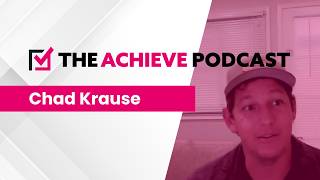
Chad Krause, CEO of TeraGanix, left management consulting to build an ag-tech startup that cuts nitrogen fertilizer use by 50% and boosts corn farmers' profits by 5-8 percentage points. His 9-person team uses YouTube and partnerships to grow, and he's skeptical AI will help agriculture anytime soon.
Chapters
Welcome to another episode of the Achieve Podcast, the show where we highlight leaders, creators, and entrepreneurs, those who are building meaningful businesses, shaping their industries, and having an impact. I'm Taylor Baker Baker, your host, and excited today to be joined by Chad Krause, the CEO, and you can find them at teraganix.com, T-E-R-A-G-A-N-I-X. So Chad, give us the backstory. How did you get into this space, into this niche?
Well, first of all, Taylor, thank you for having me here. It's— I'm kind of curious to see if that windscreen actually works on that mic, so it was really a test. Um, uh, you asked how did I end up with Terragenics. What did you ask?
Yeah, how did you get in this niche?
How did I get into this niche? Um, well, I was working at a little big company called Alvarez Marsal. Uh, they are a kind of top 10 management consulting firm, uh, known for their turnaround work. Uh, they have projects like Lehman Brothers and, and so on, the larger bankruptcies in history. Um, and I, I helped with mostly, uh, private equity-backed portfolio companies doing turnaround work, mergers and integrations, that sort of thing. Um, I, you know, became a little bit too much like the, the New York team, my dad pulled me aside. He said he didn't like hanging out with me anymore. And so I had to do something different. And so I did. He and his friend and I, we, we set out to buy a business. We were originally looking for strong economics in the direct-to-consumer space. That was my, my former business partners specialty. Since then, it has completely died, resurrected, reinvented, became what it is today, candidly.
Wow. And how big is the organization, the team now?
The team itself is about 9, 10 strong, uh, and it's, it's really the quality of of clients and the mix of clients that we have. Uh, and so yeah, I could go on that tangent, but, but in the interest of time, I won't.
Okay. And so for you, as you got into this space, what was it specifically that made you build this organization, this team, where you're at now? Because that's a big shift from where you were.
It is, it is. Um, You know, I don't even know how scalable the culture is that we have, but I mean, we have something so special. One of the guys on our team, we had an offsite where we chartered a boat, a sailboat, and we ran that sailboat aground and in San Diego Bay. And we were on it. And initially, one of the other guys on the team was like, oh, let's tack the boat, right? And I'm like, no, no, no, no, no. So you're on a sandbar, you tack it, that keel breaks the hull, and now you've totaled the boat and you've got a big paycheck you gotta come up with. So instead, we kind of slowly waited for the tide to rise and we just held the course. And we started like skipping to the next sandbar, to the next sandbar. And then finally, we kind of like got that escape velocity. Okay. And the whole team that stayed is motivated in that same way where it's like, there's like the adrenaline of like, it's all hands on deck. Everybody's caring for everybody else's family and personal space and time off. And it's, and just very mission-oriented.
Gotcha.
Completely oriented around the farmer. And candidly, even we are very oriented around regenerative, like, kind of like, if you will, like environmental projects, like green initiatives. Yeah. But we find the best way to do it. We are libertarian SOBs. Like, I got to tell you, man, like, we're neither left or right. We're purebreds in that sense of We just— if there's no margin, there's no mission. A Catholic nun said that to me once that was running a billion-dollar hospital. If there's no margin, there's no mission. And if our farmers don't have margin and they are systematically getting squeezed out of said margin, then we have no freaking food, man. And the food that we do have is making us sick. I mean, maha put that movement aside for a second, like, that's really happening. Uh, and so all of those things, including just like a team that's really supportive, I think contributed to that culture. That's that long answer.
Okay. And what would you say is actually driving growth for your organization right now?
Um, kind of, you know, right, right now, uh, we have a real problem in, in our, um, supply chain side of things. So our flagship protocol is a 50% nitrogen reduction protocol.
Okay.
To give you a sense, uh, a, a corn farmer— I normalize things with, um, it's called common size, right? But like as a percentage of revenue, right? Yeah, a corn farmer, for every dollar they make, they spend about 10, 8, 8 to 15 cents per dollar that they make, or, or, you know, 8 to 15% of what they make goes to nitrogen fertilizer. And so we have a protocol that adds about 5 to 8 percentage points to the bottom line for corn farm. That's especially a big deal right now, because they're right, like, you Everybody's seen the flippin' news. And trust me when I say real conversations, and we talked to about 10 to 12 new farms a day right now. A day. Real conversations are much darker and scarier than that. It's not even just cost. There is legitimately a very real supply just going out, just going dry and not even being able to plant. Going on. In addition to that, markets hate volatility and uncertainty. And so insurance companies and lenders, right, like, everybody's more concerned, the risk profile goes up, meaning the cost of all of these even financial products go up. Again, it's just another frickin slap in the face of the guys that are actually working the land.
So As you try to grow and expand, what have been the biggest bottlenecks or obstacles that you run into that keep showing up?
Hmm, good question. I think a lot of it is just, um, the things that got you to where you are today are not the things that are going to take you where you want to go tomorrow, sort of thing. Mm-hmm. Right. It's— that's great if you can do it yourself, but then you can't do other things. Mm-hmm. So learning how to delegate, you know, like the cliché, don't let great be the enemy of good, that sort of thing.
Yeah.
You know, I love that one. I suppose in a lot of ways that Um, because that cascades onto everything. Uh, you know, I'll give you— this is kind of related. We run into this a lot. Uh, a lot of competitors, companies, people have a scarcity mindset, you know? Yep. And you can really feel that. We, we, as soon as there's a competitor that's doing good things, we call them. What are you doing? How can we partner?
Screw it. I like that.
Farmers are hurting. If you, if you know, and I'd take this out to every industry, if you actually just whoever your customer is, you just stop thinking about, it's kind of what you're doing, what you're doing too, in a way, and like, kind of bridges it of what is it that, that these guys actually need. And you just flip and orient yourself on like just driving unbelievable, unparalleled value. And you stop thinking who's your competitor, you stop thinking all these things, and you just get in the middle of delivering value. It's exactly what— what— yeah, I mean, I won't bring you up, but like, yeah, it's kind of a similar idea. And I think that, that was a, that's a big change in mindset. It's exciting.
I love that. Was it Nietzsche that said that? Like, the way I destroy my enemy is by making him my friend?
I don't know if that was Nietzsche, but I like, yeah, I mean, yeah, that's what you're talking about.
It's like, call your competitor up and say, hey, how do we partner? Like, I love that. So this next question is kind of a two-part question. And so when you think about your messaging, your outreach, your marketing systems, first, what is working for you?
Mm-hmm. What is working for us? Um, we think of marketing as an ecosystem, not, not any one thing. Okay. Uh, it's It's great if you have YouTube. I, I guess the thing that is working for us is, is the style of content, um, and, and what, what it is that we're saying, the message and, and the offer that we have, right? That's working really well for us. Um, that's the short version. The longer version is we think of it as an ecosystem, and it's, it's about doing all of these things well and allowing people to kind of go through a journey and by the end of it, they pick up the phone, they start talking to you, and it's weird because they know you and you don't know them.
Okay, okay. Yeah, I mean, yeah, that makes sense. I can see that because you guys have a pretty successful YouTube channel.
Yeah, that's probably what you're talking about.
So the second part of the question is, where do you feel like there's still opportunity or money being left on the table right now?
Back to that thing of driving value, um, and not being greedy, not, not having that scarcity mindset of the, the biggest values is where there's the biggest pain, and it's the scariest place to go.
Oh, say that again. That's a good line. That's a great line.
Quote Nietzsche. No, um, so it's about going into the biggest pain right now for Farming is bleak. And so this is the thing that I was prodding at that I'm like, hey, you know, we're going to have a conversation after. We are very actively starting to put these pieces together. So to our offline conversation of government programs, I think of business in this very simple framework. Um, this is overly simplistic, but, um, for operation performance improvement, it's expense or it's revenue, it's expense, it's risk. And then I added— that's kind of BCG, I think, came up with it, or whoever— and then it's cash flow, right?
Yeah.
Um, and so if, if you think about our customers are farmers generally, um, their revenue They get sold a lot on revenue increases, and like, there's a whole load of risk that's attached to that as well. Like hail, the fact that you go for revenue increase, you know, you're going to spend money, cash flow, you could have a, a, you know, total crop failure, and you end up losing on all four of those points.
No, man.
Or you We do a 50% input reduction, right, as just a flagship protocol. Cash flow, good guy. Expense, good guy. Revenue, net neutral. Risk, good guy.
I like that.
You like that? Yeah. And so I forgot the question. ADHD is kicking in.
No worries. No worries at all. And so it was just where you feel there's opportunity still.
Where I think there's opportunity. So, so on that note, for the revenue side, agronomically, like going in and adding an input to achieve revenue, I don't actually think is the best plan. I think to your, to your point offline, there's a lot of government money out there. There's a lot of other programs, reimbursements, all this help. I already mentioned, and I intentionally mentioned it, not to get into politics, but to kind of frame where I'm coming from. Libertarian SOB, which means I don't like the fact that anybody could have to rely on government handouts. Mm-hmm. But there's money on the table. Mm-hmm. And my belief in how we got here is, you know who's championing those programs? I promise you, it's the big, big ag. They've got a team of attorneys, like you were just telling me about how challenging it is to fill out a 20-page grant paper. I can tell you, I know a lot, a lot, a lot, a lot of farmers that aren't going to do that. Right? You have the same experience. And so I think delivering value like that and being, being a truly trusted ally that would at their detriment, and they know it, hurt themselves before you would ever hurt them. which we have done over and over again. I think it's part of why it's believable is we do it. Um, so that on the revenue side, yeah, there's some more, uh, input cost reductions. Um, risk and cash flow are other things that we're actively working towards, just thinking about their operation. I love it.
I love what you're doing for the base of America, like the food, like the farmer. So, shifting gears slightly here, there's a lot of talk around AI and automation. Where have you guys found ways to utilize it still internally?
That's such a good question. For agriculture, you know, um, I was flipping on LinkedIn and, you know, I did come across a lot of articles talking about AI and agriculture because that's some of a lot of what my feed is now. And then I came across this one that was sort of contrarian to me. And it showed— I forgot what it's called— the— is it the radar graph, right, where it's like, you know, it's all the dots kind of around and it shows the weighting something. And it said that whoever made this that agriculture was the least susceptible to AI. Hmm.
Okay.
Or depending on how you look at it, right? AI could help the least. There's some truth in that. There's a lot of systems that can benefit from it. But candidly, The, the system itself designed around, like, even the education system around agriculture, agronomy, soil health, all these things are so deeply overtrained in flawed principles that I, you know, part of the problem— agriculture is a unique beast in that way. Part of the problem with agriculture is technology. Some of these, these big equipment providers for, for, uh, for agriculture, um, under the, the, the guise of, of precision agriculture, uh, where you get, get more efficient with your, um, with your inputs. There's truth to that, uh, and there's a huge cost to owning these, you know, million-plus dollar equipment. Yeah, it's financing costs. There's, there's, you know, so the banks are getting a clip of it, right? Like, there's this burden, and then you're not resilient in downtimes. Your, your, your balance sheet isn't as strong, right? And so as it relates to AI information's more readily available. I could come up with some ways that it may add value. It may or may not. Candidly, I'm not sure. Maybe it makes some of this precision planting equipment a little bit more efficient. Probably doesn't. Maybe they're able to do more applications via drone. Maybe they're not. This is just such a unique— like, it's so working the land and reading data points that may or may not translate to a spreadsheet. Mm-hmm. And I don't know yet. This— it's one of the only industries I feel this way about.
I can see that.
It's tough.
It'll have an effect, but to what extent, it's hard to say.
To what extent and where it fits in.
Yeah. Yeah, I can see that. So Chad, when you think about the next stages of the business, what are you most excited about?
I am— I mean, I feel like I've been describing it. I'm most excited about this. We're internally, we're branding it Mission Regen, and it's about an ecosystem of non-chemical, biologic, and I guess flowing with nature ways to actually achieve outcomes, environmental and business outcomes. So for example, water treatment, um, right? We nuke water with chlorine, and there's, there's a whole feedback loop. Maybe the easiest one would, would be to describe it with like a dairy. So a dairy cow poops, goes into a lagoon, that lagoon water goes back onto the field, that field produces the feed for the cattle, so on, right? And all of these things are systems. Ponds are systems, and then you irrigate with that water and so on, right? Yeah. And there are so many gaps with how we treat plant, animal, and water. and regulatory burden, among other things, that it's just easier. And, and the system is designed to entice you to just chemically solve problems despite what they say. Um, and so how do you break this loop? You, you, you actually come to market again— libertarian SOB, that's where it's coming again. Which doesn't mean that I'm any political direction, if you actually know what it means. And it's about attacking commercially each and every one of those objectives independently, focusedly. It's about having a shared service or company that markets amongst all of them, right? Like achieving efficiencies. So I love regenerative companies. But they are awful at business a lot of the time, like terrible, even though they may be the most fantastic solutions, which is kind of sad. And so that's what I'm most excited about is like we've figured a lot of these things out. We really care and our brand is known to care about the individual, right, for these different like needs. And how do we start plugging in the right focused companies and/or partners to start fulfilling these and then arm them with every, every, you know, dollar from government programs? How do we get them, you know, business models that actually work? How do we stand them up with marketing that actually attracts and doesn't just chase, right? And sales process. My God, dude, sales process. For regenerative communities. They're, they're so, uh, I think a pastor once told me, too heavenly minded to be any earthly good. That's how I feel about this regenerative movement.
You know, a long time since I've heard that statement. I like that one.
You know what I mean?
Yeah.
Um, and so I'm, I'm really, really, really excited about delivering a ton of value to people that are stewarding our resources, know that the way that they're doing it is hurting them and others, and, and their pocketbooks are shrinking. Man, we've got a freaking lot of problems that we're solving with this. Like, coming at it commercially— I'm gonna go middle finger down first— commercially, right? Biologic, not, not harmful, if anything, actually beneficial. And okay, you're understaffed to actually capitalize on all these programs available to you. Like, there's a ton of value, and I can sleep at night and feel good. Mm-hmm. So good.
Okay, last question for you, Chad. If you had to pick one constraint to focus on and solve over the next 90 days, what would it be?
Mm-hmm. One constraint, huh? Internal business constraint, I presume.
Yeah, I mean, you can go— you can answer both if you want.
I can't just say like, I want my newborn to start sleeping right? That'd be pretty good. Yeah, I'll take that one first. First position. Second position would be, um, I, I mean, our team needs to grow very, very quickly. Um, I, I would say I need more hours in a day, or I need, you know, access to more adults in the room. Okay. That's what we used to call it when we were consulting and you'd go into a portfolio company. Really, our job was to be the adults in the room.
Yeah. And so are there certain people you're looking for?
Yeah.
Location-wise or ideology or skills, talents?
Um, ideology, uh, just need everything I, I was saying. Like, I mean, it happens to follow a certain doctrine, but like, you just have to be violently defensive of nature and the other person's financial position. Um, I don't know any other ideology that is that way, um, and not controlling. Like, God, we flipping hate people that are— and I think you just lose people, right? Um, that's where I think a lot of missions go, go wrong. But, um, so like, yeah, I guess ideology is, is something important to us. Um, and you just need to be like a freaking go-getter. Like, mistakes of action.
Mm-hmm.
Stakes of action. Um, no, don't, you know, don't come calling us every 10 seconds. We're not going to solve your freaking problem. We've got 55 that we needed to solve yesterday, you know. Um, sales and marketing oriented. My background's heavy, heavy, heavy finance, uh, and That's great. I used to think it was everything. It is if you're putting a deal together, but even then it's not. Sales and marketing is kind of the forefront of everything that we do. So sales and marketing oriented. If you have big net networks or if you can Sorry to talk about your competitor, Taylor, but if you can get us, you know, if you can get us a line to Joe Rogan, I think he, I think he would like to hear what we have to say. So if anybody's listening, Joe, okay, Taylor and I want to talk to you.
Okay, I'll see if I can make the introduction for you.
That's all I'm asking. Okay. Or Oprah. I'd take Oprah too, you know what I mean? Like, come on, I'm not greedy.
Okay. Okay. Yeah. Yeah. I got them both on speed dial. Yeah.
Is she still doing her thing?
I'm not sure what she's doing these days. Oh, like she stepped out of the limelight a little bit. Um, but she's still got a lot. She's moving and shaking.
Yeah, I'm sure that's right. Yeah.
And so, yeah. So for those who do wanna get involved, wanna reach out, LinkedIn and the website and anywhere else you wanna send them.
Yeah, I would say just, just, uh, if you're here, um, reach out to us, terrianix.com, social medias, email Taylor Baker Baker. He'll put us in touch. Send us ideas.
Absolutely. So again, thank you for coming on, Chad. Any final words for our listeners?
Good luck out there. God bless.
Good luck out there and God bless. That's great. And thank you to our sponsors of today's episode, Achieve Fractional, which provides fractional executive leadership for growing businesses. And if you enjoyed the episode, share it with a friend, with a colleague, get involved, reach out, make a connection, help the farmers out in your backyard. Like, reach out, take action. So Thank you very much, and we'll see you all in the next episode of the Achieve Podcast.









