The Achieve Podcast - Dave Durocher (The Other Side Academy)
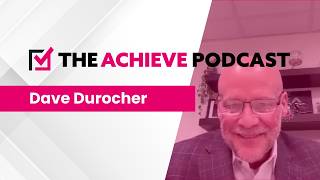
Dave Durocher spent over 20 years in prison for drug dealing and gun running before Delancey Street changed his life. He now runs The Other Side Academy, a 30-month residential program that graduates who stay the full time have a 74% chance of staying drug-free, crime-free, and employed. The Academy funds itself through social enterprises and guarantees jobs for graduates through 60 partner companies.
Chapters
Welcome to the Achieve Podcast, the show where we highlight leaders, creators, and entrepreneurs, those who are building meaningful businesses, shaping their industries, and having impact. I'm Taylor Baker Baker, your host, and today excited to be joined by Dave Dorscher, the executive director of The Other Side Academy, and you can find them at theothersideacademy.com. Now Dave, your story is so rich with, with history, with complexity, with what you've gone through to get you to this point. And the foundation that you guys have built is phenomenal. I've toured it myself. Thank you for coming on and giving us time and telling us your story. So give us the backstory, give us, for those getting to know you, a little more of the context that brought you here today.
Yeah, yeah. Well, thank you, Taylor Baker. It's good to make your acquaintance even, uh, via, via podcast for now. And thank you for your patience again and, and making all this happen. It's good to be with you today. You know, people talk about my story a lot. You know, my story was self-invoked. I— my life was a chaotic mess because of the choices that I made in my life. And it doesn't mean I wasn't influenced at an early age by, by my upbringing. And, you know, my mom and dad are still married today after 61 years of marriage, in spite of my best efforts to destroy that marriage on many occasions. I didn't realize it then like I do now when I look back. Right. But How they made it through what I put them through is just a mystery to me and a testament to their love for one another. But my dad's always been a drinker. He would drink Budweisers back in the '70s and his friends would come over and they'd ride up on their driveway in their motorcycles and I'd run over to the refrigerator and grab the Budweiser and pop the top. And my dad never sat me down and said, "Okay, Dave, this is a can of beer and this is how you drink." But I'm watching, so I'm learning. And then I would take the first drink and at the end of that soiree, I'd pick up all the cans, take the last drink. And I'm just a wee, I'm just, Knee-high to a grasshopper. I'm just a kid, and I take the last drink and then crush those cans. So I'm learning to drink at home. He doesn't even realize what's happening yet. Fast forward, right? And in between there, you know, I was the kind of kid, even at Christmas time, that the mailman would come around delivering Christmas cards to our cul-de-sac, to the houses, and I would wait for the mailman to leave the block, and I would go back to those mailboxes and steal all the cards out of the mailbox because I knew there was cash in those cards, right? I was a pretty entrepreneurial young kid. So my crime started at a really young age. Think about it. I'm like 6 or 7 years old stealing mail. And there was no such thing as credit cards. And I knew cash came in cards at Christmas time. And I was this little thief. You know, I remember at the same time, right, there was a time that I was getting into my mom and dad's wallet a lot and stealing money. And one day, and this is just to give you some context, right? I stole some money out of my mom's wallet and she confronts me in the living room and she says, David, did you take that money out of my purse? I said, no, Mom. She asked me a few more times. I said, no. She said, empty your pockets. And I emptied my pockets and I was so proud. There was nothing there. She said, take your shoes off. And now I have no idea how the money got in my shoes. But that's what a sneaky little guy I had become. I was like Dennis the Menace on steroids, Taylor. So, you know, that's really how it started. So then you have to ask yourself, How do parents parent a child like me? And those are just a couple examples. There's 1,000 more sprinkled through there, right? I was just this really bad seed of a kid that was just committing all these little crimes at a really young age. And Dad didn't really know how to deal with me. So there was the belt over the rear end over the bed, right? There was sometimes the fist, the hand, and that stuff healed. But the verbal stuff, and I didn't realize it at the time, but you're never gonna amount— I can't repeat the words he used, you can use your imagination. You're never gonna amount to— and he would use expletives and, you know, and I didn't realize it, but I started to believe as I started growing up as a young child what my dad was telling me. And, you know, there's no manual that says here's how you deal with a kid like me, right? So I think he was doing the best he could, not that he couldn't have done better, But I started to believe it, and I started to— my friends, the circle of influence started to change. And at 11 years old, I was stealing alcohol out of my dad's booze decanter, and I'd replace it with water. He'd come home, he'd have a drink, and eventually realize that he wasn't getting the desired effect he was looking for and quickly realized I was. And you can imagine how that conversation went. Then at 12, I'm smoking pot, and at 13, I did my first line of cocaine. And really, that was the beginning of the end. When I did my first line of cocaine, Taylor Baker Baker, I thought I found God. It isn't how it made me feel, it's how it no longer made me feel, right? For those short periods of time. The problem was cocaine was very, very expensive. So how does a teenager, you know, at 13 years old and through high school, how does he support his habit? I stole everything you could possibly imagine. I got into my dad's wallet that he left on the counter in his bedroom, and I rifled through there and I found the combination to his safe. And when he wasn't home, I got into the safe and I stole thousands of dollars of cash before he realized what had happened. My first arrest, I had taken a check out of his checkbook and I was on a BMX bike at a drive-through bank, right? I had forged his name. When the cops rolled up, here's this kid on a BMX bike at a drive-through at a bank trying to forge a $100 check, and the bank calls the cops. So that was my first arrest, right? And there was many other little arrests like that, but not a lot happened because, you know, I'm living at home with mom and dad. I'm this white kid in Los Angeles. So the trouble, the discipline was being done at home, but I wasn't paying any attention to it because I didn't have a problem. My parents did. I was just partying. I was just having fun. So one thing led to another, and the coke habit got so bad, Taylor, that I was the kind of kid that would go to school And I would bring a little vial, a little brown vial with a little black top with cocaine in it to school with me. And while the teacher was up at the board, I would be sitting in the very back of the class like I am here. And I'd pour that coke in between the pages of whatever book was on my desk, whether it was my math class or my history class. I'd pour that coke out on the pages of that book and I'd pull the BIC pen apart and I'd use the pen, the cartridge as the straw. And I'd just lean over in class and snort coke. That's how bad it got, that I was so addicted that I'm bringing it to school and doing that kind of stuff. Somehow I managed to graduate high school in spite of all of these issues. Many other things happened. I got girls pregnant while I was in high school, had abortions while I was in high school, had my first child while I was a senior in high school, which meant I got her pregnant when she was a junior. So much had gone on. So it was just sex and drugs and sex and drugs at a very young age. And And believe me, that just completely distorted my thinking, right? And really had a huge impact on my ability to grow as a human being because of the choices that I was making in my life. But I graduated high school, and when I graduated from high school, I went from coke to meth. And when I did my first line of meth, Taylor Baker Baker, it lit my brain on fire. It was so much less expensive than cocaine and lasted so much longer. The high was so much better. And I just, I completely went on one and meth became my drug of choice. And I never set out to be a drug dealer. That was never my intention, but I would buy some and sell some, buy some more, sell some more, buy more, sell more. And then I didn't even know what entrepreneur meant, right? Not that, you know, drug dealers are entrepreneurs, but that's what was happening. And I was buying more and selling more. And then pretty soon, I've got so much that I'm carrying with me, loaded firearms, and now I'm getting arrested for serious felonies and going to prison. My first prison term was 2 years. I got out for 59 days, went back to prison on a 5-year term, got out for 60 days, went back to prison on a 6-year term, got out for 4 months, went back to prison on a 10-year term, got out for 4 months. So it was a 2-year term, a 5-year term, a 6-year term, and a 10-year term, literally back to back to back. And it's safe to say that the day I got out of prison, I was on my way back in. I wasn't the guy that got out on parole, went to see his parole agent. I went right back to dealing drugs. The lifestyle, Taylor, had become the intoxicant. Literally, the money, the power, the women, all the things that came along with it became the intoxicant. And while I'm going to prison, you know, you see all the tattoos and I'm completely covered, you know, really from the neck down, my waist and everything else. I bought into the prison politics in California. And that really started to change me, right? I always refer to prison in California as high school with knives. It's grown men and adult bodies carrying all these knives and just hurting people for sport because there's nothing else to do. And the amount of hate, it's like a hate factory. The whites, the blacks, the Hispanics pitted against each other. And that's all the California prison system is, is a hate factory. So I buy into that to that, that lie. Yeah, yeah, that lie. And that became, you know, and then you gotta start putting in work in order to earn some of the tattoos. I've gotta put in work. So, you know, I'm earning some of the political stuff and in order to do that, I've gotta be on the front lines. And then pretty soon I've got the keys to the yard and I'm calling shots on the yards in California. And I started to believe that this is where I'm going to live and this is where I'm going to die. Prison, you know, when I get there, it's like my name gets there before I do. And I had all this respect on the inside because the amount of work I'd put in. So I started, you know, it made, it fed my ego. And what a, what a problem that became, right? It really did. Because the more my ego got fed, the more I felt like this is where, this is where I belong. Prison. Yeah. This is long. It was just, it was incredible. So I'm just throwing my life away. And then as you can imagine, after that 10-year prison sentence, I get busted again. This time I'm in California, that's where I did all of my time. But I'm at a house in Huntington Beach. I'm in a bedroom, I'm weighing up dope, and I'm looking out the window of a two-story. And I've taken Tim back to this house. You had Tim on the podcast previously. Me, Tim, and Joseph, and we're standing at the house where this happened. I'm upstairs, I'm looking out the window, there's a helicopter hovering high in the sky, way the hell up there. It's just hovering. I'm in this bedroom for a couple of hours taking care of business. And when I'm getting ready to leave, I look out that window and that helicopter's still way up there. And I thought, That's odd. Nah, it can't be there for me. Well, I was already on the run. I leave that house, get in my car, the helicopter was there for me. Huntington Beach PD, Fountain Valley, Garden Grove, and parole, and I took them on a high-speed chase. And I had told everybody, I'm never getting stopped again, I'm never going back to prison, because I know when I do, I'm going to stay there for the rest of my life. So I took the cops on a high-speed chase. The helicopter eventually came down, was shining its spotlight in the car, The cacophony of sound between the sirens, the commands to pull over. Just close your eyes and put yourself in that seat at that moment. It's exactly what you see when you're watching it on TV is exactly what had happened. So I take him on a high-speed chase. I have wanton disregard for public safety. I'm busting through red lights. I'm displacing vehicles in front of me. I'm trying to get to a bridge in Costa Mesa to throw everything out the window. Over the bridge into the water. If they find it, they got to prove that's what I— you know, that was my— my mind was just reeling, and I never made it. I got to the intersection of Magnolia and Atlanta in Huntington Beach. The cops were parked at the intersection stopping traffic because they knew I was coming, so they're trying to get ahead of me to save lives. I have a decision to make. Do I stop and let them arrest me, or do I use my car as a battering ram, go through the roadblock, and hope that they kill me? and I opted for B. And it's safe to say, Taylor, that I've never wanted to die, but in that particular moment, I no longer wanted to live, right? So I used the car as a battering ram. I pushed the cop cars out of the way that were in front of me. I made the left-hand turn. Cop closest to me that was in pursuit did the PIT maneuver, which is the Pursuit Intervention Technique, rammed my vehicle, spun me out of control up on an embankment. The The cops pulled me out of the car at gunpoint and gave me the worst beating I have ever taken. And trust me, I've taken a few. I've done a lot of prison time, so it's part and parcel. And the last thing I remember hearing before I passed out was, "Stop, stop, we're gonna kill him." That high-speed chase ended in a strip mall, so people were watching. They're beating me, I'm in handcuffs. You know, and many people say that the cops shouldn't have done that. The hell they shouldn't have. I had it coming. I've risked their lives, the public's life, the heli— hell, the helicopter pilot's life, everybody's life. Maybe they shouldn't have beat me once they had me in handcuffs, but if I was law enforcement, I'd have probably beat me too. I had it coming. Sometimes I wish we could go back and just do that because people learn valuable lessons sometimes when that happens. So anyway, I wake up in the infirmary, I'm in the county jail, I'm looking at a grip of time, 29 years. I've gone to court a few times. and I hear of a place called Delancey Street. You've probably heard of Delancey Street. I write them a letter. You know, well, I'm, I'm fighting my case for a long time, and some of the ancillary charges, the minor stuff, had fallen off. So the 29 came down to 22, and Judge Pacheco at the time— that was his name, Richard Pacheco— was my judge, and he made it very clear that I'm going to get 22 years whether I plead out or whether I go to trial. So I'm fighting my case, I'm fighting my case, I'm fighting my case, and I'm firing public defenders. And remember, I've, I have fought many cases. Before, so I know how to work the system. So I'm firing you as my public defender for inappropriate counsel, then I'm firing somebody else. I'm trying to wear the courts down, and it's not working this time. And Judge Pacheco was clear: Mr. DeRocher, you're getting 22 years whether you plead out or whether you take this to trial. We're done. We're going to trial. You're getting your 22 years. So at this point, I go back to my cell, and I'm scared. For the first time in my adult life, I realize I'm 38 I've spent the vast majority of my adult life going in and out of prison. I'm looking at 22 years if I don't pick up any more time while I'm incarcerated. That's going to put me at 60. I'm going to be pretty damn old when this is said and done if I live through this next prison term. Because with 22 years, I'm going to a 4-yard in California. 4-yard's where lifers are doing time. Lifers don't care. They have nothing to lose. So imagine you're on a yard with a bunch of lifers, and if most of them are there for murder, And guys with my kind of time, 10, 15, 20 years, even on my 10-year sentence, I went to a 4-yard, right? They don't care. So there's nothing to lose. So I already knew what was going to happen. So anyway, needless to say, uh, I write Delancey Street a letter. Delancey Street comes to the county jail and they interviewed me and they accepted me. About 2 weeks later, I get a letter of acceptance and it slides underneath my door and I open it up and it's like I hit the lottery. Delancey Street said yes. They would take me. So I present this the next time I go to court, and my public defender said, Judge Pacheco was emphatic. He said, no, you're not going to Delancey Street. Uh, you're not Delancey Street material. And then the judge, right, took the, took the, uh, hit the bench and made it clear to me that what the public defender said was true, that he's never going to allow me to go to Delancey Street. So now I go back to my cell. I realize I'm going to trial. I know I'm going to lose. I have no theory of defense. I'm looking at a lot of time. So I decided to do something, and everybody told me not to do it, Taylor. I wrote that judge a 4-page letter on letterhead just like this, 4 pages, and I told him my life story, kind of like I'm telling you now but in writing. 4 pages later, I did what everybody told me not to do. I pled guilty. I said, Your Honor, look, I've told you my story. Delancey Street interviewed me. They think they can help I am guilty of sales, transportation, weapons, high-speed chase. I'm guilty of everything. I'm telling you now, you've got me. I'm pleading guilty, but I'm also begging you to give me a chance to go to Delancey Street. Said, Your Honor, what do you have to lose? If you send me to Delancey Street and I'm writing this, one of two things will happen. I'll get kicked out or I'll split, and you can lock me up for the rest of my life. Or the next time you see me, it's because I'm coming back say thank you. I signed the letter, I send it off, and I go to court 6 weeks later. And I don't know if you remember what a phone booth looks like, Taylor, but it's a small— okay, so imagine in California, I'm in a tiny— I'm in something half the size of a phone booth. It's a metal cage. Ankle irons, waist irons, handcuffs. Some people again will say that that's cruel. It's not. That's where this animal needed to be at that time in my life. That is who I'd become. I earned the right to be in that cage. It's not as if dealing drugs and running guns and all the stuff I haven't shared right that I got away with that would have got me life. I belonged in that cage. So there's so much value in everything now when I look back on it. But I'm in that cage. Judge Pacheco wraps his hammer and everybody takes a seat. And he looked at me and he goes, Mr. Derocher, against my better judgment, I'm going to give you the opportunity of a lifetime. I'm going to let you go to Delancey Street, but you're going to plead guilty in my courtroom to 22 years. You're going to sign a deal for that time, and you're pleading guilty verbally in my courtroom. When you get kicked out of Delancey Street or when you split, I've got you for the rest of your life. Sign your deal. I wish you luck. I'm sure I'll see you again. I signed that deal for 22 years. It took the jail about 36 hours to release me because they thought it was an accident, right, that they were even releasing me. Finally, I get released. I go to Delancey Street, and Delancey Street is 2 years long, which is a long time for a treatment, right? It's a long time. I stayed for 8 and a half years in a 2-year program. Oh, wow. Let me ask you a question. Why would anybody in their right mind stay 8 and a half years in a 2-year program?
To make sure it settled in well.
Because I could. I stayed because I could. Let me explain to you what that means. Today, when you think about treatment for this population, the drug addict criminal, how long is treatment? 30, 60, or 90 days? Yeah. The minute you get there and you pay the $20,000, today's the 23rd, I just paid the in intake, uh, person $20 grand. When do I have to leave? 30 days from today. Why do I have to leave? Not because I'm ready, because the money's run out. Taylor Baker Baker, the model in this country is broken, and it has been for decades. And I truly feel in the core of my being that we're killing more people than we're helping. Not that the treatment facilities aren't well-intended, the model's broken. The reason why the model's broken is because treatment facilities are beholden to the, to the funding source. They're beholden to the funding source. And anytime you're beholden to the funding source, You're then going to do what the funding source asks you to do. Most of the funding is coming through the government, Medicaid, whatever it is, or insurance. And if the government knew how to solve this problem, Taylor Baker Baker, they never would have created it. So the reason why I stayed in Delancey Street is because I could. Because Delancey Street didn't take any government money. It allowed us to stay in the mode of practice as long as we need to. Hence The Other Side Academy being 30 months long, but you can stay as long as you need to because we don't take any government money. You wonder why it works? Because the government's not involved. I can't emphasize that enough. When you think about the problem today as it relates to drug addiction, criminal behavior, and homelessness, is the problem in our communities getting better or worse? Worse. Why do you think that is? Because we're not— correctly, because we're not willing to be disruptors, right, in the industry. The Other Side Academy, we are a disruptor in the industry. We do things completely different. And if we're going to innovate and we want— if we can look at a problem and go, drug addiction is a huge problem in this country and it's getting worse in spite of the trillions of dollars that we're funneling into the system. Well, why is it getting worse? Because the system is broken, because the model doesn't work. Why does the model not work? Because it's too short. People can't change in 30 days.
Are you kidding me?
No. Or any— well, first of all, no judge would send me to a 30-day program, so I wouldn't have stood a chance to begin with. But even if he did, no one's going to change in 30 days. You might get clean and sober for 30 days, but who cares? We spend so much time trying to get people clean and sober that we miss the mark, that we're not focused on change. And when you think about my history, drugs weren't the problem. My behavior was the problem. Delancey Street saved my life because they focused on the behavior. Because the people that were in Delancey Street before me loved me enough to tell me the truth, to tell me what a lying, cheating, thieving, manipulating, drug dealing, gun running, out of control criminal I'd become. Not only did they tell me who I'd become, but they also said how I could unbecome that. And they could show me a new way. But how can you change if you can't own what needs to change? And today people are like, oh my gosh, I mean, think about the narrative today. You can't say that, that's shaming. Should I not feel a little shame for how, for the choices I made in my life? For the fact that I dealt pounds of meth every day, ran guns, took people on high-speed chases and other stuff I got away with? Should I not feel shame that I had kids I didn't raise, that I kicked down the street for other people to raise? We're so concerned with people's feelings today that we're afraid to tell them the truth. Yes, we're so concerned with people's feelings that we're afraid to tell them the truth. And you wonder why the problem is getting worse and not better. Wow.
I have been looking forward to this podcast for a while, so Give us a little bit of the story with The Other Side. As I've toured the facility and looked at what you guys are doing, it's— it's— your stats and statistics are unreal to me. Like, so give us a little bit of the story with that, please.
So Joseph Grenny, our chairman of the board, is a New York Times bestselling author. He wrote the book— he wrote the book Crucial Conversations, Crucial Accountability, and The Influencer. In the book The Influencer, he was going around the world about 25 years ago studying different models that were having huge change impact in their communities, whether it be AIDS reduction, infections in hospitals. And everybody was telling him, go meet Mimi Silbert at Delancey Street as it relates to recidivism. So he went and he interviewed Mimi. He wrote the book The Influencer, and there's a chapter in that book about Delancey Street. And Joseph thought, man, Delancey Street's got the cure for cancer, meaning addiction, right? But he just used it, he coined that term as the cure for cancer, but they're not spreading it throughout the country. So him and Tim have been friends for decades, right? And they got together and said, you know what, let's bring the model, the Delancey Street model to Utah. So they brought about 20 people to San Francisco to go through a 2-day replication at Delancey Street. The DA at the time, the Attorney General at the time, and many other changemakers and decision makers and community leaders here. And they got done with that 2-day training and they said, "We can do this. This is the model that we need here." Couple of Joseph kids got into drugs as well. And Joseph is a saint of a man, just like Tim. And, you know, he realized the importance and the need for this immediately, especially considering the trouble he was having with a couple of his kids that got into drugs. And darn near died from an overdose. So he was moving quickly, right? And they realized that we can bring the model here, but they can't run it because you can't run it, Taylor, and neither can anybody that goes to college and graduates. The problem today is we keep sending people to college and getting degrees in social work, and they think they understand this problem. I would say social work is probably the number one study right now with people going to school. Everybody wants to go into social work. If that's the case, why is the problem getting worse? Because you can't teach people in college what you need to really understand about this population. It's impossible. Impossible. So Joseph and Tim were smart enough. They said, let's bring the model to Utah, but we can't run it. So who's gonna run it? So they start doing a search of people who have been in Delancey Street. They find a lady by the name of Charlotte Harper, who was in Delancey Street in San Francisco for 38 years. They get a hold of her on LinkedIn. She comes out here. I've graduated from Delancey Street. She graduated. She left Delancey Street after 38 years. She said, listen, Dave, I'm getting ready to go out to meet these two guys in Utah that want to start a replication of Delancey Street. And her and I are on the phone and I'm laughing. I'm like, oh gosh, two more people that want to start a replication. Seriously? She goes, listen, Dave, I'm going out Friday to meet with them. If they're not crazy, are you interested? I said, not if they're not crazy. They have to be. So she comes out, she meets with Joseph and Tim and a whole group of people. She calls me Saturday and she says, Dave, they're not crazy. I said, well, then I'm not interested. I'm just kidding. She said, they're not crazy and they're the right people. They can help get this started. I said, seriously? She goes, do you want to meet them? I said, yes. So Joseph and Tim contacted me and flew to Los Angeles. About a week later, we meet at Fleming's Steakhouse at LA Live. Joseph sits in front of me, Tim sits in front of me, and I said, don't either one of you ask me a damn question. Who in the hell are you? What's the genesis of thought behind this? What makes you think you can, and why would you want to, you LDS do-gooders? Who's first? And for the, for the next hour, they shared with me who they were. And sometimes you just know when you're in presence of good people. I knew I was in pre— in the presence of two of the greatest men I'd ever met in my life. 3 hours into this dinner meeting, they said, are you willing to come to Utah to help us get this started? I said, not if either one of you quit when this gets difficult, because you have no idea what you're getting ready to embark upon. That was nearly 11 years ago. Couple weeks later, I was out here. We were looking for properties. We started in 2015. We now have 130 students in Salt Lake. We We scaled the model 7 years ago, May, to Denver. We've got other cities now we're working with across the country to scale the model to them. We're not looking for cities to go to. They're looking to, to us for us to bring the model there. But what we do is completely different. It's 30 months long. It's hard. It's structured. And we do things completely different than every place else. We're willing to look you in the eye like I'm looking you in the eye, Taylor, and we're willing to tell you the damn truth. Because in this country, when it comes to this problem, we're so— it's almost like suicidal enabling. We're so concerned with people's feelings, like I mentioned earlier, that we don't want to tell them the truth and point out the things that need to change. And I want to say something that I think is important. Repeat after me. Are you ready?
Yeah.
If you want to help people, If you want to help people, tell them the truth.
Tell them the truth.
If you want to help yourself, you want to help yourself, tell them what they want to hear.
Tell them what they want to hear.
We live in a community where most people tell people what they want to hear because it makes the conversation easy. Most people are completely incapable of having crucial conversations, really crucial, about the truth. And when I got to Delancey Street, let me tell you, they held me accountable to who I was who I'd become, who I was when I had got there. And for the first time in my life, it resonated. You want to know why it resonated? Because it wasn't coming from somebody in a white lab coat. It was coming from people who had been in Delancey Street for a long time, who had already done drugs, lived on the streets, been to jail, been to prison. I knew I was sitting in front of people that, that knew who I was. For the first time in my life, it resonated. So You know, back to Joseph and Tim. We then come here, we find the property, we get started, and we've been immensely successful over the past 10 years at helping people turn their lives around because we broke the model. We are literally a disruptor. You can imagine the treatment facilities who just didn't want us to be here, right? Because it's not a clinical model. And I'm not saying clinical models don't have a place, but let's just say you started drinking 3 months ago. Right, and you, and you got hooked on pain pills after a surgery, but you, Taylor Baker Baker, have never been in trouble, then go to the clinical model, get clean and sober, you know, do that for 30 years. But for a guy like me, for anybody to think, for the repeat offender who's been arrested as many times as I've been arrested, that the treatment facility, the treatment model, the clinical model is going to help, that person needs more help than I did. Yeah, if you want to help us, put people in front of us with lived experience. I truly believe that, and that's why this works so well.
There's no replacement for tacit knowledge, like experience.
Wow.
So, all right, we're gonna run long on this podcast, and I'm okay with that. Like, this episode is gonna be long. So, so what would you say right now is driving growth for the organization?
I, I think the, the need Really, it's the need. And why do we have such a high need? Because I think the game has changed. The drugs have changed. Back, you know, 21— I'm 21 years clean and sober now, but 21 years ago when drugs were prevalent, it was coke, heroin, meth, alcohol, pot. Now it's all those things and a whole plethora of pharmaceutical drugs and fentanyl and other stuff that's being made. So the drug game has changed. Considerably. And I truly believe that we— the biggest problem aside from that is we no longer want to hold people accountable. We want to call this a disease, a disease, and whether it is or whether it isn't really is irrelevant. But the bottom line is it's a decision. And as a drug addict, I knew every single day, every day, that I can continue to use or I can ask for help. And so does every other drug addict. But the clinical world and the liberal world don't wanna buy into that methodology or those principles. They say, "Oh no, no, it's not their fault. It's this, it's this, it's this." Well, if my decision-making in my life wasn't my fault, whose was it? It wasn't till I took complete ownership of my life that I could change it. And I'm not saying there aren't factors that contribute to people making decisions that they make, but at some point we have to take ownership of every decision we make in our lives. We have to. Let me share a story with you. Can I? Please. I have a friend, his name is Tommy Parker, and if you Google his name, it's Tommy, T-O-M-Y Parker. Right now he's in a wheelchair and he has no legs, and I have him come speak to my students about every 2 years. Right? Because that's the, you know, anyway, he comes every 2 years. And what happened was he was in the military and he was in Iraq and he stepped on an IED. And his brothers that were there with him said he was about 25 feet in the air, those who survived the blast. And when he landed, he said, when I came to, I looked down and I realized, Dave, something really bad just happened, right? He realizes something bad had happened. So they save his life. He comes home to Montana, has numerous surgeries, loses both his legs, most of one hand, and he has an appendage from another hand on this one, so he has a like a club hand, right? He goes, they built me a house. I started to feel sorry for myself, started doing drugs, got into meth really heavy, got arrested about 20 times, and the judge finally said, Mr. Parker, I'm done. You get— you come before my courtroom one more time, I'm sending you to prison for a very very long time. He got help, got his life together, incredible human being. But this is what he said. He goes, Dave, I could not change my life until I took ownership of every decision of my life. He goes, I used to blame the government, I blamed the military, I blamed Iraq, I blamed the bomb, I blamed everybody else. It wasn't until I said, I chose to go into the military, I chose to go into that branch, I chose that infantry. I took the step that blew my legs off. It was my job to find the bomb, just not like that. He goes, it wasn't till I took ownership of every decision I've made in my life that I was able to change. And the problem today is, to answer your question, that isn't the narrative today. We don't want people to be accountable anymore. We want to enable people, and we've— we're doing it so well, but we're enabling them right into the grave. Yeah. Now, my dad played a part in my upbringing. So did my mom, and so did everything else. But when I became an adult, trust me, I wasn't dealing pounds of dope every day because my daddy yelled at me when I was 9. I did it because I was an adult making adult decisions, and I enjoyed the thrill of what I was doing, right? And when I become an adult, I know the difference between right and wrong, and I can make that decision every day. The reason why the problem's as bad as it is, is because we don't expect people to take ownership of their lives anymore. That's why the problem's getting worse. Oh man, that's a long answer to a very short question.
No, it's— so if you guys don't receive government funding, how are you guys running the organization? Like, how are you growing?
Come with me. Can you see that, that org chart right there?
That's my org.
This is the moving company. This is our thrift boutique. This is our construction company. This is our storage and warehouse. We have businesses and social enterprises that generate the revenue so that we can generate our own revenue so we can do what's best for the students. That's every student, every department that we have. All the different colors are the different levels: freshman, sophomore, junior, senior. But this is so important because this is our family. Right? And the important— the, the reason why that's so important is if we weren't generating our own revenue, we would be beholden to the government purse string, and then we'd have to do what the government's done so well with other treatment facilities— destroy them. You see, that it's fascinating. 50 or 60 years ago, when treatment facilities first popped up, they were 28 days long. Can you tell me why they were 28 days long? For— because the average American had 2 weeks of vacation and 2 weeks of sick pay. So the average treatment facility was— that means Taylor could go to treatment for 28 days, take his vacation and his sick time, come back, and nobody knew what happened. Then some very long-term programs started. The Phoenix House, Daytop, 2 years long, and they were immensely successful. So successful that the government was paying attention and said, Oh my goodness, Phoenix House, you guys are doing incredible work. You're saving so many lives. This is how smart the government is, right? This is exactly what happened. They said, Phoenix House, please start some more. Here's $40 million. Populate the country with the Phoenix House. Oh, but you're doing such great work. Can you do it in 1 year rather than 2? Then they came back with some more money and said, open up some more, but can you do it in 60 and 60 6 months rather than 1 year, you can serve more people. Taylor Baker Baker, who cares how many people you serve if you're not efficacious? They destroyed the model and these organizations became drunk with the government money. But the government, I don't care what they say, has no clue, absolutely no idea how to help this population. If they did, why would the problem be so bad? Wow.
And I remember seeing that org chart when I toured the facility and I met you there, and I love that. That's why I wanted to bring some highlight, is you're not doing the handout, you're doing the hand up.
That's right.
You're giving, you're giving these people purpose of like, I'm contributing to society, my life has meaning.
That's right. And let me, let me share with you something else. Come with me again, right? I'm going to share with you, we do something that nobody else in the world does, and I challenge people all the time to to, to challenge what I just said. Show me an organization— so wouldn't it make sense that if you went to treatment for 30 or 60 or 90 days, that the day you graduate, that that treatment facility puts you into full-time employment? Wouldn't that make sense to you? But they don't do it. And why don't they do it? Because they can't. Because if you go to a treatment facility, 97% of the people who go to treatment relapse and use again. 97%. So if they put you at Mark Miller Toyota and then 6 months later they're calling Mark, they're going, "Oh, oh, you'll call us because the last 8 people that went there all stole their tools and started using again." Treatment facilities don't place people in full-time employment because they can't, because the model doesn't work. Here we have, there's 60 companies right here that hire our graduates. The day you graduate, we have a full-time job for you, and we don't put you on public transportation. The day you graduate, I hand you the car keys to one of our vehicles, and Taylor Baker Baker, here's the car keys to and from work. Do you understand? When I hand you the car keys, what does it tell you?
You trust me.
I trust you. Why do we trust you? Because you've been a student with us for 2, 3, or 4 years. You've earned it. Then you go across the street to graduate housing that you stay in for a year. You go through a financial literacy class. You have to save $5,000 a year during that year that you're there. And then depending on how long you, you stay here, we match it. If you stayed 3, 4, or 5 years, you save $5,000, we match it 2 to 1. Then, right, you graduate. You've been a student for 3 years. You've been a graduate working out in the workforce for 1 year. You have 4 years between your old lifestyle and your new one. What do you think your odds of success are going to be?
So much higher.
You see, it's called the dosage effect. The reason why long treat— and, and the— if you Google it, you'll find it. The longer you're in treatment, the better your odds of success. But we don't fund long-term treatment.
Why?
Because it works. Now, some people are going to go, oh, this guy's crazy, that sounds like a conspiracy theory. Really? If we know long-term treatment works better than short-term treatment, Why don't we fund it? Why don't we fund it? Why do we send somebody to treatment 8 times, the 30-day program 8 times, and now you add fentanyl to the equation, and this goes back to your question earlier, then you leave treatment after 30 days, you go back, you pick up where you left off, you use again, you're dead. And we are literally creating a treatment, resistant population with the current model.
So share real quick, if you don't mind, some of your stats, because your guys' stats blew me away, right?
If you complete the minimum 2 and a half years, you have a 74% chance of being DCE— drug-free, crime-free, and employed. If you stay 3 years or longer, it's 86%. People who stay with us for 4 years or longer, it's in the high 90s. The dosage effect. Think about this for a second. For those who are listening, if I went to treatment for one day, can I change?
Not really.
Two days, can I change?
Not likely at all.
So 30 days, probably not. So what is the magic number for me? The magic number doesn't— the magic number is the fact that I can stay as long as I need to. So when you develop an organization that allows you to stay in the mode of practice as long as you need to, Now you're on to something. So here we allow you to stay as long as you need to, right? So that's, that's the key, right? Because if there was 150 people standing in front of you right now and they were all drug addicts, everybody would be ready on a different day. But the longer they're in treatment, the better their odds of success. So our average student's been arrested 25.6 times. If you stay the minimum 2.5 years, 88% of them won't reoffend. If they stay 3 years or longer, that— think about if you've been arrested 25.6 times, that means you have a 100% recidivism. That goes to 12 if you just stay 2.5 years. It's in the single digits if you stay longer. We've figured out the recidivism problem by just allowing them to stay in the mode of practice of calling this their community. And all this is, Taylor, This is a micro community preparing them for the macro community. All we do here every day is exactly what you do. We get up, we go to the bathroom, we take a shower, we get dressed, we come downstairs to go to breakfast, we go to work, we come home, we take care of our responsibilities. Does that sound like your life?
Yeah.
If you want to help people change, right, replicate what that's going to look like. If you want to teach people how to live in a healthy community, replicate a healthy community. This is that. Well, you've been here, so you know how healthy this community is. Then on top of that, every day, all day, feedback, feedback, feedback. For being lazy, for having a bad attitude, for passing a note to a girl, for stealing a pair of socks, for taking an extra cup of coffee. We love each other enough to give each other feedback every single day. With no lag time. We've been open for 10 and a half years. No dirty drug test to adult parole and probation. No violence, no acts of violence. You wanna know why? The culture won't allow it to happen. I test, anybody listening to the podcast right now, you come here, take a seat on the bench and bring drugs with you, if you get 'em inside this building, if is the operative word, you won't last. They will tell on you so fast. The culture won't let it happen. Why is the culture so strong? I keep taking you back over here. Sorry. I hope you don't mind.
Not at all.
So strong because this is my staff, right? Everybody in orange is my staff. And if you're in orange and you're my staff and you work here, you live here. I live here. I'm the CEO and a co-founder and I live on property. This is not a 20— this is not an 8-hour-a-day job. This is 24/7. 7 days a week, 365 days a year. Most treatment facilities, the therapist punches in at 9 in the morning and punches out at 5, and then leaves that population with somebody with 90 days of sobriety. Here, we're here 24/7. And you wonder why it works so well? Because we are here babysitting this population every single day, calling out all the behaviors, building the culture, making sure the culture stays strong. That's why it works. Just, could you imagine another treatment facility? Their therapists aren't going to live on property. Neither are their clinicians or their doctors, right? Why aren't they gonna stay there? Because they can't bill Medicaid for it. They can only bill Medicaid for what they can bill Medicaid, but they're not gonna do anything extra. We're here 24/7. We live on property. If you want to work here, you have to be willing to live here. That makes all the difference.
The culture is so strong there, like, and what you're doing bleeding into— again, there's principles here that you're talking about because you're dealing with extreme— I mean, 25 average, 25% that the tools that you are developing can be taken to any business like start with what you can. Like if you can't live on site, you can't be that, start with what you can building what you have built.
And you say that, I just did a presentation 2 days ago at Pura, right? Which is a company here in Utah County. I'll be at Crumble headquarters in a couple of days, right? Doing a presentation there. We now have started another social enterprise called the Leadership Institute where we're training corporate America across the country, right? If you would have came to us 2 years ago, you'd have seen us training the police department. I had 95 police officers here from the South Salt Lake Police Department. The ex-felons and ex-drug addicts were training the police department on how to be accountable. Could you imagine the ex-felons and ex-drug— look at— I'm an honorary colonel with the police department, right? That's the plaque, right? I'm the first one that— that at the time, Chief Jack Carruth was the chief. Right, allowed me to be on the board, right, as an ex-felon. And then I said to him many months later that we need to train your police department. And he looked at me and he laughed and he goes, explain. And I did. And he goes, when are we doing it? And to this day, he'll tell you it was one of the best trainings ever because the police are beholden to power, as are most organizations. Most organizations are beholden to power, so they're not going to call stuff out when they see it. We're beholden to truth. And that's why this culture is real. Because we're not beholden to power, we're beholden to truth. Organizations that are beholden to power will get sick. Welcome to corporate America. Wow.
So when you think about the next stages of the business, what are you most excited about?
I think what I'm most excited about is, you know, I'm 59 now. I probably have 10 or 15 years left before I'll probably age out of being effective. Right? Assume that that's true. I hope to open up 3 or 4 more over the next 10 to 15 years across the country so that when I do hang up the gloves, right, I know that there's a number of facilities throughout the country that are up and running, that are effective, that have a strong cultural foundation, and that will help save lives for many, many years to come. That really is— as you look at the board, you see everybody in orange, that the leaders that we're raising here, right? We got to raise leaders for here. I got to raise leaders for the village that we've started. I got to raise leaders for other cities that want us to come there and to replicate. So it's a lot of work making sure we got the right people in the right places to do this job.
Your energy and passion and zeal are amazing to me. And we were just talking off camera with some of the surgeries you've gone through and— Amazing. It is good to see God's hand on you.
Yeah, well, it's good. It's good to have his hand. I wouldn't be here today if not for it. It is because of his grace and his mercy that I'm here. I should have died. I used to say 21 years ago in that high-speed chase that that was the worst day of my life. I'm here to tell you that's the best day of my life. That was the beginning of the rest of my life. I just didn't know it at that moment, right? But I am so grateful. And I want to say this too, there's a there's a narrative now that thinks that we don't need jails and prisons, and there's nothing farther from the truth. I'm grateful for every second, every minute, every hour, every day, week, month, and year that I did in prison, Taylor Baker Baker. Prison saved my life. Unfortunately, we suck at rehabilitation, but we need jails and we need prisons because when I'm out there dealing dope, on the scale that I was and running guns and doing some of the things that I've shared with you and many others that I didn't out of fear of scaring people, right? We need prisons for people like that, right? But where we fall short is when I got to prison, right? They handed me a knife, right? This is a letter opener, by the way. But they handed me a knife and said, "Go politic, Dave," rather than handing me a manual to a therapeutic community and going, Dave, you can go politic over here, or you can go over here to AYARD and you can join a therapeutic community and you can turn your life around. That offer wasn't made to me, so I took the knife, right? And I politicked, as I shared with you, uh, uh, I don't know, 30 or 40 minutes ago. So we've got to get better at using our institutions, our jails and our prisons. We've got to get better at rehabilitating. We are dismal We suck abhorrently. I mean, we are so bad at corrections, right? So we've got to get better at that piece because we— could you imagine this country? Could you just imagine if we opened up the jails and the prisons, what would happen? You wouldn't be on this call right now. You'd be standing on your porch with your shotgun protecting your home because you let all the criminals go, right? And you think things are going to be different.
They're not.
You— we absolutely have to have jails and prisons. We just need to get so much better at rehabilitating and giving people like me— could you imagine my first term if they'd have handed me the manual to a therapeutic community? I don't know what I would have said. And what if I'd have said yes? It could have saved me many, many more years, right? And how many lives could we have saved for the person who takes that manual and says, yeah, I want to go to that program? Wow.
So for those who want to learn more, get involved, theothersideacademy.com, LinkedIn, where else? Can they find you and learn more?
They could send me an email, dave@theothersideacademy.com. dave@theothersideacademy.com. I love it when people reach out, they want to come by for a tour, they want to learn more about the academy. And, you know, I do a lot of podcasts and a lot of speaking around the state and around the country. And the reason why I'm so passionate is because I know the model works. I know it works because I'm living proof, and so is everybody else that's graduated from the academy. If you know somebody who needs help, a brother, a sister, a son, a parent, neighbors, friends, now you know of someplace that works, that's completely free, and you don't even have to be in this state. If you're in Virginia, we'll interview you over the phone. And if you don't have the means to get here, more times than not, we foot the bill. We'll get you here. We just want to save more lives. That is, that's all I want to do. That's all my staff wants to do. And that's all this organization is here to do is save more lives. Thank you. Thank you. Thank you, Taylor Baker Baker.
Thank you to our sponsors of today's episode as well, Achieve Fractional, which provides fractional executive leadership for growing businesses. And if you enjoyed today's episode, again, share it with a friend, with a colleague. There's So much value that was just dropped on a personal level for your family, for individuals that are struggling, as a leader, organization, buying into your people, creating that culture. I mean, take the, the stats that you have nationwide and completely reverse them. 90+%, like you're helping save generational lives.
That's right, David.
Thank you.
You're welcome, Taylor Baker Baker. Thank you.
And thank you to those who are listening, and we'll see you all in the next episode of the Chief Podcast.









