The Achieve Podcast - Dr. Jennifer Berry (SmartLab)
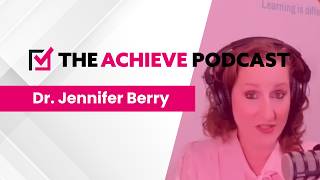
In this episode of the Achieve Podcast, host Taylor Baker interviews Dr. Jennifer Berry, CEO of SmartLab, a 30‑year‑old organization that provides project‑based, hands‑on STEM learning labs to over 700 school districts and community spaces across the United States. Dr. Berry shares her unconventional career journey—from professional dancer to retail executive to education technology leader—and explains how those experiences shaped her belief that learning must be active, project‑based, and adaptable to diverse learning styles. She defines SmartLab’s core offering as an integrated ecosystem that creates "STEM identity," a mindset where students believe they belong in STEM, can master rigorous challenges, and can think computationally, systemically, and ethically, especially in an AI‑powered world. The conversation covers SmartLab’s scale (≈50 full‑time staff, 700+ facilitators), its multi‑sector market (public, private, charter, parochial schools, and third‑space partners), and the importance of a clear value proposition for district decision‑makers. Dr. Berry details the organization’s relationship‑focused marketing strategy—leveraging conferences, superintendent outreach, community bond voting, and parent advocacy—to attract funding from corporations, foundations, and individual donors. She discusses the challenge of positioning SmartLab as the preferred vendor within those investments. The interview also explores SmartLab’s internal AI adoption across functions (HR, marketing, product, finance) and the pedagogical model for integrating AI into student curricula: students first solve problems hands‑on, then use AI to refine or assess solutions, fostering AI literacy and critical discernment. Dr. Berry shares a personal anecdote about her 11‑year‑old daughter questioning ChatGPT’s answers, illustrating the need for students to interrogate AI outputs. Finally, she identifies the biggest 90‑day constraint as building partnerships with businesses and philanthropists to fund durable‑skill programs, emphasizing that scaling such partnerships could transform K‑12 education. The episode ends with calls to action for volunteers, donors, and educators to engage via smartlablearning.com and LinkedIn.
Chapters
Welcome to another episode of the Achieve Podcast, the show where we highlight leaders, creators, and entrepreneurs, those who are building meaningful businesses and shaking up their industries and having an impact. I'm Taylor, your host, and excited today to be joined by Dr. Jennifer Berry, CEO of SmartLab, and you can find them at smartlablearning.com. Dr. Jennifer, thank you so much for joining us today.
Oh, I'm so grateful to be here, Taylor Baker Baker. Thank you so much for having me.
Absolutely. And for those getting to know you real quick, give us the backstory because you're in a little bit of a niche with what you guys are doing. How did you get into this space?
Yeah, it's, it's fascinating. Sometimes people ask me that and I'm thinking, how did I get in the space or how did the business start? And I could do a little bit of both, right? Yeah. Um, well, I'll start by talking about SmartLabs. So SmartLabs been around for about 30+ years. Um, it's It's been around a really, really long time. And it's rooted in this idea that students need durable skills outside of the basics of reading, writing, and math, right? And all of the other subjects that come along in the K-12 space. And this whole idea that project-based hands-on learning is how students learn best. If you think about when we were young, we played to learn, right? At the playground, in the sandbox, at home, we played to learn. And so that has obviously progressed over time into project-based learning. Hands-on project-based learning. And so, SmartLab is really rooted in this idea that STEM learning through project-based learning is really critical for creating the workforce of the future, right? And I am fascinated by this whole concept of project-based hands-on learning because I started in my career in my early days as a professional dancer, actually. And so, I was telling stories through my body and making sure that people got to learn about different cultures, different aspects of life through storytelling in a performing arts way. And so I was always— and I was a student that could never sit still in class because I had to be moving. And my teachers always found ways to help me learn best. So did my parents help me learn best. And that was through hands-on project-based approaches. And so I've always been fascinated by this whole active play to learn and project-based approach, hands-on learning approach, because it worked for me as a kid. And from professional dance background, I then moved into the retail space after college. I moved into the retail space where I really got to learn the end-to-end aspect of running a really good business. So, I was in the retail space for 15 years working with the big brands like Banana Republic and Gap and Old Navy and really understanding what it means to drive good business outcomes and doing it through a way that is mission-driven, right? And From there, I was really craving to do something where I wasn't having to, and I wouldn't say manufacture, but for me, manufacture what laying my head down at night and feeling really good about the mission I was serving. I was saying, if they look good, they feel good, you know, and those things are all true, but it was a little bit manufactured. And so I was craving learning and giving to an organization where I didn't have to sort of make up the mission and I really understood that, or a real good feeling of this mission really serves the greater good. And so, I went into public admin, I got my master's in public administration and then I was recruited into the educational technology space. And I did everything from supplemental tutoring, K through 8 supplemental tutoring where we sold directly to parents to help their students outside of the regular K-12 classroom to help them up-level their craft. From, to then I went to helping teachers become more professional in their craft and really really ensuring that they were more effective in the classroom and selling directly into school districts. Then I went to the after-school space where I was in a non— the nonprofit setting where we were helping across the country, uh, do things outside again of the traditional classroom space and getting to learn and thrive in that space. Then I went into the special education world where it was really focused on students that learn differently and that thought differently. So my whole career, everything from myself and my professional background, my professional dance background, to all of these learning spaces were learning different and finding ways for students to learn in maybe the way they learn best or in ways that were maybe different and outside of the traditional classroom setting. When SmartLab approached me about a year and a half ago to become the CEO of this organization, I jumped at the chance because anytime you even say— I don't know if you guys can see this, or I know people on the podcast won't be able to see it, but it says, "Learning is different here." That slogan, "Learning is different here," just made me very excited to be a part of something. Unique and supportive of different learning styles. And that it's rooted in this project-based, hands-on learning so that students can thrive in whatever career they choose in the future got me very excited to be a part of and to push into the K-12 market. And what Smart Lab does is it's an integrated ecosystem that helps support students getting aha moments over time, and those aha moments, then help them form their STEM identity. We have really coined the definition for STEM identity. STEM identity has been around a while, but what we've focused on is thinking about STEM identity as more than, can you thrive in the S-T-E-M fields? Instead, it's not about science, technology, engineering, and math. What it is, is do you have a STEM mindset? Do you have a mindset that makes you believe you belong, you add value, and you can master rigorous challenges? That is really the difference between being, oh, I can use STEM applications and I get to play with STEM toys, I get to build a robot, to, oh, I can master rigorous challenges because I know how to fail, I know how to work with others, I know how to critically think, I know how to discern even when AI is involved, I know how to say and question even that AI answer, I know how to be a systems thinker, I can be a computational thinker. Those are STEM applications that you know and I know is in every field. You don't have to be a scientist or an amazing astronaut in Artemis students too, to know that STEM applications and the way you think, those durable skills, is critical in every industry and in every job, even the jobs that aren't created yet. We need students to learn how to think, how to critically think, how to be a computational thinker, a systems thinker, how to collaborate with others, how to storytell in a way using STEM applications because that's the way of our future, right? We are living in an AI-powered world and we want students when they become adults to know how to navigate and be leaders in an AI-powered world versus just accepting the AI-powered world that was given to them. So I'm really passionate about what SMART Lab does for school districts and for students because we are, again, striving to give them this integrated ecosystem so these kids get these aha moments. And those aha moments give them that STEM identity that they can go out and be the best versions of themselves and thrive in the workplace of the future.
Wow, wow, there's so much to unpack right there.
I know, so much. I said a lot.
No, I love it, I love it though. So how big is the organization right now?
Yeah, so we, we almost 700 school districts across the country as well as some third spaces, so Boys and Girls Clubs, community centers, but mainly we're in school districts across the country. Wow. Yeah.
How big is the team that you work with in the organization?
Yeah, so we have about 50 full-time employees and then we contract employees across the country. And then of course, because we have over 700 labs, we have 700 facilitators serving our labs.
That's amazing. And you work primarily with like private organizations or like the public school systems or public—
both, both, all of it, all, all of the above. We work in the public school setting, we work in the private school setting, we work in the charter school setting, we work in the parochial setting, we work in the religious school setting. We're in all settings that superintendents or deans or heads of schools are passionate about their students thriving in this world that needs more durable skills, not just academic skills. So, and there's, to be honest, there's not a school district, no matter what genre of school district it is, that we go into that say, no, no, no, we're not interested in that. It is a matter of their priority and their budget, right? Those two things matter. But there's not a school district in the world that doesn't buy into this concept concept that students need more than sit-and-get learning. Students need more than just standardized tests. And that is where we get excited because, again, there's not many that say, no, no, no, we're not interested. It's a matter of where they prioritize it and what else is on their docket and what they value, as well as their current budget.
Yeah. So for you, what would you say have been some of the biggest turning points that stand out and that molded the way you think about running the organization?
I think the biggest turning point in most organizations that I've been in, but I can specifically talk about this one right now because I've been living and breathing it for the last year and a half, is your value proposition. How you position not only the mission and what you're trying to achieve and the vision that you have for the organization, but how you think about the purchaser and what they value and how you position it to serve their needs. Ensuring that you've codified your value prop very clearly, I feel like has been not only here at SmartLab fun and exciting to, to really figure out, but also to synthesize and make clear for the end user and the end purchase decision maker. So I feel like that has been for us something that has been a passion point for us. I also think this idea of getting partners involved in the K-12 school district. I think there's businesses, philanthropists, individual contributors, foundations that are yearning to be a part of the solution right now. And I keep saying this is a little bit of my form of activism, right? My form of activism right now is investing in youth because to me, they're the next— they're going to make sure that this world continues, right, in positive and healthy ways. And so my version of activism is investing in the youth right now, right? And I find that this pivotal point of getting people— because, you know, we live in a divided world, or at least country right now, and there's a lot of polarization. There's a lot of, you know, our way is right, our way is right, and not a lot of camaraderie in that at times. And this idea of saying, how can you get involved? How can you do something and not just talk about it and post about it, but to actually put your money where your mouth is or your time, not just your resources, but your time. And what better way to do that than companies, corporations, philanthropists, you know, individual contributors coming together to say, you know, we need to invest in youth and we need to make sure we're doing it in a way that is going to get them the durable skills so that they are the workforce of the future, they are the leaders of the future, and they're doing it from a lens of a lens of hope and a lens of problem solving that is bigger than the divide that we have right now. So that to me is really critical and something that I think as a business leader is something we're grappling with and trying to figure out how do we bring more people to the table? How do we bring, you know, the big companies out there to say, you know what, we need to invest in school districts and we need to demand of the school districts that they put put project-based hands-on learning in. And then, of course, we hope that it's SmartLab that they bring into the schools. But we want these businesses and corporations and philanthropists and individual contributors to figure out how to invest in schools, right? Because there's a lot of things you can invest in. But to me, there's no better thing to invest in than young people and their future, setting them up for future success. So, those two things, the value prop that we aim to make sure that we've shored up and are very clear and tight about what value we offer school districts. And not just school districts, because we operate in, in many spaces that care about youth development, but really making sure that they understand that it isn't just important to get students durable skills, but you want to work with a company that will create that as a sustainable model for you. Because many times when you think of STEM learning environments, especially STEM labs, it's like, oh, you get us a bunch of stuff and then you walk away from us. We're really working on, no, no, no, our organization, because we're an ecosystem, we believe that there's a sustainability model that's really important for you, school district or third space, for you to think about, okay, I'm going to put this stuff in, but how do I keep it fresh and current? How do I keep the facilitator in there, trained, certified, up-leveling their skills so that they can be effective in front of students. So that's probably the third thing beyond the value prop and trying to figure out how to get businesses to invest, but also in the youth, but also how to make sure that what we're offering goes beyond just giving them stuff and that we're giving them things that can be sustainable over time.
Gotcha. Wow, that is beautiful. I love that ethos you live and die by. So this next question is kind of a two-part question for you. When it comes to your outreach, your messaging, your marketing systems, what's been working well to attract new investors, clients, students, to attract them and to retain them?
Yeah, K-12 school districts, especially because most of our businesses are not the typical business. So you don't do the same marketing techniques in the K-12 space as you would if you were marketing, you know, shoes or furniture or even, you know, an energy company, right? Because superintendents, decision makers in the schools, heads of schools are looking for solutions to ensure their students are getting what their value set is for their community. And so therefore, they're not looking for ads. They're not out there looking for billboards, right? So we have to get very creative to meet them where they're at. And it is all about relationships. And you do that through obviously conferences, you do that through connecting, connecting with superintendents, you know, meeting with superintendents, meeting with heads of schools and having a conversation about what they value. We also find that you find out what the community— because there's many communities that do bonds to ensure that funding and revenue goes towards— so the community is putting their tax dollars to invest in certain things for infrastructure in the community and school districts in the community. Because the school districts are usually funded by the state, by maybe the city, and That's another way that we market is to look at where are the bonds at? What kind of passion values are they putting into those bonds so that the community, the parents in the community are saying, I want to make sure that my tax money and I'm voting on the things that are going to actually drive outcomes for kids. And so we also, although parents don't generally pay us directly, they do through their tax dollars and through their voting. And so we also market and aim our attentions towards parents and get people really passionate about making a difference in their small community as well as the larger community. So that's also where we spend a lot of the time marketing to ensure that parents are fighting for what they believe is right for their kids. And they can do that obviously through their tax dollars and do that through voting.
Yeah. So when it comes to your sales and marketing, where do you feel like there's still opportunity and where's your still potential money on the table? To help with some of this?
Yeah, I think the piece that we are working towards right now is figuring out how to inspire those corporations, whether it's private nonprofits or public nonprofits, 501(c)(3), foundations, to— because we become kind of the middleman, right? They're not investing in SmartLab. They're investing in school districts. They're investing in the community and then demanding that that investment gets a SMART Lab into the school. So we become kind of the middleman. And so trying to figure out that, where do we market where it drives that decision maker that has money or time or resources to give to not think they're donating to SMART Lab, but instead they're donating, they're giving their money towards investing in students and the outcomes for students. In that, threading the needle of, but it should be project hands-on learning. If it's project-based hands-on learning, we need the best of the best, and the best of the best is Smart Lab. It is an interesting way to think about marketing because you're marketing not directly for yourself, but you're marketing for this mission. But yet making sure that also SMART Lab is front and center so that when that investment is made in the school district or in the community, that it then is used for putting SMART Lab in schools. So it's an interesting marketing and sales technique to think about how to inspire businesses, leaders, philanthropists, individual contributors, foundations to invest in this way into school districts. So We really prefer doing that through relationships and through talking about and showcasing the impact that we make with students, right? It's, it's, to me, it's about proof and not about telling, but showing. And our labs, if you go in them, if you visit them, speak for themselves. The students, you know, are thriving in SMART Labs. And so we really focus on putting the attention around the great curriculum, the great kits and equipment, the support that we give the schools so that the referrals from those schools, the students themselves, the parents that see it can, can be advocates for the actual impact that it's making in their students' lives. So I believe in more of the show-and-tell model versus the let me tell you how great SMART Lab is all the time. And so we do spend a lot time investing in the sustainability of labs, the upleveling of the facilitator. You know, like, people ask me all the time, like, your customer care, who do you focus on? We obviously focus on the decision maker that purchased because we care to tell them, you know, are they getting the value for what they paid for. But more importantly, we spend a ton of time with the facilitator in the lab so that they are being the best that they can be with kids because is if the kids are getting what we believe they deserve in ways that they deserve it, um, that'll speak for itself. And so then we can use that as storytelling to, to be our proof point rather than, you know, advertising, um, some, some blank words that say how great we are, but instead show how great we are. Yeah, I hope that answers your question.
Yes, that's beautiful because you're navigating a very unique, nuanced approach marrying the ideas, who's going to benefit from it, who's going to pay for it, and who's going to use it. And so, yeah.
Yeah. And then who's going to fund it? Because many school districts are only, you know, have a budget that comes from the city or the state, or in public schools, also from federal dollars that come down and flow down for certain things. And so then it's up to the superintendent and the principal of each school to figure out how to allocate their budget judge it according to their value set. And we don't have a lot of control over that. And many times in the K-12 space, this year it's about reading, next year it's about math scores, next year it's about science scores. But what we do cuts through all of that because you still need to get these durable skills and this hands-on project way to learn any of those subjects. And figuring out how to not just do it in a lab, but how to translate it into classroom because our SMART Labs are not just for the lab that you lock the door in at night. Teachers can use our curriculum and our products in the classroom for whatever they're teaching so that students are getting that project-based hands-on learning even in learning history.
Yeah.
It's very transferable even in the classroom with classroom teachers. We're really dependent on To your point, thinking about, okay, who are the decision makers based on the budget that they were given from the city, from the state, from the federal? And then what I mentioned earlier is trying to inspire outside organizations to invest back into the school district, right? Because there's foundations usually in a school district, right? The PTA or the parent association, those decision-making bodies decisions for their school district, whether it's private or public. And they can use their dollars from their jogathon, and they can use their money and say, no, we're not going to just get more chairs or pizza party for the 5th grade class. We're going to invest in project-based hands-on learning so that the teachers can use that in the classroom or put an outright lab in. That's one example. But also, businesses can give money directly to the school district or directly to a school, and that school can use that money to allocate towards things that they believe are of value and that they weren't able to pay for based on their budget that they were given, because this year especially, many school districts had a limited budget— changed— and the budget was smaller than maybe they were used to. Enrollment, enrollment has been going down in many of the public school systems because many parents have a choice now and can send their kids to private school or charter schools or microschools or homeschool. And so because of this choice market, public school enrollment has gone down. And so, and many schools are having to collapse, you know, two schools into one school. And then in that, how are they going to ensure that when those students, because the students in no matter what zip code you're in still deserve high quality education, how do you ensure you are getting the businesses around to help support that? And so there's a lot of layers to the housing market that I don't think people fully understand because of where the funding streams come from into the school districts. There's so many layers at the federal level, state level, city level, and then the outside philanthropy level. So it's a tricky, it's a tricky place to navigate, which is why my team spends so much time focusing on the outcomes for kids because that speaks for itself. And then we can use that as our basis for referrals and to get people excited about investing in students.
That makes a lot of sense. And yeah, there's so many layers to that and how they overlap. And where— so you touched on AI earlier. A couple of thoughts with that. One, how have you guys found ways internally as an organization? And what do you guys do as far as with students?
Yeah, so we're an innovation company by nature because we're a STEM learning company. So we are building AI tools and the use of AI through really every department. I can't think of one department— the HR side, the marketing side, the product development side, the operations side, our fulfillment side. Even our finance side, we've used AI to serve us and to uplevel our reach, our impact, and our ability to scale. So we've really sort of figured out how to be at the forefront of using AI to serve us because we are a STEM company by nature, so we should be at the forefront of innovation. So we do that internally pretty often and are constantly challenging not to let that go too crazy, but to pull it into a kind of centralized place to know that whatever AI tool or whatever AI function we're using, it's learning from a unified approach, right? Because if one department's using one, you know, one department's using Claude and the other department's using ChatGPT and the other one's using Starbridge and the other one's using, right, it can get unruly. And so, we really try to make sure we let a little bit of that happen because we want people to learn and get excited. And then we bring it to a centralized approach so that the internal systems are learning from each other, right? So, it's a more systems thinking approach that can really serve the organization. So, that's one way we use it internally. And we've done, I feel like, a pretty good job. I mean, it's moving at the speed of light, right? So, you have to be constantly up on it. So, we've done a pretty good job keeping abreast of that and not not letting AI run us, but using AI to serve us. And that's been really exciting. On the student side, on our product development team, we spend a lot of time thinking about this because school districts have a lot of rules on AI literacy, AI ethics. And yet they also want to challenge how to use AI in the classroom and in schools. And so we really use it more as a tool tool in our curriculum. We use it as a tool for learning when needed. We don't have like an AI learning program, but what we do have is here's a problem set, child, that you're working on. And we always connect it to an industry. So if the child's working on health sciences, that's the industry that they're in, health sciences. And then we want them to use information technology. We're going to teach them a STEM application of information technology in health science, right? So we give them a problem that they have to solve. We have them do this hands-on project-based approach to solve a problem in using information technology, just using this as an example. At the end of— and so they have to think about how to collaborate with their team, how to solve that problem using this STEM application. And then we build in a place in the curriculum where AI can serve to make it— to challenge what they've come up with. So instead of go straight to AI to solve the problem, solve the problem first using these tools, these STEM tools. Work together, fail at it, make a mistake, and then pull in AI. And we give them that in the curriculum when they should because it's a— It's sort of a process for how they do these hands-on project-based project starters. When they get to a point where it's like, here's how AI can refine that, here's how you can use AI to improve the outcome, right, or to challenge what you came up with as a team, that's where we build AI in for the students. Because we want them to learn how to use AI. We don't want that to be the first thing they use. And not that they won't, as adults, make that the first thing, but we want them to be thinkers first. We want students to really be able to discern and to, like I said, fail and to challenge and to communicate with their peer group first. And then you use AI to maybe say, okay, I've come up with this product for this problem that I, poke holes in this AI. Tell me how I can refine it. Or is this scalable AI? Ask, ask AI, put it all in and say, is this scalable? And then AI can help support a scalable model for the students. So we really try to push AI in at the appropriate places for students so that they aren't using that as the first thing, but they're using it as the way to refine or to assess or to enhance what they've already come up with on their own because what we find students whose brains aren't fully developed yet, right? Your brain isn't fully developed until you're 25 years old, by the way. If we don't teach them how to think and to challenge and pull things out of their brain that is an idea that they uniquely came up with first, they will automatically use AI and assume it's the answer. I have a great story about this. My daughter, I can't even remember what— she's 11, my daughter's 11. I can't even remember what the problem was that she was trying to solve, but she asked ChatGPT. So she was using the most basic one and she'd been using it for a while for various things around the house, nothing to do with school, but around the house that she was curious about and learning about and asking it. She asked it something and it gave her an answer. And I said, what do you think What about that answer? And she said, I think it's right. And I said, why don't you ask it where it got that information from or why it gave you that answer? So she's like, okay. So she typed in, why did you give me that answer? And ChatGPT said to her, because I thought that's what you'd want me to tell you. Right? And she said, mom, that's not okay. And I said, yeah. Ask it to give you the source of where it got that from. And it told her, well, I got that because you've asked me 4 other questions about that and you seem to like that answer. So it was telling her. And so she— and you know, because kids by nature also don't want to be controlled, they don't want people, you know, they definitely don't want parents telling them what to do, especially at 11, they're in that tween stage, right? But they definitely don't want to be controlled. And so she really said, oh, Okay, I can't just agree with the first answer it gives me. I need to challenge it. I need to ask more questions. I need to be, again, use discernment skills. She didn't say the word discernment, but that's what she was doing. So that's where we really work hard to plug that into our curriculum so that we're teaching kids how to think like an ethical user of AI, but also be AI literate and not just accept the answer they're given.
I love that. I love that. A calculator helps me learn the basics of math.
Yeah. I mean, and there's studies that show even the basic basics of math, like your math facts, if you can get that out of the way, then you can get to higher order thinking, right? And the beautiful thing about AI is you don't actually need your math facts anymore because it gives you the higher order thinking right out of the gate. But if we don't have young minds learning the basics of math facts, the basics of higher order thinking, the basics of how to be, again, a computational thinker, thinker, systems thinker, all the great discernment world words. We're going to have the next generation having AI lead them instead of them leading AI. And that is the difference that we really are passionate about. And I'm really hopeful, actually, because I have really great conversation with amazing educators across the country that care about this and are not willing to just say, well, AI's here, we're just going to let it take over. And instead, Let's let AI serve us because it is an amazing tool when used right and used in the right places. It can be a game changer. It can be an efficiency maker. It can help you scale in a way. It can help you get time back to be with your family and your friends and not be bogged down with the things that are a drag. But it has to be used in a way that is through people that have failed enough so that they can get to that understanding of when and how to use AI to serve them, right? And I am hopeful about that because I think there's a lot of great educators in this country that are thinking about and talking about the subject so that students, again, can lead this AI-powered world rather than being led by it.
I love that. Lead this AI-powered world instead of being led by it. Yeah. So quick question for you, Jennifer. When you think about the business and the trajectory moving forward, if you had to pick one constraint to focus on and solve over the next 90 days, what would it be?
Oh, in 90 days. One constraint. It would be this partnership piece that I was referring to. In 90 days, if I could stop everything else and say, how can we get businesses, corporations, their foundations, and individuals that have resources and time to give to get involved in this movement of driving durable skills for students beyond the basics that they're learning in school. And if I could spend 90 days just talking to business leaders, getting them really passionate about their next workforce, and the students that are going to be driving jobs in industries that haven't even been created yet. If I could get business leaders excited about that, talking about that, investing their employees' time to volunteer in that, investing using their resources to get students to continue to drive this durable skill set. I believe that's— if I had more time in the day and more people to focus on that, that is what I would do in 90 days. Gotcha. We need to keep building amazing curriculum and we need to keep talking to amazing superintendents that are really into this. So, we have a lot of other fish to fry. That to me would be a really powerful shift in the K-12 space if we could get more business leaders talking about how they can get involved in this K-12 space and how to get more kids these durable skills that I'm referring to because they're going to get the AI skills. That's coming whether we like it or not. My daughter can navigate AI like nobody's business. She can put a problem set into Claude and make it happen. So I'm not worried about her for that. But what keeps me up at night about my own daughter, but also all the students we serve across the country, is do they have enough of these skills that are beyond navigating AI and even beyond just the basics of reading, writing, and math, and history, and all of the science lessons? Do they have these critical thinking skills, communication skills, storytelling skills, You know, influential skills, failing skills, like you gotta know how to fail, you know. So that's what keeps me up at night. And I think if we could get more businesses talking about it, because there's a lot of money out there and there's a lot of people that want to give their employees some amazing volunteer hours. And if I could spend 90 days preaching that to every company out there, I think that would change the, the grind a lot because school districts only have so many dollars in their budgets and they're making value choices every day with their tight budgets. And we need more money pumped into the school districts to, to support students, whether it's public school is your choice or private school is your choice or parochial school is your choice, whatever choice that you have as an individual and/or company that you're passionate about Flood time and resources into those schools, um, I think is, is, could be game changer for these students and the outcome of really our world.
Yes, invest in the next generation.
Yeah, absolutely.
Jennifer, I appreciate you coming on and giving us so much insight and passion and wisdom. I love it. Like, again, you're changing the future of the world. Thank you.
It's a lot of fun. It's a lot of fun, but it does keep me up at night.
So, for those who want to learn more, who want to get involved, they can reach out LinkedIn, smartlablearning.com. Anywhere else you want to send them?
Yeah. Well, when they reach out on smartlablearning.com, take a look at our STEM Identity Day area in our website because that's where if you're just like, "You know, I just want to volunteer in school districts. That's the place that I can give right now." You can get into a lab and volunteer with schools and talk about your own STEM identity, right? Because people might be like, well, I'm not a scientist. Yes, but I bet you if you look at the STEM applications you use every day, you could say, oh, I do have STEM identity too because I believe I belong. I believe I can master rigorous challenges. I believe I add value. And I do use STEM applications every day. And so get involved in your local school, your community schools to volunteer and talk about your own STEM identity to get these students inspired about what and how they can function in this AI-powered world, that would really be exciting. And then, yeah, people can look me up on my LinkedIn, Dr. Jennifer Berry, and I'm happy to brainstorm, to get ideas. I'm also happy to be challenged. I want to hear what other people have to say to make us all a better place because I think if we all join hands and stop fighting each other so much, we can really make this world pretty powerful and special because there's some really great people and great industries and great organizations that are doing amazing work out there.
So true. So, so beautifully put. Thank you. And thank you to our sponsors of today's episode, Achieve Fractional, which provides fractional executive leadership for growing businesses. And if you enjoyed the episode, share it with a friend, with a colleague, get involved in your school. If you have any questions, reach out to Dr. Jennifer and the and see how you can add value because you bring your STEM knowledge and there are those who need to learn from you. So reach out, get involved.
Love that. Thank you, Taylor Baker Baker.
Thank you so much. And we'll see you all in the next episode of the Achieve Podcast.









