The Achieve Podcast - Ellis Ishee (Black Tie Moving)
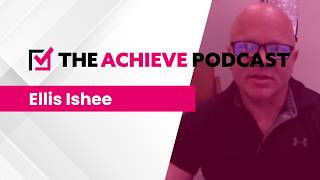
In this episode of the Achieve Podcast, host Stephen Bunker interviews Ellis Ishee, President of Black Tie Moving, a national "white‑glove" moving company. Ellis explains how a personal bad moving experience sparked the creation of Black Tie Moving 14 years ago and outlines the company’s service footprint across key U.S. cities. He identifies the primary growth engines – strong relationships with real‑estate agents, third‑party vendors (e.g., ServPro), and a robust digital marketing presence. A major turning point for the business was the realization that culture and clear standard operating procedures (SOPs) are essential; Ellis describes how he overhauled recruiting, interview processes, and a world‑class training program to align employee personal goals with company KPIs. He discusses the franchise model, emphasizing the need for franchisees who combine executive P&L acumen with a hands‑on, community‑focused mindset, and details the data‑driven market‑selection criteria (DMA, household income, migration patterns). The conversation moves to leadership development – 24/7 executive access, mentorship, and continuous coaching for franchisees. Ellis shares Black Tie Moving’s aggressive adoption of AI: after‑hours AI agents for calls, AI‑driven auto‑messaging, estimates, and plans to embed AI throughout the customer journey (real‑time move updates, post‑move issue resolution). He envisions expanding services beyond point‑to‑point moves into logistics, junk removal, storage, and disaster‑recovery support. Finally, Ellis reflects on lessons learned: hiring the right people, using exit interviews, staying connected to the “ground troops” through management‑by‑walking‑around, weekly site visits, and genuine personal conversations to maintain pulse on both team and client needs. The episode closes with practical habits for leaders to stay engaged and a call‑to‑action for listeners to learn more at blacktimemoving.com.
Chapters
Welcome to the Achieve Podcast, the show where we highlight leaders, creators, and entrepreneurs who are building meaningful businesses and shaping their industries. I'm your host, Stephen Bunker, and today we're excited to learn from Ellis, president with Black Tie Moving. So Ellis, for those getting to know you, can you give us a quick backstory of your business and organization?
Absolutely. Um, the, the business, uh, dream came to life, uh, when our owner had a bad moving experience. Um, and, you know, upon reflecting about the incidents that occurred during his own move, he really formulated a good plan to create a white glove moving experience. Um, and that birthed Black Tie Moving back 14 years ago.
Okay, and kind of what— who do you serve as far as just like location and, um, kind of demographic?
Yeah, absolutely. We serve the entire United States. Uh, we have key locations in Dallas, Memphis, Huntsville, Nashville, uh, Rehoboth Beach, Delaware, Cincinnati, Ohio, and Columbus, Ohio.
Oh, nice. Okay, cool. And would you say, like, at this stage, what is driving growth for you guys right now?
Our relationships with the real estate community, uh, relationships with third-party vendors such as ServPro, home construction companies, um, but we also have a very large digital footprint in the marketing world.
Okay, awesome. So kind of looking back for you personally, just at your journey, what have been some of the turning points? That have changed how you think about how you run an organization?
Thank you. I think you learn a lot— excuse me— I think you learn a lot about people and what it means to develop culture, what that means above and beyond a poster board or a picture frame on a wall. And I think the key to any strong organization is having clear standard operating procedures, and more importantly, people that know how to to live the culture and execute on behalf of the business, but also their clients.
Okay. So when you had that perspective shift and when you kind of realized that with the SOPs or culture, like, what was the process you went through to implement those changes?
I really had to take a deep look at how I was recruiting, um, how I was interviewing, how I was working side by side with the people, uh, creating a training program that was world-class. And what my follow-up looked like. I mean, I think it's overly important, Stephen, and that you keep people engaged and people feel passionate about what they're doing. And that's well beyond— that goes well beyond the training program. So in other words, learning what people really want to accomplish out of, out of their lives and helping them, helping them achieve those personal goals through, through your business model and through their KPI achievements.
Okay, I love how you brought that up, just kind of aligning their goals with the organization and helping really focus on that personal development. So as you guys are trying to grow and expand, what's been the biggest bottleneck or obstacle to keep showing up?
We, we really look for future franchisees or GM operators that have a have a, an executive mindset as it relates to the profit and loss side of the business, but also a blue-collar approach to rolling their sleeves up and getting into the communities. That is not an easy find. So we're not looking, we're not looking, uh, for private equity guys that want to invest money and walk away. We want people that get heavily involved in the day-to-day operation of the business.
Okay, yeah, that's definitely true in the contractor world. You got to have people who are willing to actually get their hands dirty and do the work. Um, when it comes to just your messaging and outreach, whether it's been working well for you.
We belong to the community, and though we're a coast-to-coast company, uh, we heavily believe in giving back to the community, uh, whether it be through charitable organizations such as the American Heart Association or through several different law enforcement programs, baseball teams in high schools. So we belong to the community, our teams belong to the community. Um, and you know, when people ask me, what's your demographic from a clientele standpoint, I look for the new kid moving into the first dorm day one of college, married and buy their first home, uh, until the day they expand their family, and until the day they are much like me looking for your final home. Right. So yeah, own the life cycle of a customer, really understand what that means to the client itself at different stages of their lives. Yeah, that's right.
That's awesome. Okay, um, as far as like your franchise model, are you looking for specific markets to go into, or how do you find good franchisees?
Yeah, both, both great questions. So in the moving industry, we often go traditionally as the real estate market goes. And so we are looking for cities where people are leaving and cities where people are coming from, right? They both benefit us within the moving segment. And we rank those. We keep a close eye on it. We look at the same type of DMA that a lot of other moving companies look at, such as average household income, transient, you know, what, what the people are doing as far as interstate versus local moving. Those dynamics play into our decision-making when we look at new cities.
Okay.
Yeah. So that's, that's a key part of it. And for us, you know, when we decide to go into a market again, Stephen, it goes back to do we have the right grassroots real estate approach to building partnerships, but also the right person that knows how to engage those partnerships and can build on that, plus a digital footprint that we that we work very hard to create from a local service ad, SEO, PPC standpoint.
Do you guys have like a leadership development program for your franchisees and various partners?
We do. Yes. We do. And it starts with partnerships with me, 24/7 access to the executive leadership team, but also within their given role, we have mentors within each leadership segment. That pair up, train, and then keep a continuous watch and follow up with the new guys.
Okay, cool. So with all the buzz around AI and automation, have you guys found any ways to use it?
We have. I'm very passionate about AI, and it first started with our company with after-hours calls. So we have AI agents that answer our after-hours calls, albeit customer service, sales. Payment processing. Um, we do overflow calls during the day, so if you can't reach one of us in person immediately, an AI agent picks that up and takes care of the client. And I'm currently working with our software companies that we use to integrate AI as it relates to auto-push messaging, auto-responding, online AI estimates. So yes, So we are feverishly and passionately engaged in the AI sector right now.
That's awesome.
Yeah.
And when you, when you look at just the opportunity on the table, where do you still see opportunities?
Within the AI segment?
Yeah, within the AI segment, just like where areas where you could actually like improve the business.
Lots of areas. I mean, I think anywhere where you can find a spot in the business to make the customer experience seamless, then there's that AI can jump in and fill that gap, right? I mentioned earlier the customer service side of things. So, you know, during a move or post-move, if a customer circles back and says, hey, look, you know, it's, you know, I've got things additionally that I need from you or another service that I need, or maybe I'm missing a box or I can't locate a lamp, right? Simple examples. We have people that are on calls constantly taking customer service calls. If you take the time, Stephen, to call my company about a customer service issue, which, by the way, you don't want to have to do, the only thing that makes that thing— makes that experience worse is having to wait for a callback or wait on hold. And if AI can jump in and begin to work through that issue with you and even have the opportunity to live transfer once an agent's available, then that makes your experience that much better.
Yeah.
And again, I can plug and play that into the customer service side of things. I can plug and play it into day of move. So, you know, we're supposed to be there between 8 and 9 a.m. and you've taken off of work because you're waiting for us to arrive. If I can have an AI agent reach out to you and say the truck just left and based on traffic, we expect a 35-minute from now arrival time, that creates peace of mind for you. And makes the experience easier. So I'm always looking to make the experience easier and more seamless because for me, I come from a luxury background as it relates to my background. And so we're not just moving items, in my opinion, we're moving experiences, we're moving lifelong investments, we're easing pain and stress. If you ask Americans, you know, rank the top 5 things that are hardest to do, I promise you a lot of them are going to say moving or building a new home or something. Yeah. So, you know, buddies don't, don't do the beer and pizza thing anymore. You know, moving companies now jump in and do a lot of moves for customers. So the last thing I want to do is make it hard. And again, not to beat the same drum, but if AI can help foster that by creating a virtual staff for me that supports a customer in any phase of that experience, Then that's what I plan to do at Blacktop Moving.
That's awesome. I actually think, especially with a lot of customer inquiries, I think they get a better experience with AI than they would even overseas. I mean, you know, because it's like they can get to the answer if you have a good knowledge base. I think people are going to actually prefer AI in many cases.
I agree. And we're transitioning as a society to AI. I mean, if you think back 30 years ago, it was all phone calls and then we introduced something called text and people said, oh, I'll never text, it's not personable. I can't, you know, I can't hear the person's voice. I don't know if they're being authentic. And guess what we do now? Now you and I would rather get a text sometimes than a phone call. It's just more convenient. We get the same amount of information. And now AI is transitioning and will eventually take the place of some of that too. So it's the, again, the lifecycle of communication and follow-up. And I couldn't agree more. I mean, it's just easier.
So when you think about the next stage for your business, what are you most excited about?
I'm excited about expanded services. Um, you know, we, we are, you know, traditionally think moving company is, you know, I move you from point A to point B. It's, it's, you know, me taking you from one apartment to a new house or vice versa. And really, we're, we're trying to segment out, right, whether it be junk removal or whether it be spring cleaning services, those type haul-away services. You know, we're looking to fill the void on the logistics side of anything a customer may need as it relates to inventory. So if you can think it up, we're looking to do it.
Okay, that's interesting. So like, like even inventory solutions like food storage, home storage, like, like even like storage units, like retrieving things from storage units. I'm just throwing ideas out here.
Yeah, no, no, you're spot on. I mean, we already do that. We already work in the storage unit side of the business. I'll give you another example. Let's just say we have a flood or tornado that goes through an area and a ServPro type of business has to come in and renovate and, and clean a home out and prepare it for re-entry. We, we come in and support that now where we remove that debris out. We can put it in storage, we can haul it off to junk, whatever it may be. And we help those kind of third-party partnerships with our clients.
Awesome. So when you look at your own journey, the wins and the mistakes, like what lessons have stood out to you?
The biggest lesson is, again, it goes back to people. You don't want the wrong people sitting on the wrong seats on the bus. And, and, you know, I'm a big believer in it's never the person's fault that they joined your company and got put in the wrong spot. It's ours.
Yeah.
So how do we improve assessing your skill set and how you fit best into the puzzle? And then how do we support and grow you? And so that's been a big learning. We continue to work through that, through modifying training programs, through exit interviews. You know, if they leave us, any facet of the HR experience or training experience, we try to continue to polish that up.
Yeah, I actually come on Because right now I'm currently working as a marketer, but I came into this with about 10 years in the home service industry. And I've heard the quote that like, you know, a lot of contractors start out thinking they're a contractor, and then once they get into it enough, they think they're a sales and marketer. After they do it long enough, they realize they're actually just a training company.
That's it.
And yeah, what you were saying about the recruiting piece, I kind of wonder if there's like two different philosophies there that I've tried to understand better in my own mind. One is you get a lot of business owners who will say like, you know, hire fast, fire even faster. And yet I found with recruiting, I'm like, I really wish, like, I feel like every time I've had to make a firing decision, that was my fault for not choosing the right person. So it's like, I think you can make that choice well on the front end, but also making that choice well on the back end. It sounded like your approach was like really dialing in, like, how do you select that person in the interview process? Right.
Or that's, that's right. And we have multiple people take partnerships within that interview process. I don't think I don't extend the interview timeframe out longer because there's more people making decisions. I just make those interviews closer together. And then I think people who say hire fast, fire fast, it's good. It's well-intended. I know what they're trying to say, but if you're firing fast a lot, then maybe you're the one that needs to be fired. I mean, that's— Yeah. You're not making great decisions. That's like a baseball player saying, "Swing fast, strike out a lot." I mean, well, you know, you're striking out a whole lot. You're probably gonna sit the bench at some point. So Stephen, to your point, I think it's how do we become better at assessing talent, right?
Yeah. That's, I would 100% agree. I've seen too much turnover. Do you have any final thoughts or advice that you'd give other entrepreneurs or leaders on a similar journey?
Yeah, I think you, you have to survey your customers. You have to get honest feedback from what's working well, what's not. One. And I think secondly, you have to talk to your internal customer, your number one customer, which is your team. And you have to, you have to collaborate, right? I think the higher the position goes, the often we become more and more removed from the client experience. And we get caught in the minutia of the business. So you have to, you know, as a lieutenant of your company, you have to get back in the trenches or at least talk to the ones in the trenches more and more often so that you never lose pulse of why you started the business, what the problem is that you solve, and how do you continue to evolve. And that comes from the soldiers, your, your, your ground troops. So never lose that connectivity.
How do you do that on just a practical level? Like, what are some of the habits that you have in place to actually keep that pulse?
Leave your office. Make time each week to be where your team is. I mean, that's the easiest answer to that. Yeah. Being site visits or in the offices, take time to have genuine conversations. Don't do the stereotypical, hey, I'd love feedback, let's submit it online. But, you know, pull people aside, you know, ask them how their family's doing, you know, build relationships of trust with people. So that they will feel comfortable giving you that feedback. But yeah, leave, leave the comfort of your office, if you will, and, uh, and get out there and find out what your people are saying, and more importantly, what your clients are saying.
Uh, I find what you're saying very fascinating. I, I remember reading a biography about Abraham Lincoln. I think it was like called like Abraham Lincoln on Leadership or something like that. So it was about his leadership style. It was interesting because like during the Civil War, um, a lot of the generals didn't like him at first. He was— he had— didn't have a very good reputation. And so he made it a point to actually proactively go to the generals' homes and have dinner with them. And it's like, you're thinking the president, he had like— he could say, hey, come to my office and meet with me. But instead, he was proactively going out and meeting with his direct reports, you know, and taking that initiative. And that I don't know if there's Peter— I think it's Peter Drucker— talked about in one of his management books that concept of like management by walking around, getting on the shop floor.
That we talk about that all the time, right? Management by walking around, managed by being, by being present. Um, if I want to know how our trucks are running, sit in the truck and take a drive with it. If I want to know how move's going, be at a move. If I want to know how my sales team's doing, sit with my sales guys. So it's just, it's 1, 2, 3, right? It's simple. It's hard sometimes. But what you're asking is simple to execute, but maybe sometimes hard for us to put on our calendars. But if we'll just be disciplined to take that kind of time, we will not lose connection with what's really going on in the business and not what we're just being told, right?
Yeah. I think that keyword you mentioned there, what's really going on, like what's real. I think that's a key is I think so much with our digital technologies and like even with AI and these things, like it's nice to have efficiency, it's nice to be able to send an email, it's nice to be able to have a call. But when we can like physically be embodied in what we do, it's easier to see reality, right? And it's like there's different levels of reality. And, you know, I mean, I'm not going to pick on video games, but it's like, you know, people play video games because it's exciting. Right? And it's like, it's one level of reality. And yet being successful in business or with family or your occupation, that's a different level of reality that actually brings more genuine happiness because it's closer to what's actually embodied, like physical, you know, physical reality. And, um, I think what you're saying really resonates with me. It's like, how do you get down to what's real?
And Stephen, the byproduct of that, in my opinion, is that when you do that, your attrition is stronger and you keep retaining the right people because they appreciate the time and focus that you put into being and doing, you know, the things that you need to do in the right places at the right time. So, you know, here at Black Tie, you know, I'll have crew leads come in and sit in my office and talk to me, or, you know, we'll be at dispatch and we'll have conversations about what's working well. I know who's having kids. I know which sales guys have bought their first homes. I have a sales guy having his first child next week. You know, and that's not to say, hey, you know, Ellis is putting his left hand over his right shoulder and patting it. This is about staying connected to the vein of your organization, right? And by doing those things and by caring about my people and knowing what matters to them, I'm able to do what we just talked about, and that's stay connected to my clients and my team and get good good, honest feedback.
Wow, I, I really love that. Um, this has been a great show, and I want to say thank you so much, Ellis, for sharing your story and your insights, especially with just the constant change we see in the world today. So to learn more about Black Tie Moving, visit blacktimemoving.com. And that wraps up today's episode of the Achieve Podcast. A big thank you to our sponsors, Achieve Fractional, which provides fractional leadership services for growing businesses, and Achieve Bootcamps, where entrepreneurs can learn hands-on how to build their own marketing systems and automations. If you enjoyed today's conversation, follow the show and share it with another entrepreneur. Thank you for listening, and we'll see you next time on the Achieve Podcast.









