The Achieve Podcast - Frank Trotter (Battle Bank)
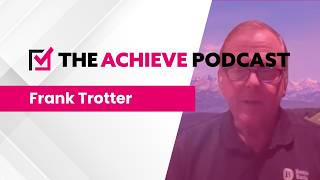
In this episode of the Achieve Podcast, host Taylor Baker interviews Frank Trotter, CEO of Battle Bank. Frank recounts his early venture EverBank, its sale to TIAA, and the founding of Battle Bank as a national community bank defined by customer aspirations rather than geography. He describes the current organization: a 2.5‑month‑old bank with about 40 employees operating in a hybrid remote model, with a physical operations hub on Long Island. The discussion covers Battle Bank’s go‑to‑market approach—leveraging a 23,000‑person waitlist, partnerships with Rick Rule’s Rural Investment Media, LinkedIn drip campaigns, and direct outreach across multiple channels (email, podcasts, YouTube). Frank outlines growth targets of $300‑$400 million in assets within the next year, with a longer‑term aim of $1‑$1.5 billion in three years, noting capital‑ratio requirements and potential future fundraising. The bank currently serves the U.S. and Canada, citing regulatory complexities of expanding into Europe or other regions. AI is employed for operational tasks (reconciliation, financial analysis) and for marketing research and content creation. The biggest short‑term challenge is converting the waitlist into active accounts, combating customer inertia despite offering high‑yield products (3.35 % APY) and differentiated services such as precious‑metals storage with borrowing options, foreign‑currency services, check‑book IRAs, and a SaaS lending platform. Frank highlights future excitement around adding niche lending verticals where larger banks lack focus. The interview concludes with a call to action for listeners to join the waitlist, contact Battle Bank, and an emphasis on the company’s open, all‑hands culture.
Chapters
Welcome to another episode of the Achieve Podcast, the show where we highlight leaders, creators, and entrepreneurs, those who are building meaningful businesses, shaping their industries, and having an impact. I'm Taylor Baker Baker, your host, and excited today to be joined by Frank Trotter, CEO of Battle Bank, and you can find them at battlebank.com. First, Frank, thanks for coming on and joining us today.
Well, this is going to be great. I appreciate the invitation. I'm looking forward to a great conversation.
Me too. So for those getting to know you guys and you, give us the backstory on how you got into this space and how the company came about.
I'd be happy to. You know, um, long ago and far away in the dark ages, uh, we, uh, started something called Everbank around the year 2000. And it was one of the first online banks out there. A couple had started up ahead of time, but frankly, nobody else had really gone very far. Then we ran that through 2017. I had a number of partners there and then sold that to TIAA. And along the way, we really learned a lot about how to reach people directly. And if you think about it, when we launched in 2000, that was 8 years before the iPhone. So kind of go back in time and, uh, understand a little bit about that. So we had a lot of training to do, but now people are pretty tech savvy. Um, and after we sold, uh, EverBank, um, you know, the new purchaser, uh, who has their own client base, uh, really decided to abandon the people we talked to directly and de-emphasize some of the projects. It's a rational decision on their part, and that's life. Uh, I began to have a conversation with a longtime friend and industry, uh, sort of icon, guy named Rick Rule. And Rick and I got to talking and said, you know, we can do this again. Uh, you know, we're young guys, we're only about 70. Uh, we should be able to, uh, put something together and, uh, serve clients one more time. And so we began to build, uh, Battle Bank, which is a national community bank, and we're you know, not defined by geography but by aspirations and attitudes. So that's a little quick backstory. And we did well at EverBank, grew that to $28 billion and went public in 2012. And now we'll see where we go with Battle Bank. Wow.
And I love that, that clarity where we're not defined by geography, only by aspiration.
Well, it is. And, you know, I think typically when you start a bank, you have a few friends, you put some capital in, you draw a circle around a physical location. And that's great. That serves a wonderful community and that's a great plan. We like to serve people who have a little different attitude about investing. And so that's how we define that.
So how big is the team and organization now?
Organization is just round about 40 people. We sort of rolled out the door about March 1st. So we're 2 and a half, 2 and a bit months old. And, you know, we spent a number of years, about 3.5 years building the technology and the capital and so on to start a bank. And a lot of that is unique. You know, you go to the vendor market and say, gee, can you do this? And they're like, eh, not really. And so we had to build a lot of this stuff from the ground up. So about 2.5 months old, about 40 people. And yep, doing good.
Yeah, that's impressive. That's really impressive. So looking back for you, what turning points have had the greatest impact on how you think about and run the organization?
Well, I think a couple of different things. Um, you know, for 25 years we've been in somewhat of a remote world. I think a lot of people were introduced to that in the 2020 to 2024 period, of course. But we've been running— we had offices, of course, in our previous employer, but we did a lot of things remotely. And we do have a physical center where a lot of the bank operations take place. That's up on Long Island. It's a great center. It's wonderful people. But we also look to hire the best people in each field. And I think remote work is a lot about selection and team members as opposed to, you know, policies and procedures. You have to have people who are driven, who are willing to work, who don't go drive an Uber during the day or go play soccer in the middle of the day or something like that. And it's just a different approach. And I think that was one of the turning points that really allowed us to have kind of this hybrid model where we do have an in-office presence with bank operations, but large portion of the company is, uh, working like I am, uh, out of remote locations.
Wow. So when it comes to your outreach, your marketing systems, what's been working well to grow and to gain clients?
Well, initially, as we were starting up, we sort of did a drip campaign with various, uh, both LinkedIn and our Rick Rule, our partner, has a company is Rural Investment Media, where he has a large number of subscribers as well. And so when we opened the doors back around March 1st, we had about 23,000 people on the waitlist. So people had come in and said, when you open up, we'd like to be a client. At EverBank, we had zero, which is kind of a funny difference. And our first marketing program was so-so. But, um, with 23,000 people, we're working through that right now. Yeah, I'm trying to, you know, put about 250 invitations out a day, making sure the systems and our phone crew is able to answer questions effectively and not put people on hold for 2 hours. Uh, we're very attentive to client service. Um, so we're working through that. And then beyond that, we have deep relationships with independent financial researchers and with online media, each of whom has a different audience, just like you do. And if we're speaking to something that's interesting to that audience, then, you know, people come on by. Something we did at EverBank, but it's also something we're doing, I think, a lot more effectively at Battle Bank. You know, we got about half the waitlist to send invitations to today. So we're probably going to be doing that through mid-June. But then we have a number of marketing partners and programs in place. And of course, you know, data analytics is key to all of this. I mean, it's a— everybody says it today, but we do understand that it's a direct marketing sort of world. It just, you know, is that email? Is that podcast like yourself? Is it YouTube? You know, a lot of different channels that we're working with and testing.
That's awesome. So where do you still see with your sales and marketing opportunity available?
Uh, there's tons of opportunity. Um, we were talking to one of the meetings, uh, last week in Nicaragua with one of our marketing partners, um, and I just think that's just going to be fantastic. They have an audience of about 12 million people, more or less. Um, and if you think about that, um, you know, pick your favorite sort of mid-sized city, 3 to 5 million. You probably want 10 to 20% of that audience at most as a bank. So it looks like we're— if we have— if they have a 12 million person audience, that's like 30 or 40 mid-sized cities that we're talking to. These people are typically independent investors. Which is exactly our, our neighborhood. These people do react to direct messaging because they're taking a newsletter, they're watching YouTube, they're listening to a podcast. So it sort of all lines up, and I think this is where it's going to go. We're very excited to be working with a lot of partners, and I think it's so far it's going to be very effective.
Wow, that's impressive. So where do you anticipate seeing things go in the next, say, 12 to 18 months?
Well, we have projections, of course, and being old guys, we didn't try to make this look like a hockey stick. It's, you know, we're rational. We're not trying to over-promise and under-deliver. Yeah, I think we'll do— just the feel of it is do much better than the projections. Um, you know what, Number is that hard to say. But we do— we have, you know, $300 or $400 million by the end of the— this time next year, probably. And that probably means we have to go back to the capital markets for additional capital in banking. Of course, you're required to keep capital. It's going to turn this off if I get to it. Turn, turn. You have to keep capital against assets. So In our case, it's about 10%. So $400 million, we have to have X amount of capital on board. And so we'll probably have to go back to grow past that. You know, some of our initial projections showed us being at $1 billion, $1.5 billion in 3 years. And I think that's not unreasonable, just a matter of how the market goes. And, you know, there's one of our jokes is, you know, what happens if Russia invades Canada? You know, it's just some wild card that we wouldn't have thought of. I mean, the Iran thing came up and people were surprised there. Um, you never know what the world's going to do next, but I think if, if even in a bit of turmoil, we should do extremely well by this time next year. Wow.
And how big of a— I mean, you're not limited geographically, so are you serving internationally, like every country, or—
We're doing U.S. and Canada. There's As you probably know, there's a lot of compliance issues, particularly when you get into Europe, in the UK, a lot of other jurisdictions where if you accept clients in those neighborhoods, you are now subject to their regulation. You know, down the road, I imagine we'll be doing some of that. We've already had a lot of entreaties from Australia, from Europe, from Switzerland, from the UK. To say, please take our clients. But initially it's US and Canada. We're very comfortable there. It's fairly straightforward. Plus, of course, the time zones are easier to deal with in a startup organization.
Makes a lot of sense. Now, with all the talk and buzz around AI and automation, where have you guys found ways internally to utilize it?
Well, a couple of different things. You know, we started all our builds really before Mr. Altman came out and sort of Roiled up the market. So what our decision was to finish all those as is, but we're already looping back heavily. Bank operations and financial management is relatively straightforward in terms of things that you can use AI to help deal with, whether that's reconciliements, whether that's financial analysis, you know, variety of other things. So that's sort of case one. Uh, the marketing team is spending a lot of time both in research and in content creation with AI. Um, and I'm doing it a lot, uh, myself, uh, for both research and creation of content. And we're sort of working with the marketing department there. So we do analyze our client data, uh, using AI. We analyze where reach might occur with AI and content creation, of course, can be helped. It doesn't go straight out from, you know, Gemini or Claude or ChatGPT, but it's a good start. And, you know, when it typically needs the touch of a professional copy person, but, you know, it's, it's, it's a lot faster to put 1,500 words on the page by asking the right question than it is to just sit down and write them out.
So true, so true. But it takes that human element. So Frank, if you had to— looking at the trajectory of the company— if you had to pick one constraint to focus on and solve over the next 90 days, what would it be?
Um, it's really getting that entire waitlist to react. Um, you know, our biggest competitor in banking is inertia. You know, you get that email and you say, hey, dear, I got the email from Battle Bank. Let's talk about it next weekend and maybe we'll open an account. Well, next weekend comes and it's busy, and then the following weekend comes and it's busy. So inertia is really our biggest competitor. I mean, when you look at, you know, most big banks are paying nothing on a checking account. So it's typically 0.01% and then $25 monthly fee. Well, that's really wonderful. We're paying 3.35% APY, and so it's an obvious change. There's no rational reason you wouldn't just do that. Yeah, um, but, um, you know, you got to get around to it. You got to say, you know, I'm going to go ahead and change my bill pays over. You gotta get around to actually going on and logging in and signing in, uh, so That's what we really have to solve for the, you know, with half the waitlist sent— has been sent invitations, uh, but we'd like to get the other, you know, 75% to sign up for an account.
That makes sense. That makes sense. And what are you finding as far as— I mean, obviously just people doing it, like, what's the biggest difference people are seeing when they switch over? Again, this makes so much sense.
Well, it does mean that what I just said, you know, rate is obvious. I think a lot of our clients purchase and hold precious metals and shipping it into our storage facility becomes fairly obvious fairly quickly. It's a fair rate of storage. We give them some flexibility by giving them the opportunity to borrow against it if they need liquidity at any point in time. So that's something new. And it just, you know, they say, oh, well, that's cool. A lot of small businesses deal in foreign currencies. And their banks are— not necessarily a technical phrase, but ripping their eyes out on price. Um, and they come to us and we get a fair rate. So that's an aha moment. And then on the retirement side, you know, checkbook IRAs are different. It allows you to do really anything that's legal in an IRA. So again, completely different things you're going to see at Schwab or Fidelity or your local bank. So each one of those, depending on the individual is that aha moment.
Gotcha, that makes a lot of sense. So, Frank, when you look at your own journey, the wins, the mistakes, what lessons stand out to you?
Um, a couple of things, you know. 25 years ago, bank regulation was a lot easier. Not better, not worse, just easier. And it took us a long time to get here, a lot longer than any of us could ever have imagined. And ultimately we had to go and purchase an institution to get past some of the regulatory delays. So that's one. Two, you obviously know with AI solidly in place, we would— if we were starting today and not, you know, 4 years ago, we'd be much more primary there. We'll be pretty much all the way there in a couple years, I think. But we have to replace a lot of things that are in classic code. But in terms of, um, brand, in terms of offering, in terms of operations, I think it's, it's— we're pretty much where we want to be. We'll have to completely change probably by 5 years down the road, but that's, that's also good because it makes it interesting.
Yeah. So last question for you. When you think about the next stages of the business, what are you most excited about?
Starting to put more and more different lending verticals out on the platform. As I mentioned, our precious metals lending, we have a software as a service vertical, but we need more people with deep expertise and some revenue to support those people. To really start getting into different areas. You know, we kind of joke that we, we can't compete with JPMorgan and they can't compete with us. We're going to be in small sectors where, you know, Jamie Dimon wouldn't even bother to pick up that vertical on his, on his annual report. We can really make a difference in each of those, have a good yield for ourselves and a great service for clients. It's really picking out those individual sectors I think is going to be most exciting. You know, which ones do we really focus on? Who do we bring in to provide expertise and how do we do it in a safe and sound manner, which is what banking is all about.
That makes a lot of sense.
Wow.
So thank you for coming on. Any final thoughts or words for our listeners?
Well, I think we're just going to— I would Obviously encourage everybody to show up at battlebike.com, join the waitlist, and hopefully we'll get to you by June. Um, take a look at what's out there and give us feedback. Uh, we listen. Uh, we're a small shop, everybody's involved. We have an all-hands meeting every Thursday where literally everybody in the company has the opportunity to say whatever is on their mind. And if they're hearing something from somebody, it gets brought up. We maybe don't do everything Uh, but it's a, it's a great forum. So, you know, come on over, check us out, and hopefully we'll, we'll have you as a Battle Bank client.
That'd be awesome. Again, they go to LinkedIn, but battlebank.com is probably the best place to find them. Anywhere else you want to send them?
No, I think really it's just battlebank.com. Um, you can email us at info, info@battlebank.com. Um, and there's a number of phone numbers. We put those actually on the website, which is novel these days, having tried to get into some companies lately. Um, so give us a buzz, you know, give us an email, join us, uh, on the waitlist, and hopefully we'll see you down the road.
That's awesome. Thank you so much. And thank you to our sponsors of today's episode, Achieve Fractional, which provides fractional executive leadership for growing businesses. And if you enjoy the episode, share it with a friend, with a colleague. If you're not sure about your business and your banking needs, reach out to Frank and the team, and they can walk you through the benefits, the many nuances that can help your business specifically. So thank you again, and we'll see you all in the next episode of the Achieve Podcast.









