The Achieve Podcast - Garry Todd (National Engineering Search)
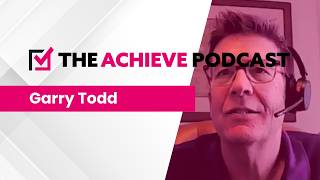
Garry Todd runs National Engineering Search, a boutique firm that recruits for geotechnical and infrastructure engineering. He has 30,000 LinkedIn connections and a three-decade candidate database. The biggest problem: civil engineering talent is scarce because STEM graduates choose tech instead.
Chapters
Welcome to another episode of the Achieve Podcast, the show where we highlight leaders, creators, and entrepreneurs, those who are building meaningful businesses, shaping their industries, and having an impact. I'm Taylor Baker Baker, your host, and excited today to be joined by Gary Todd, the president and managing principal at National Engineering Search, and you can find them at nes-llc.com. First, Gary, thank you for joining us today.
You're welcome, Taylor Baker Baker. Good to be here.
And for those getting to know you, give us a little bit of backstory on how you got into this space and what you guys are doing for the clients, because you're in a bit of a niche here.
Sure, sure. Super niche. Hyper-niched, I think. So we do civil engineering and all of the derivatives of civil engineering, but our main area of expertise is anything geotechnical related. So we're easily the best-known recruiting firm in North America as it pertains to geotechnical engineering, tunneling, dams and levees, geostructural, structural, just really high-end infrastructure-based executive search. And we've been in, and we've been in business for over 30 years as well. So we've seen a couple, several different cycles in this business too, for sure.
Quite a few. And how big is the team?
Uh, the team is just less than 10. So we have a, we have a small team. Uh, most of our team is recruiters, and then we have a research department as well. That's where the, that's where the black magic comes in.
That's awesome. And are most of your Project US-based, or do you guys start branching internationally now?
No, ironically, I spend like 3 to 4 months a year in Portugal now because my wife is from there. But no, we probably turn down in reality about 50% of the work that's offered to us. So we're not really looking to expand geographically beyond our footprint, which is basically North America, the Caribbean, and, uh, and Canada. Occasionally we'll, we'll, we'll mosey further, further south than there, but not very often, and it would have to be for a really good client for us to do that.
Gotcha.
Sure.
And what would you say has been driving the growth for you guys?
Well, uh, you know, I don't know about driving growth necessarily, um, but it's, it's a combination of a, uh, you know, given all the challenges that businesses are facing, it turns out our economy is particularly resilient, right? As you probably noticed, it's shocking, you know. Yeah, we're in a unique space as well as a firm where so many of these STEM kids, right, these science and math and technology young talented kids coming out of high school and going into university are not going into the civil engineering field at the degree that they were before. So starting, you know, probably heavily, actually, sometime in the, you know, the internet boom in the mid-'90s, we started seeing a lot of those same talented folks that are good at all those skills go into technology. Right? So there's not enough talent to go around in the space that we work in. So there is part of that. There is just not enough talented folks for all of these companies.
Gotcha. That makes sense. So getting good staffing has been one of the bottlenecks.
Right, right. And it depends on the level of staffing that you're talking about as well, because we're not a staffing firm; we're more of an executive recruiting firm. So we work from the C-suite all the way down to really project management level professionals. So not, not really anything in the staff level.
Gotcha. Okay.
Right. No baby engineers.
I understand that.
Yeah.
So for you, looking back, what turning points have had the greatest impact or molded the way you think about running the organization?
Wow. I mean, I think that we've gone through 3 or 4 iterations of our firm, actually, as well. And, you know, I used to have, you know, a stable full of young, young sales guys, essentially. Well, it wasn't guys, actually, it was probably equally female and male, actually. Tended to be high school athletes, college athletes, you know, overachievers, good with people. And went through a couple of different iterations. And some of those were stalled because of the Great Recession was a really good example. You know, I had had my best year for 16 consecutive years at that point. And I started really believing in myself too much, right? Feeling that, you know, that I'm impervious to the marketplace. And, you know, that was a, that was a a really incredible learning experience as well. And then we probably, at the end of that, where I probably had an average tenure of somebody that had been with me for 7 to 10 years at that stage. So I had a really long-tenured staff that were really successful. But I was the feeder, really. So there was, the bottleneck was me. And I've had that a couple of times in my career, really, in all honesty. And I also had a second iteration as well, post, post when that marketplace, and then I really just essentially did the same thing. I definitely made some tweaks to it. And then like 3 or 4 years later, I found that was an unfulfilling model and I wasn't happy, you know, wasn't happy about it. And I have a lot of close, really exceptionally successful friends, and one of my best friends owned a giant software company. He was one of 4 partners and businesses in 4 different countries and just, you know, terribly successful guy. And we're mountain biking buddies too. That was where we would hang out a lot. And he would always tell me these stories. And the big benefit, the big takeaway was he had partners that had a different skill set than his. And I am phenomenally good at some things. It's crazy good. And it turns out we all have some blind spots, or maybe not even blind spots. I'm fully aware of them, just not something that is as natural to me. And one of the things that I've done and kind of where we're at right now is I had one of my staff members that was with me for 12 years. We became really good good friends, and we knew each other beforehand as well. And his wife got into Georgetown Law, turned out he had to go, and, and they let him go. And that was maybe the biggest mistake professionally in my career. And we remained close for years later, and we would always talk about him coming back. And really, you know, that, that whole thing surrounded around about the fact that Well, when you do come back, because I knew it was going to happen, you'll come back as my partner. And that's the iteration that we're in now, actually. So we're like 3 years into that right now. And it is, you know, it's a lot of fun. And we've redesigned everything too, because the marketplace has changed. You know, my last employee went fully remote maybe about a year and a half ago now, something like that. And, you know, that's more reflective of where I'm at in my own personal life as well. I'm an empty nester, which that's a pretty cool thing. And I spend, you know, I live in Bend, Oregon, which is a ski resort town. So it's pretty cool. Not a bad place to live. There's no sad stories here. But, you know, winter gets pretty long. It's a 6, 7 month, you know, pull here, really. So my wife and I are spending 3 to 4 months out of the country or in Florida, whatever, we're still working from wherever we go. We're just able to, you know, enjoy warmer weather essentially, right? You know, golf and mountain bike and all the stuff that we like to do in warmer weather. And I like the winter sports as well, just not as much, turns out, as I used to.
So I understand that.
So yeah, so for so many years in the business, we've definitely gone through some iterations and And now it's, you know, all of my staff is fully remote. So there's some challenges in that. And they're good challenges as well. It's maintaining personal relationships with people that's the most important. And so, you know, that means I have to fly and go on, you know, whiskey and golf tours with my staff. We're going to like 3 or 4 World Cup games. My wife and I are hosting several of our staff here for a week this summer, actually, as well, in Bend. So, but that's a, that's a big challenge. And I think a lot of businesses are facing that. And, and as a, as a headhunter, my clients are facing that very same dilemma. There's no getting, you know, Pandora's out of the box, right? So when, when COVID happened, there was a pause. There was a really big pause there for a moment. Because of what I do professionally, we're in a critical field. So after 90 days of— I decided to grow a beard and just go mountain biking and found out there was no COVID in the, you know, in the forest of Central Oregon at that time of year. But then we went back to work, and then there was a lot of remote workers, and most of my clients have pushed back against that now. So they're more hybrid scenarios. There's far, far less truly remote roles, because they end up tending to be disconnected. And even as a recruiter, ironically, somebody will reach out to me. I'm really well known in the space. So I have so many people reaching out to me all the time. And they say, you know, they tell me the reasons why they're looking. And then they want the very same job, which is a fully remote job, because they feel disconnected. They're not part of the team. They don't get to see anybody, but they like the freedom. And then they repeat the same mistake, for goodness' sakes, over and over again. But we're humans and we're pack animals. And I think we do our best work with each other. And that's the— so that's really my personal biggest challenge. So I just have to like get in an airplane and roll to go see my staff and just work out of a hotel for 3 or 4 days or whatever and go hang out with them and have some fun and, uh, and then fly back.
That makes sense. That's so true. That's so true though. Like, you get disconnected. Like, there's something about in proximity that happens.
Matters. It matters. It matters a lot, right? So that human— the human interaction matters a lot. And it's something that I'm faced with every day in a professional standpoint for our clients who are really, you know, they're probably mostly okay having hybrid folks, but you've got to be in the office 2 or 3 days a week. So, you know, having a Zoom call or a Teams call, just like you and I are having right now, is really a face-to-face meeting as well. It's very personal, but it also doesn't include the things that are not during a meeting. Setting where you're just hanging out, having lunch, walking by, grabbing a cup of coffee, whatever it is. All the small talk where you become, you know, where you get to really have a personal relationship with somebody. That's difficult to do in just a professional setting like you and I are having just right now. If this was the end of it, that would be— that would be the depth of our relationship, right?
Yes.
Yes. Yeah.
So true. And it's interesting to see the realization of that as people come more and more like, I need people, I need the proximity.
For sure. I think we all do. And, and, but however, there's no going back in time either. That, you know, that rabbit's out of the box for sure. And it's dynamically changed the space that we're in actually as well. So most companies are, if they are rigid, which, you know, imagine, Your typical consulting engineering firm is run by somebody in their 60s, right? They're older, from a different generation, and they remember exactly what it was like, the way business was done in the, in the 1980s. Well, we're not in the 1980s anymore, right? So, so if, if they're too rigid, they end up losing out on talent because this generation looks at this work-life balance thing in just such a different way than than, you know, I'm a Gen X guy, right? So we were just, you know, we're Clydesdales. We can work in the field all day long. And I'm wired that way, actually. And of course, there are several, I mean, you know, numerous people that are wired the very same way of every generation. But as a general rule, the way that younger talent looks at their relationship professionally with companies It's fundamentally changed, right? Where, you know, my parents' generation, they took a job and they stayed in that job their whole career. My generation, you know, literally, I've only had 3 professional jobs and one of them was in the US Navy. I'm not sure that one counts, you know. So there was a lot of stability there too. And now it's not— I actually, in reality, I think my clients, it does send red flags if somebody has a job every couple of years. But it's really not uncommon for a 5-year person to have worked in 2 or 3 different spots to gather different information. Just the way that those younger professionals look at it is entirely different. And it's not wrong either. It's just, yeah, it's just a change.
So for you, what have you found when it comes to your messaging, marketing, your outreach, what's working well to attract and keep clients?
Well, producing, period. I think that's all that matters. My client, it doesn't matter whether they like me or not unless I produce talent, right? So, and that's my job and that's really personal for me as well. So, you know, what drives me is a fear of failure. And a fear of letting, you know, those relationships down. So there's an— I just, I've always had that internal, you know, anxiety in truth about that as well, because you have to produce. We have, you know, we have that website, which you mentioned at the beginning of your show. I think my LinkedIn website, my LinkedIn page, quite frankly, is probably way more important than a website is today. And I think websites are going to be gone probably pretty soon the way that we think about them, the way that they are right now. I think that we're in the middle of so many changes. But, you know, I'm connected with as many people— I think I have 30,000 connections. Like, what's that? That's what you're allowed to have on LinkedIn. And I'm cautious of them and I'm always weeding out ones that are not the right one, but I have a giant audience. So I post video, I post best practices for both candidates as well as clients. Not really— it has nothing to do with me, really. It's just, you know, these are challenges that other companies are facing, how to overcome those challenges. And it's a bit of a playbook, right? And it's the same thing for candidates as well. So So we're able to help a lot of people. And I think interestingly enough, that does drive a lot of people towards us where they want to reach out and have a conversation. But we, we do a lot of posting on, on LinkedIn. And again, we're so well known in our space. We've been doing it for such a long time that we have people just reach out to us all the time. I had a company reach out to me yesterday as well, hoping you hoping for me to find somebody for them. And unfortunately, I'm going to have to turn them down. So I'm not really marketing at all for clients. The clients we have, we're very conscious of who we have. And the type of culture, I think, matters the most, I think, when you're looking at finding a good match. So we take a, we put a lot of stock into the caliber of the clients that we're you're doing business with, right? So there's lots of ways that you could tell the health of a company, right? The average tenure of their staff, you know, that real true employee focus. And again, that's important for this younger generation than it is for us Gen Xers. You know, we'll just, we'll just pile more work on us. We've got it, right? We'll work on Sundays. That's OK. Wow.
So I'm curious, when it comes to your sales and marketing, with what you have and the audience you have, Where do you feel like there's still opportunity or money on the table?
Huge opportunity, actually. So as a matter of fact, I do hire— I have on a retainer a person that does all of my— that helps me essentially, right? Put my thoughts, because it has to be authentic. They're real, right? So they're posts about things that happen. All the time. A person accepts a job. Yay, that's good. A person turned down a job. Lessons learned, right? Or somebody took a counteroffer. How do you combat that? How do my clients navigate that too, right? And how do candidates navigate that without, you know, not only burning the bridge but setting the river on fire behind them as well, right? There's a right and a wrong way to say no to somebody, it turns out, right? So we try to help those folks. So then I have a person that helps develop up all of my material, essentially, that's posted on LinkedIn. And, you know, imagine I have 30,000 connections. Each of my staff probably has 20,000 to 30,000 connections. So what we're reaching out to is phenomenal. And occasionally I'll have— I don't know the magic formula, to be totally honest, Taylor Baker Baker as well, right? So we try to produce information that's useful to our clients and our candidates mostly. It's not really self-promotion things, pretty much what that's about. Is that right? I love that. Right?
Yes.
So it really isn't, it isn't my, it isn't my vibe. But nonetheless, the real opportunity for us, I think, with respect to marketing is the mid-level talent, right? So everybody likes to work. I had 4 placements last year in the C-suite, which was the most I've ever had in one calendar year. It was crazy. A lot of fun to work on positions like that. But usually a position in the C-suite, truly C-suite, is only going to happen, you know, once a year kind of a thing, right? It's not that common. So we end up with line, you know, regional managements and vice presidents and, you know, high-level folks for sure. But as you, as you It's kind of a pyramid structure, if you will, right? All the staff-level professionals are at the bottom. That creates the bulk of the people. And as you go up, there's fewer seats at the top, of course. But that mid-level, 5- to 15-year-level talent that has, you know, from top universities coming out of great schools, when they're ready to move, we can help them instantaneously due to the relationships that we have with clients. You know, a really good example is a candidate— didn't turn out actually because he went in a different direction— but I had a client, I sent a candidate, an opportunity to hire to one of my clients, and he looked at the resume and he goes, "I don't know if I have a need right now for this gentleman, but you know, since you mentioned it, I'll go ahead and have a conversation with him." And he did. And my feedback from my candidate, the first thing out of his mouth was, "Gary, you know, your client—" he's a COO of this firm— "really respects you because he said, you know, 'Gary told me you're solid and I should have a conversation with you.' So these are 4 opportunities in 4 separate offices. Let me know and I can fly you out and we'll introduce you to the team and then you can decide what's best for you. So it's that kind of a scenario. So my plate is full, you know, bandwidth, if you will, right? So my plate is really full, and it's perpetually full. And I have to tell even my own clients, hey, you got to give me 2 to 4 weeks before I can take on another search, or else you do a disservice to those clients, right? That's true. However, however, opportunity hires, doesn't really take away from— excuse me, opportunity hires don't take away from my bandwidth. So I'm able to introduce that talent to, you know, every one of my clients is looking for that very same person, and probably every one of them are looking for that person. So that's something that we definitely focus on with some of our, some of our LinkedIn material is looking for that mid-level talent that's looking to make the take the next step in their career, spread their wings, become a manager of sorts, or whatever the case may be.
Wow, wow, so much to unpack there. So many stories you could open up. So if you had to— well, let's back up for a second. With all the talk around AI and automation, how are you guys finding ways internally to utilize it?
Crazy, actually. So we've been completely absorbed with it Actually, my research staff and one of our partners, because I'm not a tech guy. I think I was the last guy in the world to have a BlackBerry, if you remember what those were. Just didn't want to have to learn something new, right? It's just, I don't care why it works. I just want the button to work when I press it, right? Luckily, the rest of my team isn't wired the same way that I am. But we have a phenomenally large database, right? No matter what, like, it's an incredible— that's been curated over, over 3 decades, right? So it's huge, huge database. But still, ultimately, there is, you know, there's a— you're limited based on your amount, your ability to go through X number of profiles per day is really the truth, right? So What we're using right now or what we've developed and literally we're probably maybe 3 weeks into a finished product actually as well. So it's been like a, a 2.5, 3-month full-time role really for one of my partners and my entire research staff is to figure out how to use it because it turns out, you know, AI lies to you as well, which is, you know, it makes up stuff, which was so frustrating. Yeah, yeah, couldn't even, couldn't even believe that. Um, but you know what it allow— what we're trying to do is to, for us to get us on the right talent quickly, right? And its ability— and so the commands are phenomenal, actually. So, you know, we're, we're I'm sure you're familiar with Boolean search, and that's over. That, you know, there's— thank goodness we don't have to go back to Boolean. But the level of, of how well it works is phenomenal. Learning how to make it work for you is, uh, was a, was a real tremendous effort. But now we can get a bucket of, let's say, 3,000 people in the state of California, and I want this to be able to put me on the top 100 people right now based on who my client's competitors are, their credentials, the types of experiences, you know, that— but there's technical nuances, if you will, within this space that we work in. And we're incredibly happy with the results, but it's just literally being unveiled to my, my whole team as we speak. Actually, I think the last person on my team One of my recruiters is getting the front row seat with our research team today. So it is good. So, but I think it's gonna be ever-changing too, right? So we've just learned this thing and I'm pretty sure, I don't know actually, to tell you the truth, I don't know what pathway it's gonna lead down to, but I think it will lead down to us being able to take on a bigger project load without sacrificing the quality, which is the number one thing that we lean our hat on, right? So, yeah, you know, if I say I'm the best in, you know, if we're the best at whatever we do, we had better produce or else we're not, right? So there is that.
I love that, protecting that white glove experience. Oh yeah, for sure. So Gary, if you had to pick one constraint to focus on and solve over the next 90 days, What would it be?
Wow, one constraint. I, you know, I think right now, I think some of the software that we're using is not up to speed. And I think everybody's faced with the same dilemma right now. So we've learned, we have learned something. And that's something, I mean, even me telling you about it gives me a little goosebumps on my arm. It's so crazy. What it means to be able to not literally look at a— through 100 records a day, and all of a sudden it's instant and it gets you onto the top 100 people immediately so we can begin the— our, our process of putting them in our pipeline, right? I do think that some of my vendors, um, like our, our, our software— I'm not going to name them, I think they're awesome— but I think they're really struggling to catch up and they have a couple of, they have a couple of blind spots in their software and we're having trouble, you know, downloading all of that info so that AI can really do its job. So I think that's really, so we're trying to work with them so that we can get what we, what we really are looking for, which is, you know, everything turns out. I want it all. We do.
We want it all. Yeah. So last question. When you think about the next stages of the business, what are you most excited about?
Repeat the question. The next— sorry, I missed what you said.
When you think about the next stage of the business, what are you most excited about?
Oh boy. Well, you know, I am at a stage where runway becomes part of the, you know, part of the thought process too. We have a couple of young partners that, you know, are working towards moving into leadership roles within the company as well. I'm definitely not ready to give up those reins in any way. I love what I do. It's too fun, to tell you the truth. I think, you know, what I'm finding is that I'm really enjoying the professional going to all the presentations that happen within our space, because we know so many people. It's unbelievable how many people that we know. And I've always looked at that as a way to lose money, right? So if I go and I spend 3 days at a conference, but, you know, I think I was mistaken, to tell you the truth. We've been going to more and more conferences And it's a lot of fun, but a lot of incredible opportunities are developed out of that by breaking bread with somebody, having a drink with somebody, or going golfing with somebody. And I'm just here to make, you know, other golfers feel like their game is good, you know? And I'm still happy doing it too.
I love it. You're just being humble about it.
No, I'm really not. I'm really not, most certainly.
Well, Gary, I appreciate you coming on and giving us your time and your wisdom. There's so much nuggets, so many nuggets you just dropped. Any final thoughts for our listeners or others who are on a similar journey?
No, uh, I mean, it all comes down to the same thing really, right? So, um, you know, there's some God-given abilities that we all have, right? Uh, but you have to hone them. And you have to hold your own feet. You ultimately, I think you have to be accountable to yourself more than anybody else, right? And look in the mirror every day and think, are you doing the right thing? So are you doing right by the people around you? Are you doing right by your clients that you're servicing? And I think if you have that and that insatiable desire to succeed, to win, to whatever, I think the net result is always going to be successful. And what success means to you and what success means to me are going to be two different things, right? But I think good things are going to follow, right? If you have that mindset. That's my little 101.
I love that. I love that so much. So for those who want to learn more, want to reach out, again, LinkedIn is great. The website, nes-llc.com. Anywhere else you want to send them?
No, no, not at all. And I don't play hide and seek at all. So you can find, you can give me a call directly on my line, email me directly. It's on our website. It is also on my LinkedIn page. And I'm happy to have this conversation with you, Taylor. I really appreciate it. And looking forward to seeing that end result of it as well. Absolutely.
I'm excited to get this one out. And thank you to our sponsors of today's episode, Achieve Fractional. Which provides fractional executive leadership for growing businesses. And if you enjoyed the episode, share it with a friend, with a colleague. If you're not sure the move you want to make, where you want to go, reach out to Gary and the team. They can help navigate that, plug you in the right direction, make the connections you need. So reach out to Gary, and we will see you on the next episode of the Achieve Podcast.









