The Achieve Podcast - H. Puentes (San Diego Squared)
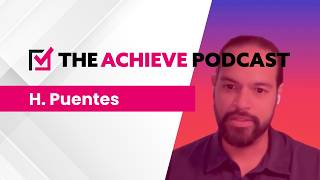
In this episode of the Achieve Podcast, host Jesse Warner interviews H. Puentes, co‑founder and president of the nonprofit San Diego Squared. Puentes explains how the organization was born out of a partnership with biotech veteran Bill Rastetter, with the mission to uncover and develop high‑potential STEM talent in high‑school and college students, especially those lacking social capital. He describes the nonprofit’s unique governance model—mirroring public‑company practices with audited finances, board committees, and charters—from its inception in 2020, arguing that strong foundations enable scalability. The conversation covers the organization’s modest size (six full‑time staff, a 14‑member board, 200 students and mentors), its funding mix of high‑net‑worth donors, corporate gifts, and growing grant work, and the ambitious plan to create a $20 million endowment to sustain long‑term operations. Puentes details program components: intensive mentorship, exposure to entrepreneurship, AI workshops, and networking events like March Mingle, positioning students to thrive amid AI‑driven uncertainty. He outlines a national scaling vision—replicating the San Diego model in other cities under a “City Squared” brand—while acknowledging constraints such as fundraising pressure and the need for sustainable financing. Finally, he shares leadership advice emphasizing authentic culture, treating all stakeholders with respect, and rigorous budget discipline, especially as AI reshapes work environments. The episode ends with a call to support San Diego Squared via its website.
Chapters
Welcome to the Achieve Podcast, the show where we highlight the leaders, creators, and entrepreneurs who are building meaningful businesses and shaping their industries. My name is Jesse Warner, and today we're excited to learn from H. Puentes, who is the co-founder and president of San Diego Squared. H, it's a pleasure to have you on the show today.
Uh, Jesse, thanks for having me. Really appreciate being here.
So our audience can get to know you a little bit, give us a quick backstory on your business. What do you do and how did it all get started?
Yeah, so San Diego Squared started about almost 6 years ago, 5 and a half years ago. I connected with a pretty iconic biotech executive in San Diego named Bill Rastetter. He's, he's most known for being the co-inventor of a cancer therapeutic called Rituxan. That cancer therapeutic essentially changed human health. My wife, who's a pharmacist, calls it the Tylenol of cancer. Essentially was the first cancer approved by the FDA to use your own immune system to fight cancer cells. And so it was a pretty landmark innovation. But Bill is a very well-respected entrepreneur here in town in San Diego. He's went on to build and grow and sell a number of different companies. And so we connected 5 and a half years ago with the vision that, you know, talent is universal, but opportunity is not. And we wanted to build an organization that was able to go hyper-local into high school and colleges, identify incredibly talented students that have shown a real passion and interest in STEM. We bring them into our programs, we make a big investment in a smaller number of students to develop that talent, and then we leverage our connections to help them find opportunities in STEM careers. The problem that we are solving is that we live in a world of referrals. And the reality is 50 to 60% of all jobs are referrals. And in, when you think about STEM companies, science, technology, engineering, mathematics, the numbers are higher. I was speaking to a company a couple weeks ago, 95% of their employees are referrals. And so if you don't know anyone, if you don't have an aunt or an uncle or a cousin, you could be super smart. You could have gone to Harvard and Yale, but if you don't know anyone, you don't have access to that company. So we are in the social capital business of helping students leverage our social capital that we synthesize for them as they pursue their careers in STEM. And the last thing I'll say is the best part about our model is we don't reinvent the wheel. We do this incredibly well globally when it comes to sports and entertainment. So Lionel Messi was found at 11 years old playing soccer in Argentina by a scout from Barcelona. LeBron James is on the COVID of Sports Illustrated in high school. Disney has built their whole empire on Selena Gomez and Britney Spears and Ryan Gosling and Justin Timberlake and Hannah Montanas. We do a phenomenal job globally when it comes to sports and entertainment of identifying young talent, developing that talent, and connecting that talent to opportunities. We take that model that has proven so successful— AAA baseball, AAU basketball, Olympics, entertainment— but we do it for students into STEM careers.
H, when did the business start? How long have you, how long you been doing this?
Yeah, so we started it, Bill and I connected in July of 2020 and our first board meeting was October of 2020, uh, and so we've been going, uh, for 5 and a half years now almost.
Talk to me a little bit about that journey. How has the business changed as it's grown and what does it look like today versus when you started?
Yeah, you know, I think for us starting the business, you know, the thing about Bill is he's on 9 boards right now. He's— he's— 4 of them are public companies. He's chair of 4 companies, very large companies. And so we run, even though we're kind of a smaller, a couple million dollar nonprofit in town, we run like a publicly traded company. And so what that means is early on, I didn't understand the emphasis that he put on good governance, right? The board structure, making sure that— I mean, we had committees, active committees on our board. We We had charters, committee charters, and, you know, at the beginning it was just us and a few board members. And I used to remember thinking to myself, my goodness, this is overkill, right? But as time has gone by, I've realized that there's a method to that madness, and that when you really get the fundamentals right at the beginning, you end up realizing that your business is built to scale. And so now when donors or funders look at the organization, we're fully audited since the very beginning, unnecessarily. Most nonprofits don't do that at the very beginning. We were doing that. Uh, and what that does is that builds a lot builds a lot of interest around what we are doing in our model, which now 6 years later really helps us and is, I think, a competitive advantage. And so, you know, I think for us that kind of making sure the foundation brick by brick was done right is kind of how, you know, has put us in this position now. And so I think that allows us to be creative around our programming and iterate and optimize and kind of learn best practices and grow from that. From there. But I think it all starts with those good fundamentals. I think oftentimes, you know, when you're starting your business, you try to kind of shortcut a little bit and kind of, you know, you know, trying to— but the reality is that shortcut now will cost you later. And if you're really trying to build a business that's scalable and a business that lasts, I think, you know, I go back to the Three Little Pigs, right? It's easy to build a house of hay and, uh, and get out there and play your fiddle, but what's really hard is to build a house of brick It takes a little bit longer, it's a little bit harder, but I promise you the big bad wolf always comes a-knockin'. And I think for us that was a really big thing is that we built by brick from the very beginning.
And how big is your team now?
So we're 6 full-time employees and we've got a board of about 14 really, really incredible board members. We work with about 200 or so students. And 200 mentors. So each of our students are paired with mentors that are executives. These are, these are mentors that currently, in while they're mentoring, sell their companies for billions of dollars. And so we've got a really influential network and community here in San Diego.
So obviously nonprofit's a little bit different than a for-profit business, right?
Yeah.
When you think about sales and marketing, uh, it's a little bit different too. Do you mostly kind of donations, or, or how does the organization fund itself, and where are you finding success in, in finding those donors?
Yeah, I think there's a lot of, uh, for sure things that are different, a lot of things that I think overlap. Um, you know, one is, I think a difference is when you are building a business in a for-profit setting, your product essentially is, is what you're selling. Uh, meaning if you have the cure to cancer or the cure to disease, it doesn't matter how good of a batter, of a CEO you are, people are going to buy it, right? And so you focus on the product and being kind of relentless and making sure that your product is addressing a problem. I think in a nonprofit, especially early on, I think it's a little bit different in that the people are the product. Eventually, um, the magnifying glass increases and you need to show impact, right? So instead of a return on an investment, donors want to see a return on impact. And that's where I think we are right now, is really showing some of the impact of our work. And so we do get, as you can imagine with the network that we have, we get a lot of donations from high net worth individuals. We get a lot of corporate donations. We were fortunate that we didn't do a lot of municipal, you know, city, state, and federal funds. We have a little bit, but I think that was cut. And so I think it's a, you know, the sales cycle or the, you know, raising money in that environment is a little bit more difficult and you need a bigger staff. So it wasn't something that we naturally went to. And now we're increasingly getting grants. And so, you know, the story comes out, you know, the people talk and in philanthropy and I think just in business more broadly, when you do good work, people want to be a part of it. When you have a problem, a product that is really addressing a problem, people will find you, you know, and if you do that good work, you know, I think where business is going right now, is especially in the age of AI, it's like you really got to show that you're solving a problem now, right? The grass is getting cut. And I think for us, we're really benefiting from that because for us, we're not a charity. We don't help students. We invest in talent. Like, and I've never met an executive that doesn't want the best talent on their team. And I think that approach has proven super successful for us here in San Diego.
And you're just investing at a much earlier age than with traditional, you know, the schooling program. You know, often you're looking at 100% here, you're looking at junior high and high school type students.
It sounds like 100%. Yeah, high school and college mostly. But the, the reality is that those are the critical parts, right? And, and, and, you know, that's where we lose a lot of talent. And I think the reality is this isn't really about diversity, or this isn't about underserved or low-income students. This is about if we're going to maintain our competitive advantages as the United States of America, which has been driven by innovation and entrepreneurship. And if you believe that the top 10% of whatever demographic— you can cut it in any way. You can say smart, you could say color, you can do it by religion, you can do it by region, ethnicity. But if you believe the way I do that the top 10% of any group that you cut is the best of the best, is super top talent, then for me, we've got to build opportunities to make sure that we are checking in every corner of our society to find the best and the brightest. And if we're gonna be the exceptional, um, leaders that we are in innovation and entrepreneurship, it's important to do that. But the reality is companies aren't built to do that. You, if you sell genomic sequencing machines, you're doing that. If you're putting satellites on a planet, that's who your job is. Your job isn't to do community work. And that's where a model like San Diego Squared really fits nicely. It's an elegant solution because it allows companies you're an HVAC company, you're a plumber, whatever the company you're doing, it allows you to focus on your core competence and your work and building your business, but creates an opportunity for you to efficiently and effectively identify talent and connect with talent in a meaningful way that allows you to help your bottom line. And so I think that's why we've been so successful at San Diego Square.
Hey, so there's a lot of buzz around AI and automation right now.
Yeah.
How is your organization using AI today?
Yeah, I mean, I think obviously there's the internal sort of simple kind of tools around, you know, the cloud and ChatGPT and the staff is on there and we fund that and we make sure and we encourage it, right? I think early on people were like, ooh, you're using AI, it's kind of like cheating. And for me it's always been, uh, you should be at the forefront. I want you to be more efficient in what you do. I think the really interesting part is how are we making sure our students are prepared for this next world. And I think anybody who tells you what— that they know what's going to happen is probably a little going to be off. And I think they just think they know, but the reality is we— no one knows. They don't know how this is going to turn out. And when you don't know how something's going to turn out, then I think you got to prepare people to be prepared for uncertainty. And so at San Diego Squared, with our students, one of the biggest things— and I think it's relevant to your podcast— is the principles of entrepreneurship. Our students visit early-stage companies. Our students think through lean methodology and iteration. Our students really are, you know, actually students today are going to a startup event in San Diego called March Mingle. There's like 500 entrepreneurs come out to that event. We purchased dozens and dozens of tickets to make it free for our students. So they're interacting early because I think our students are going to need entrepreneurial skills to address whatever may come. The second thing is we have students that are learning AI, right? So we meet with AI companies where students— I mean, we met a company called Impressive AI here in town and they actually like helped our students build AI agents. So making sure that students aren't kind of like uncomfortable with the technology and are making sure that they're at the forefront of like playing with it and practicing. And then the third piece that I think prepares our students and I think people should be looking at is networks. At the end of the day, we're all humans, we're social beings. We're gonna take care of ours, we're gonna take care of our families, we're gonna take care of our friends, we're gonna take care of networks. So how are you getting out there and networking? How are you building your community? Whether it's through, you know, things that, you know, hobbies that you have, sports, whether through your religious or belief organizations, whether it's through your like, you know, company kind of industry-focused communities. We help our students, really encourage them to build their networks because no matter what happens, you're going to get your job from someone you know. You're going to need to leverage that relationship with somebody. And so having the skills and the faculty, the ability to go into any environment and build a relationship, I think in the age of AI, that's going to be a special, special talent. And so we're making sure that our students have those skills so that whatever comes out of this AI, If you have the entrepreneurial skills and the fundamentals, if you have been like playing with AI and building agents and just messing around with it and feel comfortable around it and you have those networks, you're going to be, I think, 90% better than anyone else because most people aren't doing those 3 things. And the reality is something's coming and I'm not sure what it is, but we're going to make sure that our students are prepared for it.
As you try to scale, what have been some of the constraints that keep showing up? Where do you keep bumping into walls as you try to scale?
Yeah, I think the big thing is we're about to embark on a really big ambitious goal of a $20 million endowment. I think the reality is for nonprofits, one of the things that's the biggest issue is sustainability, right? How do you make sure that, that if you tell a student in junior high that you're gonna be there for them, you know, after graduation and through medical school, that's an 8, 9, 10-year commitment. And at the end of the day, we run, like I said, about a $2 million budget. You know, that's, you know, $150,000 a month. That's, you know, $40,000 a week. That's $7,000 a day that I have to fundraise, right? Did I raise $7,000 today? I came up short, Jesse, you know? And so the reality is, how do we get out of that cycle? And I'm a massive proponent that nonprofits should be thinking about sustainability first. I think there's a lot of people that have passion and they want to go into nonprofits because they have these massive hearts. And that's great, but the reality is this is where you gotta have your business mind. This is where you have to understand like, how am I gonna build sustainability? So a big part of that for us is an endowment that generates anywhere between 50 to 60% of our operating costs through the interest earned from that endowment. And so we're about to embark on that. And that's a massive challenge. You know, I don't think, you know, that isn't the standard right now in philanthropy. Right now people want to invest in organizations and they wanna see their money work immediately. And I get it. But the reality is we've got a lot of problems that are systemic, and systemic problems require systemic solutions. And that means you have to have sustainability. You have to have the ability to withstand the test of time. And so for me, that's, that's the big one that keeps me up. The other thing is when we think about scaling, San Diego Squared has always been built to be a national model. What I mean by that is, you know, we identify talent develop that talent through our programs, connect that talent to opportunities in STEM. And so, you know, the idea is that there's talent everywhere in all cities. And so we've built a model in San Diego with, from the very beginning, with the intention to scale nationally. So you can imagine San Bay squared, Atlanta squared, New York squared, Houston squared, Boston squared. And then we're build a national network of organizations that are identifying talent, developing that talent, and connecting that talent to our most innovative companies addressing our most complex issues. So for me, those are the 2 things that are, you know, keep me up at night. It's like, hey, how do we build the sustainability? And that's $20 million, and that's a big lift, you know, that's a crazy lift for a nonprofit, you know, 5 and a half years old. But I believe we can do it, and, and I believe strongly that it is a requirement and that it is up to the founding team to make that happen. And the second is, I think we are always conscious to build a model that while we're hyperlocal in San Diego, we're building a model that's scalable nationally because The thirst and the need and the desire for great talent is not just local to San Diego. That's a national and global thing that we should really be thinking about.
I love the passion with which you're talking. Clearly, this is a cause that is important to you and you devote a lot of time to it. As you look toward the next stage of growth, what are you most excited about?
You know, like I said, I think You know, we've had some really great conversations and, you know, I'm obviously excited about taking on ambitious goals, right? I mean, I think, you know, Bill has taught me that, you know, you got to think big. And the board that we have pushes us to think big. And I think that's pretty incredible. But for me, the number one thing is these students. I can't tell you like how much talent is out there. And how inspirational that talent is. We've got students out there that are facing real adversity and overcoming it with very little. You know, students that are going to Dartmouth and have single moms that are nail technicians and just like overcoming so much adversity. We have students that are just, you know, deep in the data science and AI with not an aunt or an uncle or a cousin for generations in sight, even near. Those industries. And so what excites me most is just the ability for us to go out there and find some unbelievable talent. And, you know, I think it's easy to look around and see so many challenges that we face that are at a scale that can feel overwhelming. Right. You know, whether it's, you know, you name it. I mean, just turn on your TV. I don't even need to go down that road. It can feel very overwhelming. But when you meet these students And when you see the level of talent that's out there and how much grit and desire and passion that they have and the unintended consequences that happen when you invest in people, to me, it's just, that's, that's what excites me. That's what I'm looking forward to is just the kind of second order impact that happens when you invest in talent and then they then invest in their communities and they inspire other people to get involved and they inspire other people to rise up to the occasion. And I think, I think we need to do that more if we're going to address— it's all going to start with the people, and we're at the front line of that, and that excites me a lot.
All right, last question for you. What advice would you give to other leaders or entrepreneurs who are on a similar journey to you? Yeah, some of the lessons you've learned along the way.
Yeah, you know, I've got a, I've got a, I guess, a number of them, right? I think Authenticity is really important. You know, I think being yourself and being authentic is really important. I also think as leaders, just more practical, I think I look, I look at my role as CEO is really two things. One is culture and the other is I manage a budget. And I think on the culture side, it's culture is kind of easy. It's how you treat people. And I think how you treat those on your own team, it starts there. How you treat yourself. Are you investing in yourself? Are you, are you thinking about your health? Are you thinking about your family? Are you— how are you treating those you interact with? How are you treating the janitor that's cleaning your office? All of that stuff. People are looking at everything you do and they're listening to nothing you say. And so as a CEO and as a leader, the biggest thing that I learned is it's really important to be mindful of culture. That is your job and you have to live it. And whatever culture you have in your organization, as a leader, you're responsible for it. I guarantee it. You should— I can go into your office, I can feel the culture, I can see the culture. And I promise you, all roads lead to Rome. They're gonna lead to you. And so really putting some awareness around that, I think leaders oftentimes don't think about that. And in the age of AI and with the younger and younger generations that are starting to take up roles and sort of the baby boomers that, you know, are, are retiring, culture is gonna be increasingly important and you can't be flippant about it. That doesn't mean that you can't have a culture of excellence, right? The standard is the standard. You need employees to understand that excellence should be paramount. That's what we do with our students. We don't keep students to students. If there's a student that's not delivering and not meeting the, the expectations, we don't keep them. So this isn't about charity, right? This isn't about making it easy for people, but it is about culture. The second is your budget. I think too oftentimes people think of budget and the kind of the budget cycle is just an exercise. And I think I learned that a lot from Bill and the board that that if you show me your budget, I see your strategy, I see your vision, I see what you execute, I see your problems, I see your opportunities. And I think oftentimes, you know, leaders, we just kind of like going from month to month trying to make it work and do it. And we're not thinking the big picture around budget. And I think it's just such a missed opportunity. And mind you, I'm not a finance guy. I'm not like— that's not— but I've learned to be one. And it is one of the most powerful things, um, is your budget. In, in there lies everything you need to know. And I think everything where you want to take it. So my advice is those two things, right? As leaders is really think about the culture that you're setting, especially in the age of AI, that authenticity culture's gonna be so much more important. You, you're gonna be able to get employees to do more with less if they feel inspired, if they feel connected. And the second is the budget. If you're really disciplined about your budget and you understand, you know, how it works and you really, you know, budget to actuals and really focus on that, I think you're going to be a really great leader. I think those two things are super, super important.
Well, H, thank you again for sharing your story with us, your insights. Fantastic conversation. Love what you're doing. Love the mission behind what you're doing. Congratulations on the growth. So many good things about what you're doing. For those listening, if you want to learn more about San Diego Squared and what H and his team are doing, I would encourage you to visit SD2, the number 2,.org, and you can learn more about his— their nonprofit organization and help them take it to the world, right?
Let's go! That's right, Jesse. Thank you for lifting our voice, and thank for this opportunity. You know, there's a, uh, there's a big need for what you're doing and you're out here lifting a lot of people's voices. Uh, and so thank you so much for doing that for us, for our students, for our community. It means a lot. Thank you.
Well, that will wrap up today's episode of the Achieve Podcast. A big thank you to our sponsor Achieve Fractional, which provides fractional executives for growing businesses. And if you enjoyed today's conversation, follow the show, share with another entrepreneur who'd also find value in it. And again, thank you for listening, and we'll see you on the next episode of the Achieve Podcast.









