The Achieve Podcast - Jag Prakasam (Qdeck)
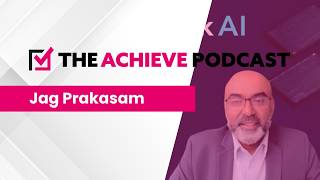
In this episode of the Achieve Podcast, host Taylor Baker interviews Jag Prakasam, CEO of QDEC, about the company’s evolution from a hedge‑fund‑focused AI research team to a provider of AI‑driven “outcome‑as‑a‑service” solutions for wealth‑management firms. Prakasam explains how two decades of neural‑net and machine‑learning work positioned QDEC to address a macro‑level shift: a $80‑$100 trillion generational wealth transfer coupled with a looming advisor shortage in the United States. He describes the firm’s lean 12‑person team, its Agent Studio platform that lets advisors launch custom AI agents, and its business model that includes OEM/white‑label partnerships and a focus on delivering outcomes rather than traditional SaaS. Security and compliance (SOC 2 Type II, data custody, rapid SLA response) are highlighted as critical trust factors for fiduciary clients. The conversation also covers QDEC’s marketing narrative—meeting clients “where they are” (Uber analogy)—and the challenges of long enterprise sales cycles versus mid‑market adoption. Looking ahead, Prakasam emphasizes making custom‑agent deployment faster, reducing AI energy footprints, and enabling on‑device models to lower costs and improve data security.
Chapters
Welcome to another episode of the Achieve Podcast, the show where we highlight leaders, creators, and entrepreneurs—those who are building meaningful businesses, shaping their industries, and having an impact. I'm Taylor Baker Baker, your host, and excited today to be joined by Jag Parakh Sam. Did I say that right?
That's perfect.
Wonderful. CEO of QDEC. And you can find them at QDEC.AI. So Jag, thank you for coming on and joining us today. Thanks a lot, Taylor Baker Baker.
Thanks a lot for having me on your podcast.
No, my pleasure. I know we've tried to schedule things a few times. So for those getting to know you and the company, what you guys do, give us the backstory real quick on how you got into the space and who you're currently serving.
Absolutely. We are squarely in the wealth advisory space, the wealth management space. And the background goes back, maybe the inception of this was maybe the idea was over 20 years in the making. And sometimes, you know, you only connect the dots looking backwards. And, you know, at the time you don't realize it. So myself and the team itself, our background is in hedge funds and we originally, were part of a hedge fund for 20+ years, and I was the second CEO and CIO of the hedge fund. And we started deploying neural nets way back in the mid-2000s for a variety of different use cases. We went through random forests, all kinds of AI and ML algorithms, right? Now, people, your listeners probably can relate to it, you know, Markov chains, natural language processors, where we looked at real-time unstructured data to make investment decisions on, hey, what is the market sentiment right now? What is the risk picture right now based on publicly available news sources? But it was an efficient architecture to consume them and extract that signal to augment are time series-based models, right? So that was our knitting. You know, we were seeded by really large investors. We managed, you know, over a billion plus, close to 2 billion in assets. The set of investors changed over a period of time after the financial crisis and things like that, you know, but our returns were really good during the financial crisis as well. And what we noticed is that we were continuously able to innovate in that area. We operated more like a research think tank, more than a product manufacturer, you know, like an ETF or a mutual fund manufacturer. We were more focused on innovation. And I'll give credit to the whole team and everybody, you know, As much as I led the team, I felt lucky to be part of that club, you know, to have that opportunity to do that, honestly. And fast forward to 2018, you know, we are headquartered out of Seattle, Washington, and Microsoft decided to drop $10 billion into OpenAI, which was a big moment in the space. And one of the things that we recognized is that we had done so much diligent work on these AI and ML frameworks because we were making investment decisions that we might be able to create something really valuable in the wealth management space. You know, the reason we didn't go after hedge funds that we were very comfortable with, familiar with in terms of how we did it was hedge funds are the worst clients you can have. And I apologize to anyone who thinks otherwise, right? So, and the reason is they are, We know that because we were one of them, right? We always wanted it to be proprietary tech. We didn't really want it to be, you know, we never wanted to get anything off the shelf. We had a large development team, an IT team to actually develop it, right? So I said, I want to go sell to that club. And I tell you that it's going to be frustrating. Let's go to the wealth management space because they are more likely, they're investment professionals first. They're not technologists. Typically, they do not have a deep technology team and are willing to adopt technology, you know, off the shelf or technology and customize it to their use case. And so what we did is we looked at this AI moment and said, you know, where do the lines, you know, what is the opportunity here? And one of the biggest things that we found, and this is a larger trend, a macro trend that we are in the middle of, and it started then, I'm saying then as in like 2019, 2020, where there's a massive generational wealth transfer. It's close to $80 to $100 trillion from one generation to the next. It goes from many times, it's going to women first, the spouses or what have you, and then to the kids, right? And the kids are already involved in the decision-making for their parents. And, you know, there is a— McKinsey came out with a study about a year ago, and I think they refreshed that study this year even, that there is going to be 100,000 advisor shortage in the US because over the next 10 years, because imagine this, the average age of an advisor in the US is 55. 26% of them are over 65. So they are also getting out of the business, but there are not enough people getting into the business at that rate, right? And so the existing ones, many a times, you know, an advisory business is actually a It's actually a startup in itself, or their exit is to sell that business. They try to build valuation in the business. Their exit is actually to sell that advisory business, right? And they can't just sell it overnight to anyone. It's not something that like a tech startup, you have a valuation and you try to list it, or they can actually go public with that sort of a business. Advisory businesses are not at that scale to do an IPO. So their only exit is acquisition. So it's not something that happens at a scale. So imagine that they're going through their own transition. They're given their age and demographics. They're also sort of exiting the business. And, you know, this massive wealth transfer is happening. Added to that, The expectation is that we are going to, the advisory business is going to manage an additional $20 trillion in the next 10 years coming in over and above that, right? So you see the confluence of things happening here. And so one of the challenges that we noticed on talking to advisors, right? So we were lucky even during COVID when the world was sort of shut, we had these online podcast kind of things. So we ran a webinar series called QCast. We ran it every 6 weeks. And while we were running the hedge fund to do the market research, right? So we were trying to understand our client better. And out of that, we were fortunate to convince 200 advisory firms to actually talk to us. And show us their process, talk to us about their clients, the tech stack. What is their problem? How do you solve this? We could see it in the data, but then we wanted to actually validate it with a practitioner, right? And out of that, we recruited 3 advisors. One is a $200 million advisory firm. One is a $2 billion advisory firm and another one was a little much larger than that. And their CIOs and founders were really sort of helpful in informing our sort of product roadmap, the solution that we build and things like that. And what we really found is they expressed something that we suspected is that the next generation is nothing. Like the parents' generation. Yeah. So what, like 60 years since advisory business the way we know it was created? This is a client I've never seen before. All right. Yeah. They are digital natives. They love self-service transaction models. They want hyper-personalization, but they're very cost sensitive because you know what? They have so many other options hitting them on the self-service transaction model that they can go do it themselves, right? Yeah. And the LLMs and what we see with OpenAI and Claude and everything is actually propagating that. It's appealing to that. It's pandering to them. It's saying, hey guys, you can do it yourself. You know? Yeah. Every new feature that comes out by any of these large language models is basically telling that generation that, hey, fire your provider. You don't need an expert, I will make you an expert. So imagine this, and this has only become worse from the time we started this sort of trend and, you know, it's only become worse. So this is where they came in and said, hey, this is, We need help because if we had to really deliver, you know, this kind of hyper-personalized advice at scale, we cannot do it with the number of employees. Our profitability is going to drop dramatically. We would have to, with existing framework that we have, we would have to hire a whole suite of employees, but then it's not a profitable business anymore. And we are destroying value of our business. At that point, right? So that is when we figured out actually the type of AI infrastructure that we should create for them. It was a no-brainer because AI agents are the employee that doesn't complain and works 24/7 for you and, and helps you hyperscale. Yeah, industry that is having a shortage of labor, right? It's a different thing if you're using AI in a place where there's abundant labor and you're— we're not talking about laying off anybody. We are talking about actually helping these guys build value in their business and survive and hyperscale and actually compete with the newer new age competitors who are coming out, right? I love that. Yeah. So that is how we sort of, you know, conceptualize this idea. And there was another important piece that came out of that whole analysis, which— see, it doesn't matter if you're a JPMorgan advisor or Morgan Stanley or the ABC advisor down the street, an independent advisor down the street, right? They always held the last mile trust with their client. It's not the brand, it's not anything, it's the last mile trust. The client always knew their advisor. They would call them for everything, even unrelated to financial advice, because that is your first call. Because they are not— they don't bill you by 6-minute increments like your attorney. So they land up being your first call saying, hey, can you help me out with this? You know, they want to— somebody has a collectible collection of cards or something. And they say, "I want to move across the country. Can you help me with a recommendation on whom I should be using?" Guess what? They go to their advisor. They don't go anywhere else. They go to their advisor. It's almost like a concierge sort of service. The advisory firm is like a catch-all sometimes in many cases. They're like a mini family office for you to sort of help with everything, or they make an introduction to the appropriate, you know, service providers, things like that. And that is where what they told me is, all this is great, AI and everything is great, but if that turns out to be something that I cannot trust, I'm never going to roll the dice on it. So they were extremely AI curious, But they were in the early days, they were also AI shy. Yes. Right. And I get it because for them it was a bigger impact. You know, if there is an error, there is some sort of data, you know, data is compromised or client data is out there or someone's financials is out there, you know, they're going to lose the business. It's not— they're not going to lose one client. They're going to lose the business. right? They cannot afford bad press. You know, most people are worried about their credit score. Imagine if your whole, like, net worth was dependent on it and your whole firm was dependent on it. It's almost like, you know, their credit score, and that will affect their ability to sell their business in the future, attract new clients, referrals, what have you, right? So that we recognize that when we were building the solution are, that is going to be key. Yes.
You know, so how big is the team and organization right now?
So we are actually like every AI firm, we are super lean. We are 12 of us. Okay. But the beauty is our clients service, you know, the end-to-end client markets. They service 10,000 or 15,000 advisors out there and things like that. But we are able to scale with our own technologies, right? So we work more, we go after enterprises. We are like an OEM partner. We power other enterprises. And even with the advisors, we have these agent studios that they can, you know, We help them sort of map their business out. But in terms of like, that's the advantage of using these AI agents and things like that is that you don't need a lot of people in the mix to deliver that software or create that software, right? Unlike maybe even 2 years ago or 5 years ago or 10 years ago. And that's one of the reasons, you know, like, large companies are at risk many a times because they're saying, hey, now in some sense, AI is sort of democratized that access, access to financial advice, access to technology, access to infrastructure. You know, it's kind of democratized it. So an advisor who is, let's say, a $2 billion advisor can easily compete with a $100 billion advisor or $200. You know, the advantage before was, hey, I have 100 analysts who sit and only think about the markets. You know, that was your like, like 2 floors in Midtown Manhattan. They sat there and they sort of, you know, that was their claim to fame, right? So they would say, hey, whether the advice was great or not, it doesn't matter. But it was just like you felt as a client of the advisor, you know, I, I have like these guys have 100, you know, researchers looking at the markets for me. But now we've created a piece of technology, enabled it where they can have 1,000 agents working on whatever they want overnight and get a result. Actually, 2 agents is gonna Their result is way better and faster than anything that a group of teams of hundreds of researchers can come together and agree on. And actually, you know, it's a challenge getting people to actually agree on because, you know, many times logical decision-making is also influenced by people's own life experiences, biases and things like that. It's not coldly data-driven and logical, but what the AI agents can help you do is make that extremely data-driven, you know, cold and calculated clinical decision-making ability, right? And, and so in some sense, it's democratized that whole aspect. And you're going to see that, you know, you're going to see smaller firms come out and challenge the players. Bigger players. And that's one of the reasons you see— I mean, you see even Meta. I think I saw a news article this morning as I was, um, you know, Meta is trying— I don't know, they laid off like 8,000 people or something like that. And I was thinking about it. I said, well, you lay off 8,000 people and you claim that you're actually going to do things better? And I was wondering— and they're all perfectly competent and accomplished people in their own right. And I don't know what divisions they're doing it in, but it also tells you that sometimes either you don't have a way to scale them to create even more growth and value for the company, that's one. Second is when you put too many people in the decision loop, nothing gets done. So in a way, they're trying to take out the red tape out of it, right? So I can see that being a thing because now they're trying to compete with the smaller challengers who are coming in and saying, hey, you know what? I can deliver it and I can deliver it at a cost far cheaper than those guys because I don't have the burden of carrying this much of payroll on my balance sheet, right? So— Wow. So this is a trend we're going to see. It's just going to be disruptive. Quite a bit, I believe.
I agree. I definitely see that and you've laid it out very, very well. So when it comes to your messaging and outreach, your marketing systems, what's been working well for you guys to attract and to retain good clients and customers?
Yeah. So see, when someone goes, you know, in the old days you subscribe to a SaaS software, they tell you, you know, I give a lot of credit to to someone like Salesforce. And, you know, when Marc Benioff came out with that, I read all of his books and it's a fascinating read, you know. In the late '90s, when they came out and said, you don't need a desktop implementation, here you go, you know, it's the untold story of the cloud or whatever. In that book, he talks about it, you know, he claims that they invented software as a service. And let's take take for example that is the case. I actually don't know if that is true, but it's believable, right? Like, so, and if you looked at all the companies that came after that, software as a service, basically it was not, I believe that it's sort of a little bit of a misnomer because it was your software in the cloud, right? So you could basically access it via a browser and you didn't need hardware in that, but still you had to fit your business into their product. They'll tell you, hey, this is how the product works, fit your business into it. You're not getting any customization. This is, you know, for the average person, right? Like the, for the mid-size, mid to small size company or, or individual, You're not— I'm not customizing it for you. You fit into my worldview. Okay. Software as a service, right? Yeah. Going to step into the AI world. Why is AI challenging software as a service? Why SaaS companies are thinking, man, this is rough? Because AI, what we use AI for and what we offer, and this is our pitch every single time, is we are outcome as a service. That's it. We will meet you where you are at, and that's what everybody wants at the end of the day. They want to feel special about it. They want to say, hey, this is how I do my business. There's a reason I do it the way I do it. There's a reason where I live. There are a multitude of factors as to why I am where I am, or where I live, or what— how I do my business. Can you meet me where I am? So this is what the earliest— one of the biggest companies that we know of understood it really well before the AI, uh, you know, sort of revolution happened. You know that, you know, can you guess the name of the company?
Um, running blank right now.
Uber. Okay. Uber did the simplest thing, right? In the old days, if you and I had to go get a cab, we would say, okay, let's go, go to a hotel, uh, location, or a train station, or a bus station, whatever it is, and say, let's flag down a cab, or there's a cab stand there, I know of it, and I'll, I'll go, I'll walk down there and try to get, get hold of a cab. Or you had to call in a black cab, right? Yeah. But they made it simple. The simplest thing that they invented. They did not own the fleet. They did not own the drivers. They didn't do anything. All they did is they said, "I'll meet you where you are. You don't need to do a thing. I don't need you to move. I don't need you to fit into my worldview. I will meet you where you are. You tell me where you are and I'll come meet you there." And sometimes you see the route, the cab driver is driving like 10 minutes to get to you and then take you. It didn't matter. In the larger scheme of things, but it was a beautiful experience. And everybody said, you know what, I don't need to worry about it. It goes out of my— you know, the payment was made simple. All of that are, you know, nice to have and, and all that. But the simplest thing that is most appealing about Uber is that they meet me where I am, no matter where I am. And it's fantastic, right? Right? And this is what AI does to people, right? This is what AI startups are doing. This is what AI companies are doing. Because it's— when a client comes to us, they already assume that we will meet them where they are. I don't care how big or small they are. They could be a fractional person, and you probably see that in, in some of your businesses. They're saying, hey, meet me where I am. Don't tell me to change things. Don't tell me I gotta into this. Don't tell me I gotta like, you know, change my CRM or change my, you know, subscription. I gotta get on, you know, Google Mail versus Office 365. Not all of that. I just want you to meet me where I am. Yeah. And this is what— this is the beauty of how the world is moving towards, right? And this is what the sooner the companies understand, and this is where SaaS companies are struggling with because now they gotta take that their existing architecture, which forced people into coming into their worldview and saying, no, no, no, I got to make it flexible enough to sort of, you know, give them that optionality, right? Wow. Yeah.
Um, so where do you still see more opportunity on the table when it comes to sales and marketing with what you're doing?
You know, the— I, I, I really think that, see, once you get to the outcome as a service, what you're selling is a framework that, that, you know, really what we are doing is we are selling a framework. We are saying, hey, here it is out of the box. Here are a bunch of agents. We tell you how they work. And many a time, sometimes, you know, a client comes in, they say, okay, I've heard all these great things about AI doing this and that and everything else. And how do I do this? You know, like, what should I be looking at? And sometimes they kind of like come in with a super open book, like, you know, it's actually, uh, interesting. But the more they understand how we could use AI, they say, ah, that is possible, I had no idea that is possible. And sometimes the client also, the, the older the company, the client also comes in with these goggles of SaaS, right? And then they go like, oh, so you're saying I'm not limited to doing this? You're saying I can throw any document into your service and not worry about it, right? And so this is what, like, you know, all the— are the large language model companies, whether it be Claude, OpenAI, whatever, has sort of tapped into that and are actually helping our case many times and sort of propagating that idea. But there are risks to that approach, you know. So I'll tell you what the risks are, is that they have sold, um, every non-technologist even, right, to say, hey, you can get on my platform and overnight build a software, you know what I mean? Do it yourself. They've made so many DIY people, you know, like I can assure you, you know, everything, like even, you know, my wife has prevented me. She has a ban on me from doing any DIY projects in the house, even like hammering a nail into the wall. She's just like, we're getting a handyman to do that. Whenever you hammer a nail, it's never one hole in that wall. There are at least 3 holes because you didn't get the height right or you didn't get the right card or whatever it is, I am going to get— and, or, or you nailed some electrical wire, something somewhere, you know, I'm going to get someone, the professional, to do it. And this is where I, I draw that analogy, because as much as people like— if you want to track your stock portfolio and you created a little cloud app over the weekend and you can track your little portfolio, it's fun, okay? You can, you feel a sense of accomplishment. You say, hey, I built my own little software. But when you go in the enterprise level, right, what is really important is that, you know, data security, data custody, where is your data going? Like, for example, we are SOC 2 Type 2 compliant. Most firms that are trying to build their own software who work in fiduciary sensitive industries, may healthcare or financial services or legal will not be able to achieve SOC 2 Type 2 compliance because of their business, but they can pick a vendor who's SOC 2 Type 2 compliant, which is, which is huge because we have so many different controls on the way we operate, from the way we upload code, the way we make updates. That is phenomenal, right? The other is what they don't realize is It's not about building things, it's also about supporting them on an ongoing basis, supporting them for your clients. You know, we offer a 4-hour service level agreement, right? So that means within 4 hours we will address any issue that comes that hits you. Hours, right? Within 4 hours, right? And then if it is super non-critical or something bigger, you know, we have a 24-hour SLA. But then for most critical activities, it's 4 hours. But imagine that. Do you want to be on the hook? You created it, great. You know, you're a half-baked technologist or you have an interest in technology, but not really, you know, built software before. You built it out. Your boss loves you for this. And the first instance it doesn't work, they're going to call you and say, hey, can you change? Now you're looking at it and saying, man, why am I on the hook for this? You know, I created it. It was cool or whatever. Right. And I'm beginning to see that already, like that hype sort of people who did that coming back to us and said, this is what I created. Can you just like recreate it in your worldview and support it? Like, take it, right? Yep. Yeah, exactly right. Like you don't, because in a wealth advisory business, your clients are not you to create software, right? Sure, you might improve your profitability a little bit and all that, but Your clients are saying, make better investment decisions, make my returns go higher, make me wealthy. Yep, that's it right there. If you take your resources and spend it and your time and money on creating something like a software that you're not actually— that was not your mandate and that's not the reason you exist. It's going to, it's going to be problematic. It's, it's not going to give you an outcome that you think, you know, you, you expect. Your clients are not going to be happy with it, you know. Even if you succeed in it, your clients are not going to be happy with it.
And to your point, one of the big concerns is rising more and more is the security aspect of it, where before you're like, I'll see my bank statements and upload them to ChatGPT and it'll spew out whatever. It's like That's public, like, you can't just do that.
Exactly. And even if they say it's anonymized and this and that, that's not what you said you would do. That's not the expectation. If I knew my banker was putting my stuff, you know, into Google or sending it in an unsecure way to people around, I'm going to be upset about it because you know what, I mean, I'd be, It may not be a problem today, in 6 months, but in 3 years my whole profile is hacked and, you know, Tom, Dick, and Harry has borrowed money under my name and I don't even know about it, right? And this could be a nightmare. And that's where it's very important, as much as there's excitement, it's great to like use these services to say, hey, this is what I want. Actually, it's great to tell us that, you know, you say, hey, this is my product, this is where I want you to meet me, this is the type of service I want, but I want you to build it, support it, and manage it, right? Yes. And, and, and this is where we have tried to educate them on that process, and we are already seeing people sort of on the other end of it, because ultimately you need to understand as a software firm We know our mandate. We create software. That's what we do. But yeah, it's a fiduciary as an investment firm, as a healthcare provider, as a legal person, that's not your mandate. So it's a balance. And then there are some little things you can do that you want, maybe, you know, you want to automate low-risk stuff. But for the most part, I wouldn't recommend getting into that. I would rather transfer that risk to a dedicated team, um, and have them do it because that's all they do, you know, that's what they're defined by.
So, Jack, when you think about the future of the business and the trajectory you're on, if you had to focus on one constraint to solve over the next 90 days, what would it be?
Man, you put me on the spot. So the biggest thing that we are focused on is to make the ability to launch these custom agents really easy because when you go into outcome-as-a-service world, businesses are so diverse. There are knickknacks there that they operate a little differently. There's a reason they picked this provider for this and that provider for that, because, you know, the employee has a relationship with the founder of the company or something like that. You know, there's this whole bunch of intricacies that are there. So what we're trying to do is essentially giving them that flexibility, but getting them to come on our Agent Studio and say, hey, I can launch my own agent. This is, this is how I want to do it. Go ahead and do it, right? So essentially what we're trying to say is, let me— not only do I get you the outcome you want, but I want to give it to you fast, really quickly. That way you don't feel like, okay, anytime I want a new, new change in process or feature or what have you, I gotta wait like 6 months. So there's that, you know, and unfortunately with all these LLMs, the expectation is like, oh, of course you can create it, like you can create the world in, you know, like 24 hours, you know, there's this whole thing. And because of that, also playing into that sort of psyche that's, you know, turning around, We are trying to get to that, that point. And to that end, we've launched, you know, a lot more agents. We've been testing these things with clients saying, okay, does this meet, uh, you know, this is something that you're able to create the software process on our Agent Studio with all the controls, the SOC controls and all of it, and then go ahead and, you know, deliver it. So that, so that's, that's been our big big sort of focus, and we're watching the performance of it as well. You know, like, ultimately we can't just be 50% right, we have to be 100% right, otherwise the verification tax is too much.
Yeah. So, so when you look at your own journey, the wins, the mistakes, what lessons stand out to you?
I would say, you know, in terms of the wins, I'd say we were really fortunate to have caught the AI trend. And also because we had never thought of monetizing all of our sort of research and technology and things like that, that sort of, we built that knowledge base over, you know, close to 2 decades. And so I think from a win standpoint, we evolved a lot. We learned a lot from our customers and how, you know, what we are doing. I think the evolutionary part was fantastic. I was really happy about that. We are on track with that. Some of the, if I would have done it differently, you know, like I wouldn't say it's a, if I would have done it differently, the challenge I've had is with enterprise sales. Honestly, it's like with OEM partnerships, what have you, you know, typically it's a known fact that it takes 18 months before an enterprise would sign. And, you know, it's just like a lot of stakeholders and stuff like that. What I have found is as much as we have a lot of logos and a lot more bigger enterprises sort of doing tech stack reviews for us and approving us and things like that, they There is a little bit of stress in, in midsize and, and larger enterprise between build versus buy. Okay, they have their own tech teams internally. They are not AI native. They are— they have all put on their training wheels a little bit, and they're all trying to learn this AI and deliver a product. And then here comes a vendor who says, I'm AI native, I have patents that provide the ultimate audit trail in the business awarded to me. And here you go, when I go in there with that whole, you know, deep thought process and the, you know, the audit trails and things like that, and it's taken us considerable amount of research to arrive and, you know, convince fiduciaries that they have a very stable, transparent, auditable AI system, uh, they want to do it themselves. They think, oh, okay, if a startup can do it, can, can I, can our team take a stab at it? And so that causes friction and stress. They're all wonderful people. It's not that, it's just like, again, like I said, is that your mandate or not? And, and, and I get it, you know, sometimes technologists in these larger mid-sized firms, they feel like I should be part of the equation here in the AI deployment space, right? So I think I would have, if I would've known that a little better looking back in time, I might have gone after smaller clients because they don't have that interest. They're like, I'm great, I can use it today, I can make an impact in my business. In the next month, 2 months, 3 months, great, I'll do it. But enterprise, there's always that constant sort of, so that's why the enterprise sales cycle sometimes goes longer than 18 months because it's like they try that out, they try to learn, they try to sort of, you know, window shop with you and see, can I build it myself? Then they try it out and then it doesn't work out or something like that happens. They're not able to figure it out. Then they come back You know, so there's this constant sort of cycle. And now, to be honest, if you're a much bigger bank or something like that, I'm very apprehensive. I just go like, what do you exactly— what is the problem you're looking to solve exactly? I'm not— previously I was more naive. I would show off every, you know, every aspect of our platform and say, oh, you know, we're so geeked about this. And stuff like that. They look at it and then go back and then not call me for 6 months. And then I see that they're trying to build something on their own, and then they come back to us like 6 to 12 months and again window shop with you, you know. So I'm just like, hey man, you know, it's like, I don't want to be the, you know, showroom for you to inform your product roadmap, right? Sometimes it's the product folks who come because they don't see— they're so also new to this change that they don't have a product vision. They're looking at all these startups and trying to come up with a product vision. Yeah, this is— so there are many times it's not real. And, and, and this has been a big learning for me, and I'm still learning which is real, which is not. Like, which is that company that is looking to do a deal with us, and which is, which is that company, even though they're a big name and you feel like, oh, I got to, of course, I'm talking to XYZ and they're, you know, on the S&P 500. They may not necessarily be a client and there's no value in it to say, you're just helping them build their product roadmap, but there's no value in it. Even though you get to say, hey, I was in the room with XYZ and they want to talk to us. You know, it makes for good sort of maybe, you know, investor pitch, but it's not real. What about white labeling?
And so have you found a lot of interest in that?
Yeah. So that's where we found like the mid-sized companies are willing to white label, which is great. We white label all the time. It's great. See, if you're using my tech, I don't— I'm not looking, you know, I don't mind. I'm the Intel Inside model for us. Right? So you can be Apple, you can be Dell, you can be Microsoft or whatever, it doesn't matter. But I'm the Intel inside for you, right? Yeah. And if you're willing to participate, use me for that and leave me to do me, whatever it is, that's great. I don't mind white labeling it. It's, it's great. I actually love that model. They do the distribution, the sales, the marketing, all of it. I just power them and I actually enjoy that. I'm trying to be lean here, Taylor. Jag, last question for you.
When you think about the next stages of the business, what are you most excited about?
You know, I really think that we are going to have all these services get really good. At how we roll them out. So for example, right now there's a lot of energy credits being spent on all these AI outcomes. When you think about it, this is a huge dragon. And what I'm really excited about is, you know, even if you see the new— I think the new CEO of Apple, he's a hardware guy. And I think where that vision is going is they think that you can now launch everything on your MacBook. You can have your own large language model, you can have more data security. It can be, you know, for the types of outcomes you're trying to achieve, you might have more, more control on your data and environment in, in a very small footprint. Yeah. You know, and, and that's where I'm excited to see that shrink rather than saying I gotta send it all to the cloud and I gotta send it all to this data farm somewhere, which I need all those resources, right? I think on a macro level, I think if we can achieve these AI outcomes with a lot less energy spent, and this happens with cars and everywhere else, you know, you see that curve, I think it has a role to play and I'm excited to watch a lot of new startups will come up with sort of bringing that footprint down. And I'm excited about it. I think then actually our cost of deployment, you know, goes, drops as well. Yeah.
So for those who want to learn more, who want to reach out, they can go to LinkedIn, they can go qdeck.ai, anywhere else you want to send them?
You know, I've been on a bunch of different podcasts that are on, you know, a variety of these, Spotify and, you know, Apple Podcasts and things like that, and Amazon Podcasts and things like that. You can learn about the use cases, you can, you know, there are different aspects I've spoken about it there. But the cleanest way is just, you know, just send us an email on hello@qdec.com. And we will get back to you and we'd be more than happy to give you a tour of all kinds of deployments and features that we have done and see if you like it. And we are happy to inform you, it's not— we tend to be less transactional in our business because I understand it. For many of our clients, AI is new. They're coming as a discovery process. They're saying, what can it do? All right, many a time they don't know that it can do bunch of different things that, you know, once they see it, they say, oh, I can actually take away my most complex workflow that I have right now, which has so many sort of different sort of, you know, hand-holding and lots of software switching that I don't need to do anymore. Yeah. So I would encourage you to just encourage your viewers users should just drop hello@qtek.com, tell them I heard Jag pitch this thing that is so magical and I want to talk to you guys, you know.
That's awesome. And so, and thank you to our sponsors of today's episode, Achieve Fractional, which provides fractional executive leadership for growing businesses. And if you enjoyed the episode, reach out to Jag and the team. If you're not sure with your tech stack, if you kind of made it yourself and you're like, 'Ah, how secure is it? How functional is this? I mean, sure, it made it quickly, but now I have to maintain it, and that's taking a lot of my bandwidth.' Reach out to Jack and the team. Like, they can simplify it, they can clean it up, again, white label it, however they need to do to get your business running smoother. So reach out, and we'll see you all in the next episode of the Achieve Podcast.









