The Achieve Podcast - James Bohan (Stonehan)
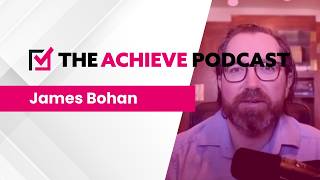
James Bohan, CEO of Stonehan, a tax firm for real-estate investors, built his practice through referrals and attorney partnerships. He's hiring a COO to free up his time, planning a 50% revenue increase over 12 to 18 months, and moving to a coworking space to tap into an entrepreneurial community.
Chapters
Welcome to another episode of the Achieve Podcast, the show where we highlight leaders, creators, and entrepreneurs, those who are building meaningful businesses, shaping their industries, and having impact. I'm Taylor Baker Baker, your host, and excited today to be joined by James Bohan, the CEO of Stonehan, and you can find them at stonehan.com. James, first, thank you for joining us today.
Yeah, absolutely. Thanks for having me on, Taylor Baker Baker.
Absolutely.
Thank you.
And for those getting to know you a little bit more of the background, give us the backstory of what brought you into this space because you have a bit of a niche history with what you've been doing.
Yeah. You know, I always wanted to work in real estate growing up. I grew up in a family of builders and I went to USC and I double majored in real estate and accounting and I graduated in 2008, which was honestly probably the best time to get into real estate, but also the worst time as someone just trying to start their career. So I had passed internships in real estate firms, but the whole world was upside down. There were no jobs. So I decided to use my accounting degree to go get an accounting job. But a lot of the Big Four, the big companies, you know, recruit several years early. It's kind of like the NFL. Are really more like the NFL draft or like the college draft where the scouts are going out and talking to the kids like a few years before they're, you know, ready to declare out of high school. So they usually get people locked up pretty early. And so I'm graduating into recession. They're hiring less. So I ended up having to get a job for like Liberty Tax is where I started. If you remember those guys with the Statue of Liberty costume standing on the street selling tax services. Yeah, that's where I, I worked there for like a month doing their training program. We were doing like 1040 individual tax returns by hand and calculating it.
Wow.
All at the same time I was studying for the CPA exams, taking Becker Review classes, and I never ended up actually working for Liberty Tax because I got a job with a, with a one-man CPA firm in Hollywood, California. So I worked there for about 6 to 9 months where, um, I, I realized I wanted to kind of level up and got in with a great kind of mid-tier firm called Rothstein Kass. And that's really kind of how I got my hand into accounting. It wasn't really intentional on the front end, but I ended up there in a kind of roundabout way.
That's crazy, and that's awesome because they overlap so well in so many ways. So how big is the team in the organization now?
Yeah, right now we have myself, CEO. I just hired a COO, which has been incredible. I wasn't really looking to hire a COO. I was looking for more like kind of an executive assistant and maybe another tax strategist this year. But someone locally came available and they were just incredible talent and they've been working with me for 3 weeks and I could already see that was like the right choice for sure. Then I have a senior tax manager in Las Vegas, a senior accountant in Los Angeles, and then 5 staff in the Philippines.
Wow, that's awesome. Quite diverse bringing those talents together.
Yeah.
Now, what would you say is driving growth for the organization right now?
Uh, I think with this business, a lot of the growth comes from referrals. You know, success begets success, and once you you know, do a good job for someone, they're going to want to tell their friends. Or if they're just, you know, chatting on the country club and like, oh, my tax guy, like, I— he set me up, I'm not paying any taxes this year. And, uh, then, you know, that word of mouth can spread. I've also started doing a lot more podcasts like this. I've really established my social media, um, presence by hiring a marketing team. Social media is something I can't do myself, so my team does a great job of making me look good out there and really capturing my voice. Um, and then like attorney referrals as well too, you know, there's, there's, uh, a great network of attorneys. Like I need to send them clients, they need to send me clients. So it's a kind of great, uh, professional industry and community in that regard.
That's awesome. Now looking back for you personally, what turning points have had the biggest impact on how you think about running the organization?
Oh, that's a good question. I think for me, when I started, like, I never wanted to have employees. Um, you know, my dad, uh, has taught me a lot of business lessons over the years, and one of them was when you hire employees, you hire their problems too. And I'm like, well, that doesn't sound great. I don't want problems. But it was probably like 4 or 5 years ago where I realized that advice was not gonna get me to where I wanted to go. And really had to embrace the responsibility of being an employer and just, you know, dealing with the stuff that comes along with that. And I've come to actually enjoy the responsibility of it. You know, like it's not just about me anymore, you know, providing for myself. I've got to, you know, continue the business for the other people who bought into the dream as well. And, uh, that responsibility gives some motivation in a way.
It does. It's amazing what that does when you have— you'll get up for other people a little sometimes easier than you'll get up and work for yourself. So looking back for you, as you start growing this, as you acquire these clients, what's been the biggest factor for you? What's been working well in acquiring and retaining clients and customers?
Um, I think kind of just given my unique background and expertise, uh, is very attractive to a lot of people. You know, I have experience both as a CPA for real estate funds, I was a CFO of a real estate fund, now I own and manage my own real estate and help other people, uh, figure out what I've figured out over the last 15 years of how to set all their funds up, how to deal with investors. Um, so I think it's really my experience That sets me apart. Um, you know, I've worked at the Big Four as well too. People love to see that, and I think that's been the biggest factor. And then you got to deliver for them, you know, year after year, otherwise they're going to leave. You know, obviously mistakes happen and we do our best to fix that, but, um, generally, luckily in this business, clients are pretty sticky.
That's good. And with your sales and marketing, where do you feel like there's still opportunity or money on the table?
Um, for me, it's all about getting the systems, I think, dialed in, you know, like standardizing the intake form, making it really easy, really thinking about the client experience from, uh, beginning to end is where I'm putting my time and money right now. You know, hiring the CEO is part of that. I'm also hiring a consulting company to go in and rework my practice management system so it's hyper-efficient for both the sales process, which is currently all on my shoulders, and then also the delivery process, and all the team can see where all the work is. You know, it's fine just using an Excel spreadsheet when it's maybe you and another guy, but if you scale up, you need to kind of get the, the systems in place.
100%. Yeah, that duplicability. So that brings up a question. For all the talk around AI and automation, where have you guys found ways internally to utilize that?
Gosh, it's a really, uh, interesting question. I'm still figuring it out every day. Um, I do use Groq and other tax research tools. Um, I haven't unleashed Claude or anything like that. I'm, I'm hyper paranoid about giving it access to anything that might have a Social Security or bank account number in there. Um, I've talked with my IT consulting department about the best way to set this up. I do have a dedicated laptop. I'm going to, you use to start playing around with that. Um, but I'm really looking down that for more of a, uh, um, bookkeeping kind of financial Excel workbook, uh, Excel monkey. Like I'll have an AI monkey instead of an Excel monkey myself anymore, as I call it. And, um, well, yeah, we'll see. I'm still figuring it out. It's still really early. I really think in February or March there was an inflection point where it became like Okay, this is something really good now. And that was obviously during tax season. So I haven't had time to sit down and implement things, but we're constantly figuring out, we're talking to other vendors. There's a few platforms that will automatically scan the K-1s and populate a worksheet. And the pricing on those is so interesting where an hour of my staff's time is about the same cost as it is to use one of these systems. So I'm thinking about it from a business owner's perspective, like they're going to have to review it anyways. I'm actually— it's going to take them, you know, probably more cost total between the time of the system running it. You know, it could be like $10 to $15 to $20 a K-1, you know, to run some of these things. And it might take my team like 10 to 20 hours of, you know, $10 to $20 of hourly work to, to get it in there. And it just doesn't make sense because they're going to have to spend that same amount of hourly work reviewing the input as well. Um, so I think either costs have to come down a bit. Um, I do see the benefit of that, like, potentially increasing accuracy, but the robots still aren't perfect.
Yep, yep. A lot of potential there.
Yeah.
Well, James, if you had to focus and pick one constraint to solve over the next 90 days that could change the trajectory of the business, what would it be?
Um, I think it's just continually like freeing up my time. You know, as a business owner, you're probably wearing like 5 to 20 hats and you can't hire someone to wear 20 hats. If you did, that person would be an entrepreneur and he'd leave you in a year, you know? Um, you kind of got to take like a hat off at a time. Lucky with the COO I just hired, she can maybe wear 5 hats or more. You know, she's, she's really good. Um, and so it's just kind of, uh, continually kind of building the system out and getting systems, processes in places so I can hire someone in and give them that hat. And they're already kind of like got a great, uh, track to follow on the systems that are built out. So that's where really where I'm at right now.
That makes sense. And where would you like to see the company in 12 to 18 months?
Uh, 12 to 18 months. Um, I, I'm hyper aggressive on growth right now. I want to grow the revenue 50% because I want to, um, hire a couple more professionals in the United States and then, um, a couple more in the Philippines as well too.
That's awesome. That's some good growth there. So looking back at your own journey, um, looking at the wins, the mistakes, what lessons stand out to you?
Mm, don't quit, just keep into it. Like, I've had, like, before I started on my own, like, after college, I had, like, I think 2 jobs, you know. Um, my idea was going into, uh, Rothstein Kass and doing 2 years, getting my CPA, get out. But the work culture was so good there, like, I had great partners I worked for. Um, I didn't want to leave, but they got bought by KPMG and I went to grad school. And then I was CFO for a bit and then started my firm like 5, 6, 7 years ago, 2019. Oh, it's been a minute. But yeah, just don't quit. Just keep grinding, you know, put your nose to the grindstone, ignore Instagram, get off social media. Comparison is the thief of joy. Just, just grind, you know? And 5 to 10 years from now, people will look at you like, oh, he's an overnight success, but they're never going to see, you know, you grinding and looking back, you know, all, all through this accounting thing, like I, I got the accounting degree cuz I took Accounting 101 as a freshman and got an A without trying. I'm like, okay, this is easy, I'll just do this. And, um, you know, you had to make a lot of sacrifices because, um, the accounting school is more on like a quarter than semester system at USC. So, you know, Halloween, I could never party because I had finals and then you have to study for the CPA exam and then you, you work hard just just don't quit. And, you know, it's, it's interesting where you be. I always looked around at the partners and, you know, a lot of them are just people who just outlasted everyone else, you know. Um, there's, there's a lot to be said by not quitting and just keep keeping going.
I love that. That is so true. So true. It's just that consistent stacking every day, every year. So what would you say is the biggest obstacle you're working through right now?
Uh, it's just, I think, a matter of budget. You know, really good people are really expensive, uh, especially in the CPA and tax industry. So, um, it's just a matter of balancing the growth, uh, with new clients and, and getting new people on. And, um, that's kind of my challenge right now. I'm looking, um, potentially for like an SBA loan to, to, you know, kind of turbocharge the growth. or other alternate means of, of financing.
That makes sense. That can be a wise decision for sure. So last question for you. When you think about the next stages of the business, what are you most excited about?
Uh, well, I just got an office space, uh, and so I've been working from home for 7 years, so it's, it's nice to finally go into a place. So just kind of getting out there and seeing where that's going to lead to. It's in— I have a private office space in kind of more like a coworking facility that's known for having a lot of entrepreneurs out there. So there's a lot of good like kind of energy in the building and like kind of that hustler vibe, not in the bad way, but just like people, you know, doing things. There's a lot of tech going on in there. So I just think kind of being surrounded by other entrepreneurs is gonna be great for me after just kind of working in my own cave, a nice cave as you could see for the past 7 years.
Nice kid for sure. So I appreciate you coming on, James, and sharing your story, your wisdom and experience, the things you're pulling together to bring that value for that real estate agent. Any final thoughts or words for others on a similar journey and for our listeners?
Yeah, I'm just going to go back to the main point. And there's a great phrase my dad taught me from Vince Lombardi, and it's that winners never quit and quitters never win. And it's pretty, pretty logical when you think about it.
Some of the best ones are that logical, and just it's the application, right?
Exactly.
And so, but I love that. Just, just keep going. Just keep going. You'll have the hard times, plan on them. So those who want to learn more, who want to reach out, Stone, S-T-O-N-E-H-A-N, Stone Han. .com, LinkedIn, anywhere else you want to send them.
Yeah, I'm really active on LinkedIn. James Bohan CPA, MRED is my tag there. And then I'm trying to grow my Instagram as well too, James Bohan CFO on there.
Awesome. So yeah, reach out and thank you to our sponsors of today's episode as well. Achieve Fractional, which provides fractional executive leadership for growing businesses. And if you enjoyed the episode, share it with a friend, with a colleague. If you have some questions with your taxes, with your real estate investments, reach out to James and the team, see how they can help you navigate through that and maximize your benefits. So reach out and we'll see you in the next episode of the Achieve Podcast.









