The Achieve Podcast - John DeCausmaker (Little John’s Lawns)
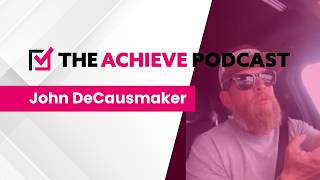
In this episode of the Achieve Podcast, host Taylor Baker interviews John DeCausmaker, co‑founder of Little John’s Lawns, about the company’s journey from a makeshift start in 2012 to a multi‑truck, 35‑person operation serving over 4,400 residential and small commercial properties in the Phoenix area. John recounts the origin story—leaving the fire department, leveraging church connections, and acquiring tools on credit—followed by rapid growth driven by relentless customer service, a strong culture, and low employee turnover. He explains the firm’s marketing mix (Google Ads, SEO, word‑of‑mouth, incentivized crew referrals, welcome gifts) and the importance of “building grace” into service recovery. The conversation expands to John’s other ventures: CallBoss, a high‑level admin/lead‑conversion service, and a custom CRM (Capture) built on HighLevel, where AI is used for routing, field estimates, and automation. John discusses current constraints (scaling trucks and staffing, sharpening CallBoss messaging, and expanding the CRM), key lessons learned (the value of SOPs, disciplined pricing, and maintaining relationships), and future ambitions to dominate the landscaping market and grow the tech businesses. The episode ends with contact information for Little John’s Lawns and the related tech platforms.
Chapters
Welcome to another episode of the Achieve Podcast, the show where we highlight leaders, creators, and entrepreneurs— those who are building meaningful businesses, shaping their industries, and moving things around. I'm Taylor, your host, and today excited to be joined by John the Cosmaker, the owner of Little John's Lawns, and you can find them at littlejohnslawns.com. John, I appreciate making some time to jump on the podcast today and joining us.
Yes, sir. Absolutely. Thank you for having me.
And so give us a little bit of backstory because I know you have a few different businesses, what you guys are doing. How did you guys get into this space and who are you guys currently serving?
Yeah, so we got in the space in 2012. We had no experience. I did one maintenance job and I was doing roofs. I left the fire department. We got laid— a whole bunch of us got laid off on a Monday morning. But right before that, my wife and I had decided to start a company just out of giggles called Little John's Lawns. We thought, oh, maybe we'll do something or whatever. So we got laid off, kind of panic mode set in a little bit. We were at church the following Sunday. We were serving and they asked my wife, like, what do you guys do? Like, oh, we own a landscape company. We started a landscape company. And they're like, I'm literally on my phone looking for somebody. So I went and estimated the job. I had to hire 2 guys on the roof that had the tools and the experience. I asked them, hey, can you show me what's up? How to do this. So I split it with them. They ended that job, they walked it. The guy's like, man, it was amazing, but you guys really were off on your price. So what do you mean? He's like, you way underbid this. So he gave me like extra $300. So super nice of him. Following week, I go to— we're at church. A guy named Nate Stanton, uh, says, hey, I heard you was hard of landscape company, do you need any tools? I'm like, I have no tools. Come out to be of equipment. He gave me, he's like, well, this is what landscapers use. And he gave me my first like blower, hedge trimmer, weed eater, and those things. Didn't have the money, said pay me back later. So my wife and I were in business together at that point. We hustled, like hustled like starvation was on the, was gonna happen and that was gonna happen. So, and then we literally danced in the kitchen on the middle of the month 'cause we made enough money for rent. We said, oh my God, this is something we can do, right? So you take that, I think you fast forward to today, we're primarily residential. We service about 4,400 properties on a regular basis. Oh wow. We do cookie cutter homes, typically what we do, and then we do, uh, small commercial, and we're starting to make a big dive into small commercial. Um, and then we are— we started in the East Valley outside of Phoenix, now we kind of encompass different parts of Phoenix if it's the small commercial stuff that we can wrap in. But that's how we started, you know, and just, just hard work and determination and not to give up and having a great partner with you, which is my wife. And so some people will say that their spouse works in the business, like my spouse legitimately works in the business every day, makes big decisions. And we work really well, really, really well together, you know, and I think that's what makes us so unique. So that's awesome.
And how big is the team in the organization now?
So right now we're doing— right now we're adding— we're on the pace right now this year, we've added 3 trucks. We're gonna add another— we're gonna add another 3 by the middle of next month. But we have roughly about 22 trucks I think out running. We have a 6,000— about a 6,000 square foot office yard space. Uh, very, very lucky to get into that space. Um, and then personnel, we're probably right around 35 employees for— I just left the office and we're hiring more employees right now. We, we probably need about 40 total to kind of get to what we're going through. We hit about a 30% growth rate so far this first quarter. Uh, change up our marketing, our strategy, how we're going about things. A lot of, a lot of, a lot is finally lined up. Yeah.
So what do you feel like is actually driving growth right now?
I think it's okay. So it's answering your phone, doing what you say you're going to do, being personable, right? If you make a mistake, correct it. I think there's that part of it. I think that the other part is like putting out a good product, treating your employees very well. My wife Nikki is incredible with the culture at all of our companies and we are big on culture. We don't have a turnover. It's very, very rare for somebody to leave any one of our companies.
Gotcha.
You know, we have employees that have been with us for 8 or 9 years. We've been in business a total of 14. This is our 14th year. Wow. Yeah. Wow.
Now, what would you say looking back, what turning points have had the biggest impact on how you think about and run the organization?
I think knowing your numbers, like don't compare yourself to everybody else, compare yourself to what it actually costs to run your business. I think it is, don't be afraid to be different, right? Like everybody does the same thing. All these guys go and have trailers because everybody else has a trailer. They all use, in our area, they use a certain kind of mower because everybody else uses that mower. I think challenging the system sometimes is like refreshing. Right. Yeah. And I think, I think really landing on customer service is like a huge key that people overlook. Right. So we own another company called CallBoss. CallBoss is like a high-level admin service. We— all of our employees are here in the United States, but that's what we started because my wife and I recognized there's a huge need in the market. People go and they'll spend tons and tons of money on marketing. They'll do all these things, but then they don't answer their phone. They don't follow up on their leads. They don't ask the questions, right? Like, hey, can I ask why you're not using our service? Or can I ask, how is our service now? What are we doing? What can we do better? If you get that feedback, they're gonna tell you, right? Most people are afraid. Well, I haven't heard from, so everything's okay. That's not the— that's not the challenge you do. Right. And so, like, right now, I think we just, we just passed or getting ready to pass, I think just shy of 500 customers this year we've added. So far. Wow. Right. But you start building yourself a reputation, you start building yourself— like, reputation is everything, you know? And I think taking care of your employees will take care of your customers, right? So we do performance pay. We pay way different than a lot of people. It's sometimes hard to bring in good cust employees, but once they get in, they figure it out. They're like, oh my God, I make more money than I've ever made in my life, and this company wants to take care of me, and they'll take care of our customers in return. Wow. Yeah.
So next one's kind of a two-part question for you then. When it comes to your messaging, your marketing systems, What's been working well to attract and keep customers?
So marketing systems, what that we use right now. Mm-hmm. So we give our guys dine-arounds that we incentivize our guys for anybody who comes up to the truck. We have cards that are made for their trucks. So anybody signs up for any service, our crew gets paid for that. That helps. If we use a lot of like Google AdWords, we use a lot of SEO, a lot of it. But also it's like word of mouth. You know, we really try to get more word of mouth. We go out, we— the 9-rounds are probably something that people don't think about that is more valuable than you think because now it incentivizes your guys, right? Hey, you do a good job on the property, the neighbor's going to want to sign up with you, with us. And if they sign up, guess what? You guys get paid for that, right? So it's like a win-win for everybody. Yep, we do welcome gifts. So every new customer gets a box and it has a gift inside of it. And really, like, we're making ourselves stand out. But the other thing we're doing is that we're building grace into when we screw up because we're going to screw up at some point in time. We're not going to do something that's not right. If I lose a customer because of a quality issue or whatever, we're going to go fix it. We're not asking to fix it. We're going to go fix it. And then when we go fix it, We want to be set up for the next person, and that'll throw people off all the time. They're like, why would you do that? I'm like, well, because I want to leave it in the, in the best situation possible for the next person who's going to take care of it. That person might not come back right now, but they're going to come back eventually, or they're going to tell somebody like, yeah, this didn't work out for me at Little John's, but it was crazy. Like, they did this and they still sent somebody back to fix it, right? Wow.
Yeah.
That makes all the difference in the world, right?
I love that. Build grace right into it.
Yeah, absolutely. We're not perfect.
Yeah, absolutely. Plan on it. Plan on it. I love that. So when it comes to your sales and marketing, where do you feel like there's still opportunity or money on the table?
I think upselling what our current customers have, adding services to what our customers, our current customers have. We do some of it. We need to do a better job of it. But I think that there's a big one right there. I think really going— we just started hitting boots on the ground for going after commercial stuff and it's paying off big time. But it's like it took a long time to get there, right? And we've had to work through it. It's a different model than what most people are used to. And I think that's why it's been a little bit hard because you get resistors, right? They're like, well, that's not going to work. Well, maybe it will or maybe it won't, but we don't know unless we try. So I think upsells of our existing customers, you know, 9 Rounds, we're doing a good job, but we can always do better, you know. And then just really like, how do you put yourself out there to make you stand out from everybody else, right? So all of our trucks are green, all of our guys are lettered, they all have uniforms on. Like, it's just the standard that we set for ourselves. And then we talk about all the time, like, do the right thing. People driven embrace suck, right? Every meeting we talk about that. And so I think that just submitting that home, uh, we do a good job of it, but letting our customers know, like, these are our core values and this is what we stand by, I think could help us out even more.
I love that. Say that again, one more time.
Yeah, do the right thing, because why would you do the wrong thing? Right? People-driven, because those are our customers, right? And that's what you're doing it for. And embrace the suck. We don't— there's things you're going to do in life that you hate. There's situations you're going to get into that you're not going to want to do. But if you just take care of it and handle it, get it off the table, it's done. It's over with. Doesn't have to sit in the back of your mind. It doesn't keep the customer pissed off. The customers, their situation or problem has been resolved, and we can move on to it, right? Instead of that customer just letting it build and fester and her— and them getting super, uh, upset about it, you just taking care of it.
I love that. That is so beautiful, so applicable. So with all the talk around AI and automation, where have you guys found ways to utilize it?
So, okay, so here's our third business. So we own a CRM system. What we bought We bought 50% of it last year, but we bought 50% of it last year because my wife and I recognized from our— from this, the HighLevel, um, HighLevel admin service that we offer. So we answer your calls, we convert leads to customers, we take credit card payments, we do all the things except for bulk email. We don't do emails or bulk billing, but we can do everything else and help your office, right? But what we learned is that we're in all of these serv— we're on all these CRM systems, okay? And we know we have a very unique view because I— we own a landscape company, a space company. We see 10 to 20 different systems, sees that, right? So we, we see the good, bad. And then we went out and found one that was already existing. We took a year— we, we've been building this for a year rebuilding what this software looks like on a CRM standpoint. So like my wife Nikki, she walked through and said, okay, what's the best experience for your office, for your CR, uh, your CSR, for the field staff? Like, what does it look like? And to navigate, move this button here, do this. What services work and what services don't work? And get rid of them, right? Or what, what options? And so we built that, and then that that part that has AI in it, has all the things, that is what we've been using it for, right? So automated routing, because routing sucks and it's hard to do, and as you get bigger it gets harder, right? Make it easy to build, give estimates from the field, giving power to the guys that are out there working in the, in, in the field. Stop restricting them from being able to give estimates, right? Give those guys an opportunity to make more money. So There is.
Okay.
And now we're using AI, I guess, to answer your question. Yeah.
All right. Well, if you had to pick one constraint to focus on and solve over the next 90 days, what would it be?
One problem? Yeah. I'd say at Littlejohn's, it's how can we get enough trucks in fast enough and bring the right people in? That's for them. For CallBoss, it's how do you, how do you straighten our message to get people who don't understand? Everybody who starts with CallBoss loves us because we, we, our close rate, not that we're salespeople, our close rate's better because we train on answering the phone all the time. How many CSRs are out there that don't get trained once they get in an office? They get talked to once, they learn the system, and then they kind of get set free. We train and retrain. How do I take that and get it 50 new companies to get on with us in the next 90 days, right? We're 24 hours. How do we get those companies that need the night services? For our software company, um, it's— well, right there, we're in the next 90 days, we're setting up our campaigns, and that's what we're solving. We're going to take this out to everybody, and we're going to— we want to be a thorn in some of these other CRM systems' side. Fair enough.
That's awesome. So looking back at your journey, the wins, the mistakes, what do you— which lessons stand out to you and which ones do you feel like took longer to learn than they probably should have?
Man, I think my wife could— I know could add to some of this. So we have a podcast we talk about, and I think we have a podcast my wife does every, every week. It's called The Bosses Next Door, and we just talk about like lessons learned and life that, that we've done different, right? The hills you stand on. Like if you leave in bad terms, you don't come back. Right. If you leave in bad terms, you don't come back. If you're a crummy customer, you don't come back. Right. If you burn that bridge, you can't treat people with respect. You don't deserve to be a customer of ours. I think some of the other thing is, is that like, hey, cut me this deal, I got more work for you later. No, just pay the price of what the cost is now. If you give us more work later, maybe we can talk about it, right? Yeah. We used to give out money left and right to guys and then hope that they'd pay us back. We have a loan program for that, right? We don't, we don't go outside those parameters. SOPs— wish we had done SOPs a long, long time ago. We've done them over time, but like really following them, I think, has made a huge difference in our business.
Yeah, that makes a lot of sense.
Wow.
So, I— last question: when you think about the future of the business, What are you most excited about?
We're going to dominate. That's what I'm most excited about, because if we're going to do it, we're going to do it well. And if we're going to do it well, then we're going to do it better than everybody else. And if we're going to do it better than everybody else, then we're going to dominate the world. It's just, we, we kid about dominating the world, but like, we look at stuff that— we're trying to look at things outside the box, right? So anybody can start a landscape company, and a lot of people do, right? Because there's low barrier of entry. But if I'm going to do landscaping, why not be the largest landscape company that we can be in our area? That's that, that services our customers the best, right? I have a— yeah, we have a high bar set. We have a guy that we're good friends with, Jonathan Koskinen, that owns City Turf. Man, that guy does an incredible amount of work, and he's like, their business is amazing. Like, that— he showed that it can be done. Right. At CallBoss, why can't we answer for, you know, 200, 300 companies, right? Why can't we expand ourselves in other industries? And then Capture, I just want to like, I want to take the CRM system by storm and show them that there's better options out there. We don't have to, we don't have to settle for what currently is out there.
Yes. So for those who want to learn more, LinkedIn, littlejohnslawns.com. Where else can they find you?
Yeah, you should find us at, uh, capture.com, yourcallboss.com, uh, The Boss Is Next Door. I'm kind of everywhere. Yeah.
Okay, we'll put that all in the show notes. And again, thank you for joining us today.
Yeah, absolutely, it's been a pleasure. I really do appreciate it. Thanks for, uh, putting patience with us as we drove, so I, I do appreciate that.
No worries. And thank you to our sponsors of today's episode, Achieve Fractional, which provides fractional executive leadership for growing businesses. And if you enjoyed the episode, share it with a friend, with a colleague. If you're upset with your lawn maintenance guy, reach out. If you're upset with your CRM, reach out. And so reach out to John and the team, and we'll see you all in the next episode of The Chief Podcast.









