The Achieve Podcast - Jon Cheney (GenAIPI)
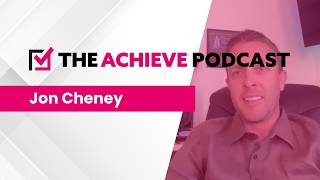
In this episode of the Achieve Podcast, host Taylor Baker interviews John Chaney, CEO of GenAIPI (General AI Proficiency Institute). Chaney recounts his path from an AR startup (Seek) to founding GenAIPI, a company that helps businesses adopt AI without being steamrolled. He describes rapid growth from solo founder to a 27‑person team in seven months, attributing it to market demand and the perception of AI as the next internet. The conversation dives deep into the rise of no‑code and "vibe coding" platforms—especially Replit—and how they let non‑developers build enterprise‑grade tools quickly. Chaney explains how he audits AI‑generated code for security, compliance (ADA, GDPR, SOC2), and quality, using AI itself as a reviewer. He shares his client‑acquisition strategy: educate for free, publish content, appear on podcasts, and write a book, arguing that knowledge should be given away while execution is monetized. He discusses the tension between knowledge sharing and revenue, the importance of transparent client communication, and the need for better reporting as the company scales. Leadership lessons include maintaining control over vision, trusting but verifying, and hiring entrepreneurs who have failed and learned. Chaney outlines the tech stack he relies on (Replit, Grok, Claude, OpenClaw/Jarvis, ChatGPT) and his belief that personal AI agents will become ubiquitous. He ends with a call to action for listeners to experiment with AI tools, take his weekend‑business‑with‑AI course, and connect with him on LinkedIn.
Chapters
Welcome to another episode of the Achieve Podcast, the show where we highlight leaders, creators, and entrepreneurs, those who are building meaningful businesses, shaping their industries, and actually having an impact. I'm Taylor Baker Baker, your host, and excited today to be joined by John Chaney, the CEO at GenAIPI. John, thank you for joining us today.
Hey, really excited to be here, Taylor. I love— I, I feel like I identify with all of those titles. The leader and the creator and the entrepreneur. So, I think I'm in the right place today. Absolutely.
I love your content. And so, I've been watching it for a while. And for those getting to know you and your space and what you do, give us the backstory on how you got here because you've worked with some big names in the industry.
Yeah, you know, I really just like technology. I think technology is cool. I'm surrounded by some music and tech, and I've got TVs and multiple— I've got 5 computers in this room. 3 pianos anyway. And I've got my Apple Vision Pro sitting over there. And so I love just the new stuff. I love playing with it. I just think it's fun. And, and so I always want to see. But, but, but one of the things that I think I do a little bit differently with technology, and it's not that I'm the only one, but just I, I love to figure out how is this tech going to actually help people, right? Not just, hey, it's a cool toy, but is this really going to help someone, right? And, um, You know, so I look at like the Apple Vision Pro. My past company Seek that I started back in 2016 was an augmented reality company. And so I was very much in this, you know, AR, VR, you know, trying to figure out how can we make this a real technology that helps people. And we ended up, you know, pointing our technology at e-commerce so you could see products in your house or, you know, try something on virtually before you buy it. And that was, you know, a great way to apply that, right? Other people decided to do Pokémon Go or other things. And that was fun. That was fine. And we did some of that too. We did. It's not that we don't have fun, but we like to say how How can this really help? And so right now what I'm, what I'm doing, I started a company, uh, a little over almost a year and a half ago, I guess, at this point, called GenAIPI, right? Which is what I do now. It's the General AI Proficiency Institute, and we're helping companies figure out how to really have AI make a difference for them, right? Really, the, the blunt way to put it is I want to help as many people and businesses not get steamrolled by AI.
I love that. And there's so many questions around that— how to utilize it, which ones are best, because it changes. So how big is the team in the organization right now?
So we are at 27 people now. Wow. It was— it was— I was a solopreneur through, I want to say, September or October of last year, and now we're in May. So in 7 months, I've gone from 1 to 27 people.
So what is contributing to that growth?
I think people just want to get involved. People were just really excited about this technology, and they're trying to figure it out too. They're trying to figure out, all right, What, how do I not miss this boat, right? I think a lot of people have started to realize, especially those that are really active in business and entrepreneurs, they're realizing that AI is kind of like the internet, right? If you missed the boat with the internet, you're gone now, right? Like you were, you were gone 20 years ago. And, and with AI, if you miss this boat, it's gonna be tough, man. It's, you know, it's not that, it's not that 100% of businesses will go down, but maybe 90% will. Those that are not really adapt— adopting AI. And the reason is this: other people are. The new companies, the new startup, the new founder is going into his plumbing business with an AI foundation. All of his marketing, all of his sales, all of his, uh, customer support, all of his billing, everything, it's all gonna be automated. And so his cost can be way, way lower. He's gonna have very little overhead. Because it's all gonna be done by machines and agents and whatever instead of having to hire 7 or 8 people on staff that, you know, these legacy companies are doing. So he's gonna be able to undercut your prices. He's gonna do great plumbing work, right? You still gotta send the people out to the plumbing. We don't have robots doing that quite yet, but that new single guy in his basement is gonna outdo the big huge HVAC company that's dominating their industry because they have this, this, uh, advantage of starting with zero overhead and then trying to keep it there for as long as possible.
Wow. So because there's, there's so many tools changing with this, for you looking back, what turning points have had the greatest impact on how you think about and run your organizations?
You know, for me personally, when I discovered Vibe Coding, it just changed my life, man. Like, like I knew Vibe Coding was a thing, but I'm not a developer. I can't write a single line of code. And so I didn't jump on vibe coding immediately. The coders did. And there was, you know, some of the earlier tools that, you know, like Cursor and things like that that really were more coding assistants. You kind of had to know how to code and how to put it all together. And I had no idea how to do that. Right. And then all of a sudden you got to these fully baked vibe coding platforms like Replit, right? And there's a few of them out there that are great. I love Replit personally. I'm a huge fan of that, of that piece of software because it could take someone like me who's got a lot of ideas. I, I want to see if they can come to life, but I can't code, but I could just talk to it. I could say, hey, build me an app that does this, or a website that does this, and, and, you know, build me a CRM so I can keep all my stuff, you know, whatever. It just does it, and it figures out the back end, and it figures out the security, and it figures out all these things. And, and it, it wasn't as good when I first started using it a couple years ago. Uh, today it's amazing. It can build unbelievable enterprise-quality software that can be used and especially can be used for that plumber, you know, that's starting his new business right now. Can he keep track of all his clients and do all his automations and invoicing and website and everything all through that? Totally. And he doesn't have to go spend a ton of money on subscriptions and, you know, paying developers to build this stuff. And, you know, he can do it all for hundreds of dollars instead of tens of thousands or hundreds of thousands of dollars. Like it used to cost.
That's crazy. So how do you audit without being a coder? Because the thing people come up— how do I know if it's writing bad code? How do I know if it's— if it has a glitch? How do I troubleshoot that?
Yeah, you, you don't know. And because you don't know, you then need to go figure out, figure it out. And you can use AI to do it now. AI at this point, right, today in 2026, in May of 2026, um, It is— AI is so capable of doing that, right? Where you just have to— but you have to know to ask the question, right? You have to say, hey, look at my code. Where are my vulnerabilities, right? Am I, am I up to code with my code? Meaning, am I following regulations? Like, do I have ADA compliance? Like, you can actually get fined if your website isn't ADA compliant, right? So that blind people and people that have color blindness and different things like that can navigate your website well, right? And so you have to just know that that stuff exists. And so you can— but if you just say, hey, Mr. AI, Mr. Replit, whatever you're using, I want you to do a full evaluation of my website. Tell me what risks I have in my industry legally, in my state, right? Are there any federal regulations that I'm not following? Are there any, you know, 2 or 3 or 4-letter word, you know, acronyms that I'm not following? GDPR, whatever it is, right? SOC 2 compliance, and you don't have to know that stuff. You don't even have to know hardly what that is. And the cool thing is the AI will come back and say, hey, Mr. Plumber, you don't have to be SOC 2 compliant. You know, that's something that's for banks and for HIPAA and, you know, other things like that. But we should fix these things. What do you want me to do? Yeah, fix those things. Okay, great. Now run another audit after you fixed it all. Okay. Hey, your site is really, really well built now. Right? They can tell you, they can do it for you.
That's so impressive. So for you, where—
what has worked?
What do you feel like has been working well to attract and retain good clients and customers?
Yeah, um, it's a great question. Honestly, what I try to do, the way that I get customers, is I just educate, right? I just— I'm out there, I'm making lots of noise, I ascribe to this awesome book that I just happen to have sitting right here, Day Trading Attention by Gary Vee. I'm just out there, right? I'm just talking about what I'm learning, what I'm seeing, what I'm thinking. And the cool thing about AI is there's news every day. There's news every 10 minutes, some new model, some new platform, some new whatever. I haven't even seen 10% of the platforms that are out there. It's impossible right now. I definitely see the big ones, right? I see the updates of the big ones. If ChatGPT comes out with something new, I'm going to be there, right? I'm going to see it and I'm going to understand it. I'm going to talk about it. But by becoming a voice that understands it, I'm in the game. People then naturally say, hey, looks like you know a lot about AI, can you help us? And then they see, oh, you've got a company that does this. Yeah. And so for me, it's just all about educating, providing free value, and not, and not gating, right? Not gating that value, right? A lot of people are like, don't give too much away for free. No, give as much away for free as possible. Get it out there. Get that information out there. Every post that Every single post that you put out, people should say, wow, okay, I can apply that like right now, that I can make my life a little better now.
I love that. I love that. So what do you say to the naysayers who are like, ah, you got to retain some of it? Like, what's your approach to them?
Yeah, well, first of all, there's so much, it's impossible for me to give it all away in one post or in 1,000 posts. There's so much to say, so much to do. And the reality is knowledge usually isn't the, the way you make money. The knowledge gap that you have, right? It positions you. So let's talk about like a doctor or a lawyer or a plumber. Okay. You go and you pay a doctor, you go sit down with them and he says, hey, I've taken a picture of your heart. It looks like one of your valves is a little bit too small or it's not functioning properly. And, you know, You pay him a little bit of money there, right? Maybe $100 for your visit or $15 for your copay or whatever it is. Okay. But the real money is made by that doctor in the execution of the plan, right? Where he then says, okay, we're going to put you under anesthesia. We're going to have a team of 8 doctors in here. We're going to slice you open. We're going to do all this stuff, and then we're going to help you through the recovery. That's where he makes his $100 grand, right? And the plumber, same thing. He can come out and do a $69 diagnosis, but then he's gonna make money when he sells you an $800, you know, fix. And, and so it's not the knowledge. The knowledge has a little bit of value. So give that away freely. Give it away. Tell 'em what you're doing. Show 'em what you're doing. Because most people then don't know how to actually take that and say, okay, I'm gonna go do it. Or maybe they could do it, but they're way too busy to do it. Right? Mm-hmm. So we work with tons of CEOs and big companies and small companies and whatever, but leaders that They already have a super busy job. I'm CEO of my company. I feel like I have no time to, like, my list today is huge. I've got a massive list. I literally was writing this down. I know I'm a BYU fan, but you know, I spoke at the U and they gave me this to-do list. So I'm advertising for the University of Utah. But, um, but I, I wrote down literally just, just before this call in like 5 minutes, I was like, I've got a lot of things piling up. And so I just started writing, you know, what are all the things I need to figure out here. And there's like 20 of them piled up. The point is, if somebody comes to me and says, hey, let me take— you have a problem in your business. And I'm like, yeah, I agree, I have that problem. Let me take care of it for you. They say, yes, where do I sign?
Right?
So, so that's how I track good ones, right? They just— they're people that know they need it. And they're, you know, they're, they're seeing the future. They're not ignoring the future, not burying their head in the sand or trying to say, yeah, someone else will Whatever. I'm making $30 million a year. I'm good. I'm fine.
Right?
So was Blockbuster. So were a lot of companies that didn't make that pivot correctly.
Yes, I love that. I mean, it goes back to the analogy of like, you can give somebody the checklist and instruction manual how to fly the plane. Doesn't mean they know how to fly it.
No, I'd be terrified, right? If you put me in a plane, like in the pilot seat, and all of a sudden you say, you need to take off and land, right? Here are all the instructions. Here's an AI to walk you through the whole thing. I would still be absolutely terrified. There's no way I would do it unless, you know, it's like a volcano going off and I had to escape somehow, you know?
Yeah, yeah. There you go. Yep. The director says so. Exactly. So when it comes to your sales and marketing, where do you still see opportunity or money on the table?
Yeah, I mean, look, I did a search yesterday and I identified that there's probably about 107,000 companies in the United States that are like the perfect size, type, scale for what we do, what we offer. Wow, that's a huge market, right? And we're, we're touching a tiny, tiny, tiny fraction of that. Um, and so I don't know, how long do you want to talk about this? There's so many opportunities out there, right? Right now I just, I have a, I have a good cadence that's working well. I talk a lot, I get on podcasts like this, and share what I'm doing. I'm writing a book right now, which is really fun. And that will definitely, you know, there'll be some press behind that, and I'll push that, and that'll be kind of more evergreen content. And we're actually launching our own podcast pretty quick here, which is gonna be pretty fun, called AI Works. It's gonna be really awesome. Really just gonna focus on, you know, stories and bringing real people in. Like, look, this is how AI is actually helping the world. We are super pro AI over here at GenAIPI, but we also take a very measured approach that puts humans first. It has to put humans first. If you're doing AI correctly at your business, you should be hiring more people, not firing people. I think AI becomes the boogeyman a lot, and, um, you know, it makes sense. It's an easy thing to do. And, and quite frankly, I don't even think that these leaders are, are trying to lie or be deceitful with that. They're saying, hey, I think AI can replace these people, and so we're going to do that as a cost-cutting approach, right? Because that's— unfortunately, businesses owe their allegiance to their shareholders, not their employees. It's just how it works. A lot of people are mad when someone lets 200 people go. But the reality is, if you don't— I've had, I've had to do that. I've had to let 20 people go in a day. Right. And it sucks. Yeah, I don't like that at all. But if I didn't do that, the rest of the other, the other 40 employees would have to get fired and all the shareholders would go to zero. And that I'm getting sued because I'm not, I'm not actually doing my, you know, fulfilling my fiduciary responsibility of keeping the company. Now, does that mean it was all my fault that I did that? Maybe. I don't know. But, but the reality is I have to make that move. I have to make that move. And so I think a lot of CEOs are trying to make good moves. I don't think they're trying to be bad people and fire people and, you know, just going after profits. I think they're just trying to do what they think is the best way to grow their company at the moment. And, and I think that a lot of them will find that they're hiring people back as they get their systems and their AI, you know, figured out and are like, man, we have so much more opportunity. We have so many more customers because everything's so much more efficient. We need more people to help take care of these people because ultimately that's what it comes down to. People want to work with people. They don't want to work with a robot, right? It's cool that robots can do stuff. I'm— I've, I've preordered the Neo robot. So that it can do my laundry, right? Awesome. That's going to allow me to do other things that, you know, my to-do list.
So, so what AI tools are you utilizing the most? You mentioned Replit. What else do you like and which ones you're like, I'm still exploring?
Yeah, you know, Replit is really just awesome. I want to say one thing about it because I think it's so cool. And you can do this with a number of live coding platforms, but I think Replit just has the system figured out really, really well. I will use Replit to build many pieces of software that can do things so much better than, uh, than really, than really any other type of system could do. And, and it's— let me give an example. My executive team, and I bring in my family and my, you know, couple family members from the executive team. We're going on a retreat next week. Okay. And my wife's amazing. And she said, hey, I want to, I want to take care of the food for the whole week for everybody. I'm going to, you know, cook and do it. She's amazing. She's such a good chef, right? She's like, well, tell me, you know, how many people are going to be there? You know, what are the different meals I need? And I was like, okay. So I talked to ChatGPT for a minute and I said, okay. And I just turned on my voice dictation so I could just talk to it and just flow. So here's what we're doing. Here's how many people are going to be there. These people arrive this day. Some people leave early. Some people, you know, whatever. So, um, had that all done. I said, okay, now put this into just like an Excel sheet so that we could just fill out what we want. And then I took that Excel sheet and I dropped it into Replit. And I said, Replit, make a quick, you know, database and, and page that allows, or just a, a little tool that will allow my wife to go in and put all the meals in, write down all the ingredients, and then it will create a shopping list. It's perfect, right? And so I just texted that and it took me 15 minutes to do that whole thing I just told you. Okay. And that, that type of a process before AI would take, you know, if you were gonna actually build software, it would take days or weeks, right? But, but even just to plan out the meal and build the spreadsheet would even take you an hour, right? I did the whole thing in way less than that. Sent that link to my wife and she's like, this is awesome. And, and in like 10 minutes she was, she came back and she had filled out all these things and she had a perfect shopping list all built out. And she's like, can, can I just use this for our, our weekly planning for meals at home? And right. So I like built this thing. I was just trying to solve a very, very basic inconsequential problem. Right. Just a task. One of my to-do list things, like literally for, for a bunch of these tasks, I would use AI at least on half of them, maybe 75% of them. And a couple of them, I'll build a little tool to help me do it that I may never use again. By the way, this meal planning one is, potentially useful to use again. But some of these, it's just like, hey, I need you to help me, you know, figure this out. And it just builds a tool and it's like, okay, enter this, enter this, hey, I'll figure it out, there's your output, boom, proposal finished, go, you know. And so anyway, to answer the question on what tools I like to use, I use Replit a ton, but I use other tools like ChatGPT or Grok. I use Grok a lot. A lot of people don't use Grok because, I don't know, maybe they don't like Elon or It doesn't— it just feels like a weird name or something like that. But honestly, Grok is amazing at market research. It's better than anything else. Why? Because it has access to the LivePulse of the world. It has access to X where everyone's tweeting about everything, right, globally. And so if you need to figure out, hey, I'm building a product or I'm thinking about a product launch, I'm thinking about something, go to Grok, and it's awesome. I love that. Obviously love Claude Code and Claude Desktop and all these, you know, automations and agents and things like that. And then Open Claw, right? We're using Open Claw a lot at our company. We have— we call it Jarvis. It's tied into our systems. And so we can just say, hey Jarvis, I need this, right? Go, go find me 20 new companies and send them some emails and set up a meeting for me. And then it just does it. It's crazy, right? And it's connected to all of our systems, our CRMs and our, you know, places where it can find information and things, things like Apollo and other stuff that allow us to look look data up and has access to our email, so it can just jump in, it can write the email on our behalf, it can write them as Jarvis, it can, it can do whatever the heck we want. We can have it add calendar events, set up team meetings, it can do so many things for us. And so, uh, agents are becoming more and more, um, capable, and people are starting to trust them a little bit more, uh, because they're getting a little safer. And that's only gonna— that's only going to continue. I believe personally that every single human, at least those that want, right, every single human will have their own personal agent in the next few years. I don't know how long it will take, you know, before it's really like just, hey, boom. And by the way, you know who I think will probably do it, and people have kind of written them off at this point? I think these guys are going to do it. I think Apple's got it. Why? Because they have the distribution. They have the hardware distribution. And Siri sucks right now. It's just terrible. It's the worst voice assistant. It's horrible. But if they figure it out, which I think they are, I think they're trying to do that, and they're just being quiet about it until they get it right, because they tried kind of an early launch a couple years ago and it did not go well. It did not go well. And so they said, okay, we got to step that back and we got to really do this right. And so I think they're going to figure it out. But everyone is going to have a personal agent in the future, and that's going to change the world a lot because these to-do lists become, you know, done lists.
I love that. Do lists become done lists? So you had mentioned a little bit, people are trusting it a little more. So how often are you auditing it, auditing like your emails? To make sure it doesn't sound AI, it sounds you, it's authentic. It's like, how often are you auditing things and checking them?
Always. Like, I know I say, hey Jarvis, go write an email for me, but it will say, hey, I wrote it. And I'll say, okay, we need to change the tone here and here. I'm gonna rewrite this for you. All right. Now, now what I can do though is I can write an email once and then send that same email to 20 prospects. Right? And so, you know, I'll, I, I almost always will have AI come up with a first draft. When I'm doing some things like that, and then I'll go in and edit it. Now, this is really, really important. I'm actually a writer. I love writing. I'm writing a book. I'm writing a couple of books right now. And, and so I don't really like it when AI writes for me. I will let AI write an inconsequential intro email, right? That's kind of whatever. But if I'm writing a blog, if I'm writing an article, if I'm writing a book, I do not use AI. My AI sits at another table and I sit there and I just type, right? And I just write and I let my brain just kind of flow and I do that now after. So, so the first draft definitely does not come from AI when I'm writing something more consequential. But after I've finished that, then I'll say, okay, AI, I want you to just tell me what you think. Don't change anything. Don't rewrite this. Tell me what you think. You're an editor. I want you to be critical. I want you to point out a few, you know, if there's grammatical errors and things like that, point them out. Don't fix them. Tell me what I did wrong, right? Typos even. Don't fix them. Tell me what I did wrong. And then it will come back and say, all right, for this chapter you have this, this, this, this, this, this, and this, right? And if they are grammatical and typos, I'll say, okay, go fix those things. Approve. Don't change anything that I wrote. Don't change any words that I wrote. But then it will say, hey, you know what? It's not very clear in this section. "Um, why don't you try working on that piece a little bit?" So I let it help me, but I just hold on to the creation process myself. I'm the creator, I am the writer. Quite frankly, you know, I know somebody that just wrote a book and they wrote the whole thing with AI and they published it in a week. And okay, I mean, cool. I have zero interest in reading it because it's just an AI just telling you random stuff about some topic. I don't really care about that. And I don't really think that person wrote that book. They shouldn't be the author of that book. Yes, they came up with some ideas and I'm sure they wrote a little bit in there. But the reality is, I, I care what Taylor thinks. If you write a book, I'll read it because I care what you think, right? If somebody— if Gary Vee writes a book, right? If Gary Vee all of a sudden started switching to AI writing his books, You know how many people he would lose, how fast he would lose? That guy thinks differently. I want to get inside his head, not average random, you know, thing that AI concocted, right? Even, even if the concepts are good and some of the concepts are original, a lot of people are using AI to fill in the chapters and make a 300-page book. That, in my opinion, is not real creation. That's just product creation.
Yes, bloat. That becomes a lot of that AI bloat. Wow, I love that. And that's a good distinction between the two because, yeah, it can help and you can use it as a tool to articulate and to fine-tune to say, hey, how can I improve? How can I improve? Versus go just do this so I don't have to think anymore. Yeah. And so now you'd mentioned something as well as far as security. I, because I know a lot of people have concerns with that. It's like, what can I upload? How do I upload it and keep it secure? And and, and HIPAA, or, or my personal bank statements, like how to utilize that.
Yeah, you know, that's, that's a tricky one. And, and you have to know that the, the companies like ChatGPT and Anthropic, or OpenAI and Anthropic, the big guys out there, they really take security extremely— or security and privacy extremely seriously. They really care about it. They know that if people's information is getting leaked, they're— no one's going to trust them anymore. Right? And the reality is no one's information is getting leaked, right? There have been a couple tiny instances of early days of ChatGPT. It's not happening now, right? I totally trust— like, right now, just, just recently, ChatGPT added a Plaid connection into, into ChatGPT. And so now you can connect your, your Discover account or your Amex and your Chase account and whatever, and your Robinhood account and Charles Schwab. And you can say, hey, How am I doing financially? Where are opportunities for growth? What's what? You know, what expenses should I watch for? Right. You got your own personal, you know, assistant that can help you from a financial perspective. A lot of people are afraid of that, right? Because they just think that somehow ChatGPT is going to, I don't know, use it against you or something. They can't. They can't use it against you. Their terms and conditions and the systems and the encryption and all the things that are going on in there. They're a lot safer than, you know, people, people think. And so that being said, be careful, right? I mean, don't be stupid. I mean, but the reality is like I give, I give my AIs passwords to my accounts so that I can have them, you know, because I can— my AI can use my computer for me and do stuff for me, right? So I have to give it accounts and it's like, hey, go do this, right? I built this really cool this really cool app. What the heck did I call it? But it's basically— I don't remember what I called it. It's basically a to-do list that does itself, right? I should call it Done, right? The to-do list becomes a done list. We're branding right now. We're figuring— we're making businesses right now. But I should call it Done. But anyway, I created this thing, and basically that's what it is. You add something to it and then it just does it for you, right? And if it doesn't know, like, it needs it needs a password, it needs a credit card, or it's like, hey, what do you want me to do here, right? It will just pause and it will say, hey, waiting for you. And then you tell it something and then it gets back to work. And anytime it hits something where it needs you, it will just pause, ask, and then get back to work, right? And so, uh, I, you know, I— it's, it's, it's fairly new, but, uh, but that type of a thing is pretty cool. I've, you know, the, the test I've been messing with is I take a picture of a bill and I just say, pay the bill. Right? And it has secure access. So I have a secure place to store my credit card in the system, and so it can then use that card, it can see the number, and it can enter it for me and do it on its own virtual machine. But, um, but yeah, you have to trust it with your credit card, you have to trust it with, you know, potentially sensitive information. And so that's something that some people are going to be really slow to adopt, and something that other people like me that are really tech-forward— I'm the early adopter, you know, side of the bell curve, right? I really I'm there as soon as I can try it. Um, you know, that's, that's a personal preference, and I'm not saying to do one thing or the other, but I personally am on the side of, hey, I'm gonna just dive in. And I really try to understand how their systems work. So I'm like, yeah, I think if I put my credit card number in here— it doesn't even care about this. It doesn't even care about the credit card number. It kind of erases that because it's irrelevant to its learning capabilities. And it's, you know, even if it is trying to learn who you are and what you're about and all these things. Um, it doesn't care about your Social Security number or your bank account number. It just cares about how can I best get this guy to use me more, you know? How could I— how can I, you know, provide enough value that I'm going to keep coming back?
That makes sense. Is, is that app published for other people, or is that just one you made for yourself personally?
Yeah, I made it personally. I'm trying to remember, I don't think I made it public yet. I will at some point and I don't know, we can do another podcast and talk about it then. But yeah, it's pretty cool. I want to release it to the world but I need to do more checks on it because I am asking people to put in their Netflix username and password in it. Not that that's a terribly sensitive thing but one of the tasks I had it test, I was like, go add Suits to my watch list, right? See if we can, you know, and it did it. That was on the first test I did. I was like, wow, it like went, it thought about it, did it, came back and said I did it. And I was just like, man, this is, this is awesome. And I just started doing harder and harder things. And, and so now there are other, there are other apps out there that can do stuff like this, like an Open Claw could certainly do it, but this one, it's just like Open Claw takes a huge amount of setup. It's just hard. This one is like you open it up and it looks like a to-do list. Add a to-do list item and then it just starts doing it and you're just like, how? Like, it's so cool. It feels a little bit like that. So I've gone for ultra simplicity with that one.
I love it. And I can see why you guys are growing so fast. It's like you take that simplicity approach with every business because every CEO, every person, like, I have all these things and you can just do like you just created for me, great. And obviously you're at the forefront, you have the knowledge, you, you're working with some of the best of the best. Yeah. So when you think about your business and the trajectory you're on, if you had to focus on one constraint the next 90 days to solve, what would it be?
Client communication, hands down. It's really tough sometimes for clients to be able to see exactly what we are doing for them. Okay. Right. Like we're working hard, we're working behind the scenes, we're vibe coding, we're doing stuff, we're creating like crazy amounts of things. And, and, and you know, their employees are, you know, we might be working with, you know, 3 or 4 different people at a, you know, or 4 different departments even at a time and, you know, dozens of people in there. But it's really easy for all of that progress and impact to get lost in the messaging back to those that are actually paying the bill, right? They're like, hey, what'd you guys do this week? Like, we've been working all week. Have you not— if your employee's not been telling you about it, you've not heard it, or, you know, you kind of expect that they just know. And, and that's something that we need to just do better at. We are getting better at it. We're trying to build better systems. Um, but, but ultimately, that's, that's, that's a tough one. It's a tough one to really get because, you know, and I've had to have, you know, heart to hearts with CEOs where I sit down, they're like, I feel like you're not doing anything. I'm like, Okay, I understand why you feel that way, and that's my fault. I'm totally on me. Look at all of this. And they're like, okay, this is awesome, man. I wish you could tell me about this, right? So, so clearly I know it's a problem. I've had that conversation with several, probably, probably 3 or 4, you know, really good accounts that we've been working with for a bit. And they just want us, they just want more data. They want to see it more. And so as we scale, that's something that, that we're just working on.
I can see that for sure. So when you look at your own journey, the wins and the mistakes, what lessons stand out to you?
The mistakes are certainly like— the wins are cool, they happen, they're— celebrate them and then move on, right? Um, the mistakes are the ones that you're just like, man, I wish I would have done that differently. There's probably about 1,000 I could pick, um, but I think I think one of the biggest things that I did wrong in, in my past startup, uh, Seek, which is a, which is a really big one, raised a lot of money for that, raised $13 million bucks and whatever, is I let control go away from me more than I should have. And that's when things started to go poorly. And it's not that I'm just the smartest guy in the room. Maybe I am. I don't think I am. I try to hire people that are smarter than me, and I I hired some that are absolutely smarter than me, but ultimately I, as the CEO founder, just had better vision into everything. I knew the history from the first, you know, $5,000 that was invested by the first investor 7 years ago. And I know the million dollars that came from this guy. I was the one that sat there and said, here's what we're doing, here's what Here's a promise that was made. Here's what's going on. And I put another CEO in place of me as I was kind of stepping back a little bit. And there was some control things that I did with having that person on the board as well that just kind of put us into a deadlock, kind of a gridlock. We wanted to do things and one person wanted one thing, one person wanted another, and the board couldn't agree. And it ultimately led to a lot of loss. We ended up selling the company. I mean, it was fine, but it was for a lot less than, than I believe we would have had I stayed in control. And so, and again, I don't think it's necessarily an intelligence issue. I think it was a— I had 4,000% more visibility into the entirety of the equation, right? This person had this much visibility into this huge thing that I built for 8 years, employed hundreds of— probably 150 people on the cap table. Wow. Big, big company structure, right? And it just wasn't understood. And so when you don't understand all of that, you don't understand the whys behind why everything was done at every stage, at every moment, it's easy to just make bad decisions. To maybe no fault of their own, or, you know, sometimes there are people that do things maliciously and that happens too and did happen by, you know, for certain instances. But, but if you maintain control, if you maintain control where you— where if the ship starts to steer just a little bit like, wait, that's not right, we don't want to do that. If you have control, you can, you can ride it. If you've lost control and you have to then go get other people to, you know, do it, you know, a way that someone else totally disagrees with. Then, you know, all bets are off. So keeping control is something that can avoid a huge amount of problems. And there comes a point as a CEO where you're just like, I'm tired. I want to just have somebody else take over. And, you know, you can do that. I'm not saying that's bad. I'm not saying it's bad, but there's good ways to do it. If you do it in the right way where you find someone that you really trust and to put in that place in that, you know, high trust position. But trust but verify, maintain that control so that you can make an adjustment if needed.
Trust but verify. I love that. So last question for you, John. When you think about the next stages of the business, what are you most excited about?
You know, I'm excited to have way more people on the team from a— from an intelligence standpoint, from an experience standpoint. So what I mean by that is the way that we approach working with companies is we have one individual that, uh, one or two individuals usually that are assigned to a company and they become like the primary points of contact. But then behind the scenes, we have subject matter experts on all kinds of things, right? Because not everyone's an expert in HR or finance or coding or sales or marketing, whatever it is. Um, but building out that team that support team behind the scenes is just really, really cool. I'm excited about that piece. I think that's going to be really fun, uh, to just be— to provide a more complete solution so that when people come to us, we can say, yeah, we can do anything, right? We— today we believe we can figure out anything, but to have just, hey, I've been there, done that, right? Um, and, and another thing that I really love about the people that we hire is everyone on the team is an entrepreneur. Everyone on the team has built businesses, failed at it, succeeded at it, had wins, had losses, whatever. They're all people that have gone and done good things. And, you know, they have their individual strengths as well. But I just like bringing together teams of people that, that like to create, that like to push, that aren't afraid of failure. Failure is, is something that I bet every single person on my team Yeah, I'm just thinking through the team right now. Every person on the team just has amazing failures. It's just like, holy cow, that was hard. The fact that you made it through and you're, you know, killing it now is just— that's the thing that I look for. I look for people that have failed and then overcome.
Love that. Everyone on the team has amazing failures. That's such a beautiful way to put it. Like, that's so good. Any final thoughts for our listeners or those on a similar journey?
You know what? As far as AI goes, guys, those of you that are listening, just, just dive in, right? You can come to me and you can take one of my courses or something. That's cool. But honestly, there's so many. The way that I learn is I get on Instagram and X and YouTube, whatever. I just watch videos and then I don't just watch it. I, I do it, right? I'm like, that's cool. And I do, I don't do everything. I don't try everything. Sometimes I'm like, yeah, it's not interesting to me. But then I see something and I say, I wonder if I could do that. That's crazy. And I go and I'll sign up for the thing. And usually there's free trials or at least very low cost, you know, 1 month for $17. You know, anyone can afford that. If you can't afford it, go drive an Uber for a day. You can afford it then. But the point is, go try it. Just get in the game. Get in the game. The field, the playing field has been leveled, right? It used to require— I had to go raise $13 million to build Seek. Then I raised $3 million for the next company, one that I did kind of in between Seek and Genie API. I did that because I lacked a lot of skills around technology. Now, for a couple hundred bucks, literally a few days of DoorDash, right, of working, whatever, anybody can raise their seed funding. And so just get out there, go do it. If you want to know how to do it, you want to learn, feel free to come and take one of my courses. I teach a course called How to Build a Business in a Weekend with AI, and I only do it every 6 to 8 weeks now. I used to do it a couple times a week, and, and, um, and now I have to do my to-do list, whatever, and everything else. And I have other people teaching classes too and things like that, but I teach it personally every once in a while. And so you can go on our website, jennaipei.org, and find our live courses and find the one that says John teaching. Anyway, so, um, would love to, would love to do that, or, you know, or come and take it from one of our other awesome people. But, but, uh just get in the game. Don't sit this one out. Don't sit this one out. If you sat out the internet or you sat out, you know, Facebook or social media or whatever, don't sit out AI. You've got the peep— there are going to be some losers in the AI race, and the— those people are going to be the ones that just sat around, didn't do anything, right? You want to win, just get in the game. I really believe that's all it takes. I think everyone that gets in and figures it out and just starts using it and You're all smart. You're all smarter about your own life, your own business, your own thing. Go figure it out. If you want us to help, of course, reach out. I'm happy to help and we can take it off your plate for you.
I love that. And so obviously you can reach out on LinkedIn, but GenAIPI.org, anywhere else you want to send them.
Yeah, LinkedIn. John Chaney, come find me on there. I'm pretty dang active on there. I respond to virtually every DM that I get, which is kind of crazy, and I do it personally. I do not have an AI do that. I don't automate my socials or my posting. Again, I like to write and I like to connect with people. There's probably going to be a point where I can't do that. I went really, really viral on a big podcast a couple months ago and I had thousands of messages and it took me weeks, but I did actually catch up. I, you know, and some of them, you know, were people just reaching out wanting to sell me something. I would just be like, no thanks, no thanks, or whatever, right? And then somebody will be like, hey, thanks for listening. Thanks for connecting. Might be something simple like that. But some of them, they're like, hey, I just have a question. And I'll answer the question if I can, right? Mark Cuban does that, right? He's way, way bigger than me. And, um, I remember when I, uh, he was already on Shark Tank and I had founded CompanySeq, and I was maybe a year in or so, and I was like, hey, we're doing, we're doing great, we've raised, you know, a million and a half, or, you know, we're doing this and that, whatever, we'd love your advice, and maybe you can even get involved if it's interesting to you. And he wrote back, he's like, hey, really not for me, but really, you know, happy for you on the progress. Why don't you try this and this? Gave me a little bit of advice in there. It was cool. And, and I responded back to him and I never heard from him again, right? But he was like, I'm going to give, I'm going to give people, you know, one response. And that's cool. I think that's really cool. People just try to help and be responsive. So yeah, I'm on Instagram and Facebook and TikTok and X, whatever. I think all of those, my username is @cheenypiano. I'm a pianist and that's a huge thing I do, so I love that. But, um, but ultimately Yeah, just come and connect with me. LinkedIn's kind of my main spot and would love to work with you if that, you know, if you're the type of company that we can help.
I love that. I love that so much. Thank you so much for giving your time and wisdom and so many good tools and resources. Like you and the team can help so many businesses. Like you said, 107,000. Like there's so many people that are available. And thank you to our sponsors of today's episode as well. Achieve Fractional, which provides fractional executive leadership for growing businesses. And if you enjoyed the episode, share it with a friend, with a colleague. Like John said, just get involved, reach out, take one of their courses, go to their website. If you have questions, you're not sure, just reach out, tag John, he'll reach out, he'll respond and help you out. So reach out and we'll see you in the next episode of the Achieve Podcast.









