The Achieve Podcast - Jonathan Bethune (Bethune Consulting)
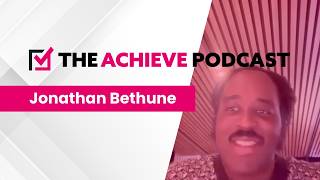
Jonathan Bethune built Bethune Consulting from solo contractor to 30 contractors across five continents, focusing on regulated industries like law and healthcare. His new product, Ninshi, verifies AI-generated code and creates developer portfolios to ensure accountability in high-risk sectors. He's now hiring marketers to solve the firm's main bottleneck: discoverability.
Chapters
Welcome to another episode of the Achieve Podcast, the show where we highlight leaders, creators, and entrepreneurs, those who are building meaningful businesses, shaping their industries, and having impact. I'm Taylor Baker Baker, your host, and excited today to be joined by Jonathan Bethune with Bethune Consulting, and you can find them at bethuneconsulting.com. Jonathan First, thank you for joining us today.
Thank you, really appreciate your time, appreciate the opportunity.
I appreciate you as well. I know you're, you're traveling quite a bit, you're in Asia, or it's like 4 AM, I believe.
So yes, yes, I'm in South Korea.
So for those getting to know you, give us the backstory a little bit on how you got into this space and who you're currently serving.
Yeah, it's a long story. I'm going to try to keep it short because, uh, it has been an odd journey. I used to be a teacher, I was jazz musician for a while, yada, yada, yada, ended up working for an education company called Newton in the early 2010s. And from there I pivoted into software development. I taught myself Python and was a test engineer, then a DevOps engineer backend for a long time and pivoted into consulting around 2017. I did a stint in Japan working for Toyota and started putting together my own consulting firm, my own group of contractors. And that really kind of blew up around 2021, 2022 with COVID There's a lot of new opportunities that came about, unfortunately really, but that along with the AI boom, we expanded into more compliance regulated industry stuff, more security stuff. And that was when I went to Dallas in 2022 and we started doing a number of jobs out there. And where the company is now, we're in a good place. I have operations in Tokyo, I have clients now in Singapore and South Korea and Europe, and our main initiatives now are around, let's see here, law, healthcare, the stuff that's more difficult to automate. We found the traditional startup space is getting eaten up a lot by AI. People are doing things with smaller teams and it's creating new opportunities in other industries because people feel like they can be more ambitious with how quick it is to generate code. That's a whole other huge topic I could go off on. But, you know, long story short, we've got about 5 core clients now that we work with and a team of a few dozen contractors in our workspace. And we're still looking to expand, still looking to grow. Wow. Wow.
So much to unpack. So many stories you could tell right there.
Sure.
With the company, how big is the team in the organization now?
Yeah, in terms of contractors, it's about 30. Employees full-time, about 3. It's myself, assistant, and one other kind of manager coordinator. We're actually bringing in a marketing person full-time in June because now we're getting a lot of response with a new technology initiative around AI and also in the Japanese market where there's interest in what you call responsible AI usage compliance, having some instrumentation and observability around AI usage. So we're growing, we're not massive. Still, uh, you know, kind of a boutique small firm, but, uh, you know, big, big dreams.
Yeah, that's awesome. And what would you say is driving growth for you guys right now?
That's an interesting question. I mean, we've honestly grown mostly just through referrals, through, you know, knowing people, going to events, conventions, conferences, uh, a bit through consulting networks. You know, I did some freelance through Toptal and A-Team and some of these other third-party networks. But I'd say right now we're sort of riding the inertia of a lot of good work over the last few years, but we're trying to get into a more intentional phase of sort of, you know, controlling our own destiny, which is why we're investing more in marketing. And, you know, we did an experiment a few months ago where we did kind of the drip campaigns through LinkedIn. We saw a little bit of success there, but I think now in this age with there being so many vendors, we have to take a a little bit more of an artisanal approach, you know, the kind of the old school glad-handing, meet people in person events. And we found we've had more success with that.
Yeah, yeah, there definitely is. The human element is becoming more and more critical.
Yes.
So looking back for you, what turning points would you say have had the greatest impact on how you think about and run the organization?
Interesting question. I wasn't expecting that. Let me think for a sec. Turning points. I've had a lot, you know, I think as far as the organization for starting from around 2017, the stint I did in Japan around then, did some work with MetLife and then with Toyota. That was really important because it was one of the first times I was working with a really huge, you know, multi-billion dollar organization. And I got a sense of what the enterprise vendor-client relationship is like. It helped us to sort of industrialize and become more professional. So I would say that period around 2019-ish was really pivotal. And then Dallas was another really big period, 2022 through 2024, you know, getting our first physical office and working with multiple startup clients simultaneously. That was the first time that I had to really defer to a lot of other people. I had to actually delegate, you you know, for the first part, it was basically just me and a couple of guys in Slack. But when we moved to Dallas, things got so complicated that I actually had to start hiring my own vendors to handle business processes and accounting and, you know, other things, healthcare, all kinds of stuff. So that was sort of our grown-up moment of stop just winging it and hoping for the best, but actually, you know, get things in place. You know, we had to be HIPAA compliant, we had to start working with vendors like Drata and Vanta and get SOC 2 compliance. And that's become our bread and butter now doing that. So those are two really key ones. And I feel like honestly, we're in another moment right now that's kind of pivotal. You know, I would love to say that this is a normalcy period, things are just smooth sailing, but there's a lot of chaos in the industry right now. And so I think, you know, how things go with these new initiatives are going to be really huge.
Yeah.
Yeah.
So it's There's so many variables with that.
Yeah.
When it comes to, for you, attracting and keeping clients, what have you found that's worked really well?
Oh man, you know, I wish it could be just that we have some amazing product or some amazing brand or anything, but, you know, we don't. We're not, we're not Rolex. You know, it's really about person-to-person communication. And I'd say If I can venture to give myself a compliment, I'm a pretty comfortable speaker. I was actually an English major in college. And for the longest time, I had a chip on my shoulder about that working in tech, dealing with guys who've got MIT PhDs and stuff like that. I was self-taught, and I always had that kind of imposter syndrome. But the further I've gotten into my career, especially going into management— I was a senior manager at Toyota. I was a CTO. I was director of technology. Had multiple executive roles with companies, serving as a CIO for a startup now, actually. The further I've gotten into my career, the more I've realized the communication side is pivotal. Good communication can save months of misadventure and pain, getting people aligned, getting people to understand what they're building and managing expectations. I'd say that's been huge for my own development as an engineer and technology leader. But also for the business, for closing deals. People, they buy the seller, you know, it's not just how good is your product, how good are the numbers. They want to look you in the eye and trust you and get a sense that they can get along with you. I feel like I've, you know, some experience from that, also from being a teacher. I taught in New York City, I taught at Harlem Charter Schools, and you better have good interpersonal skills to deal with some of those kids.
I'm sure they sharpened you right up.
Oh, they did in a lot of ways.
That's awesome. So when it comes to your sales and marketing systems, getting the message out there, where do you still see opportunity on the table?
Yeah, we're still iterating. You know what, like I said, we, we did a few experiments. We invested in a, a firm, uh, last fall. Um, you know, I get like everyone else, I get a ton of spam on LinkedIn, lots of software outsourcing vendors, lots of marketing, you know, this and that. Every month I respond to a couple and just take vendor calls just to see what's out there. And we did one, you know, it was an upfront payment. You pay a few thousand and, you know, there was like a guarantee we're going to get you a certain number of calls. And if you get, you know, you're a pretty good speaker. If you get one call, you close the deal, more than pay for itself. Didn't get a single call, not one. But they did get us a lead sheet of thousands of people to talk to. So that was sort of valuable. And so we're using that, we're iterating through that. And what we found is, again, that sort of traditional drip feed campaign, you know, give someone your LinkedIn and have them spam a bunch of people, doesn't work great. It's high noise, low fidelity. It's just kind of a waste. What I've seen work in terms of the deals that closed is, again, actually meeting people in person, going to events, referrals through, friends, you know, the hardest thing to scale is trust. Uh, and you're starting with zero when you're doing all of that social media, LinkedIn spam stuff. Uh, so, you know, that's the hard thing that we're going to be working on with the new marketing people I'm bringing in is how do you communicate with people in a way that builds trust? Cold calls are very difficult. Um, so we're going to have to come up with a methodology for that.
I love that line. The hardest thing to scale is trust.
Oh, thank you. I got a lot of them.
That is so good because it's so true. It's so applicable.
Yes. Yes. It's very true, especially working in compliance. It's, it's hard. Yeah.
And, and with the AI, AI, with everything going on that way, where have you guys found ways internally to utilize it?
Yeah. So we are using it. We dogfood our own stuff. We, we've launched an AI initiative project called Ninchi, which is about human verification of AI-generated code. Because the challenge we have now is generating code is cheap, understanding it is not. You have people pushing commits and pull requests that are thousands of lines of code, and you ask yourself, does any human actually understand what's going on here? Do we want to go down a path where humans don't understand the software running on their phone, running in their car? Would you eat at a restaurant if the chef told you they have no idea what's in the food? I think it's a long-term risk for us. I watch a lot of sci-fi. I've seen Jurassic Park. I've seen Terminator 2, and I don't like the implications of building things we don't understand. And so I think this is a missing layer in the current AI stack, the human verification. So what Ninshi does is very, very simple. You generate code or a pull request, analyzes it, generates a simple question about it, shoots it back to the developer. You can tune the difficulty, you can tune whether that blocks things, you can tune anti-cheat if you're worried about someone cheating and just asking another LLM, which I don't worry about a ton because even if they do that, they're going to learn something and, you know, they're confronted with their own lack of understanding. So I'm not too worried about the anti-cheat, but it's there, it's tunable. And what happens over time from doing these Ninshi challenges is that it creates a knowledge map. It creates business insight that the technology leaders, management, enterprise can see through dashboards and analytics. These guys know about encryption, these guys know about Python, these guys know about front end, right? We can see where there are gaps, where there's missing accountability. You get grades and scores and the individual developers get a nice portfolio, generatable as a PDF or as a web page they can share, provable. I have a real expertise and this is what we need if we're going to protect our jobs, our employment. We have to show that we're better than just asking ChatGPT, that there's a person accountable behind it. And to your question about what are we doing internally, we're dogfooding all of this. We use all of this internally at Koon Consulting, all the software we write. Our developers have Ninshi verification cycles. All of our client work we've used Ninshi for. So I can show our clients we haven't just solved your problem, we've created expertise in the people around it. And there's— now you've got an incentive to keep us, but also you have confidence that this isn't just slop, that this isn't just, you know, something that was output and vibe-coded one night. Actually, the people behind it have real expertise and training and can speak to it.
Yes, and that distinction is so crucial.
I think it's going to be very important going forward, especially in more sensitive industries. We see a huge play there. And also it's not just in software development. We're actually in discussions now with an international school in Tokyo to do a pilot for using Minshi for verification of student work, because schools, office workers, law firms, business, finance, anywhere where LLMs are being used for work, What people want is they want to use this stuff. They want to teach kids how to use AI. They want to be up onto the latest tools, but they want to use it responsibly. They want to use it in a responsible way. And we're seeing that in South Korea where AI adoption is actually faster than Japan. There's a lot of companies using this stuff now, but there's concerns around governance and around human accountability. And we think that we're positioned to speak to that. Yeah.
Wow.
Wow.
Wow. So if you had to pick one constraint to focus on and solve over the next 90 days, what would it be?
Constraint? Uh, like personal, professional, work-related? In what— in what—
for the business that could change the trajectory of the business?
Uh, okay. Um, that's a good one. Uh, I really think we are constrained on our marketing and SEO and our discoverability. Because we do really good work and we get great reviews. You know, we've always had good experiences. Well, mostly. We've had one or two not great ones, but for the most part, when people work with us, they love us. So I think our main constraint is just that people don't know enough about us. So I have done what I can on my own to travel and be social, get out and talk to people, but I again need to delegate more. And so we have two new people. We have a Japanese marketing person. We have, uh, an American marketing person. We're coming up with our protocol and our leads, and, uh, I think that'll get us past the constraint of, you know, just we do great work but no one's finding us, no one's learning about it. Um, so that's what I really want to focus on right now.
That makes sense, getting that word out there.
Yeah, yeah, yeah.
So Jonathan, when you think about your own journey, the wins, the mistakes, the lessons learned, which ones stand out to you?
There's a lot. I've made a lot of mistakes. That's one thing I can speak to. You know, so my family's Catholic and I try to be humble and reflective. And I know my main sin of the seven sins is pride. And so the mistakes that come from my past come from pride, come from assuming too much. You know, not reading things, the situation the right way, or just rushing, you know, not getting the right paperwork for things. So I would say the mistakes usually come from wrong assumptions or wrong data. And so my biggest thing that I've tried to practice over the last few years dealing with clients is always, always seek out explicit feedback. If you sit and wait wait for them to come to you, it's probably too late. So I make a practice, even if they're busy, of bugging them until I can get a sit-down and make sure that we're aligned. So especially in the world of consulting, as opposed to being an employee, you're always disposable. They're always looking for the next shiny thing. So you have to be constantly demonstrating value. And one of the ways we've done that successfully with Katoon Consulting is we only invoice when there's something the customer is happy with. We don't invoice upfront. We do free audits, we do free initial consults, and we break up our work into very small deliverables so that there's no— it de-risks it for the client. It makes it so that there's no worry that we're going to outlay hundreds of thousands of dollars and hope for something. There's always— like, I've never once fought with a client about an invoice. I've never fought to get paid for anything. It's always, you happy? If you're not, we keep going. Once you're happy, then the invoice comes. So those are some just professional standards and experiences, but I'm sure there'll be more. I'm sure there'll be more because I'm sure I'll find some new mistake.
I like that. That is a good philosophy to have right there.
Yeah.
When they're happy, that's when we invoice.
Yep.
So as long as you have the expectations and the clear, like you mentioned, wrong assumptions, wrong data, clear that up upfront.
Yeah, I mean, even with all the AI stuff making things chaotic, this is a lucrative industry. You know, this is not super low margin, super painful, at least not the way we approach it. It can be, you know, you can race to the bottom. As I always say in consulting, you know, there's kind of 3 things. There's speed, quality, and cost, and you pick 2. And our approach has always been quality and speed. So, you know, we work with very senior people. We find that by getting very talented people who are expensive, who charge hundreds an hour, that you end up saving on cost because they can do things in 2 weeks that will take the vendors months. And the thing is, speed even now has gotten cheaper than ever because of AI. People can knock stuff out, they can vibe code stuff, right? What you're really paying for in terms of quality is peace of mind, is consistency, reliability, security. You know, I've had to slow down developers about this. I was actually at a— this is a little bit of an aside— I was at a tech meetup here in South Korea the other day. And they were talking about how to build an AI business in one day, how to, you know, build, launch an app in a day. And I was sort of chiding them a little bit. I said, you don't necessarily want to try to launch a business in a day. This is great if you are an experienced business person, you know what you're doing. But if— imagine if you could snap your fingers and have a restaurant. That's not necessarily a good idea, because if you don't know how to run a restaurant, you're going to end up giving someone salmonella. You're going to end up, you know, causing some sort of problem. Same thing with running a tech company. If you don't know what you're doing, you're going to have security problems. You're going to have someone, you know, steal people's identities. You're going to— it's not necessarily a good idea to move faster than you can be accountable for. And so again, as a consulting firm, our focus is not just on speed, but also consistency, reliability, quality, and compliance. That's really what it is today.
I love that. Don't move faster than you can be accountable for. So good. So many just good lines.
So I got a million of them. I was an English major.
I appreciate it so much. So last question for Jonathan.
Sure.
We think about the next stages of the business. What are you most excited about?
I'm excited because we have a number of projects that we have a significant stake in that I think have very big upsides. So we have a really, really interesting matchmaking project in Japan. We have this Ninshi software accountability and education thing. We have a project in New York working with a law firm. We're working with a database startup. We're working with, you know, a number of early-stage startups as well. But there's just really high upside. And even if, you know, they don't all succeed, if one of them does reasonably okay, it could propel us into the next kind of tier. Where we could expand, we could hire more, you know. I think we're at an inflection point over the next few months just because of some of the investments we've made. So now we have legal entities in multiple countries, we've got all of our paperwork and payment processing set up for Singapore and for Japan. We're situated where we can actually do business with some of the more tight industries over there, and it's not easy in Japan. They're very tough on foreign companies and the a lot of, you know, legal stuff. You have to go through paperwork. I had to hire a lot of local talent to deal with that. But I think all of that is over the next few months slowly paying off where it's kind of, you know, you work, work, work, work, work, and then all at once there's that switch. And I feel like that's coming up for us.
That's awesome. That's so good to hear. So thank you for joining us. For those who want to learn more, who can reach out? So LinkedIn, obviously. Bethelconsulting.com. Anywhere else you want to send them?
Uh, that's fine for now. There's a— I got a lot of things going on, but Bethune Consulting and LinkedIn are the gateways to everything.
Okay. And so for those who want to reach out, want to learn more, reach out to Jonathan and the team if you have questions on projects and what you're, what you're looking at. And again, moving, moving it fast but responsibly. I love it, like the way you're going about this. It's intentional. And so thank you. Thank you to our sponsors of today's episode as well, Achieve Fractional, which provides fractional executive leadership for growing businesses. And if you enjoyed the episode, share it with a friend, with a colleague. And if you're not sure with your business where your loopholes, where your problems are, reach out to Jonathan and team and they can troubleshoot it and see where you're at. So reach out and we'll see you in the next episode of the Achieve Podcast.









