The Achieve Podcast - Leo Castaneda (Think AES)
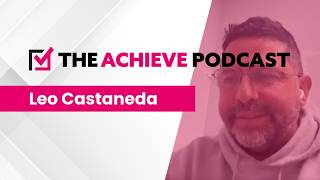
In this episode of the Achieve Podcast, host Taylor Baker interviews Leo Castaneda, CEO of Think AES, about his unconventional rise from a warehouse clerk in New Jersey to leading a global biotech engineering firm. Leo recounts his self‑taught path through hazardous‑waste work at Bristol‑Myers Squibb, automation engineering at Genentech, and the founding of Think AES, now a 300‑engineer organization with 14 offices across four continents. He explains that massive capital investment in biotech fuels the company’s growth, and that Think AES differentiates itself by acting as a partner rather than a traditional service provider—leveraging deep process, automation, and equipment expertise to design facilities with minimal client direction. Leo discusses the biggest operational hurdles: managing a widely dispersed team, scaling without venture‑capital backing, and overcoming limited brand recognition when pursuing large contracts. Marketing and lead generation are identified as ongoing challenges, with the firm relying on personal networks and partnership messaging. The conversation turns to the role of AI and automation in accelerating documentation and recipe design, and Leo shares excitement about launching an internal AES Biologics CMO to showcase the company’s end‑to‑end facility capabilities. He reflects on key lessons—particularly the importance of understanding finance and the banking system early on—and offers advice to aspiring entrepreneurs: work hard, hustle, and “knock on doors” to create opportunities. The episode closes with Leo emphasizing the need for better connection between biotech CEOs with capital and service providers like Think AES.
Chapters
Welcome to another episode of the Achieve Podcast, the show where we highlight leaders, creators, and entrepreneurs who are building meaningful businesses, shaping their industries, and having impact. I'm Taylor Baker Baker, your host, and today excited to be joined by Leo Castaneda, the CEO of Think AES, and you can find them at thinkaes.com. Leo, give us the backstory of how you got into the space, who you're serving. But first, thank you for joining us.
Thank you so much. Well, it's a bit of a long story how I got here, but so I, I was originally born in Guatemala. At about age 21, I came to the USA. Okay. And I started my life in the USA, New Jersey. I work— had many odd jobs, work as a warehouse clerk. You know, doing odd jobs. Eventually I found myself finding a job with Bristol Myers Squibb in New Jersey as a hazardous waste technician.
Okay.
In my job as a hazardous waste technician, I would go to labs and just, you know, pick up things from the labs. I walk into a lab that was a biology lab where they were producing monoclonal antibodies. And that's where I met my friends, the bioreactors. And I walk into the lab, the PhD who was running the lab was cleaning bioreactors and said to me, and I asked, you know, "What are you doing?" She said, "Well, I'm cleaning these bioreactors." At the time, I had no idea what these were. I very quickly, I offer my help and I started doing basically glass washing, cleaning in the lab. From there, she has a degree in molecular biology, a PhD. She taught me all the science behind biotech, how the monoclonal bodies are produced, how mammalian cells reproduce, how E. coli and all those, you know, biology things happened. From there, still at Bristol-Myers Squibb, I learned how to be a chemical engineer with another engineer who was building a pilot plant. And he taught me how to design CIP skids and bioreactors and the skid portion of it, the equipment portion of it. After working for about 10 years at Bristol Myers Squibb, I got a call from my recruiter from a company called Genentech in California. They were building a new manufacturing facility and I got a job as an operator running a clinical manufacturing facility. There I learned automation. I had an engineer who taught me how to program automation and automation systems. I became an automation engineer while I was at Genentech, and after about 10 years of working for Genentech, I decided to leave Genentech and started my own company, which is AES. So that is kind of how I came to the industry. I basically— I don't have a degree. I unfortunately, I was very poor and I couldn't pay for college, so I just learned by doing it. So I became, let's say, an automation engineer, a process engineer, an operator. So today, you know, I'm sitting on about almost 30 years of experience in biotech doing design of new facilities, doing process controls, automation for facilities and things like that. So that's kind of how I got here.
Wow. Wow. That is quite a journey. And I love that you're like, you know what? I don't have to have the degree, I'm just going to jump in and learn it and figure it out. And, and now you have more experience than, than most. So how big is the team in the organization now?
Uh, the company is about 300 engineers across the globe. So we have 14 offices across the, the globe. So we are doing work in 3 continents and we employ people out of 4 continents. Wow.
And what would you say is actually driving growth for the organization currently?
The, the capital investments happening in biotech. I mean, the, the world biotech investment is, is just very, very large. I don't know that many people understand how big these things are, but the, the growth that the biotech industry is having around the globe is what drives our growth.
Okay, and so looking back for you personally, what would you say turning points have molded the way you think about running the organization?
Well, so, you know, as a CEO, when I, you know, when I went from being an engineer to became a CEO, I had multiple failures. I had no clue how to run a company. One of the first things I learned very quickly is I had to learn the financial portion of the business. I started running the company where we will bid on a project and our costs were way higher than what we bid on. And it took me a while to understand why and how to control. So project costs, project controls was something that took me a bit to learn. A turning point for the company is when we started to see the success with our clients, when we started to— we bring a bit of a uniqueness to the automation integration services, the equipment services, in the sense that I don't need a client to give me specific user requirements. I, you know, from our experience and AES actually, it's a team of ex, we call it owners. So meaning people that used to work for Genentech, people used to work for Bristol-Myers Squibb that have joined AES. So we have the, the knowledge of the process and the operations, things like that. So I can go to a client and say, oh, you want to build a facility? Okay, you want 6 bio reactors? Really? That's all you need to tell me. I'll go and do it. And that's where we started turning into a partner to a lot of the clients that we work with rather than a service provider. It was more like, hey, we're building this. Can you just come and help us? Here's an idea. Can you just do it? Mm-hmm. And that's, that's the key. They, they, as people like to do, the secret sauce of our company is that I, I understand operations. We understand, you know, automation. We understand process. We don't need a lot of handholding from somebody to tell us what they want.
That makes a lot of sense. Now, as you guys try to grow and expand, what have been the biggest obstacles or bottlenecks that keep showing up?
The challenges is, you know, organization that grows as much as what we have, you know, management is a challenge when you have so many branches around the world and different time zones, stuff like that. Setting up that management layer has been a challenge for a while. I would say that is the biggest obstacle. Also, the growth itself. I mean, it is really, really hard to keep up with the growth and to do things as, you know, there's a huge demand for financial stuff like that. One of the other unique things about us is that we are self-financed. So I don't have any venture capital behind me. I don't have any banks behind me.
Wow.
The company is driven by the revenue and the profits that we make.
Wow, that is fascinating. That is so impressive to come from Guatemala to anyone and to build what you have in such a short time. And so looking at the team and the organization, this next question is kind of a two-part. First one, what's been working well when you, when you think about getting new business and getting the messaging out there, your marketing systems? What's been working well for you guys?
Um, what works really well is in, in the marketing side of things is really understanding how to connect with clients, how to send a message of, hey, we are here to partner with you. The partnerships that we have developed with our clients are really the, the, the heart of our growth.
Okay, and so the next question, part of that question is, where do you feel like there's still opportunity or you're leaving money on the table?
Oh, there's a ton of opportunity. The market is really large. Where, where a challenge of a company like AES is, we don't have a brand name. So sometimes going after a project that's very large is really hard because they go, hey, I don't know who you are, you know. And in terms of our size, even though I feel like 300 engineers on staff is large. It's not large enough for some of our clients. You know, they're looking for companies more, much bigger stuff like that. And that's where actually the industry, in my opinion, is going a little wrong is large, you know, senior VPs of engineering. They are looking for large companies that have a brand name recognition, stuff like that. And the problem there is then it just becomes a cookie cutter. This is what we do for you. So projects end up being expensive, projects being overrun. When you have a company like AES, we're, you know, more of a small boutique company that's willing to accommodate the needs of the clients. Then you see a much more efficient project execution. But the one challenge is to get people at the executive VP level to feel comfortable with cutting a $100 million deal to a company like AES. So that's, that's one of the challenges that we face is the brand name recognition and that, and making sure that people feel comfortable with a company like AES taking on a large project. We find them, but they're difficult to find.
That makes sense. And where are most of your projects? Are they US or nationwide or international?
You, you can take a a world map and close your eyes and put a finger, and that's where our projects are. So we have projects in Singapore, we have projects in Germany, Switzerland, Denmark, France, obviously USA, and we have some projects in China, Japan. Wow.
Now there's a lot of talk around automation and AI. Where have you guys found ways to utilize it internally?
So AI, the biggest thing that we're doing with AI is So in the life science industry, in the biotech industry, there's a lot of regulations, a lot of need for documentation and things like that. AI tools are really amazing at creating documents faster and creating, you know, the design work, what's in your brain that needs to be put into a piece of paper. The link between those two, one of the big big things that AI brings to the table is the efficiency on getting those documents created.
That makes a lot of sense.
Yeah.
And so do you still see steps where you can— are things are manual that you can make them more automated?
Of course. I mean, you know, when I started doing automation 20 years ago, there was a lot of people not really understanding how to create the automation, how to set up the, the, you know, we call recipes and paste logic, stuff like that. But again, with the help of AI, now you have a very large pool of computer systems that have this system. So, um, having to do a recipe design using AI is something that we're trying to implement. It's a little difficult, but we're working on trying to understand that. So the, the automation, um, capabilities will benefit quite a bit from AI tools in terms of the efficiencies to do. It takes a little, a little work. It takes a little bit of investment to figure out how to make it work. But that is where, to me, it's a big thing that we can do in the industry to become more efficient. And that's where I think there's a huge amount of benefit to bring it in on the, on the design. Like I said, the ability to put what's in your brain into a piece of paper through AI is extremely efficient.
Yes, I like that. That's a well-worded way to put that. Now, when you think about the next stages of the business, Leo, what are you most excited about?
Well, so from day one when I started the business, my vision, my goal was to eventually be able to build our own facilities. Not the walls, not the roof, you know, not the drains or anything like that. We're not construction workers. When I talk about our own facilities, it's the equipment, the automation, the infrastructure to run the facility. So I'm really excited that I decided to launch an AES Biologics CMO, which is our own internal CMO, where we are going to be able to build a facility with our own equipment, our own automation, and use that to show to our clients how we can build these facilities. That has been my dream. Of all my life, be able to give a CEO of a biotech company a manufacturing facility that works, operates, and produces product that came, comes from AES's kind of brains of how we do it and show the difference in the industry of how that can be more efficient.
Okay, and what has to go right for that to actually happen for you?
Well, so I, you know, for the last 5 years I've been waiting for the one client that's willing to give us the opportunity to do it. And it's been really tough because, you know, just talking and saying, people go, ah, sounds good, but have you done it? So that's why we decided to build our own CMO so that we have the ability to do it without necessarily asking for permission. And then we just showcase our CMO facilities. So we actually are working with our first client on our CMO. We expected to close our first contract And then we will build it, you know, we're in the middle of building the facility, we'll start producing, and we're hoping to showcase that to our customers and say, look guys, here is something that we've done. Look, look to see if you like it. We can do the same for you.
I love that. Now, when you look back at your own journey, the wins, the mistakes, the lessons learned, what do you feel like you, you learn, like what lessons stand out the most? And what do you wish you understood sooner?
I think the, the, the whole banking system, because again, so when I started the company, Taylor, I started the company, as I tell people, with $20 in my pocket. I, I tell people I don't have a rich uncle, I don't have anybody who says here's some money, go and do things. No understanding the banking system from day one was very very, very hard for me. Again, I was an engineer, I was getting a paycheck from Genentech, I was getting a paycheck from Bristol-Myers Squibb. I never really understood that. So if I go back in time, that is one of the first things I should have taken a finance class on day one to understand it. Now I know it, I'm very well versed on finances and the banking system, but you know, a while back, I didn't. And that was one of the things that I regret not doing that sooner.
Wow. Yeah, I definitely see that being a huge need. Now, Leo, if you were to pick one constraint to focus on and solve over the next 90 days, what would it be?
Oof. The big— the one constraint that solve is to— how do I say it? Be able to get our, um, how to say, uh, sales, uh, our sales higher, um, or, or our business opportunities higher. Okay. It's, it's hard to get out there, you know. It's funny because I meet with a lot of business development people, um, and all the meetings really is everybody's looking for leads and You know, and I get tremendous amount of marketing from companies saying I can increase your leads. The bottom line is nobody really knows how to increase leads. They say this, I, I, but that's just databases. It's not something concrete that somebody says, here, I'm going to introduce you to the CEO of this company and he's ready to cut a deal for you kind of thing. It's a very, very, very difficult— not difficult, it's a very challenging world out there to find this project stuff like that. There's tools, there's stuff like that, but those are just reports that you need to be able to actually secure, and it's challenging. But I'm happy to say that, you know, we have a very large network and seems to work, but I wish that would be easier done, which is one reason why I accepted this podcast, because I do think that the biotech community is lacking a group of people that understand each other. So there's, you know, I always put it— I don't know if you've seen the movie Pretty Woman when she goes to Rodeo Drive and tries to buy clothes and she pulls all this, all this cash in her hands and says, I have all this money I'm trying to spend it, but there's nobody to help me. So what I see is there's a lot of companies, a lot of biotech companies out there right now, a lot of CEOs with a lot of money saying, I need to invest, I need to expand my commercial manufacturing facility. So I put it as saying, hey, I got all this money to spend. On the other hand, you have all the service providers like myself, like, you know, all the companies saying, hey, I can do all these things for you, but there's no link to connect them where you can say, yeah, sure, come here, I'll help you, stuff like that. And the industry helps with shows and stuff like that, but it is a, it is a bit of difficult to bring those two parties to the table and say, this is what you need, this is what I can do for you, let's go together. And I feel like they have— there has to be a way to make this easier.
Yes, trust, trust is lower now, and so people, they want to make the they want to spend the money and want to invest in it, but they want to know it's going to the right cause, the right business.
Exactly. And I think it's all about being able to connect and say, what do you need? This is what I bring to the table. Are we a good match? Let's do it.
Yeah.
Wow.
So Leo, any final words? Again, your story, like rags to riches, like to grow from $20 in your pocket to a multimillion-dollar company with with 300 engineers and like international— like, your success story is fascinating. Any other advice or words of wisdom you would share with those on a similar journey?
Well, the biggest thing I tell people is a lot of people don't do things because they sit at a desk, you know, either hoping that the right answer to their problems will land on their lap, or wishing that they could do more. And I tell people, the answer to your problems is easy. Get up in the morning, do your thing, work hard, and it will come back to you. It will have rewards. Yes, you might have a lot of problems, you might have a lot of issues, but at the end of the day, since I was 21, I have learned that hard work pays off. And it doesn't matter how you do it, it doesn't matter how many people tell you you cannot do to do it. Just a quick example of that is when I wanted to start my first international business in Switzerland, I went to large corporations and asked them, how do you start a company in Switzerland? And the amount of people say it's impossible, you can't do it, it's just the Swiss government doesn't allow it. So then what I decided to do was I bought a ticket to Switzerland, I landed in Zurich, I started going around asking if I could meet an attorney. Within 4 hours, I met an attorney in Switzerland. Within 48 hours, I had incorporation in Switzerland. But the amount of people I contacted in the United States saying, do you know how to do this? They're like, nope, and it's impossible, it cannot be done. And I was like, there's no way that you cannot open a branch in Switzerland. Like, there has to be a way. And all it took for me to go there, hustle, meet people, and, and, you know, once that happens, then I was able to do Germany, I was able to Denmark, and it started to be so fast. Today, if you ask me how to branch, name the country, I know exactly what to do. And it's extremely simple. But people are afraid of doing that and they're afraid to ask and they're afraid to just venture and go and do it. It's crazy to me. That people are impaired by just not asking.
I love that. Get out, get out and just knock the door. Just get out and just make the connection.
Knock the door and somebody will answer.
I love that.
Wow.
Thank you so much, Leo, for coming in and sharing. Like, again, your story to me is so fascinating to see. It's to go— it eliminates the excuses so many people have, like, to come to a foreign country that you weren't born, you're not raised, it's not your native tongue, and, and with $20 your name, and to grow a business internationally the way you have, like, I appreciate that light, that example.
Like, yeah, thank you. Thank you so much.
And for those who want to learn more, they can reach out at Thinks, to thinkaes.com, or LinkedIn, anywhere else you want to send them that they can find you.
No, that's, that's what we exist in, in the biotech community, LinkedIn, and our website is our tools that we use for communication. Awesome.
Well, thank you so much. Any final words?
No, no. Thank you so much, Taylor Baker, for the opportunity.
And thank you. And thank you to our sponsors of today's episode, Achieve Fractional, which provides fractional executive leadership for growing businesses. And if you enjoyed today's episode, share it with a friend, with a colleague, share it with somebody who is interested in bootstrapping and taking their business and growing it. Like, no excuse, just get out there, knock the door. Thank you, thank you so much, and we'll see you in the next episode of the Achieve Podcast.









